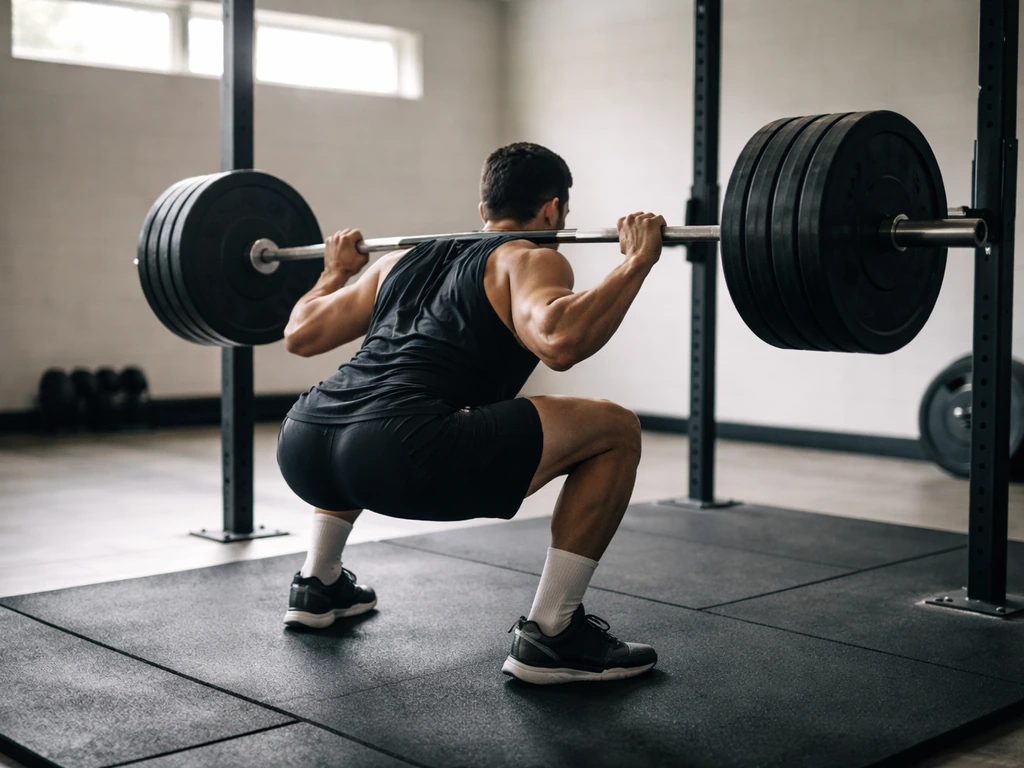
Your muscles grow the fastest in your late teens through your mid-20s. That's the honest, direct answer. But the more useful answer is that muscle growth is possible at virtually any age, and the gap between a 20-year-old and a 50-year-old lifter is much smaller in practice than most people assume. What actually changes with age is the speed and efficiency of the process, not your ability to make real, visible progress.
What Age Do Your Muscles Grow the Most and Fastest?
Marcus Kellerman
13 Apr 2026
What 'growing the most' actually means: speed vs. total potential

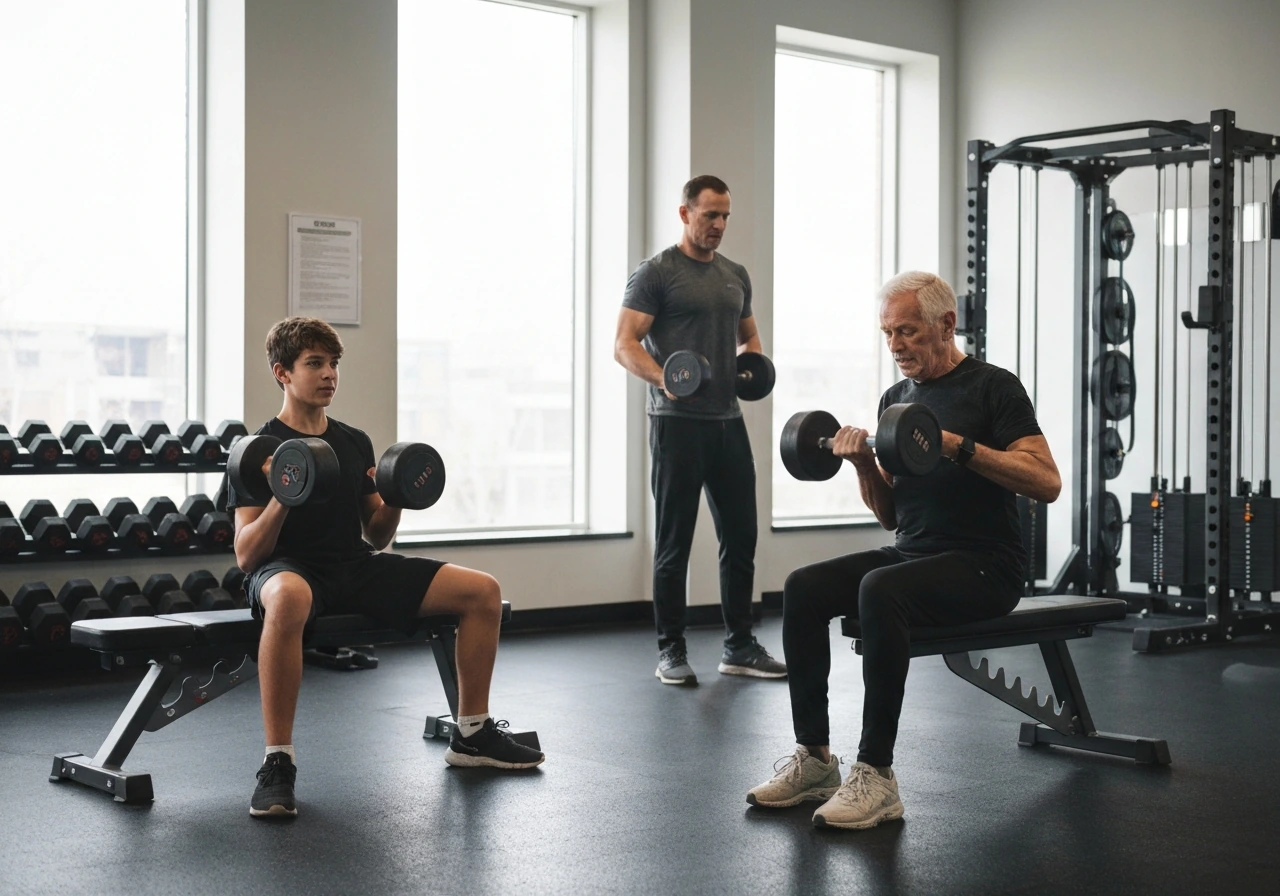
Before jumping into timelines, it's worth separating two different things people mean when they ask this question. Speed of growth refers to how fast you can add muscle in a given training period, measured in weeks or months. Total potential refers to the absolute ceiling of muscle mass you could theoretically reach over years of dedicated training. These are not the same thing, and conflating them leads to a lot of unnecessary discouragement.
A teenager who just started lifting may put on 10–12 lbs of lean mass in their first year, largely because they're untrained and their hormonal environment is exceptional. A 45-year-old who has been training for 15 years might gain 2–3 lbs of lean mass in that same year and still be making excellent, biologically meaningful progress. Comparing those two numbers without context is like comparing a sprinter's first mile to an ultramarathoner's hundredth. The mechanisms of growth (mechanical tension driving muscle protein synthesis, satellite cell activation, progressive overload) work at every age. What shifts is the efficiency of those mechanisms.
If you're wondering what muscles grow the fastest in terms of specific body parts that respond quickest to training, that's a separate layer worth exploring once you understand the age foundation. For now, the key point is this: "growing the most" is not a single metric. You need to know whether you're asking about growth rate or growth ceiling before the age question even makes sense.
The age timeline: when gains tend to be fastest
Teens (roughly 13–19)

During puberty, testosterone and growth hormone surge to levels that most adults will never see again without pharmaceutical help. This hormonal backdrop means muscle responds rapidly to almost any kind of physical stimulus, including sports, casual lifting, and even manual labor. Teens who start resistance training during this window often see dramatic changes in body composition within months. The catch is that bone growth is also happening simultaneously, which means programming needs to be smart rather than just aggressive. Heavy, unguided loading during active growth phases carries real injury risk. But in terms of pure anabolic responsiveness, this is a genuinely exceptional window.
Late teens to mid-20s: the peak responsiveness window
This is the period most research points to as the fastest window for hypertrophy. Testosterone peaks in men between roughly 18 and 25. Muscle protein synthesis (MPS) responds robustly and quickly to resistance exercise and protein intake. Satellite cells, which are the repair and growth cells in muscle tissue, are abundant and active. Recovery between sessions is fast. And for most people in this age range, it's the first time they're lifting seriously, so untrained-status gains (sometimes called "newbie gains") compound on top of an already-favorable hormonal environment.
Late 20s through 30s

Muscle growth doesn't fall off a cliff here. Most people in their late 20s and early 30s are still capable of substantial hypertrophy, especially if they haven't been training consistently before. The hormonal environment is slightly less optimal than the early 20s peak, but practically speaking the difference is modest if training and nutrition are solid. Many elite natural bodybuilders peak in physique competitions in their late 20s to early 30s, which tells you something real about what's achievable. Recovery starts to take marginally longer, and injury risk starts to become more relevant if programming is sloppy.
40s and 50s
This is where the biology starts shifting more noticeably. Testosterone declines gradually (roughly 1–2% per year after 30 in men), growth hormone drops, and the acute MPS response to resistance exercise becomes blunted and delayed, a phenomenon researchers call anabolic resistance. Satellite cell density also begins to decline with age.
A PubMed review of satellite cells in human skeletal muscle reports that aging is accompanied by a decline in type II muscle satellite cell content, consistent with type II muscle fiber atrophy [Satellite cell density also begins to decline with age. ](https://pubmed. ncbi. nlm.
nih. gov/24122288/). A PubMed-indexed review discusses how the satellite cell niche changes with aging and how those changes affect muscle regenerative capacity [Satellite cell density also begins to decline with age. ](https://pubmed.
ncbi. nlm. nih. gov/18462272/).
That said, research consistently shows meaningful hypertrophy is still achievable in this age group with the right training and nutrition approach. The inputs just need to be better calibrated.
60s, 70s, and beyond

This is where many people give up before they start, and that's a mistake. Studies on untrained older adults aged 55–75 following a 16-week resistance training program showed strength gains of 39% in the upper body and 167% in the lower body. Those are not trivial numbers. Muscle hypertrophy after resistance training has been documented in elderly populations in multiple time-course studies. The process is slower, the satellite cell pool is smaller, and anabolic signaling is more muted, but the muscle still responds. The ceiling is lower than it was at 22, but the floor is much higher than most people over 60 think it is.
Why age changes muscle building (the actual biology)
A few key mechanisms explain why the same training program produces faster results in a 22-year-old than a 55-year-old. Understanding them helps you stop blaming yourself and start adjusting the variables you can control.
- Anabolic resistance: Older muscle tissue has a blunted and delayed MPS response to both resistance exercise and protein intake. The signal is still there, but it fires more slowly and at a lower amplitude. This is probably the single biggest mechanical reason why growth slows with age.
- Hormonal changes: Testosterone, growth hormone, and IGF-1 all decline gradually with age. These hormones amplify the MPS signal and support the recovery process. Lower levels don't eliminate growth, but they raise the bar on how hard you need to train and how well you need to eat.
- Satellite cell decline: Satellite cells are muscle stem cells that contribute to repair and growth after training. Their density and activity decline with aging, which means the regenerative capacity of your muscle tissue decreases over time.
- Recovery capacity: Older adults take longer to clear metabolic waste, repair micro-damage, and restore the contractile proteins damaged by training. This affects how frequently you can productively train and how much volume you can absorb.
- Activity history: Someone who has been active their entire life has a different muscle baseline at 55 than someone who has been sedentary. Muscle memory, existing myonuclear content, and training adaptations built over decades all influence how fast you respond to a new stimulus.
Yes, you can still grow muscle at older ages. Here's what changes and what doesn't
The question "can you build muscle after 40, 50, or 60" comes up constantly, and the answer is a clear yes with an asterisk. What doesn't change is that progressive resistance training is still the primary driver of muscle growth at any age. Mechanical tension on muscle fibers still triggers MPS. Protein still provides the building blocks. Sleep still drives hormonal recovery. These fundamentals don't expire.
What does change is the efficiency and margin for error. Younger lifters can get away with inconsistent sleep, moderate protein intake, and messy programming and still grow. Older adults typically cannot. The anabolic window is narrower, the satellite cell pool is smaller, and recovery takes longer. Plasticity declines with age, and while satellite cells still contribute to hypertrophy in older muscle, their ability to fuse and add new myonuclei is attenuated. This means older adults need more precise inputs: higher protein per meal, better sleep, more deliberate programming, and probably more patience with the timeline.
It's also worth noting that some muscles are harder to develop regardless of age. If you're curious which ones present the biggest challenge, what is the hardest muscle to grow breaks that down in detail. Age amplifies those challenges, but it doesn't create entirely new ones.
How to actually maximize muscle growth at your age
Training principles that apply at every age
Progressive overload is the non-negotiable. If you're not gradually increasing the challenge on your muscles over time (more weight, more reps, more sets, better technique), you're not growing. This is true at 18 and equally true at 68. Weekly training volume (total sets per muscle group) is one of the strongest predictors of hypertrophy, and research supports it as the core lever to overcome reduced responsiveness as you age. Most evidence-based guidelines suggest 10–20 working sets per muscle group per week as a reasonable hypertrophy range for most people.
Effort matters too. Training close to failure (within 1–3 reps) is more important than the specific weight on the bar. A 60-year-old lifting at 70% of their 1-rep max to near failure is stimulating hypertrophy. A 25-year-old lifting at 80% with 5 reps left in the tank is not stimulating much. Intensity of effort often explains more of the variation in results than intensity of load.
Age-adjusted training parameters
For older adults specifically, meta-analytic data suggests a training frequency of around 3 sessions per week per muscle group, 2–3 sets per exercise, and intensities in the 51–85% of 1-rep max range are effective for driving hypertrophy. Some evidence recommends including higher-velocity work (faster concentric movements) alongside traditional slower lifting to preserve both strength and power as you age. A properly periodized program for older adults should also include some unilateral exercises and movements that address balance and joint stability, not just cosmetic muscle size.
For younger adults and beginners of any age, the parameters can be more aggressive: higher frequency (3–5 days per week), higher intensity (75–85% 1RM), and more volume per session are all well tolerated. Beginners should prioritize learning movement quality before chasing load. The fastest gains often come in the first 6–12 months not because of any magic, but because the delta between your starting point and your trained state is largest then. If you've ever wondered why do my muscles grow so fast during those early training months, that untrained-status effect is the primary explanation.
Nutrition and supplementation: what to eat and when
Protein: the non-negotiable macronutrient
Total daily protein intake is the single most important nutrition variable for muscle growth. For most active adults under 40, a target of 1.6–2.2 g of protein per kg of bodyweight per day covers the bases well. For older adults dealing with anabolic resistance, some research supports pushing toward the higher end of that range or even slightly beyond, because their muscle tissue is less responsive to a given dose of amino acids.
Per-meal protein distribution matters more for older adults than younger ones. Because older muscle has a blunted acute MPS response, spreading protein across 3–4 meals at around 0.4–0.6 g/kg per meal helps maximize the anabolic signal across the day. Some trial data in older adults suggests that higher per-meal protein amounts than previously thought may still drive net anabolic response, meaning the practical advice is: don't skimp on protein at any meal, and don't assume one big protein dose covers the whole day.
Calories and overall diet
You cannot build muscle in a sustained calorie deficit. A modest caloric surplus of 200–400 calories per day is sufficient for most people trying to maximize lean mass gain without excessive fat accumulation. The older you are, the more precisely you probably need to manage this, because metabolic rate tends to decline with age and fat gain becomes more problematic as a compounding factor. Total carbohydrate intake matters for fueling training sessions and replenishing glycogen; don't gut carbs in the name of health while trying to build muscle.
Supplements worth considering
Creatine monohydrate is the most evidence-backed supplement for muscle growth at any age, and its benefits are particularly well documented in older adults. A meta-analysis found that creatine supplementation combined with resistance training produced roughly 1.4 kg greater lean tissue mass gains compared to training with placebo in older adults, along with improved strength. A network meta-analysis comparing different nutritional interventions in older adults found creatine showed the most pronounced muscle-mass improvements compared to protein or HMB. The standard dose of 3–5 g per day is effective and safe for most people. Protein supplements (whey, casein, plant-based blends) are useful for hitting daily protein targets when whole food falls short, but they're not magic on their own.
| Age Group | Daily Protein Target | Per-Meal Protein Emphasis | Key Supplement |
|---|---|---|---|
| Teens to mid-20s | 1.6–2.0 g/kg/day | Moderate (distribute across 3+ meals) | Creatine (optional but beneficial) |
| Late 20s to 40s | 1.8–2.2 g/kg/day | Moderate (3–4 meals) | Creatine + protein if gaps exist |
| 50s and beyond | 2.0–2.4 g/kg/day | High emphasis (~0.4–0.6 g/kg per meal) | Creatine (strong evidence), protein supplements |
Recovery, sleep, and injury management: the stuff people ignore
Recovery is not optional, it's where the growth actually happens. Training breaks muscle down; the rebuilding process (driven by MPS, satellite cells, and hormonal signaling) occurs during rest. If you consistently under-recover, you're accumulating damage without completing the repair cycle, and your results plateau or reverse.
Sleep is the most powerful free recovery tool you have. Aim for 7–9 hours per night. Research on habitual sleep restriction and resistance training adaptation supports using 7 hours as a practical minimum reference point, and cutting below that consistently can meaningfully impair the hormonal and cellular processes that drive adaptation. Growth hormone secretion is heavily concentrated during deep sleep stages, which means poor sleep directly undermines one of the key anabolic signals you're trying to amplify through training.
For older adults, injury management deserves explicit attention. Clinical trials on resistance training in aging populations routinely exclude participants with orthopedic conditions that affect exercise capacity, which tells you something real: training around existing joint issues, managing load progression carefully, and not treating soreness as a badge of honor are all part of sustainable programming. This doesn't mean training easy. It means training smart. Reducing range of motion temporarily, substituting exercises that load the same muscle through a less painful pathway, and cycling intensity across weeks are all legitimate strategies.
For people at any age who feel their recovery between sessions is consistently poor, it's worth auditing sleep, protein intake, and weekly training volume before assuming the problem is age. Many people who report "not recovering like they used to" are actually under-eating protein, over-training relative to their current work capacity, or sleeping 5–6 hours and expecting 8-hour results. Fix those variables before concluding that age has capped you.
Setting real expectations and moving forward today
If you're in your teens or 20s, you're in the fastest growth window of your life. Use it. Lift consistently, eat enough protein, sleep well, and progressively overload over months and years. The gains available to you right now are genuinely exceptional compared to what will be possible at 50, and they're worth prioritizing.
If you're in your 30s or 40s, you're not past your prime, but you do need to be more deliberate. Higher protein intake, more attention to sleep, smarter programming with adequate recovery built in, and creatine supplementation are the practical levers that move the needle. Untrained or detrained adults in this age range can still make remarkable initial progress.
If you're 50 or older, the rules don't change, they just tighten. The same fundamentals apply with less margin for error. Some muscles that seemed easy to develop when you were younger may now feel more stubborn, and if you want a practical lens on which ones tend to respond most readily when you're working against those biological headwinds, what is the easiest muscle to grow offers a useful starting point for prioritizing your training focus.
The action steps are the same regardless of your age: start resistance training if you haven't, increase volume and intensity progressively, hit your daily protein target consistently with an emphasis on adequate protein per meal, prioritize 7–9 hours of sleep, and add creatine if you're not already using it. Those five inputs cover the vast majority of what the evidence actually supports. Everything else is detail work on top of that foundation.
FAQ
Is the fastest muscle growth mostly about hormones, or can training override age?
If you mean “how much muscle can I add,” it is still achievable at any age, but the ceiling comes down as anabolic responsiveness declines. If you mean “how quickly I can gain visible size,” the fastest pace is usually late teens to mid-20s, and later decades require tighter execution (progressive overload, higher protein spacing, and better recovery) to get close to your potential.
Can you still grow muscle at 50 or 60 if you train the same way you did at 25?
Yes. Age affects recovery speed and the margin for error, but it does not remove the main driver (progressive resistance training). The biggest reason older adults fall behind is often under-dosing inputs, especially weekly volume consistency, protein distribution, and sleep duration.
How do I know my intensity is high enough if age changes my recovery?
Go by technique quality and effort, not the number on the bar. A practical rule is to perform working sets at an intensity of effort where you stop 1 to 3 reps short of failure on most sets, then use load or reps to progress over weeks while keeping form stable.
Why do my results slow down even when I’m “doing everything right”?
A common mistake is expecting linear gains week to week and then quitting when the rate slows. Instead, use a longer feedback window: track weekly sets, body weight trend, and at least 4 to 8 weeks of performance changes, because anabolic signaling and recovery adaptation can lag especially in older trainees.
Should I change my protein schedule if I’m older?
Protein targets should be consistent, but distribution matters more as you get older. If you are 40+, aim for 3 to 4 protein feedings per day, roughly 0.4 to 0.6 g per kg per meal, and do not assume one large shake replaces multiple meals.
What calorie surplus is best by age for gaining muscle without gaining too much fat?
If you are trying to build muscle, keep calories at a modest surplus (often 200 to 400 per day). In older adults especially, too-large surpluses raise fat gain, which can hide muscle progress. If your weight is rising faster than you want (for example, more than about 0.25 to 0.5% of body weight per week), reduce calories slightly.
How should I adjust training volume as I get older?
For many people, the easiest way to progress is adding “working sets” gradually, keeping intensity of effort similar. Use a weekly set target as your anchor (often 10 to 20 working sets per muscle group per week), then increase total sets by small increments every 2 to 4 weeks only if recovery and performance hold.
Is creatine still worth it after 40, and how should I take it?
Creatine does not depend on being young to work, and it tends to be especially helpful when your training quality and recovery are harder to sustain. Take 3 to 5 g daily consistently, and expect results through improved training performance over time rather than immediate size changes.
What if I feel like I’m not recovering anymore, does that mean I’m too old?
Yes. If you cannot recover well between sessions, the problem is often too much weekly volume, too high training frequency, or insufficient sleep, not age itself. Audit sleep first, then check whether total hard sets per week match your current capacity, and lower volume temporarily before changing everything else.
Could low testosterone or another hormone issue be stopping my muscle growth?
Yes, and it is more common than people think. Testosterone and growth hormone can be lower with aging, but muscle still responds when the “inputs” are right. If you have symptoms (major fatigue, low libido, unintentional weight loss, or very poor strength progression), it is worth discussing bloodwork with a clinician rather than assuming it is only training.
Will I get newbie gains if I start lifting at 35 or 50?
Some individuals, especially those starting after a long break, will get strong “beginner” or “returner” gains regardless of age because muscle is responsive when it is detrained. The key is consistent training for long enough to build the pattern, then progressively overload as performance improves.
How should I train through joint pain without losing muscle gains?
For older adults, joint and tendon tolerance often becomes the limiter. Smart substitutions include using pain-free ranges, switching to less aggravating variations, and controlling speed while keeping the target muscle close to failure on working sets. If pain persists or worsens, scale range of motion and consult a qualified professional.