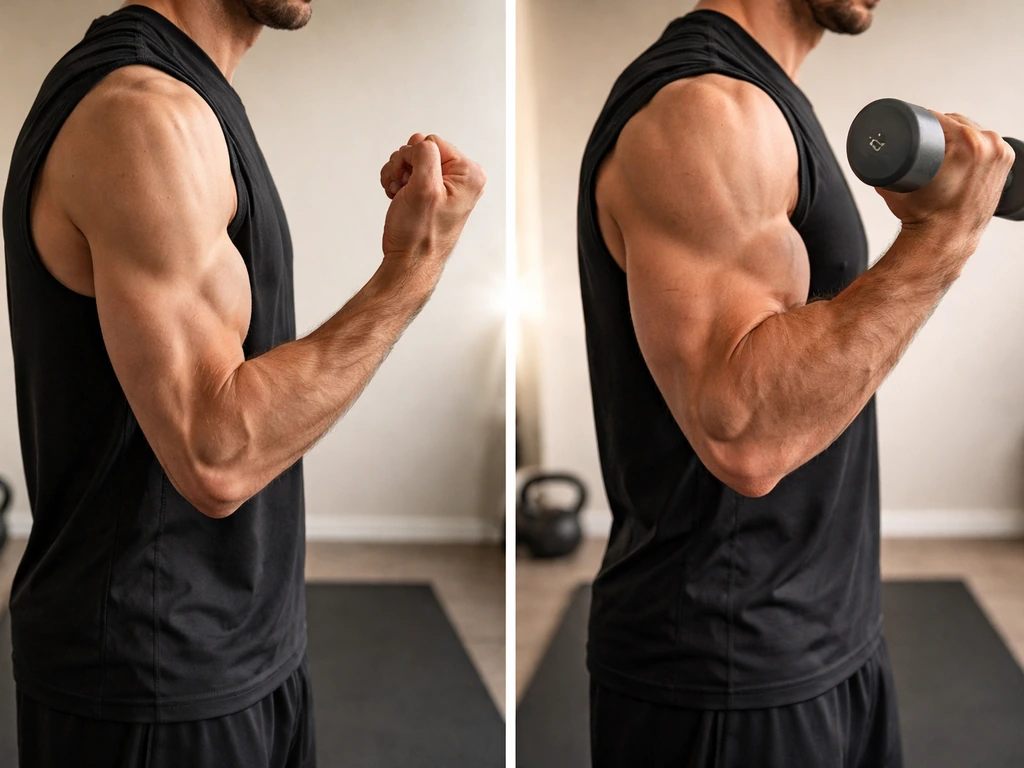
Tendons do not grow like muscles. Muscles get bigger through hypertrophy, meaning your individual muscle fibers increase in cross-sectional area when you apply enough mechanical tension and recover properly. Tendons adapt differently: they remodel their internal collagen structure, increase stiffness, and improve load-bearing capacity, but they do not pack on size the way a bicep does. That distinction matters enormously for your training, your timeline expectations, and how you avoid getting hurt.
Do Tendons Grow Like Muscles? What to Expect and How to Train

Marcus Kellerman
23 Apr 2026
How tendon adaptation compares to muscle growth
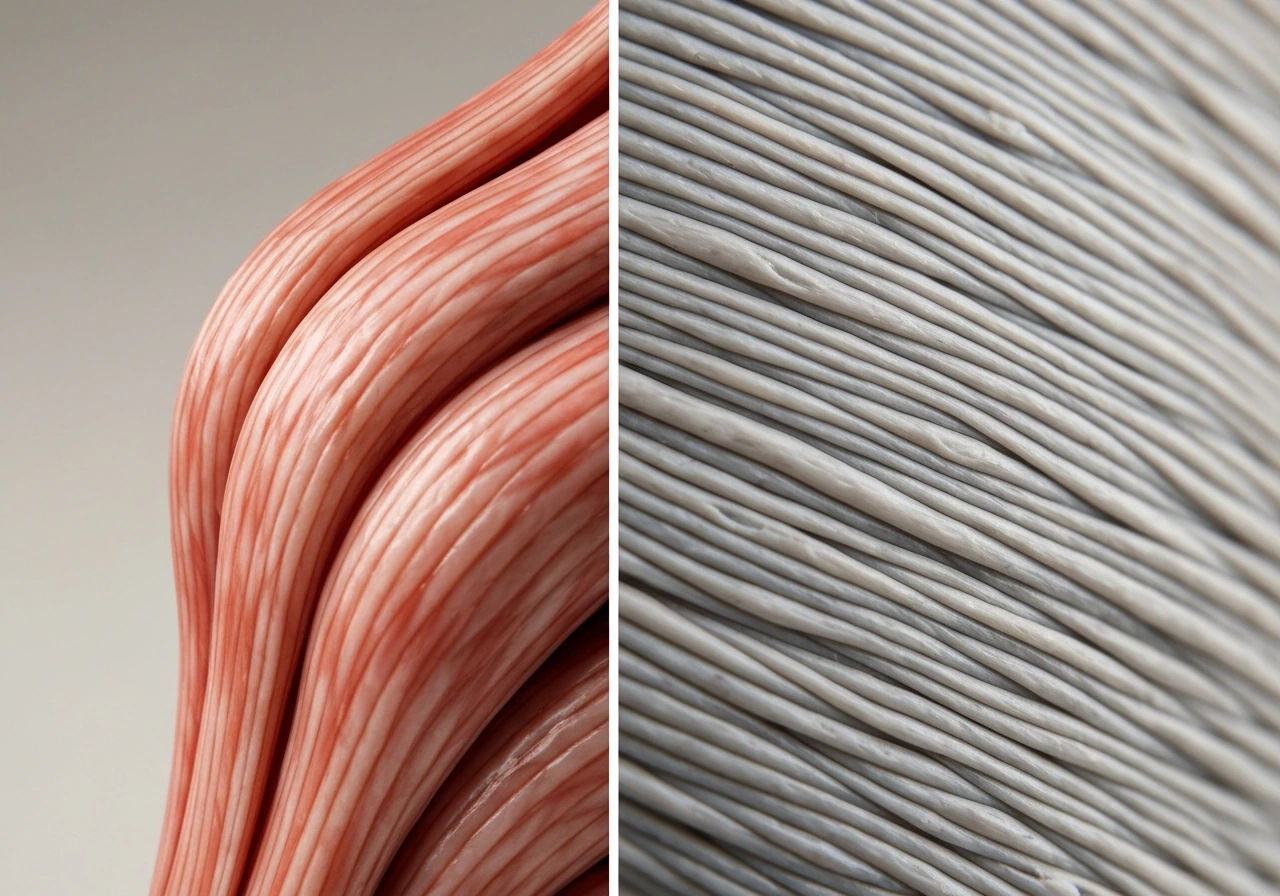
When you lift weights, your muscles respond to mechanical overload by signaling satellite cells and ramping up protein synthesis. Over time, myofibers get thicker, which is why your arm looks bigger after a few months of consistent training. That increase in physiological cross-sectional area is the actual definition of hypertrophy. Neural adaptations come first, usually in the opening weeks, and visible size changes follow somewhere around the one-to-two-month mark.
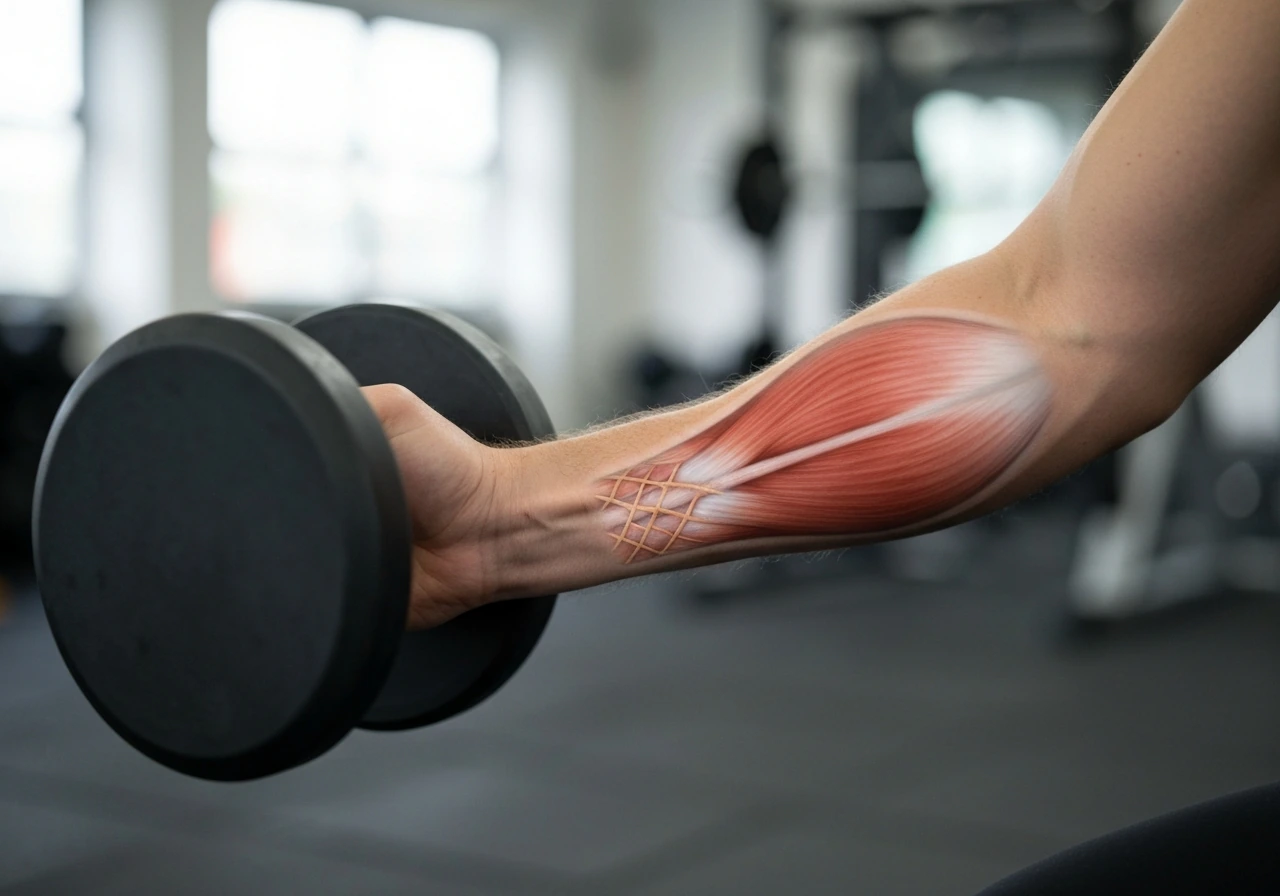
Tendons take a completely different path. When you load a tendon consistently, it responds by synthesizing new collagen, remodeling how that collagen is organized, and improving molecular cross-linking within the matrix. The end result is a stiffer, more mechanically capable tendon. Stiffness here is not a bad thing: in tendon science it means the tendon can transmit force more efficiently, which is exactly what you want. But none of that looks like a muscle growing. You cannot train your Achilles tendon the way you train your calves and expect the same kind of visible change.
The basics of muscle hypertrophy
Muscle hypertrophy requires three overlapping signals: mechanical tension (actually challenging the muscle with load), metabolic stress from sustained work, and enough recovery for the muscle to rebuild thicker than before. The extracellular matrix inside the muscle also remodels to support continued fiber growth. You need progressive overload, enough protein, and adequate sleep to keep this cycle going. Beginners often see strength improvements faster than size changes because early gains are largely neural, but the structural changes start accumulating within weeks of consistent training.
How tendon tissue actually adapts
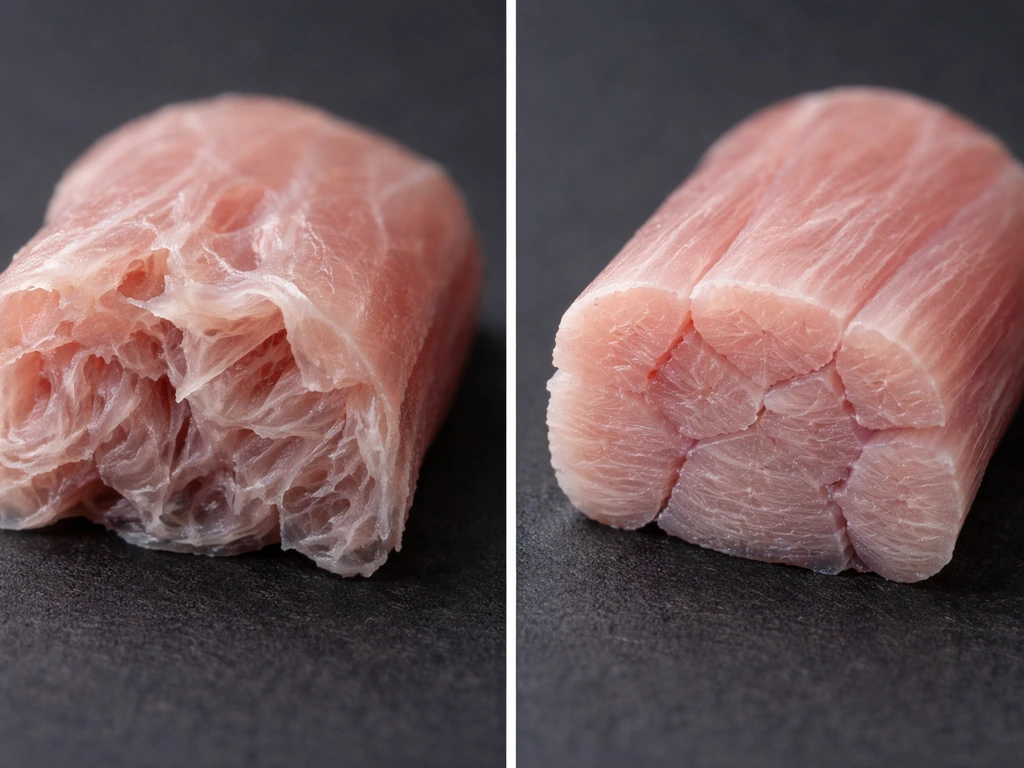
Tendons are mechanically driven tissues. Give them appropriate load and they respond by synthesizing collagen and reorganizing the fiber structure to better handle that load. Give them too much too fast and that same system tips toward tendinopathy. The key biological outcomes that researchers measure are tendon stiffness (force required to stretch the tendon per unit distance) and material properties like Young's modulus, not fiber size. A 2024 study in middle-aged men found that combining resistance training with hydrolyzed collagen supplementation over 12 weeks produced greater increases in patellar tendon cross-sectional area and stiffness compared to training alone, which is one of the cleaner examples of measurable tendon structural change in response to loading plus nutritional support.
One important point that often gets overlooked: pain going away does not mean your tendon is structurally healed or ready for heavier load. Pain modulation and actual tissue remodeling are separate processes on different timelines. You can feel better weeks before the tendon is meaningfully stronger. That gap is where a lot of people re-injure themselves.
The timeline gap between muscles and tendons
Here is the practical reality of timing. Do muscles grow faster than tendons? In most cases, yes, which is why the slow tendon clock matters for your training plan The practical reality of timing. Your muscles start adapting structurally within a month or two of consistent training. Your tendons begin tolerating load relatively quickly too, sometimes within a few weeks, but meaningful changes to tendon stiffness and collagen architecture take considerably longer. Research points to three months as an early marker for tendon structural changes, and in many cases you need six months to a year or more before deeper remodeling is complete. This is especially relevant for older adults, whose tendon turnover rates are slower.
| Tissue | Early adaptation (weeks 1-8) | Structural change timeline | What is measured |
|---|---|---|---|
| Muscle | Neural efficiency gains, early hypertrophy signals | 1-2 months for visible size change | Muscle fiber cross-sectional area (CSA) |
| Tendon | Improved load tolerance, pain modulation | 3+ months; full remodeling 6-12+ months | Stiffness, tendon CSA, Young's modulus |
The takeaway is not to panic about the slow timeline but to plan for it. Your muscles will outpace your tendons in adaptation speed, which is exactly why smart progression matters. In most training plans, muscle growth happens during recovery as the muscle rebuilds and adapts after you stress it do muscles grow during recovery. Muscles that are growing stronger can put more force through tendons that have not yet caught up structurally. That mismatch is a common setup for tendinopathy.
Training that builds both muscle and tendon capacity

The good news is that training designed to build muscle and training designed to strengthen tendons are compatible. You do not need two separate programs running in parallel. What you need is smart structure and appropriate load progression.
Slow heavy resistance work
Heavy, slow resistance training is probably the best crossover tool you have. It drives the mechanical tension your muscles need for hypertrophy while also delivering sustained loading to tendons that promotes collagen remodeling. A 3-4 second eccentric (lowering) phase with controlled concentric work is a practical starting point. Clinical protocols for Achilles and patellar tendinopathy use progressions that start at higher reps (around 15) and lower relative loads, then move toward heavier loads at lower rep ranges (down to 6) over weeks as tolerance builds.
Isometrics as a starting point or pain-management tool
Isometric contractions, holding a loaded position without movement, are particularly useful when tendon irritability is high. They can reduce pain acutely and provide a mechanical loading signal without the compressive or shear forces that aggravate inflamed tendons. Isometrics are not just a rehab tool either: they work as a warm-up activation strategy before heavier isotonic work, and they are effective enough that patellar tendinopathy protocols often start here before progressing to full range concentric and eccentric work.
Eccentric training
Eccentric-focused training has the strongest research backing for mid-portion Achilles tendinopathy specifically, with a 2023 meta-analysis confirming it outperforms other modalities for that condition. But you do not have to be dogmatic about it. Concentric-only and combined programs also produce positive tendon outcomes when load progression is appropriate. A systematic review and meta-analysis found that adding physical modalities to eccentric exercise offered no clear benefit over eccentric exercise alone for chronic Achilles tendinopathy at short- and long-term follow-ups. The contraction type matters less than the progressive loading principle. If pure eccentrics feel painful or are technically difficult to set up, combined slow isotonic work is a legitimate and evidence-supported alternative.
How to space tendon work within a hypertrophy program
Tendons need 36 to 72 hours to recover from heavy loading sessions. That is longer than most people assume, and it matters when you are combining tendon-targeted work with regular hypertrophy training. Lighter activities and low-load isometrics can be done more frequently, but heavy slow resistance work for the tendon should be placed at least two to three days apart. A practical approach is to treat your heavy compound lower-body or upper-body days as the primary tendon-loading stimulus, let the adjacent lighter days stay genuinely lighter, and resist the urge to add extra tendon work on top of everything.
Mistakes that get people hurt
The most common mistake is ramping up training load faster than tendons can keep pace with muscle adaptation. Your legs may feel strong enough to add weight every week for months, but the patellar tendon connecting your quads to your shin is on a slower biological clock. Jumping load too fast is how you end up with tendinopathy that sidelines you for months.
- Treating pain relief as a green light for heavy loading: feeling better at rest or after light activity does not mean the tendon is structurally ready for increased demand.
- Relying on stretching alone: passive stretching does not meaningfully increase tendon stiffness or promote collagen remodeling. It has a place in warm-up routines but will not fix a struggling tendon.
- Avoiding all load because it hurts: tendons need mechanical stimulus to remodel. Complete rest typically leads to deconditioning without structural improvement. Controlled, progressive loading within a tolerable pain range (roughly 0-5 out of 10) is both safe and necessary.
- Assuming heavy eccentrics are the only answer: multiple loading strategies work. The common thread is progressive load, not the specific contraction type.
- Skipping the early stages: jumping straight to heavy compound work without building through isometrics and lighter isotonic work is a fast track to flare-ups.
If you develop sharp or worsening tendon pain during activity, pain that does not settle within 24 hours of a session, significant swelling, or any sensation of a pop or sudden giving-way, stop loading that area and get it evaluated. Those patterns can indicate acute tendinopathy, partial tearing, or more serious structural damage that needs professional assessment before you return to loading.
Nutrition and recovery that support connective tissue
There is no magic supplement for tendons, but nutrition does matter. The foundation is protein adequacy and sufficient overall calories. Tendons are collagen-based tissues and collagen synthesis requires amino acids, particularly glycine and proline. If you are chronically under-eating or protein-deficient, you are limiting your body's ability to remodel both muscle and tendon tissue.
Collagen supplementation paired with resistance training is the most promising specific nutritional intervention. A 2026 systematic review found strong evidence that collagen supplementation combined with resistance training improves tendon cross-sectional area and stiffness, though it does not appear to meaningfully boost muscle strength. The research suggests hydrolyzed collagen consumed around training time, alongside vitamin C (which acts as a cofactor for collagen synthesis), may enhance tendon adaptation specifically. That said, collagen supplementation is an addition to a solid diet, not a substitute for it.
Sleep is non-negotiable. Tissue repair and collagen turnover happen during sleep, and consistent sleep deprivation undermines recovery from both muscle and connective tissue loading. Aim for seven to nine hours. General recovery habits including managing training volume, avoiding excessive alcohol, and controlling stress also support the slower biological processes that tendon remodeling depends on.
How to know if your tendons are actually improving
You cannot feel collagen remodeling happening, but you can track meaningful proxies. The most practical markers are load tolerance (can you handle more weight or more reps at the same weight without symptoms?), stiffness at rest in the morning (a common early indicator of irritability that should decrease over weeks of appropriate loading), pain during and after activity (which should trend downward and stay within the tolerable 0-5 out of 10 range during sessions), and how quickly symptoms settle after a training session.
In clinical research, tools like the VISA-A questionnaire are used to track Achilles tendinopathy symptoms and function on a 0-100 scale over time. SRaLab’s RehabMeasures database describes VISA-A as a disease-specific questionnaire for Achilles tendinopathy severity with scores ranging from 0 to 100, where 0 indicates worst severity VISA-A questionnaire. You do not need to use formal questionnaires, but tracking your pain scores and load numbers in a training log gives you real data to assess progress over weeks and months, which is the correct timescale to evaluate tendon adaptation.
If you have been following a progressive loading program consistently for 8 to 12 weeks without meaningful symptom improvement, or if your symptoms are worsening despite appropriate load management, that is the point to seek professional evaluation from a physiotherapist or sports medicine clinician. Insertional tendinopathies, calcific deposits, and partial tears have different management pathways and may not respond to standard progressive loading in the same way mid-portion tendinopathies do. Getting a proper diagnosis early saves months of misdirected effort.
The broader point here connects to how muscles recover and grow too: tendons are part of the same adaptive system. The broader point here connects to how muscles recover and grow too: tendons are part of the same adaptive system if you tear a muscle does it grow back stronger.
That is why the strain-repair cycle for tendons and muscles is slow, and you should not expect a quick boost in strength from a single bout how muscles recover and grow too. Muscles do grow during recovery when hypertrophy signals from training have given your body what it needs to rebuild stronger and thicker how muscles recover and grow too.
If you are also interested in how muscles themselves respond to recovery windows, or how strain and repair affect long-term tissue strength, those questions follow the same underlying principle that consistent, appropriately dosed mechanical stress drives positive adaptation over time, for both tissue types, just on very different clocks.
FAQ
If tendons do not “grow” like muscles, what actual changes should I expect over time?
You should expect improvements in mechanical tolerance (able to handle more load or more reps), reduced irritability (less morning stiffness and symptoms that settle faster), and tendon stiffness changes that reflect better force transmission. Visibly larger “size” is not the goal, especially in early stages.
How much tendon training per week is enough if I am also trying to build muscle?
A common mistake is stacking extra tendon work on top of full hypertrophy volumes. Many people do well with 1 primary tendon-loading stimulus every 2 to 3 days, using controlled heavy slow work on key lower-body or upper-body days, while keeping “supporting” days genuinely lighter.
Should I train through tendon pain, or stop immediately when it hurts?
Use a symptom rule, not a yes-or-no rule. If pain stays within a tolerable range during the session and does not worsen or keep escalating after, you can usually continue with the planned dose. But if pain is sharp, worsens over the next 24 hours, or does not calm down after the session, scale back or pause and get assessed if it persists.
Is morning stiffness a reliable sign that my tendon is flaring or under-recovered?
It can be. A flare often shows up as increased stiffness in the morning plus slower symptom settlement after training. The useful proxy is trend over weeks: appropriate loading should make morning stiffness decrease, not intensify.
Can I improve tendon strength with bodyweight only, like calf raises or push-ups?
You may start improving with bodyweight, but progress usually stalls unless you can meaningfully increase tendon load over time (more range, tempo control, reduced rest, or added external resistance). Tendons respond to adequate mechanical stimulus, not exercise type alone.
How do I choose between eccentric-focused work and combined slow isotonic training?
Choose the option you can progress safely and consistently. Eccentrics have strong support for mid-portion Achilles, but if pure eccentrics trigger sharp pain or are hard to set up, combined slow isotonic (with or without isometrics) is an evidence-supported alternative as long as total tendon load gradually increases.
What tempo should I use for tendon work to make it effective without overloading me?
A practical starting point is about a 3 to 4 second eccentric and a controlled concentric, then progress load first or reduce tempo only after symptoms stabilize. If you are tendon-irritable, start with isometrics at a tolerable intensity and later move into longer controlled ranges.
Do isometrics “count” as tendon training if I am still building muscle?
Yes, they can count, especially when irritability is high. They can reduce pain acutely and provide a loading signal without high shear or compressive aggravation. They are often best used as either a warm-up bridge before isotonic work or as a short-term starting tool, not a permanent substitute.
How long should I wait to see improvement before changing my tendon program?
Expect early changes in load tolerance within weeks, but meaningful structural remodeling markers often take months. If you have done a consistent progressive plan for 8 to 12 weeks without meaningful improvement, or symptoms are worsening despite load management, get a professional evaluation.
Is it normal to feel stronger while tendon symptoms lag behind?
Yes, that mismatch is common. Muscle fibers adapt faster, so you may be able to add weight even while tendon stiffness and architecture are still catching up. That is why you should base progression on tendon symptoms and tolerable pain trend, not only on how your muscles feel.
What does “tendon recovery” mean in practice, and how should I schedule sessions?
Heavier tendon-loading work typically needs 2 to 3 days before the next similar high-load stimulus. If you schedule heavy tendon work too frequently, you are more likely to flare. Lighter days and low-load isometrics can usually be done more often, as long as they do not perpetuate irritability.
Should I rely on supplements like collagen if my protein intake is already good?
Collagen can be a helpful add-on, but it is not a substitute for meeting overall protein and calories. If you are chronically under-eating or not getting enough amino acids, collagen will not overcome that limitation. Pair any collagen approach with resistance training and adequate vitamin C from diet.
Do I need to stop my hypertrophy training if my tendon is injured?
Not always. The goal is to adjust tendon irritability without eliminating mechanical stimulus completely. Often you can keep training nearby muscle groups and reduce the specific tendon-loading dose, using pain-guided modifications and isometrics or lighter ranges while you restore tolerance.
What warning signs mean “stop and get evaluated” rather than just adjusting load?
Stop loading and get assessed if you have sharp or worsening pain that does not settle within 24 hours, significant swelling, or a pop or sudden giving-way sensation. Those patterns raise concern for acute tendinopathy escalation or more serious tissue injury.