Muscle fibers grow by getting bigger, not by multiplying. When you train consistently and eat enough protein, individual fibers increase in cross-sectional area through a process called hypertrophy. Your body adds more contractile proteins inside each fiber, the fiber swells, and the muscle as a whole gets larger and stronger. That's the core of it. Everything else, including the training variables, the nutrition targets, and the recovery protocols, is about making that process happen as reliably and quickly as possible.
How Do Muscle Fibers Grow? Hypertrophy Explained and Your Plan

Marcus Kellerman
29 Apr 2026

What 'muscle fiber growth' actually means
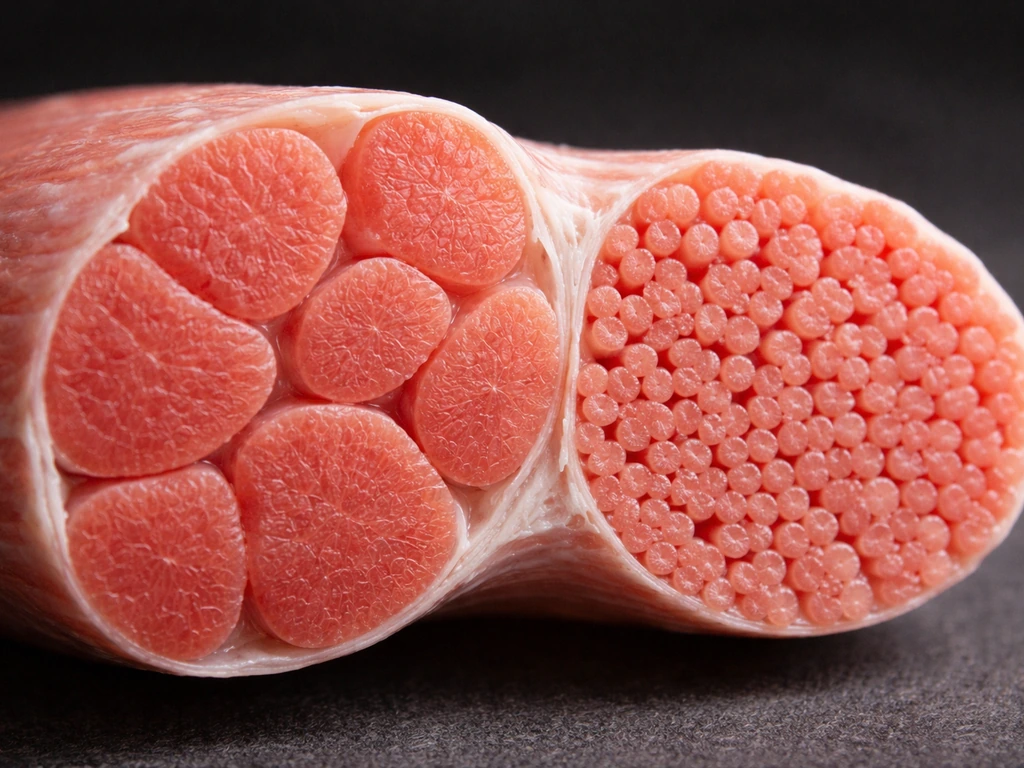
There's a common assumption that building muscle means growing more fibers. For most adults, that's not really how it works. The number of muscle fibers you have is largely fixed after early development. What changes is their size. Hypertrophy, which is the technical term for muscle fiber enlargement, happens when the proteins inside each fiber, particularly the contractile proteins actin and myosin, accumulate faster than they break down. The fiber gets thicker, takes up more space, and the muscle you see in the mirror gets bigger.
You may have heard the term hyperplasia, which refers to an actual increase in fiber number. There is limited evidence this occurs meaningfully in humans under normal training conditions. Some researchers have explored whether extreme training stimuli could split or generate new fibers, but for practical purposes, your growth strategy should be built around hypertrophy, not hyperplasia. That question about whether it's even possible to grow more fibers is worth understanding, but it shouldn't change how you train.
You might also see the term sarcoplasmic hypertrophy tossed around, suggesting that non-contractile fluid inside fibers expands separately from the contractile proteins. The current evidence for this as a distinct, trainable mechanism is inconsistent at best. Practically, this distinction doesn't change your program design. Train hard, eat well, recover, and your fibers will grow.
The biology behind it: protein synthesis, satellite cells, and remodeling
At the cellular level, muscle growth is driven by muscle protein synthesis (MPS), the process your body uses to build new muscle proteins. After a resistance training session, MPS elevates, and research shows this elevation can blank" rel="noopener noreferrer">persist anywhere from 3 to 48 hours post-exercise, though the range varies a lot between individuals and studies. The key is that this elevated synthesis window is when your muscle is most actively rebuilding and adding to fiber size, especially when you've fed it adequate protein.
Satellite cells are the other major player. These are muscle stem cells that sit dormant on the surface of fibers until stress, like hard training, activates them. Once activated, they proliferate over roughly 24 to 72 hours after a training session. They can then fuse into existing fibers and donate new nuclei, which is important because each nucleus in a muscle fiber manages a certain volume of protein synthesis. More nuclei means greater capacity for the fiber to grow. Satellite cells can also self-renew to keep the pool replenished, and in some cases form entirely new fibers, though again this is a minor pathway in most adults. Their correlation with hypertrophy outcomes after training is well established in human research.
One nuance worth knowing: older adults, especially those in their 80s and beyond, show reduced satellite cell responses and diminished fiber hypertrophy from the same training that works well in younger people. This doesn't mean training is pointless at any age, and plenty of evidence supports building muscle well into your 60s and 70s, but it does mean expectations and programming may need adjusting as you get older.
The training stimulus: what actually triggers growth
Training is the trigger. Without a mechanical challenge, there's no signal to grow. But not all training triggers growth equally, and the variables you control, including how much volume you do, how hard you push, and how consistently you progress, determine the size of that signal.
Progressive overload is non-negotiable

Your muscles adapt to whatever you consistently ask them to do. If you do the same weight and reps every week for months, adaptation slows or stops. Progressive overload means gradually increasing the demand: more weight, more reps, more sets, or better technique with a given load. This doesn't have to be dramatic week to week. Small, consistent progression over months adds up to significant hypertrophy.
Volume: weekly sets per muscle group
Volume, meaning total weekly sets per muscle group, has a dose-response relationship with hypertrophy. Research shows that each additional weekly set is associated with roughly 0.37% greater muscle mass gain, and the effect scales across categories of less than 5, 5 to 9, and 10 or more sets per muscle group per week. Beginners can grow well on the lower end of that range. More experienced lifters generally need higher volumes to keep progressing. A practical starting point for most people is 10 to 20 weekly sets per muscle group, spread across 2 to 4 sessions.
Load and effort: you have more flexibility than you think
A common myth is that only heavy weights, typically above 70 to 80% of your one-rep max, drive hypertrophy. The evidence doesn't support that. Multiple load ranges can produce similar hypertrophy when effort is matched and volume is equated. What matters most is working close to failure. Whether you're lifting a heavier load for 5 to 8 reps or a lighter load for 15 to 20 reps, if the last few reps are genuinely hard, the hypertrophic signal is comparable. Leaving 2 to 4 reps in reserve on most sets, and occasionally pushing to failure, is a practical framework.
Frequency and exercise selection
Spreading your weekly volume across at least 2 sessions per muscle group tends to outperform cramming it all into one session. This allows you to accumulate more total quality sets without excessive fatigue compromising performance. Exercise selection matters too: choose movements that allow you to load the muscle through a meaningful range of motion and that you can execute with solid form. For most people this means a mix of compound lifts (squats, presses, rows, hinges) and targeted accessory work.
Nutrition: feeding the growth you're training for

Training is the stimulus but nutrition is the raw material. Without enough protein and total calories, your body simply can't build tissue, no matter how hard you train. This is one of the most common reasons people train consistently and see minimal progress.
Total protein: how much you actually need
The evidence points to a practical daily protein target of around 1.6 to 2.0 g per kilogram of body weight for most people actively trying to gain muscle. A meta-regression analysis found that intakes above roughly 1.6 g/kg/day don't reliably produce additional gains in fat-free mass during a caloric surplus. However, if you're eating in a calorie deficit (trying to build or maintain muscle while losing fat), pushing toward 2.3 to 3.1 g/kg/day helps protect lean mass. The bottom line: aim for at least 1.6 g/kg/day, and err higher if you're in a cut.
Calories: you need enough fuel
Protein alone doesn't cover it. You need sufficient total energy intake to support training performance and anabolic processes. A practical minimum is around 27 to 30 kcal per kilogram of body weight per day. For many people trying to build muscle, a modest caloric surplus of 200 to 400 kcal above maintenance is a reasonable target, enough to support growth without excessive fat gain.
Protein distribution: spread it out across the day
How you distribute protein through the day matters, not just the daily total. Research on protein ingestion patterns after resistance exercise shows that spreading intake evenly across meals produces a greater muscle protein synthetic response than eating it all in one or two sittings. A practical target is about 0. 25 to 0.
40 g of protein per kilogram of body weight per meal, spread across 3 to 5 meals every 3 to 4 hours. For older adults especially, hitting at least 20 g of high-quality protein per meal, including roughly 2. 2 g of leucine, is important to overcome age-related reductions in anabolic sensitivity. Dose-response evidence also suggests that older adults may need a [higher leucine or protein dose per meal](https://pmc.
ncbi. nlm. nih. gov/articles/PMC11099237/) to produce a robust muscle protein synthesis response than younger adults.
Leucine acts as a primary trigger for MPS and is found in high concentrations in animal proteins like chicken, dairy, eggs, and fish, as well as soy among plant sources.
What about supplements?
Protein supplements (whey, casein, plant blends) can genuinely help you hit your daily targets if whole food alone isn't practical. Creatine monohydrate has solid evidence for enhancing training output, which indirectly supports hypertrophy. But no supplement builds muscle on its own. The foundation is always consistent training, adequate calories, and sufficient protein from any source.
Recovery: where the actual growth happens
You don't grow during your training session. You grow between sessions, when your body has the time and resources to rebuild. Recovery is what allows the muscle to repair after training so you can grow over time. Underestimating recovery is one of the most common mistakes, especially for motivated beginners who want to train every day.
Sleep is your most powerful recovery tool

One night of total sleep deprivation reduces muscle protein synthesis by about 18% and creates a hormonal environment that works against muscle building. Chronic sleep restriction to 4 hours per night also lowers myofibrillar protein synthesis rates. These aren't trivial effects. If you're training hard and eating right but sleeping 5 to 6 hours a night, you're leaving significant gains on the table. Seven to nine hours of sleep per night is the practical target for most adults. This isn't a soft recommendation, it's a biological requirement for the adaptation you're training for.
Rest days and deloads
Muscle doesn't need to be sore to be recovering or growing. Soreness is a sign of unfamiliar stress, not an indicator of hypertrophic stimulus. That said, programming at least 1 to 2 full rest days per week from heavy training is sensible for most people. After several weeks of accumulated training load, a planned deload, where you reduce volume and/or intensity for a week, allows fatigue to dissipate without meaningfully reversing hypertrophy. The acute swelling in muscle thickness from a training session returns to baseline within about 48 hours, but the actual tissue adaptations you've built over weeks don't disappear. A week of reduced training won't erase your gains; it often actually sets you up to push harder afterward.
Stress and lifestyle factors
Chronic stress elevates cortisol, which competes with anabolic signaling. This doesn't mean you can't build muscle while stressed, but it does mean that managing life stress is a legitimate part of your muscle-building strategy. It also means that if your training is adding to your overall stress load rather than relieving it, reducing intensity or volume temporarily is often the right call.
How fast does muscle actually grow: realistic timelines
Beginners can expect noticeable strength gains within the first 2 to 4 weeks, primarily from neural adaptation. Visible changes in muscle size typically take 6 to 12 weeks of consistent training and nutrition. In the first year of serious training, many people can gain 1 to 2 pounds of lean muscle per month under good conditions. After the first year, the rate slows considerably, and intermediate lifters may gain 0.5 to 1 pound per month on a good program. These numbers vary based on genetics, age, training quality, and nutrition.
Older adults can absolutely build muscle, and the evidence is clear that resistance training works well into the 60s, 70s, and beyond. The rate of gain is typically slower, and the protein requirements per meal are higher due to anabolic resistance. But detraining in older adults also leads to meaningful losses, which makes consistency especially important. If you're older and wondering whether it's worth starting, the answer is yes, both for muscle mass and for the broader health benefits.
The most honest thing I can tell you about tracking progress is to measure it multiple ways. Scale weight is noisy because it reflects water, food, and fat as well as muscle. Body measurements (circumference of arms, chest, thighs), progress photos every 4 weeks, and training performance (are you lifting more or doing more reps with the same weight?) are better combined signals of real muscle growth.
Why growth stalls and how to fix it
Plateaus are normal, but most of them have a fixable cause. Here are the most common blockers and what to do about each one.
| Blocker | What's happening | Fix |
|---|---|---|
| Not eating enough protein | MPS can't keep up with breakdown; net gain is flat | Track protein for 1–2 weeks; target 1.6–2.0 g/kg/day from whole foods and/or supplements |
| Eating below maintenance calories | Body prioritizes energy over building tissue | Aim for slight caloric surplus (200–400 kcal/day above maintenance); track intake briefly to calibrate |
| No progressive overload | Muscles have adapted to current demand and have no reason to grow further | Add weight, reps, or sets each week; log your training to see where you've stalled |
| Training too far from failure | Insufficient mechanical tension and motor unit recruitment to drive hypertrophy signal | Aim to end sets within 2–4 reps of failure; occasionally train to true failure on isolation work |
| Too little volume | Weekly sets per muscle group below threshold needed for continued adaptation | Gradually add 1–2 sets per muscle group per week until at 10–20 sets/week |
| Too much volume or frequency without recovery | Accumulated fatigue blunts performance and suppresses anabolic signaling | Program a deload week; ensure at least 1–2 rest days per week |
| Poor sleep | MPS reduced by up to 18% with even one night of deprivation; hormonal environment shifts catabolic | Prioritize 7–9 hours; treat sleep as part of your training program, not optional |
| Unrealistic timeline expectations | Expecting visible change in 2–3 weeks; giving up before adaptations accumulate | Commit to a consistent 12-week block before reassessing; track performance gains, not just aesthetics |
Your practical starting point this week
If you want to put all of this into action right now, here's a simple checklist to get your first week dialed in.
- Calculate your protein target: multiply your body weight in kilograms by 1.6 to 2.0, and spread that across 3 to 5 meals per day. Each meal should have at least 20 to 40 g of protein from a quality source.
- Estimate your daily calories: start at 27 to 30 kcal/kg of body weight as a floor. If you're in a gaining phase, add 200 to 400 kcal above your estimated maintenance.
- Plan your training week: aim for 2 to 4 sessions that each train major muscle groups. Shoot for 10 to 20 sets per muscle group per week, split across sessions. Choose exercises you can load progressively.
- Train close to failure: on your working sets, the last few reps should feel genuinely hard. If you could do 10 more reps, you're not close enough to the stimulus that drives hypertrophy.
- Log your lifts: write down your weights and reps every session. Your job the next session is to beat or match last session's performance.
- Protect your sleep: set a consistent bedtime that gives you 7 to 9 hours. If you're only getting 5 to 6 hours, that's the first thing to fix before adding more training.
- Check in after 4 weeks: take measurements, a progress photo, and review whether your training weights have moved up. If all three training and nutrition boxes are checked and nothing is changing, revisit the stall checklist above.
Muscle growth is not complicated, but it does require consistency across multiple inputs at once. Training, protein, calories, and sleep all need to be working together. Any one of them falling short can cap what the others can do. Get those fundamentals right, be patient with the timeline, and the physiology will do the rest.
FAQ
If hypertrophy is mainly fiber size increase, why do I sometimes see my muscle look bigger in the first couple days after starting training?
Early “size” changes are often from swelling and increased glycogen, not new fiber thickness. The swelling can normalize within about 48 hours, while true growth shows up more gradually across weeks as protein synthesis repeatedly drives higher fiber size.
How do I know I’m getting enough mechanical tension if the last reps aren’t failure every set?
Use an effort target: keep most sets around 0 to 3 reps in reserve, especially on your main working sets. If you can do the same reps and reps-in-reserve week after week without any load increase or clean progression, the mechanical stimulus is likely too low.
Does muscle grow if I lift in a deficit or should I only bulk?
Muscle can still be gained in a deficit, but the rate is slower and requires stricter protein and training quality. The article’s higher protein range for cutting (around 2.3 to 3.1 g/kg/day) helps protect lean mass while your calories are below maintenance.
Is it better to do more sets, more reps, or heavier loads to grow muscle faster?
Dose-response volume is usually the easiest lever, so prioritize total quality weekly sets for each muscle group, then use a rep range that lets you approach failure safely. You do not need to only lift heavy, as long as effort is matched and volume is equated across loads.
What should I do if my muscles are getting sore all the time, but my performance is not improving?
Frequent soreness plus flat performance usually means recovery and/or intensity management is off. Consider reducing volume temporarily, avoiding too many sets taken to absolute failure, and adding more rest between hard sessions for that muscle group.
Can I train every day and still grow, or does recovery require full rest days?
You can train most days if you avoid excessive fatigue, but you still need recovery time between hard stimuli for each muscle. A practical guideline is to spread weekly work across multiple sessions and include at least 1 to 2 full rest days per week from heavy training when fatigue is accumulating.
How many protein meals is enough if I cannot eat 3 to 5 times per day?
Aim for fewer, higher-quality meals that still hit a per-meal protein dose. If you cannot do 3 to 5 meals, try to concentrate protein into 2 meals that each approach the effective per-meal range, and add a shake or protein-rich snack to keep daily totals on target.
Do I need leucine specifically, or is total protein always enough?
Total protein usually covers leucine, but older adults often need more per meal to overcome anabolic resistance. If you are older, targeting at least 20 g of high-quality protein per meal and around 2.2 g leucine per meal is more reliable than simply meeting a daily protein number.
If I hit my daily protein and calories, why might I still stall after a few months?
Most stalls come from the training stimulus no longer matching your current capacity. Check whether weekly set volume is too low, effort has dropped (more reps left in reserve), or progression has stalled (no small increases in load or reps with the same technique).
How should I adjust hypertrophy training as I get older?
Expect slower progress and higher per-meal protein needs due to reduced anabolic sensitivity. Also consider using slightly less aggressive failure frequency, keeping sessions higher quality, and managing fatigue with deloads more proactively.
What’s the difference between a deload and “stopping training,” and when should I deload?
A deload reduces training load and/or volume for about a week while you keep some stimulus, so you can dissipate fatigue without fully undoing adaptations. Deload when performance declines for multiple weeks, joint discomfort rises, or your ability to hit target reps and loads deteriorates.
Is creatine worth taking for muscle growth if it doesn’t directly build muscle?
Creatine monohydrate can help you lift more or do more reps over time, which indirectly supports hypertrophy through better training output. Use it as a performance tool, not a substitute for adequate protein, calories, and progressive training.
What should I track to confirm I am actually gaining muscle, not just fat or water?
Track multiple signals: body weight plus waist or circumference, progress photos every few weeks, and training performance on compound and accessory lifts. If weight is flat but reps and loads are rising and measurements slowly trend up, that can indicate lean mass gain despite day-to-day scale noise.