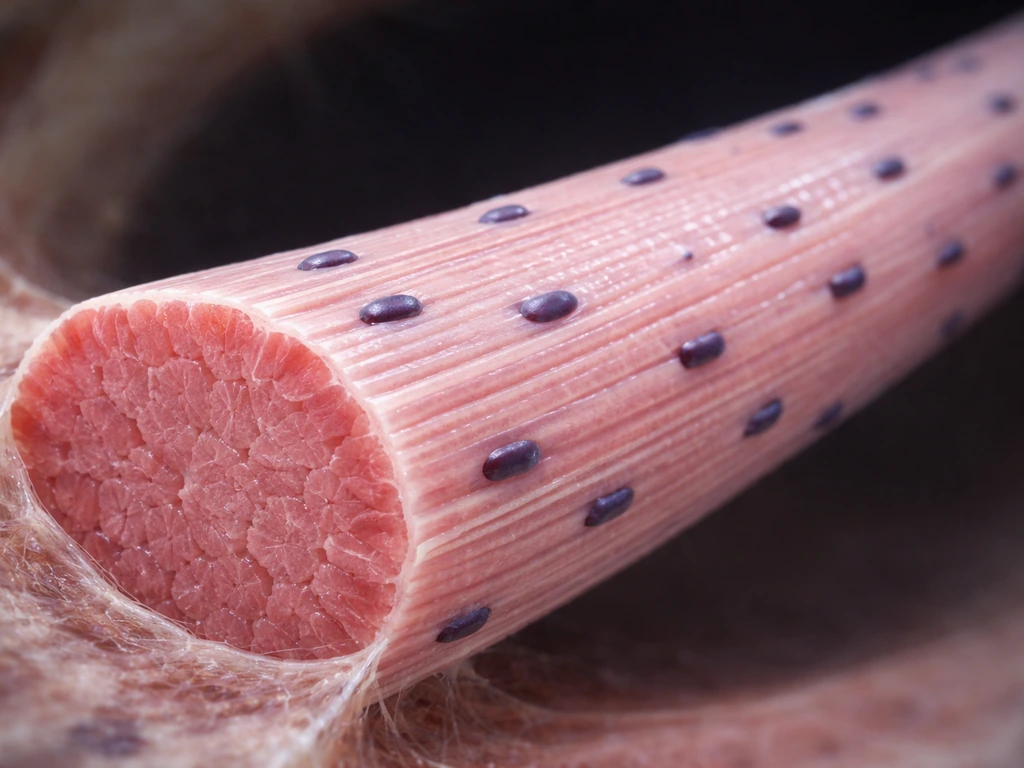
Muscles grow through a process called hypertrophy: you apply a challenging mechanical load to muscle fibers, your body detects that stress, repairs the damage at the fiber level, and builds the tissue back slightly thicker and stronger than before. That cycle, repeated consistently over weeks and months with enough protein and sleep to support repair, is how muscle is built. There's no shortcut and no mystery, but there are a handful of variables that move the needle and a handful of myths that waste your time. Here's everything you need to know, start to finish.
How Muscles Grow Video Guide: Training, Nutrition, Recovery

Marcus Kellerman
31 May 2026

How muscle growth actually works

When you lift a weight that challenges you, you create two main stimuli inside the muscle: mechanical tension and metabolic stress. Mechanical tension is the more important and better-understood of the two. When a loaded muscle fiber is stretched under tension, it activates a signaling cascade involving a protein complex called mTORC1, which acts like a master switch for muscle protein synthesis.
Research has traced this pathway back to upstream activators like phosphatidic acid, a lipid messenger produced when muscle membranes are physically deformed under load. So the muscle quite literally senses being pulled, and that physical event triggers the molecular machinery to build more contractile protein. Muscle size changes can happen through hypertrophy, which increases fiber size, or through hyperplasia, which increases the number of muscle fibers, though hyperplasia is harder to confirm in humans build more contractile protein.
Metabolic stress, the burning, pump-heavy feeling from higher-rep sets, has also been proposed as a hypertrophy driver. Metabolites like lactate and hydrogen ions do accumulate during hard sets, and for a while the field thought these chemicals directly signaled growth. The current picture is murkier: mechanistic reviews note that the causal role of metabolite pooling in humans hasn't been consistently established. Metabolic stress likely contributes something, but mechanical tension is the cleaner, more reliable signal. This is also why MAPK/ERK pathways and phospholipase D activity show up in hypertrophy research: they're part of the signaling web that translates 'load applied' into 'build more muscle.'
One thing worth knowing: muscle cells don't divide and multiply the way skin cells do. The growth you see is almost entirely the existing fibers getting bigger in cross-sectional area. There's ongoing debate about whether new fibers (hyperplasia) can form in humans, but it's not the primary story of muscle growth for practical purposes. If you want to dig deeper into the distinction between fiber hypertrophy versus fiber addition, that's a rabbit hole worth exploring separately.
Training stimulus: progressive overload, volume, and intensity
If mechanical tension is the trigger, progressive overload is how you keep pulling that trigger over time. Your muscles adapt to whatever load you give them, which means a weight that challenged you in week one stops being a meaningful stimulus by week six unless you've made it harder. Progressive overload just means you systematically increase the demand: more weight, more reps, more sets, or shorter rest periods. Any of those work. The key is that the muscle is regularly encountering something harder than it's already adapted to.
Volume, meaning the total number of hard sets you do for a muscle per week, has a clear dose-response relationship with hypertrophy. Research and meta-analyses consistently show that more sets produce more growth, up to a point. A practical sweet spot appears to be somewhere in the range of 10 to 20 sets per muscle group per week, with meaningful gains starting around 10 sets and returns flattening out above roughly 20 sets. If you're a beginner, 10 sets per muscle per week is plenty. If you're more advanced and recovering well, pushing toward 15 to 20 can provide an additional edge.
Intensity matters too, but not in the way many people think. You don't need to train to absolute failure on every set. A meta-analysis comparing training to failure versus stopping a few reps short found only a trivial advantage for failure training on hypertrophy overall (effect size around 0.19). Where failure training does show a clearer benefit is in low-load, high-rep contexts. For heavier loading, stopping 1 to 3 reps short of failure across most sets, and only hitting failure on your last set or on safer exercises like machines, is a smart balance. It keeps mechanical tension high while managing cumulative fatigue across the session.
Training frequency is more flexible than many programs suggest. When weekly volume is matched, training a muscle 2 to 4 times per week produces similar hypertrophy to training it once per week. Frequency is mostly a tool for distributing your total volume across the week in a way that's manageable and recoverable. For most people, hitting each muscle 2 times per week works well practically.
Recovery is where growth actually happens

Training doesn't build muscle. Training is the stimulus. Muscle is actually built during recovery, when your body repairs and upgrades the tissue. This distinction matters because many people train hard enough but then undercut their results by not recovering adequately.
Sleep
Sleep is the most underrated variable in muscle building. A systematic review on sleep and resistance training found that inadequate sleep directly limits training performance and strength outcomes. Growth hormone secretion, testosterone release, and muscle protein synthesis are all tied to sleep quality and duration. Seven to nine hours per night is the target for most adults. If you're consistently sleeping less than six hours, no training program or supplement stack is going to fully compensate.
Soreness, fatigue, and overtraining
Delayed onset muscle soreness (DOMS) is not a requirement for growth. You can have a productive session that drives adaptation without being unable to walk the next day. Chasing soreness is a distraction and can push you toward junk volume that just accumulates fatigue without producing better results. The actual signal you want is progressive performance improvement over time, not soreness.
Overtraining syndrome is real but takes time to develop. It's characterized by persistent performance decline lasting months alongside disrupted hormonal, immune, and metabolic function. A systematic review characterizes overtraining syndrome as an imbalance between training stress and recovery, associated with decreased performance and fatigue plus dysfunction across metabolic/immune/hormonal systems [imbalance between training stress and recovery with hormonal, immune, and metabolic dysfunction](https://bmcsportsscimedrehabil. biomedcentral.
com/articles/10. 1186/s13102-017-0079-8). The more common issue is non-functional overreaching: a few weeks of too much volume or too little recovery that tanks your performance and motivation temporarily. The fix is pulling back.
Research on deloading suggests that a structured one-week reduction in volume (cutting sets by about two-thirds) and frequency doesn't erase hypertrophy while helping manage accumulated fatigue. If you've been grinding for 6 to 8 weeks straight and feel flat, a deload week is a feature, not a failure.
Nutrition for muscle growth

Calories first
You don't technically need a calorie surplus to build muscle, especially if you're a beginner or returning after a break. But gaining muscle efficiently, particularly as an intermediate or advanced lifter, is much easier in a slight surplus. A modest surplus of 200 to 300 calories above your daily maintenance is enough to support tissue building without excessive fat gain. If you're cutting calories significantly, muscle gain slows down considerably, though hitting your protein target can blunt muscle loss.
Protein targets and distribution
Protein is the building material for muscle repair and synthesis. The evidence-based target for muscle growth sits at around 1.6 grams per kilogram of body weight per day. The ISSN's position puts the range at 1.4 to 2.0 g/kg/day for exercising individuals. A meta-analysis of protein supplementation research found that benefits plateau around 1.6 g/kg/day, meaning there's little added muscle gain from pushing higher under normal training conditions. For a 75 kg (165 lb) person, that's roughly 120 grams of protein per day.
How you distribute that protein across the day does matter, though the difference is probably modest compared to total daily intake. Spreading protein across four or more meals, aiming for roughly 0.4 g/kg per meal (about 30 grams per meal for that same 75 kg person), optimizes muscle protein synthesis by keeping anabolic signaling elevated throughout the day. Research also supports consuming protein before sleep as a practical way to extend that synthesis window overnight, particularly a dose of about 40 grams of casein or a similar slow-digesting protein.
Carbohydrates and timing
Carbohydrates support training performance by replenishing muscle glycogen and delaying fatigue. For muscle growth, carbs are not optional extras but genuine performance nutrition. You don't need to obsess over the exact timing, but having carbohydrates around your training session, either in a pre-workout meal or in the post-workout window, is a practical default that supports both performance and recovery. The overall daily carbohydrate intake matters more than the exact timing minutiae.
Supplements worth considering (and what to skip)
Supplements are last in the hierarchy, not because they don't work, but because they work on top of training, sleep, and nutrition. If those three aren't dialed in, no supplement will meaningfully move the needle. That said, a few have solid evidence behind them. The position stand also notes that commonly studied strength-task caffeine doses are about 3, 6 mg/kg body mass and are typically taken 30, 90 minutes before exercise commonly studied strength-task caffeine doses are about 3–6 mg/kg body mass and are typically taken 30–90 minutes before exercise..
| Supplement | Evidence | Practical Dose | Who it's for |
|---|---|---|---|
| Creatine monohydrate | Strong: improves strength, power, and lean mass over time | 3–5 g/day (no loading phase needed) | Most people; especially beneficial for vegetarians and older adults |
| Protein supplements (whey, casein, plant) | Strong: useful when whole-food protein is insufficient to hit daily targets | Whatever closes the gap to ~1.6 g/kg/day | Anyone not hitting protein goals through food alone |
| Caffeine | Strong for performance: reduces fatigue and improves training output | 3–6 mg/kg body weight, 30–90 min before training | People who tolerate caffeine well; avoid late-day use |
| Beta-alanine | Moderate: buffers acidity in muscle, may help with high-rep sets; causes harmless tingling | 3.2–6.4 g/day over 4+ weeks | Higher-rep training styles; less useful for low-rep strength work |
| Omega-3 (fish oil) | Promising especially for older adults: may increase muscle protein synthesis rate | 2–3 g EPA/DHA per day | Older adults, people with low dietary fish intake |
| Vitamin D | Useful if deficient: strength improvements mainly seen in deficient individuals | Test first; supplement if below optimal levels | People with low sun exposure or confirmed deficiency |
| BCAAs, glutamine, HMB (high dose) | Weak to no added benefit when protein intake is already adequate | Not necessary | Not recommended as a priority |
Creatine is the supplement most consistently supported by research for muscle gain and strength. A 2026 meta-analysis confirmed small but meaningful lean mass and strength effects, including in postmenopausal women. It's cheap, safe, and works. Omega-3s look particularly promising for older adults, with a randomized trial showing increased muscle protein synthesis rates with supplementation. If you're over 50 and not eating fatty fish regularly, it's worth considering.
How fast you'll actually see results
The first thing that improves is strength, and it happens fast. In the first 4 to 8 weeks of training, strength gains come primarily from neuromuscular adaptations: your nervous system gets better at recruiting and coordinating muscle fibers. Actual muscle size changes lag behind and can be confounded early on by inflammation and fluid shifts in the tissue.
Muscle fibers grow larger through the same core process of hypertrophy: training creates tension signals, and recovery and nutrition let your muscle proteins rebuild and adapt how do muscle fibers grow. Visible, measurable hypertrophy typically becomes evident after 8 to 12 weeks of consistent training. For older adults, functional strength improvements can appear on a similar timeline, though the visual changes may be subtler relative to younger lifters.
After that initial phase, progress slows because you're no longer a beginner. Intermediate lifters typically gain somewhere between 0.5 to 1 kg of actual muscle per month under good conditions, and often less. Advanced lifters gain even slower. This is normal and not a reason to change everything you're doing.
If progress stalls after 8 weeks of consistent effort, check these things in order before blaming your genetics or changing your program: Are you actually hitting progressive overload? Has your weekly set volume increased over time? Is your protein intake consistently at or above 1.6 g/kg/day? Are you sleeping enough? Only after those four boxes are checked should you look at program structure, exercise selection, or supplementation.
Your practical plan to start today
Here's how to put this all together into something you can actually start this week. The principles are the same whether you're 25 or 65, though the practical adjustments for older adults are noted.
Training template

Train each major muscle group twice per week. A simple upper/lower or push/pull/legs split works well. The ACSM recommends at least 2 nonconsecutive days per week of resistance training for healthy adults, and for older adults, 8 to 15 reps per set is a solid range (10 to 15 for older or deconditioned individuals). Beginners can start with 2 to 3 sets per exercise and build from there.
- Choose 4 to 6 compound exercises per session (squat, press, row, hinge patterns). Machines are fine, especially for older adults or beginners learning movement patterns.
- Start with 2 to 3 sets per exercise, targeting 8 to 12 reps per set (or 10 to 15 if you're older or newer to lifting). Stop 2 to 3 reps short of failure on most sets.
- Progress the load: when you can complete the top of your rep range with good form on all sets, add a small amount of weight next session (2.5 to 5 kg on compound lifts, less on isolation work).
- Aim for 10 to 15 working sets per major muscle group per week total across all sessions.
- Rest 60 to 120 seconds between sets for hypertrophy-focused training.
- After 6 to 8 weeks of consistent training, take a deload week: reduce your set volume by about two-thirds and drop frequency if needed. Then resume progressing.
- Track your sessions: write down what you lifted, how many reps, and how hard it felt. Progress you can see on paper beats progress you're trying to remember.
Nutrition checklist
- Calculate your rough daily protein target: multiply your body weight in kilograms by 1.6. That's your grams-per-day goal.
- Spread that protein across 3 to 4 meals, aiming for roughly 30 to 40 grams per meal.
- Eat enough total calories to support training. If you're not gaining any weight and not building strength over several weeks, eat a little more.
- Don't fear carbohydrates. They fuel your sessions and replenish muscle glycogen. Include them in meals around your training.
- Consider a protein shake if whole-food intake is falling short of your daily target, not as a replacement for real meals.
- If you're over 50, aim for at least 1.6 g/kg/day of protein (some evidence supports going slightly higher), and consider omega-3 supplementation if your diet is low in fatty fish.
Recovery checklist
- Prioritize 7 to 9 hours of sleep per night. This is not optional for muscle growth.
- Don't train the same muscle group two days in a row, especially as a beginner.
- If you feel persistently flat, weak, or unmotivated after several weeks, reduce volume and frequency for a week before assuming your program isn't working.
- Soreness is not a measure of a good workout. Consistent progress in the gym is.
Supplement starting point
- Creatine monohydrate: 3 to 5 grams per day, every day. Take it whenever is convenient.
- Protein supplement: only if you're not hitting your daily protein target through food.
- Caffeine: 3 to 6 mg/kg before training if you respond well to it and train in the morning or early afternoon.
- Omega-3s: 2 to 3 grams EPA/DHA daily, particularly if you're over 50 or rarely eat fatty fish.
- Everything else: skip it until the basics above are consistent.
The biology of muscle growth isn't complicated, but applying it consistently is where most people fall short. Mechanical tension from progressive overload triggers the molecular signals for growth, protein and calories provide the raw materials, and sleep is where the actual rebuilding happens. Hit those three pillars consistently for 12 weeks and you will see real changes, regardless of your age or starting point. Harvard Health research supports that older adults respond well to resistance training 2 to 3 times per week with progressive adjustments, and if you're not seeing changes after about 8 weeks, it's a sign to adjust the program, not abandon it. Start with the basics, track what you're doing, and let the biology work.
FAQ
How fast will I notice muscle growth if I follow the plan described in a how muscles grow video?
Expect strength improvements within 4 to 8 weeks, even if the scale and photos change only slightly. Clear visual hypertrophy usually shows up after about 8 to 12 weeks of consistent training, so if you are only 3 to 4 weeks in, focus on performance metrics (reps, load, time under tension) rather than appearance.
If I do progressive overload, do I need to increase weight every week?
No. You can progress with any combination of load, reps, sets, or rest changes. A practical approach is to keep the same rep range and add the smallest increment when you hit the top of the range for all sets (for example, add 2.5 to 5 lb next session or add one rep per set).
What counts as a “hard set” for hypertrophy if I’m not training to failure?
Use proximity to failure and quality mechanics. A set is typically “effective” when you stop with about 1 to 3 reps in reserve on most sets for heavier work, or when you use a higher-rep range where effort is still high. If form breaks or range of motion collapses, that set may not provide the mechanical tension stimulus you are trying to target.
Should I chase the pump or the burn described in how muscles grow videos?
A pump can be a side effect, but it is not the main goal. Prioritize mechanical tension by using progressive overload and sufficient challenge. If you only feel burn and your performance is not improving week to week, you may be doing too little tension relative to the effort.
How do I structure volume if I train a muscle twice per week (upper/lower split)?
Split your weekly hard sets across both sessions, rather than cramming everything into one day. For example, if you aim for 12 to 16 hard sets per muscle group per week, do about 6 to 8 sets per session, then adjust based on recovery (extra sets should only be added if performance and soreness do not steadily worsen).
Is DOMS a reliable sign that my workout worked?
No. DOMS is not required for growth and it often tempts people into adding junk volume. Instead, track whether you are maintaining or increasing reps/load over time with stable technique. If you feel little to no soreness, you still may be on track if performance is rising.
What if I’m recovering poorly, but my program volume is already in the 10 to 20 set range?
First reduce the weekly total by a meaningful amount rather than cutting one exercise at a time. The article notes that deloading can involve cutting sets by roughly two-thirds for about a week, then rebuilding. Also check sleep duration and daily protein consistency, because under-recovery usually shows up before soreness becomes severe.
How do I know whether I should add calories, or should I just stay at maintenance?
If you are an intermediate or advanced lifter, you will usually do better with a small surplus around 200 to 300 calories. If you are not gaining weight at all or strength is stalling despite good training, try a modest surplus. If your weight is rising too fast and fat gain is noticeable, step down to near maintenance.
Do I need carbs around workouts to build muscle, or is protein enough?
Carbs mainly help you train harder by replenishing glycogen and reducing fatigue. If you are cutting hard and training performance drops, your weekly volume and intensity may fall even if protein is perfect. A simple default is to include carbs in the pre-workout meal and/or post-workout window until performance stabilizes.
What’s the best way to hit the protein target if I struggle with food quantity?
Use distribution and convenient doses. The article suggests multiple meals, and a practical tactic is to anchor protein with 3 to 4 meals containing roughly equal amounts, then add a shake if you are short. Aim for consistency across the week, because missing the daily total occasionally matters less than repeatedly falling below your target.
Should I take creatine every day, or only on training days?
Take it consistently. Creatine works best when your muscle stores are steadily replenished, which typically means daily use. There is no need to time it precisely around workouts, and the usual approach is a standard daily dose.
What should I do if progress stalls after 8 weeks?
Run a quick checklist before changing everything: confirm progressive overload, verify weekly set volume is actually increasing, ensure protein is consistently at or above about 1.6 g/kg/day, and check that sleep is sufficient. Only after those are solid should you change exercise selection, rep ranges, or supplementation.
Can I build muscle if I’m older or returning after a break?
Yes, but expect slightly different timelines and recovery needs. Start with the same core principles, train major muscle groups about 2 to 3 times per week with a rep range that fits your ability (often 8 to 15 for older or deconditioned lifters), and adjust volume slower if soreness or performance drops quickly. Use performance tracking because visual change can be subtler.