Muscles grow when you consistently give them a reason to adapt, feed them enough protein and calories to rebuild, and let them recover. That's the whole framework. The Jeffrey Siegel explanation that circulates from TED-Ed boils it down to resistance training, nutrition, and sleep, and that's actually correct, just incomplete without the practical numbers and the order of priority that determines whether you actually see results.
What Makes Muscles Grow: Evidence-Based Guide With Jeffrey Siegel

Marcus Kellerman
30 Apr 2026

What's actually happening when muscles grow
Muscle growth, or hypertrophy, is the result of muscle protein synthesis (MPS) exceeding muscle protein breakdown (MPB) over time. When you lift, you create micro-damage and mechanical stress in the muscle fibers. Your body responds by synthesizing new contractile proteins, primarily in the myofibrillar fraction, which makes the fibers physically larger and stronger. That positive net protein balance, repeated consistently over weeks and months, is what you see in the mirror.
You may have heard about 'myofibrillar vs. sarcoplasmic hypertrophy' as if they're two separate dials you can tune. The myofibrillar type (growing the actual contractile machinery) is real and well-supported. Sarcoplasmic hypertrophy (swelling the fluid-filled compartment around the fibers) gets a lot of gym talk, but the research calls it something close to a 'scientific unicorn.' Don't obsess over it. Build your training around mechanical tension and progressive overload and the adaptations will follow.
One thing worth knowing up front: a single workout does spike muscle protein synthesis, but that acute spike does not reliably predict how much muscle you'll gain over months of training. Muscles can also respond quickly at first, but the real question is whether you can keep progressing the stimulus over time muscles grow. Chronic consistency is what determines outcomes, not any individual session.
The training stimulus: progressive overload and how to set up your sessions

Mechanical tension is the primary driver of hypertrophy. That means your muscles need to work against a load that challenges them near their capacity. Progressive overload, which means gradually increasing that demand over time, is the mechanism that keeps your muscles adapting rather than plateauing. Without it, your body has no reason to add tissue.
Volume, intensity, and proximity to failure
More weekly sets per muscle group generally produces more hypertrophy, up to a point. A large meta-analysis found that each additional weekly set corresponded to roughly 0.37% greater muscle mass gain. Practically, most lifters benefit from somewhere between 10 and 20 weekly sets per muscle group depending on training age and recovery capacity. Beginners grow with less; advanced lifters often need more.
How hard you push each set also matters. Training closer to failure, meaning finishing a set with only 1 to 3 reps left in reserve, is associated with better hypertrophy outcomes than always stopping far short. That doesn't mean grinding to failure on every set, which increases injury risk and accumulates fatigue faster than it produces extra growth. A good target is ending most working sets 1 to 2 reps shy of failure, and occasionally taking a set all the way.
Rep ranges and exercise selection
For hypertrophy, rep ranges between 6 and 30 reps all work as long as sets are taken close to failure. Lower rep ranges with heavier weight tend to build strength and size together; higher rep ranges (15 to 30) can produce similar hypertrophy with less joint stress, which matters more as you get older. A practical approach is to use a mix: heavier compound movements in the 6 to 12 range and isolation work or machine movements in the 12 to 25 range.
Range of motion deserves a mention because recent research shows that lengthened partial reps (working a muscle in its stretched position) can produce hypertrophy comparable to full range-of-motion work in trained individuals. This doesn't mean abandoning full ROM, but it does mean that exercises loading the muscle at stretch (Romanian deadlifts, incline curls, deep squats) are especially valuable for growth.
- Prioritize compound movements: squats, deadlifts, rows, presses, pull-ups
- Add isolation work to target lagging areas or reduce joint stress
- Train each muscle group 2 times per week as a minimum effective frequency
- Aim for 10 to 20 weekly sets per muscle group, starting at the lower end
- Progress by adding weight, reps, or sets over time, tracking it so you know when you've stalled
Protein: the numbers that actually move the needle
Protein is the raw material for muscle repair and growth. Without enough of it, your training stimulus is wasted because the body can't build new tissue from nothing. A large meta-analysis found that protein supplementation during resistance training plateaued its fat-free mass benefit at around 1.62 g per kilogram of body weight per day. That's a useful upper bound for most healthy adults. In practice, targeting 1.6 to 2.2 g/kg/day covers you whether you're lean, in a caloric surplus, or dieting.
For older adults, protein needs are higher due to anabolic resistance, a blunted MPS response to the same protein dose that works fine at 25. Research on older exercisers often points to 1.2 to 1.6 g/kg/day as the practical minimum to support muscle protein synthesis, but if you're over 60 and training hard, erring toward the higher end (1.8 to 2.2 g/kg) is a reasonable and evidence-informed choice.
Per-meal dosing and leucine
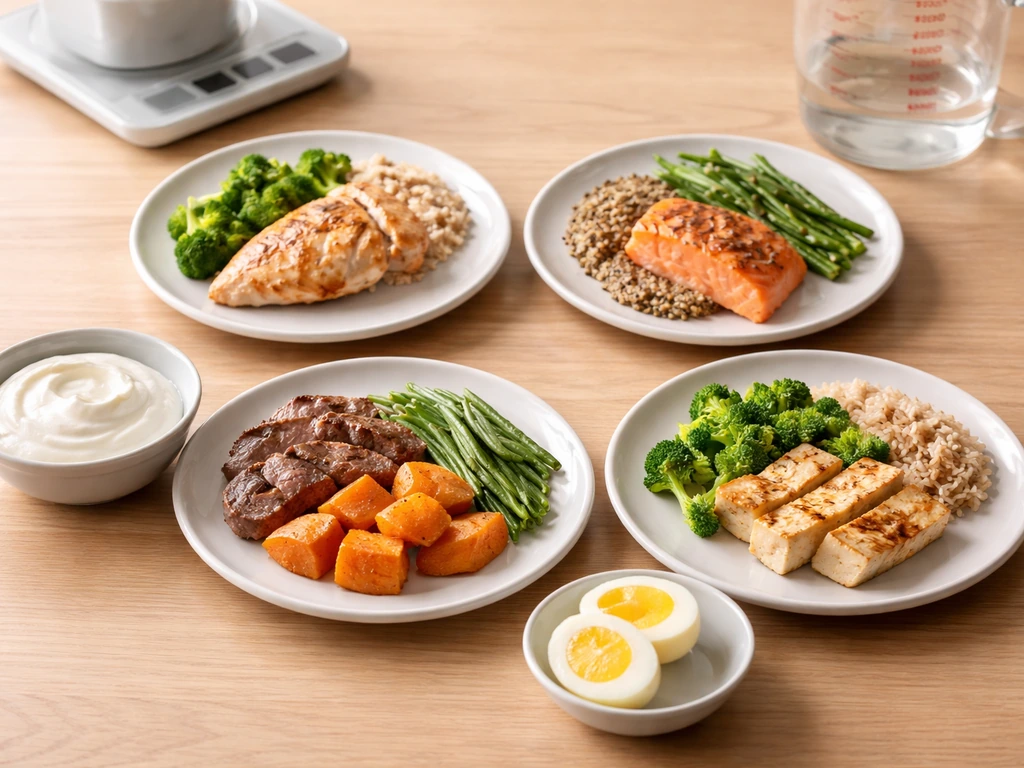
Spreading protein across meals matters more than most people think. Aiming for roughly 0.4 g/kg per meal (around 30 to 40 g for most adults, higher for larger or older individuals) across 3 to 4 meals per day consistently stimulates MPS throughout the day. Leucine is the key amino acid that triggers that MPS response, and it's abundant in animal proteins like meat, eggs, dairy, and whey. If you rely on plant proteins, you'll generally need a larger total dose per meal to hit the same leucine threshold, which is why plant-based lifters benefit from either combining sources or slightly increasing total daily protein.
Protein timing around training gets a lot of attention, but its practical importance is smaller than total daily intake. Having protein within a couple of hours before or after training is sensible and easy to achieve through normal eating. If you train fasted or go long periods without protein, that's worth fixing. But don't stress about the 30-minute anabolic window if you're hitting your daily target.
Calories and carbs: fueling growth without runaway fat gain
You can build muscle in a modest caloric surplus, at maintenance, or even in a slight deficit if you're newer to training. But for most people who want to maximize the rate of muscle gain, a small surplus of roughly 200 to 350 calories above maintenance is the sweet spot. More than that and you accumulate more fat than muscle; less than that and growth slows considerably, especially in experienced lifters.
Carbohydrates don't directly drive muscle protein synthesis the way protein does. Research confirms that adding carbs on top of a protein dose that already maximally stimulates MPS doesn't produce extra muscle growth. Where carbs genuinely help is performance: maintaining glycogen stores keeps you training harder, longer, and with better technique, which feeds back into the training stimulus. Think of carbs as the fuel for the engine rather than the raw material for the build. Shoot for enough carbs to support your training sessions, typically 3 to 5 g/kg/day depending on volume, and let protein do the structural work.
The most underrated mistake in muscle building is chronically under-eating. If you're not gaining weight over a 3 to 4 week stretch and you're training consistently, you're almost certainly not eating enough. Track your intake for even a week and most people discover they're off by 400 to 600 calories compared to what they thought they were eating.
Recovery: the part most people shortchange
Your muscles don't grow during the workout; they grow during recovery. During puberty, this same recovery-based principle still applies, but total growth and your training needs are shaped by hormonal changes Your muscles don't grow during the workout. The workout is just the signal. Sleep is the most powerful recovery tool available, and the research on this is blunt: even a single night of sleep deprivation can reduce postprandial muscle protein synthesis by around 18%. Presleep protein ingestion has also been shown to augment blank" rel="noopener noreferrer">overnight recovery-related muscle protein synthesis responses without compromising the muscle protein synthetic response to protein ingested the following morning. That's a significant hit to the adaptation you're working hard to earn. Most adults need 7 to 9 hours to maintain optimal anabolic hormone levels (growth hormone and testosterone both peak during deep sleep) and support normal protein turnover. The American Heart Association commonly recommends that adults aim for about 7 to 9 hours of sleep per night Most adults need 7 to 9 hours.
Stress, frequency, and managing fatigue
Psychological stress elevates cortisol, which blunts anabolic signaling and can accelerate muscle protein breakdown. This isn't a reason to avoid stress entirely (that's not possible), but it's a reason to take life stress seriously as a training variable. If you're in a high-stress period, reducing training volume temporarily is often smarter than grinding through at the same intensity and wondering why you're not progressing.
Training frequency for each muscle group works best at 2 times per week for most people. One well-designed session per week per muscle group underdelivers on the stimulus needed for consistent growth; 3 or more times per week can work for higher-volume programs but requires careful management of total load. The key metric is weekly volume, not frequency itself.
Soreness is not a reliable marker of productive training. You can have a highly effective session with minimal soreness, especially once you've been training a muscle group consistently for a few weeks. Chasing soreness as a proxy for growth is a common mistake that leads to constantly switching exercises and never building momentum on the movements that matter most. Muscle itching during growth is also usually temporary and related to normal skin and muscle changes, not a sign that training is harmful do muscles itch when they grow.
Planned deload weeks (reducing volume or intensity for a week) are a reasonable tool for managing accumulated fatigue in longer training blocks. Research on a midpoint deload in a 9-week program found no negative effect on hypertrophy outcomes, even if short-term strength numbers dipped. If you've been training hard for 8 to 12 weeks and feel persistently flat or your performance is stalling, a deload week is likely overdue.
Supplements worth your money (and those that aren't)
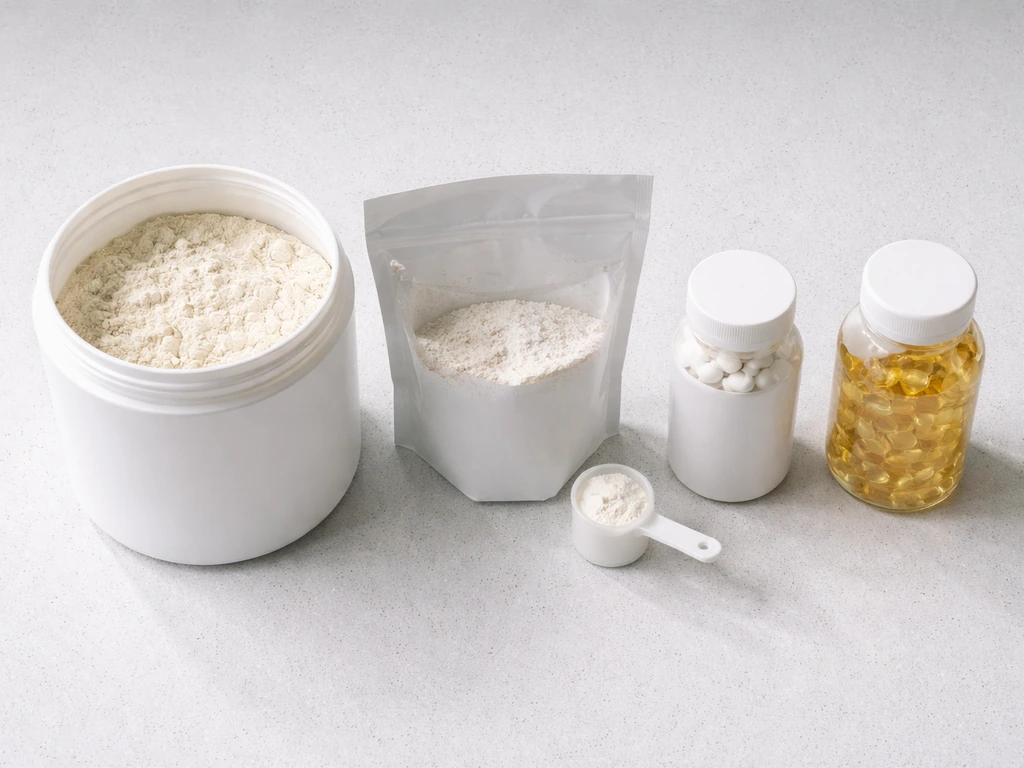
Most supplements are noise. A small number have real, consistent evidence behind them and are worth considering once your training, nutrition, and sleep are dialed in.
| Supplement | Evidence Level | Practical Recommendation |
|---|---|---|
| Creatine monohydrate | Very strong | 3 to 5 g/day consistently; loading phase (0.3 g/kg x 5–7 days) speeds saturation but isn't required |
| Protein powder (whey, casein, plant) | Strong | Useful to hit daily protein targets; not magic, just convenient food |
| Caffeine | Moderate | 3 to 6 mg/kg pre-workout improves performance and may indirectly support hypertrophy via better training quality |
| Vitamin D | Conditional | Supplement if deficient (common); evidence does not show an additive hypertrophy benefit in people who are already replete |
| BCAAs | Weak for most | Redundant if you're already hitting daily protein targets; no extra muscle growth benefit on top of adequate protein |
| Pre-workout blends | Mixed | Often just caffeine plus stimulants with marketing markup; assess ingredients individually |
| Mass gainers | Low value | Mostly sugar and calories; better to eat real food and hit the same calorie target with more protein |
Creatine monohydrate is the standout supplement in this space. The International Society of Sports Nutrition's position stand confirms it's safe for long-term use and effective for improving training performance and contributing to lean mass gains. If you're only going to add one supplement, this is it. Everything else is secondary.
A practical weekly structure you can actually run with
The principles above only help if you implement them consistently. Here's a simple framework that works for beginners through intermediates. Advanced lifters will adjust volume upward, but the structure holds.
- Train 3 to 4 days per week, hitting each major muscle group at least twice
- Use 3 to 4 working sets per exercise, 2 sets from failure, in the 8 to 20 rep range
- Start each session with one or two compound movements, finish with isolation work
- Eat 1.6 to 2.2 g of protein per kg of bodyweight daily, spread across 3 to 4 meals
- Eat enough total calories to support slow, steady weight gain (0.25 to 0.5 kg per month is realistic for intermediates)
- Sleep 7 to 9 hours; treat it as a non-negotiable training input
- Track your lifts every session so you can see when you've stalled and need to adjust
- Run a program for 8 to 12 weeks before changing it; novelty feels productive but consistency is what compounds
A simple example split: Day 1 (push: chest, shoulders, triceps), Day 2 (pull: back, biceps), Day 3 (legs: quads, hamstrings, calves), Day 4 (upper body repeat or full body). Rest days between as needed. This gets every muscle group twice a week with manageable fatigue. For older adults, adding an extra rest day or substituting one session with lower-impact movement (swimming, cycling) reduces joint stress without sacrificing the training stimulus.
Progress markers to track weekly: the weight on the bar for your main lifts, total reps completed at a given weight, and bodyweight trend over 4-week blocks. If none of these are moving after a month of consistent effort, the issue is almost always calories or sleep, not the program.
Myths, mistakes, and what Jeffrey Siegel actually gets right
Jeffrey Siegel's TED-Ed explanation of what makes muscles grow is a great entry point because it cuts to the essentials: resistance training, nutrition, and sleep. That's correct. Where people go wrong is treating those three pillars as equally weighted or thinking any one of them alone is enough. Training hard without eating enough protein is like building a wall without bricks. Eating plenty of protein while sleeping five hours a night is throwing resources at a system that can't use them efficiently.
The Siegel framework maps cleanly onto what the physiology literature confirms: mechanical tension from training drives the MPS signal, protein provides the substrate, and sleep is when synthesis and hormonal recovery peak. Where his popular explanation (and most gym culture) falls short is in the specifics: how much protein, what training volume, how close to failure, and how to adjust as you age or progress.
Common mistakes that stall growth
- Relying on supplements as a substitute for adequate protein and calories: creatine helps, but it doesn't replace an extra 500 calories and 50 grams of protein
- Training to failure on every set: this spikes fatigue without proportionally increasing hypertrophy and raises injury risk over time
- Changing programs every 2 to 3 weeks: progressive overload requires enough time on the same movements to actually progress them
- Ignoring total calorie intake: under-eating is the most common reason people train hard for months and barely change
- Treating soreness as a growth signal: you can be adapting well with minimal soreness once you're consistent
- Skipping sleep to fit in more training: that's a net negative for muscle protein synthesis, not a shortcut
- Expecting linear progress: muscle gain is slow (roughly 0.5 to 1 kg per month for most natural beginners in ideal conditions), and slower still with experience or age
One more worth calling out specifically: the idea that you need to feel destroyed after every session. Effective training feels challenging and focused, not crushing. If you're consistently unable to recover between sessions, your volume is too high or your sleep and nutrition are too low. Both are fixable. Muscles respond to progressive tension over time, not to how wrecked you feel on the way home from the gym. The same principle applies whether you're discussing mechanical tension as the primary driver of growth, or exploring whether things like flexing, squeezing, or stretching muscles add anything meaningful to the equation: the training stimulus has to be load-based, progressive, and consistent. Massage and other forms of muscle manipulation can feel good, but they are not a reliable way to trigger the progressive tension and recovery needed for real muscle growth does massaging muscles help them grow. You can also flex and squeeze during your sets, but muscle growth still depends primarily on progressive overload and sufficient total tension over time flexing, squeezing, or stretching.
FAQ
How do I know if my workout plan is actually working for muscle growth?
A good rule is to adjust based on progress, not soreness or comfort. If your main lifts, reps at a given weight, or bodyweight trend (over about 4 weeks) are flat, reduce or raise weekly volume by about 10 to 20% while keeping the same rep targets and effort. Also check protein and sleep before changing programs, because those are the most common hidden bottlenecks.
Should I stick to a strict rep range or change it weekly?
Keep the reps close to your target range, but treat load and effort as the priority. For example, if you plan 6 to 12 reps for compounds, stop a set with 1 to 2 reps left in reserve and only increase weight when you can hit the top of the rep range for all or most sets with the same form. Switching rep ranges often is less important than making steady progress in load or reps.
How much training to failure is too much?
Use a “hard enough” definition of failure: most sets 1 to 2 reps shy of failure, with occasional sets at failure, and avoid stacking failure across every movement in the session. If you’re missing reps on multiple exercises, or your performance is dropping for more than 2 sessions, you are probably overreaching and should cut 1 to 3 sets from that muscle group for the next week.
What if I’m growing everywhere except one muscle group?
If you’re only missing growth in one area, you usually have a stimulus problem (volume distribution, exercise selection, or range of motion loaded) rather than a brand-new body-wide issue. Check whether that muscle is getting enough weekly sets, whether your last reps are still within your target effort, and whether the exercise truly loads the muscle in its stretched or shortened ranges.
Can I build muscle with dumbbells or bodyweight only?
Not exactly. You can grow with limited equipment, but you need enough mechanical tension and progressive overload. Machines often make it easier to keep constant tension and reduce compensations. If you rely on lighter free weights, extend sets closer to failure and use small technique progressions, like deeper range or better leverage, while still tracking performance over weeks.
Is more weekly volume always better for hypertrophy?
Yes, but only up to a point. The most practical approach is to increase weekly sets gradually (for example, add 2 to 4 sets per muscle per week) and monitor recovery and performance. If strength and reps are falling or sleep is worse, you went too fast, and scaling back volume usually restores progress within 1 to 2 weeks.
What’s the best frequency if I recover slowly?
Splits are flexible. What matters is that each muscle group hits the required weekly sets and effort, and that you can recover between exposures. If twice a week is hard to recover from, shift to a higher-quality “once per week plus a lighter second exposure” approach, like one heavy day and one lower-volume day, rather than forcing frequency.
Do I need protein at breakfast specifically, or can I distribute it differently?
Aim for the total daily protein first, then distribute it. As a practical target, most people do well with 3 to 4 protein-containing meals spaced about 3 to 5 hours apart. If you struggle to hit protein early, a large breakfast meal may not be as important as having a consistent dinner plus an additional protein dose at a time you can reliably eat.
How should I use creatine, and does it replace good training?
Creatine monohydrate helps mostly by improving training performance and lean mass over time, it is not a direct muscle-growth trigger like mechanical tension. A common practical mistake is skipping it during busy weeks, so treat it as a daily habit. If you have stomach sensitivity, splitting the dose or taking it with meals can help.
I’m not gaining weight, but my lifts are stuck. What should I check first?
If your bodyweight is stable but you are not gaining strength or reps, you may still be under-eating, especially if you are very active outside the gym. Track intake and bodyweight trend together for 2 to 4 weeks. If calories look correct, the next most common issue is insufficient effort (too far from failure) or too little weekly volume for your current training age.
I feel destroyed after workouts. Should I keep doing it?
Train hard, but don’t chase “wrecked” as a goal. If you feel persistently unable to perform at your usual loads by the next session, that is a recovery or fatigue-management issue. Practical fixes include reducing total weekly sets, avoiding too many near-failure sets in the same muscle group, and improving sleep duration before you increase training intensity.
When is a deload actually necessary, and what should I change during it?
Deloads are not only for strength athletes. If performance stalls or you feel chronically flat, even if you are not injured, a deload can restore training quality. The most useful deload trigger is not just “time passed,” it is reduced performance plus elevated perceived fatigue, then reducing volume (for example, cut sets in half) while keeping technique and moderate loads.
Do I need to stretch to grow, or can I skip it?
In most cases, muscle gain still requires progressing tension, so stretching routines alone will not replicate hypertrophy from resistance training. However, stretching can support ROM and help you load positions that put the muscle under stretch. Use stretching to improve exercise mechanics, not as a substitute for sets taken near failure.