Here's the short answer: muscles don't have to hurt for you to grow them. Soreness can happen alongside growth, but it's not a sign that growth is actually occurring in that moment, and the absence of soreness doesn't mean your workout did nothing. What most people feel after a hard session is delayed onset muscle soreness (DOMS), a byproduct of exercise-induced muscle damage and inflammation, not a live readout of muscle being built. Understanding the difference between that normal post-workout soreness and a genuine injury is one of the most practically useful things you can learn as someone trying to build muscle, so let's break it down properly.
Do Muscles Hurt When They Grow? What to Expect and What to Do

Marcus Kellerman
18 Apr 2026
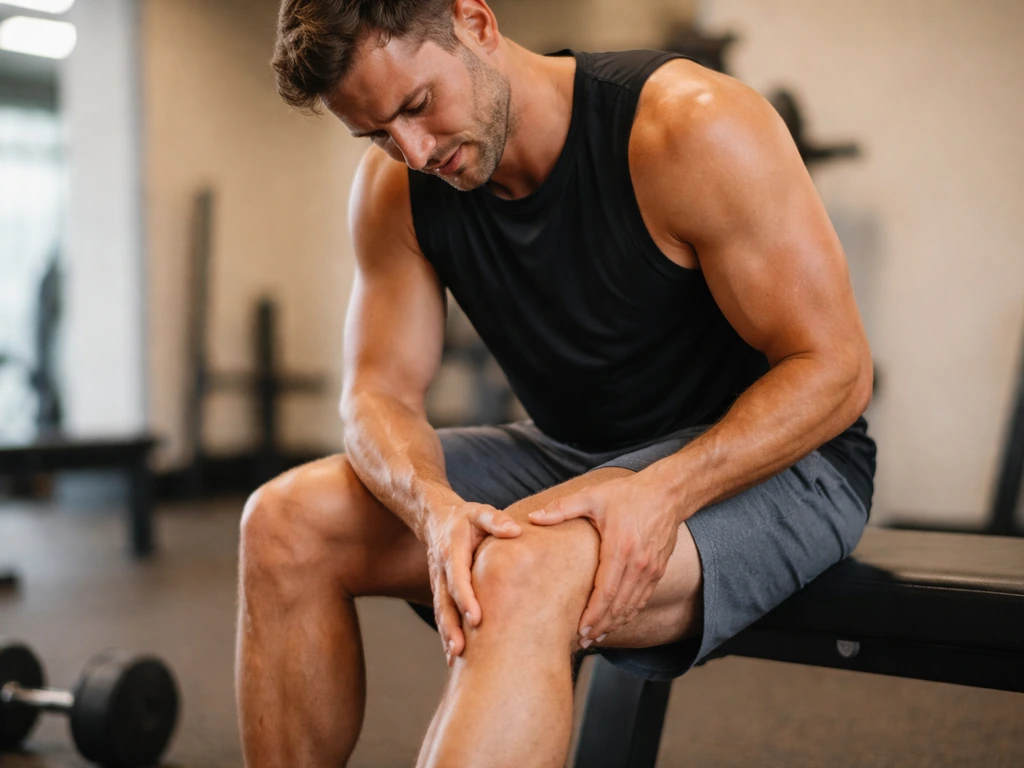
Why your muscles can feel sore as they grow
When you train, especially with new exercises, heavier loads, or more volume than usual, you create mechanical stress on muscle fibers and the connective tissue around them. The most disruptive part of that stress comes from the eccentric (lowering) phase of a lift, when the muscle is producing force while lengthening.
That mechanical disruption kicks off a cascade: the structural integrity of individual sarcomeres (the repeating contractile units inside muscle fibers) gets disrupted, and your body responds with an inflammatory process to clean up the damage and begin repair. Neutrophils, the immune cells that show up earliest, are most active in the first 24 hours. Macrophages follow and help clear debris and signal rebuilding.
The downstream effect of that process, including reactive oxygen species and chemical sensitization of local nerve endings, is what you actually feel as soreness.
Importantly, the soreness you feel is not muscles growing in real time. It's the body's repair and adaptation response. The actual growth (adding myofibrils, increasing fiber cross-sectional area) happens over days and weeks through protein synthesis, not during the soreness window itself. That said, the training stress that causes DOMS is also the kind of stress that, with proper recovery, drives adaptation. So soreness and growth can travel together without one causing the other. So if you're wondering whether those microtears are the reason your muscles grow, that's a related question to consider when interpreting soreness and recovery microtears and muscle growth basics. It's a timing coincidence as much as anything.
One myth worth killing here: lactic acid is not the cause of DOMS. Lactate is produced during intense exercise and cleared quickly, usually within an hour of finishing. The delayed soreness you feel 24–48 hours later is not lactic acid pooling in your muscles. That explanation has been thoroughly debunked. The real drivers are the structural damage and the inflammatory signaling that follows it.
Normal soreness vs. a real injury: how to tell the difference
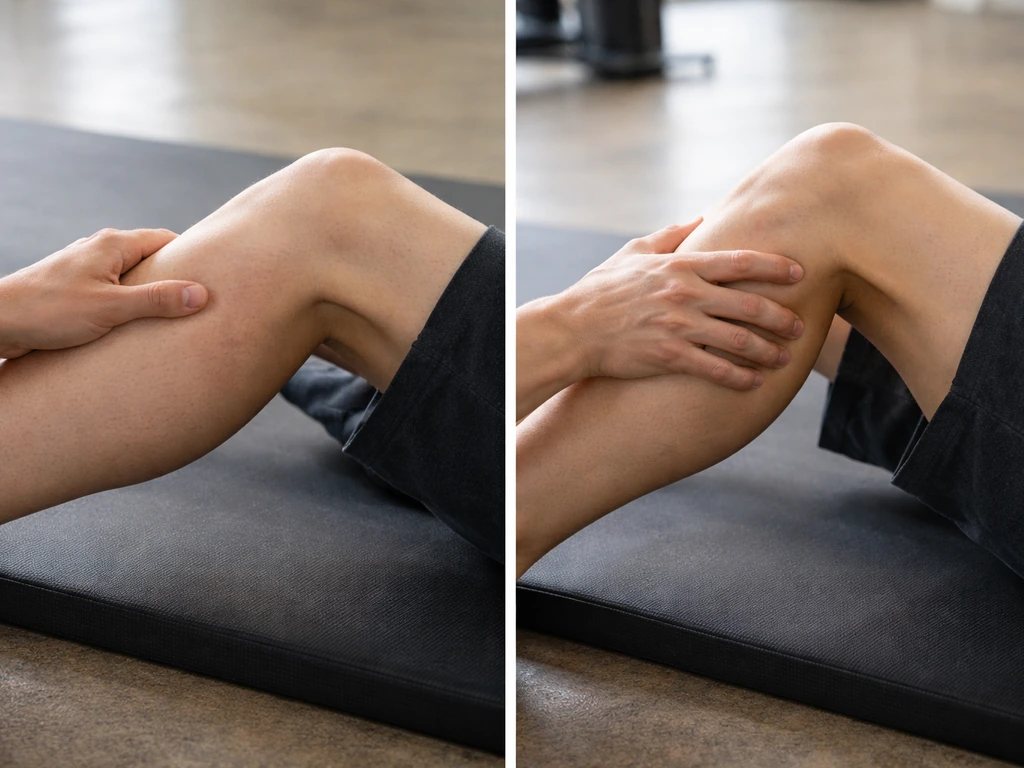
Normal growth-related soreness feels like a deep, dull ache in the belly of the muscle. It usually shows up the day after training, sometimes two days after, and it's fairly symmetric if you trained both sides. Moving through it often makes it feel temporarily better (not worse). Pressing into the muscle with your fingers tends to reproduce the soreness, and the affected muscle feels a bit stiff but still functional.
An injury feels different in almost every respect. Here are the warning signs that mean you should stop, not push through:
- Sharp, stabbing, or sudden pain during the workout itself (not the next day)
- Pain that is located in or around a joint rather than in the muscle belly
- Swelling, bruising, or visible deformity
- Pain that gets worse with movement rather than easing slightly after warming up
- Loss of range of motion or strength that is noticeably worse than usual
- Symptoms that are still intensifying after 5–7 days rather than resolving
- Pain that wakes you up at night or is present completely at rest without improving
If any of those apply, stop training that area and read the section at the end of this article about when to see a clinician. If none of those apply and you just feel stiff and achy in the worked muscles, that's almost certainly DOMS, and you can manage it with what follows.
When soreness peaks and what the timeline means
DOMS typically starts between 12 and 48 hours after exercise, peaks somewhere in the 24–72 hour range, and largely resolves within 5–7 days. If you do a hard leg session on Monday, you'll probably feel fine that evening, start noticing stiffness Tuesday morning, feel the worst of it Tuesday afternoon through Wednesday, and be largely recovered by the weekend. This pattern is useful information: if you're on day three and things are clearly improving, you're on track. If you're on day seven and things are getting worse, that's no longer DOMS.
The 48-hour soreness peak is also why programming matters. If you train legs on Monday and again on Wednesday, you're likely hitting that session right at peak soreness. That's not necessarily wrong, but it does mean performance will probably be reduced, and you need to decide whether that tradeoff fits your goals. For beginners, two or three days of rest between sessions for the same muscle group is a sensible starting point. More advanced lifters may train through mild soreness routinely, but they've built up tolerance through gradual progression, not by ignoring their body.
What's actually causing the pain: DOMS, microdamage, and inflammation
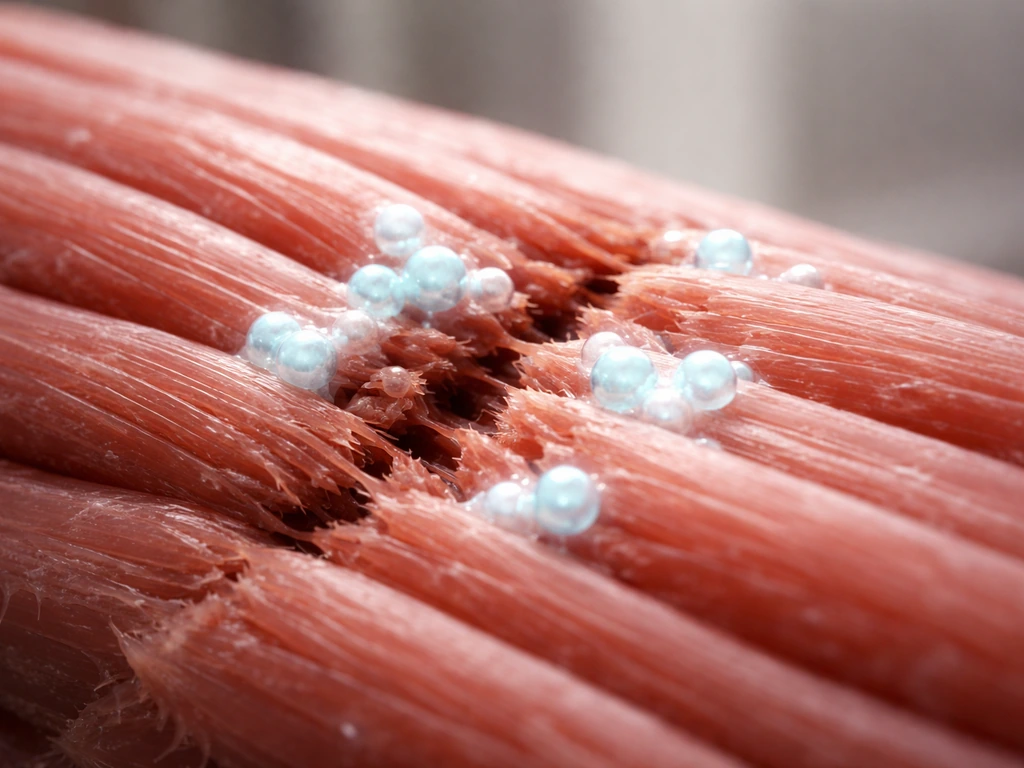
The full chain looks like this: mechanical disruption of sarcomeres (especially from eccentric contractions) triggers a local inflammatory response. Neutrophils arrive first and their activity peaks within the first 24 hours. Then macrophages move in to clear cellular debris and release signals that begin the repair process. Throughout this, reactive oxygen species and chemical mediators sensitize local nociceptors (pain-detecting nerve endings), which is what produces the delayed ache you feel.
Eccentric exercise consistently produces more DOMS than concentric exercise, which tracks with the mechanism. The lowering phase of a squat, the descent of a bicep curl, the negative portion of a push-up: those are the moments that create the most sarcomere disruption. That's also why new exercises almost always cause more soreness than familiar ones, even at the same intensity. Your nervous system and muscle fibers haven't adapted to that specific movement pattern yet.
It's also worth noting that soreness is an indirect and imperfect marker of muscle damage. You can have significant muscle damage with minimal soreness, and significant soreness with relatively modest damage. Individual variation in pain sensitivity, training history, and even genetics all affect how sore you get. This is part of why soreness is a poor guide for whether your workout was effective.
What to do today to reduce pain and recover
If you're sore right now, here's what actually works. Keep moving. Light activity, a walk, easy cycling, or a short mobility session with the affected muscles, increases blood flow and tends to reduce soreness more than complete rest does. Gentle stretching can be a helpful recovery tool, but it isn't a guarantee that it will make muscles grow faster. You don't need to train hard, but being sedentary usually makes DOMS feel worse.
- Do 10–20 minutes of low-intensity cardio or light movement in the sore area to increase blood flow without adding more damage.
- Prioritize sleep tonight. Growth hormone and muscle protein synthesis are both elevated during sleep, and sleep is when the repair you want is most active.
- Eat a protein-rich meal or snack now: aim for at least 25–40 grams of quality protein (chicken, eggs, Greek yogurt, whey, or a plant-based equivalent) to give your muscles the amino acids they need to repair.
- Stay hydrated. Muscle tissue is roughly 70% water, and even mild dehydration impairs recovery. Aim for clear or pale yellow urine as your practical check.
- Consider a cold shower or ice pack on very sore areas. Cold therapy can blunt the subjective feeling of DOMS, though it may modestly reduce inflammation that also contributes to adaptation, so don't overdo it if your goal is muscle growth.
- Over-the-counter NSAIDs like ibuprofen can reduce DOMS pain, but use them sparingly. Chronic NSAID use may interfere with muscle protein synthesis and the inflammatory signaling that drives adaptation.
- If you can access a foam roller, spend 5–10 minutes rolling the sore muscle groups. Research on foam rolling for DOMS is mixed but leans toward modest benefit for perceived soreness and mobility.
For the next 24–72 hours, avoid training the same muscle group at high intensity. You can train other muscle groups normally. If you feel good enough to train the sore area at all, drop the intensity and volume significantly: think 50–60% of normal load and half the usual sets. This keeps you moving without stacking more damage on top of an ongoing repair process.
How to prevent the soreness next time
Warm up properly before you train
A proper warm-up does two things: it raises muscle temperature (which reduces stiffness and improves force production) and it primes the neuromuscular patterns you're about to use. Spend at least 5–10 minutes raising your heart rate with light cardio, then do 2–3 warm-up sets of your first exercise at progressively increasing loads before hitting your working weight. For lower body days, add dynamic mobility work like hip circles, leg swings, and bodyweight squats. A cold muscle under load is more susceptible to damage and soreness.
Apply progressive overload sensibly
Most excess DOMS comes from doing too much too fast: jumping volume or intensity beyond what your body is currently adapted to. The repeated bout effect is real: after you've done a given exercise or training session once, you'll get significantly less sore from the same session the next time. Your body adapts. The practical implication is to increase load, volume, or novelty gradually. A common rule of thumb is to increase weekly volume by no more than 10% at a time. If you're introducing a new exercise, start with 2–3 lighter sets before adding volume the following week.
Manage exercise selection and tempo
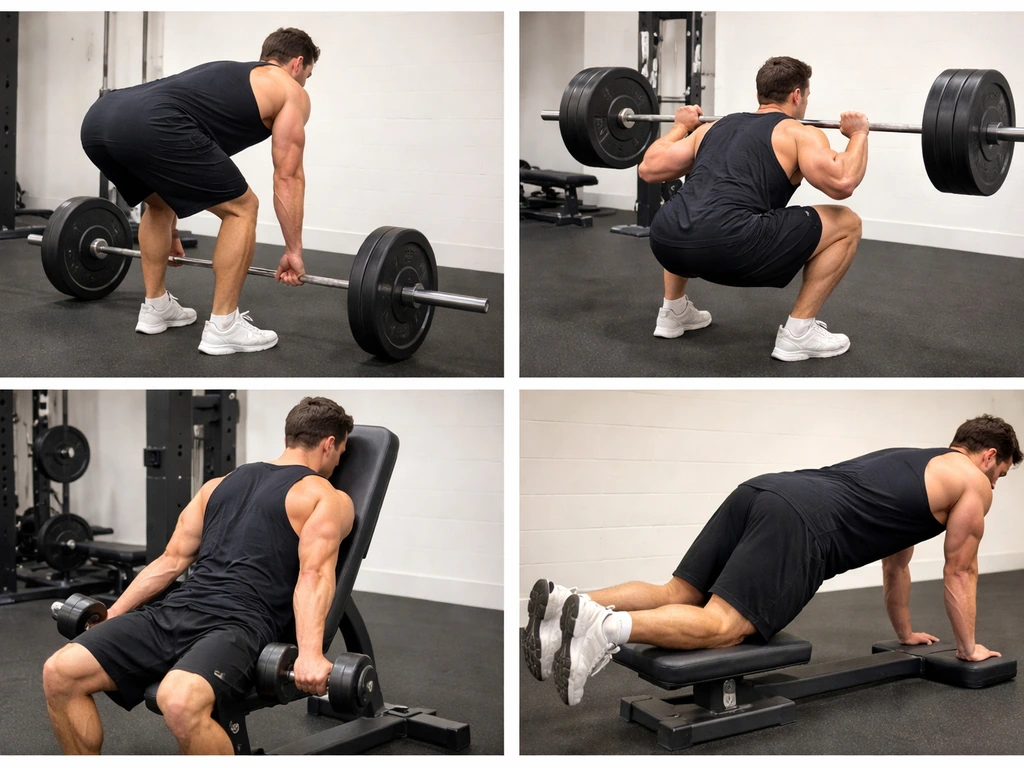
Exercises with a long eccentric range of motion at a stretched position tend to cause the most DOMS. Romanian deadlifts, deep squats, incline curls, and Nordic hamstring curls are notorious for this, which is useful to know when you're introducing them. Start lighter and with a controlled (not slow) eccentric phase rather than slamming through the negative. You'll still get the training stimulus without generating excessive damage.
Nutrition, protein, sleep, and recovery for muscle growth
Muscle doesn't grow without raw materials. Protein is the most important nutritional variable: you need adequate amino acids to drive the muscle protein synthesis that repairs damage and adds new tissue. Most research supports a target of 1.6–2.2 grams of protein per kilogram of bodyweight per day for people actively trying to build muscle. For a 75 kg person, that's roughly 120–165 grams daily. Spreading that across 3–4 meals of 30–40 grams each tends to maximize the muscle protein synthesis response better than front-loading it all in one meal.
Total calorie intake also matters during recovery. Being in a significant caloric deficit impairs your ability to repair muscle damage and synthesize new tissue. If you're sore and under-eating, recovery will drag. You don't need to be in a large surplus to grow muscle, but eating at or slightly above maintenance supports the recovery process.
Sleep is non-negotiable. The majority of muscle protein synthesis happens during sleep, and growth hormone secretion is highest during slow-wave sleep. Getting less than 7 hours consistently will impair recovery and muscle growth, regardless of how well you train and eat. Seven to nine hours is the practical target for most adults. If you're older (60+), recovery generally takes a bit longer, which makes sleep quality even more important, not less.
On the supplement side, a few things have genuine evidence behind them for recovery and soreness. Creatine monohydrate (3–5 grams daily) supports repeated bout performance and has some evidence for reducing exercise-induced muscle damage markers. Tart cherry juice concentrate has been studied for DOMS specifically and shown modest but real reductions in soreness and inflammation markers when taken around training. Omega-3 fatty acids (2–3 grams of combined EPA and DHA daily) also have evidence for reducing DOMS severity over time. None of these replace good training, adequate protein, and sleep, but they're reasonable additions if you want everything dialed in.
| Recovery Lever | Practical Target | Evidence Strength |
|---|---|---|
| Protein intake | 1.6–2.2 g per kg bodyweight per day | Strong |
| Sleep | 7–9 hours per night | Strong |
| Hydration | Pale yellow urine throughout the day | Moderate |
| Creatine monohydrate | 3–5 g daily | Moderate–Strong |
| Tart cherry juice | 30 mL concentrate twice daily around training | Moderate |
| Omega-3 fatty acids | 2–3 g EPA+DHA daily | Moderate |
| Light active recovery | 10–20 min low-intensity movement on rest days | Moderate |
When to see a clinician or change your plan
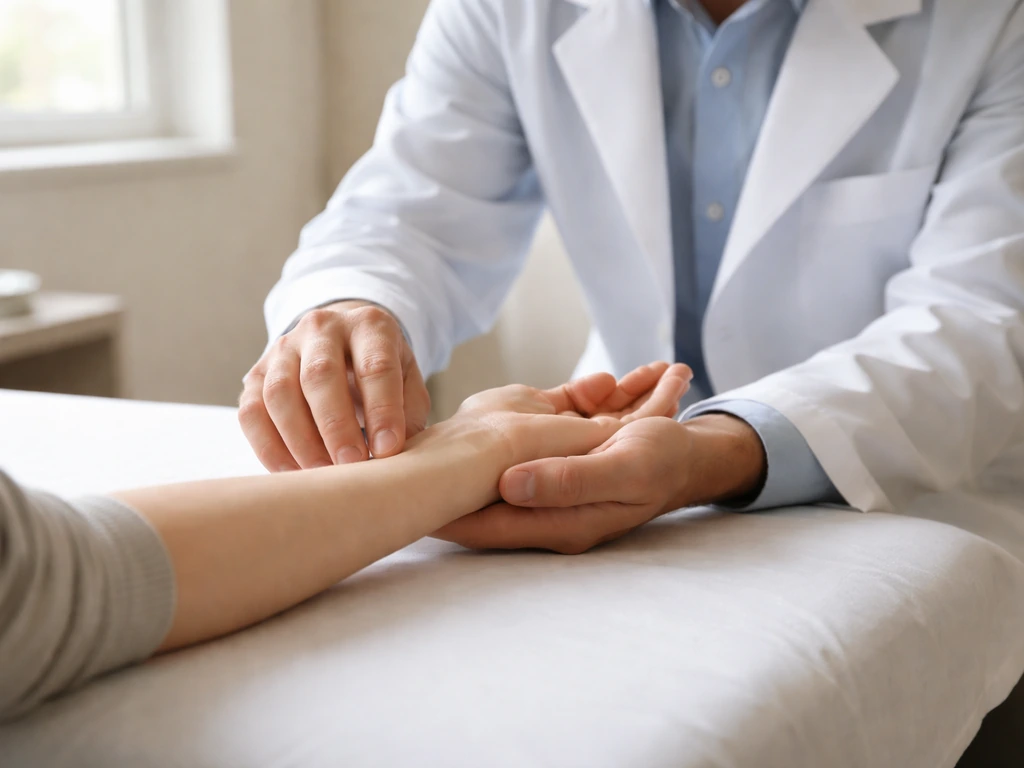
Most DOMS resolves on its own within a week and doesn't require professional intervention. But there are specific situations where you should stop training the affected area and get it assessed by a sports medicine physician, physiotherapist, or orthopedic specialist.
- Pain that starts during exercise (not hours after) and is sharp, catching, or severe
- Joint pain, especially with clicking, locking, or giving way
- Swelling, bruising, or any visible change in the shape of a limb or muscle
- Weakness or loss of range of motion that doesn't improve after 5–7 days
- Symptoms that are worse at day 7 than they were at day 3
- Muscle soreness so severe that urine becomes dark or brown-colored (this can indicate rhabdomyolysis, a rare but serious condition requiring immediate medical attention)
- Any pain that interrupts sleep or is present continuously at rest
If you're an older adult (50+), be a bit more conservative with these thresholds. Recovery does take longer with age, and joint tissues are less forgiving of repetitive strain. That doesn't mean you can't train hard or build meaningful muscle, because you absolutely can, but it does mean the warning signs above deserve prompt attention rather than a "wait and see" approach.
If your symptoms don't meet any of those red flags but you're still struggling with persistent or recurring soreness, the answer is almost always a training adjustment rather than a medical one. Reduce volume by 30–40%, cut intensity for two weeks, add an extra rest day between sessions for the affected muscle group, and rebuild more gradually. The goal is consistent training over months and years, not any single heroic session. Staying in the game is the strategy.
One final thing worth remembering: you don't need to feel sore to know training is working. Do muscles tear to grow? Damage can contribute to the repair process, but you can also grow without major soreness or obvious tearing. Plenty of effective workouts produce little to no DOMS, especially once your body adapts to a routine.
The study reported that ibuprofen (compared with placebo) did not influence whole-body protein breakdown and assessed the postexercise muscle protein synthesis response [Plenty of effective workouts produce little to no DOMS](https://journals. physiology. org/doi/abs/10. 1152/ajpendo.
00352. 2001). Progress in the form of adding weight, adding reps, improving technique, and gradually increasing volume is what drives long-term muscle growth, not the presence or absence of next-day soreness. If you want a quick way to sanity-check progress, focus on whether you can feel your muscles grow through strength and performance gains over time, not just soreness can you feel your muscles grow.
You can use your progress in strength and performance as a better answer than whether your muscles are sore muscles be sore to grow. The soreness question and the growth question are related but not the same thing, and keeping that distinction clear will save you a lot of unnecessary worry and a few bad training decisions.
FAQ
If I am not sore after workouts, does that mean I am not growing muscle?
No. If soreness never shows up, you can still be progressing, especially if your lifts are getting stronger, reps are increasing, or you are adding total volume over weeks. DOMS is an indicator of a specific kind of stress (often eccentric or novel work), not a requirement for muscle protein synthesis.
What if my soreness lasts more than a week or keeps getting worse?
Soreness that lasts longer than about 7 to 10 days, keeps worsening after day 3 to 4, or is paired with loss of strength is usually a sign your load was too high, you have incomplete recovery, or there may be an injury rather than typical DOMS. Treat it as a stop-and-adjust situation rather than “push through.”
Can I work out the same muscle group while I am very sore?
Keep training, but modify. For the sore muscle group, use about half the normal sets and reduce intensity, keep reps in a range that preserves form, and avoid maximal eccentrics (for example, very deep holds or heavy negatives). If even light use is painful, switch to other muscles for 24 to 72 hours.
How can I tell the difference between DOMS and something like a strain or tendon problem?
Small, tolerable discomfort is fine, but sharp, localized pain, pain that changes your technique immediately, numbness or tingling, or pain in a specific joint or tendon area is not DOMS. Those are “different signals,” stop that movement, and consider a sports medicine or physiotherapy evaluation.
Why do some people get sore while others do not, even when they train similarly?
Yes, some people feel “no DOMS” because they are already adapted to the movement, they are not doing much eccentric work, or they have a pain sensitivity that is lower than average. Also, if you sleep, eat enough protein, and spread protein across the day, soreness can be less noticeable even though you still get training adaptation.
I tried a new exercise and got unexpectedly wrecked, what should I change for next time?
If soreness spikes right after you try a new exercise, it is usually because the movement is unfamiliar and has a lot of eccentric stress. Reduce the novelty for the next session by using a shorter range of motion, lighter load, fewer sets, or a slower and controlled eccentric instead of doing the hardest version again.
Does stretching help DOMS, and could it make it worse?
Be careful with stretching. Gentle mobility can help stiffness and comfort, but aggressive stretching or painful deep holds can irritate sensitized tissue and prolong discomfort. If stretching increases pain during the session and it worsens the next day, scale it back.
How should I schedule training if my leg day hits the 24 to 72 hour DOMS window?
A good rule is to stop using “soreness day” as your intensity target. Program based on performance and recovery cues, then choose a conservative intensity for the sore session, or swap exercises. Example decision aid: if strength is down a lot or pain is high, make it a technique and pump session, not a heavy PR attempt.
Can being in a calorie deficit make DOMS worse or slow muscle gain?
Yes. If you are dieting aggressively, your ability to repair is reduced, and soreness may feel worse or recovery may be slower. Aim for maintenance or a small surplus when possible, and do not rely on supplements to “override” under-eating.
Do supplements actually reduce muscle soreness enough to matter, or are they mostly optional?
Creatine is generally a low-risk, practical add-on, but it will not erase DOMS for everyone. If you want to use tart cherry or omega-3 for soreness, consistency and timing matter, and you still need protein, sleep, and smart progression. Also watch your total supplement stack if you have stomach issues.
Should I measure progress by soreness level or by something else?
Use soreness as a trend, not a requirement. If performance is improving and you are adding load, reps, or volume over weeks, you are on track even with little soreness. If performance stalls and soreness is unusually intense, reduce volume and reintroduce the stimulus gradually.
Does DOMS work the same way for older adults?
Yes. Some people recover slower due to age, previous injuries, or long breaks from training. If you are 50-plus, use a more conservative progression, take extra rest days between the same muscle group, and pay closer attention to the red-flag symptoms rather than assuming every painful day is DOMS.