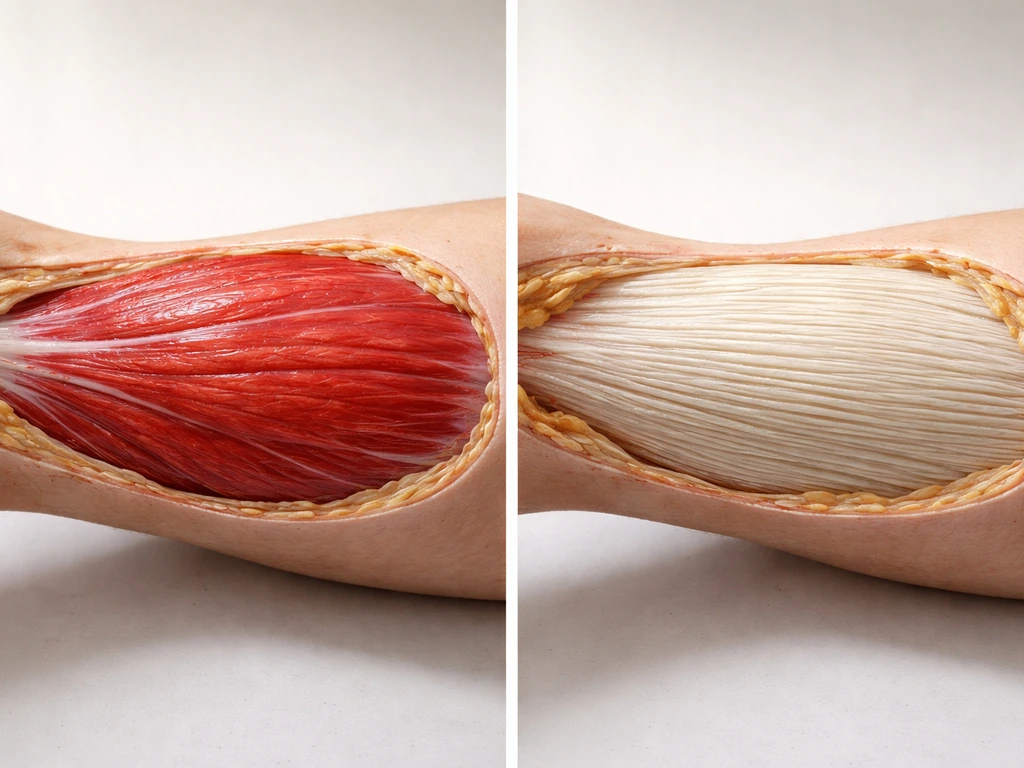
A 2023 systematic review and meta-analysis backed this up, describing the chronic static stretching literature as an 'inconclusive picture,' with only small, parameter-dependent effects on strength and hypertrophy-related measures. And a 2024 RCT directly comparing resistance training to static stretching found that flexibility improved in the stretching group, but muscle thickness did not clearly favor stretching over resistance training. So if you've been told to stretch more to get bigger muscles, that advice is off the mark.
That said, stretching isn't useless for someone trying to build muscle. It supports range of motion, movement quality, and training comfort, which matter a lot when you're trying to train hard and stay consistent. A 2019 systematic review and meta-analysis on hold-relax and contract-relax hamstrings stretching concluded that these stretching protocols mainly influence flexibility and range of motion rather than hypertrophy outcomes contract-relax/hold-relax. The distinction worth making is that stretching supports muscle growth indirectly by helping you train better, rather than triggering hypertrophy directly. The mechanisms that actually grow muscle (mechanical tension, progressive loading, metabolic stress, and adequate recovery) are not meaningfully activated by a typical stretching routine.
Does stretching make you taller? What's real and what isn't
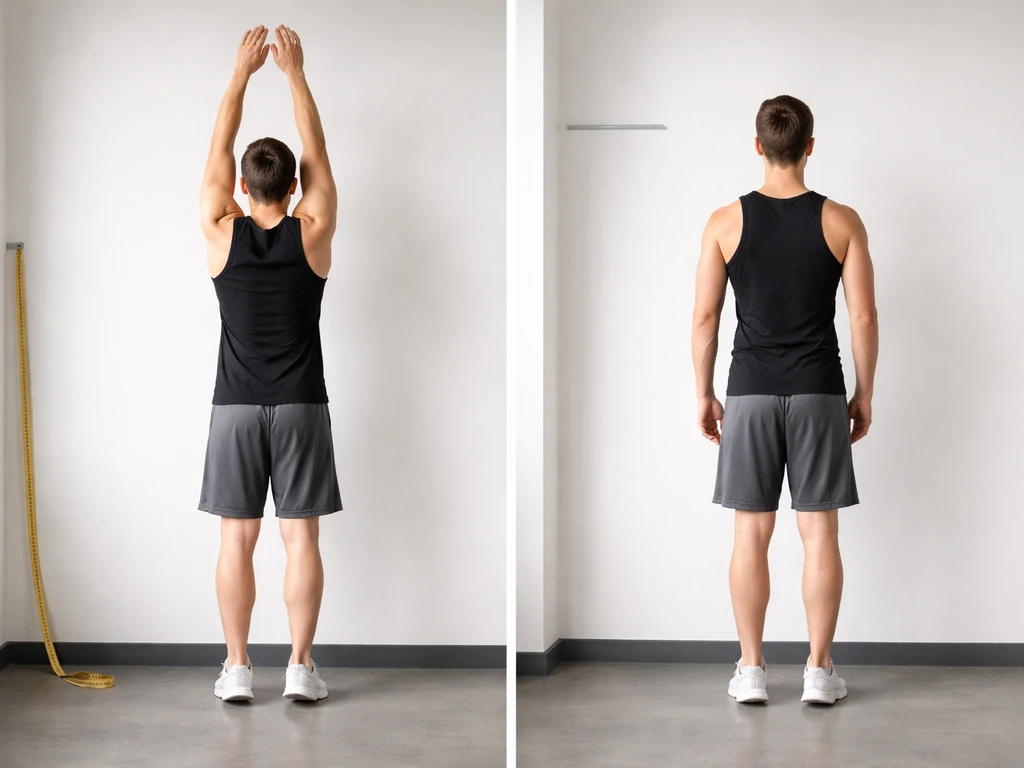
This one comes up constantly, especially from younger readers searching whether stretching their legs will help them grow taller. Let's be direct: stretching does not cause bone elongation or structural height increases in any meaningful way. Your height is primarily determined by genetics, the closure of growth plates (which typically happens in your late teens), and factors during puberty like nutrition and hormonal status.
This aligns with a physiologic overview describing the growth plate as the site of long-bone growth in childhood and adolescence, with growth plate activity decreasing through puberty and after epiphyseal fusion (growth plate closure) [the growth plate is the site of long-bone growth during childhood and adolescence and becomes less active through puberty and after epiphyseal fusion](https://pmc. ncbi. nlm. nih.
gov/articles/PMC7484711/). No amount of hamstring or spinal stretching will reopen a fused growth plate.
What stretching and postural work can do is affect your measured height temporarily or, in some cases, modestly over time through posture improvement. A 2023 study found that after acute postural correction exercises, measured stature increased by roughly 3.5 cm in standing and supine positions. That is a posture effect, not bone growth. Similarly, a pilot study in older adults found measurable height increases after a manual therapy and exercise intervention, attributed to thoracic kyphosis flattening rather than any structural growth. These changes are real and can feel significant, especially if you've spent years slouching, but they reflect you standing more upright, not your bones getting longer.
There's also the spinal compression angle worth mentioning. Your spine compresses slightly throughout the day due to gravity and loading, so you're measurably taller in the morning than at night. Decompression stretches or lying down can temporarily restore some of that difference, but again, this is not growth. True structural height changes from spinal interventions require clinical correction of actual deformity, not a daily yoga routine.
How stretching actually affects muscle size: what the mechanisms say
There is a specific scenario where stretching could theoretically contribute to hypertrophy, and it's worth understanding because it sometimes gets misrepresented online. Research in animals shows that prolonged, loaded stretch can drive muscle growth, but human studies haven't reliably replicated this under typical training conditions. A narrative review from 2023 specifically noted that evidence for stretch-mediated hypertrophy in humans is scarce and that most mechanistic explanations are extrapolated from animal models. The key phrase is 'sufficient tensile strain': for stretch to potentially stimulate growth, it needs to be loaded, sustained, and probably much longer in duration than the 15-to-30-second holds most people do.
Some researchers have proposed that very long-duration static stretching sessions might create microtrauma similar to what resistance training produces. Certain protocols have shown creatine kinase elevations after prolonged stretching, which is sometimes interpreted as a marker of muscle microtrauma. If you're curious about how muscles respond to microtrauma during growth, the short version is that some level of mechanical disruption is part of the repair and remodeling process, but typical brief stretching doesn't generate nearly enough of that stimulus. You'd need unusually long and intense loading to approach that threshold, and at that point you're doing something much closer to a loaded exercise than a standard stretch.
What stretching does reliably do is reduce muscle-tendon unit stiffness. A 2022 systematic review found that acute static stretching significantly decreases stiffness with a moderate effect size, which explains the ROM improvements most people notice. Chronic stretching tends to maintain these improvements through both mechanical changes and improved stretch tolerance. This is useful for training, but it's a different physiological pathway from the one that builds muscle.
What stretching your legs can and can't do for growth

For anyone specifically searching whether stretching your legs helps you grow taller, here's the practical breakdown. Tight hip flexors, hamstrings, and calves can cause anterior pelvic tilt and forward lean that makes you look shorter and moves less efficiently. Addressing that tightness through consistent stretching can improve your posture and gait, which has real quality-of-life value and can change how tall you appear. But your femur and tibia are not going to lengthen.
For leg muscle development, stretching the quads, hamstrings, and hip flexors does serve a purpose: better hip and knee mobility lets you squat deeper, lunge more effectively, and hit the full range of motion that research consistently links to greater hypertrophy stimulus. Training through a fuller range of motion is one of the more evidence-supported ways to maximize muscle development in the legs. In that sense, leg stretching indirectly supports leg growth by enabling better training, not by causing growth directly.
Before training: keep it light and dynamic

Static stretching before lifting is something to approach carefully. A 2024 study confirmed the concept of a 'stretch-induced force deficit,' showing that static stretching can acutely reduce maximal voluntary force output. This matters if you're about to do heavy compound lifts. The practical recommendation from the Delphi consensus on stretching (2025) is that brief static holds of under 30 seconds are less likely to impair performance, while longer holds risk blunting force production. If you want to warm up joints and improve movement quality pre-workout, dynamic mobility work (leg swings, hip circles, controlled movement through range) is a better choice than prolonged static holds.
After training: this is when static stretching fits
Post-workout is where static stretching makes more sense. A meta-analysis looking at post-exercise stretching versus no stretching found effects on muscle soreness and pain threshold, supporting its role as a recovery tool rather than a growth tool. It won't dramatically speed up recovery, but it can help you feel less stiff the next day and maintain the ROM gains you're working toward. The ACSM's longstanding guidance on flexibility training recommends holding stretches for around 10 to 30 seconds at the point of mild discomfort, with no meaningful additional benefit from holding longer in typical ROM-focused protocols.
Weekly frequency and dosing

The 2025 Delphi consensus recommends targeting 30 to 60 seconds per muscle group per session for ROM adaptations, noting that very short durations are often insufficient. For most people training 3 to 5 days per week, spending 5 to 10 minutes on static stretching after each session covers the major muscle groups adequately. You don't need a dedicated daily stretching session unless you have specific mobility deficits that are actively limiting your training. Consistency matters more than duration: regular short sessions beat occasional marathon stretching.
What actually drives muscle growth (and matters far more than stretching)
If you've been wondering whether soreness or certain feelings during training signal that growth is happening, you're not alone. People sometimes confuse the sensation of a deep stretch with muscle-building stimulus, but they're different things. Muscle soreness is not a reliable marker of growth, and neither is the sensation of a good stretch. What reliably drives hypertrophy comes down to a few well-established variables.
- Progressive overload: consistently increasing the mechanical demand on a muscle over time, whether through more weight, more reps, or better technique at the same load.
- Training volume: the updated ACSM resistance training guidelines (2026) position roughly 10 sets per muscle group per week as a starting point for hypertrophy, with volume being one of the primary drivers.
- Protein intake: research consistently points to around 1.6 g/kg/day or higher as the threshold for maximizing muscle protein synthesis in exercising individuals, with ranges up to 2.0 g/kg/day commonly recommended.
- Recovery: muscles grow during rest, not during the workout. Sleep, stress management, and adequate calories all feed into this.
- Training frequency and exercise selection: hitting each muscle group 2 times per week with compound movements and sufficient volume outperforms any stretching protocol for hypertrophy.
ACSM's progression models for resistance training are explicit that higher-volume, multiple-set programs are the primary tools for maximizing hypertrophy. Stretching doesn't appear in those models as a growth driver. A 2022 systematic review with meta-analysis also found that chronic static stretching produces only small effects on dynamic strength and no robust effect on isometric strength when compared to non-training controls, which tells you that even the strength benefits of stretching-only programs are modest.
It's also worth being honest about something people rarely ask directly: can you actually feel your muscles growing during or after a workout? The short answer is no, not in real time, and chasing that 'growth feeling' through deep stretches or pump sensations doesn't mean hypertrophy is occurring. What you're often feeling is blood flow, mechanical tension, or mild microtrauma, none of which automatically translates to measurable size gains without the other variables in place.
Stretching vs resistance training: a quick comparison
| Goal | Stretching (alone) | Resistance Training |
|---|
| Muscle hypertrophy | Minimal to no direct effect | Primary driver with sufficient volume and load |
| Strength gains | Small effect on dynamic strength only | Well-established, dose-dependent |
| Range of motion | Primary benefit; well-supported | Secondary benefit through full-range training |
| Injury prevention | Evidence is mixed; routine static stretching as warm-up does not clearly reduce injury rates | Generally protective when programmed appropriately |
| Posture improvement | Moderate benefit via reduced tightness | Benefit through muscle balance and strength |
| Height increase | Temporary postural effect only (no bone growth) | No direct effect on height |
| Recovery | Modest benefit post-exercise for soreness and comfort | Recovery depends on volume and programming |
The recommendation here is straightforward: use stretching as a support tool within a resistance training program, not as a substitute for one. If you're a beginner trying to decide whether to stretch or lift, lift. Then stretch after.
A practical plan and how to track whether it's working

Here's a simple weekly framework that places stretching where it belongs, alongside the training variables that actually move the needle on muscle growth.
- Lift 3 to 4 days per week with compound movements (squat, hinge, press, row) targeting each muscle group at least twice. Aim for 10 or more working sets per muscle group per week.
- Before each session: 5 to 10 minutes of dynamic mobility work specific to the day's movements (hip circles for lower body days, shoulder rotations for upper body days). Keep static holds brief (under 30 seconds) if you use them at all pre-workout.
- After each session: 5 to 10 minutes of static stretching, targeting the muscles you just trained. Hold each stretch for 30 to 45 seconds per muscle. This is where your ROM work lives.
- On rest days: optional 10-minute full-body flexibility session if you have specific tightness limiting your training positions. Not mandatory if your ROM is already adequate.
- Hit your protein target daily: at minimum 1.6 g/kg of bodyweight, and track it for at least the first few weeks until it becomes habitual.
How to track whether your stretching is actually helping
The key is tracking training outcomes, not just how flexible you feel. Every 4 weeks, check these three things: First, can you get into better positions in your key lifts? Deeper squat with a neutral spine, fuller range on a Romanian deadlift, better overhead position? If yes, your mobility work is doing its job. Second, are your working weights or rep counts going up? That's the progressive overload signal you want. Third, are you experiencing fewer training interruptions due to joint stiffness or minor aches? If stretching is helping you stay consistent, it's earning its place in your routine.
One thing to watch: don't confuse temporary flexibility gains with lasting structural change. If you stop stretching for a few weeks and your ROM regresses significantly, it means the gains were largely neurological (improved stretch tolerance) rather than structural. That's fine, it's just a reason to stay consistent rather than expecting a one-time fix.
People often wonder about the sensations that come along with muscle adaptation, including questions like whether growing muscles actually hurt or whether the discomfort after a session means something productive is happening. Some discomfort is normal, but pain is not a requirement, and deep stretching discomfort is not the same signal as productive mechanical loading. Use your training performance and measurements over time as your guide, not how intense your stretch feels.
If you want to go deeper on the underlying mechanisms, understanding whether muscles actually need to tear in order to grow is a useful next step. The short version is that muscle growth involves microtrauma at the cellular level, but that's different from acute injury, and it's driven by resistance training load, not by how aggressively you stretch before or after.