Muscles don't grow simply because they tear. That's the short answer. The longer answer is that microscopic damage to muscle fibers does happen during training, it can contribute to the growth process, but it is not the primary driver of hypertrophy and chasing damage is one of the most common mistakes people make when trying to build muscle. Let's break down what's actually going on, what the research says, and what you should be doing if your goal is consistent, reliable muscle growth.
Do Muscles Grow From Microtears? The Real Guide

Marcus Kellerman
14 Apr 2026
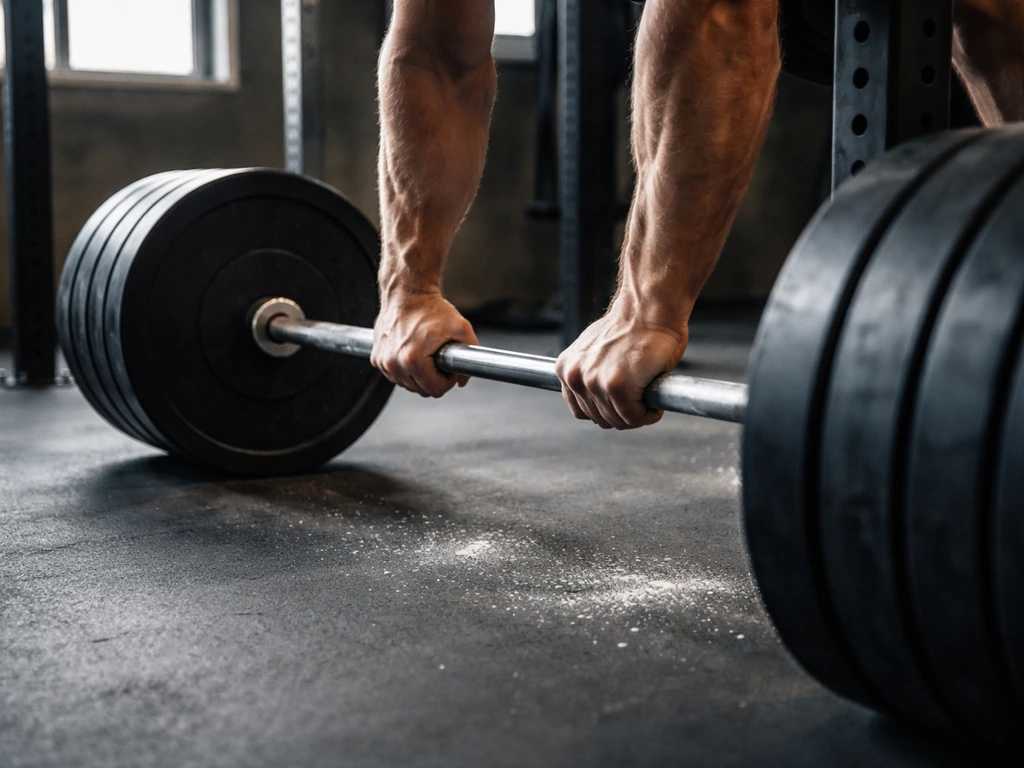
The microtears myth vs. what's actually happening
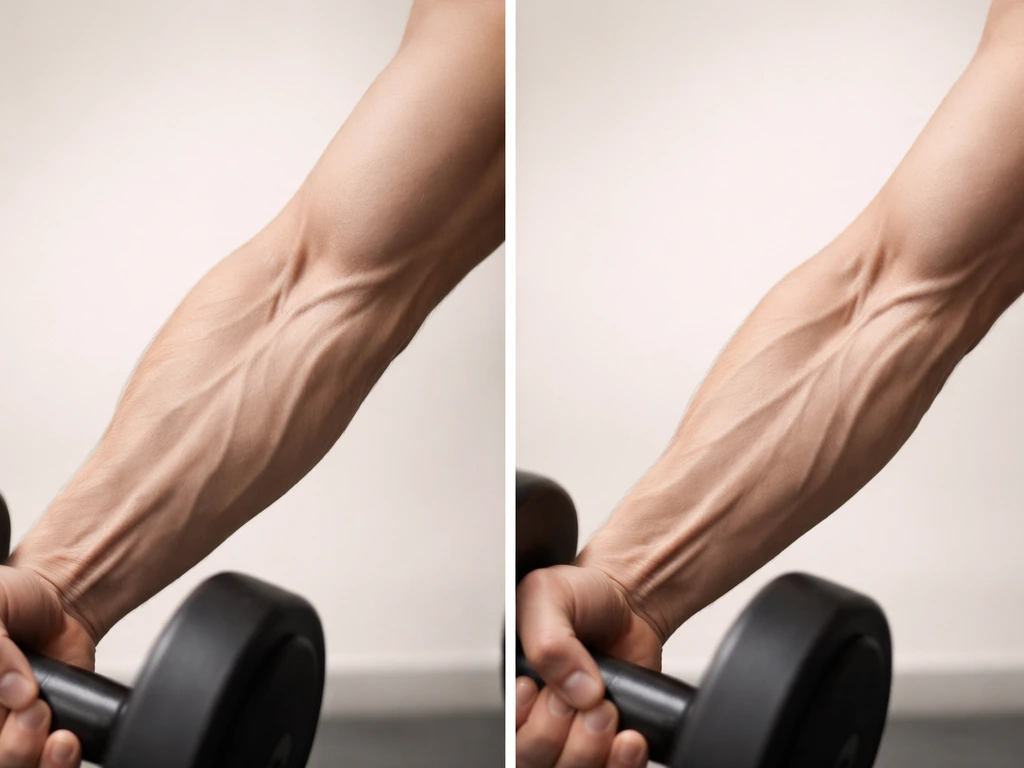
The "microtears" story goes like this: you lift weights, your muscle fibers tear slightly, your body repairs them bigger and stronger, and that's how you grow. It sounds clean and logical, which is probably why it spread so widely. But it's an oversimplification that leads people down the wrong path. If you've been wondering whether muscles have to tear to grow, the honest answer is: damage happens, but it's not the prerequisite for growth that the popular version of this story implies.
Here's what the research actually shows. Biopsy studies on humans confirm that after eccentric or otherwise demanding resistance exercise, there is visible disruption to sarcomeres (the contractile units inside muscle fibers) and cytoskeletal structures, particularly around the Z-disk. This damage is observable under microscopy at 2, 48, and even 96 hours after a damaging workout. So yes, structural disruption is real. But the key point is this: the presence of damage does not automatically equal a requirement for hypertrophy. You can cause a lot of muscle damage and grow very little, and you can cause minimal damage and grow quite a lot, depending on how you train.
The conflation of damage with growth has led to a generation of people using soreness as their primary feedback metric, hammering their muscles with excessive volume or novel exercises to stay sore, and then wondering why they're not making progress. Soreness and growth are related but separate phenomena, and understanding that distinction changes how you train.
What actually triggers muscle growth
There are three main mechanisms that researchers use to explain hypertrophy: mechanical tension, metabolic stress, and muscle damage. Of these three, mechanical tension has the strongest evidence base as the primary driver. When a muscle fiber is placed under sufficient tension through a strong contraction, especially across a full range of motion, it creates mechanical signals that kick off a cascade of molecular events, including activation of mTORC1 (a key regulator of muscle protein synthesis), satellite cell activity, and ultimately the addition of new contractile proteins to the fiber. This is the stimulus that matters most.
Metabolic stress, the build-up of metabolites like lactate and hydrogen ions during high-rep or short-rest training, also appears to contribute to growth, though the mechanism is less fully understood and likely less powerful than mechanical tension on its own. Muscle damage is the third factor. It can act as a secondary growth signal during repair, but excess damage actually delays the recovery process and can blunt the protein synthesis response if it's too severe. So chasing damage is counterproductive. You want enough stimulus to drive adaptation, not so much structural disruption that recovery becomes the primary problem.
In practical terms, this means your training should prioritize loading muscles through a full range of motion with sufficient effort and progression, not novelty and soreness for their own sake.
How to actually read soreness as a training signal

A lot of people assume that if they're not sore, the workout didn't work. This is one of the most persistent myths in fitness, and it's worth confronting directly. Many people wonder whether their muscles have to be sore to grow, and the answer is a clear no. Soreness, technically called delayed-onset muscle soreness (DOMS), peaks around 24 to 72 hours after training and is largely tied to the novelty of an exercise, the amount of eccentric stress, and how well-adapted you are to that movement. As you get more experienced with a given exercise, you'll produce less soreness from it even while still making excellent progress.
What soreness tells you is that your muscles experienced mechanical stress they weren't fully prepared for, not that you grew. And if you're asking yourself whether muscles hurt when they grow, the pain you feel during and after training is a byproduct of tissue stress and the inflammatory response, not a reliable growth indicator. Use performance instead: are you lifting more weight, doing more reps, or handling the same load with better technique over time? That's your real feedback.
Soreness does deserve some attention as a recovery signal. If you're severely sore going into your next session for the same muscle group, that's worth factoring into how hard you push. But mild soreness or no soreness at all is completely compatible with a productive training session.
Training variables that actually build muscle
If mechanical tension is the primary driver of growth, then your training program needs to be built around delivering that stimulus consistently and progressively. Here's what the research and practical experience say about each key variable.
Volume and frequency
Volume, measured as sets per muscle group per week, is one of the most important factors for hypertrophy. Most evidence points to 10 to 20 working sets per muscle group per week as a productive range for most people, with beginners responding well at the lower end and advanced trainees potentially benefiting from more. Spreading that volume across 2 to 3 sessions per week per muscle group tends to outperform cramming it all into one day, because protein synthesis is elevated for roughly 24 to 48 hours after training and then returns to baseline even if the muscle is still recovering.
Intensity, load, and proximity to failure
You don't need to max out every session, but you do need to train hard enough to recruit high-threshold motor units and create meaningful tension. A practical range for hypertrophy is roughly 6 to 30 reps per set, provided you're working within 1 to 4 reps of failure. Both heavier loads (6 to 12 reps) and moderate loads taken close to failure (15 to 30 reps) produce comparable hypertrophy in research. What matters is effort, not a specific rep range. For most people, a mix of moderate and heavier work tends to be practical and effective.
Range of motion and exercise selection

Training muscles through a full range of motion consistently produces more hypertrophy than partial reps, likely because peak tension at a stretched position is a particularly strong growth signal. Compound movements (squats, rows, presses, deadlifts, dips) should form the foundation of your program because they load large amounts of muscle mass efficiently. Isolation exercises are a useful complement for targeting specific muscles more directly.
Progressive overload
Progressive overload is non-negotiable. Your muscles adapt to a given stimulus and then stop responding to it. You need to progressively increase demand over time, which can mean adding weight, adding reps, adding sets, reducing rest periods, or improving technique and range of motion. Track your lifts. If the numbers aren't moving over months of training, that's a signal your program or recovery needs attention, not that you need to destroy yourself with more volume.
Recovery is where growth actually happens
Training is the stimulus. Growth happens during recovery. People underestimate this consistently. You can have perfect training but terrible sleep, high stress, and poor nutrition and make very little progress. Recovery is not optional.
- Sleep: Aim for 7 to 9 hours per night. This is when the majority of anabolic hormone secretion (especially growth hormone) peaks. Chronic sleep deprivation measurably impairs muscle protein synthesis and increases muscle protein breakdown.
- Stress management: Chronically elevated cortisol from life stress competes with the anabolic environment you're trying to create. You don't need to eliminate stress, but you do need to manage it well enough that it's not overriding your training adaptations.
- Deloads: Every 4 to 8 weeks (or when cumulative fatigue is clearly building), reducing training volume by about 40 to 50% for a week allows structural recovery that can't happen during a normal training week. Many people make their best gains in the weeks after a proper deload.
- Training frequency per muscle group: Don't train a muscle so frequently that it never gets a full recovery window. Two to three sessions per week per muscle group is generally optimal. More than that can work but requires careful volume management.
- Acute soreness management: Light movement, adequate hydration, and contrast therapy (alternating hot and cold) can ease severe soreness without meaningfully blunting the adaptation response.
Some people also wonder whether other practices support growth at the margins. For example, stretching can play a role in muscle development, particularly when done under load (as in loaded stretching), though it's not a replacement for progressive resistance training.
Protein and carbs: what you actually need to eat

Muscle growth requires a positive net protein balance. That means you need to be consuming enough protein to not only replace what breaks down but to add new contractile tissue on top of that. The current evidence supports a target of roughly 1.6 to 2.2 grams of protein per kilogram of bodyweight per day for people training for hypertrophy. For a 75 kg person, that's approximately 120 to 165 grams of protein daily. Older adults may benefit from the higher end of this range because muscle protein synthesis becomes somewhat less sensitive to lower doses of protein with age.
Distribution matters too. Rather than eating most of your protein in one or two meals, spreading intake across 3 to 5 meals or snacks of roughly 30 to 50 grams each maximizes the number of times per day you stimulate muscle protein synthesis to a meaningful degree. A pre-sleep protein source (cottage cheese, casein, or Greek yogurt are common options) appears to support overnight muscle repair based on available research.
Carbohydrates are often underrated in muscle-building discussions because protein gets most of the attention. But carbs are essential for fueling heavy training sessions, sparing muscle protein from being used for energy, and supporting the anabolic hormonal environment (insulin, in particular, plays a role in suppressing muscle protein breakdown). If you're in a calorie deficit that's too aggressive, or cutting carbs very low while trying to build muscle, you're working against yourself. A modest calorie surplus of 200 to 350 calories per day above maintenance is a practical target for lean muscle gain.
Supplements worth taking (and what to ignore)
Most supplements don't meaningfully move the needle. A few do, and it's worth knowing which ones have real evidence behind them.
| Supplement | What the Evidence Shows | Recommendation |
|---|---|---|
| Creatine monohydrate | Increases phosphocreatine availability in muscle, improves output during high-intensity efforts, and has a small but consistent positive effect on lean mass gains over time | Take it. 3 to 5g daily is sufficient. No loading phase required. |
| Protein powder (whey, casein, plant blends) | Effective way to hit daily protein targets when whole food intake falls short | Use as needed to reach your daily protein goal, not as a meal replacement. |
| Caffeine | Improves training performance and effort, which indirectly supports growth over time | Useful pre-workout if it doesn't interfere with your sleep. |
| Beta-alanine | Modest evidence for performance in the 1 to 4 minute effort range; not directly anabolic | Optional. More relevant to endurance-style sets than typical hypertrophy training. |
| BCAAs | No meaningful benefit if you're already meeting total protein targets | Skip it. Spend the money on food or creatine. |
| HMB, glutamine, 'muscle repair' blends | Weak or inconsistent evidence for hypertrophy in trained individuals | Not worth it for most people. |
Creatine is genuinely the most well-supported ergogenic aid for muscle growth, with decades of research behind it. Everything else is either a nice-to-have or a waste of money. Don't let supplement marketing convince you that there's a shortcut to the fundamentals.
Why you're training hard but not growing (and how to fix it)
If you've been putting in consistent effort and not seeing results, the problem almost always falls into one of a few categories. Work through this checklist before changing anything dramatic about your approach.
- Stimulus isn't strong enough: Are you actually training close to failure on most sets? "Working out" and genuinely challenging your muscles are not the same thing. If you could do 5 more reps on every set, you're leaving a lot of stimulus on the table.
- Volume is too low (or too high): Under 6 to 8 working sets per muscle per week is probably not enough. Over 20 to 25 sets per week without proportional recovery capacity can accumulate fatigue that limits growth.
- Protein is too low: Many people think they eat enough protein and don't. Track your intake honestly for a week. If you're under 1.6g per kg of bodyweight, that's likely part of the problem.
- Calories are too low: You can't build tissue out of nothing. If you're eating at a deficit or right at maintenance and not seeing muscle gain, try adding 200 to 300 calories per day for 6 to 8 weeks and see if the scale and your lifts move.
- Sleep is being neglected: Less than 6 hours a night will consistently impair recovery and growth regardless of how well everything else is set up.
- You're not tracking progress: If you don't know whether your lifts are going up over time, you can't know if you're progressing. Keep a training log. Progressive overload needs to be deliberate.
- Program hopping: Switching programs every 2 to 3 weeks doesn't give your body time to adapt and progress within a system. Pick a program and run it for at least 8 to 12 weeks before drawing conclusions.
- Expecting too much too fast: Natural muscle growth is slow. A realistic rate for most people is 0.5 to 1 kg of lean mass per month under good conditions. Less if you're older or more advanced. Impatience leads to bad decisions.
One thing worth checking in on: some people report they can actually feel changes in their muscles during and after training and wonder what that sensation means. If you're curious whether you can feel your muscles growing, the sensations you notice (pumps, tightness, fatigue) are real physiological events, but they're not a direct readout of growth happening in real time. Growth is a longer process measured in weeks and months, not the feeling in a single session.
Put it all together: your starting plan
Muscle growth comes down to a repeatable loop: apply a sufficient mechanical stimulus through progressive resistance training, eat enough protein and total calories to support repair and construction, and recover well enough that your body can actually execute the adaptations. Microtears are part of the biology, but they're a side effect of training, not the goal. Stop chasing soreness, start chasing progression, and give the process enough time and consistency to work.
Here's what that looks like in practice: train each major muscle group 2 to 3 times per week with 10 to 20 working sets distributed across those sessions, take most sets within 1 to 3 reps of failure, use a full range of motion, add load or reps progressively over time, hit 1.6 to 2.2g of protein per kg of bodyweight spread across the day, sleep 7 to 9 hours, take creatine, and run your program for at least 8 to 12 weeks before evaluating results. That's it. The fundamentals aren't complicated, but they do require consistency. Start there.
FAQ
If muscle growth does not depend on microtears, how do I know my training is actually working?
You may see soreness with hypertrophy and you may not, because soreness is more about how novel or eccentric-heavy a session was. A better “did it work?” check is performance over weeks, for example adding reps at the same load, increasing load at the same reps, or improving your technique and range of motion while staying near the same effort level (about 1 to 3 reps from failure).
What should I do if I’m training hard but not getting stronger or bigger?
If you consistently train hard but never progress for 6 to 12 weeks, consider whether you are underdosing the stimulus (too few hard sets, not close enough to failure, or limited range of motion) or overreaching recovery (sleep, calories, total stress). Deloading for about 1 week can help if you are truly fatigued, but first verify volume, effort, and progression are in place.
How should I handle eccentric training if it makes me extremely sore?
Eccentric-focused work can increase structural stress and soreness, but you still should avoid turning it into a “damage contest.” Use controlled eccentrics, then keep overall effort and weekly working sets within a productive range. If soreness is so intense you miss sessions or lose range of motion the next workout, reduce eccentric emphasis or volume for that muscle group.
Is it safe to train if I have pain from the last workout?
Microdamage is not a reason to “train through” major pain. During sets, keep discomfort in a muscle-related burn or normal effort zone, but stop for sharp pain, joint pain, numbness, or pain that changes your form. Those are signals to adjust load, technique, exercise selection, or range of motion.
If I keep getting sore, does that mean I’m doing the movement correctly?
The “damage” discussion is different from technique quality. If your range of motion is limited or you are using compensations to lift more, you may reduce effective tension where the muscle should be loaded and still feel sore. Prioritize the same controlled setup and full range you can perform safely, then progress loads gradually.
Why do I stop getting sore but still keep making progress sometimes?
You can grow even with minimal soreness, especially once an exercise is no longer novel. A practical approach is to rotate exercise variations but keep the same core movement patterns, then use progression and effort tracking instead of soreness to decide whether to keep, change, or reduce training stress.
How close to failure do I need to be if microtears are not the main goal?
If you are not near failure often enough, you may not generate sufficient mechanical tension, regardless of how much you feel “torn up.” Aim to let most sets finish around 1 to 3 reps from failure, and use higher-rep work closer to failure if you prefer lighter loads. Avoid grinding every set to absolute failure across your whole program.
How do I know whether my volume is too high and just causing extra damage?
More is not always better, especially if it primarily increases fatigue and soreness rather than productive sets. If you are above the point where weekly sets are recoverable for you, progress usually stalls. A good adjustment is to reduce volume by 20 to 30 percent for 1 to 2 weeks, then rebuild volume while watching strength and performance.
Does creatine change how microtears and soreness work?
Creatine does not “cause microtears,” but it can help you train harder by improving performance in repeated efforts. That can indirectly support hypertrophy by enabling more total high-quality work (more reps, slightly higher loads, better set-to-set performance), as long as nutrition and recovery are adequate.
When should I use soreness to adjust my next workout?
Soreness timing can mislead, because it often peaks 24 to 72 hours. If you’re testing whether a workout caused growth, compare training outcomes across weeks, not single-session feelings. For recovery planning, mild soreness is usually fine, but severe soreness that reduces your next session effort or range of motion is a reason to adjust.