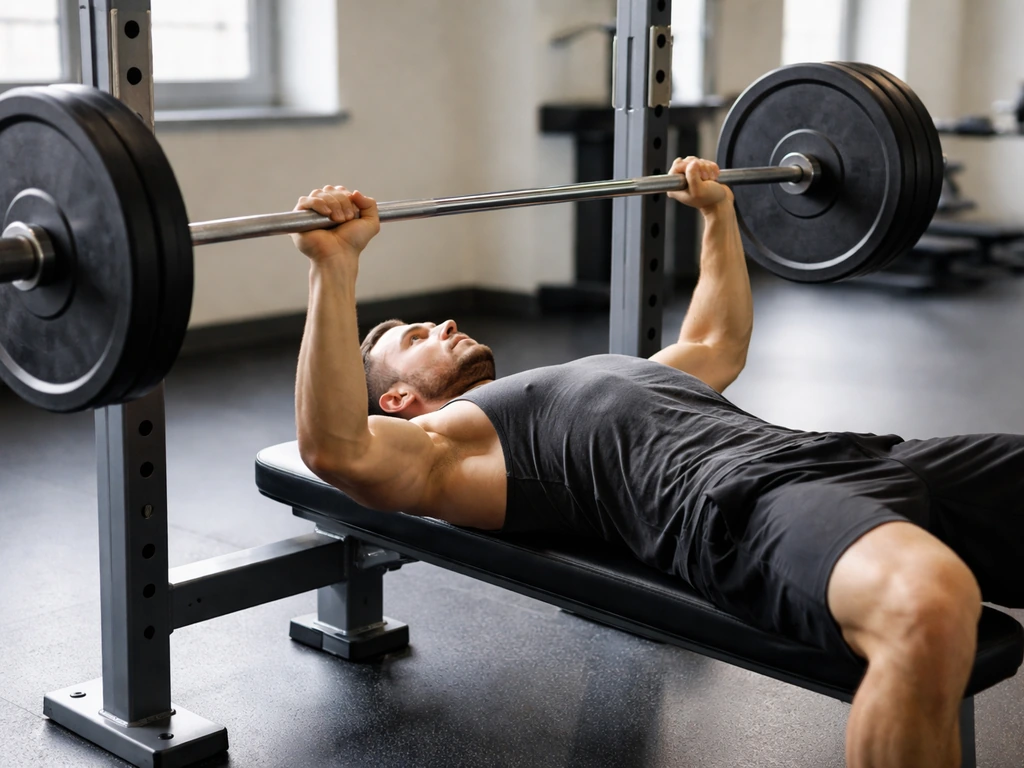
No, your muscles do not have to be sore to grow. Soreness can show up after a good training session, but it is not the mechanism of muscle growth, it is not a requirement, and chasing it is one of the most common ways people derail their own progress. The short version: you can build significant muscle without ever feeling sore, and feeling sore does not guarantee you are building any muscle at all.
Do Your Muscles Have to Be Sore to Grow? Evidence-Based Guide
Marcus Kellerman
13 Apr 2026
Soreness vs muscle growth: what's the real link
Delayed onset muscle soreness (DOMS) is the stiffness and tenderness you feel 12 to 48 hours after a workout, usually peaking around the 24 to 72-hour mark. It is caused by mechanical stress on muscle fibers and surrounding connective tissue, particularly from eccentric (lengthening) contractions. That stress triggers an inflammatory response, and the soreness you feel is essentially a side effect of that inflammation. It is not a signal that muscle protein synthesis is ramping up. It is not a measure of how much damage was productive. It is your body managing tissue stress.
Muscle growth, or hypertrophy, is driven by three main stimuli: mechanical tension (the load placed on the muscle), metabolic stress (the buildup of metabolites like lactate during sustained effort), and muscle damage. Notice that muscle damage is only one of three drivers, and even its role is debated. The other two can absolutely happen without producing meaningful soreness. So right from a physiology standpoint, soreness and growth are related only in that they can share a common cause, not that one produces the other. People often ask can you feel your muscles grow, and the honest answer is: the sensations you associate with growth (soreness, the pump, fatigue) are not reliable indicators of hypertrophy on their own.
Do you have to be sore? myth vs evidence
The idea that "no soreness means no growth" is a myth, and the evidence is pretty clear on this. One of the most direct ways to test the link between soreness and growth is to ask: what happens when you reduce soreness but keep training hard? A placebo-controlled randomized trial looking at ibuprofen ingestion during resistance training found that the ibuprofen group did not have impaired muscle hypertrophy (measured by elbow flexor thickness) or strength gains compared to placebo. Taking the anti-inflammatory did not stop muscle growth. Soreness relief did not equate to impaired growth. That is a meaningful data point because it decouples the inflammatory soreness response from the actual hypertrophic outcome.
Another piece of research actually found the opposite: a 2025 randomized controlled trial reported that NSAID ingestion during resistance training increased muscle cross-sectional area and volume gains in trained men compared to placebo, without improving strength gains. A randomized resistance-training study in trained men reported that [chronic NSAID ingestion over 84 days increased muscle cross-sectional area and muscle volume gains](https://physoc. onlinelibrary. wiley.
com/doi/abs/10. 1113/JP289542) versus placebo, without improving strength gains. That does not mean you should be taking NSAIDs to build muscle (there are real reasons to be cautious), but it does further undermine the idea that the soreness-producing inflammation is what drives growth. The mechanistic side of this is also covered: a study on over-the-counter doses of ibuprofen found it did not differentially affect key hypertrophy regulators like mTOR signaling, satellite cell content, or myonuclear accretion compared to aspirin.
In a study examining [over-the-counter doses of ibuprofen](https://journals. physiology. org/doi/abs/10. 1152/japplphysiol.
00698. 2022) during resistance training in young adults, researchers found limited or no meaningful effects on mechanisms regulating muscle hypertrophy, including satellite-cell and myonuclear-related measures. In other words, the molecular machinery of growth was not meaningfully disrupted by reducing soreness. People also wonder do muscles tear to grow, and the answer is nuanced: some micro-level stress is part of the adaptation process, but the dramatic "tearing" narrative overstates how damage-dependent growth actually is.
Why you might not get sore (and still grow)
There are several completely legitimate reasons why you might not feel sore after a workout that still drove real hypertrophic adaptation. Understanding these should take a lot of pressure off.
- Repeated bout effect: After you do a new exercise or return from a break, you get very sore. After repeating that same stimulus a few times, soreness drops dramatically even if training intensity and volume stay the same. Your nervous system and connective tissue have adapted to that specific movement. This is normal and expected, not a sign your workout stopped working.
- Training age: More experienced lifters tend to get less sore than beginners. Their tissues have adapted, their technique is better, and their recovery systems are more efficient. Less soreness at the same or greater volume is a sign of fitness, not a lack of stimulus.
- Exercise selection: Compound movements like squats and deadlifts with a significant eccentric demand will produce more soreness than exercises with a shorter range of motion or less eccentric loading. Changing exercises can reignite soreness, but that does not mean the original exercise was not working.
- Individual variation: Some people are just less prone to DOMS regardless of training quality. Genetics, muscle fiber composition, hydration, sleep quality, and even the specific muscle groups trained all influence how sore you get. Some people can train hard and grow consistently without ever feeling truly beat up.
- Good recovery: If your sleep, nutrition, and hydration are dialed in, you will often recover faster and feel less sore. That is a good thing, not a problem to fix.
There is also a question worth addressing here: do muscles grow from microtears? The microtear theory has been popular for years, but the current evidence suggests muscle damage is one contributing factor at most, not the central mechanism. Mechanical tension and consistent progressive overload matter far more than generating soreness-inducing damage.
How to train for hypertrophy without chasing DOMS
If soreness is not your target, what should you focus on? The research is reasonably consistent here. These are the variables that actually drive muscle growth.
- Progressive overload: Over time, you need to lift more weight, do more reps, add more sets, or reduce rest periods. Your muscle grows in response to increasing demand. If the stimulus never increases, adaptation plateaus regardless of how sore you feel.
- Proximity to failure: A 2022 systematic review and meta-analysis on resistance training proximity-to-failure found that hypertrophy can occur across a range of effort levels, but training closer to muscular failure tends to produce better hypertrophic results. You do not need to go to complete failure on every set, but leaving 10 reps in the tank on every set consistently probably means you are leaving gains on the table.
- Volume: Sets per week per muscle group matter. For most people, somewhere between 10 and 20 working sets per muscle group per week is a reasonable productive range, though beginners can grow with far less. Volume should increase gradually over time.
- Consistency: Showing up and training a muscle at least twice per week with adequate effort beats any single heroic workout that leaves you wrecked for a week. Frequency and consistency are more predictive of long-term hypertrophy than any single session.
- Exercise selection with full range of motion: Prioritize movements that allow the target muscle to work through its full range, particularly in the stretched position. Lengthened partial reps and exercises with a strong eccentric stretch have shown strong hypertrophic signals. Yes, these also tend to produce more soreness, but again, that is a side effect, not the mechanism.
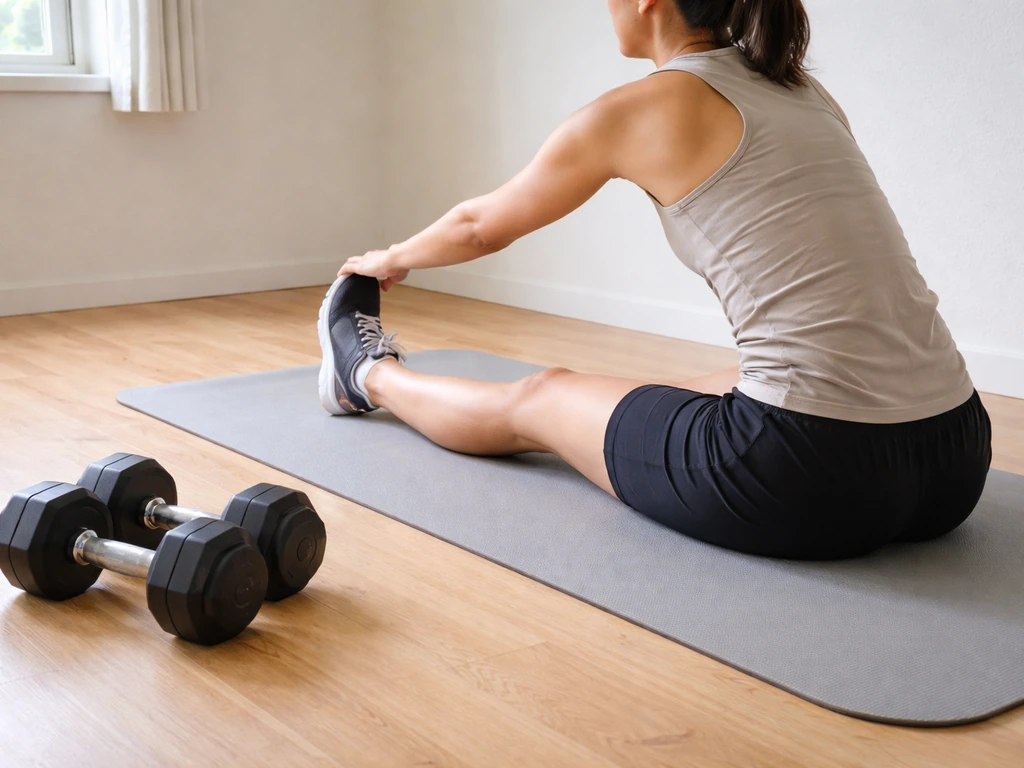
One thing worth noting for anyone curious about recovery modalities: does stretching help muscles grow? The evidence on stretching as a hypertrophy tool is interesting and evolving, but the key takeaway is that it can contribute to recovery between sessions, and there is emerging research on loaded stretching as a stimulus in its own right.
How to track progress and know your stimulus is working
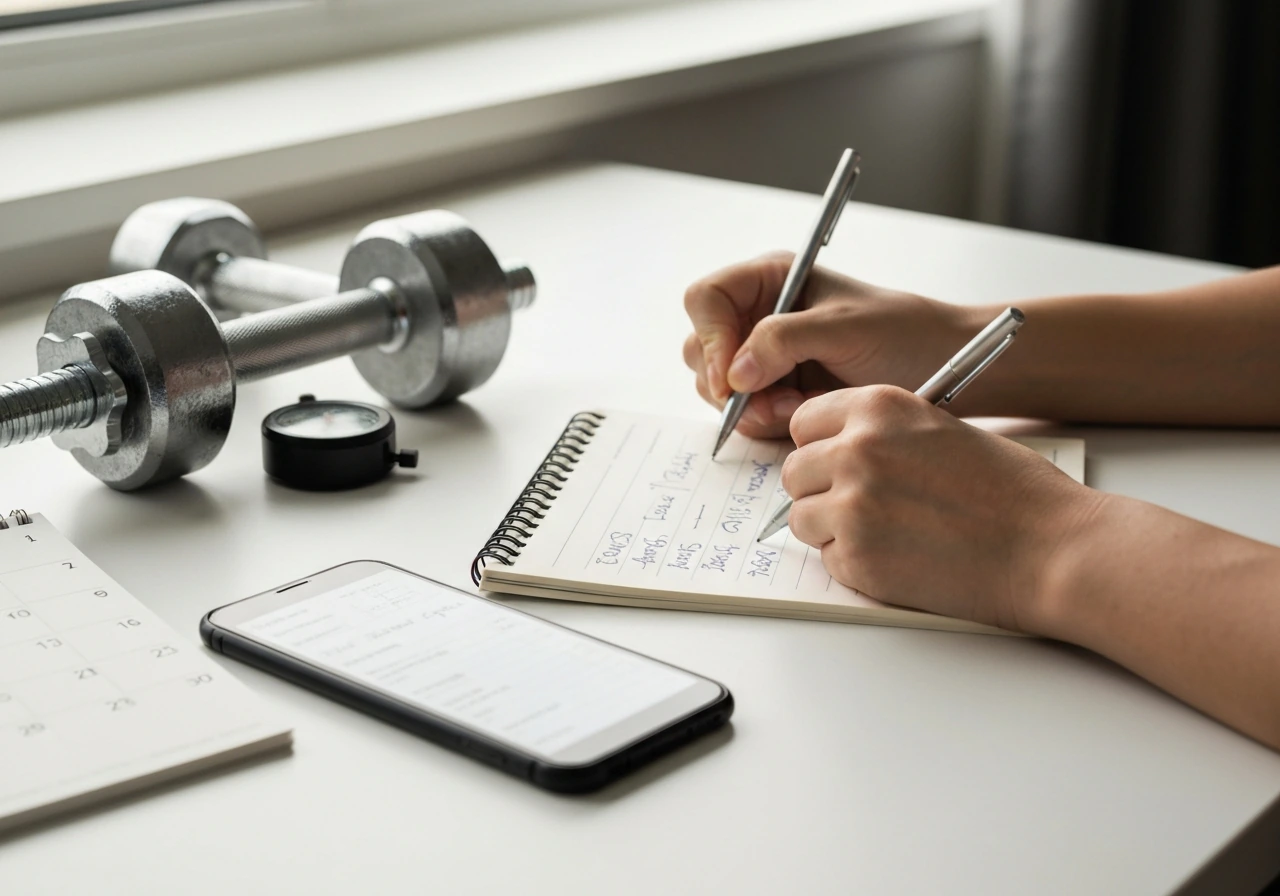
If you stop using soreness as your progress indicator, you need something better. Here is what actually tells you whether your training is producing results.
| Indicator | What to track | How often |
|---|---|---|
| Strength on key lifts | Weight x reps on 2 to 3 main exercises per muscle group | Every session |
| Bodyweight and measurements | Scale weight plus tape measurements of key areas (arms, chest, legs, waist) | Weekly |
| Progress photos | Consistent lighting, angles, and time of day | Every 2 to 4 weeks |
| Training volume | Total sets per muscle group per week | Weekly |
| Subjective effort (RPE) | Rate of perceived exertion or reps in reserve per set | Every session |
| Body composition (optional) | DEXA scan, bod pod, or reliable skinfold if available | Every 8 to 12 weeks |
Progressive strength over weeks and months is the most practical indicator that you are providing a sufficient hypertrophic stimulus. If your squat, bench, row, and press numbers are going up over a 12-week block and your bodyweight or measurements are trending in the right direction, you are growing. Period. Whether or not you felt sore the morning after a session is irrelevant to that outcome.
Beginners should expect to see measurable strength gains within 2 to 4 weeks and visible muscle changes within 6 to 12 weeks with consistent training and adequate nutrition. More advanced trainees will see slower absolute progress but can still track meaningful changes over 8 to 16 week blocks. If you are not making progress on any of the indicators above, the issue is almost certainly volume, effort, nutrition, or sleep, not a lack of soreness.
Programming for recovery: managing soreness and staying consistent
Even though soreness is not a requirement for growth, it is a real phenomenon that can genuinely affect your training quality if it becomes severe. The goal is not to chase it and not to fear it, but to manage it so it does not interfere with your ability to show up and train consistently.
When you are ramping up volume, introducing new exercises, or coming back from time off, program the increases gradually. Adding more than about 10 to 20 percent volume per week is a reliable way to generate excessive soreness that spills into your next session. A smarter approach is a 3 to 4 week progressive loading block followed by a deload week where volume drops by around 30 to 50 percent. You will feel fresher, your soreness will clear, and you will come back to the next block ready to push harder.
If you do end up significantly sore, there is no strong evidence that training through it when soreness is mild to moderate does real harm, especially if you use lighter loads and treat the session as a technique or movement quality day. Light activity, walking, and low-load movement actually tend to help clear soreness faster than complete rest by promoting blood flow.
On the other hand, training intensely through severe DOMS on the same muscle group is asking for diminished performance and potentially a worse next session. Use common sense: mild soreness is fine to train through, severe soreness warrants a modification or extra recovery day. And it is worth knowing that do muscles hurt when they grow is actually a more nuanced question than most people expect, because the growth process itself does not directly cause pain.
Sleep is non-negotiable in this equation. Most of the hormonal environment that supports muscle protein synthesis and repair happens during sleep. Seven to nine hours for most adults is the target. If your soreness is lingering longer than expected or you feel chronically beat up, poor sleep is often the first place to look before blaming your program.
Nutrition and recovery essentials that affect growth beyond soreness
Your muscles are rebuilding and growing between sessions, not during them, and that process is entirely dependent on the raw materials and recovery conditions you provide. Getting this right will determine whether the training stimulus you are applying actually converts into muscle tissue.
- Protein intake: The most important nutritional variable for hypertrophy. The current evidence supports somewhere between 1.6 and 2.2 grams of protein per kilogram of bodyweight per day for people training for muscle growth. Spreading this across 3 to 5 meals or snacks with at least 20 to 40 grams per sitting gives your muscles a consistent supply of amino acids for muscle protein synthesis.
- Total calorie intake: You can build muscle in a calorie deficit, particularly if you are a beginner or returning after time off, but a modest calorie surplus (around 200 to 350 calories above maintenance) tends to optimize hypertrophy for most people who are already reasonably lean.
- Carbohydrates: Do not underestimate them. Carbs replenish muscle glycogen, support training performance, and have an anti-catabolic effect by sparing protein from being used as fuel. Eating carbohydrates around your training sessions can support recovery and reduce exercise-induced inflammation, which includes the kind that causes soreness.
- Hydration: Muscle tissue is roughly 75 percent water. Even mild dehydration can impair strength, endurance, and recovery. Most active adults should aim for at least 2.5 to 3.5 liters of water daily, with more on training days.
- Creatine monohydrate: The most well-supported supplement for hypertrophy and strength. A dose of 3 to 5 grams per day is effective, safe, and does not require loading phases. It helps regenerate ATP faster during high-intensity efforts, supports more total work per session, and has some direct anabolic signaling effects.
- Post-workout nutrition timing: While the 'anabolic window' is smaller than it used to be believed, getting a protein-rich meal or shake within 1 to 2 hours after training is still a practical habit, especially if you trained fasted or it has been several hours since your last meal.
The bottom line is straightforward. Soreness is a side effect of certain kinds of training stress, not a growth signal. You can train consistently, push near failure, apply progressive overload, eat enough protein, sleep well, and build significant muscle without ever waking up unable to walk down stairs. In fact, if you are constantly so sore that your next training session suffers, that is a recovery problem, not evidence that you are training optimally. Track the things that actually reflect muscle adaptation, focus on consistent effort and progressive demand, and let soreness be whatever it turns out to be for you on any given week.
FAQ
If I never get sore, am I definitely not training hard enough?
Not necessarily. You can grow with little or no DOMS if you still accumulate enough mechanical tension, effort, and overall training volume. A better check than soreness is whether the target muscle gets worked close enough to failure (for most sets, you should stop with a small number of reps left in reserve) and whether you can progress loads or reps over time.
How can I tell whether my muscles got the right stimulus if I am not sore?
Not reliably. “No soreness” can mean your session was less stressful, but it can also mean you are accustomed to the movement, you used a mix of contraction types, or the exercise was less DOMS-prone. Use performance trends (reps, load, range of motion) and whether the same muscle still shows fatigue during the workout to judge stimulus quality.
What if my pain shows up right away instead of 1 to 2 days later?
Soreness timing matters. If you feel symptoms immediately after training, that is more likely joint or tendon irritation, technique issues, or a bad warm-up than classic DOMS. DOMS usually ramps up 12 to 48 hours later. If pain is sharp, localized, or not improving across a few days, treat it as an injury risk and adjust.
Can I use soreness as a guide for how much volume to do?
DOMS can be misleading when you do a lot of eccentric-only work, new exercises, or big jumps in volume. Those increase soreness risk but do not automatically increase hypertrophy. If your goal is growth, keep the stimulus focused on productive sets and use controlled progression so soreness does not force you to miss or weaken the next session.
What should I change if I am too sore to train effectively?
Very often, yes. If you are constantly sore to the point that strength drops in the next workout, it usually means the program is too aggressive for your recovery capacity (volume too high, too much novelty, too frequent hard eccentric work, sleep and calories insufficient). A practical adjustment is to reduce weekly volume by about 20 to 40 percent for a week or two, then ramp back.
Why did my soreness drop after a few weeks, but my strength kept improving?
One reason is adaptation. As you repeat the same movements, DOMS typically decreases even if you keep making progress. Another is exercise selection: machine-based or well-mastered movements can produce less soreness than deep eccentrics on unstable or unfamiliar patterns. So decreased soreness does not automatically signal stalled growth.
Can soreness happen without real hypertrophy?
You can be sore without building much, especially if the soreness is mainly from damage that you cannot translate into performance next session. Conversely, you can build without soreness. The key is whether you are getting enough high-quality, hard sets consistently and progressing something measurable (reps, load, or total work) across weeks.
Is it ever a bad idea to train through DOMS?
Mild soreness is often manageable, but severe DOMS that makes movement or lifting form noticeably worse is a sign to modify. A useful decision rule: if you cannot maintain target technique at a similar effort level, switch that day to lower load and shorter range, train a different pattern, or take an extra recovery day for that muscle group.
Should I take anti-inflammatories to keep training when I am sore?
Not usually. If you use NSAIDs just to remove soreness, you might mask fatigue and allow harder training while still needing recovery. Also, regular use can have side effects, especially with higher doses or long durations. If you feel you need them to function, it is a stronger signal to adjust training load, volume, sleep, and overall recovery first.
What measurements should I track to confirm I am growing even without soreness?
Yes. Track at least one objective metric: your working weight and reps for key lifts, and your weekly “hard set” volume for each muscle. If strength is trending up and weekly training quality is intact, soreness is not the limiting factor. If strength is flat for 2 to 4 weeks, look first at whether you are under-eating, under-sleeping, or not progressing volume or intensity.