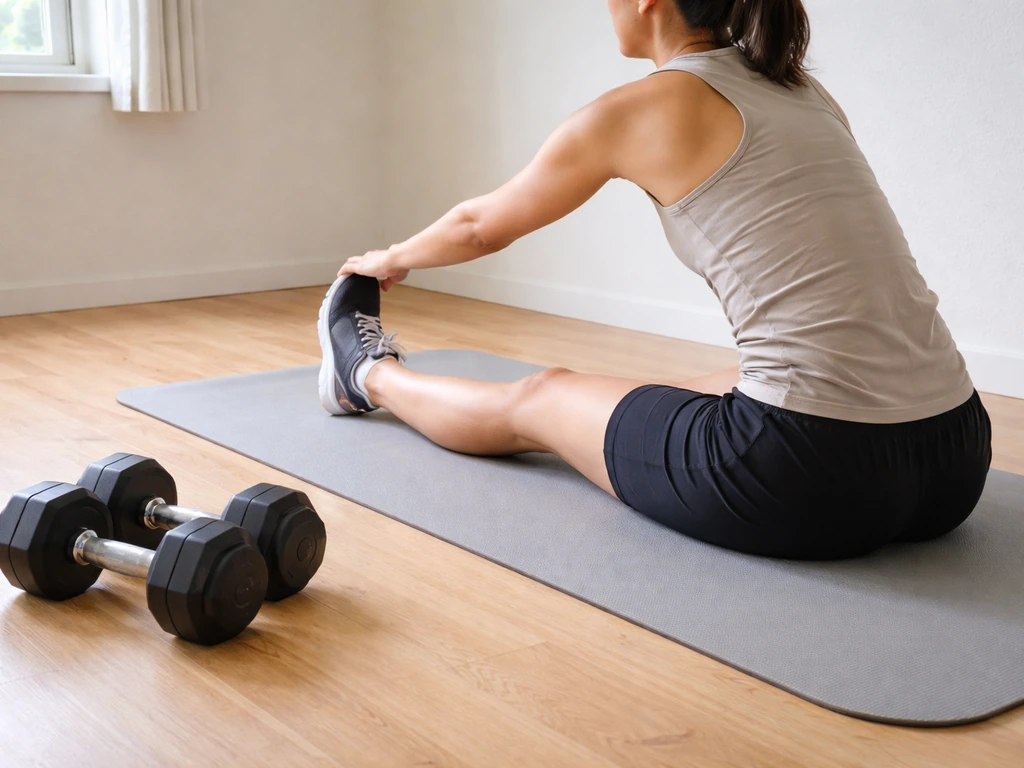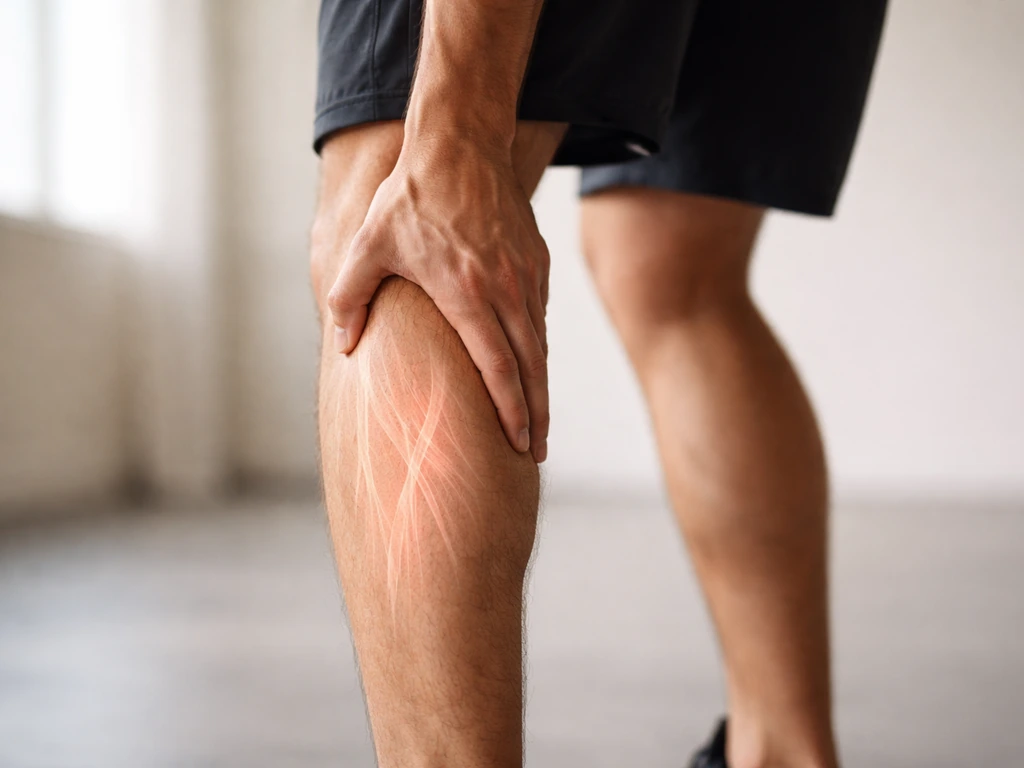
Short answer: not really, no. You can feel things that happen during and after training, but the actual cellular process of muscle growth, the slow remodeling of tissue over days and weeks, is completely silent. What you're feeling in the gym or the day after is almost never muscle getting bigger in real time. That doesn't mean those sensations aren't useful information, but if you're waiting to "feel" growth to know your training is working, you'll be chasing the wrong signal. Let's break down what's actually happening and what to pay attention to instead.
Can You Feel Your Muscles Grow? What to Expect
Marcus Kellerman
12 Apr 2026

What you're actually feeling (pump, soreness, tightness)

The sensations people most often associate with muscle growth are the pump during a workout, soreness 24-72 hours later, and a general tightness or fatigue in a trained muscle. None of these are growth itself, but they're worth understanding so you're not misreading your own body.
The pump is a vascular response. When you train, local metabolites accumulate in the muscle and trigger increased blood flow to that area (reactive hyperemia). Blood rushes in, the muscle swells temporarily, and you get that tight, full feeling. It feels dramatic, but it clears within an hour or two and has no direct relationship to how much muscle you'll build from that session.
Soreness, specifically delayed-onset muscle soreness (DOMS), is different. It typically shows up 1-5 days after training, peaks around 72 hours, and is linked to mechanical stress from high-tension or eccentric movements causing structural disruption in muscle fibers. The resulting inflammatory response, including sensitization of local pain receptors (nociceptors), is what you actually feel. A lot of people assume soreness equals damage equals growth. The truth is more complicated: whether sore muscles are actually a sign of progress is a question worth looking at carefully, because the research consistently shows that the intensity of soreness doesn't track well with the magnitude of muscle damage or adaptation.
Tightness and fatigue in a trained muscle are also common and are usually a combination of residual fluid, connective tissue stress, and neuromuscular fatigue rather than the muscle actively rebuilding. These feelings can last a few days, especially when you've hit a movement pattern your body isn't used to.
Real muscle growth is invisible day-to-day
Actual hypertrophy, the increase in muscle fiber cross-sectional area and overall muscle size, happens through a process that plays out over weeks, not hours. After resistance training, satellite cells activate and contribute to muscle repair and growth. This cellular activity is completely imperceptible. You can't feel satellite cells responding to mechanical tension any more than you can feel your liver processing glucose.
There's a common misconception that connects directly to this: many people believe you have to feel soreness or some kind of deep muscle ache for growth to be happening. But the actual mechanism of whether muscles tear to grow is more nuanced than the simple "tear it, feel it, grow it" model. Some hypertrophy occurs without major disruption markers. Some sessions produce significant soreness with minimal growth stimulus. The two just don't map cleanly onto each other.
Early in a training program, a lot of what feels like "getting stronger" is actually your nervous system adapting. Neural factors, things like better motor unit recruitment and coordination, account for a large portion of early strength gains in the first four weeks or so of training. You feel stronger, you are stronger, but your muscles haven't necessarily grown yet. Visible and measurable size changes tend to lag several weeks behind those early strength gains, particularly in beginners and older adults.
Realistic timelines: when to expect actual changes

Here's the honest timeline breakdown for most people starting or restarting a resistance training program:
| Timeframe | What's likely happening | What you might notice |
|---|---|---|
| Weeks 1-3 | Neural adaptations dominating | Strength gains, better coordination, less soreness over time |
| Weeks 3-6 | Early hypertrophic signaling underway | Muscles may look slightly fuller (mostly water/glycogen), some CSA change possible in beginners |
| Weeks 6-12 | Measurable hypertrophy beginning | Visible size changes in mirror, clothing fitting differently, performance tracking shows clear progress |
| Months 3-6+ | Sustained hypertrophy accumulating | Clear changes in muscle size, significant strength progress, body composition shifts measurable |
For beginners, research shows significant increases in muscle cross-sectional area can appear after roughly 9-12 weeks of consistent training, with some younger subjects showing measurable changes a bit earlier. Older adults generally see more pronounced changes later in a program, but they absolutely do experience hypertrophy with proper training and protein intake. In fact, research on men over 60 has shown meaningful muscle fiber hypertrophy and satellite cell increases after 12-week resistance training blocks. Age is context, not a barrier.
The takeaway: stop expecting to feel growth week to week. Expect to feel stronger, more coordinated, and less sore over time as your body adapts. Actual size changes will follow, but they're measured in weeks and months, not training sessions.
How to actually know it's working (track this instead)
If soreness and pump aren't reliable signals, what is? The answer is objective data. Here's what to track:
- Training log: record your weights, sets, and reps every session. If you're lifting more or doing more reps with the same weight over weeks, hypertrophic stimulus is almost certainly present.
- Body measurements: use a tape measure on key areas (upper arm, thigh, chest) every 4 weeks. Small increases here are meaningful.
- Progress photos: taken in consistent lighting and position every 4 weeks. What you can't see day-to-day becomes obvious over two months.
- Performance benchmarks: tracking your working weight on key lifts over time is one of the clearest indicators your program is driving adaptation.
- Body weight trends: if you're in a modest surplus and weight is slowly trending up (0.25-0.5 kg per week), that's a reasonable sign muscle is being added alongside minimal fat.
It's also worth noting that your muscles don't have to be sore for them to be growing. If you've been training consistently for more than a few months and rarely feel sore anymore, that's actually a sign your body has adapted to the training stimulus, not that you've stopped growing. The absence of soreness in an experienced trainee is normal and expected.
The training inputs that actually drive muscle growth
Three things matter most: progressive overload, sufficient volume, and appropriate intensity. Get these right and growth follows. Miss them and no amount of soreness or pump will compensate.
Progressive overload
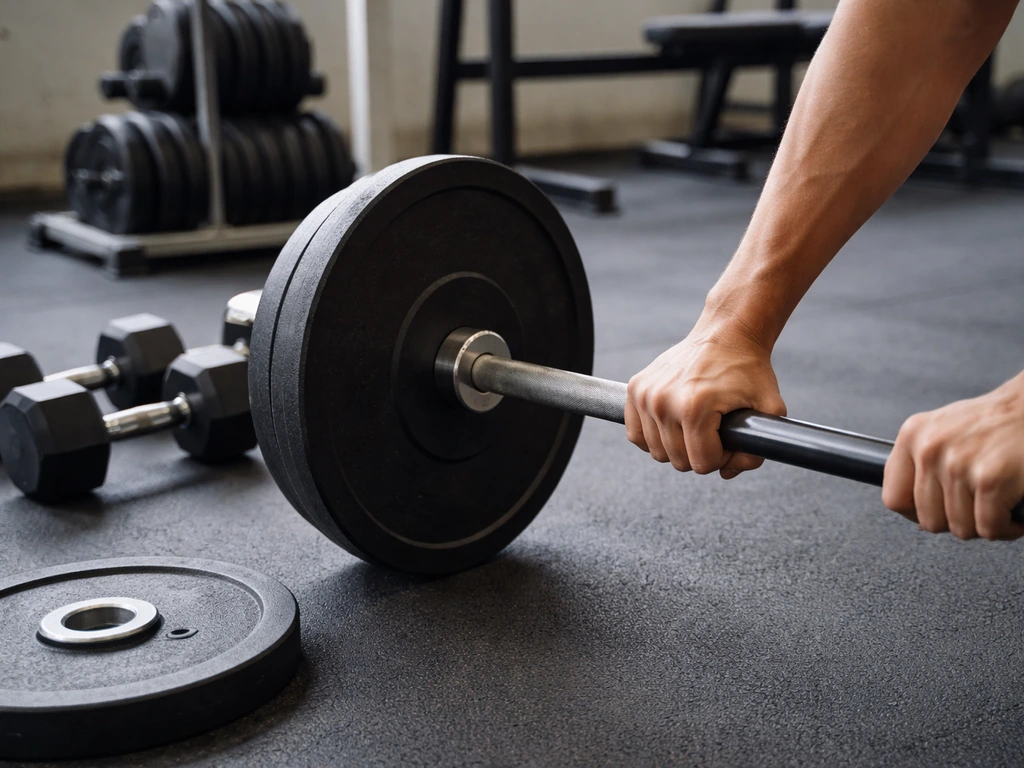
This is the non-negotiable. Your muscles grow in response to a training stimulus that exceeds what they've adapted to. That means over time, you need to be adding load, reps, sets, or reducing rest periods. The American College of Sports Medicine's position stand on resistance training progression treats systematic progression as the foundation of any effective hypertrophy program. If your log looks the same as it did three months ago, your body has no new reason to grow.
Training volume
Volume, meaning total sets per muscle group per week, shows a clear dose-response relationship with hypertrophy. Research comparing weekly volumes of fewer than 5 sets, 5-9 sets, and 10 or more sets per muscle group shows graded increases in muscle growth of roughly 5.4%, 6.6%, and 9.8% respectively. For most people trying to build muscle, targeting at least 10 working sets per muscle group per week is a solid starting point, structured across at least two training sessions per week. Evidence consistently shows that training a muscle twice weekly produces better hypertrophic outcomes than once weekly, even when total volume is matched.
Intensity and proximity to failure
You don't have to grind every set to absolute failure to grow. A systematic review and meta-analysis found only a trivial advantage for training to failure versus stopping a few reps short, when volume was equated. Training close to failure (within 2-3 reps) is probably optimal for most sets, but you don't need to destroy yourself to drive hypertrophy. Leaving some reps in reserve keeps quality high and reduces injury risk, especially important for older adults and anyone with joint issues.
Protein and calories: the nutrition side of growth
Training is only half the equation. Without adequate protein and calories, your body doesn't have the raw materials to build new tissue regardless of how well-structured your program is.
For protein, the International Society of Sports Nutrition recommends 1.4-2.0 grams per kilogram of bodyweight per day for most people actively training and trying to build muscle. For a 75 kg person, that's roughly 105-150 grams of protein daily. If you're in a calorie deficit while trying to maintain or gain muscle (common in recomposition phases), that range may need to push toward the higher end or even up to 2.3-3.1 g/kg/day to preserve lean mass.
Timing matters, but not in a complicated way. Consuming protein around your training session (before or after) is synergistic with the exercise stimulus for muscle protein synthesis. A practical approach is making sure you have a solid protein-containing meal within a couple of hours either side of your workout. The ISSN position stand supports this as a useful habit, though overall daily intake is more important than rigid timing windows.
For calories, you generally need a modest surplus (200-300 calories above maintenance) to support muscle growth without excessive fat gain. If the scale isn't moving and your measurements aren't changing after 4-6 weeks of consistent training, you're likely not eating enough to support hypertrophy.
Recovery is where growth actually happens
The training session is the stimulus. Recovery is when the adaptation occurs. If you're consistently shortchanging recovery, you'll feel beat up more often, adapt more slowly, and misread fatigue as a sign that training isn't working.
Sleep is the most underrated variable in most people's programs. Research in athlete populations shows sleep quality and quantity directly influences perceived training quality and muscle soreness. Animal research supports that sleep deprivation impairs muscle recovery from high-intensity exercise. The practical standard is 7-9 hours per night. If you're hitting the gym hard but sleeping 5-6 hours, you're leaving a significant amount of adaptation on the table.
Stress matters too. Chronically elevated cortisol from training overload or life stress can blunt adaptation signals. This is one reason why more training isn't always better, and why deloads (planned weeks of reduced volume or intensity every 4-8 weeks) are a legitimate tool rather than a sign of weakness. A deload lets accumulated fatigue clear so your fitness can express itself and you can train harder in subsequent cycles.
DOMS recovery also deserves a mention here. When a muscle is acutely sore, training it again at high intensity is counterproductive. This is one argument for splitting your training across muscle groups and ensuring at least 48 hours before hitting the same muscle hard again. The role of microtears in muscle adaptation is real, but recovery from that micro-level disruption needs time and adequate nutrition to complete properly.
Myths to drop and what to do when things feel like they're not working
Myth: soreness means you grew
This is probably the most persistent myth in gym culture. Research by Nosaka and others clearly shows that DOMS doesn't reliably reflect the magnitude of muscle damage, let alone growth. You can have brutal DOMS from a movement your body isn't used to and stimulate almost no hypertrophy. You can have a near-zero soreness session with heavy compound lifts and drive significant adaptation. Soreness is a signal of novelty or excessive eccentric load, not a quality indicator for your training.
Myth: no pump, no growth
The pump feels satisfying but it's not a growth mechanism in itself. Metabolic stress may play a supporting role in hypertrophy, but chasing a pump at the expense of progressive overload and volume is a trade you don't want to make. Some effective hypertrophy sessions (like heavy compound work with longer rest periods) produce relatively little pump.
Myth: if you don't feel anything, the session was wasted
After months of consistent training, you should feel less soreness and maybe less dramatic pump in well-adapted muscles. That's not a problem. That's your body being efficient. If your log shows progression and your measurements are trending in the right direction, the biology is working regardless of how you feel the next morning. And if you're curious whether adding mobility work to your routine could support those results, the question of whether stretching helps muscles grow is worth exploring as a complement to your main training.
Troubleshooting: what to check if you're not seeing results
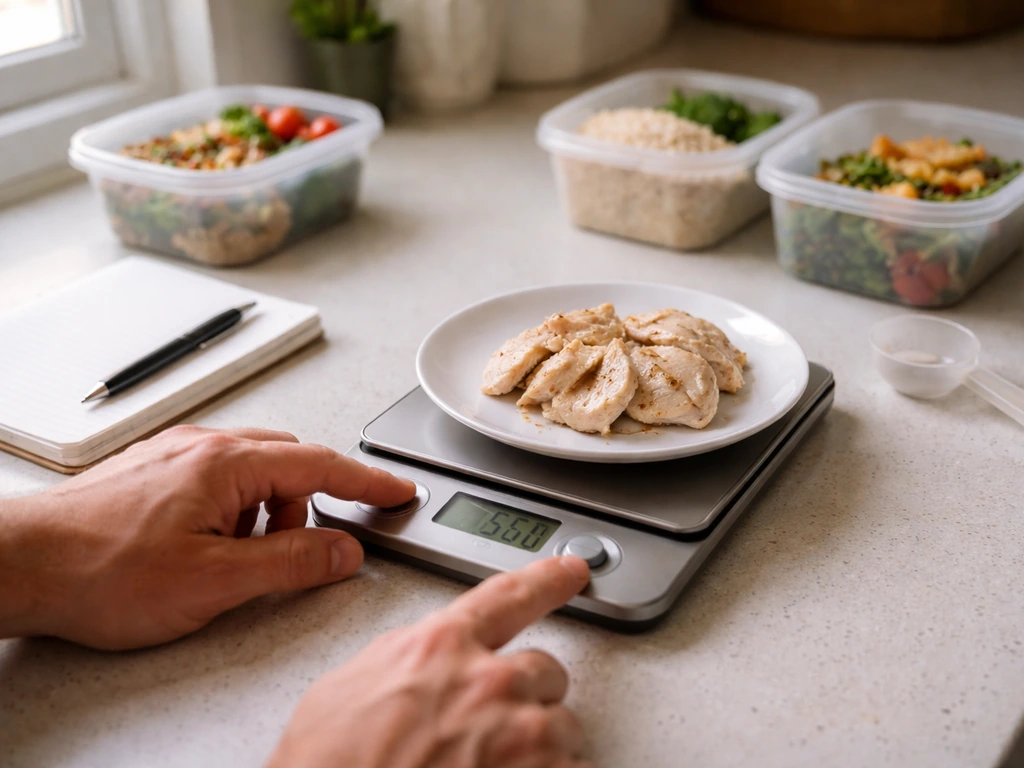
- Check your protein intake first. Most people who aren't growing are under-eating protein. Log a typical day and see if you're actually hitting 1.4-2.0 g/kg.
- Check your volume. Are you getting 10+ working sets per muscle group per week? If you're doing 3 sets of one exercise per muscle and calling it done, volume is probably the limiter.
- Check your progression. Look back at your training log from 6-8 weeks ago. If the weights and reps haven't moved, you've plateaued and need to find a way to add overload.
- Check your sleep. Honest question: are you getting 7+ hours consistently? If not, fix this before changing anything else.
- Check your calories. If you're maintaining weight over 4+ weeks while training hard, you're not in a surplus. Body weight needs to trend upward (slowly) to support net muscle gain for most people.
- Check your frequency. If you're training each muscle group once a week, moving to twice weekly with the same total volume will likely improve results.
The bottom line is straightforward: you can't feel muscle growth as it happens, and trying to use sensory cues as your primary feedback mechanism will lead you astray. Train with progressive overload, hit your protein targets, sleep enough, and track objective markers over weeks and months. That's the system. The feelings during training (pump, burn, soreness) are just noise alongside those real signals, and muscle soreness really isn't required for growth to occur. Build the habits, track the numbers, and trust the process over time rather than the sensations of any single session.
FAQ
If I do not feel sore, does that mean I missed my workout and no growth is happening?
Not necessarily. Lack of soreness, especially after you have trained the same movement pattern for months, is common and often means your body adapted. What matters more is whether you progressed in load or reps, hit sufficient weekly sets near the right intensity, and maintained protein and calories.
Can soreness ever be a good sign, or is it always irrelevant to muscle growth?
Soreness can be useful as a signal that you introduced novelty, especially eccentric stress, but it still does not reliably predict how much hypertrophy you will gain. Use soreness to decide how hard to push the next session, not as a scoreboard for progress.
How long should it take before I can see or measure muscle growth?
Strength improvements can show up within weeks from neural adaptation. Size changes typically lag and are more evident around 9-12 weeks for many beginners, with older adults often noticing changes later. If you track measurements and they do not move after 4-6 weeks, reassess volume and calories rather than chasing soreness.
What if I feel a strong “pump” but my strength and measurements are not improving?
A big pump usually reflects temporary blood flow and metabolite buildup, it does not guarantee enough stimulus for growth. If the same exercises and loads are going nowhere, you likely need progressive overload, more effective weekly volume, or closer-to-failure effort on working sets.
Should I train a muscle again the moment soreness starts, or wait until it is fully gone?
If your goal is hypertrophy, avoid taking the same muscle to high intensity while it is acutely sore. Many people do well with at least 48 hours between hard sessions for the same muscle, using an adjusted workload if soreness is limiting performance.
How can I tell whether I am training close enough to failure if I am not getting sore?
Use performance-based markers instead of pain. For most sets, stopping 0-3 reps short of failure (leaving a small, consistent amount in reserve) while maintaining good form is a practical range. If reps and loads stagnate for several weeks, your effort may be too conservative or your volume too low.
Does feeling “burn” or fatigue during a set matter for muscle growth?
It can indicate you are accumulating work and approaching the effective intensity zone, but it is not a requirement. You can grow with less burning if you provide enough challenging sets over the week. Judge progress by whether your working sets produce stable near-maximal effort and you can progress over time.
If I am older or returning after time off, should I expect different signals like more soreness?
Often yes. Beginners, older adults, and anyone returning from a break commonly experience more novelty-related soreness. Even so, soreness is still not a reliable predictor. Prioritize gradual progression, adequate protein, and consistent volume, then evaluate outcomes with measurements.
What should I track if I cannot rely on how I feel?
Track objective trends: bodyweight direction for calorie adequacy, weekly volume per muscle, sets performed with good form, and strength metrics like top set or rep ranges. If scale and measurements do not change after 4-6 weeks of consistency, adjust either calories or your effective training stimulus.
Can too much soreness mean I am doing too much, even if I grow eventually?
Yes. Persistent high soreness plus declining performance can mean you are accumulating fatigue faster than you can recover. A practical response is reducing volume or intensity for a deload every 4-8 weeks, or temporarily lowering effort on the most eccentric-heavy movements.
How does stretching or mobility affect the “growth feel” people look for?
Mobility work can improve exercise quality, range of motion, and comfort, which may indirectly support hypertrophy by helping you train effectively. It should not be treated as a way to force soreness or pump. Focus on whether your sets become more stable and progressive, not on whether soreness changes.