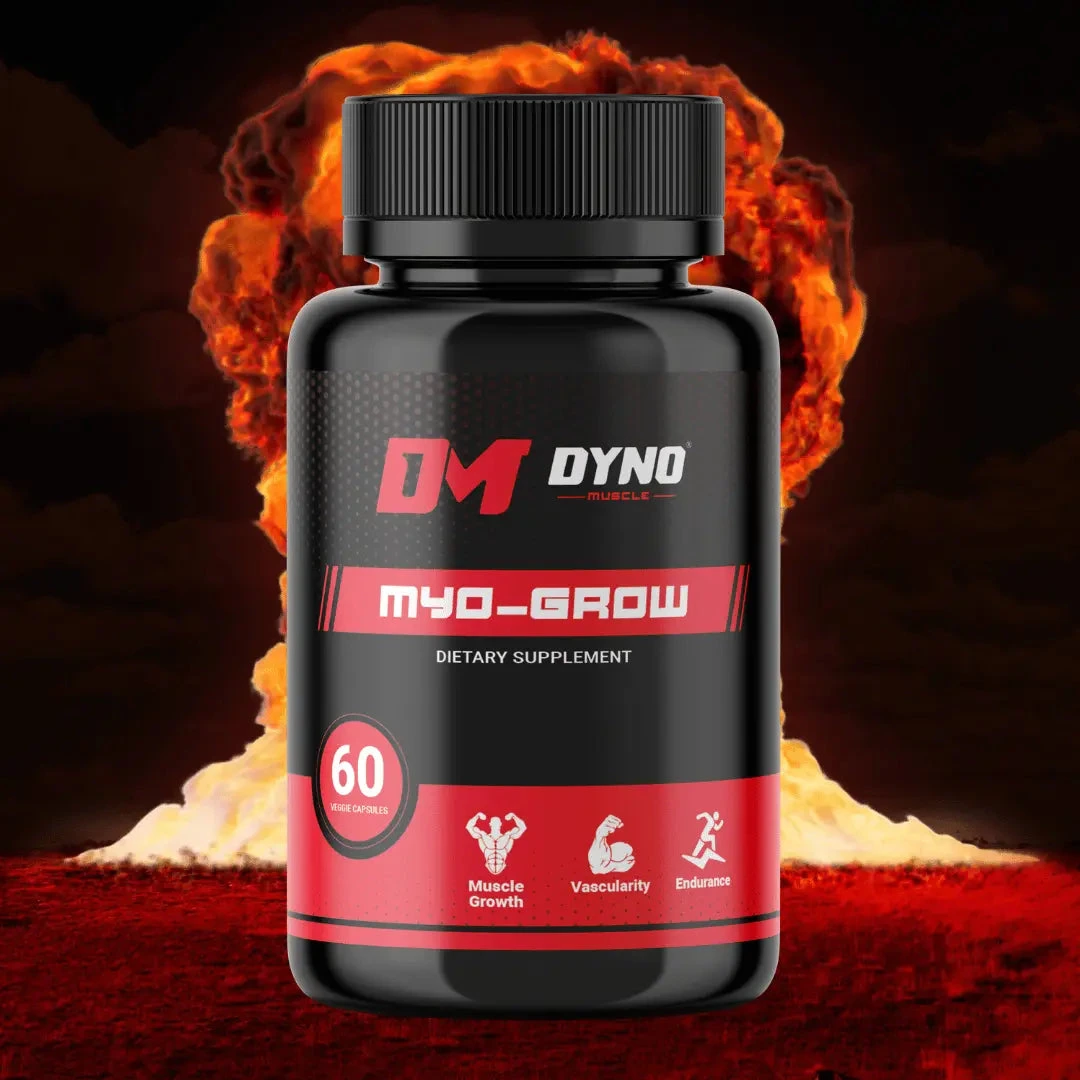
MYO Grow can support muscle growth, but only if your training, protein intake, and calories are already dialed in. Its ingredients, epicatechin and beta-ecdysterone, have real (if modest) mechanistic backing for influencing muscle protein synthesis and myostatin suppression, but the honest answer is: the supplement alone won't move the needle. A 12-week randomized double-blind training study of a commercial phytosteroid supplement that included [ecdysterone-related components](https://pmc. ncbi.
Does MYO Grow Work? Evidence, Results Timeline, and What to Do

Marcus Kellerman
23 Apr 2026
nlm. nih. gov/articles/PMC12337734/) examined effects on strength, body composition, and endocrine, liver, and kidney function in resistance-trained men. A systematic review of epicatechin evidence also discusses potential effects on myostatin inhibition and follistatin-related, muscle-relevant pathways [epicatechin and beta-ecdysterone](https://pubmed.
ncbi. nlm. nih. gov/38276564/).
If you're eating enough protein, training with progressive overload, and sleeping well, you might squeeze out a small additional benefit. If those foundations aren't in place, you'll mostly be paying for expensive capsules while your actual results stall.
What MYO Grow is and what it claims to do
MYO Grow is a capsule-based muscle growth supplement made by Dyno Muscle. If you want the quick answer, MYO Grow is a capsule-based muscle growth supplement built around epicatechin and beta-ecdysterone. The formula centers on three ingredients: epicatechin, beta-ecdysterone, and piperine.
The brand markets it specifically for lean muscle growth, and the mechanism they emphasize is epicatechin's ability to reduce myostatin (a protein that limits how much muscle you can build) while simultaneously increasing follistatin (which counteracts myostatin's braking effect). Dyno Muscle also claims their epicatechin is 98% pure and dosed at the level used in clinical studies, which is a meaningful claim if true. Piperine is included as a bioavailability enhancer, essentially helping the other ingredients absorb more efficiently.
The standard protocol is two capsules per day.
The myostatin-follistatin angle is real science, not pure marketing fiction. Myostatin genuinely limits muscle hypertrophy, and compounds that suppress it have attracted legitimate research interest. The question is how much impact you get from an oral supplement versus, say, the mechanical tension you create by lifting heavy. That's where things get more complicated.
Does it actually work? What the evidence says
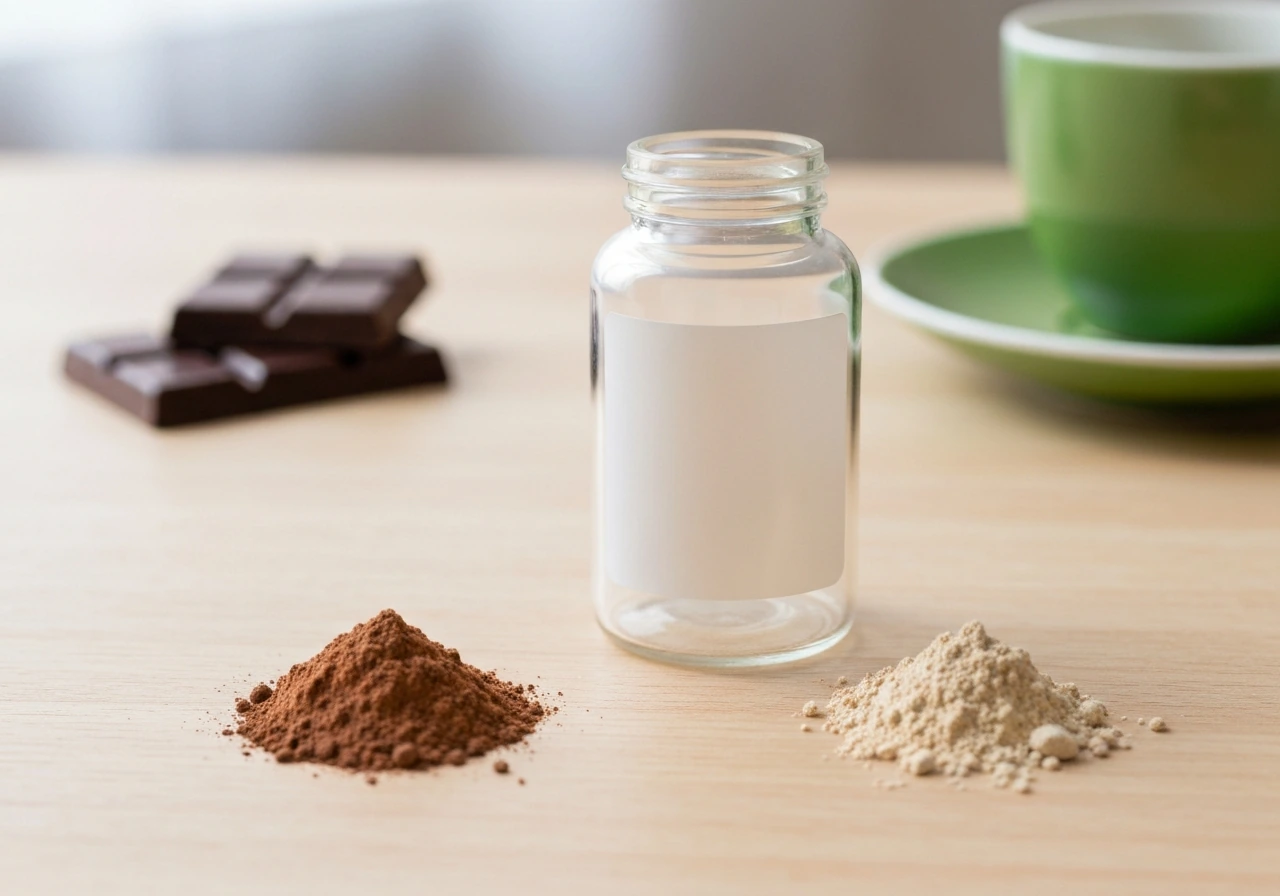
Let's start with epicatechin, the headline ingredient. It's a flavonoid found naturally in dark chocolate and green tea, and early human studies (including a small but cited trial) showed it can reduce myostatin and increase grip strength in older men. The effect sizes were modest, not dramatic. Importantly, most research used doses in the range of 150 to 300mg per day. If Dyno Muscle's claim about matching the clinically studied dose holds up, that's a point in its favor compared to underdosed competitors.
Beta-ecdysterone is the second active compound. It's a plant steroid (technically a phytoecdysteroid) that some research suggests can increase protein synthesis via a pathway similar to insulin-like growth factor. A 2019 study published in the Journal of the International Society of Sports Nutrition found meaningful increases in muscle mass in resistance-trained men supplementing with ecdysterone compared to placebo. The study attracted a lot of attention, and follow-up research has been mixed, with some showing positive trends and others showing minimal effects when controlling for diet and training. It's not a slam dunk, but it's not pseudoscience either.
Piperine (from black pepper extract) is fairly well-established as a bioavailability enhancer. It inhibits enzymes that break down certain compounds too quickly in the gut, allowing more of the active ingredient to reach circulation. Its presence in the formula is a sensible addition rather than a filler.
Put it all together and MYO Grow is a formula with plausible mechanisms and some supporting research, but the effect sizes you should realistically expect are small to moderate, not transformational. You're not going to build 10 pounds of muscle from a supplement that science gives a 'possible benefit' rating to. What you might get, under the right conditions, is a marginal edge on top of a solid training and nutrition program.
How to actually tell if it's working
The biggest mistake people make with any muscle-building supplement is taking it without a baseline. If you don't know where you started, you can't know if anything changed. Before you start MYO Grow (or restart a training phase), take five minutes to record: your body weight, key circumference measurements (upper arm flexed, chest, quads), and your working weights on two or three compound lifts like squat, bench, and deadlift or row.
Then give it a real window. Muscle remodeling takes time, and supplements that work through hormonal or protein synthesis pathways typically need four to twelve weeks of consistent use before meaningful changes show up in measurements. Four weeks is the minimum to notice training-performance changes (more reps at the same weight, faster recovery between sessions). Eight to twelve weeks is when body composition shifts become measurable.
Metrics worth tracking

- Strength on compound lifts: are your working weights going up over 8 to 12 weeks?
- Arm and quad circumference: a gain of 0.25 to 0.5 inches over 12 weeks is meaningful and realistic for most people
- Body weight trend: slow, steady gain (0.5 to 1 lb per week) suggests you're in a muscle-building environment
- Recovery quality: are you bouncing back faster between sessions and feeling less beat up?
- Training volume tolerance: can you handle more total work without performance dropping?
If after twelve weeks none of these metrics have moved, the supplement isn't working for you, or more likely, something in your foundations (protein, calories, sleep, or training structure) is the real bottleneck. That's actually the most common outcome, and it's fixable.
Who might benefit vs who probably won't notice much
Not everyone responds the same way to a formula like this, and your starting point matters a lot.
Who has the most to gain

Older adults (roughly 50 and above) are actually the most compelling use case for epicatechin-based supplements. Myostatin levels tend to rise with age, which partly explains why building and maintaining muscle gets harder after 40 or 50. Blunting that increase could genuinely matter at this life stage, especially when combined with resistance training and adequate protein (1.6 to 2.2g per kilogram of body weight per day). The grip strength research on epicatechin was done in older men specifically, so if you're in this demographic and already training consistently, MYO Grow is a more rational purchase than it would be for a 22-year-old.
Intermediate and advanced lifters who have already optimized the basics may also notice a small incremental benefit. When you've been training for years, the easy gains are gone, and marginal improvements from any intervention become more relevant. If everything else is locked in, a compound that modestly nudges protein synthesis or reduces myostatin could help push past a plateau.
Who probably won't notice much
Beginners have the most muscle-building potential of anyone, but almost none of it depends on supplements. In your first one to two years of training, your nervous system and muscle fibers respond so dramatically to progressive overload that adding a myostatin inhibitor is a bit like putting a spoiler on a car that's still learning to drive. Focus on the foundations first, and you'll get more out of them than any capsule.
Anyone not hitting their protein targets will also see minimal results. If you're regularly under 1.4 to 1.6g of protein per kilogram of body weight per day, you're not giving your muscles the raw material to grow regardless of what hormonal environment the supplement creates. Similarly, if you're in a significant calorie deficit, muscle growth is physiologically constrained, and no supplement changes that equation.
| Profile | Expected benefit from MYO Grow | Priority action instead |
|---|---|---|
| Beginner (under 1 year training) | Very low | Master progressive overload and hit protein targets first |
| Intermediate lifter, solid diet | Low to moderate | Worth a 12-week trial if fundamentals are already in place |
| Advanced lifter at a plateau | Moderate (marginal edge) | Most rational use case alongside creatine and high protein |
| Older adult (50+) training consistently | Moderate | Strongest biological rationale given age-related myostatin rise |
| Anyone undereating protein | Negligible | Fix protein intake before spending money on supplements |
What to actually do to build muscle starting today

If you want to build muscle as fast as your biology allows, here's what the evidence consistently points to, in order of impact.
- Progressive overload in the 6 to 20 rep range: add weight, reps, or sets over time on compound movements like squats, hinges, presses, and rows. This is the primary driver of hypertrophy. Nothing replaces it.
- Hit your protein target: 1.6 to 2.2g per kg of body weight per day, distributed across at least 3 to 4 meals with 30 to 50g per sitting. Older adults should aim for the higher end (closer to 2.2g/kg) because muscle protein synthesis efficiency declines with age.
- Eat enough total calories: you need a slight surplus (roughly 200 to 400 calories above maintenance) to build muscle at a meaningful rate. Trying to gain muscle in a steep deficit is fighting biology.
- Prioritize sleep: 7 to 9 hours per night is when growth hormone peaks and muscle repair actually happens. Chronic short sleep blunts protein synthesis even when training and diet are perfect.
- Consider creatine monohydrate first: if you're not already taking it, 3 to 5g per day is the most consistently evidence-backed muscle and strength supplement available. The research base dwarfs everything else on the market.
- Then layer in MYO Grow if you want: if foundations above are in place and you want to test it, run a proper 12-week trial with the baseline measurements described above, and reassess honestly at the end.
It's also worth noting that MYO Grow sits in a competitive category. If you're doing your research and comparing it to other options in this space, looking at specific product reviews and ingredient-level breakdowns (including comparisons between products like Dyno Muscle's full line) will help you make a more informed decision about what's actually in the formula and whether the dosing holds up. If you want a clearer sense of what that means in practice, look for a dyno muscle myo grow review that breaks down results and dosing product reviews. If you are comparing options, a muscle grow xxl review can help you judge how its claims stack up against MYO Grow dyno muscle myo grow review.
Safety, side effects, and realistic expectations
Epicatechin and beta-ecdysterone are generally considered safe at standard doses. Neither is a hormone, and neither has shown signs of suppressing your body's natural testosterone production the way anabolic steroids do. Side effects from epicatechin at studied doses are rare and typically mild (occasional GI discomfort at high doses). Ecdysterone has a similarly clean safety profile in human trials to date.
That said, a few practical cautions are worth keeping in mind. First, piperine can affect the absorption of medications, including some blood thinners and certain anticonvulsants, by inhibiting the same enzymes involved in drug metabolism. If you're on prescription medication, check with your doctor or pharmacist before adding any piperine-containing supplement. Second, the supplement industry is not tightly regulated, so third-party testing for label accuracy and contamination is something to look for when evaluating any brand. Third, 'clinically dosed' claims like Dyno Muscle makes for their epicatechin deserve scrutiny, since many companies make these claims without the label transparency to verify them.
The most important expectation to calibrate is this: even if MYO Grow works as advertised, the effect is additive to good training and nutrition, not a substitute for it. The readers who are disappointed with this or any similar supplement are almost always the ones who hoped it would compensate for inconsistent training or poor diet. It won't. But for someone who has those pieces locked in and wants to explore what a myostatin-focused formula can add, it's a reasonable, relatively low-risk option to test properly.
FAQ
Does MYO Grow work if I am already taking other supplements for muscle growth?
It can still help modestly, but stacking often creates two problems, overlapping ingredients and tradeoffs in your nutrition. If you already use a myostatin-focused product, the incremental gain may be small. Also, if your stack pushes your total protein, calories, and training volume into the “overwhelming” zone, results can stall. Keep your training and protein plan constant for 8 to 12 weeks so you can actually tell what changed.
How long should I take MYO Grow before deciding whether it is working?
Use a fixed trial window of at least 8 to 12 weeks with consistent dosing and the same training structure. If you track only body weight, you might miss recomposition, so follow at least one performance metric (reps at a given load, or reps to near-failure) and one measurement (upper arm flexed or chest). If nothing moves by 12 weeks, the issue is usually foundations like protein, calories, or progressive overload rather than the supplement.
What is the “right” way to measure whether does myo grow work for me?
Measure baseline and then repeat the same conditions, same time of day, similar sleep, and similar hydration. Track 2 to 3 weekly strength or performance targets, plus 1 to 3 circumferences, not just weight. If strength is improving but measurements do not, your calorie intake might be too low for growth, even if training is good.
Can MYO Grow help if I am cutting calories or in a calorie deficit?
It is unlikely to cause meaningful hypertrophy in a hard deficit, because the limiting factor becomes energy availability. You might still see training performance hold up a bit better than expected, but visible muscle gain is usually minimal. If you are cutting, consider evaluating using recovery and strength maintenance as your primary outcomes, not body composition changes.
Is MYO Grow worth it for beginners?
Usually the best ROI is not the supplement. Beginners often gain muscle rapidly from training quality and nervous system adaptations, so the marginal benefit from a myostatin-focused capsule can be hard to detect. If you do buy it, run a short, controlled test while you are building your basic habits, but expect limited measurable differences beyond what training already delivers.
Does myo grow work differently for older adults than for younger lifters?
Potentially, yes. The epicatechin angle is more compelling for people around 50 and up because myostatin-related changes with age may make the pathway more relevant. That said, older adults still need consistent resistance training and sufficient protein to realize any benefit. If you are not progressing your loads or volume, age alone will not make the supplement “work better.”
What protein and calorie targets should I hit for the best chance that does myo grow work?
Protein should generally be in the 1.6 to 2.2 g per kilogram per day range for hypertrophy, especially if you want to see measurable change during an 8 to 12 week trial. Calories matter too, because persistent under-eating blunts muscle gain. If you are below roughly 1.4 to 1.6 g/kg/day or you are significantly in deficit, expect the supplement effect to be very small.
How should I handle the piperine ingredient if I take medications?
Piperine can interfere with drug metabolism, potentially changing medication levels. If you take blood thinners, anticonvulsants, or any prescription that has narrow dosing, talk to a clinician or pharmacist before using MYO Grow. Do not start it “just to try” without checking, because interactions are a real edge case that can outweigh any potential benefit.
Does MYO Grow require cycling or can it be taken indefinitely?
The article’s evidence logic supports a trial-based approach rather than indefinite use. If you choose to continue, base it on whether your performance and measurements respond over 8 to 12 weeks. For many people, a better decision tool is “works or not,” not cycling schedules, especially since you are already aiming for additive gains on top of training and diet.
What side effects should I watch for with MYO Grow?
Most people tolerate epicatechin and ecdysterone well at researched doses, but the common practical issue is GI discomfort if you are sensitive. If you notice nausea, stomach cramps, or unusual reflux, take it with food (if label permits) and evaluate whether the dose or timing is aggravating your digestion. If side effects persist or worsen, stop and reassess the trial.
How do I know whether MYO Grow’s “clinically dosed” epicatechin claim is credible for my purchase?
Look for transparency you can verify, such as clear epicatechin mg per serving and quality control information from third-party testing. If a product only makes claims without showing dosing details on the label, your practical risk is that you are paying for an underdosed ingredient. For a controlled trial, label clarity matters because it affects whether your outcomes are explainable by dosing.
If I do not see results, what should I fix first?
Re-check the biggest bottlenecks first: protein adequacy, calorie balance (surplus for gain, maintenance for recomp, deficit expectations for cutting), and whether your program uses progressive overload (reps, load, or sets trending up). Sleep quality and total weekly hard sets also matter, because poor recovery can erase small additive benefits. Only after those are corrected is it reasonable to conclude that does myo grow work for you, or it does not.