Dyno Muscle Myo Grow is a three-ingredient capsule supplement built around epicatechin, beta-ecdysterone, and piperine. The short answer to whether it produces real, measurable muscle gain: the ingredients have a plausible mechanism, but the marketing wildly overpromises, customer service complaints are real and recurring, and your training and nutrition will determine 90% of your results regardless. Here's everything you need to make a clear-headed decision today.
Dyno Muscle Myo Grow Review: Side Effects, Results, and Buyer Guide

Marcus Kellerman
12 Apr 2026
What Dyno Muscle Myo Grow is and what it claims to do

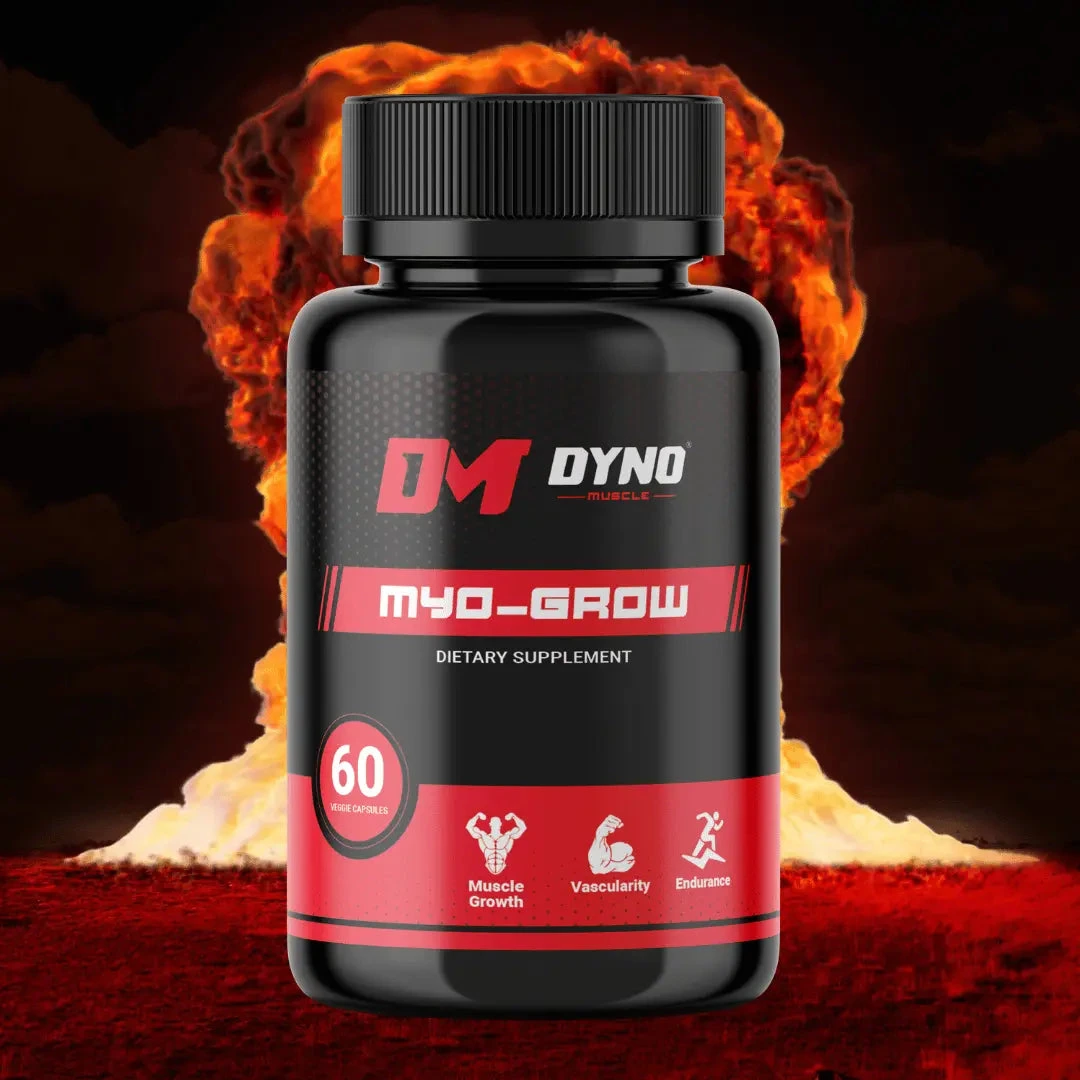
If you want the basics first, what Myo Grow is comes down to a pretty lean formula: 400 mg epicatechin, 400 mg beta-ecdysterone, and 5 mg piperine per serving (2 capsules), with 60 capsules per container giving you a 30-day supply. The vegetable capsule shell is the only other listed ingredient, which at least means there's no proprietary blend hiding low doses.
The product page frames the mechanism around myostatin inhibition, which is the idea that these ingredients regulate myostatin activity, the protein that limits how much muscle your body builds. Dyno Muscle describes it as a '100% natural, clinically dosed formula' with 'no stimulants, synthetics, or banned substances,' and the company claims no cycling is required.
The standard FDA disclaimer is present: these statements have not been evaluated by the Food and Drug Administration, and the product is not intended to diagnose, treat, cure, or prevent any disease.
The myostatin-inhibition angle is real science in the sense that both epicatechin and ecdysterone have been studied for anabolic mechanisms. Epicatechin, a flavonoid found in dark chocolate and green tea, has shown myostatin-reducing effects in some small studies. Ecdysterone, a naturally occurring compound in plants, has been explored for anabolic and performance effects, including potential interaction with estrogen receptors based on more recent research. Piperine is included as a bioavailability enhancer, a common role it plays in supplement formulas. So the formula isn't random. The question is whether the evidence is strong enough to justify the marketing claims, and that's where things get shaky.
Dyno Myo Grow reviews: overall impressions and what people actually report
The split between positive and critical reviews follows a pattern that's pretty common with this category of supplement. A thorough Myo Grow review from the community tends to land somewhere in the middle: the ingredients aren't junk, but the testimonials the company highlights are not credible.
A Reddit reviewer in the r/hgh_t community described it as a 'decent epicatechin formula' while calling the marketing 'absurd,' specifically pointing to testimonials claiming 20 lbs of lean muscle, which is not a realistic outcome from any natural supplement in a short cycle. Positive reviewers typically report modest strength increases and feeling 'fuller' or more pumped during training. Negative reviewers report feeling nothing at all, with the added frustration of poor customer service when they try to get a refund.
That gap between experience sets is telling and worth understanding.
Dyno Muscle's own marketing material says most users notice strength increases by week 3 and visible physical changes by weeks 6 to 8. Third-party write-ups echo those timelines (3 to 4 weeks for initial changes, 8 to 12 weeks for a full cycle), but none of these reflect independent clinical trials. They're aggregated anecdotes at best. The honest framing is this: some users who are also training consistently and eating enough protein may notice modest improvements in performance or recovery. Users who aren't doing those things won't notice much, and no supplement fixes a poor training stimulus.
Before-and-after results: separating real gains from marketing theater

Before-and-after photos and testimonials are the hardest type of evidence to evaluate. Whether Dyno Myo Grow works is a different question from whether a specific person's before-and-after looks dramatic, because lighting, body fat loss, pump timing, posture, and clothing all influence photos enormously. Ecdysterone anecdote compilations report double-digit pound changes over 7 to 12 weeks in some cases, but these are self-reported and not controlled for diet, training volume, or starting baseline. A beginner or someone returning after a break will always show more dramatic before-and-after results than an experienced lifter, regardless of what supplement they're taking.
Here's how to track results honestly if you decide to try it. Scale weight alone is the worst metric. What you want is: bodyweight measured at the same time each morning, a weekly average to smooth out water fluctuations, waist and limb measurements every 2 to 4 weeks, and progress photos in consistent lighting with the same pose. If your waist stays flat or shrinks while your arms and chest measurements grow, you're gaining lean mass.
If your scale weight jumps 5 lbs in the first week, that's almost certainly water and glycogen, not muscle. Realistic muscle gain for a trained individual is roughly 0. 5 to 1 lb of actual muscle per month under ideal conditions. A supplement may push that modestly at the margins; it won't double it.
Timelines to set your expectations: most users who report anything positive notice workout performance improvements (more reps, slightly better recovery between sets) in weeks 2 to 4. Changes in actual body composition that show up in photos or tape measurements typically take 6 to 12 weeks minimum, and that's assuming training and nutrition are dialed in. Claims of major transformation in under 4 weeks are marketing, not physiology.
Side effects and safety: who should be careful
The three ingredients in Myo Grow carry different safety profiles. Epicatechin at 400 mg is generally well-tolerated; the most commonly reported side effect is mild GI discomfort, particularly if taken on an empty stomach. Beta-ecdysterone has a reasonable safety profile in available research, but it's worth noting that ecdysteroids may interact with estrogen receptors based on emerging evidence, so anyone with hormone-sensitive conditions should discuss this with their doctor before using it.
Piperine at 5 mg is a low dose and is broadly considered safe, but it's a CYP3A4 inhibitor, meaning it can slow the breakdown of certain medications. Research in animal models has shown piperine can alter the pharmacokinetics of anticoagulants like warfarin, which is a meaningful concern if you're on blood thinners, anticoagulants, or certain cardiovascular drugs.
Dietary supplements in the U.S. don't require manufacturers to prove safety and effectiveness before reaching shelves, which is a structural reality of how this market works. That means the burden is on you to check ingredient interactions. If you take any prescription medication, including blood pressure drugs, anticoagulants, statins, or hormonal therapies, run the ingredient list by your pharmacist or doctor before starting. The NIH Office of Dietary Supplements maintains a safety reporting portal where you can check whether serious adverse events have been reported for specific ingredients. Dyno Muscle does include a 'consult with a certified healthcare professional' disclaimer on their product page, though they don't give specific contraindication guidance by condition.
- Piperine interacts with certain medications, especially anticoagulants and drugs metabolized by CYP3A4 enzymes. Check with a pharmacist if you take any prescription drugs.
- Ecdysterone may interact with estrogen receptors. People with hormone-sensitive conditions should consult a doctor.
- GI discomfort is the most commonly reported side effect. Take capsules with food to reduce the risk.
- Pregnant or breastfeeding individuals should avoid this product, as with most untested supplements.
- Teens and young adults under 18 should not use hormone-adjacent supplements without medical guidance.
Where to research Myo Grow and how to read the reviews

Not all review sources are equal, and knowing how to filter signal from noise saves you a lot of time. Reddit is generally the most useful starting point for honest takes, because the community self-polices marketing accounts fairly aggressively and users tend to share actual protocols, doses, and side-by-side comparisons with other supplements. Look for posts that include training history, diet context, and multi-week updates rather than single posts with dramatic claims.
Amazon reviews for supplements are notoriously gamed: look at the 2- and 3-star reviews, not just the 5-star or 1-star extremes, because those tend to be the most nuanced. YouTube reviews from influencers are the least reliable unless the creator is independently funded and has a history of criticizing products that don't work. Assume any YouTube review where the creator has an affiliate link is financially motivated.
Trustpilot and BBB are useful specifically for customer service and business practice patterns, not product efficacy. If you see recurring themes around refund denials, unresponsive support, or shipping disputes across multiple reviewers, that's a legitimate business-practice concern regardless of whether the product works. For Dyno Muscle, that pattern exists and is worth weighing before you buy. There's no 'consumer reports'-style independent lab testing published for Myo Grow at this time, so you can't verify label accuracy from a third-party certificate of analysis publicly. If third-party testing matters to you, that's a gap worth noting. Whether Myo Grow works is ultimately a question you'll have to answer through ingredient-level evidence and your own n=1 trial, not through marketing testimonials.
How Myo Grow fits (or doesn't) into a real muscle-building plan
Supplements sit at the bottom of the muscle-building priority stack, not the top. Before Myo Grow makes any meaningful difference, you need a progressive resistance training program that provides consistent mechanical tension and metabolic stress, a protein intake of at least 0.
7 to 1 gram per pound of bodyweight per day (closer to 1 g/lb if you're older or in a caloric deficit), adequate total calories to support muscle synthesis, and 7 to 9 hours of sleep where most muscle repair actually happens. If any of those are missing, Myo Grow won't compensate. It's an additive, not a foundation.
That said, if those fundamentals are already in place, the ingredients in Myo Grow have plausible mechanisms that could offer a modest edge, particularly around myostatin regulation and recovery. One paper on (−)-epicatechin reviewed molecular modulators involved in skeletal muscle growth and differentiation, including changes related to myostatin [around myostatin regulation and recovery](https://pmc. ncbi. nlm.
nih. gov/articles/PMC3857584/).
For dosing, the label calls for 2 capsules per serving. The company doesn't specify timing, but taking it with a meal is sensible for tolerability and because piperine enhances absorption of other compounds when taken with food. An 8 to 12 week trial is the minimum useful evaluation window given the timelines the research suggests for ecdysterone and epicatechin. Running it shorter than that and concluding 'it didn't work' is premature.
Running it longer than 12 weeks without measurable progress (tracked with tape and photos, not feelings) means it's probably not giving you a meaningful individual response. If you want to compare it against alternatives, something like a well-dosed creatine monohydrate has significantly more robust evidence for muscle gain and costs a fraction of the price. The ISSN position stand also provides established creatine dosing guidance of about 0.
3 g/kg/day for 5 to 7 days to increase muscle creatine stores, followed by about 3 to 5 g/day for maintenance [well-dosed creatine monohydrate has significantly more robust evidence for muscle gain](https://pmc. ncbi. nlm. nih.
gov/articles/PMC5469049/). Creatine isn't the same mechanism, but it sets a useful evidence bar: any supplement you add should have a reason to be there beyond marketing.
| Factor | Dyno Muscle Myo Grow | Creatine Monohydrate |
|---|---|---|
| Primary mechanism | Myostatin inhibition (epicatechin, ecdysterone) | ATP resynthesis, cell volumization |
| Evidence strength | Preliminary/inconsistent for muscle gain | Extensive, consistent across populations |
| Ingredients | Epicatechin 400 mg, Beta-Ecdysterone 400 mg, Piperine 5 mg | Creatine monohydrate (3–5 g/day typical dose) |
| Drug interaction risk | Moderate (piperine, ecdysterone) | Very low |
| Cost per month (approx.) | Higher, single-source brand | Low, widely available |
| Third-party testing available | Not publicly confirmed | Many brands certified |
| Customer service track record | Multiple complaints on Trustpilot and BBB | Category-wide, not brand-specific |
This isn't to say Myo Grow is worthless compared to creatine. They work through completely different pathways and could theoretically be stacked. But if you're choosing between them as your first supplement dollar, creatine wins on evidence and cost every time. If you're already using creatine and eating enough protein, then exploring epicatechin or ecdysterone as an addition is more reasonable. It's also worth reading a broader muscle grow XXL review if you're comparing this category of natural anabolic supplement more widely, because Myo Grow is not the only product making similar claims and the patterns repeat across brands.
Complaints, red flags, and what the negative reviews actually tell you

The business-practice complaints around Dyno Muscle are the most concrete and actionable part of any negative review. On Trustpilot, recurring themes include refund requests not being processed as advertised, customers claiming they never received return instructions, and reported delays or outright denials around the 90-day money-back guarantee. BBB complaint records show a similar pattern: refund disputes, difficulty reaching customer service, and return processes that don't match what the product page advertises. These aren't anecdotes about the product not working, they're claims about whether the company honors its stated policies, which is a different and more serious issue.
If you're considering buying, here are the red flags worth taking seriously. First, the money-back guarantee is advertised prominently, but the complaint volume around it suggests actually using that guarantee may be harder than it sounds. Second, there are no publicly available third-party lab results confirming that what's on the label is actually in the capsule at the stated dose.
Third, some marketing testimonials claim results (like 20 lbs of lean muscle) that are not physiologically possible from a natural supplement in a short cycle, which signals a willingness to overstate outcomes. That marketing pattern, where the ingredient list is decent but the claims are disconnected from what the ingredients can realistically do, is a recurring theme in this product category and it's worth calibrating your expectations accordingly.
The 'it didn't work' complaints are harder to evaluate because they don't include training or nutrition context. Someone eating below maintenance protein and not doing resistance training won't get results from anything. But when that complaint clusters with refund difficulty, it creates a frustrating double bind: the product underdelivered and getting your money back is an ordeal. That combination is worth pricing into your decision before you buy, not after.
So should you try it? Here's the honest framework
Here's how to decide. If you're a beginner or haven't optimized protein intake and training consistency yet, don't start here. Fix those first and you'll get better results than any supplement can produce. If you're intermediate to advanced, already hitting your protein targets, training consistently 3 to 5 days per week, and sleeping well, then the ingredients in Myo Grow have a plausible case for offering a modest edge. The epicatechin and ecdysterone doses are at least in the range that research has used, and the piperine inclusion for bioavailability makes formulation sense.
The cautions are real: check for medication interactions before buying (especially if you're on blood thinners or any CYP3A4-metabolized drug), don't expect dramatic before-and-after results in under 6 weeks, and document your results with measurements not just feelings. If you decide to buy, go in with eyes open about the refund process: screenshot the guarantee terms, save your order confirmation, and contact customer service proactively if anything goes wrong rather than waiting. The ingredient science is interesting enough to warrant exploration for the right person, but the marketing and customer service record mean you should approach this one as an informed, cautious buyer rather than an enthusiastic one.
FAQ
Is Dyno Muscle Myo Grow a good first supplement if I have never used anything besides protein?
Usually no. If you are not already using creatine, or you have not tracked training and protein intake for at least a few weeks, Myo Grow is less likely to be the biggest lever. Creatine monohydrate has stronger muscle-gain evidence and simpler dosing, so many people add it first, then consider epicatechin or ecdysterone only if basics are already solid.
How should I take it if I get stomach discomfort from supplements?
Try taking the 2 capsules with a full meal instead of on an empty stomach. Piperine can increase absorption, but it can also irritate some people, so spacing with food often helps. If symptoms persist, stop and reassess rather than pushing through, especially if you have a history of GI sensitivity.
Can I stack Myo Grow with creatine, pre-workout, or other supplements?
Creatine is generally the easiest stack because there is no overlap in mechanism that would raise an obvious concern, and it does not rely on piperine for absorption. For pre-workout, avoid doubling stimulants if your goal is better tolerance. For any other hormonal or “testosterone booster” product, be cautious, because the ecdysterone component and piperine can complicate hormone-related effects and drug metabolism.
What medications or conditions are the biggest red flags before using this?
The biggest practical concern is piperine’s effect on drug breakdown (CYP3A4) and the epicatechin or ecdysteroid endocrine angle. Extra caution is warranted if you are on anticoagulants (like warfarin), have hormone-sensitive conditions, take multiple prescription medications, or have a history of medication interactions. If you want a simple check, ask your pharmacist to screen the exact ingredient list against your prescriptions.
Does Myo Grow require cycling or stopping after a few weeks?
The marketing suggests no cycling is required, but your personal risk management should still guide decisions. If you notice side effects, or your labs or symptoms change, stop. If you want a conservative trial approach, run a defined 8 to 12 week experiment with tracking, then only continue if results justify the cost and any risk.
What results should I expect realistically in the first month?
Most “early wins” are performance related, like slightly more reps, better recovery between sets, or a better pump, not major body-composition changes. If you are only watching the scale, expect water and glycogen fluctuations, sometimes masking progress. If tape measurements and waist do not improve at all after 6 to 8 weeks, a modest effect is unlikely.
How do I tell if a before-and-after photo is showing real lean gain?
Control the variables: same lighting, same time of day, same distance to the camera, similar pose, and ideally similar body hydration. Also use at least one objective metric like waist and arm or thigh circumference every 2 to 4 weeks. If scale weight rises but waist and measurements stay flat, it is more likely water or food volume than muscle.
What is the best way to measure progress if I am bulking or cutting?
Use trends, not single measurements. During a cut, target waist and photos, because muscle gain is slower, and scale weight will drop even if you add lean mass. During a bulk, track weekly average scale weight and waist together, because a rapid waist increase suggests fat gain. Consistency in daily protein and training volume matters more than the supplement.
If Myo Grow does not work for me, how long should I wait before contacting support for a refund?
Treat the refund window as the priority, not the results timeline. Save screenshots of the guarantee terms and your order confirmation immediately, then contact customer service promptly if you feel the product is not delivering. Do not wait until the end of the money-back period to discover return instructions are unclear.
What are common mistakes that lead to “it didn’t work” reviews?
The most common issue is missing fundamentals, like training volume not progressing and protein below the recommended range. Another frequent mistake is evaluating too early, judging by scale weight in week 1 or 2, when glycogen and water swings can dominate. Finally, some users skip documentation, so they cannot separate “felt nothing” from actual lack of change in waist and circumference.
Is there any reason to buy this if I am already getting good results with creatine and protein?
If creatine and your nutrition and training are already dialed in, Myo Grow is more of a “maybe modest edge” purchase than a necessity. Consider it only if you are disciplined about tracking and willing to accept that evidence for large transformation is weak. Otherwise, your incremental gains are likely better spent on higher-quality training progression or adjusting calories and sleep.