Swimming builds real muscle, especially through the lats, shoulders, chest, triceps, glutes, and core. It's not as efficient as barbell training for pure hypertrophy, but with the right stroke selection, intensity, volume, and nutrition, you can absolutely grow muscle from the pool. The degree of growth depends heavily on how hard you push, how much total work you do each week, and whether you're eating enough protein to support it.
What Muscles Does Swimming Grow? Breakdown by Stroke
Marcus Kellerman
4 Jun 2026
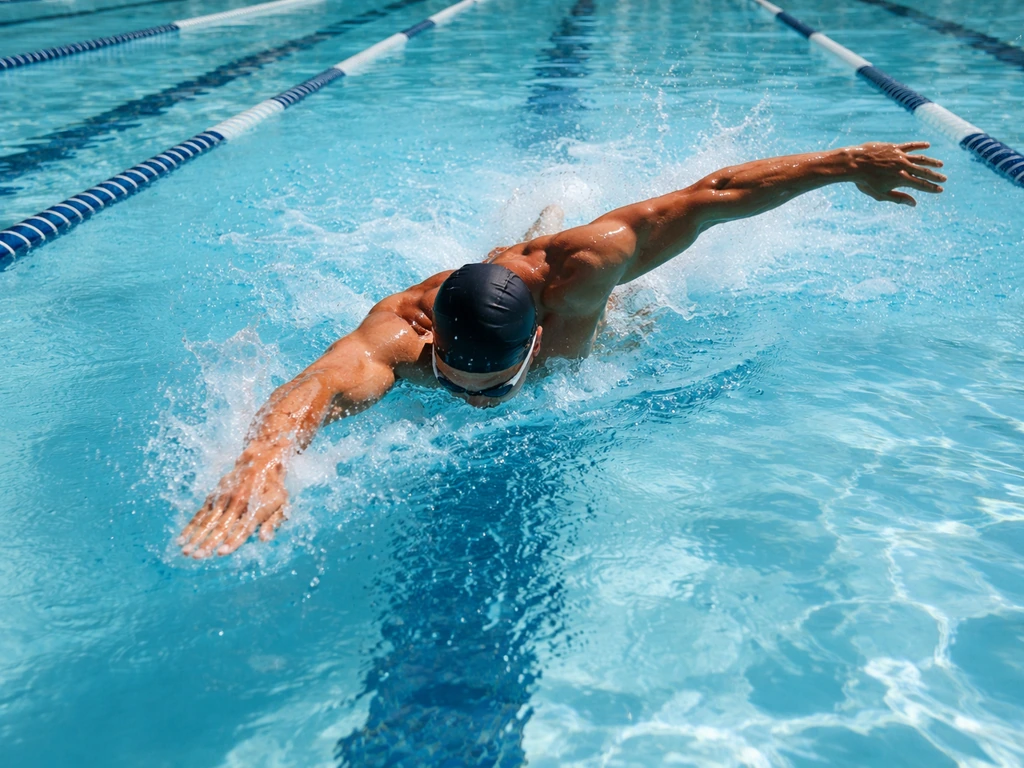
The main muscle groups swimming actually works
Swimming is a full-body activity, but it's not equal across all muscles. Some groups get hammered; others get a lighter stimulus. Understanding which is which helps you train smarter and set realistic expectations.
On the upper body side, the latissimus dorsi is the primary driver of propulsion in most strokes, particularly during the pull phase when your hand enters the water and drives back toward your hip. Fine-wire EMG studies have directly measured high activation in the lats, pectoralis major, subscapularis, and serratus anterior across competitive swim strokes.
A fine-wire EMG study directly recorded shoulder and arm muscle activity during swimming and synchronized it with stroke phases, analyzing eight muscles including the biceps, subscapularis, latissimus dorsi, pectoralis major, supraspinatus, infraspinatus, serratus anterior, and deltoid [Fine-wire EMG studies measured shoulder activation synchronized with swim phases](https://pubmed. ncbi. nlm. nih.
gov/3752349/). A systematic review of EMG studies across the four competitive strokes, including crawl/freestyle, breaststroke, butterfly, and backstroke, supports this EMG-based stroke-specific view of muscle activation Electromyography in the four competitive swimming strokes: A systematic review.
The deltoids (especially anterior and medial) work hard during hand entry and the early catch, while the triceps extend the elbow to finish each pull. The biceps and forearm muscles assist with grip and elbow control. The trapezius, rhomboids, and rear deltoids contribute to scapular stability and recovery phases.
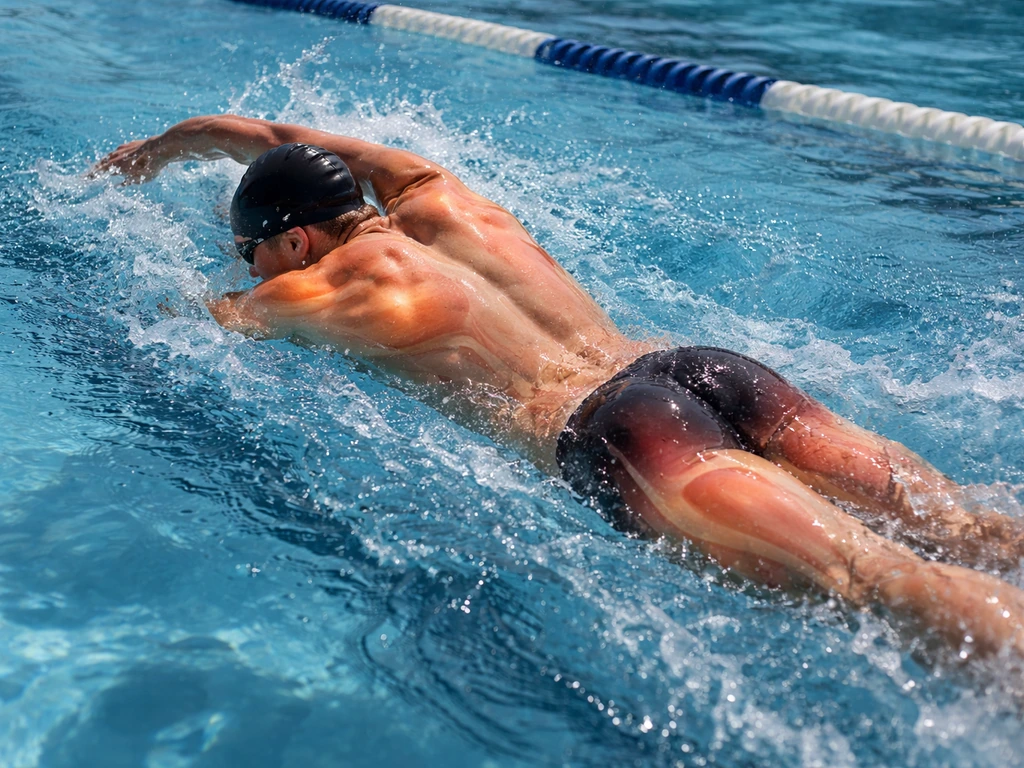
Below the waterline, the glutes and hamstrings drive the kick in freestyle and backstroke. Breaststroke's frog kick is more quad and inner-thigh dominant, with significant involvement of the rectus femoris and biceps femoris documented in EMG breaststroke research. The gastrocnemius (calves) and tibialis anterior also show meaningful activation, particularly in breaststroke kicks. Hip flexors get a sustained workout in flutter kick, where you're cycling your legs continuously.
Then there's the core, which is less a targeted muscle and more of a constant background requirement. Your abs, obliques, and deep trunk stabilizers (think transverse abdominis and erector spinae) work continuously to keep your body horizontal and efficient. This isn't glamorous hypertrophy work, but it does build functional core strength and endurance over time, which matters for older adults especially.
How each swim stroke emphasizes different muscles
Stroke choice changes the stimulus significantly. If you're always doing freestyle laps, you're getting a very different training effect than someone who mixes in butterfly or breaststroke. Here's how the four main strokes break down:
| Stroke | Primary Muscles Targeted | Notable Emphasis |
|---|---|---|
| Freestyle (Front Crawl) | Lats, pecs, deltoids, triceps, glutes, hamstrings, core | Best overall lat developer; continuous flutter kick loads glutes and hip flexors |
| Backstroke | Lats, posterior deltoids, trapezius, glutes, core | Rear shoulder and upper back get more attention than in freestyle; good postural benefit |
| Breaststroke | Pecs, triceps, quads, biceps femoris, gastrocnemius, inner thighs | More quad and inner thigh than any other stroke; distinct pull-then-kick cycle works muscles sequentially |
| Butterfly | Lats, pecs, deltoids, abs, glutes, spinal erectors | Highest full-body demand; hip/trunk drive is central to propulsion, making it exceptional for core and lower back development |
Butterfly deserves a special mention. Clinical biomechanics research notes that much of butterfly's propulsion actually comes from hip and trunk undulation, not just the arms. That means it's one of the best strokes for building the posterior chain and core if you're doing it correctly. It's also the most technically demanding and physically exhausting, so beginners shouldn't expect to last more than a lap or two at first.
From a muscle-building standpoint, using multiple strokes across a week is smarter than just grinding freestyle. Rotate breaststroke for more quad work, backstroke for rear delts and posture, and butterfly for core and power development.
Upper vs lower body: what swimming actually develops
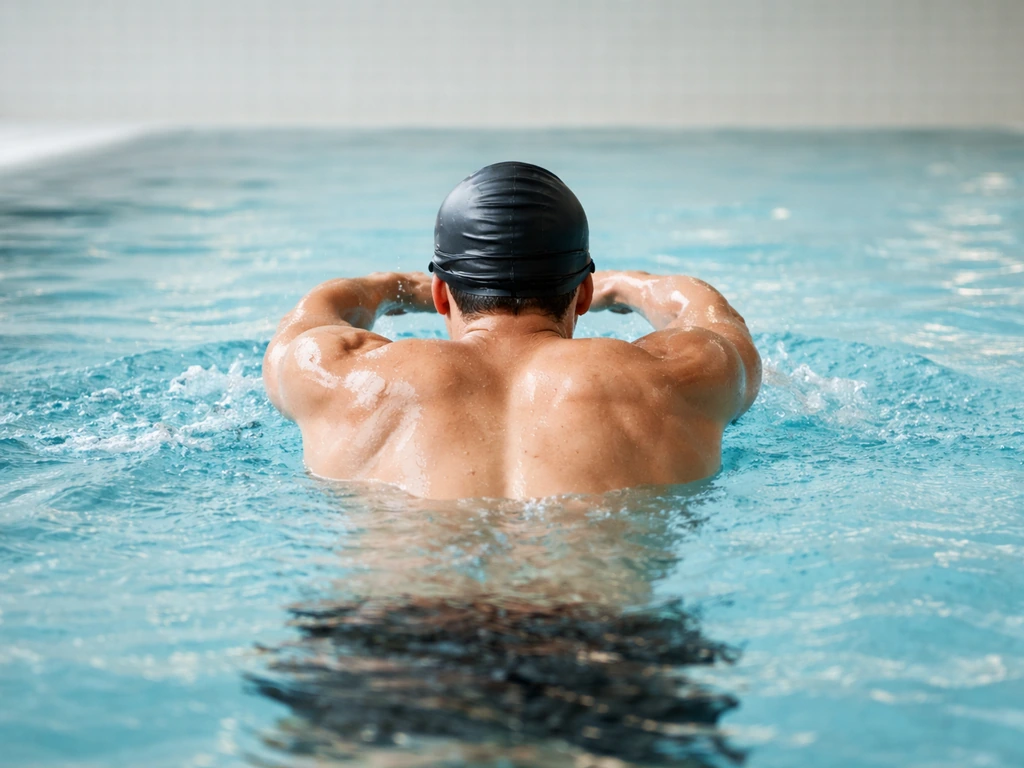
Here's the honest truth: swimming builds the upper body more visibly than the lower body, at least compared to land-based training. The pulling motion through water creates enough mechanical tension in the lats, pecs, and shoulders to drive measurable hypertrophy, particularly if you're working at high intensity or using resistance tools like hand paddles. Elite swimmers famously develop wide, V-shaped backs and thick shoulders precisely because of high-volume, high-effort upper body work.
The lower body is a different story. Water provides resistance, but it's lower than what your legs can produce with loaded squats or deadlifts. Flutter kicking for an hour does build glute and hamstring endurance and some size, but you won't grow your legs the way a squat rack will. Breaststroke is the exception here because the explosive frog kick produces a more loaded, strength-oriented contraction, making it better for quad development than other strokes. If you're specifically trying to grow your legs, swimming alone probably isn't enough, and pairing it with land training is worth considering.
The core ends up being one of the clearest winners. Sustained swimming across multiple strokes demands continuous trunk stabilization. Over months, this translates into noticeably stronger, more defined abs and obliques, even if you never do a single sit-up. For older adults in particular, this functional core strength has real carry-over benefits for injury prevention and posture.
What actually determines muscle growth from swimming
This is where most people go wrong. They get in the pool, do moderate laps at a comfortable pace, and wonder why nothing is changing after two months. Swimming, like any training method, only builds muscle when it provides enough mechanical tension, metabolic stress, and progressive overload to signal the body to adapt. Casual lap swimming often doesn't meet that threshold.
Intensity and effort
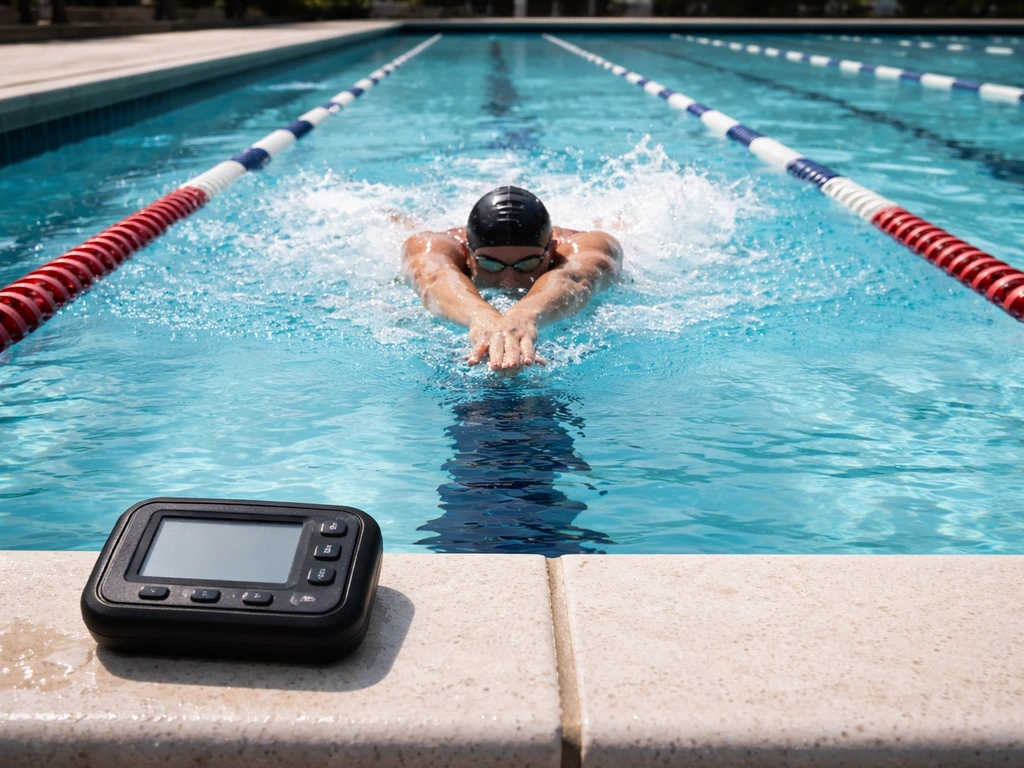
Effort is the biggest variable most swimmers underutilize. If you can hold a conversation mid-lap, you're not working hard enough for meaningful hypertrophy. Interval-based training, where you push hard for a set distance or time and then rest, creates the kind of muscular fatigue that triggers growth. Think sets of 4x50m at near-maximum effort with 30-60 second rest, rather than a slow 1000m cruise.
Volume and frequency
Volume matters as much in the pool as it does in the gym. For muscle growth, you generally want 3-5 sessions per week with enough total meters that individual muscle groups are getting 10-20 hard sets of equivalent stimulus weekly. That's a lot for beginners, so scale appropriately. Two or three quality sessions per week with focused effort beats five leisurely swims every time.
Progressive overload in the pool
Progressive overload is harder to apply in water than with a barbell, but it's not impossible. You can increase resistance by adding hand paddles (bigger paddles mean more resistance per stroke), using pull buoys to isolate the upper body and overload the lats and shoulders, adding resistance bands or drag socks, or increasing your pace over time on the same intervals. Kick sets with fins can overload the glutes and hamstrings more than standard kicking. These tools are the swimming equivalent of adding plates to the bar.
Hybrid training for better results
If maximizing muscle size is your primary goal, swimming alone may leave you short. Combining swim training with compound lifting, especially exercises like rows, pull-downs, overhead pressing, and hip hinge movements, addresses swimming's lower body and progressive overload limitations. Many competitive swimmers lift heavy in the off-season for exactly this reason. Even two days of simple barbell or dumbbell work per week on top of swimming significantly accelerates muscle development.
When you'll notice changes and what to expect
For someone starting from scratch, the first 4-6 weeks are mostly about neurological adaptation. Your muscles are learning to coordinate the movements, and you'll feel stronger in the water without much visible change yet. By weeks 8-12 with consistent training and adequate protein, you should notice increased definition in the shoulders, lats, and core. Meaningful size changes, meaning your shirt fits differently, typically take 3-6 months of structured, progressive swimming with sound nutrition. That's not slow; that's just honest physiology.
For older adults (50+), the timeline doesn't necessarily lengthen, but the stimulus needs to be consistent. Muscle protein synthesis still responds well to resistance training at any age, and swimming provides a low-impact way to deliver that stimulus without joint stress. The research on older adults and aquatic exercise consistently shows improvements in muscle function and quality, even if raw size gains are more modest than in younger populations. Don't let age talk you out of expecting real results.
If you're three months in and seeing nothing, check these in order: Are you pushing hard enough? Are you eating enough protein? Are you sleeping 7-9 hours? Are you progressively making sessions harder? Lack of results is almost always one of those four things. Soreness is not a reliable indicator of growth, by the way. You can make progress without feeling wrecked the next morning.
Practical swim routines to actually build muscle
Beginner routine (3 days per week)
If you're new to swimming, focus on stroke technique first since poor mechanics waste effort and reduce muscle activation. Here's a simple structure for each session, targeting roughly 1500-2000 meters total:
- Warm-up: 200m easy freestyle (focus on long strokes and relaxed breathing)
- Drill set: 4x50m catch-up drill or fingertip drag drill (builds shoulder and lat awareness)
- Main set: 6x100m at 70-80% effort with 30-45 seconds rest between each (alternate freestyle and backstroke each session)
- Kick set: 4x50m with a kickboard at moderate effort (targets glutes and hamstrings)
- Cool-down: 100-200m easy mixed stroke
After 4-6 weeks, introduce pull buoy sets to isolate and overload the upper body. Add 4x75m pull buoy freestyle to your main set and drop the pace to near-maximal on these.
Intermediate routine (4 days per week)
At this level, you're comfortable with at least two strokes and can handle higher intensity. Structure two sessions as upper-body emphasis (pull buoy, hand paddles, sprint intervals) and two as full-stroke mixed sessions:
- Upper-body focus day: 300m warm-up, then 8x100m with hand paddles at 80-90% effort, 45 seconds rest; finish with 4x50m all-out sprint freestyle
- Full-stroke day: 200m warm-up, 6x150m alternating freestyle and breaststroke at strong effort, 200m butterfly drill work (if technique allows), 200m cool-down
- Add resistance: Once every two weeks, use drag socks or a resistance band tethered to the wall for 4-6 short sprint sets of 25m to drive progressive overload
- Track your paces: If your 100m pace isn't improving over 6-8 weeks, you need to either increase effort per session or add volume
Nutrition and recovery: the part most swimmers skip
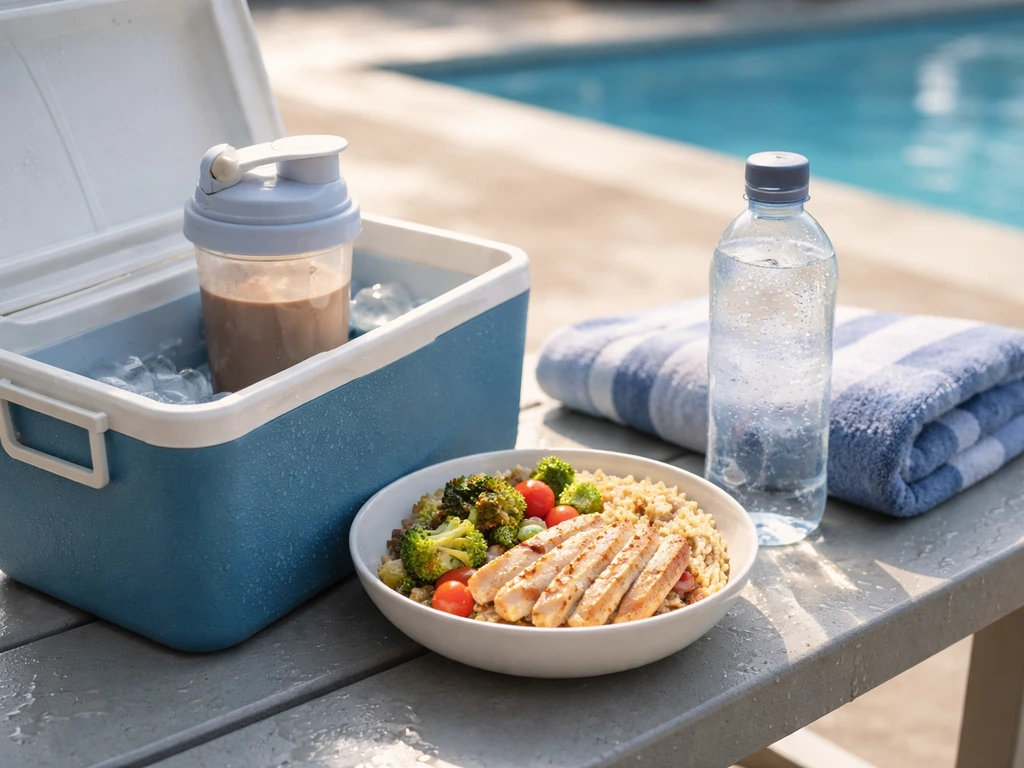
You cannot out-swim a protein deficit. Muscle grows during recovery, not during the session itself, and that recovery requires adequate raw materials. Protein is the non-negotiable foundation.
Protein targets
For muscle growth, aim for 0.7-1 gram of protein per pound of bodyweight daily (roughly 1.6-2.2 grams per kilogram). So a 170-pound (77kg) person needs roughly 120-170 grams of protein per day. Spread it across 3-5 meals or snacks, with at least 30-40 grams per sitting to maximally stimulate muscle protein synthesis. Older adults should push toward the higher end of this range since they tend to show a blunted anabolic response to lower protein doses.
Calorie intake
Swimming burns more calories than most people expect, particularly at higher intensities. If you're trying to grow muscle, you need to be in a slight caloric surplus (roughly 200-300 calories above your maintenance). A common mistake swimmers make is underestimating their burn and undereating, which kills recovery and stalls muscle growth. If you're tracking and still not gaining, add a protein shake or an extra meal before assuming something is wrong with your training.
Timing and post-workout nutrition
Eat a protein-containing meal or snack within 1-2 hours of finishing your swim. This doesn't need to be complicated. A chicken breast and rice, Greek yogurt and fruit, or a whey protein shake with milk all work. The post-workout window isn't magic, but it is a practical opportunity to give your muscles what they need while protein synthesis is elevated.
Recovery protocols
Sleep is your most powerful recovery tool, full stop. Aim for 7-9 hours. Muscle grows during deep sleep when growth hormone secretion peaks, so cutting sleep to squeeze in more training is counterproductive. Between sessions, prioritize mobility work for the shoulders and hips since swimmers accumulate repetitive stress in these joints. Foam rolling the lats and thoracic spine takes five minutes and meaningfully reduces next-session soreness. For higher-volume weeks, consider a full rest day every 3-4 days rather than swimming through accumulated fatigue.
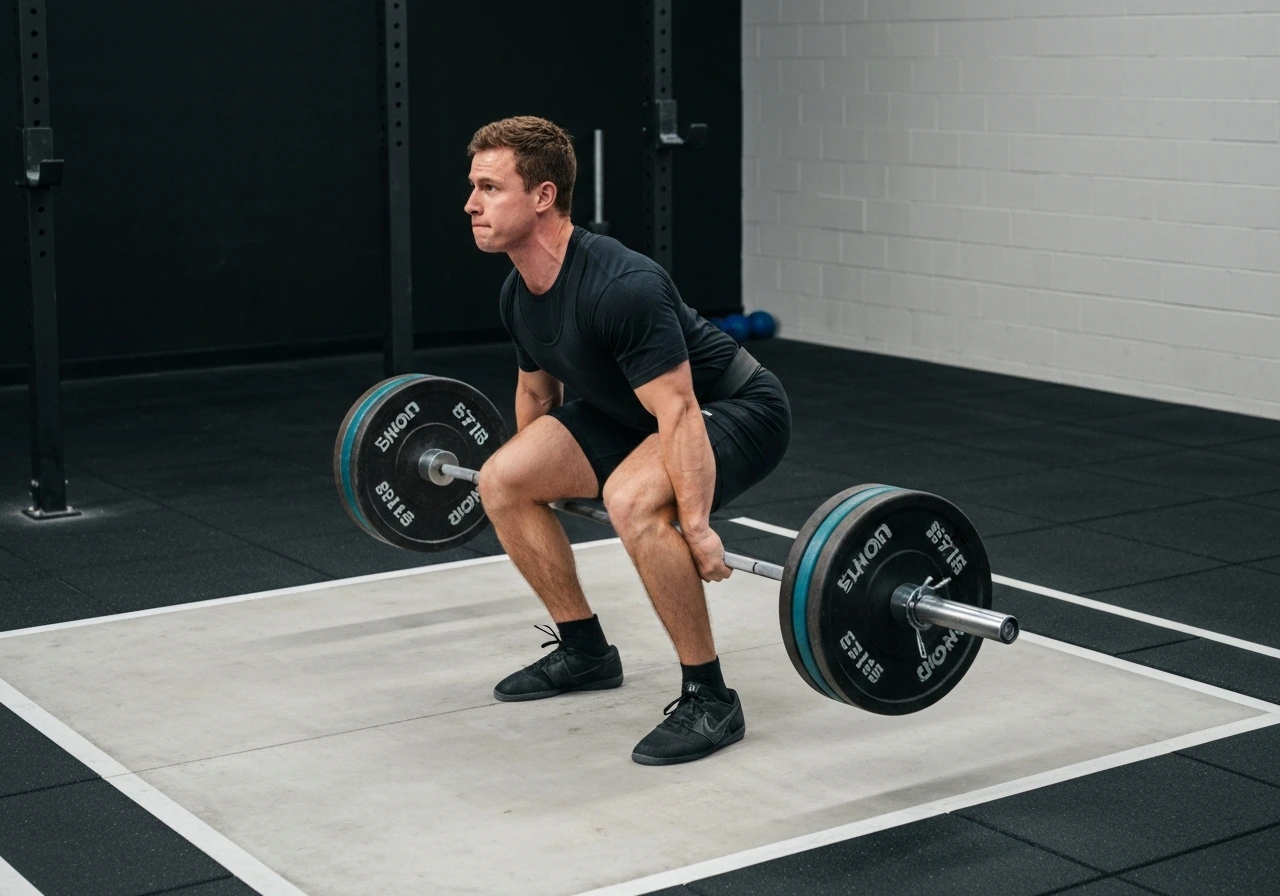
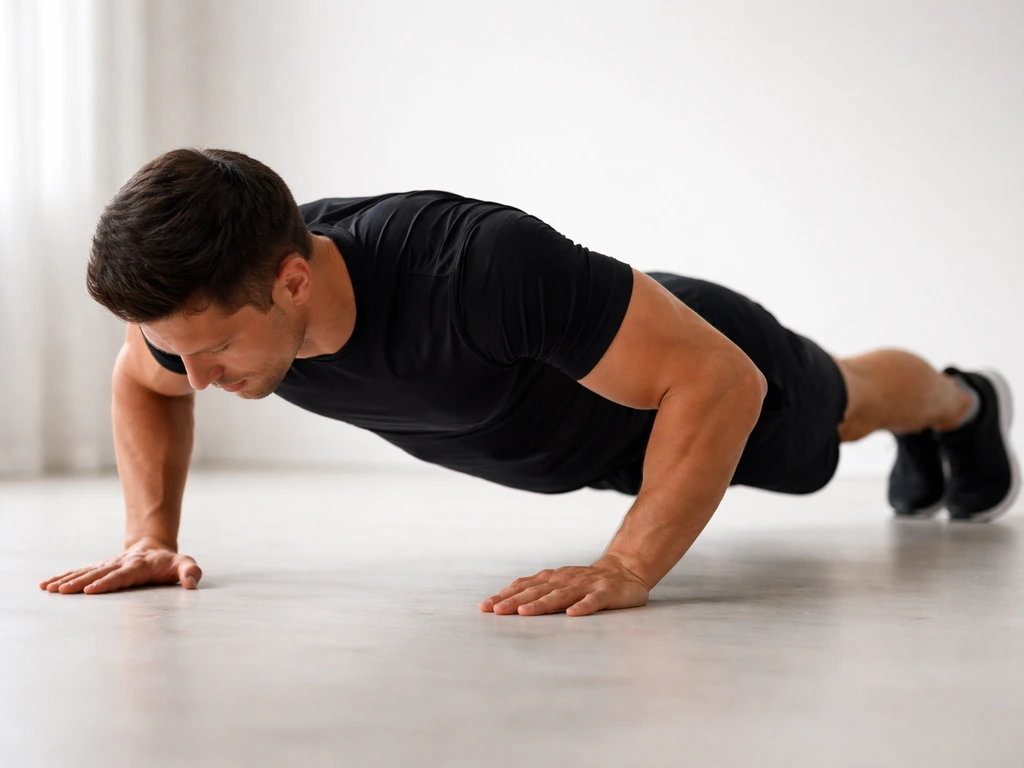
Swimming shares muscle-building principles with every other training modality. The same mechanical tension and metabolic stress that makes deadlifts grow your posterior chain or push-ups develop your chest applies in the pool. Deadlifts mainly grow the glutes, hamstrings, and other hip hinge muscles, which is why they translate well to building a strong posterior chain. Push-ups mainly target the chest, triceps, and shoulders, with your core helping stabilize your body throughout the reps.
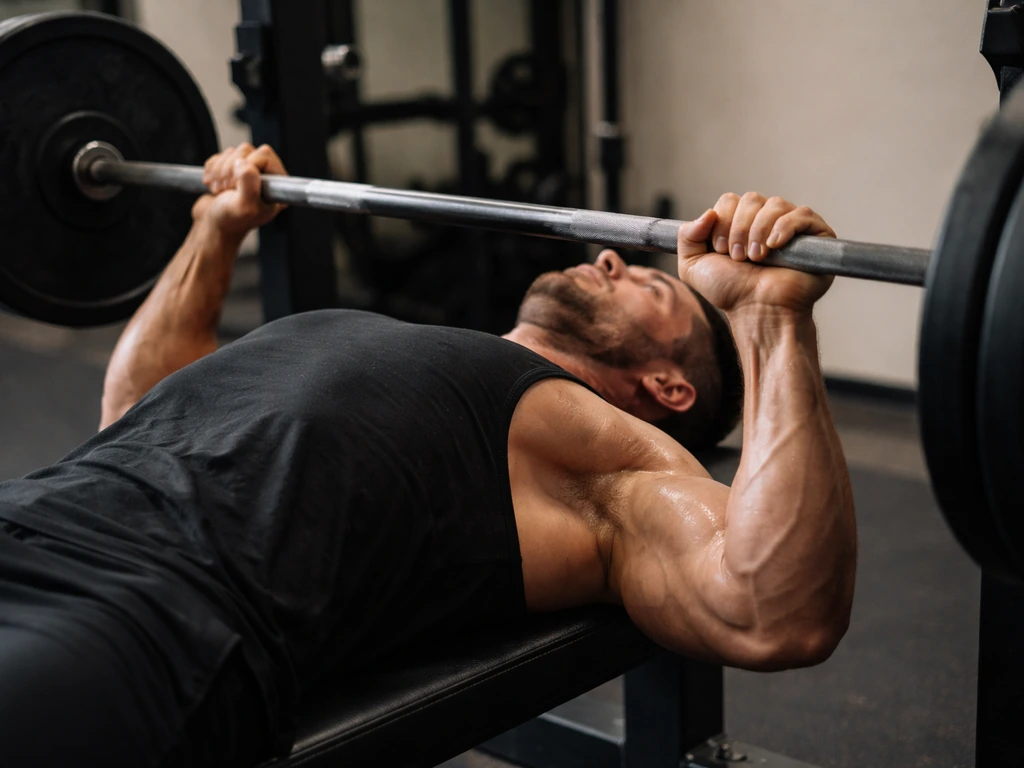
The difference is that water provides a lower maximum resistance than iron, so you have to be smarter about intensity, stroke selection, resistance tools, and volume to get the same growth signal. In weight training, the same core idea shows up when lifters use progressive overload to create enough mechanical tension for growth weightlifters. Do that, hit your protein, sleep well, and the muscles you're targeting will respond.
FAQ
If I only swim freestyle, what muscles will still grow most?
Freestyle most strongly trains the lats and upper back (during the pull), plus the anterior and medial deltoids and triceps (to set the catch and finish the pull). You will also get repeated trunk stabilization for abs and obliques, but your legs usually get more endurance than size unless you add focused kicking work or a second stroke with more knee-dominant action.
How hard do I need to swim to actually build muscle, not just get fitter?
You generally need intervals you cannot hold as a casual pace. A simple check is whether your target sets feel like 8 to 9 out of 10 effort near the end, and whether you need rest to maintain near-max speed. If you can talk comfortably the whole time, the session is likely too easy to drive the growth stimulus.
Do swimming workouts that leave me sore mean I am growing muscle?
Not reliably. Soreness can come from unusual technique, overreaching, or delayed-onset muscle damage, especially early on, while hypertrophy depends more on sustained tension and enough weekly hard work. Track performance and body measurements, not next-day soreness, to judge progress.
How many swimming sessions per week are enough for muscle growth?
Three to five sessions per week is the usual sweet spot for gaining, assuming you do enough hard meters. Two quality sessions can work if you include near-max intervals and targeted sets, but five easy sessions often under-deliver because intensity and weekly “hard sets” are too low.
What is the most common reason swimmers don’t gain muscle after months?
The most frequent combination is not pushing hard enough plus not eating in a way that supports growth. Many swimmers track workouts but underestimate calories and protein, so recovery fails even when training looks intense on paper.
Can pull buoys or fins help me target specific muscles for growth?
Yes, but use them intentionally. Pull buoys shift load toward the upper body, increasing the stimulus for lats and shoulders, while fins can increase resistance and make kick sets more glute and hamstring focused. Avoid using them for every set, since you can bias muscle development and reduce total full-body practice.
Will swimming grow my legs the same way squats do?
Usually not. Swimming provides resistance, but it typically stays lower than what you can produce with loaded squats or deadlifts, so leg hypertrophy is generally limited unless you add strong kick emphasis (for example, breaststroke or fin-assisted work) and accept that size gains may be smaller. If legs are the priority, adding 1 to 2 land sessions is often necessary.
How should I eat around my swim if my goal is muscle gain?
Aim for a protein-containing meal or snack within 1 to 2 hours after training, and spread protein across the day rather than saving it all for dinner. Also make sure your total daily intake includes a small surplus (often 200 to 300 calories) because harder workouts raise energy needs and recovery depends on it.
What protein amount makes the biggest difference for swimmers trying to gain muscle?
Protein targets help most when you hit them consistently, not occasionally. A practical approach is roughly 0.7 to 1 gram per pound per day, and distributing it into 30 to 40 gram doses per meal. If you are 50 plus, aiming closer to the higher end can better overcome a reduced anabolic response.
How can I progress in swimming if resistance tools are limited at my pool?
Progress by increasing either intensity, work capacity, or density. Examples include making the same interval faster over time, adding a small amount of total volume (more repeats), reducing rest slightly while keeping effort high, or swapping to less efficient-but-more-demanding variations (for example, different stroke orders or shorter rest rather than longer cruising).
Is butterfly worth it for muscle growth, or is it too exhausting?
It can be valuable for posterior chain and core because effective propulsion comes from coordinated hip and trunk undulation, but it also demands high technique and creates heavy fatigue. Start with short butterfly segments or brief technique sets so you can maintain form, then build volume gradually.
How long should I expect before my shoulders and back look more muscular?
Expect early improvements in strength and body feel within the first month, with more visible definition often showing up around 8 to 12 weeks if training is structured and nutrition supports recovery. Noticeable size changes typically take longer, often several months, because muscle gain is a slow process even with good programming.
What should I do if I am not gaining strength or muscle even when training feels hard?
Go through a quick checklist: confirm you are doing near-max or hard interval work, confirm total weekly meters and intensity are increasing, and verify calories and protein are sufficient for a surplus. Also reassess sleep (7 to 9 hours) and consider whether technique issues are wasting effort, especially if your stroke mechanics are inconsistent.