Muscles get larger and stronger in weightlifters because lifting places mechanical stress on muscle fibers, those fibers get damaged at a microscopic level, and your body rebuilds them slightly thicker and denser than before. Do that repeatedly with a little more load or volume over time, eat enough protein and calories to fund the repair process, sleep enough for it to actually happen, and the result is a bigger, stronger muscle. That's the core loop. Everything else is just tuning that loop to work faster and more reliably.
Why Do Muscles Grow Larger and Stronger in Weightlifters

Marcus Kellerman
11 May 2026

What you're actually seeing: hypertrophy vs. strength gains

When someone calls a weightlifter "strong" versus "jacked," they're picking up on a real physiological distinction. Strength and muscle size are related, but they don't move in lockstep, especially early on. In the first three to four weeks of lifting, strength improves significantly, but you won't see much visible muscle growth yet. That's because early strength gains are almost entirely driven by neural adaptations: your nervous system gets better at recruiting motor units, coordinating muscle contractions, and reducing inhibitory signals that were holding you back. The muscle fibers themselves haven't changed much yet. This is why a brand-new lifter can double their squat in a month without gaining a visible pound of muscle. The brain is getting smarter before the muscle gets bigger.
Visible size increases, called hypertrophy, are morphological changes: the actual cross-sectional area of your muscle fibers grows. This starts happening meaningfully around weeks four to eight and continues for months and years with consistent training. There are two types worth knowing. Myofibrillar hypertrophy is an increase in the contractile proteins (actin and myosin) inside the fiber, which directly increases force production. Sarcoplasmic hypertrophy is an expansion of the fluid and energy-storing components around those proteins, which adds volume and supports sustained effort. Most training produces both, but heavier, lower-rep training skews toward myofibrillar (more strength per unit size), while higher-volume, moderate-load training tends to build more overall size. Neither is a waste of time.
What actually causes growth: the three main drivers
Sports scientists have narrowed the primary growth signals down to three mechanisms. You don't need to memorize the names, but understanding them changes how you think about your training.
Mechanical tension
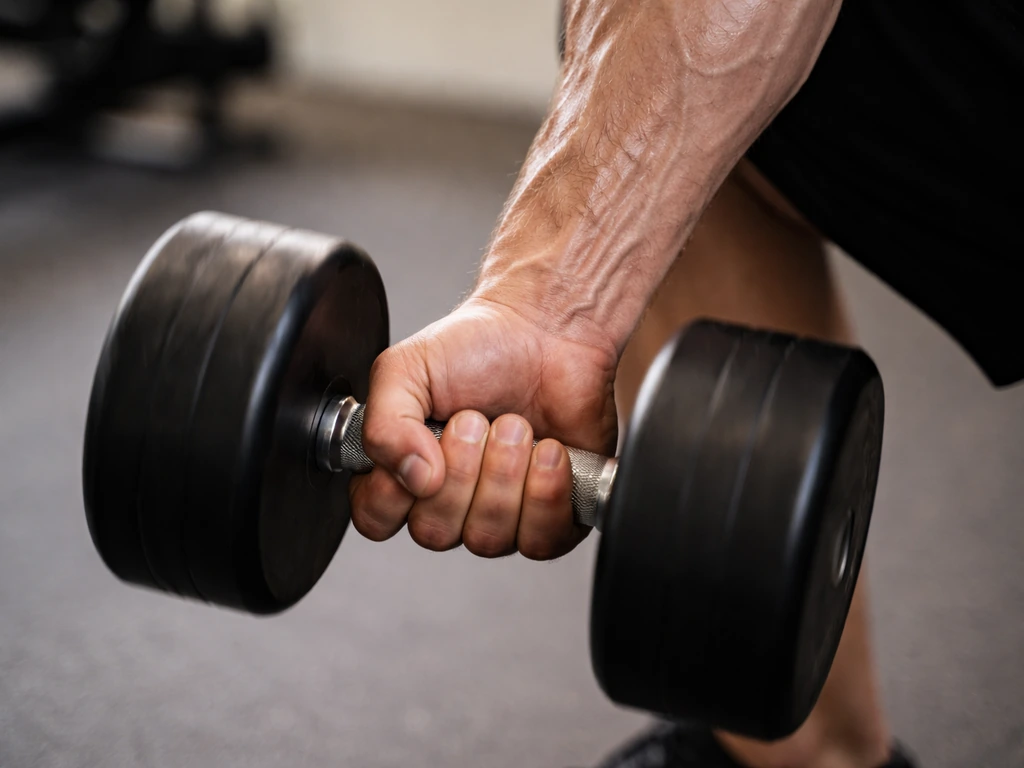
This is the big one. When a muscle fiber is put under load while it's trying to contract or resist lengthening (especially during the eccentric or lowering phase of a lift), tension is transmitted through the fiber's structural proteins. That tension activates mechanosensors inside the fiber that kick off a cascade leading to muscle protein synthesis: your cells start building new contractile proteins to handle future tension better. The slower and more controlled your eccentric phase, the more tension time per rep, and the more potent this signal tends to be.
Metabolic stress
Higher-rep sets taken close to failure produce a buildup of metabolites like lactate, hydrogen ions, and inorganic phosphate inside the muscle. This metabolic environment appears to trigger hypertrophic signaling through a separate pathway, which partly explains why moderate loads (say, 60-75% of your one-rep max) taken close to failure can build just as much muscle as heavier loads. A systematic review and meta-analysis synthesized evidence on how training closer to failure, using different proximity-to-failure definitions, affects skeletal muscle hypertrophy moderate loads (say, 60-75% of your one-rep max) taken close to failure can build just as much muscle as heavier loads. The "pump" you feel during training is partly this phenomenon in action, and while the pump itself isn't the growth signal, the conditions that cause it are.
Muscle damage and repair
Lifting, particularly novel exercises or high eccentric load, causes micro-tears in muscle fibers. Your immune system responds, satellite cells are activated, and the damaged areas are repaired with slightly more protein than before. This is real, but it's worth clarifying a common myth: soreness is not a reliable indicator of growth. Experienced lifters often train hard and grow without feeling sore at all, because their muscles have adapted to handle damage more efficiently. You don't need to feel wrecked after a session for it to be productive.
Progressive overload: the engine behind lasting gains
Your body only adapts to stresses it hasn't already handled. If you lift the same weight for the same reps every week, your muscles have no reason to grow beyond what they need to meet that demand. Progressive overload means systematically increasing the challenge over time: more weight, more reps, more sets, shorter rest, or better technique. This is the single most important principle in all of resistance training, and it's where most people who "aren't growing" are falling short. Research using velocity-based tracking confirms that how you manage and progress load over time significantly changes whether you're driving hypertrophy or strength as the dominant adaptation. In practical terms: keep a log, add a little each week, and treat your training as a long-term investment rather than a series of isolated workouts.
The training variables that actually move the needle
Not all variables matter equally. Here's how to think about each one.
| Variable | What research says | Practical target |
|---|---|---|
| Weekly volume (sets per muscle) | Strong dose-response: more sets per week = more hypertrophy, up to a recoverable ceiling | 10–20 working sets per muscle per week for most people |
| Intensity (% of 1RM) | Both heavy (>80% 1RM) and moderate (60–75% 1RM) loads build muscle when taken close to failure | Mix ranges; heavier for strength, moderate for volume work |
| Proximity to failure | Training closer to failure produces greater hypertrophy than stopping well short of it | Leave 0–3 reps in reserve on most working sets |
| Frequency | Spreading volume across 2+ sessions per muscle per week is generally superior to 1 session | 2–3x per muscle per week |
| Rep ranges | 6–30 reps all build muscle if effort is high enough | 8–15 reps is a practical sweet spot for most exercises |
| Rest periods | Longer rest (2–3 min) preserves performance across sets and may support hypertrophy | 2–3 min for compound lifts; 60–90 sec for isolation work |
The 2026 ACSM resistance training position stand reinforces that weekly volume is a primary driver for hypertrophy, and that heavier loads skewed toward roughly 80% of your one-rep max are more specifically effective for maximal strength development. You don't have to choose one or the other exclusively, but knowing the distinction lets you design your training around your actual goal. Exercise selection matters too: compound movements like squats, deadlifts, rows, and presses recruit more total muscle and let you accumulate volume efficiently, while isolation exercises let you target specific muscles that lag behind.
Nutrition: what your muscles need to actually grow
Protein: the non-negotiable
Protein provides the amino acids your body uses to build new muscle tissue after training. The ISSN's position stand puts the effective range at 1.4 to 2.0 grams of protein per kilogram of bodyweight per day for most exercising individuals. In practical terms, a 75 kg (165 lb) person needs roughly 105–150 g of protein daily. If you're closer to the upper end during a hard training block, or if you're older (where protein synthesis efficiency declines somewhat), aim for 1.8–2.2 g/kg. Spreading that intake across three to five meals of roughly 20–40 g each stimulates muscle protein synthesis more consistently than eating most of your protein in one or two large sittings.
Calories: growth requires fuel
You can maintain muscle at maintenance calories, but growing new tissue requires a caloric surplus. A modest surplus of 200–400 calories above your maintenance level is enough to support muscle growth without excessive fat gain. If you're training seriously and consistently underrating, your body simply won't have the energy substrate to fund protein synthesis at full capacity. Carbohydrates are especially important here: they replenish muscle glycogen, fuel your training sessions, and have a protein-sparing effect that keeps dietary protein going toward building rather than burning for energy. Fats should not be dropped too low either, as they support testosterone and other hormones that regulate muscle protein synthesis. A ballpark minimum is 0.5–1.0 g of fat per kilogram of bodyweight.
Timing: does it matter?
Post-workout protein has some benefit, but the "anabolic window" is much wider than the old 30-minute rule suggested. Hitting your daily protein target consistently matters far more than precise timing. That said, having a protein-rich meal or shake within a couple of hours of training is a reasonable practical habit, especially if you trained fasted.
Recovery and lifestyle: where the gains actually happen
Training is the stimulus. Recovery is when adaptation actually occurs. Sleep is the most underrated variable in muscle building. Research on sleep restriction shows it can directly impair strength performance, which compounds over time into worse training quality and slower adaptation. Aim for 7–9 hours per night. Even one or two nights of poor sleep reduces muscle protein synthesis and degrades your ability to push hard in the gym.
Rest days are not optional; they're part of the program. Your muscles don't grow during the workout, they grow in the 24–72 hours after it. Skipping rest days or training a muscle group before it's recovered doesn't double your gains, it halves them. If you're always sore, always tired, or your performance is flat or declining across sessions, you're likely in functional overreaching, the early stage of overtraining where recovery can't keep up with training stress. The fix is almost always less volume, more sleep, more food, and a deload week.
Post-exercise recovery strategies like cold water immersion, compression, and active recovery have evidence behind them for reducing soreness and fatigue markers, but they're supporting tools, not replacements for sleep and adequate rest. Use them when you're training frequently and managing a heavy schedule, but don't rely on them to compensate for chronic under-recovery.
Supplements that actually help (and what to skip)
The supplement industry is enormous and mostly overhyped. A few things have legitimate evidence behind them.
- Creatine monohydrate: This is the most well-supported ergogenic supplement in sports science. A meta-analysis of creatine combined with resistance training shows consistent improvements in strength and lean mass. A dose of 3–5 grams per day is effective, no loading phase required. It works by increasing phosphocreatine availability for high-intensity efforts, letting you do slightly more work per session, which compounds into more growth over time.
- Protein powder: Not magic, just a convenient way to hit your daily protein target. Whey, casein, and plant-based blends all work. Use it if whole food alone isn't getting you to your gram target.
- Caffeine: Meta-analyses show caffeine can meaningfully improve strength and power output in training sessions. 3–6 mg per kilogram of bodyweight taken 30–60 minutes before training is a well-studied dose. This isn't a direct muscle-building supplement, but better training sessions over months translate to more growth.
- What to skip: BCAAs (redundant if protein intake is adequate), testosterone boosters (generally unproven in healthy adults), most "muscle builders" marketed with proprietary blends. Save the money for food.
Why you're not growing yet: troubleshooting your plateau
If you've been training for more than a few months and nothing seems to be changing, it almost always comes down to one of a handful of fixable problems. Here's how to diagnose it.
- You're not tracking progressive overload. If you're not logging your lifts and consistently adding load or reps over time, you may be doing the same workout repeatedly and expecting different results. Start a simple training log today.
- You're not eating enough. Underestimating calorie intake is extremely common. Track your food for one week honestly. If you're at or below maintenance, muscle growth will be minimal regardless of how hard you train.
- You're not hitting protein targets. Even experienced lifters frequently fall short of 1.6–2.0 g/kg. Calculate your target and check whether you're actually reaching it.
- You're not sleeping enough. Less than 6–7 hours per night is a recovery limiter that no amount of extra training can overcome. Fix sleep before adding more volume.
- Your volume is too low or too high. Less than 8–10 quality sets per muscle per week is often insufficient. More than 20–25 sets with poor recovery is counterproductive. If you've been grinding with no results, consider whether a deload week (50–60% of normal volume) might reset your recovery.
- You're not training close enough to failure. Stopping at half-effort might feel safe, but leaving 6–8 reps in the tank on every set significantly reduces the hypertrophic stimulus. Push closer to your actual limit.
- It's been less than 8 weeks. If you're a beginner or returning from a break, remember that visible hypertrophy lags neural adaptation by weeks. Strength improving without visible size change is normal and expected in the first month or two.
Age is worth addressing directly here. Older adults do build muscle more slowly due to a blunted anabolic response to protein and training stimuli, a phenomenon called anabolic resistance. But the same mechanisms apply, and resistance training works at 60, 70, and beyond. The adjustment is usually slightly higher protein intake (toward the 2.0–2.2 g/kg end), potentially higher training frequency to accumulate enough weekly stimulus, and prioritizing recovery even more carefully. Age is context, not a barrier.
If you're thinking about specific movements and which muscles they develop, different exercises drive different adaptation profiles. If you're also wondering what muscle takes the longest to grow, that answer depends on which muscles are more likely to respond quickly versus slowly to those same training signals different exercises drive different adaptation profiles. Deadlifts, for example, load the posterior chain heavily, while push-up variations target the chest, shoulders, and triceps through a different mechanical pathway. Push-ups mainly build the chest, shoulders, and triceps by providing repeated mechanical tension in those muscles push-up variations. Swimming creates resistance through water rather than gravity, which changes the tension curve and the muscles primarily stressed. The underlying growth mechanisms are identical across all of them: mechanical tension, metabolic stress, repair, and progressive challenge. The exercise just determines where those signals are delivered.
Your starting plan, right now

If you want to take one actionable step from this article today, make it this: audit the four basics before adding anything else. Are you training each muscle group at least twice a week with 10 or more hard sets? Are you eating 1.6–2.0 g of protein per kilogram of bodyweight daily? Are you sleeping 7–9 hours? Are you progressively adding load or reps to your lifts over time? If any one of those is missing, that's your bottleneck. Fix the weakest link first. Add creatine if you want a low-cost, well-supported boost. Track your progress so you know whether it's working. And give it at least eight to twelve weeks before drawing conclusions, because muscle adaptation works on a slow, compounding timeline that rewards patience more than intensity alone.
FAQ
If I feel sore, am I definitely growing, and if I’m not sore, am I not growing?
Soreness is neither necessary nor sufficient. Growth depends on getting enough effective stimulus (challenging sets with tension and proximity to failure) and then recovering, soreness just reflects damage plus inflammation. Many experienced lifters train hard without being very sore because their muscles adapt to repeated loading.
How close to failure do my sets need to be for muscle growth?
A practical target is leaving about 0 to 3 reps in reserve on most hard sets (especially for moderate-load work). Going much farther from failure often reduces the stimulus, while training to true failure on every set can wreck recovery and reduce overall quality and weekly volume.
Will light weights with high reps build muscle, or do I need heavy lifting?
Both can work if sets are sufficiently challenging. Moderate loads taken near failure can produce strong hypertrophic signaling through metabolic and tension demands, and heavier lower-rep work tends to emphasize myofibrillar adaptations. Use the method you can progress reliably and that lets you hit your weekly hard-set target.
What’s the difference between “pump” and actual muscle gain?
The pump is a short-term byproduct of increased blood flow and metabolite buildup during a session. The gain comes from the longer-term adaptations your training triggers and your recovery supports. You can chase the pump and still underperform if you are not progressing load or volume over weeks.
How do I know if my training volume is enough (and not too much)?
Start with a baseline of around 10 hard sets per muscle per week and adjust. If performance and measures of effort decline, soreness lasts unusually long, or progress stalls for multiple weeks, volume may be too high. If you are progressing and recovered but still see no change after 8 to 12 weeks, you likely need more hard sets or better progression.
What should I do if I’m not gaining strength after a few weeks?
First check whether you are actually progressing (more reps, more weight, or better form) and whether sleep and food are adequate. Next, look for technique breakdown that reduces effective tension (especially on eccentrics), and confirm you are not training too hard too often. If everything is aligned and strength still plateaus, reduce total volume slightly and keep intensity consistent for a deload.
Do I need to train every muscle group twice per week, or can I do full-body once daily?
Twice-weekly coverage is a reliable guideline, but it’s not a law. What matters most is weekly hard-set dose and ability to recover, if you prefer full-body, you can distribute volume across more frequent sessions as long as each muscle still gets enough challenging work and you don’t accumulate fatigue that limits progression.
Is there an ideal rep range for hypertrophy and strength?
There is overlap. For hypertrophy, many people grow well from roughly 5 to 30 reps per set when sets are close enough to failure and you can progress. Strength-focused work often uses heavier loads with fewer reps and longer rests, but including some moderate and higher-rep sets can help maintain total weekly volume.
How big of a caloric surplus should I use, and what if I gain too much fat?
A modest surplus of about 200 to 400 calories above maintenance is typically enough. If your scale weight climbs faster than expected or waist size increases quickly, reduce the surplus slightly (for example, by 100 to 200 calories) while keeping protein steady so muscle gain remains prioritized.
Do I need carbohydrates to grow, or is protein alone enough?
Carbohydrates are strongly helpful because they refill glycogen, support training intensity, and reduce the chance that dietary protein gets used for energy. If carbs are extremely low, you may still gain muscle but your training quality often drops, which indirectly limits growth.
Should I take creatine, and how do I use it safely and effectively?
Creatine monohydrate is the best-supported option for muscle and performance. Use a consistent daily dose (commonly 3 to 5 g), it does not require cycling, and it may increase scale weight slightly from water stored in muscle. If you have kidney disease or a medical condition, ask a clinician first.
Does protein timing matter, or is daily intake the only thing that counts?
Daily total intake matters most. Timing is a practical lever: aim to eat protein across 3 to 5 meals so you repeatedly stimulate muscle protein synthesis, and if you trained fasted, having a protein-rich meal within a couple hours is a reasonable habit.
How much sleep is enough for muscle growth, and what if I can only get 6 hours?
The target is usually 7 to 9 hours. If you are consistently around 6 hours, you may still gain, but expect slower strength progress and reduced adaptation because training quality and muscle protein synthesis can be impaired. The highest-impact fix is consistency plus adding an extra nap if feasible and improving pre-sleep routine.
What are common reasons people “aren’t growing” besides not training hard enough?
The most common missing pieces are lack of true progressive overload, insufficient weekly hard-set volume, inconsistent calories or protein, and persistent under-recovery (sleep plus too much volume). Another frequent issue is tracking quality, if you never log weights and reps, you can accidentally keep training the same or even regress without noticing.
How long should I wait before changing my program?
Give it at least 8 to 12 weeks before concluding it is not working, because muscle changes are slow. Change one variable at a time after that window (volume, intensity distribution, exercise selection, or recovery) so you can identify what actually moved the needle.
For older adults, what adjustments usually help anabolic resistance?
Older lifters often do better near the high end of protein targets, more frequent training to accumulate weekly stimulus, and extra attention to recovery and technique. You may also benefit from slightly longer warm-ups and controlled eccentrics, since connective tissue and recovery capacity can be less forgiving.