Traps grow fast on steroids for a few compounding reasons: the trapezius has an unusually high density of androgen receptors, anabolic steroids dramatically increase protein synthesis and satellite cell activity, and most steroid users train with heavier loads and more volume than they could sustain naturally. Put those three things together and the traps, which are already primed to respond to heavy pulling and shrugging, get a disproportionate growth signal. This article isn't an endorsement of steroid use. It's a direct explanation of the physiology so you can understand what's actually happening, separate myth from reality, and then use the same core ingredients naturally to build your own traps.
Why Do Traps Grow on Steroids? Muscle, Training, and Myths

Marcus Kellerman
19 May 2026

Why traps are often the first muscle to grow

The trapezius isn't one muscle in any meaningful functional sense. It runs from the base of your skull down to the mid-thoracic spine and out to the shoulder blade, covering an enormous area of your upper back. It has three distinct regions with different fiber orientations: the upper traps elevate and rotate the scapula, the middle traps retract it, and the lower traps depress and upwardly rotate it. EMG research confirms that different movements hit these regions very differently. Middle trap activity dominates during shrugs and shoulder abduction, while lower trap activity peaks during rowing and adduction patterns, with prone rows producing particularly strong lower trap recruitment.
That regional complexity matters because most compound training, heavy deadlifts, barbell rows, overhead pressing, loaded carries, hits traps hard whether or not you're specifically targeting them. If you're under a heavy bar regularly, your traps are working. This makes them one of the muscles most exposed to mechanical tension across a wide range of training styles. And mechanical tension is the primary driver of muscle hypertrophy. Traps are also visible from the front, back, and side, so even modest growth looks dramatic on a person's physique in a way that, say, a thicker quad might not.
What steroids do to muscle growth and recovery (in plain physiology)
Anabolic-androgenic steroids (AAS) work by binding to androgen receptors inside muscle cells, which then triggers a cascade of events that shifts the muscle into an accelerated anabolic state. Steroids can grow muscle by increasing anabolic signaling, boosting protein synthesis, and improving recovery so you can train at higher volumes. The most important effects, from a hypertrophy standpoint, are a significant increase in muscle protein synthesis, suppression of muscle protein breakdown, and a dramatic expansion of satellite cell activity.
Satellite cells are the repair and growth cells that fuse with existing muscle fibers to add nuclei and increase the fiber's capacity to grow. Research in healthy young men confirmed that testosterone-induced hypertrophy directly correlates with an increase in satellite cell number, and studies in strength-trained athletes have proposed that anabolic steroids may even support the formation of entirely new muscle fibers through enhanced satellite cell activation.
Beyond the protein synthesis side, steroids significantly improve recovery capacity. Studies measuring creatine kinase (a marker of muscle damage) and the cortisol-to-testosterone ratio after resistance training found that AAS users recover more rapidly from exhaustive workouts than natural lifters. That means they can train harder, more frequently, and at higher volumes without the same accumulating fatigue.
Molecular mechanisms include activation of the Akt/mTORC1 pathway (the main anabolic signaling hub), calcium-dependent hypertrophy pathways, and partial deactivation of the myostatin pathway, which normally puts a brake on muscle growth. It's worth noting that AAS suppress the hypothalamic-pituitary-gonadal axis, reducing the body's own testosterone production, which creates its own complications during and after a cycle. But in terms of raw anabolic signaling while on cycle, the environment for muscle growth is dramatically enhanced.
How steroid cycles change training volume and intensity for traps

Here's something that often gets overlooked in the discussion: the drug itself isn't the whole story. What changes on cycle is what you can do in the gym. Natural lifters hit a wall with training volume and frequency. Add too many sets, train too often, and recovery breaks down, you stall or regress.
Steroid users, with their enhanced recovery capacity, can sustain and benefit from much higher weekly training volumes. Research is clear that higher training volume drives more hypertrophy. A controlled comparison of 1, 3, and 5 sets per exercise found that higher volume produced meaningfully greater muscle growth in trained men. A dose-response meta-analysis on weekly resistance training volume supports a greater effect at 10 or more weekly sets per muscle group.
Steroid users can often hit those numbers and then some, without crashing.
For traps specifically, the training patterns on a typical bodybuilding cycle load them constantly. Heavy deadlifts, barbell and dumbbell rows, shrugs, overhead pressing, and face pulls all involve significant trap engagement. With faster recovery, a lifter can do heavy back work two or three times per week, meaning the traps are getting a high-quality growth signal multiple times per week rather than once. Evidence on training frequency suggests at least twice-per-week frequency per muscle group maximizes hypertrophy, and AAS users can sustain that with heavy loads more easily. The combination of more volume, heavier training, higher frequency, and a supercharged anabolic environment is what makes traps grow so conspicuously.
Why people associate big traps with steroid use (myths vs reality)
The 'steroid traps' reputation is partly real and partly perception. The real part: the trapezius and deltoids have a notably high concentration of androgen receptors compared to many other muscles, which is why heavy androgen exposure tends to produce more dramatic upper-body thickness changes. Studies of strength athletes using AAS do show distinct body composition changes that track with this receptor density pattern. That's why big traps and 3D shoulders are often used as informal visual cues in the fitness community.
The myth part: plenty of natural lifters develop very large traps through consistent heavy training, and plenty of steroid users have underdeveloped traps because they don't train them properly. There's also a posture and body composition effect worth understanding. Steroid use often reduces body fat while increasing lean mass across the upper back and shoulders, which changes how the traps look visually even if their actual size increase is modest. Improved posture from stronger upper back musculature can also make traps look more prominent. And once social media normalizes a certain look as 'steroid traps,' confirmation bias does the rest. Someone with naturally thick traps gets accused of using because of a visual shortcut, not because of any physiological evidence.
What to expect: timelines and the factors that determine trap response

Whether you're training naturally or asking about what to expect on a cycle (or coming off one), the honest answer is that trap growth timelines vary considerably based on a few key variables. Research using weekly measurement protocols has shown that measurable muscle thickness changes can appear within weeks of starting a structured resistance training program, not months. One time-course study in untrained men found detectable hypertrophy within short training windows of a few weeks. An 8-week hypertrophy study using weekly assessment found that growth emerged progressively over the block rather than appearing all at once at the end.
The factors that determine your personal trap response are pretty consistent regardless of training status. Genetics play a role, both in muscle fiber type distribution and androgen receptor density. Baseline training history matters significantly: AAS evidence suggests the anabolic effect is more pronounced in people who are already strength-trained, rather than complete novices. Nutrition, particularly protein intake, is non-negotiable. You can't synthesize new muscle tissue without adequate amino acid availability. And sleep and recovery determine how much of the stimulus actually converts into new tissue. These same variables govern natural trap growth too, which brings us to the practical part.
Natural ways to grow traps fast: exercises, programming, and nutrition and recovery
Exercise selection
For upper and middle traps, barbell shrugs, dumbbell shrugs, and trap bar shrugs with a full range of motion and a brief pause at the top are your primary tools. For lower traps, prone rows, face pulls, and posterior flys produce the strongest EMG activation in the lower fibers. A study using EMG reported measurable activation differences and compared serratus anterior and lower trapezius activity across multi-joint scapular exercises and isometric contractions [EMG activation in the lower fibers](https://pmc. ncbi.
nlm. nih. gov/articles/PMC4495440/). If you want complete trap development (not just the upper mound), you need to include both elevation-dominant movements and retraction/depression-dominant movements.
Deadlifts and heavy rack pulls recruit the entire posterior chain including traps under isometric load, which is a distinct and valuable stimulus. Farmer's carries and loaded holds are underrated; the sustained isometric tension across the entire trapezius under load is exactly the kind of mechanical stress that drives hypertrophy.
Programming for progressive overload
Train traps at least twice per week, which aligns with the minimum frequency recommendation for maximizing hypertrophy. Aim for 10 to 20 weekly sets targeting traps across all the movements that load them, including your deadlift and row work, not just isolation exercises. Start at the lower end of that range if you're newer to direct trap training, and add sets progressively over weeks. Progressive overload is the mechanism: you need to consistently apply more tension over time, whether that's more weight, more reps, or more sets. Don't skip the full range of motion on shrugs; a partial shrug at a heavier weight produces less actual muscle stimulus than a controlled full-range repetition at a weight you can own.
Nutrition and protein
This is where natural lifters often leave the most gains on the table. The ISSN recommends at least 1. 4 to 2. 0 grams of protein per kilogram of bodyweight per day for people engaged in regular resistance training.
For someone focused on hypertrophy, staying toward the upper end of that range or slightly above is a reasonable strategy. Distribute your protein across the day in doses of roughly 20 to 40 grams per meal to maximize the acute muscle protein synthesis response. Getting a quality protein dose around your training session, either before, after, or both, is a practical habit worth building.
Creatine monohydrate is one of the few supplements with consistent evidence supporting its effect on training performance and adaptation, and it's worth including at 3 to 5 grams per day.
Recovery and sleep
One of the clearest advantages AAS users have is faster recovery, which lets them train harder more often. Naturally, you close that gap by protecting your recovery inputs aggressively. Seven to nine hours of sleep per night is where muscle protein synthesis peaks and growth hormone pulses are largest. Manage training stress intelligently: if your total volume is high, something else needs to be lower. De-load weeks every 4 to 8 weeks aren't optional fluff; they're the mechanism by which accumulated fatigue dissipates and supercompensation occurs. Older adults specifically should know that recovery time between sessions may need to be longer, but the growth response to resistance training remains real at any age; the principles don't change, the pacing does.
| Factor | What it does for trap growth | Practical target |
|---|---|---|
| Training frequency | Ensures traps receive growth signals multiple times per week | 2x per week minimum |
| Weekly volume | More sets drive more hypertrophy up to a recoverable threshold | 10-20 sets/week across all trap movements |
| Exercise selection | Hits all three trap regions: upper, middle, and lower fibers | Shrugs + rows + posterior fly + carries |
| Protein intake | Provides amino acids for muscle protein synthesis | 1.4-2.0 g/kg/day, 20-40 g per meal |
| Progressive overload | Ensures ongoing mechanical tension stimulus over time | Add load, reps, or sets each week or block |
| Sleep and recovery | When actual tissue remodeling and growth occur | 7-9 hours/night; de-load every 4-8 weeks |
| Creatine | Supports training performance and adaptation | 3-5 g/day creatine monohydrate |
The honest takeaway is that steroids accelerate and amplify the same mechanisms that drive natural muscle growth: more protein synthesis, more satellite cell activity, better recovery, and the ability to sustain higher training volumes. Your traps respond to those inputs, naturally or otherwise, because they're a large, mechanically loaded muscle with high androgen receptor density.
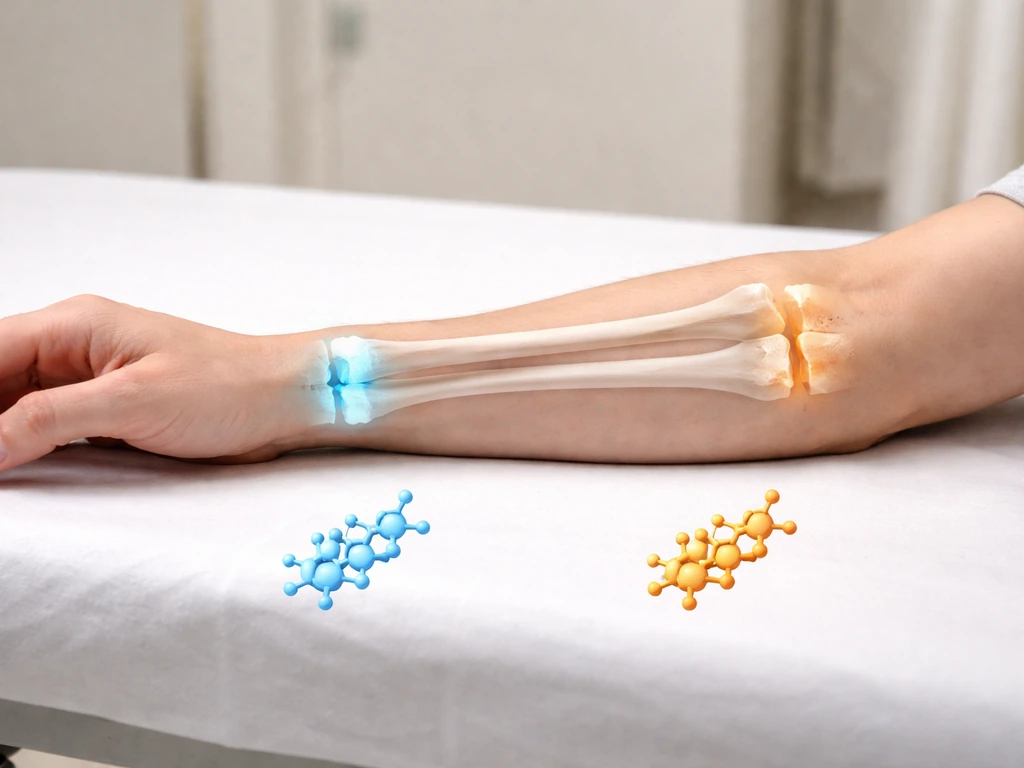
But bone growth is also influenced by your hormones, nutrition, and the type of mechanical loading you do during training Your traps respond to those inputs. If you're specifically trying to understand how steroids grow muscle, the key is how they boost protein synthesis and satellite cell activity while improving recovery how do steroids grow muscle. You can't replicate the pharmacological magnitude of those effects without the drugs, but you can absolutely stack the same variables in your favor.
Consistent progressive training, adequate protein, smart exercise selection covering all three trap regions, and serious recovery discipline will build impressive traps over time. If you want the fastest results naturally, start with a focused trap plan: shrugs for the upper traps and rows and carries for the lower and middle traps how to grow traps fast. If you want even better results, follow a structured program for how to grow traps fast and progress your sets and reps over time. That's not a consolation prize. That's the process.
FAQ
If traps respond so well to steroids, why do some people get big traps but others do not?
Steroids amplify growth, but the training input still has to match your trap weak points. If someone mainly does heavy deadlifts and presses but neglects middle and lower-trap retraction or depression work, the upper traps may grow while the rest stays behind. Genetics also matters, androgen receptor density varies, and people with better baseline training history often capture more of the anabolic advantage.
How can I tell whether my traps are actually growing versus just looking thicker from posture or fat loss?
Use consistent measurements, not mirror impressions. Take side and back photos from the same distance and lighting, and track trap thickness or circumference at a fixed landmark (for example, halfway between the C7 vertebra and the shoulder line). Visual changes from leanness and scapular positioning can happen quickly, but true hypertrophy should show up in repeated measurements over 4 to 8 weeks.
Does trap growth require direct trap exercises, or will deadlifts and rows be enough?
They can be enough for the upper and overall posterior chain, but middle and lower fibers usually benefit from more targeted movements. If your training has lots of pulling but few retraction or depression patterns (like face pulls, prone rows, or controlled carries), you may cap out before the lower traps catch up.
What’s the most common mistake people make when trying to grow traps naturally?
Overusing heavy shrugging while ignoring range of motion and other trap functions. Partial reps, no pause, or bouncing at the top often reduces actual loading time on the fibers you’re trying to grow. Another frequent issue is chasing more sets without managing fatigue, then stalling because recovery does not keep up.
Is higher training frequency for traps always better, even if volume is already high?
Frequency helps when total weekly volume and recovery support it. If you spread the same sets across more days, that can improve quality, but if you also increase sets and training intensity, fatigue can outrun adaptation. A practical approach is to keep weekly trap sets stable at first, then move them from one big day to two smaller sessions before adding more volume.
Do steroids change the timeline of muscle growth, or is it the same process just faster?
The process is the same, anabolic signaling and recovery support earlier and larger responses, but the timeline still depends on training structure and how much stimulus you can recover from. Even on-cycle, people who do not progressively overload or who under-eat protein and total calories still struggle to grow. Expect faster visible change, but not instant gains without consistent training.
How much weekly trap volume should I start with if I am natural and training deadlifts and rows already?
A good starting point is the lower end of the 10 to 20 weekly sets range, but count only sets that truly load the traps (full ROM shrugs, controlled prone rows, heavy carries that keep scapular and trap tension). If deadlifts and rows already include multiple hard sets, you may not need to add many more isolation sets at first. Reassess after 6 to 8 weeks using progress in load, reps, or thickness.
Is creatine enough to “close the gap” in recovery compared to steroids?
Creatine can improve performance and support training quality, but it does not replicate the recovery and anabolic magnitude associated with AAS. It helps you do more productive work, while steroids also change recovery kinetics and anabolic pathways more broadly. If you use creatine, pair it with sleep targets, adequate calories, and de-load weeks, because those inputs often limit growth more than the supplement.
What should I do when my traps are sore all the time but they are not getting bigger?
Treat constant soreness as a warning sign, it can mean you are adding stress without adapting. Check three levers: weekly trap volume, exercise technique and range of motion, and recovery inputs (sleep, calories, and total body training load). Consider dropping 20 to 30 percent of trap sets for one week, then reintroduce with better exercise selection and clearer progressive overload.
How should I adjust trap training if I am older or have longer recovery needs?
The principles stay the same, but the pacing changes. Use the same frequency target (often twice per week), but reduce intensity extremes and shorten sessions by prioritizing the highest quality movements (for example, full-range shrugs and lower-trap prone rows). Plan recovery by allowing extra time between hard back sessions and taking de-load weeks sooner if performance declines persist.
Could high androgen receptor density in traps mean I will grow them quickly no matter what I do?
No, receptor density sets the ceiling, it does not replace training stimulus. If you rarely load traps under tension (for example, no full-ROM shrug pattern, limited retraction or depression work, or carries that are too light), you may not reach that ceiling. The fastest natural gains usually come from matching trap-region exercises to the scapular actions you need, then progressively increasing the tension over time.