Your traps can grow, and they will respond faster than most people expect, but only if you're actually targeting all three regions of the muscle and giving them the stimulus they need. Most people shrug heavy, feel a burn at the top of their neck, and wonder why their traps never look any bigger. The answer is almost always that they're only training one slice of a large, complex muscle. Here's how to fix that, from anatomy through weekly programming, nutrition, and recovery.
How to Grow Traps Muscles: Exercises, Form, Program

Marcus Kellerman
16 Apr 2026

What the traps actually are (and what makes them grow)
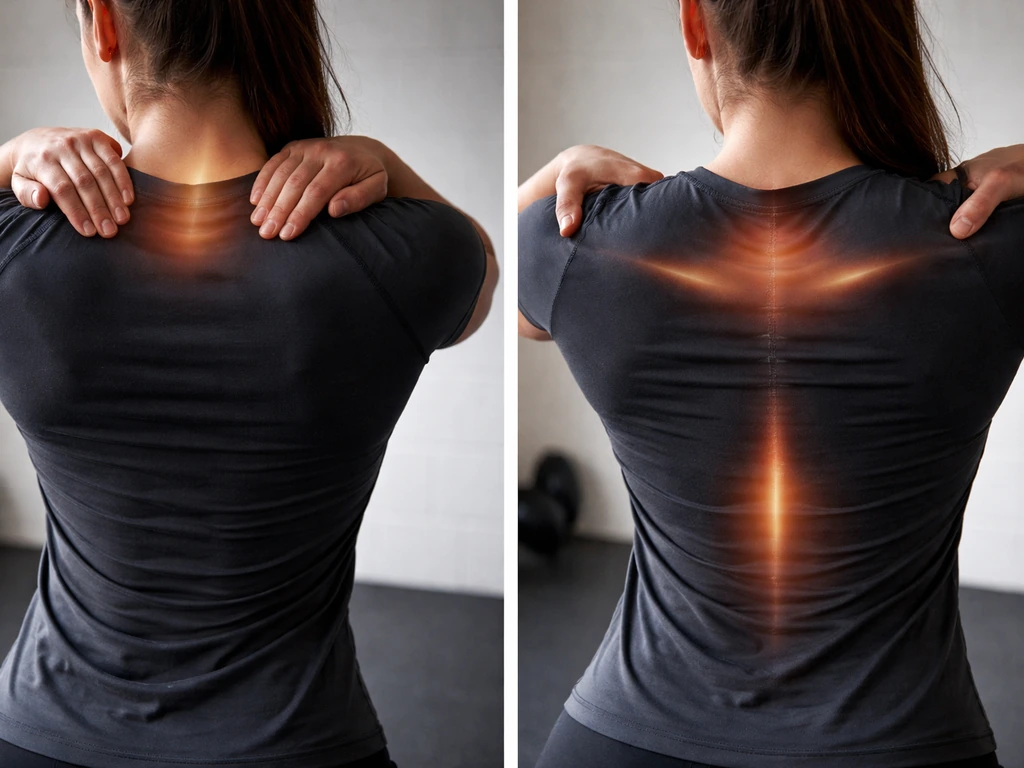
The trapezius is a broad, diamond-shaped muscle that runs from the base of your skull down to the mid-spine and across both shoulder blades. It's divided into three functional regions, and each one does something different. The upper fibers elevate and upwardly rotate the scapula. The middle fibers retract the scapula, pulling the shoulder blades toward each other. The lower fibers depress the scapula and assist with upward rotation, working as a counterbalance to the upper fibers during overhead movements. When you raise your arm overhead, the upper trapezius and serratus anterior work together as a force-couple to rotate the scapula upward so the joint stays healthy and the movement is efficient.
Why does that anatomy matter for growth? Because each region responds to different movement patterns. You can't build a complete trap by only doing shrugs, which primarily stress the upper portion. Hypertrophy requires mechanical tension through a meaningful range of motion, enough weekly sets, and progressive overload over time. The trap is no different from any other muscle in that respect, but it does require deliberate exercise selection to hit all three zones. If you've been skipping scapular retraction and depression work, you've been leaving most of your trapezius undertrained.
The best exercises for upper, middle, and lower traps
Upper traps: shrugs and their smarter variations
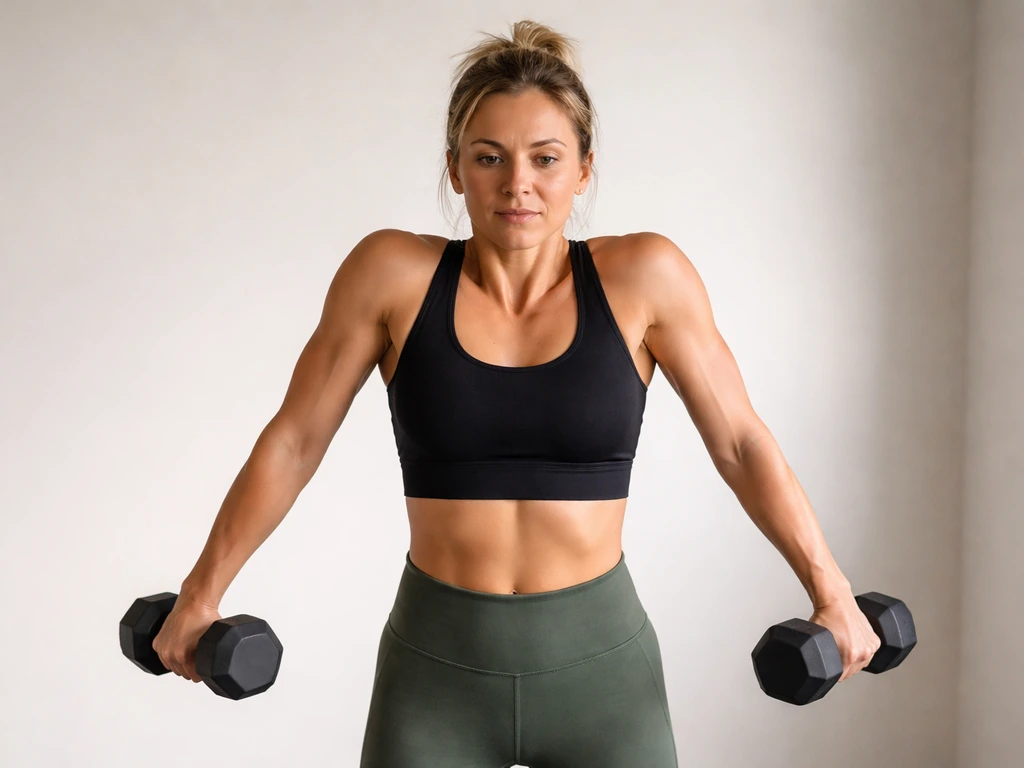
Shrugs are the classic upper trap exercise, and they work, but form and variation matter more than most people realize. A shrug variant performed with the arms abducted to about 30 degrees from the body produces significantly higher activation of both the upper and lower trapezius compared to a standard straight-arm shrug. That's a simple tweak worth making immediately: instead of holding dumbbells directly at your sides, angle them slightly forward and out when you shrug. Focus on a full upward range, pausing briefly at the top, then controlling the descent slowly. Behind-the-back barbell shrugs also show strong upper trap activation in EMG comparisons, so if you train at a barbell rack, that variation is worth rotating in.
Middle traps: rows and horizontal pulling
The middle trapezius is best trained through horizontal pulling movements that emphasize scapular retraction at the end range. Prone rows (lying face-down on an incline bench and rowing dumbbells toward your hip), seated cable rows with a deliberate squeeze at the end, and band pull-aparts all load the middle fibers effectively. The key cue is to finish each rep with your shoulder blades actively squeezing together, not just pulling with your elbows. EMG studies have confirmed strong middle trap activity in prone row variations, particularly when the retraction phase is controlled rather than rushed.
Lower traps: depression and rotation work
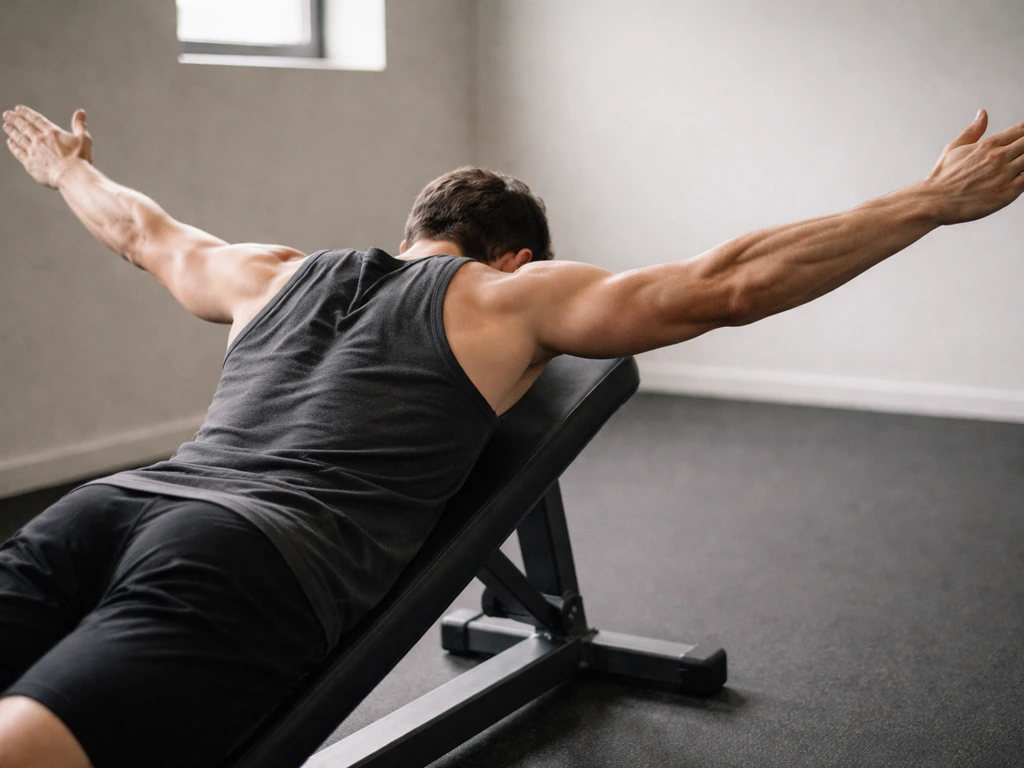
Lower trap work is where most people have the biggest gap. The prone Y-raise and prone cobra are two of the highest-activating movements for the lower trapezius identified in rehabilitation and EMG research. For the prone Y-raise, lie face-down on a slight incline, hold light dumbbells or plates, and raise your arms diagonally overhead in a Y shape while actively driving your shoulder blades down and in. That depression cue is the whole point. The posterior fly (rear delt fly with a pronated grip and slight internal shoulder rotation) and the modified prone cobra also produce strong lower trap activation. Start light here because the lower trap is often underdeveloped and these movements expose that weakness immediately.
A trap-focused training program you can start this week
The research is clear that at least 10 working sets per muscle group per week is a practical minimum for hypertrophy, and that significant growth can occur even training a muscle once per week if weekly volume is adequate. For the traps specifically, I'd suggest hitting them twice per week, splitting the volume across two sessions. This gives you enough frequency to practice technique and accumulate volume without excessive fatigue.
| Exercise | Sets x Reps | Tempo | Target Region |
|---|---|---|---|
| Dumbbell shrug (arms ~30° abducted) | 3 x 12–15 | 2 sec up, 1 sec hold, 2 sec down | Upper |
| Prone dumbbell row | 3 x 10–12 | Controlled, 2 sec lower | Middle |
| Prone Y-raise | 3 x 12–15 | Slow, deliberate | Lower |
| Rear delt / posterior fly | 3 x 12–15 | Controlled eccentric | Middle/Lower |
| Band pull-apart | 2 x 20 | Steady, full range | Middle |
| Modified prone cobra | 2 x 10–12 | 2 sec hold at top | Lower |
Run Session A (shrugs, prone rows, Y-raises) on one day and Session B (rear delt fly, pull-aparts, prone cobra) on another day, with at least two days between sessions. Total weekly sets across both sessions land at roughly 16, which is in the productive range for most people. Beginners should start at the lower end of the rep ranges with moderate weight and focus on feel before adding load.
How to progress over 4 weeks
- Week 1–2: Establish baseline. Use a weight where you can complete all reps with full range and control. Don't train to failure yet. Focus entirely on feeling the target muscle work.
- Week 3: Add one rep per set to each exercise (so 3 x 13–16 where applicable). Keep the same load.
- Week 4: If you hit the top of the rep range with clean form, increase load by the smallest available increment (usually 2.5–5 lb for dumbbells) and return to the bottom of the rep range.
- Tempo discipline: Avoid rushing the eccentric. Very slow reps of 10 seconds or more actually reduce hypertrophic stimulus compared to moderate tempos, so a 2–3 second lowering phase is plenty.
If you're integrating this into an existing back or shoulder day, slot the lower and middle trap work early in the session when you're fresh, since those muscles fatigue quickly and are often undertrained relative to the lats and upper traps. Shrugs can go at the end of a back session or early in a shoulder session.
Form cues and mistakes that stall trap growth
Mistake 1: Shrugging with no scapular control
The most common error on shrugs is using too much load and compensating by rolling the shoulders forward or letting the neck collapse. The traps don't get fully loaded this way, and over time it stresses the cervical spine and AC joint. Cue yourself to think about lifting the shoulder blade up and slightly back, not just hunching your shoulders toward your ears. If your neck tenses up badly before you feel the trap working, the weight is too heavy.
Mistake 2: Skipping scapular retraction and depression
If your trap training is only shrugs, you're only training one third of the muscle. Middle trap weakness shows up as poor scapular retraction and rounded shoulders. Lower trap weakness shows up as the scapula winging or tipping forward during pressing and rowing. Both issues limit performance and increase injury risk. Retraction work (rows with a hard squeeze) and depression work (Y-raises, prone cobras) are not optional if you want the full muscle to grow.
Mistake 3: Truncating range of motion
Short-range shrugs with maximal weight load only the top of the movement and skip the stretch at the bottom where much of the hypertrophic tension occurs. Let the weight fully depress the shoulder at the bottom of each shrug before pulling back up. Same principle applies to rows: don't just pull the weight to mid-range. Let the weight stretch the shoulder blade forward at the start, then retract fully at the end.
Mistake 4: Turning trap exercises into arm exercises
On rows and flies, it's easy to pull with the biceps or forearms and let the shoulder blade just go along for the ride. The trap never gets meaningfully loaded. Think of your hands as hooks. The pulling is initiated by moving the shoulder blade, not the elbow. This is a mental cue you'll need to practice deliberately for a few weeks before it becomes automatic.
Eating to support trap growth
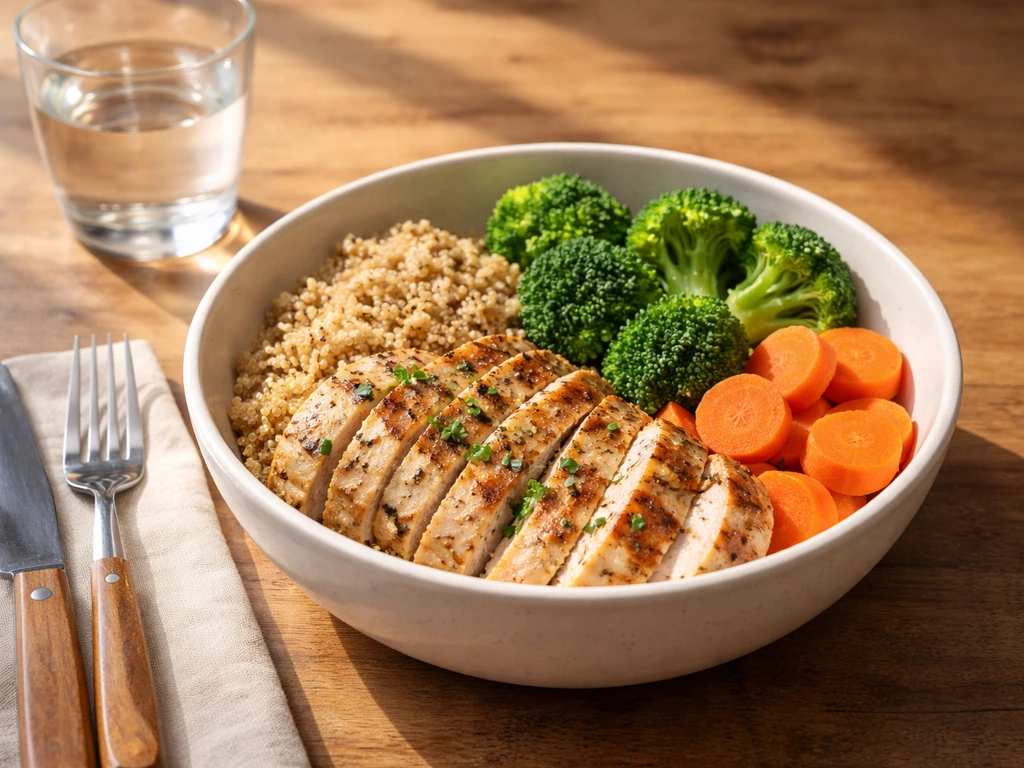
Training stimulus is what tells the muscle to grow, but nutrition is what actually funds the construction. Without enough protein and total calories, the trap training signal goes mostly unanswered. The International Society of Sports Nutrition recommends that resistance-trained individuals consume roughly 1.7 to 2.2 grams of protein per kilogram of bodyweight per day to support hypertrophy. For a 180 lb (82 kg) person, that's approximately 140 to 180 grams of protein daily. Spread this across 3 to 5 meals rather than loading it all at once, since there's a ceiling on how much protein can be used for synthesis per meal.
On the calorie side, you need to be in a slight surplus to gain muscle efficiently. A 200 to 300 calorie surplus above your maintenance intake is a reasonable starting point. If you're a beginner or returning to training after a break, you can often gain muscle even at maintenance, but a small surplus gives you more margin. Prioritize whole food protein sources (chicken, eggs, fish, lean beef, Greek yogurt, legumes) and don't skip carbohydrates around training, since they fuel the sessions that drive the growth.
Supplementation worth considering
Creatine monohydrate is the one supplement with consistent, replicated support for improving resistance training output and lean mass gains over time. A daily dose of 3 to 5 grams is the standard approach. Creatine (often discussed as creatine monohydrate) is commonly dosed around 3, 5 grams per day to support intramuscular creatine turnover and raising muscle stores over weeks, as summarized in Wikipedia 3 to 5 grams is the standard approach. You don't need to do a loading phase; without loading, full muscle saturation typically takes around 28 days, which is perfectly fine for a long-term training plan. Protein powder is only worth adding if you're genuinely struggling to hit your daily protein target through food. It's a convenience tool, not a requirement. Everything else in the supplement world is mostly noise for trap growth specifically.
Recovery, mobility, and keeping your traps healthy long-term
Sleep is where muscle protein synthesis ramps up and training adaptations consolidate. Research shows that even a habitual shortfall of one to two hours below the recommended seven or more hours per night can meaningfully affect hormonal recovery responses after resistance training. Aim for at least seven hours consistently. If your sleep is poor, that's probably limiting your results more than any programming detail.
Trap soreness after new exercises or increased volume is normal in the first one to two weeks. Mild soreness is not a signal to stop, but sharp neck pain, pinching at the top of the shoulder, or pain radiating down the arm should be taken seriously and assessed before pushing through. The trapezius sits right next to the cervical spine and the AC joint, so poor mechanics under load can cause real problems.
Thoracic mobility and scapular mechanics
Thoracic spine posture directly affects how the scapula moves during shoulder training. A stiff, rounded thoracic spine limits scapular posterior tilt, which in turn limits how effectively the lower trapezius can fire during overhead movements and rows. Spending five minutes before each session on thoracic extensions over a foam roller and cat-cow variations genuinely improves scapular mechanics during the workout. It also reduces the risk of shoulder impingement, which is the most common way trap training gets derailed for people who sit at desks all day.
Proper scapular mechanics during training, particularly maintaining a stable, non-winging scapula during pressing and pulling movements, is a well-established factor in preventing shoulder and rotator cuff injuries. The serratus anterior and lower trapezius work together to keep the shoulder blade in the right position during arm elevation. If either is weak, the other gets overloaded. That's why the lower trap work in this program isn't optional; it's injury prevention as much as it is hypertrophy work.
Managing volume and avoiding overtraining the traps
The traps are indirectly worked in almost every back, shoulder, and deadlift session. By the time you add direct trap work on top of heavy rows, pull-ups, and overhead pressing, your weekly set count can climb quickly. If your upper traps feel constantly tight or knotted, that's often a sign of accumulated volume or poor posture outside the gym, not a sign you need more shrugs. Start with the 10 to 16 sets per week outlined in this program and see how you recover before adding more.
One thing that comes up a lot in conversations about trap development is why some people's traps seem to grow unusually fast. Part of this is individual anatomy and fiber-type distribution, but it's also worth noting that the upper trap has a high density of androgen receptors, which is why traps grow so noticeably on steroids relative to other muscles. For natural lifters, this means the upper traps are genuinely responsive to mechanical tension, but you still need to train the full muscle, not just chase that neck-and-shoulder look from shrugs alone.
If you're curious about how muscle growth works at a hormonal level more broadly, understanding how steroids grow muscle gives useful context for what the natural anabolic environment is trying to replicate through training, sleep, and nutrition. And if you've ever wondered about the physiology behind compound effects on other tissues, the research on whether steroids make your bones grow touches on the broader hormonal signaling involved in skeletal and muscular adaptation.
For natural lifters comparing their own progress, it helps to know that which muscles grow fastest on steroids (traps, delts, and upper back being prominent) reflects the androgen receptor density in those regions, which also tells you which muscles are most worth prioritizing with direct, high-quality training naturally.
Your next 2 to 4 weeks in practice
Start this week. Pick two days at least 48 hours apart. Run Session A (shrugs with 30-degree abduction, prone rows, prone Y-raises) on day one and Session B (posterior fly, band pull-aparts, prone cobra) on day two. Use a weight where your form is clean for every rep. Focus on feeling the trap work, especially the lower and middle regions, which will feel foreign at first if you've been only shrugging. Don't expect visible size changes in the first two weeks; what you'll notice is improved mind-muscle connection, less upper trap tightness, and better shoulder mechanics during other lifts. By weeks three and four, if your protein is dialed in and you're sleeping well, you'll start seeing the upper trap thicken and the mid-back take on more definition. That's the program working. Stay consistent with it.
FAQ
What if I cannot do the prone lower-trap exercises (Y-raise, prone cobra) due to setup or discomfort?
Yes, but switch the loading method. If you cannot do prone Y-raises or prone cobras, use any exercise that reliably teaches scapular depression and upward-rotation control, like cable face pulls with a controlled scapular-down cue, or a low-incline dumbbell raise where you keep your shoulders away from your ears and aim the elbows slightly behind you. The goal is tension in the lower trap through a full, controlled range, not a specific exercise name.
I’m doing the moves, but I mostly feel my neck or rear delts. What should I adjust first?
Do not change every variable at once. If you are not feeling your middle or lower traps, first slow down the rep tempo and reduce load by 10 to 20 percent, then use the two cues: retract with your shoulder blades (for middle trap), and depress and drive your arms in the Y-direction (for lower trap). Only after you consistently hit the correct scapular motion should you add weight.
What rep ranges should I use for each trap exercise in this program?
Use a rep range that lets you keep tension through the full scapular range. For traps, a practical starting point is about 6 to 10 reps on shrugs and rows, 10 to 20 reps on rear-delt fly variations and pull-aparts, and 8 to 15 reps on Y-raises and prone cobras. If you cannot pause and control the top or end range, the set is probably too heavy or too rushed for growth work.
How do I know the trap soreness is normal versus a sign I should modify or stop?
Short-term, you can keep training if soreness is mild and movement feels normal, but stop if pain is sharp, pinchy at the AC joint, radiates down the arm, or you lose scapular control. If symptoms appear, replace the exercise for that session with a pain-free scapular drill (light cable retraction or band pull-aparts) and reassess form and load before returning to the original movement next week.
My traps aren’t growing, but I’m doing the program. How should I troubleshoot overtraining versus poor nutrition/recovery?
Your traps can be “small” even when they’re working if you keep adding intensity without enough recovery. If weekly sets are already around the recommended 16 and your performance and pump are dropping across both sessions for two weeks, deload by cutting volume in half for one week while keeping similar technique. Also check sleep timing and dietary protein consistency, because under-eating often shows up first in trap training where the mind-muscle connection is already difficult.
Should I train traps to failure, and how close to failure should I go on each set?
Most people need to reduce load when they first add middle and lower trap work, especially on Y-raises and prone cobras. A simple rule: keep 1 to 3 reps in reserve (RIR) on most sets, and only push closer to failure if form is still clean at the end ranges. If your neck takes over early, you are likely too heavy, too fast, or not cueing scapular depression/retraction long enough.
How do I fit trap training in if I already do heavy back or overhead work each week?
Schedule matters because trap sessions share similar scapular control demands. If you are doing another heavy back or overhead day, place your trap session earlier in the week and keep at least two days between your trap days. On weeks you feel beat up, reduce one exercise per session by 1 to 2 sets rather than skipping the entire trap split, so you keep volume distributed across all three regions.
Can I train traps only once per week, and still grow them?
Yes, but make it deliberate. If you cannot do two separate trap days, you can run a single weekly session that still covers all regions, for example 8 sets total upper trap emphasis plus 8 sets total middle and lower trap work combined, split across the right movement patterns (shrug, horizontal retraction, and depression). The difference is that you lose practice frequency for technique cues, so prioritize slower reps and longer pauses to maintain stimulus.
What are good progress markers besides “my traps look bigger”?
Track the scapular quality, not just the weight. Good signs are: full shoulder-blade upward motion in shrugs (with a controlled top pause), visible retraction at the end of rows (elbows are guides, shoulder blades move), and a consistent “shoulders away from ears” feeling during Y-raises. If performance rises while scapular cues worsen, you’re probably compensating.
What are the most common form mistakes on shrugs and how do I fix them quickly?
Avoid turning shrugs into a neck exercise. On shrugs, let the shoulders fully depress at the bottom before you start the upward pull, then keep your chin neutral and think “shoulder blade up and slightly back.” If you feel cervical tightness before the traps load, lower the weight and shorten the range only temporarily, then rebuild full range over 1 to 2 weeks.