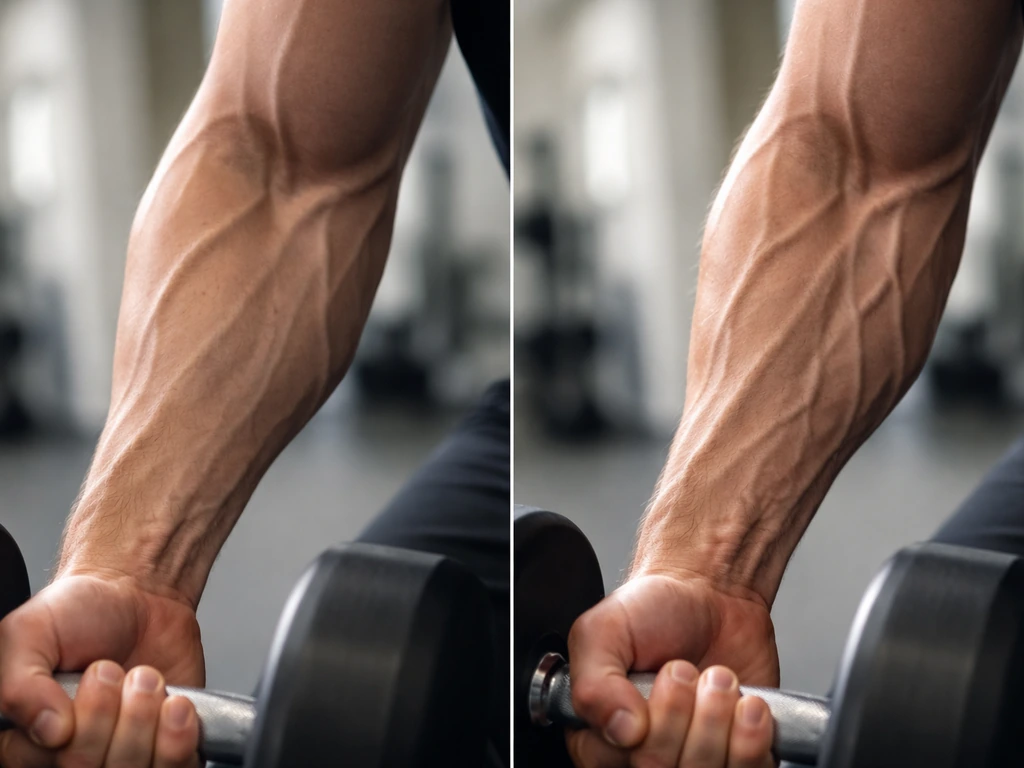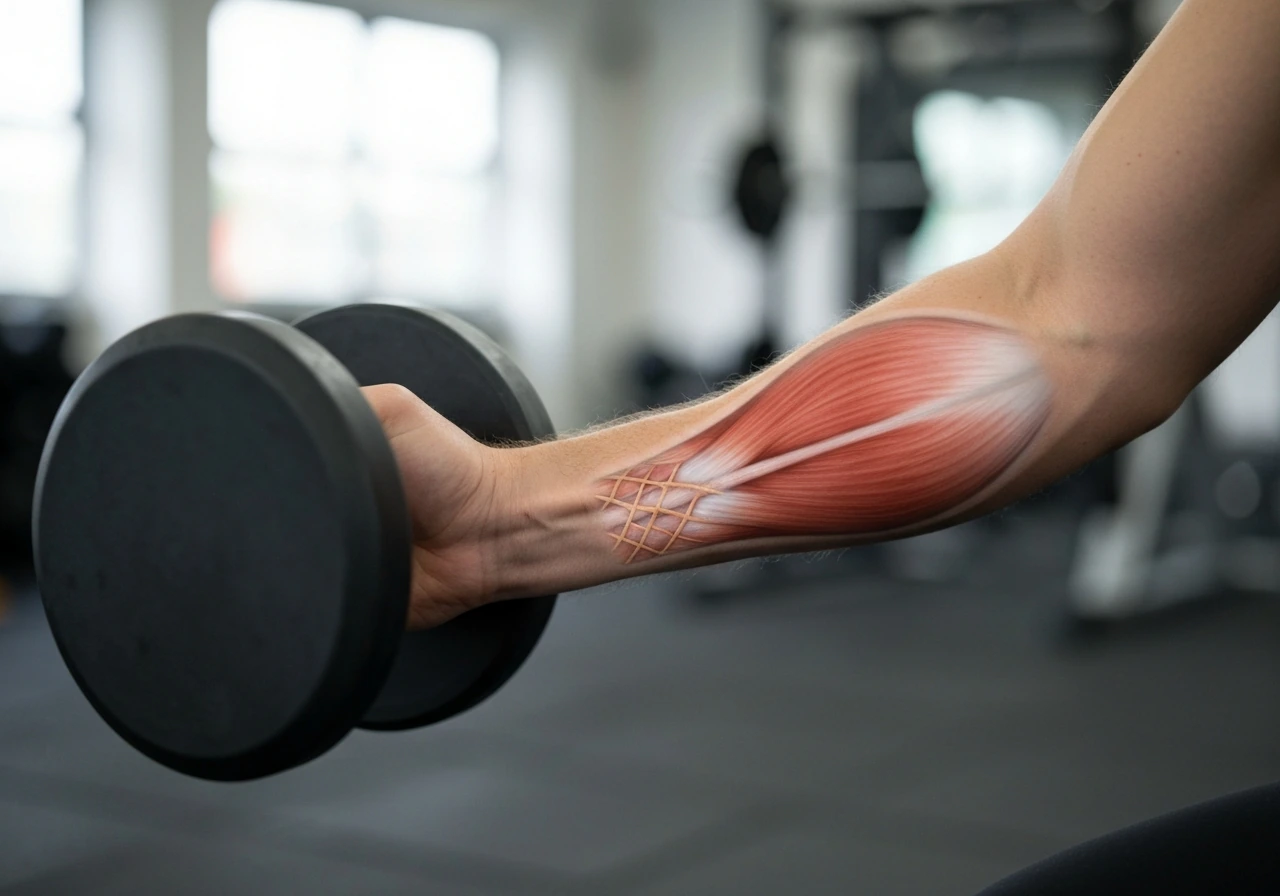
Yes, muscles do grow faster than tendons. That said, the exact answer to does muscle grow back depends on factors like how long you were off training and how much muscle you lost. Muscle protein synthesis spikes within hours of a hard training session, and you can see measurable size and strength changes in as little as 4 to 8 weeks. Tendons, on the other hand, don't show meaningful mechanical changes until around 2 months of consistent training, and full structural adaptation takes considerably longer. That gap is real, it matters, and if you ignore it you will eventually pay for it with a nagging overuse injury that sets your progress back further than a few slow weeks ever would.
Do Muscles Grow Faster Than Tendons? Timelines and Training

Marcus Kellerman
22 May 2026
Muscle vs tendon biology: what adapts faster and why
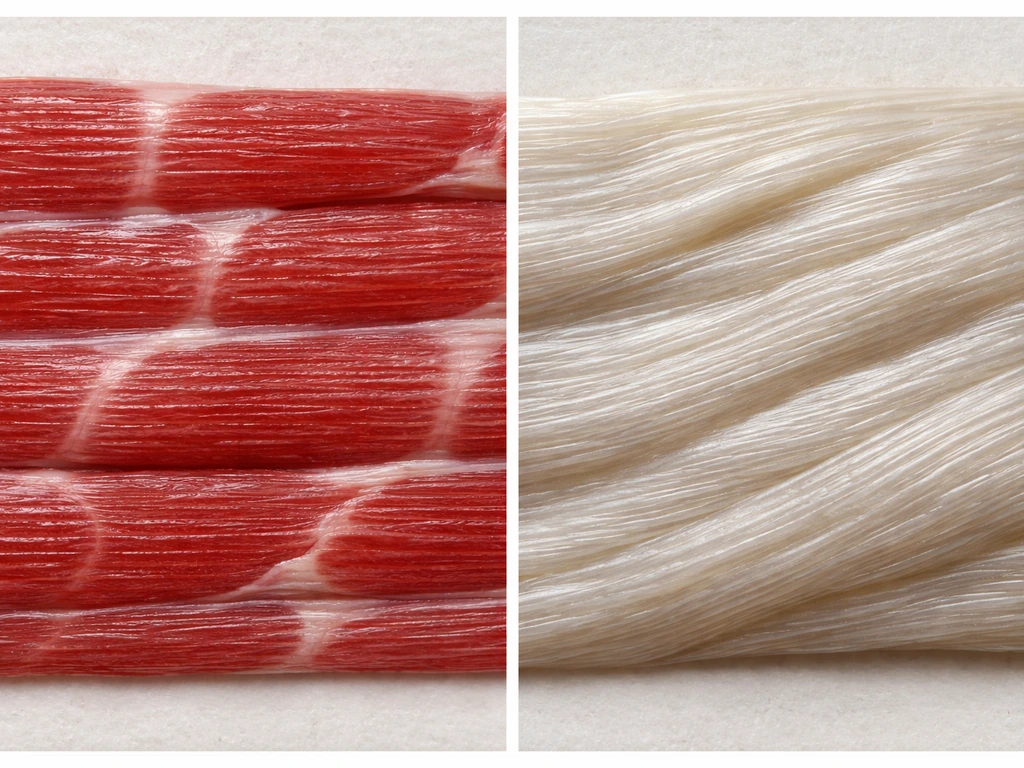
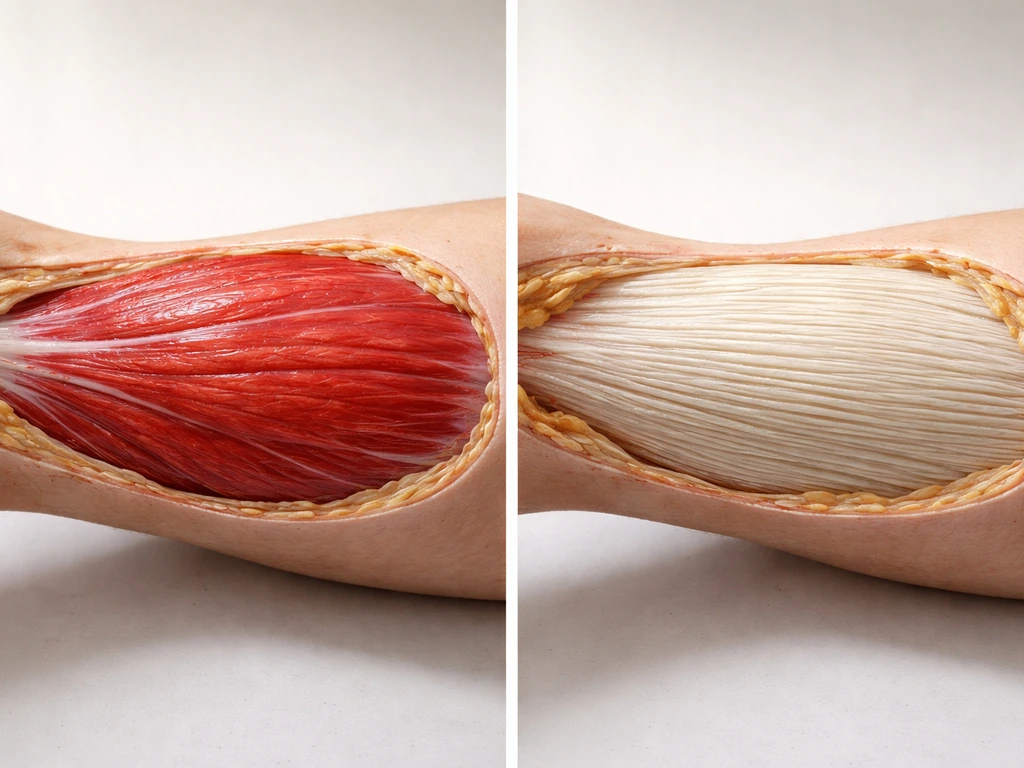
Muscle and tendon are completely different tissues that speak different biological languages when it comes to adaptation. When you lift, muscle protein synthesis (MPS) shoots up fast. Research measuring MPS after heavy resistance exercise found it was about 50% higher at 4 hours post-session and more than double its resting rate at 24 hours. That rapid anabolic response is driven by well-studied pathways like mTOR signaling, and it means muscle tissue is actively building new contractile protein within a day of your workout.
Tendons don't work that way. They're primarily composed of type I collagen arranged in a dense extracellular matrix, and remodeling that matrix is a slow process. Collagen expression does increase after tendon loading, and the formation response peaks around 24 hours post-exercise and stays elevated for roughly 3 days. But here's the catch: that collagen has to be laid down, organized, cross-linked, and mechanically tested before it actually makes the tendon stiffer or stronger. That takes months, not days. The 'speed limit' for tendon adaptation is set by the biology of connective tissue remodeling, and no training trick can fast-forward it the way progressive overload can accelerate muscle growth.
There's also a recovery timing issue that's easy to miss. If you load your tendons again before about 24 hours of recovery, you can actually tip the balance toward net collagen degradation rather than collagen synthesis. So if you're training the same heavy movements back to back with minimal rest, your tendons may not just be failing to adapt, they may be losing ground.
Typical timelines: when you'll notice muscle vs tendon changes
Here's a practical framework for what to expect and when. These timelines are drawn from controlled training studies and apply broadly, though individual variation is real.
| Tissue | First noticeable changes | Meaningful structural/mechanical adaptation |
|---|---|---|
| Muscle (size/strength) | 2 to 4 weeks (neural + early hypertrophy) | 6 to 8 weeks (significant CSA and strength increases) |
| Tendon (collagen turnover) | ~4 weeks (degradation/synthesis markers shift) | ~8 to 12 weeks (stiffness and material properties change) |
| Tendon (stiffness/mechanics) | Not detectable until ~2 months | 12+ weeks for full mechanical property gains |
In real numbers: a quadriceps study found significant increases in muscle cross-sectional area within 8 weeks of resistance training. Achilles tendon stiffness, measured across training in a separate time-course study, didn't show a statistically significant change until about 2 months in, eventually reaching around a 50% increase by the end of the study period. A 12-week high-load calf training program found tendon hypertrophy (actual size increase) after about 8 weeks, with stiffness continuing to rise. These aren't minor delays. There's a genuine 4 to 8 week window where your muscles are getting stronger and bigger while your tendons are still in early adaptation mode.
Age matters here too. Older adults tend to have slower connective tissue turnover, which means the tendon lag can be more pronounced. That's not a reason to avoid training hard, it's a reason to be more deliberate about progression timelines and not rush through the early phases of a program. Younger lifters aren't immune either. Because they can often train harder and recover faster on the muscle side, they can actually accumulate tendon stress more quickly.
Strength gains before tendon readiness: what that means in practice

The danger zone is the period when your muscles are strong enough to generate loads your tendons haven't yet adapted to handle. This is the classic overuse injury setup. Muscles get stronger fast, you add weight or volume quickly because you feel capable, and the tendons absorb forces they're not yet structurally prepared for. Repeat that enough times without adequate recovery and you get patellar tendinopathy, Achilles problems, or elbow issues that can linger for months.
Rapid increases in activity or load are consistently flagged as the primary overuse injury mechanism. It's not that lifting heavy is inherently dangerous, it's that escalating load faster than tissue repair and adaptation can keep pace is. Your muscles are enthusiastically saying 'more weight, let's go' while your tendons are quietly trying to catch up. If you tear a muscle, it can regenerate, but the stronger outcome depends on how well you protect the injury and then rebuild strength gradually Muscles are enthusiastically saying 'more weight, let's go' while your tendons are quietly trying to catch up.. Paying attention to that gap is one of the most underrated things you can do for long-term progress.
The practical signal to watch for is tendon discomfort that persists or worsens 24 to 48 hours after training. Some mild stiffness right after a session is normal. But if you're still sore or tight in the tendon area two days later, that's your body telling you the loading was more than the tissue could comfortably handle. That's a cue to dial back volume or intensity, not push through.
How to train to grow muscle without overstressing tendons
The good news is you don't have to choose between building muscle and protecting your tendons. You just have to be smarter about how you progress. The core principle is that tendons respond best to controlled, progressive mechanical loading, and they hate sudden spikes.
- Keep weekly load increases to roughly 10% or less. This applies to total volume (sets x reps x weight) rather than just intensity. Jumping from 3 sets to 6 sets in a week is just as risky as jumping from 100 lbs to 150 lbs.
- Prioritize consistent session frequency over single-session volume. Tendons adapt better to regular moderate loading than to occasional heavy overload sessions.
- Don't skip warm-ups. Tendons are more compliant and perfused when warm, and working through a gradual ramp-up before heavy loads reduces peak stress on cold tissue.
- Include rest days between sessions that stress the same tendons. Collagen synthesis needs at least 24 to 48 hours to shift toward net positive remodeling, so training the same heavy hinge or squat pattern daily is risky.
- If you're a beginner, keep intensity moderate (60 to 70% of 1RM) for the first 4 to 6 weeks and prioritize form and range of motion. Your tendons need time to get used to the loading pattern before you push intensity.
- Advanced lifters cycling into high-volume or high-frequency blocks should periodically include deload weeks. Tendon stiffness can actually drop by 7 to 12% within 2 weeks of detraining, which means the same weight feels more stressful on a returning tendon.
Tendon-targeted strategies: loading, exercise selection, and progression

If you want to actively strengthen your tendons alongside your muscles, the research is fairly clear on what works. High-intensity loading (roughly 70% of your maximum or above) consistently produces the largest tendon stiffness adaptations. A meta-analysis found that high-intensity resistance training produced large effect sizes for tendon stiffness and modulus, while low-intensity protocols produced much more modest and inconsistent results. Low-and-slow work doesn't cut it for tendon development.
Heavy slow resistance (HSR) training is one of the most evidence-supported methods specifically for tendon adaptation. The idea is controlled, deliberate movement through full range with heavier loads and a slower tempo (think 3 to 5 seconds per rep). This creates sustained mechanical tension in the tendon without the ballistic stress of explosive or plyometric loading. It's a good foundation for any phase of tendon strengthening, and it's also effective for managing tendinopathy when it arises.
Isometric exercises are another valuable tool, especially early in a tendon-strengthening program or during periods of irritation. High-intensity isometrics (around 80 to 100% of maximum voluntary contraction held for 1 to 3 seconds) support collagen synthesis and tendon stiffness improvements and are supported as a pain-management and function-improvement strategy in tendinopathy. For practical use, isometric holds at end range work well for patellar tendons (wall sit or leg press hold) and Achilles tendons (calf press hold).
After a base of HSR training is established, a staged progression to energy-storage loading (controlled plyometrics like jumping and bounding) is how tendons learn to handle sport-specific or explosive demands. Clinical guidelines for tendon loading explicitly recommend this staged approach: get comfortable with heavy slow loading first, then progress to faster and more dynamic movements only when you can complete the prior stage with minimal discomfort.
How to spot tendon-limited bottlenecks and adjust your plan
One of the clearest signs your tendons are the limiting factor rather than your muscles is a mismatch between your strength and your comfort. You feel muscularly capable of lifting more weight, but a particular tendon location (kneecap, heel, elbow) is consistently sore during or after the movement. That's not a muscle recovery issue, it's a tendon tolerance issue.
- Pain or stiffness that is worst at the start of a session and warms up within the first 10 to 15 minutes is a common tendon signal, often called 'start-up pain'. This is generally manageable but should be monitored closely.
- Pain that worsens during training or is significantly worse 24 to 48 hours after a session indicates the load exceeded the tendon's current tolerance.
- A specific tendon location that is tender to touch (rather than diffuse muscle soreness) points to localized tendon stress rather than general fatigue.
- If your strength numbers are rising consistently but tendon symptoms keep appearing, your program progression rate is outpacing your connective tissue adaptation. Slow down load increases even if your muscles feel capable.
When you identify a tendon bottleneck, the adjustment isn't to stop training. It's to reduce the load on that specific tendon while maintaining overall training stimulus. Swap out high-impact or ballistic versions of movements for slower, controlled alternatives. Reduce total volume on the affected tendon for 2 to 3 weeks. Add targeted isometric work for that tendon. Then rebuild intensity gradually using the 24 to 48 hour pain-response rule as your guide for when to progress.
It's also worth knowing that tendon symptoms from overuse don't always resolve quickly. Studies on patellar tendinopathy show that meaningful improvement from targeted eccentric training programs typically takes 12 weeks, and in elite athletes, full resolution and maintained improvement can take up to 12 months. If you catch the issue early and adjust promptly, you can often avoid that long road. If you push through significant tendon pain, you likely cannot.
Recovery, nutrition, and protein to support both tissues
Nutrition for muscle growth is reasonably well established. For most people doing resistance training, daily protein intake in the range of 1.4 to 2.0 g per kg of bodyweight covers the bases for muscle protein synthesis, with evidence suggesting diminishing returns beyond about 1.6 g/kg/day for hypertrophy. That's roughly 112 to 160 g of protein per day for a 100 kg (220 lb) person. Spreading that across 3 to 4 meals tends to work better than front- or back-loading it.
Tendon nutrition is a less tidy picture, but there are a few evidence-informed angles worth knowing. Collagen is the structural backbone of tendons, and collagen synthesis depends on vitamin C, glycine, proline, and hydroxyproline. Vitamin C's clinical evidence for tendon healing is actually mixed despite the strong mechanistic rationale, so don't over-rely on megadosing. Hydrolyzed collagen and specific collagen peptide supplements have shown some promise in tendon adaptation research. A 15-week lower-body resistance training study comparing 15 g per day of specific bioactive collagen peptides to placebo found improved tendon stiffness and material properties in the collagen group, and a separate soccer player study combining high-intensity resistance training with hydrolyzed collagen showed favorable patellar tendon adaptations. These aren't slam-dunk results, but if you're specifically trying to support tendon remodeling alongside muscle growth, 10 to 15 g of collagen peptides or hydrolyzed collagen around training is a low-risk, possibly useful addition.
Sleep and recovery structure matter just as much as what you eat. Collagen synthesis stays elevated for up to 3 days after tendon loading, which means that recovery window is active adaptation time, not dead time. Cutting sleep short, stacking heavy sessions too close together, or consistently under-recovering won't just hurt your muscle gains, it will actively impair tendon remodeling. Tendons are not passive structures waiting to be loaded. They're living tissue in a constant state of slow remodeling that needs adequate rest to tip toward net positive adaptation.
The bottom line is that muscle and tendon can both grow stronger with consistent, progressive training, but they're on different clocks. Muscle responds in days to weeks. If you are also wondering do veins grow with muscles, remember that blood vessel and connective tissue adaptations follow different timelines than muscle protein synthesis. Tendons respond in weeks to months. The people who train for years without injury are usually the ones who figured out how to respect both timelines, not just the one they can feel in the mirror.
FAQ
If muscles adapt faster, should I increase weight every week?
Only if your tendons stay comfortable. A good decision rule is to progress the muscle stimulus (load or reps) while keeping tendon pain the same or better using the 24 to 48 hour response window, then increase volume or intensity no sooner than your tendon tolerates it. If tendon discomfort lingers or worsens, hold load steady and reduce the specific tendon’s volume for 2 to 3 weeks.
How can I tell whether my limiting factor is tendon lag or poor muscle recovery?
Tendon-lag issues tend to show up as localized tenderness at the tendon insertion (kneecap, heel, elbow) during or after the movement, and the discomfort persists 24 to 48 hours later. Muscle-recovery issues more often feel like generalized soreness and tiredness that gradually improves within a day or two across sessions. If it’s clearly one joint position or one tendon spot, treat it as a tendon tolerance problem first.
What training schedule helps prevent overuse when I’m trying to build muscle fast?
Use a staggered approach: avoid repeating heavy, tendon-stressing variants (for example, maximal calf raises, heavy leg extensions, or heavy bench variations that irritate the elbow) on back-to-back days. Keep at least one “easier” exposure day for the tendon-stressing pattern, and separate high-intensity sessions by enough time for symptoms to settle, not just for muscles to feel better.
Does warming up fully protect tendons from the muscle-tendon speed gap?
A warm-up can improve movement readiness, but it doesn’t change the structural remodeling timeline. It can reduce strain temporarily, yet if you repeatedly escalate load faster than tendon adaptation, symptoms can still build. Use warm-ups as a tolerance enhancer, not as a substitute for progressive loading and recovery.
Are isometrics enough to grow tendon strength, or do I still need heavy slow resistance?
Isometrics can help, especially when a tendon is irritated, but they are usually best as a bridge or supplement. Heavy slow resistance provides both mechanical loading and progressive tendon remodeling over time. If your goal is long-term resilience, pair isometrics with an HSR base rather than relying on holds alone.
How much tendon pain is acceptable while building strength?
Some mild discomfort during a set is common, but the key check is next-day and two-day behavior. If tendon discomfort is still present or worse 24 to 48 hours after training, reduce volume or intensity for that tendon. If pain is sharp, rapidly escalating, or changing your technique, stop that variation and regress to a less provocative version.
Do eccentric exercises make tendons adapt faster than other training types?
Eccentrics can be effective, but the broader takeaway is that tendons adapt best to heavy, controlled mechanical loading, regardless of whether the focus is eccentric, isometric, or the full slow-rep spectrum. “Eccentric-only” is not automatically superior, and some people tolerate full-range HSR better. The best choice is the version you can progress consistently without triggering persistent 24 to 48 hour symptoms.
Will collagen peptides improve tendon outcomes if I already meet protein needs for muscle?
They may add a small, targeted benefit for tendon remodeling, but they should not replace the fundamentals: progressive heavy loading, adequate sleep, and avoiding rapid spikes in load. If you try them, consider 10 to 15 g of collagen peptides or hydrolyzed collagen around training as an add-on, and assess tendon symptoms and performance over several weeks.
Does age always slow tendon adaptation enough to change my progression rate?
Often yes, connective tissue turnover can be slower with age, so the tendon lag can feel more pronounced. Practically, this means you may need smaller weekly increases and more time between “hard” exposures for tendon-stressing movements. You can still progress, but the rate should be driven by next-day symptoms and your ability to complete the current stage with minimal discomfort.
What if I’m already injured, can I still build muscle while protecting the tendon?
Yes, but modify the tendon-stressing component first. Keep training overall, reduce or swap the painful variation for a less provocative one, and use targeted isometrics if they help symptoms. Then rebuild intensity gradually using the pain-response rule, and avoid pushing through significant tendon pain because it can lengthen recovery.
How long should I run a tendon-focused block before deciding it isn’t working?
Don’t judge too early. For many overuse tendon issues, meaningful improvement often takes about 12 weeks of targeted loading, and more severe cases can take longer. If you’re not seeing any trend toward reduced next-day soreness or improved tolerance by around 8 to 12 weeks, reassess exercise selection, range of motion, volume, and whether the chosen loading intensity is truly “heavy” enough.