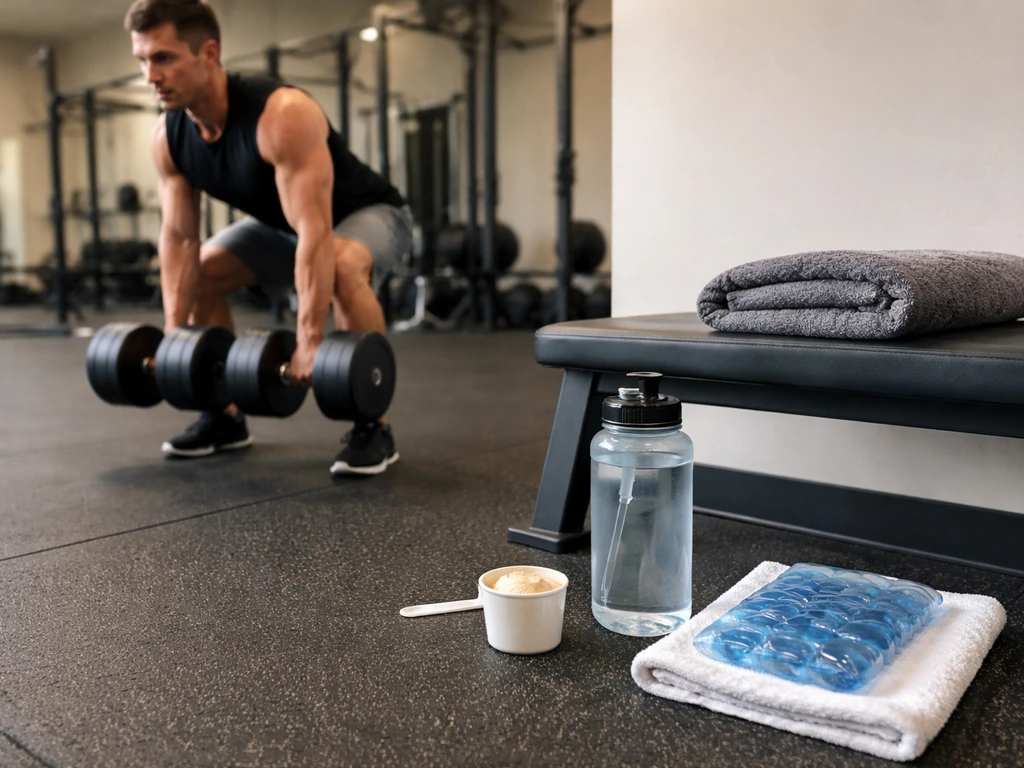
Yes, teenagers can absolutely build meaningful muscle, and in fact your hormonal environment as a teen is genuinely one of the best you'll ever have for it. What it takes is the same three things it takes at any age: progressive overload in training, enough protein and total calories to fuel growth, and consistent recovery. Get those three things working together over 8–12 weeks and you will see real changes in strength and size. Women can absolutely grow muscle through resistance training, and the same fundamentals of progressive overload, protein, calories, and recovery apply. The details matter though, especially at your age, so here's exactly how to do it right. If you're wondering how to grow muscles in 1 week, remember the fastest safe approach still follows progressive overload, nutrition, and recovery principles.
How to Grow Muscle as a Teen: Training and Nutrition Plan

Why teens can build muscle (and what actually makes it happen)
Muscle grows when you give your body a mechanical signal (lifting) that forces it to repair and reinforce muscle fibers, a process called muscle protein synthesis. For that repair to result in bigger, stronger fibers rather than just baseline recovery, you need three things stacked together: a training stimulus that challenges the muscle beyond what it's used to, enough protein to provide the raw building blocks, and enough total energy so your body isn't in a deficit deep enough to prioritize fuel over construction.
Teens actually have a hormonal advantage here. Growth hormone and testosterone levels during adolescence are elevated compared to most adult stages of life, and both hormones directly support muscle protein synthesis. The idea that lifting weights will 'stunt your growth' has been thoroughly studied and debunked. The American Academy of Pediatrics has stated clearly that well-designed youth resistance training programs have not been shown to negatively affect growth plates or linear growth. The real risk is poor form, unsupervised maximal lifting, or dropping weights, not the act of resistance training itself. Train smart and you're not just safe, you're in an ideal window.
One thing worth understanding early: the nervous system adapts first. In your first 4–6 weeks of training, a lot of your strength gains come from your brain learning to recruit muscle fibers more efficiently, not from the fibers themselves getting bigger. Visible size changes typically start showing up around weeks 6–10. This is normal and not a reason to quit. Keep going and the structural changes will follow.
Teen-safe resistance training plan
The NSCA's youth resistance training position recommends starting with 1–3 sets of 6–15 reps per exercise, a 5–10 minute dynamic warm-up before every session, and gradual resistance progression of roughly 5–10% at a time. That's a solid framework. Here's how to turn it into a real weekly plan.
How often to train
Three days per week of resistance training is the sweet spot for most teens. This lines up with both CDC guidelines (muscle-strengthening on at least 3 days per week for ages 6–17) and real-world recovery needs. Training more isn't necessarily better if you're not recovering between sessions. A simple upper/lower or full-body split three days a week, with rest or light activity on the other days, works extremely well.
Exercise selection
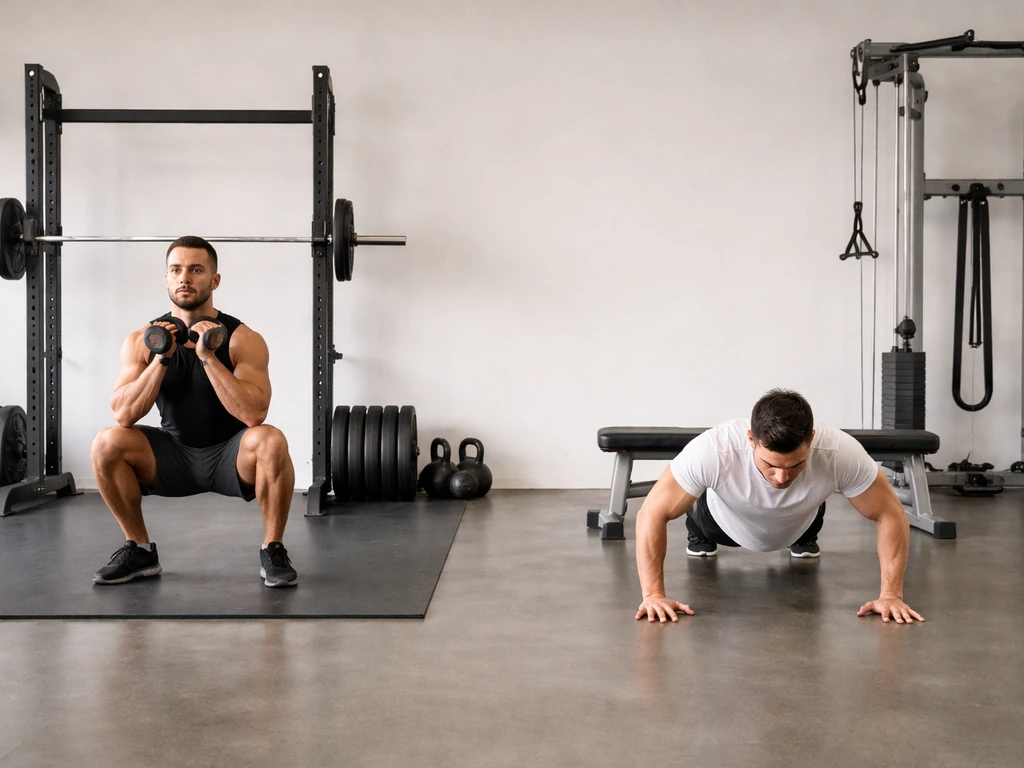
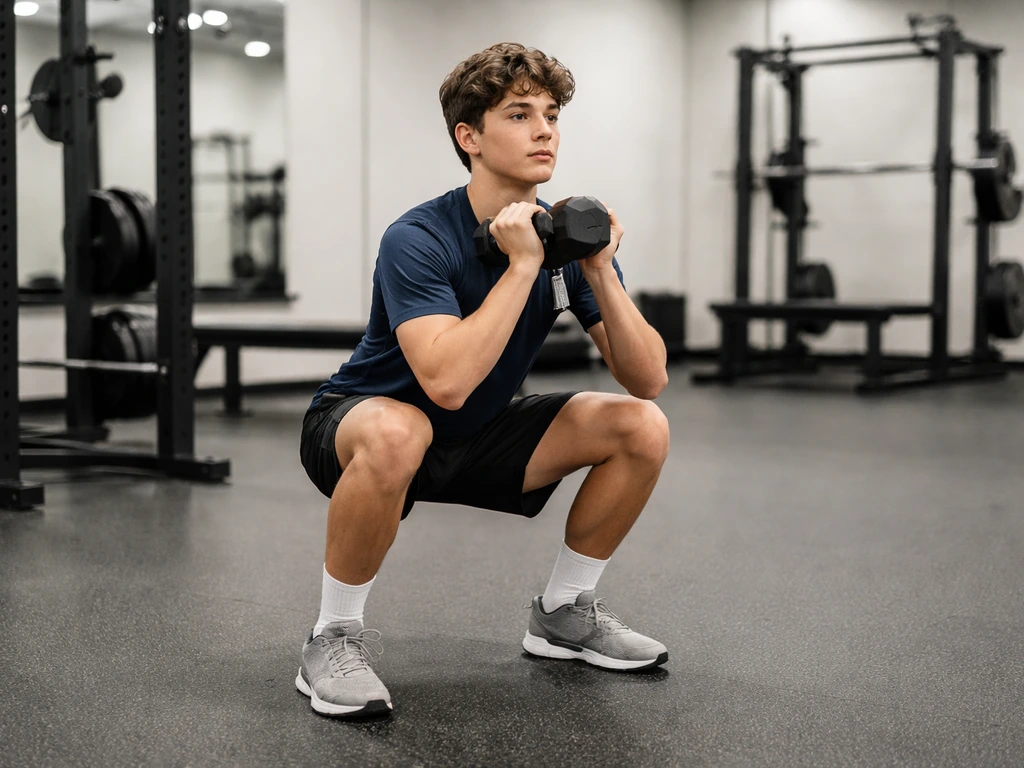
Compound movements should be the backbone of your plan. These are exercises that work multiple muscle groups at once, giving you more muscle stimulus per unit of effort. Machines are a perfectly legitimate place to start if you're new to the gym, since they guide your movement pattern and reduce injury risk while you learn. Free weights are great too, but take more time to learn correctly. Don't let anyone pressure you into doing heavy barbell back squats on week one if your form isn't there.
- Lower body: squats (goblet squat to start), leg press, Romanian deadlift, lunges
- Upper body push: push-ups, dumbbell or barbell bench press, overhead press, chest press machine
- Upper body pull: lat pulldown, seated cable row, dumbbell rows, assisted pull-ups
- Core: plank variations, dead bug, cable core press
Sets, reps, and progression
For the first 4 weeks, stick to 2–3 sets of 10–12 reps per exercise at a weight where the last 2 reps are genuinely hard but your form stays clean. Research in adolescents supports that both lower-rep (4–6 RM) and higher-rep (12–15 RM) ranges can develop muscular fitness, so don't overthink it early on. Once you can complete all reps with good form across all sets, add 5 lbs (or 2.5 kg) to the exercise the following week. That's progressive overload. It's the single most important training variable. If your goal is how to grow weak muscles, progressive overload is what helps those muscles get stronger over time.
A sample weekly structure
| Day | Focus | Example Exercises |
|---|---|---|
| Monday | Full body A | Goblet squat, dumbbell bench press, lat pulldown, plank |
| Tuesday | Rest or light cardio | Walk, bike, sport, or stretching |
| Wednesday | Full body B | Romanian deadlift, overhead press, seated row, dead bug |
| Thursday | Rest or light activity | Walk, swim, recreational sport |
| Friday | Full body C (or A repeat) | Leg press, push-ups, dumbbell row, core circuit |
| Saturday/Sunday | Active rest | Sport, walking, mobility work |
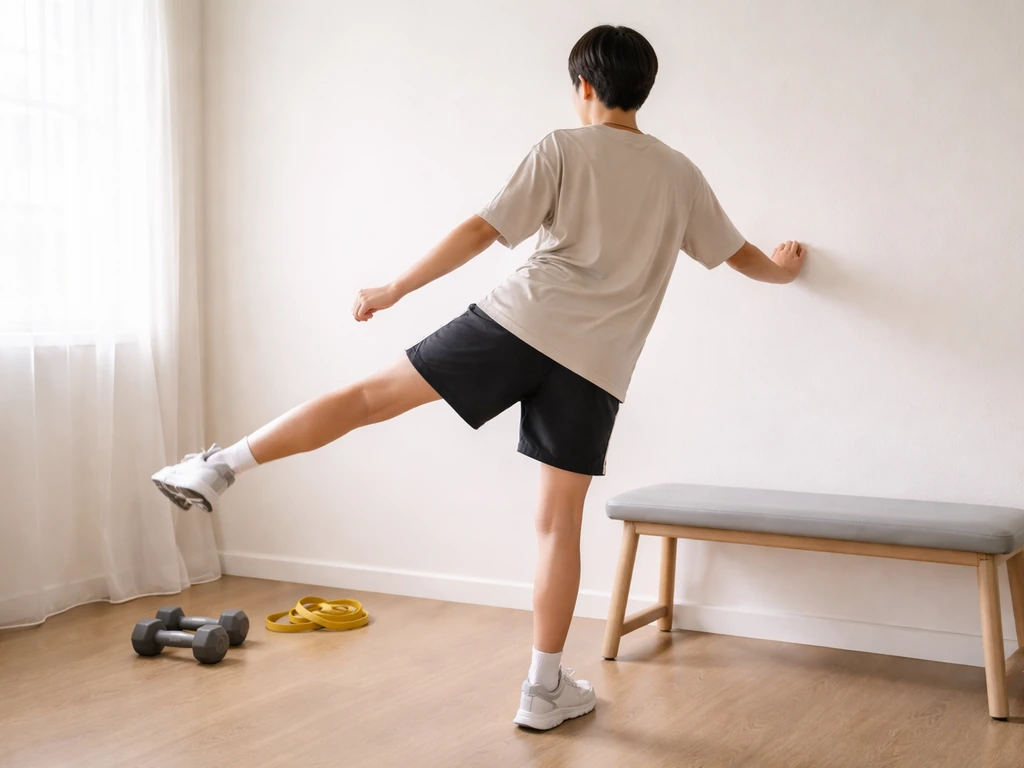
Start each session with a 5–10 minute dynamic warm-up: leg swings, arm circles, bodyweight squats, hip hinges. Never skip this. Cold muscles and joints under load is exactly how you get hurt and derail a whole month of progress.
How much to eat and what to eat
Nutrition is where most teen muscle-building attempts fall apart, usually by under-eating. You cannot build muscle in a significant calorie deficit. As a teenager you're already burning more energy than most adults just from growth and daily activity. Add resistance training on top and your calorie needs are real.
Calories
A rough starting target for a teen actively trying to build muscle is your estimated maintenance calories plus 200–300 calories per day. You don't need an aggressive bulk. A modest surplus keeps fat gain minimal while providing enough fuel for muscle construction. If you're underweight or very active in sports, that surplus might need to be higher. If you're not sure where your maintenance is, use your current bodyweight in pounds multiplied by 16–18 as a rough daily calorie estimate, then add 200–300 on top.
Protein
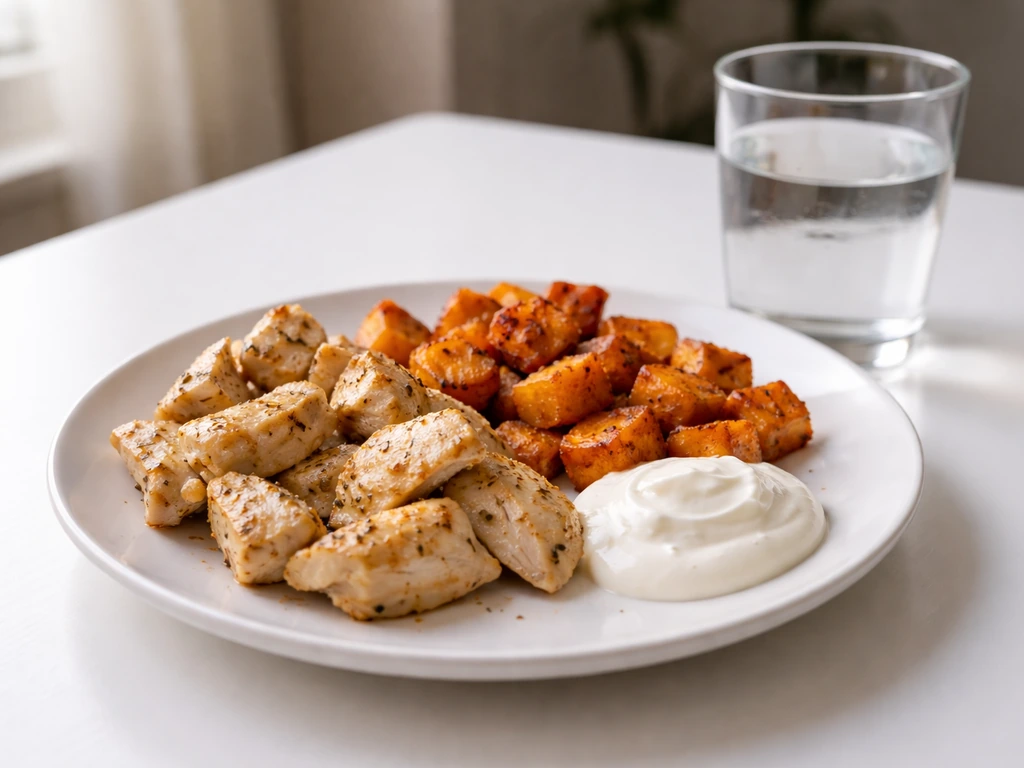
This is non-negotiable. Protein provides the amino acids that your body uses to actually build new muscle tissue. The ISSN recommends around 0.25 g per kg of bodyweight per meal, or roughly 20–40 g of high-quality protein per eating occasion, spread across multiple meals throughout the day. For total daily intake, targeting 1.6–2.2 g of protein per kg of bodyweight is supported by the evidence. For a 70 kg (154 lb) teen, that's roughly 112–154 g of protein per day. Hit that number consistently and you'll rarely leave gains on the table from the nutrition side.
Carbohydrates and fats
Carbohydrates are your primary fuel source for training and should make up a large portion of your plate. Rice, pasta, potatoes, oats, fruit, and bread are all solid options. Don't fear carbs. Fats support hormone production including the testosterone that helps you build muscle, so don't cut them too low either. Aim for at least 1 g of fat per kg of bodyweight per day from sources like eggs, nuts, olive oil, avocado, and oily fish. Fill the rest of your calories with carbohydrates.
Practical eating tips for teens
- Eat 3–5 times a day with a protein source at every meal
- Have a meal or snack containing 20–40 g of protein within a few hours of training
- Don't skip breakfast, especially on training days
- Drink enough water: at minimum 2–3 liters per day, more if you sweat heavily in sport
- School lunches often fall short on protein, so carry a snack like Greek yogurt, cottage cheese, hard-boiled eggs, or a protein bar as backup
Recovery essentials for muscle growth

Muscle doesn't actually grow during the workout. It grows between workouts, during recovery. Training is the stimulus, but sleep and rest are where the adaptation happens. Skimping on recovery is one of the most common ways teens (and adults) sabotage good training.
Sleep
The American Academy of Sleep Medicine and the AAP are aligned on this: teenagers aged 13–18 need 8–10 hours of sleep per night. This isn't optional background advice, it's directly relevant to muscle growth. A systematic review of the research found that sleep loss negatively affects strength and physical performance outcomes. Growth hormone is primarily released during deep sleep, and that's the same hormone driving a big chunk of your muscle repair and growth. Protect your sleep schedule as seriously as you protect your training schedule. Consistent bedtimes, limiting screens before bed, and keeping your room cool and dark are not complicated fixes but they genuinely move the needle.
Managing soreness
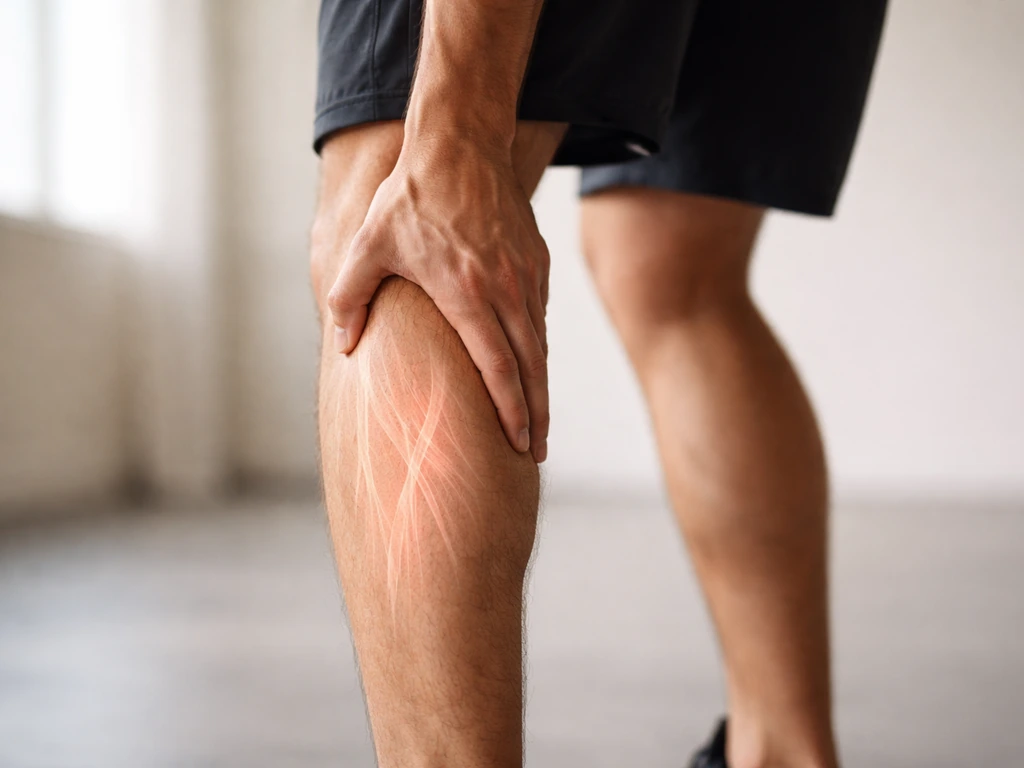
Delayed onset muscle soreness (DOMS) typically peaks 24–48 hours after a new or hard workout. It's a sign of muscle damage and adaptation, not necessarily a sign you trained hard enough or that growth is happening. You don't need soreness to grow, and training through severe soreness into the same muscle group before it recovers is counterproductive. Light movement, adequate protein, hydration, and sleep are the best remedies. If soreness is still significant after 72 hours, ease back on volume in that muscle group the next session.
Stress and overtraining
School stress, exam pressure, and social demands all affect your body's hormonal environment. Chronically high cortisol (the stress hormone) competes with anabolic hormones and can slow recovery. This doesn't mean you can only train when life is perfect, but it does mean that rest days and manageable training volume matter. Three well-executed sessions per week consistently beats five sloppy sessions per week every time. If you're also playing a sport, account for that activity in your total weekly load and adjust gym volume accordingly to avoid burning out.
Supplements and what to avoid as a teenager
Most teens don't need supplements at all. Food should always come first, and the vast majority of your progress over the next 8–12 weeks will come from training hard, eating enough protein, and sleeping well. That said, a few supplements have legitimate evidence behind them and a reasonable safety profile for teens.
What's worth considering
- Whey protein powder: not a magic supplement, just a convenient way to hit your daily protein target when whole food isn't available. Useful after training or as a school snack. Look for products with minimal additives.
- Creatine monohydrate: the ISSN identifies it as the most effective ergogenic supplement for increasing high-intensity exercise capacity and lean body mass during training. A maintenance dose of around 3–5 g per day is well-studied. The evidence on safety in adolescents is generally positive, but this is a supplement best discussed with a parent or doctor before starting. It's not necessary for a beginner, but it's the most evidence-backed option if you do choose a supplement.
- Vitamin D and omega-3 fatty acids: worth considering if your diet is limited in fatty fish or sun exposure is low, since both play a role in general health and recovery.
What to avoid
- Pre-workouts with high caffeine doses: many commercial pre-workouts contain 200–400 mg of caffeine per serving, which is not appropriate for teenagers. At best, they disrupt sleep. At worst, they can cause cardiac stress.
- Fat burners and weight-loss products: no evidence of meaningful benefit and real risk of side effects in developing bodies
- Testosterone boosters and hormone-altering products: marketed aggressively to teens but can interfere with your natural hormonal development. Avoid entirely.
- Anything that isn't clearly labeled with a full ingredient list from a reputable manufacturer
Tracking progress and adjusting when gains stall

You can't manage what you don't measure. Tracking doesn't have to be obsessive, but a simple system will tell you whether your program is working and what to change if it isn't.
What to track
- Workout log: exercise, sets, reps, and weight used each session. This is the most important thing to track because it shows you whether you're progressing over time.
- Bodyweight: weigh yourself once a week at the same time of day (morning, before eating). Weight will fluctuate daily, so weekly trends matter more than daily numbers.
- Photos: a monthly progress photo in the same lighting and pose is more useful than the mirror for spotting gradual changes.
- How you feel: energy levels, sleep quality, and whether training feels harder or easier are all real data points
What to expect in the first 8–12 weeks
Weeks 1–4 are mostly about nervous system adaptation. You'll get noticeably stronger even if the mirror doesn't change much. Weeks 5–8 is when most teens start seeing visible changes in muscle definition and some size, especially in the upper body. By weeks 9–12 in a well-executed program with consistent nutrition and sleep, you'll see measurable differences in strength, potentially 1–2 kg of lean mass gained (sometimes more depending on starting point and adherence), and a clear change in how your clothes fit. If you are aiming for faster gains, the same principles of progressive overload, nutrition, and sleep help you follow a “one month” muscle-building approach how to grow muscles in one month.
When to adjust
If you've gone two or more weeks without adding weight or reps to any of your main lifts, something needs to change. Go through this checklist in order: Are you eating enough total calories? Are you hitting your protein target most days? Are you sleeping at least 8 hours? Is your form breaking down before you fail, robbing you of effective reps? If those all check out, add one more set per exercise or try adjusting your rep range. If weight is going up but you're gaining fat faster than you'd like, slightly reduce your calorie surplus. If you're gaining no weight at all, eat more. The answer is almost always simpler than people expect.
One last thing worth knowing: progress won't always be linear. Some weeks will feel great and others won't. Teens dealing with school stress, irregular sleep during exams, or sport seasons will notice this especially. Consistency over months matters far more than perfection in any single week. Stay with the program, adjust the variables methodically, and the results will show up.
FAQ
How do I know my workouts are intense enough to grow muscle, not just “exercise”?
Use a simple rule for each set: you should finish with 1 to 3 reps left in the tank (stop before form breaks). If you can do the same reps, same weight, and the same form session after session without that effort creeping up, you are probably not applying enough progressive overload.
Should I train to failure as a teen to maximize muscle growth?
Not as a default. Training very close to failure occasionally is fine, but failing reps repeatedly usually wrecks technique and increases fatigue. Better approach: keep most sets at about 1 to 3 reps in reserve, then only push harder on your last set after you own the movement pattern.
What if I’m sore all the time, and my performance drops from workout to workout?
That usually signals you have too much volume or you are not recovering enough (sleep, calories, or rest days). Reduce the next week by lowering sets per exercise (for example, cut 1 set), keep the same rep range, and protect your sleep. You can also swap one hard lift variation for a machine or lighter technique work.
Can I grow muscle if I only have access to home workouts or no gym machines?
Yes, but you must still progress. Use bodyweight and resistance bands with a plan that increases difficulty (more reps, slower tempo, harder band levels, added weight via backpack). Focus on movements that let you reach near your target rep effort, around 8 to 15 reps with good form, and repeat the progression weekly.
Is it better to focus on higher reps or lower reps for a teen?
Either can work early, but consistency beats choosing a single “magic” rep range. The plan in the article uses 10 to 12 reps at first because it teaches control and makes progression easier. After you have solid form, you can cycle rep ranges (for example, 8 to 10 one block, 12 to 15 another) to keep joints and motivation fresh.
How much muscle should I expect in 8 to 12 weeks, and how do I track it if my weight changes?
Look at trends, not daily changes. Weigh yourself 2 to 4 mornings per week under similar conditions and watch the weekly average. Track performance too, like total reps at your working weight or whether you added load while keeping reps and form. Small scale changes can still mean real muscle gain if strength is rising.
What if I’m gaining fat instead of mostly muscle, how should I adjust calories?
If your weight is climbing faster than you want and you notice increasing waist size, reduce your surplus slightly, for example by 100 to 150 calories per day. Keep protein and training effort the same. A slower gain rate usually improves body composition without stalling strength.
Do I need supplements for muscle growth as a teenager?
Most teens do not. If you want a practical, evidence-based option, consider creatine monohydrate, but confirm it fits your health situation and discuss with a parent or clinician if you have any medical conditions. The bigger levers are still protein intake, enough total calories, and 8 to 10 hours of sleep.
How should I eat around my training days and rest days?
Aim to hit protein and total calories both days, not only on training days. For training, having a carbohydrate-containing meal 1 to 3 hours before lifting often improves training quality. After training, prioritize a protein-containing meal within a few hours and then continue your normal day of carbs and fats to reach your targets.
What should I do if my parents or coach are worried lifting will affect my growth plates?
The key is program quality. Emphasize supervised coaching, controlled technique, avoiding maximal, sloppy lifting, and using progressive resistance rather than random heavy attempts. Growth plate risk is mainly associated with poor form and high-risk behaviors, not well-designed youth resistance training.
If I play a sport, how do I avoid overtraining while still growing muscle?
Treat the gym as part of your total weekly workload. On weeks with hard sport practices, consider reducing gym volume (fewer sets) or choosing less fatiguing variations. Also keep at least one full rest or light day between hard gym sessions so you do not stack soreness on soreness.