If you searched 'grow bone vitamin code,' you're probably looking at the Garden of Life Vitamin Code Grow Bone System and wondering whether it's worth buying, whether it actually does anything for your bones, and whether any of those height-related hopes are realistic. I'll give you a straight answer on all of that, ingredient by ingredient, with the honest context most product pages leave out.
Grow Bone Vitamin Code Review: Does It Work Safely?

Marcus Kellerman
24 Mar 2026

What Vitamin Code Grow Bone Actually Is
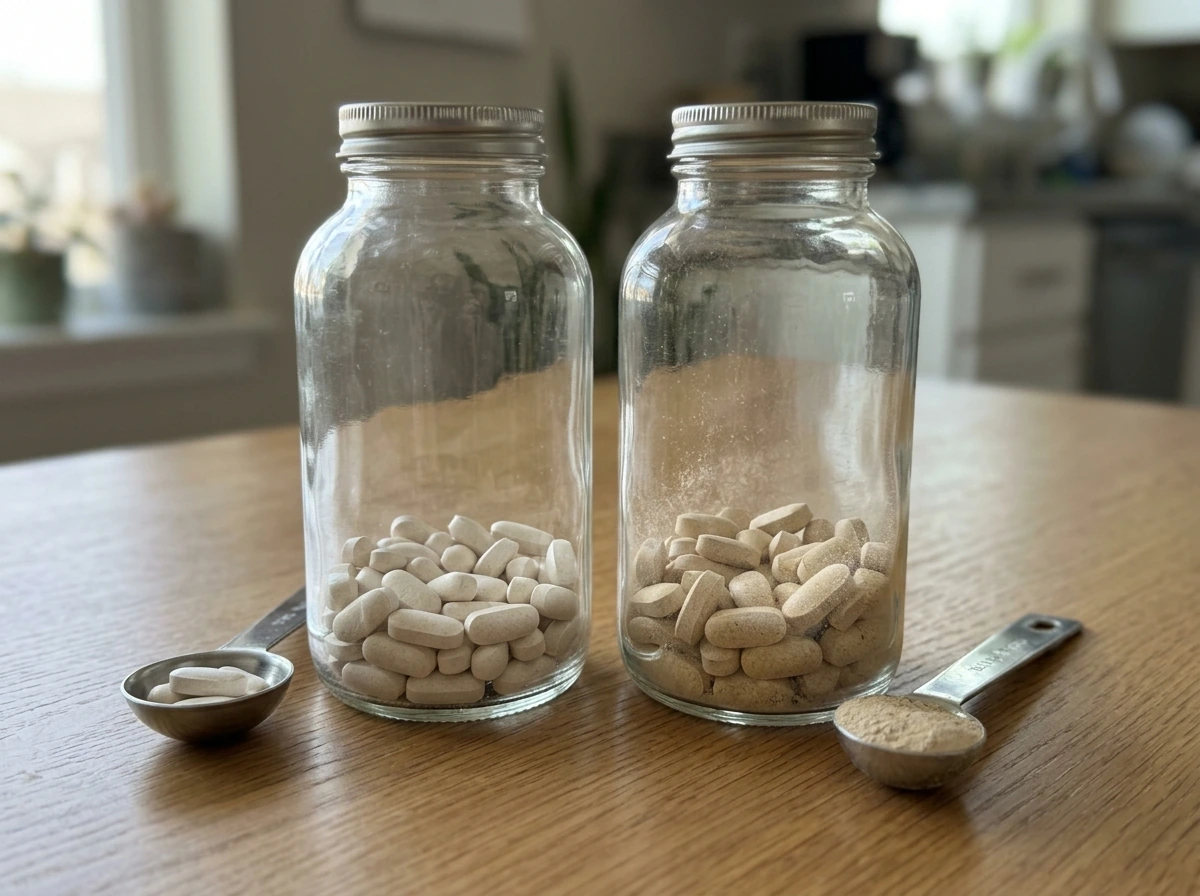
The Vitamin Code Grow Bone System is a Garden of Life product, and it's not just one bottle. It's a two-part kit: one bottle called 'Vitamin Code Grow Bone Calcium' and a second bottle called 'Growth Factor S.' You take both together as a program. Garden of Life markets this as a 'clinically studied' system, pointing to a six-month, randomized, open-label human clinical study involving 176 healthy men and women aged 18 to 85, with bone mineral density improvements measured by DEXA scan.
The 'Grow Bone' name clearly nods at bone formation, and some buyers come to it hoping for height increases. That's worth addressing directly and honestly, which I'll do below. But first, let's look at what's actually in each bottle.
Grow Bone Calcium: what's in bottle one
The calcium formula draws from plant-based, algae-derived calcium (similar to what's marketed under names like AlgaeCal). Per daily serving it provides 756 mg of calcium. Alongside that you get 1,600 IU of vitamin D3, 100 mcg of vitamin K2 as MK-7, 386 mg of magnesium, 3 mg of boron, and 2.2 mg of silica. Those are the headline numbers. The inclusion of K2 as MK-7 is notable because there's a published three-year randomized, placebo-controlled trial showing K2 MK-7 as an add-on to calcium and vitamin D improved bone mineral density and bone microarchitecture in postmenopausal women with osteopenia. That's real, peer-reviewed evidence, not just label copy.
Growth Factor S: what's in bottle two
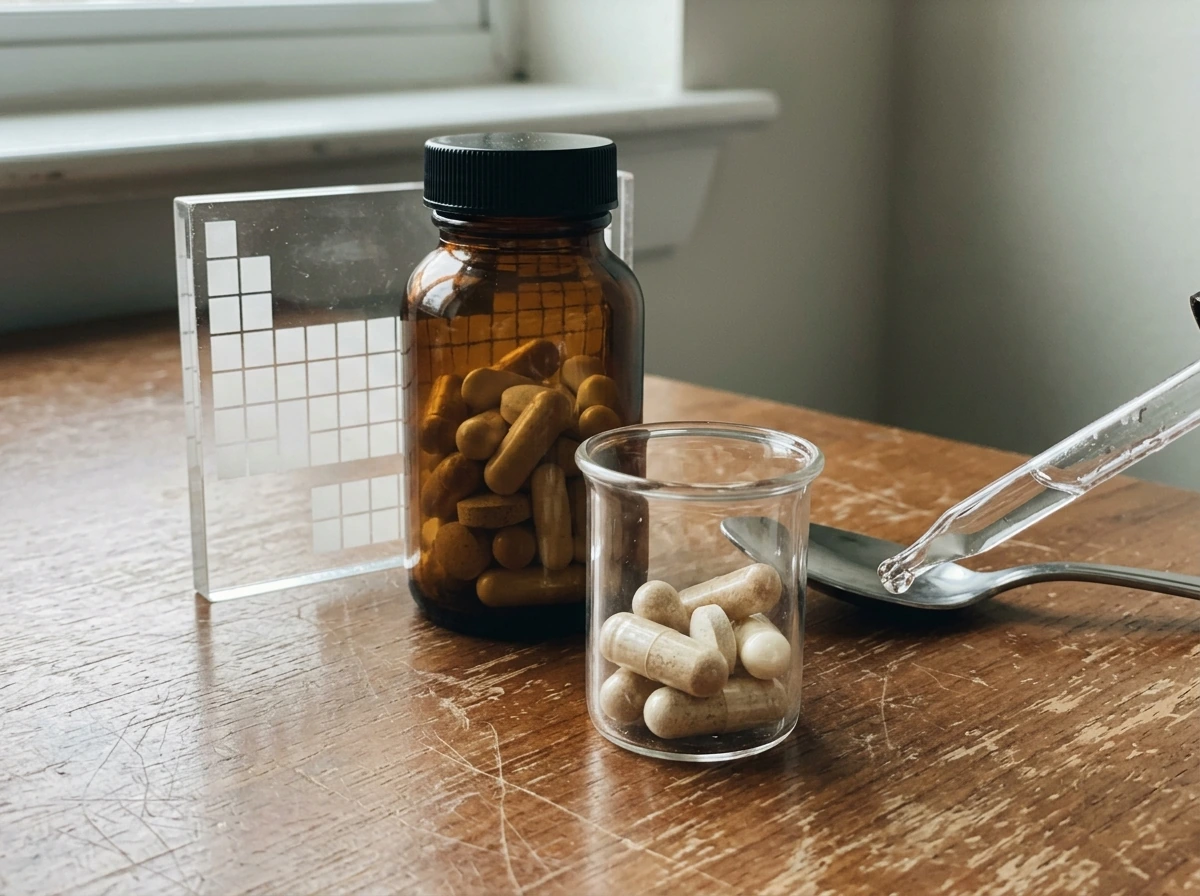
This is the more controversial bottle. Its central ingredient is strontium citrate, delivering 680 mg of elemental strontium per serving. Strontium is a trace mineral that some research suggests can support bone density, but it comes with important caveats I'll cover in the safety section. Growth Factor S also contains a probiotic and enzyme blend including strains like Saccharomyces cerevisiae and Lactobacillus species, plus digestive enzymes (protease, lipase, phytase), and a RAW organic fruit and vegetable blend.
Does It Work? The Evidence, Honestly
For bone mineral density support in adults, the ingredients here are genuinely evidence-backed. Calcium, vitamin D3, vitamin K2 MK-7, magnesium, and boron all have plausible and in some cases well-studied roles in bone metabolism. The combination is reasonable, and Garden of Life's own clinical study reported DEXA-measured BMD improvements. That's not nothing. For people in midlife or older who are trying to slow bone loss, maintain density, or support recovery from low bone mass, this kind of multi-nutrient formula is more evidence-informed than most 'bone support' products on shelves.
But there's a major asterisk on the strontium angle. Strontium has a different atomic mass than calcium, which means when DEXA scans pick up strontium in bone tissue, they can overestimate bone mineral density. This is a well-documented measurement artifact issue with strontium-containing protocols. So some of the BMD improvement numbers you see in studies involving strontium may be partially inflated by what the DEXA machine is 'reading,' not purely by actual calcium deposition. That's not a fringe concern; it's been raised by independent researchers and clinicians for years.
What about height and linear growth?
Here's the part where I have to be really direct. If you're an adult with closed growth plates, no supplement, including this one, can increase your height. Growth plates (epiphyseal plates) fuse during late adolescence, typically by the late teens, and once they're closed, linear bone growth stops. That's basic physiology.
Even in children and adolescents whose plates are still open, the evidence for calcium and vitamin D supplements driving meaningful height increases is weak. AHRQ meta-analyses of randomized controlled trials found no significant effect of calcium supplementation on height in children aged 3 to 18. An AHRQ meta-analysis (Evidence Report/Technology Assessment No. 183) reports that calcium supplementation in children ages 3, 18 did not show an effect on height gain attributable to calcium supplementation [AHRQ meta-analyses of randomized controlled trials](https://www.
ahrq. gov/downloads/pub/evidence/pdf/vitadcal/vitadcal. pdf). Separate RCTs on vitamin D supplementation in stunted children showed no meaningful change in height-for-age z-scores overall.
So the honest answer is: this product is a bone density support tool, not a height-increase tool.
Breaking Down the Ingredients vs. Your Actual Needs

| Ingredient | Amount per Serving | What the Evidence Says | Fit for Most Adults |
|---|---|---|---|
| Calcium (algae-derived) | 756 mg | Supports bone mineral density; modest fracture-risk reduction in at-risk adults | Good if dietary calcium is low |
| Vitamin D3 | 1,600 IU | Below the IOM upper limit of 4,000 IU/day for ages 9+; supports calcium absorption | Yes, safe dose range |
| Vitamin K2 (MK-7) | 100 mcg | 3-year RCT shows BMD and microarchitecture benefits alongside calcium/D3 in osteopenia | Strong addition |
| Magnesium | 386 mg | Cofactor in bone metabolism; many adults are deficient | Useful; watch total daily intake |
| Boron | 3 mg | Trace mineral with some bone metabolism research | Reasonable dose |
| Silica | 2.2 mg | Present in small amounts; role in bone collagen formation | Low-risk trace amount |
| Strontium Citrate | 680 mg elemental | May affect bone markers; distorts DEXA readings; controversial at this dose | Use cautiously; discuss with doctor |
The 1,600 IU of vitamin D3 is well within safe territory but still needs to be counted against your total daily vitamin D from all sources (including fortified foods, other supplements, and sun exposure). The IOM upper limit is 4,000 IU per day for ages 9 and up, so you have room, but if you're also taking a multivitamin or another D3 supplement, add the numbers together.
Vitamin D toxicity is rare under normal supplementation patterns according to Mayo Clinic commentary, but it's not zero, and high cumulative doses over time do carry risk. The 386 mg of magnesium is meaningful; check your total daily intake because exceeding about 350 mg from supplements (on top of dietary magnesium) can cause loose stools. These aren't deal-breakers, just things to track.
What Reviews Can (and Can't) Tell You
Walmart's product listing for the Vitamin Code Grow Bone System includes star ratings and customer snippets. Trustpilot has brand-level Garden of Life reviews. Both are worth a quick look, but read them with appropriate skepticism. Consumer reviews of bone supplements are almost always confounded: bone density changes can't be felt, take months to show up on a DEXA scan, and most reviewers never get a follow-up scan.
What you'll mostly read are reports of 'fewer aches,' 'feeling stronger,' or 'doctor said my numbers improved,' which is anecdote, not controlled data. That doesn't mean the reviews are fake or useless, but it means they can't tell you whether the supplement caused the outcome. Also worth noting: the FTC has pursued matters related to Garden of Life marketing claims in the past.
That's a reminder to read promotional language carefully and look for what independent evidence actually shows rather than what the label says.
What reviews can tell you: whether the capsules are easy to swallow, whether the size of the serving is manageable, whether customer service is responsive, and whether the product arrived as described. Those are legitimate and helpful signals, especially when buying a two-bottle kit at nearly $50. If you see a pattern of complaints about the strontium bottle causing digestive discomfort, that's worth weighing. If you see consistent reports of easy integration into a daily routine, that's useful too.
Side Effects, Safety, and Who Should Think Twice

For most healthy adults, the calcium, vitamin D3, K2, and magnesium components of this product are well-tolerated within established safe ranges. The piece that needs more scrutiny is the strontium. The 680 mg of elemental strontium per day in Growth Factor S is a pharmacologically relevant dose. Strontium ranelate, a drug form of strontium, has been reviewed by regulatory bodies including Health Canada for serious cardiovascular and venous thromboembolism concerns. Strontium citrate is not the same compound, and those drug-level findings don't automatically transfer, but the dose being similar to drug regimens means you shouldn't treat this as a casual, no-questions-asked add-on.
People who should have a direct conversation with their doctor before using this product include anyone with a history of cardiovascular disease or blood clots, people with kidney disease or impaired kidney function (strontium and calcium both rely on renal clearance), people already taking prescription medications for bone density (bisphosphonates, denosumab), pregnant or breastfeeding individuals, and children or teenagers. If you're in any of those groups, the baseline ingredients may be fine but the strontium component adds a variable your clinician should weigh in on.
- Kidney disease or impaired kidney function: calcium and strontium clearance is reduced, raising toxicity risk
- Cardiovascular history: strontium drug forms have been flagged for CV risk; discuss strontium citrate with your cardiologist
- Current bone medication users: combining prescription bone drugs with this system should only be done under medical supervision
- Pregnant or breastfeeding: calcium and D3 needs change; strontium in pregnancy has not been adequately studied for safety
- Taking vitamin K antagonists (warfarin): K2 MK-7 can interact with blood-thinning medications
Buying Smart: Walmart, Coupons, and What to Watch Out For
Walmart lists the Garden of Life Vitamin Code Grow Bone System as a single '1 Kit' product. As of this writing the Walmart price has been around $47.59. That's the kit price, so it covers both bottles. For a quality bone supplement with algae-derived calcium, K2 MK-7, and a full trace mineral profile, that's a reasonable price point compared to building the stack yourself with individual supplements, which would likely cost more. iHerb, Vitamin Shoppe, and the Garden of Life website also carry the product, and prices can vary.
If you're looking for coupons or discounts, iHerb often runs first-order discounts for new accounts, and Vitamin Shoppe has a loyalty program that can bring the effective price down over time. Garden of Life's own site occasionally runs promotions. Subscribe-and-save options where available can shave 10 to 15 percent per kit. Before using any coupon code you find through a third-party site, verify it's current and not tied to an affiliate redirect that could expose you to counterfeit or gray-market products.
To avoid counterfeits or misrepresented products, always check that the product listing matches the expected two-bottle kit format, not just a single bottle. Compare the UPC and lot number on the box to what's listed on Garden of Life's website. Buying from Walmart, iHerb, Vitamin Shoppe, or directly from the brand are the lowest-risk channels. Third-party Amazon sellers or unfamiliar supplement sites with unusually low prices are where counterfeits and mislabeled products show up most often. The price difference isn't worth the uncertainty.
Your Action Plan for Better Bone Health Starting Today
Before you spend money on any supplement, the first honest step is figuring out whether you actually have a gap to fill. Get your vitamin D level checked with a simple 25-OH vitamin D blood test. If you're already in the optimal 40 to 60 ng/mL range through diet and sun exposure, you may not need a large D3 supplement at all. Ask about your dietary calcium intake too. If you're consistently hitting 1,000 to 1,200 mg per day from dairy, fortified foods, leafy greens, and legumes, the supplement adds less than you might think. If you're low on either, then the calcium-D3 component of this system is genuinely addressing a real need.
The non-supplement side of bone-building is where most people leave results on the table. Resistance training and load-bearing activity (walking, running, weightlifting) are among the most powerful stimuli for maintaining and improving bone density, at any age. Bone remodeling responds to mechanical load the same way muscle responds to training stimulus. If your goal is the best supplements to grow muscle, protein and a calorie surplus tend to matter more than bone-only formulas.
If you're already curious about which of these nutrients helps muscles grow strong, the answer is: protein, load, and recovery work for both systems simultaneously, the answer is: protein, load, and recovery work for both systems simultaneously, and it overlaps with the best supplements to grow muscle fast. Aim for at least 150 minutes of weight-bearing activity per week, including two or more sessions of resistance training.
best vitamins to grow muscle Protein is also central to muscle building, so if your real goal is performance-focused, see best supplements to grow muscle for a more targeted comparison. Protein is also central to muscle building, so if your real goal is performance-focused, you may want to check the best protein powder to grow muscle.
Protein is often overlooked in bone conversations. Adequate protein intake (roughly 1. 2 to 1. 6 grams per kilogram of body weight for active adults) supports the collagen matrix that gives bone its flexibility and fracture resistance.
Bone is not just mineral; it's a composite material, and the protein scaffold matters. If you're already reading about protein for muscle growth, know that your bones are benefiting from that same focus. If your goal is muscle growth, the best pills to grow muscle fast are usually the ones that support training recovery and adequate protein.
If you're already reading about protein for muscle growth, know that your bones are benefiting from that same focus, and for the broader muscle-building question of what helps muscles grow, see that guidance next. For the muscle-growth side of your goals, a good comparison point is the best protein powder to grow muscle.
Sun exposure for vitamin D synthesis is also free and often underused. Ten to twenty minutes of midday sun on exposed arms and legs several times a week can meaningfully support D3 levels for many people, especially during warmer months. In winter or at higher latitudes, supplementation matters more.
Realistic milestones and how to track them
Bone density changes slowly. The clinical study Garden of Life references ran for six months, which is about the minimum window to see meaningful DEXA changes. If you start this supplement (or any bone support protocol), the only objective way to measure results is a DEXA scan at baseline and then again at 12 months. Most people can get one ordered by their primary care physician, especially if you're over 50, postmenopausal, or have risk factors for osteoporosis. Don't rely on how you feel as your marker; bone density changes are silent until a fracture happens.
- Get a baseline vitamin D blood test and, if relevant, a DEXA scan before starting any bone supplement
- Start two or more sessions of resistance or load-bearing exercise per week if you're not already doing so
- Audit your dietary calcium intake for one week to understand your actual gap before relying on supplementation
- If you decide to try the Grow Bone System, note the strontium and discuss it with your doctor, especially if you have any cardiovascular or kidney history
- Track your total daily vitamin D from all sources and stay below the 4,000 IU/day upper limit
- Commit to at least six months before evaluating supplementation results; schedule a follow-up DEXA at 12 months if possible
- Price-compare across Walmart, iHerb, and Vitamin Shoppe; check for active coupon codes on those platforms directly
The Vitamin Code Grow Bone System is a thoughtfully formulated product with real, evidence-backed ingredients for bone density support in adults. The strontium component deserves informed attention, not panic, but also not blind trust. If your primary goal is maintaining or improving bone density as part of a broader strength and health strategy, this system is worth considering as one tool in a stack that includes resistance training, adequate protein, and sensible sun exposure.
If your goal is to build muscle, you will also want to consider the best vitamins to grow muscle alongside a strength program and enough calories. If your goal is growing taller as an adult, no supplement can help with that, and no honest product should tell you otherwise.
FAQ
If I take grow bone vitamin code, how long should I wait before judging whether it is working?
Plan for at least 6 to 12 months. Bone mineral density changes are slow and not reliable through how you feel, the most objective check is a baseline DEXA scan and then another around 12 months (some clinicians may choose 6 to 18 months depending on your risk).
Can I take only the calcium bottle, or do I need the Growth Factor S bottle too?
If your goal is general bone support, many people do fine starting with the calcium plus vitamin D plus K2 portion, but the Growth Factor S includes strontium at a pharmacologically relevant dose. Because strontium adds extra safety considerations, it is reasonable to discuss with your clinician whether you should skip it rather than taking the full two-bottle kit by default.
How do I count the vitamin D in grow bone vitamin code if I already use a multivitamin or separate D3?
Add up all sources of vitamin D daily. The kit provides 1,600 IU of D3 per serving, so if your multivitamin has D3 too, your total can climb quickly. Keeping a running daily total helps you stay under the commonly cited 4,000 IU/day ceiling for most adults, and blood levels (25-OH vitamin D) give the best guidance.
Is the strontium in this product safe with blood thinners or heart disease history?
You should use extra caution and get clinician input if you have cardiovascular disease, a history of blood clots, or you take medications that affect clotting. Even though strontium citrate is not the same as certain drug forms, the dose is similar to regimes that have been linked to serious risk signals in reviews, so your personal medical history matters.
Will strontium make my DEXA scan look better than it really is?
It can. Because strontium can incorporate into bone and DEXA may not fully distinguish it from calcium, DEXA-based bone mineral density can be overestimated when strontium is present. Ask your ordering clinician about interpreting DEXA results in the context of strontium use, especially if you are tracking changes closely.
What side effects are most common with grow bone vitamin code, and what should I do if I get them?
Digestive symptoms are the main watch-out for some people, particularly from the strontium bottle or the probiotic and enzyme blend. If you get persistent diarrhea, cramps, or worsening reflux, stop and talk to your clinician. Also check magnesium intake from all supplements because higher supplemental magnesium can cause loose stools.
Can I take it if I have kidney disease or reduced kidney function?
Do not treat it as a standard OTC option if you have kidney disease. Calcium and related minerals rely on renal clearance, so impaired kidney function can increase the risk of unwanted mineral accumulation. Get medical clearance first, and ask whether monitoring labs are needed.
If I am already on osteoporosis medication, can I combine it with this system?
Talk to your prescriber first. Bone drugs such as bisphosphonates and denosumab have specific administration schedules, and adding multiple bone-active ingredients can complicate overall management. Your clinician may want to coordinate timing, monitor labs, or adjust what you take.
Does grow bone vitamin code help with posture, back pain, or “fewer aches”?
Possible symptom improvements do not necessarily mean bone density improved. Pain and “feeling better” can come from factors like inflammation changes, gut comfort, or general nutrition. For confirmation, rely on objective measures like DEXA and risk assessment rather than symptom-based judgments.
Is it worth it to buy the full kit versus building a stack with separate supplements?
It can be cost-effective if you truly want all components, but the strontium part is the deciding factor. If you would prefer to avoid strontium due to your risk profile, a more tailored approach using calcium plus vitamin D plus K2, and possibly magnesium from a separate product, may be safer and more flexible.