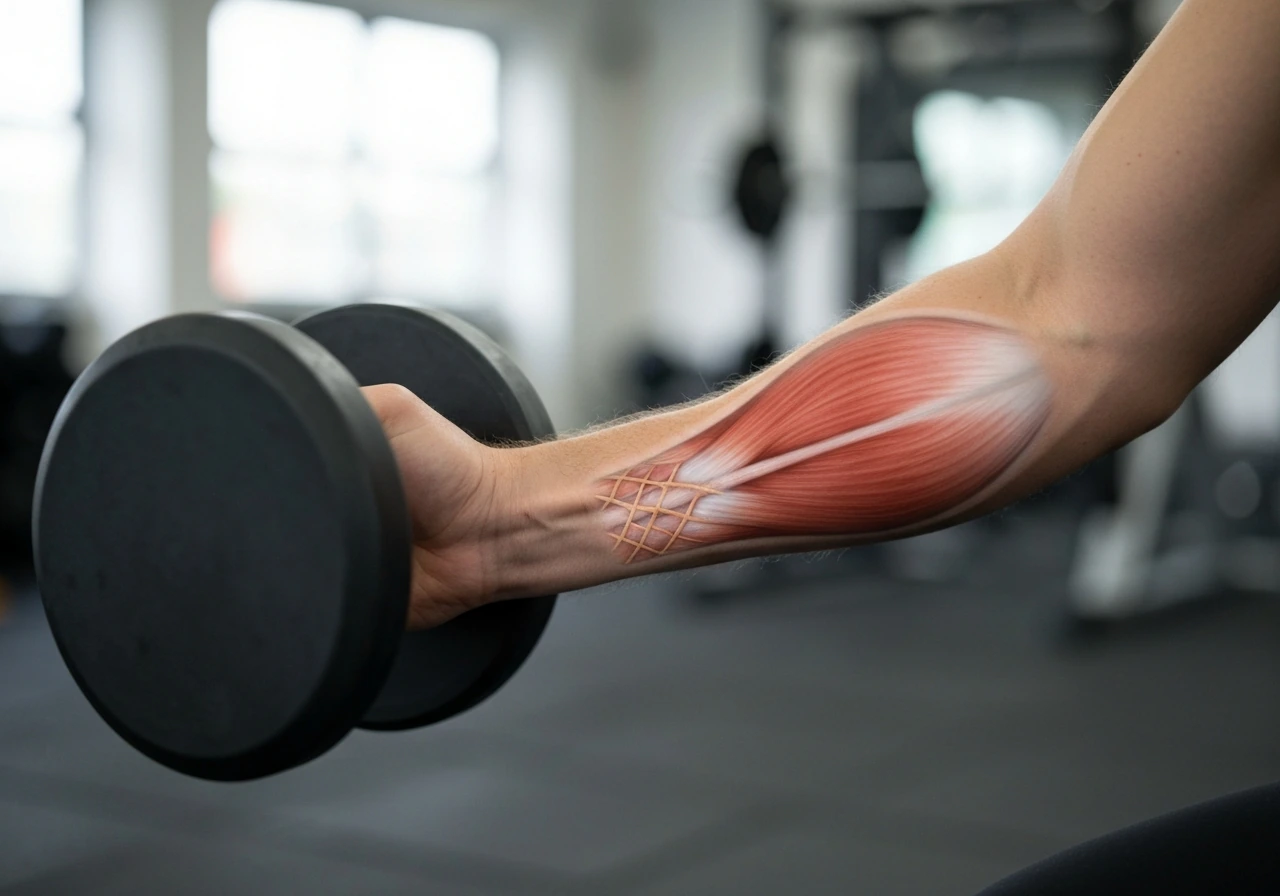
A grow-muscle diet comes down to four things done consistently: A grow-muscle diet comes down to four things done consistently: eating enough total calories to support growth, hitting a meaningful daily protein target, fueling your training with carbohydrates, and keeping fat intake in a range that supports hormones and overall health., hitting a meaningful daily protein target, fueling your training with carbohydrates, and keeping fat intake in a range that supports hormones and overall health. Get those four things right, time your meals reasonably well, and you will ${anchorlink}build muscle${/anchorlink}. This guide gives you the exact numbers, practical meal examples, and a clear process for tracking and adjusting so you're not guessing three months from now.
Grow Muscle Diet: What to Eat, Protein, Carbs, Timing

Calorie surplus basics for muscle gain
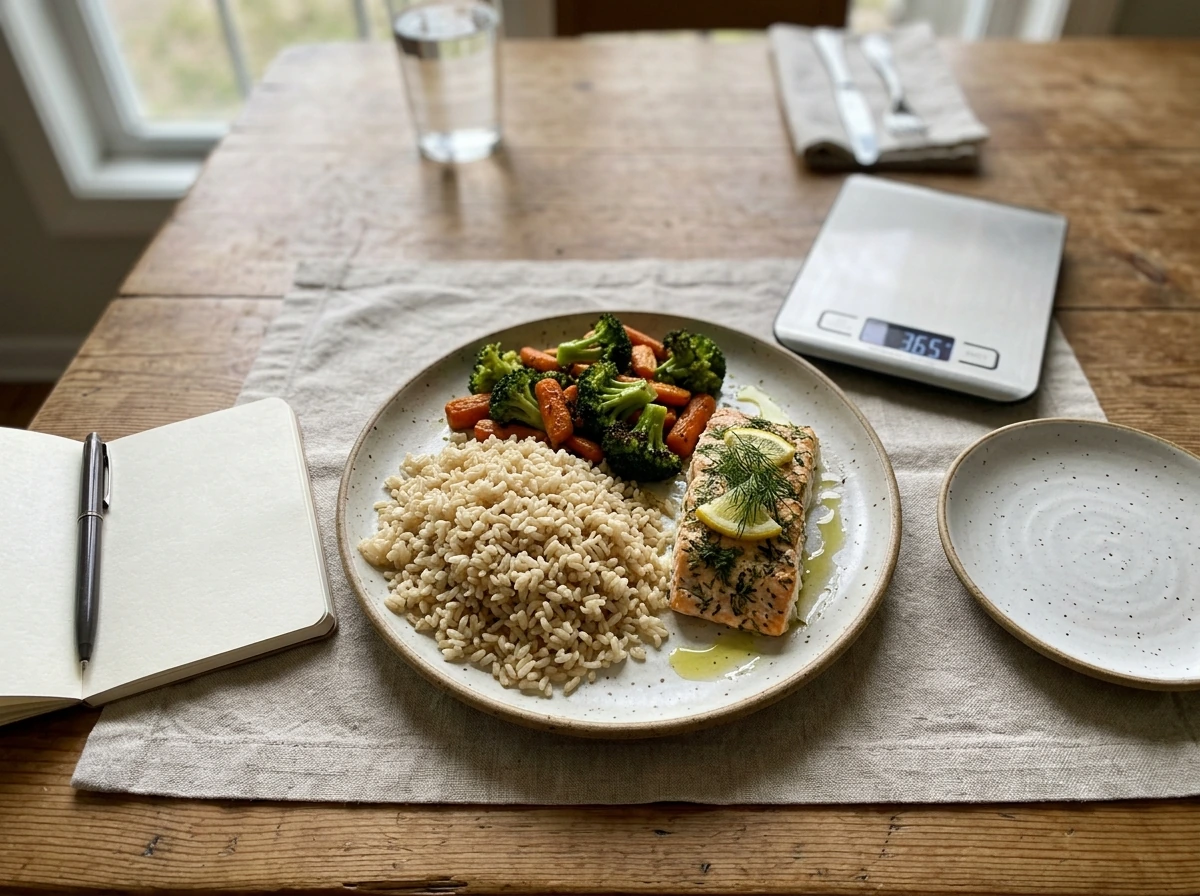
You cannot build muscle out of thin air. Muscle tissue is metabolically expensive to build, and your body will not invest in it if you're running on empty. That said, bigger is not better when it comes to a calorie surplus. Eating 1,000 calories above maintenance doesn't build muscle twice as fast as eating 300 above it, it mostly just builds more fat.
The research-backed sweet spot is a surplus of roughly 10–20% above your maintenance calories. In practical terms, that's about 200–400 extra calories per day for most people. This conservative approach is sometimes called a "lean bulk," and it's backed by evidence suggesting a target weekly lean mass gain rate of around 0.25–0.5 kg per week. Beginners and those returning after a break can sit closer to 0.5 kg/week because their bodies are more responsive. Advanced lifters should aim for the lower end, around 0.25 kg/week, to keep fat gain in check.
To find your starting point, use a rough maintenance estimate: multiply your body weight in kilograms by 33–38 (or in pounds by 15–17) depending on your activity level. Then add 200–400 calories. This isn't going to be perfectly accurate out of the gate, but it gives you a real number to start tracking against. You'll adjust based on what the scale and mirror tell you over the next few weeks. More on that in the tracking section below.
Protein targets and how to hit them daily
Protein is the building block your muscles need to repair and grow after training. For most people actively trying to build muscle, the research points to a daily target of 1.6–2.0 g of protein per kilogram of body weight. A useful practical anchor from a large ISSN review puts the ideal starting intake around 1.62 g/kg/day. So a 75 kg (165 lb) person is looking at roughly 120–150 g of protein per day.
Distribution across the day matters almost as much as total intake. Multiple lines of evidence support consuming 20–40 g of high-quality protein every 3–4 hours to maximize muscle protein synthesis (MPS). That translates to 4–5 protein-containing meals or snacks across your waking hours rather than cramming most of your protein into one or two sittings. Controlled research has shown that spreading protein evenly throughout the day improves 24-hour MPS compared to less evenly distributed patterns.
Good high-quality protein sources include chicken breast, eggs, Greek yogurt, cottage cheese, fish (salmon, tuna, cod), lean beef, turkey, milk, and whey protein. Plant-based sources like tofu, tempeh, edamame, lentils, and combinations of legumes plus grains can also get you there, though you may need to pay a little more attention to getting complete amino acid profiles throughout the day.
One more note on protein and older adults: anabolic resistance, the reduced sensitivity of aging muscle to protein, means people over 60 often need to push toward the higher end of the range. ESPEN expert recommendations set a baseline of at least 1.0–1.2 g/kg/day for healthy older adults, with 1.2–1.5 g/kg/day for those who are active or at risk of muscle loss. If you're 65+ and resistance training, aiming for 1.6–2.0 g/kg/day is a practical, evidence-supported target. This topic connects closely to our dedicated article on how much protein to grow muscle, which goes deeper on the physiology.
Carb strategy for training performance
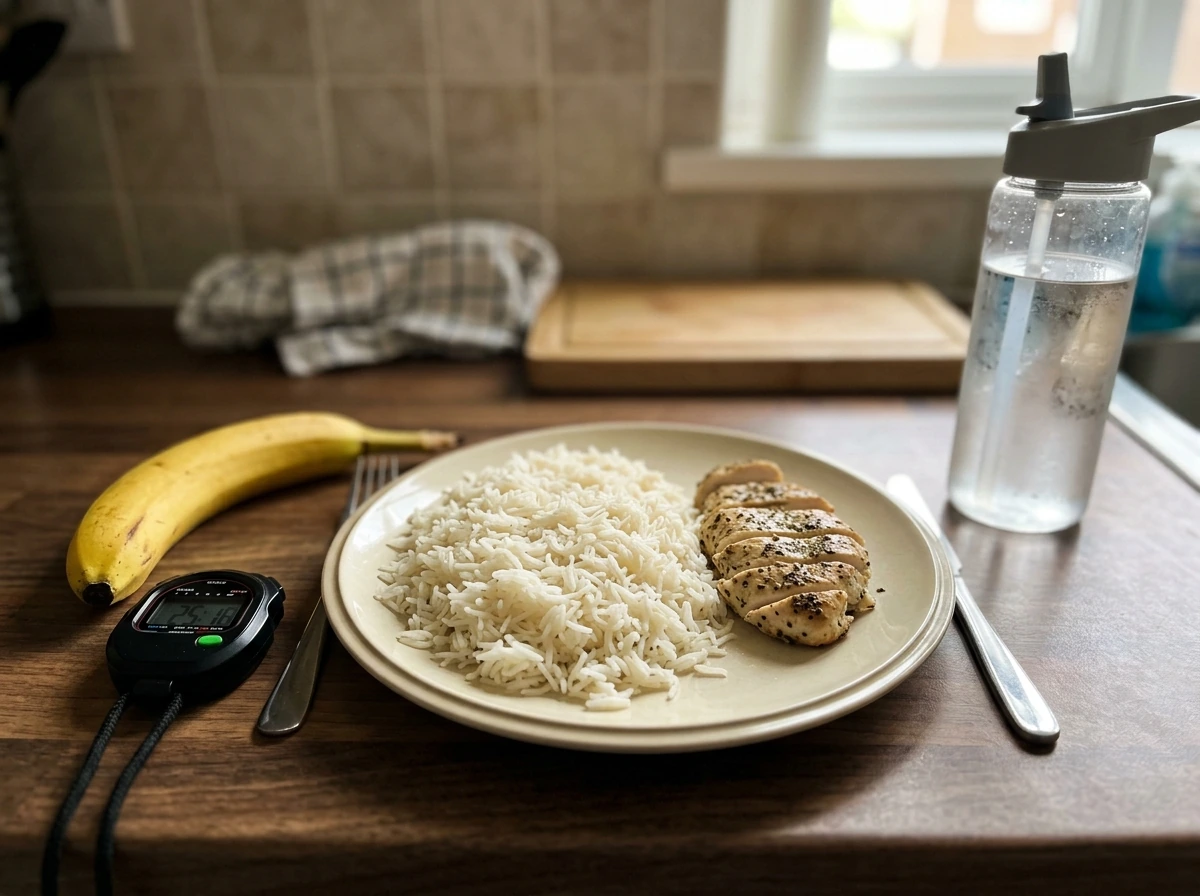
Carbohydrates are your muscles' preferred fuel source during resistance training. They get stored as glycogen in your muscle tissue, and when glycogen runs low, training intensity drops, which means less mechanical tension on your muscles, which means less growth stimulus. Carbs aren't optional if you want to train hard consistently.
For most people building muscle on a moderate training schedule (3–5 sessions per week), a practical carbohydrate target lands around 3–6 g/kg/day. Athletes training at very high volumes can need 7–12 g/kg/day to fully normalize glycogen between sessions, but that's overkill for the majority of recreational lifters. Fill carb intake with foods that come with fiber and micronutrients: oats, rice, potatoes, sweet potatoes, bread, pasta, fruit, and legumes. These are not the enemy, they're the engine.
Carbs and protein together around training are particularly useful. Combining both in the peri-exercise window supports glycogen restoration and MPS at the same time. You don't need to overthink the exact timing (more on the practical pre/post window below), but making sure you have carbs in your pre-workout meal and again after training is a smart, evidence-backed habit.
Fat intake and overall hormone-friendly nutrition
Dietary fat plays a real role in muscle building, not because it directly stimulates MPS, but because it's critical for hormone production, including testosterone and other anabolic hormones that regulate muscle growth. Restricting fat too aggressively is a mistake. Research consistently shows that keeping fat intake at or below 20% of total calories provides no performance benefit and can hurt health and hormonal function.
The practical target is 20–35% of your total daily calories from fat, which aligns with both ACSM guidance for athletes and the standard macronutrient ranges used in dietary planning. For a 2,800-calorie diet, that's roughly 62–108 g of fat per day. Prioritize sources that support cardiovascular health alongside muscle building: olive oil, avocados, whole eggs, fatty fish like salmon, nuts, and seeds. Saturated fat from whole food sources like eggs and dairy isn't something to be afraid of in moderate amounts. Where you want to be cautious is with ultra-processed foods that deliver large amounts of fat alongside refined carbs and little protein, those eat into your calorie budget without much nutritional return.
Meal timing and distribution (pre/post, daily schedule)
Total daily intake is what moves the needle most, but timing is a legitimate supporting tool once your calories and protein are consistently on track. Think of timing as a multiplier, it won't rescue a poor diet, but it can sharpen results from a solid one.
Pre-workout nutrition
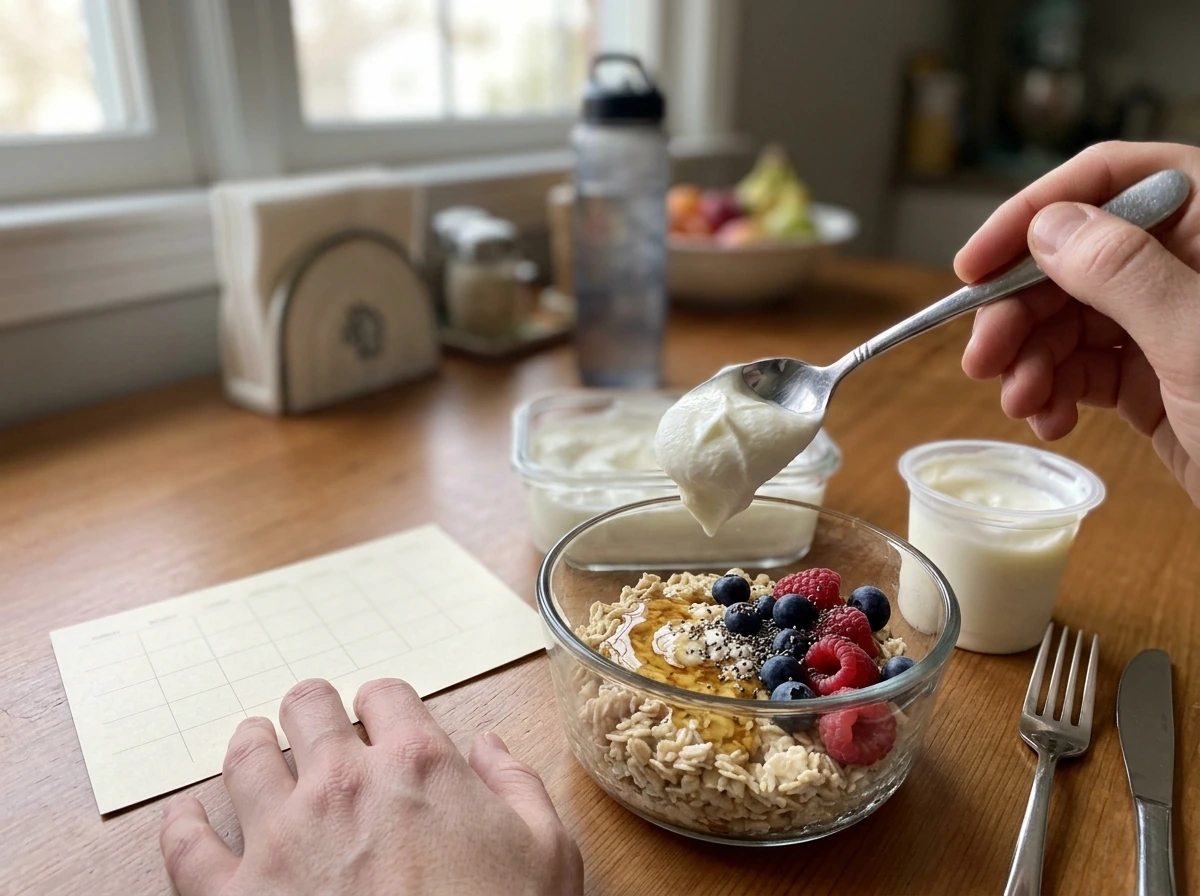
Eat a balanced meal 1–3 hours before training. That meal should include 20–40 g of protein and a meaningful carbohydrate portion (40–80 g depending on your size and session length). This tops up muscle glycogen before you start and gives your body amino acids available during and after training. If you're training first thing in the morning and can't stomach a full meal, a smaller protein-and-carb snack 30–60 minutes out, a banana with a scoop of protein powder, for example, is a practical workaround.
Post-workout nutrition
Get in 20–40 g of protein and some carbohydrates within about 1–2 hours after training. The old "anabolic window" narrative (you have 30 minutes or everything is wasted) has been walked back significantly by more recent research, but eating a proper post-workout meal within 1–2 hours is still a smart habit. This is when muscle protein synthesis is elevated and your muscles are primed to use incoming nutrients.
Daily meal structure
Beyond the training window, try to space your meals so you're hitting that 20–40 g protein dose every 3–4 hours. how many sets to grow muscle how many sets to grow muscle You don't need to set timers, but loosely aiming for breakfast, a mid-morning or lunch meal, an afternoon meal or snack, and dinner naturally gives you the right distribution. A protein-rich snack before bed (like cottage cheese or Greek yogurt) can also be useful, as casein protein digests slowly overnight and keeps amino acids circulating during sleep.
Nutrition plan examples
These plans are examples, not prescriptions. Calories and protein targets will vary based on your body weight, training volume, and individual metabolism. Use these as a starting template and adjust from there.
Beginner (75 kg, moderate training, ~2,800 calories)
- Breakfast: 3 whole eggs + 2 egg whites scrambled with vegetables, 2 slices whole-grain toast, 1 cup orange juice — roughly 40 g protein, 60 g carbs, 18 g fat
- Mid-morning snack: 1 cup Greek yogurt (plain) with 1/2 cup berries and a small handful of granola — roughly 20 g protein, 35 g carbs, 5 g fat
- Lunch: 150 g grilled chicken breast, 1.5 cups cooked rice, large side salad with olive oil dressing — roughly 45 g protein, 70 g carbs, 14 g fat
- Pre-workout snack (if afternoon training): 1 banana, 1 scoop whey protein in water — roughly 25 g protein, 30 g carbs
- Dinner/post-workout: 150 g salmon, 1.5 cups roasted sweet potato, steamed broccoli — roughly 38 g protein, 55 g carbs, 18 g fat
- Evening snack: 3/4 cup cottage cheese with a small amount of fruit — roughly 20 g protein, 15 g carbs, 4 g fat
- Daily totals (approximate): 185 g protein, 265 g carbs, 59 g fat, ~2,800 calories
Vegetarian/vegan (70 kg, ~2,600 calories)
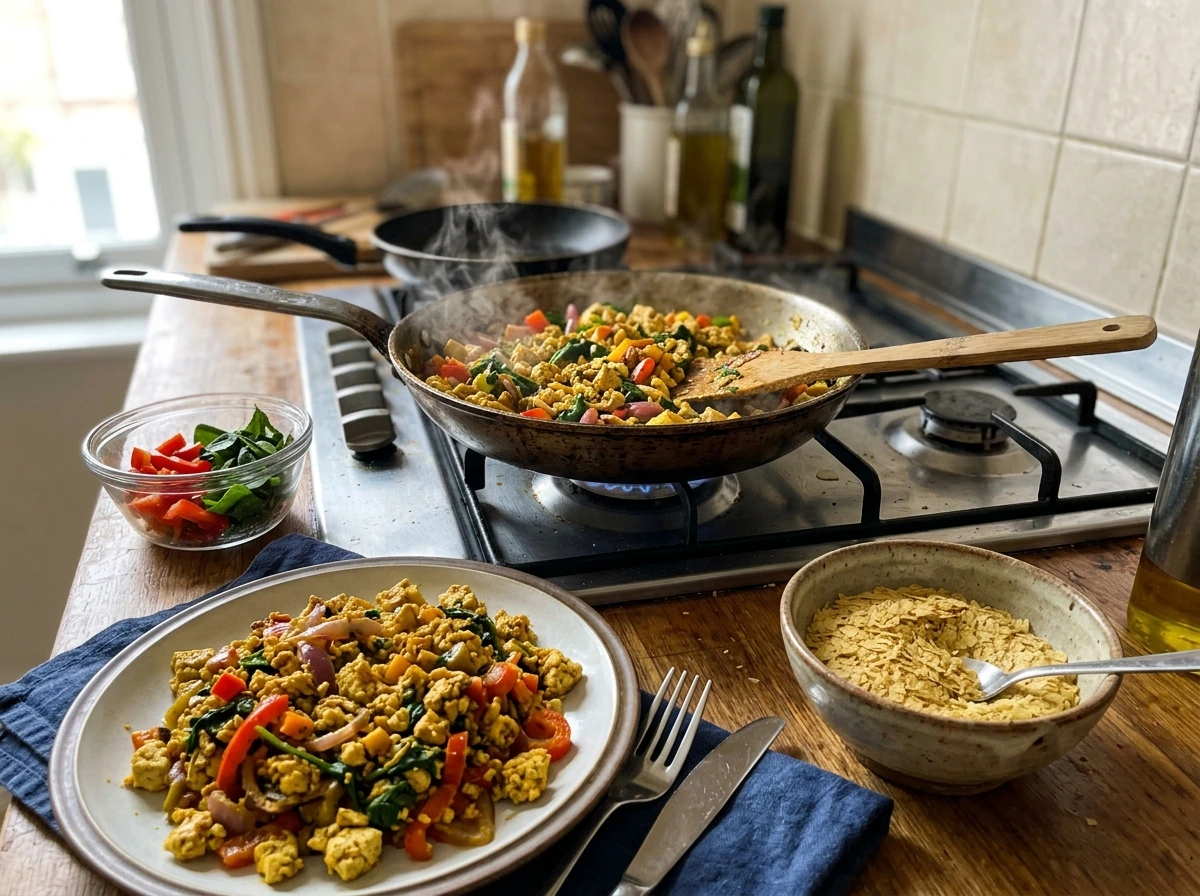
Plant-based muscle building is absolutely achievable, but it requires deliberate attention to protein quality and completeness. Leucine, the amino acid most responsible for triggering MPS, is lower in many plant proteins, so total protein targets should lean toward the higher end of the range (around 1.8–2.2 g/kg/day). Combining different plant proteins across the day (legumes plus grains, for example) covers your full amino acid profile.
- Breakfast: Tofu scramble (200 g firm tofu) with spinach, peppers, and nutritional yeast, 2 slices whole-grain toast, 1 cup fortified soy milk — roughly 38 g protein, 50 g carbs, 16 g fat
- Mid-morning snack: 1 cup edamame (shelled), 1 apple — roughly 17 g protein, 35 g carbs, 8 g fat
- Lunch: Large lentil and quinoa bowl with roasted vegetables and tahini dressing — roughly 28 g protein, 75 g carbs, 14 g fat
- Afternoon snack: 1 scoop plant-based protein powder blended with 1 banana and almond milk — roughly 25 g protein, 35 g carbs, 5 g fat
- Dinner: 200 g tempeh stir-fried with broccoli, bok choy, brown rice, and soy-ginger sauce — roughly 42 g protein, 70 g carbs, 16 g fat
- Evening snack: 150 g high-protein soy yogurt with mixed seeds — roughly 15 g protein, 20 g carbs, 8 g fat
- Daily totals (approximate): 165 g protein (~2.4 g/kg), 285 g carbs, 67 g fat, ~2,600 calories
Older adults (70 kg, 65+, ~2,400 calories)
Older adults face two specific challenges: anabolic resistance (muscle is less sensitive to protein signals) and often a reduced appetite that makes hitting protein targets harder. The solution to both is distributing protein more deliberately and making every meal count in terms of protein density. Aiming for 1.6–2.0 g/kg/day is appropriate for active older adults, and each meal should deliver at least 25–40 g of protein to overcome the blunted MPS response.
- Breakfast: 3 whole eggs with smoked salmon (60 g), 1 slice whole-grain toast, 1/2 cup berries — roughly 38 g protein, 30 g carbs, 20 g fat
- Mid-morning: 1 cup cottage cheese with sliced banana and a small drizzle of honey — roughly 25 g protein, 30 g carbs, 5 g fat
- Lunch: 150 g grilled white fish, 1 cup mashed potatoes, steamed green beans with olive oil — roughly 35 g protein, 50 g carbs, 12 g fat
- Afternoon snack: 1 scoop whey protein in milk, small handful of almonds — roughly 30 g protein, 15 g carbs, 14 g fat
- Dinner: 130 g lean beef or chicken, 1 cup cooked pasta, large salad with olive oil — roughly 38 g protein, 55 g carbs, 15 g fat
- Daily totals (approximate): 166 g protein (~2.4 g/kg), 180 g carbs, 66 g fat, ~2,400 calories
Supplements that support a grow-muscle diet
Supplements are optional, and none of them replace consistent training and solid nutrition. That said, a few have genuine evidence behind them and can give your diet a practical edge.
| Supplement | What it does | Evidence-backed dose | Who actually benefits |
|---|---|---|---|
| Whey protein | Convenient high-quality protein source to hit daily targets | 20–40 g per serving as needed to meet daily protein goals | Anyone who struggles to hit protein targets through whole foods alone |
| Creatine monohydrate | Increases muscle phosphocreatine stores; supports strength and training volume over time | Loading: ~5 g x4/day for 5–7 days (or skip loading); Maintenance: 3–5 g/day | Most people — one of the most well-researched performance supplements available |
| Caffeine | Improves training performance, focus, and power output | 2–6 mg/kg body weight ~30–60 min pre-workout | People who want a legal, effective pre-workout boost without a complicated stack |
| Vitamin D + Omega-3s | Supports general health, hormone function, and inflammation management | Per clinical guidance based on bloodwork and diet | Anyone with limited sun exposure or low oily fish intake |
On creatine specifically: the loading protocol (roughly 0.3 g/kg/day for 5–7 days, then 3–5 g/day maintenance) saturates muscle stores fastest, but simply taking 3–5 g/day from the start works too, it just takes 3–4 weeks to reach the same endpoint. Multiple large reviews, including ISSN position papers, confirm that standard creatine supplementation is safe and effective for healthy individuals, with no clinically significant adverse changes in kidney function markers in the research literature.
Plant-based athletes should also consider checking ferritin, zinc, B12, and iodine status, since plant foods are lower in bioavailable forms of these nutrients, all of which affect energy, recovery, and performance indirectly.
Common mistakes, how to track, and when to adjust
Mistakes that kill progress
- Under-eating protein: Hitting 80–90 g of protein per day when you weigh 80 kg and then wondering why you're not growing. Total daily protein is the single biggest nutrition lever for muscle building.
- Inconsistent eating: Eating great Monday through Thursday and going completely off-plan on the weekend routinely cancels out the surplus you built during the week.
- Neglecting carbs out of fear: Low-carb diets are not optimal for muscle building. Training intensity drops, training volume drops, and muscle gain follows. You can build some muscle on lower carbs, but you're leaving results on the table.
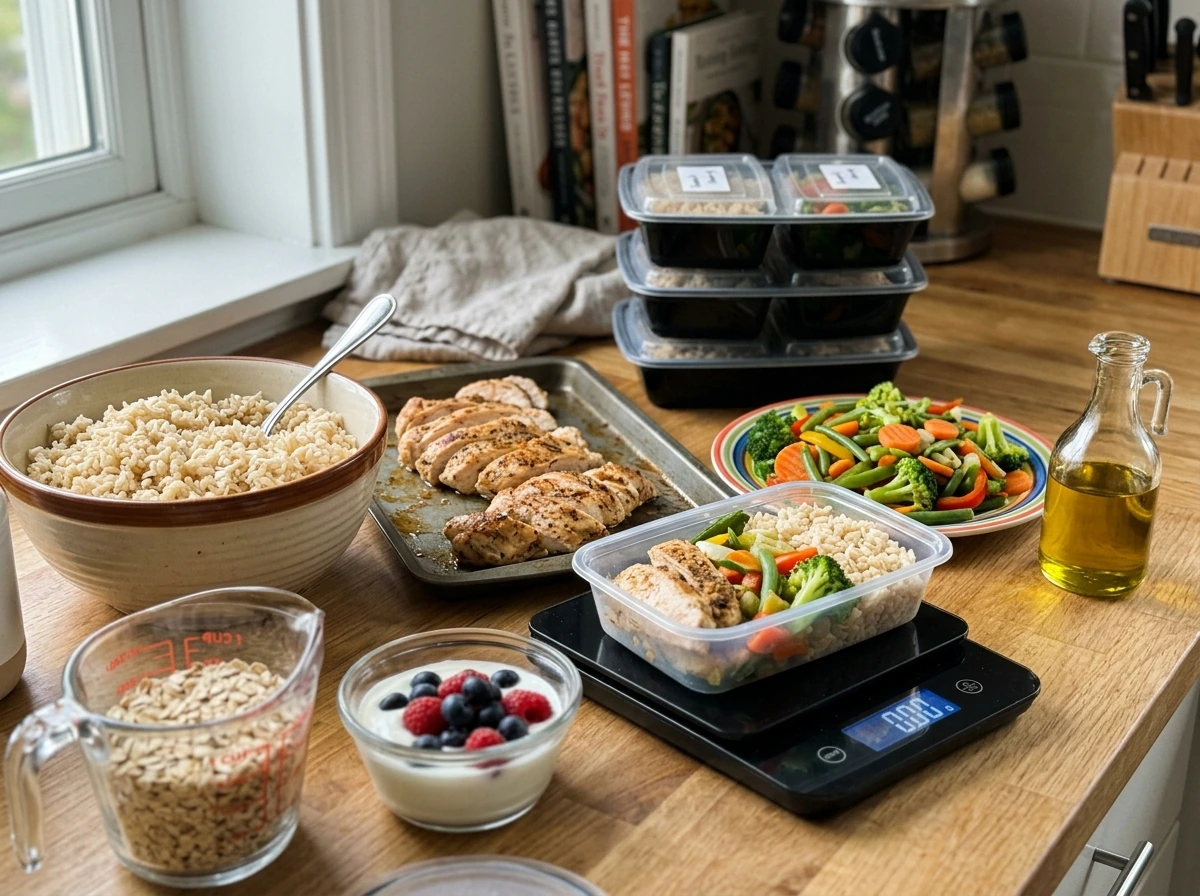
- Eyeballing food without any tracking baseline: Most people significantly underestimate how much they eat and significantly overestimate their protein intake. Tracking for even 2–3 weeks builds a real sense of portion sizes that pays dividends for months.
- Misreading scale changes as fat gain: If you gain 2–3 lbs in week one of a new diet, that's mostly water and glycogen from carbohydrate storage and creatine — not fat. Week-to-week scale fluctuations of 1–2 lbs are normal and not meaningful. Look at 3–4 week averages.
- Overcomplicating meal timing before getting the basics right: Obsessing over the exact post-workout window when you're only eating 100 g of protein daily is backwards. Nail total intake first, then refine timing.
How to track progress
Use three signals together: scale weight (weekly average, not daily single readings), body measurements (waist, hips, chest, arms, thighs every 2–4 weeks), and performance in the gym (are you getting stronger and adding reps over time?). No single signal tells the whole story. Someone whose weight is barely moving but whose lifts are climbing consistently and whose measurements are shifting is almost certainly building muscle, possibly while losing a little fat at the same time.
Track your food intake using a calorie-counting app for at least the first few weeks. You don't need to do this forever, but having a reliable baseline picture of what you're actually eating is essential for making smart adjustments. Most people who think they're "eating enough" are not.
When and how to adjust
- Give any dietary change at least 3–4 weeks before judging it. Short-term fluctuations are noise.
- If your weight hasn't moved in 3 weeks and you're training consistently, add 150–200 calories per day (primarily from carbs or protein). Recheck in 2–3 weeks.
- If you're gaining weight faster than 0.5 kg/week consistently and body fat seems to be increasing, trim 100–200 calories per day and monitor for another 3 weeks.
- If protein intake is below 1.6 g/kg/day, fix that before adjusting total calories. It is almost always the higher-leverage change.
- If gym performance is flat or declining over multiple sessions, check total calories and carbohydrate intake first — under-fueling training is the most common culprit.
Building muscle takes months, not weeks. But with a clear calorie target, reliable daily protein, well-timed carbohydrates, and a system for tracking what's actually happening in your body, the process becomes much less mysterious. You're not trying to be perfect every day, you're trying to be consistent enough, across enough days, that the signal to grow is louder than the noise. That's how muscle gets built.
FAQ
What should I do if I can’t consistently hit my daily protein target on busy days?
If you consistently miss your protein target by a small amount, don’t slash carbs or fat to compensate. Instead, adjust in the next meal or snack to hit protein per dosing, aiming for 20 to 40 g each 3 to 4 hours. Large, rare misses (for example, one day with very low protein) matter more than being 10 to 15 g short on most days.
How do I adjust calories if I am gaining too much fat on my grow muscle diet?
For a lean bulk, the surplus matters. If your weekly scale average is rising faster than your intended rate (for example, more fat gain signs, waist increasing quickly), reduce calories by about 100 to 200 per day rather than changing protein first. Keeping protein steady preserves the training stimulus while trimming the extra fuel that turns into fat.
What if I’m eating a perfect grow muscle diet but I’m not getting stronger?
If you’re not training hard enough, extra calories and protein will not fully compensate. Use gym performance as the tie-breaker, if your weights and reps are not trending up over 2 to 6 weeks, first address programming, sleep, and total training volume. Then refine carbs around sessions so you can hold intensity, because low glycogen often shows up as declining performance.
My scale is going up, but my body isn’t changing much. Why?
If you’re gaining weight but lifts and measurements are not moving, it can be under-recovery or under-eating in the wrong places. Double-check meal timing and protein distribution, for many people the biggest fix is ensuring the pre- and post-workout meals actually contain both protein and a meaningful carb portion. Also confirm you are using weekly scale averages, not daily fluctuations.
How do I make a plant-based grow muscle diet work without worrying about “complete protein”?
Vegetarians can usually reach complete amino acid profiles by combining protein sources across the day (for example, dairy plus eggs, or legumes plus grains). If you’re vegan, a practical decision aid is to choose higher-leucine options when possible (soy foods like tofu and tempeh are often the easiest) and raise total protein toward the upper part of the range to offset lower leucine per gram.
Do I need creatine loading, or can I just take it daily with my grow muscle diet?
Creatine can usually be taken without loading, 3 to 5 g daily is fine. If you have stomach upset, take it with food, split into two smaller doses, and consider skipping loading. You do not need cycling, the goal is consistent daily intake to maintain muscle stores.
Can I go lower than 20% fat calories if I’m trying to lean bulk?
Fat intake targets are best used as ranges, not hard limits. If you keep fat around 20 to 35% of calories, you’re unlikely to harm hormones or performance, but if you notice digestion issues from very high-fat meals, shift more of your fat away from pre-workout and toward meals after training.
How do I choose carbs on a grow muscle diet if my training days vary a lot?
Yes, but the target should match training frequency and volume. If you train 4 to 5 days per week, 3 to 6 g/kg/day is often enough, if you do very high-volume sessions or multiple sessions per day, you may need more. The practical sign to increase carbs is performance dropping within sessions or difficulty maintaining the same weights and reps.
Is it okay to train fasted on a grow muscle diet?
If you skip breakfast or train fasted, focus on getting protein and carbs into the first meal you can tolerate post-workout. Many people do well with a smaller protein and carb snack 30 to 60 minutes pre or right after training, then a full balanced meal within 1 to 2 hours to reach the post-workout window you’re aiming for.
How can I tell if my protein timing is good enough without tracking everything?
A simple way to check whether your distribution is working is to count protein servings, not just grams. If you regularly hit 20 to 40 g per meal, you are likely covering the “every few hours” spacing. If you only eat two large protein meals, add a third smaller protein-containing snack to reduce the gap.
What are practical ways to increase protein when I struggle with appetite?
If your appetite is low, lean on protein-dense foods and liquid options rather than adding only large meals. Examples include Greek yogurt or milk-based smoothies, whey or plant protein shakes, and cottage cheese. For older adults, this also helps because anabolic resistance increases the importance of reliable protein density each meal.
Which supplements actually matter most for someone starting a grow muscle diet?
Supplements are optional, but the most “diet-adjacent” one for most lifters is creatine. For plant-based diets, checking iron stores and B12 status is often more useful than guessing, because low ferritin or B12 can reduce training quality and recovery. Avoid adding multiple supplements at once, change one variable at a time so you can tell what helped.