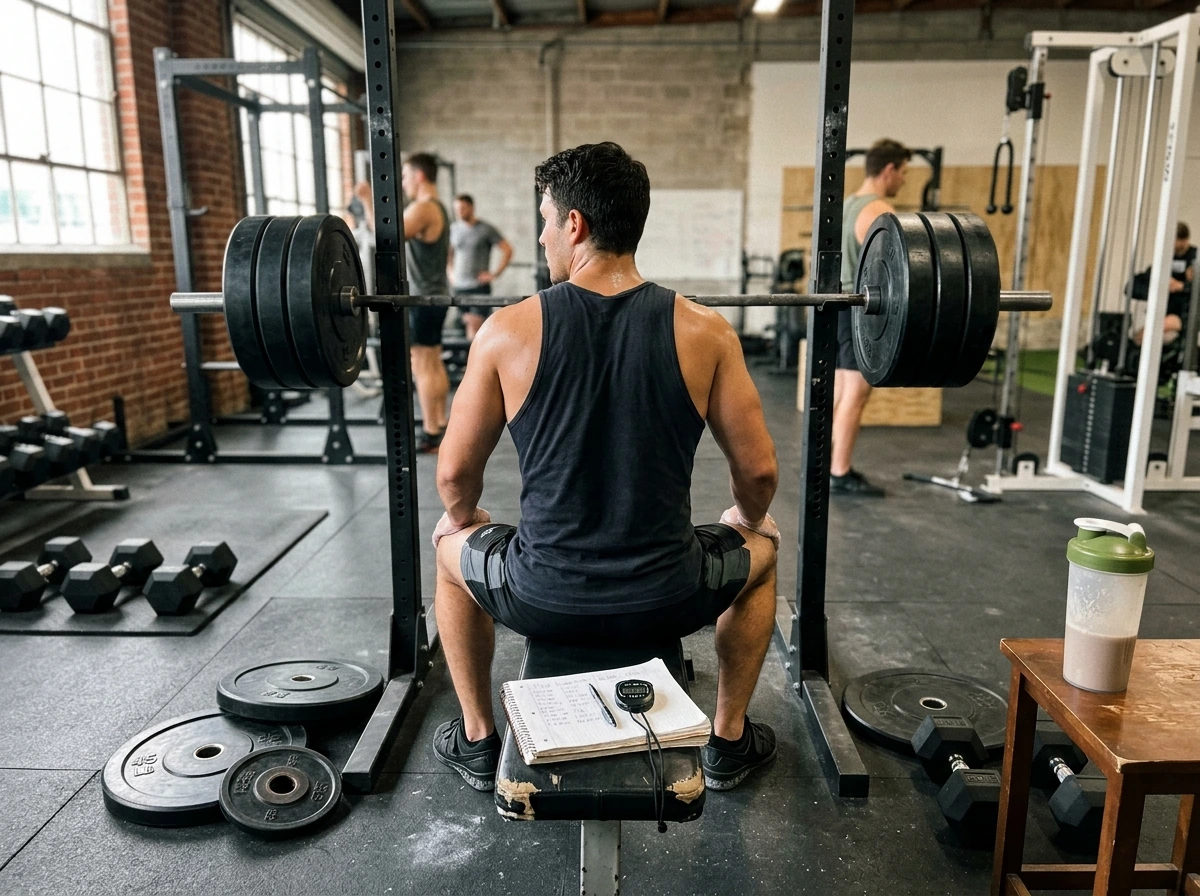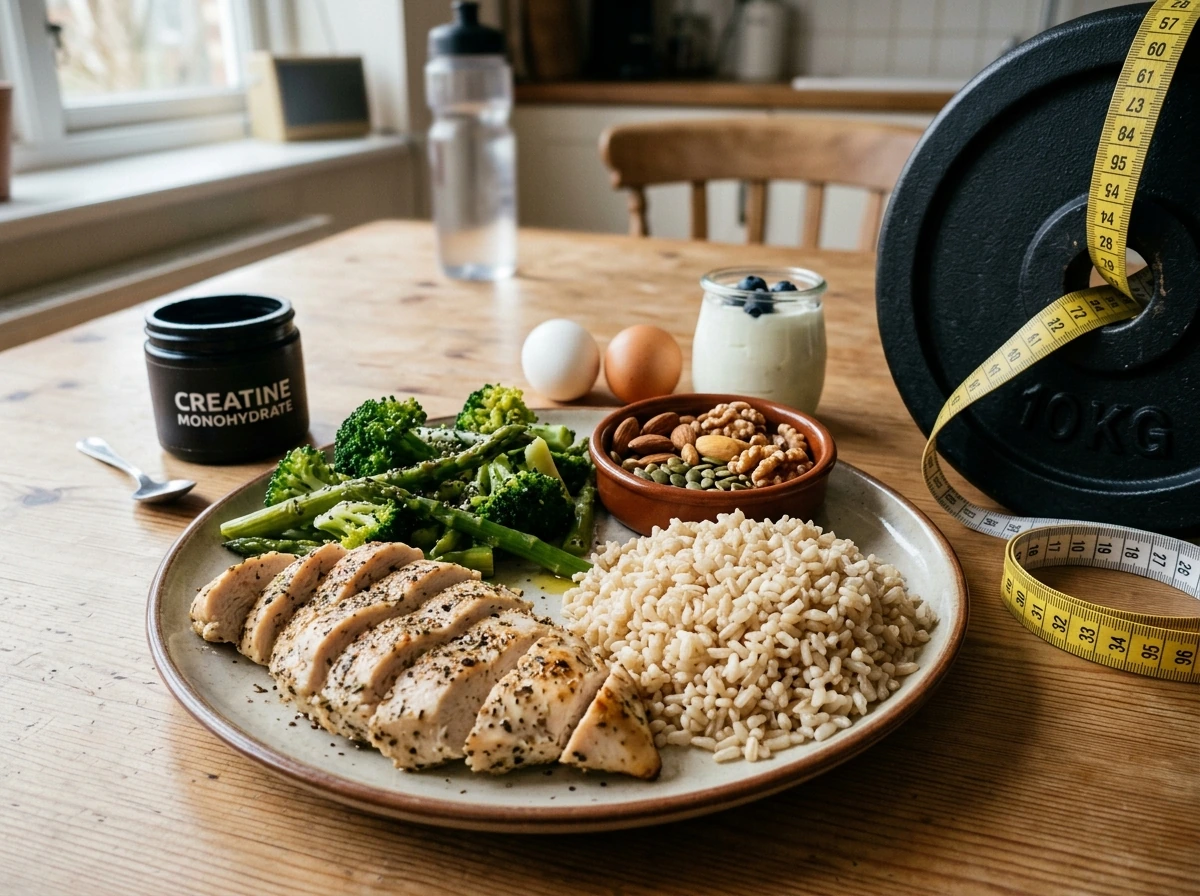
Muscles and bones grow through largely the same inputs: mechanical stress, adequate nutrition, and enough recovery to let your body rebuild stronger. The signals differ a bit between the two tissues, and the timelines are different, but the practical actions you take in the gym and kitchen overlap significantly. If you're trying to get stronger, leaner, and more resilient all at once, you're not chasing two separate goals. You're chasing one well-built program.
What Helps Muscles and Bones Grow: Training, Nutrition, Recovery
Marcus Kellerman
24 Mar 2026

Muscle growth basics: what signals your body to build

Muscle grows when mechanical tension, metabolic stress, or muscle damage signal your cells to ramp up muscle protein synthesis above its baseline rate. Of these, mechanical tension (the actual load you place on a muscle during a contraction) is the most reliable and most important driver. When you lift a weight that challenges you, your muscle fibers sense that stress and trigger a cascade of molecular events that ultimately builds new contractile proteins.
The key variables that determine how much hypertrophy you get are well studied. An umbrella review of 14 meta-analyses confirmed that volume (total sets and reps), intensity (how heavy you lift relative to your max), frequency (how often you train a muscle), contraction type, and effort all contribute to muscle growth. The good news is that these variables are adjustable, which means you can start wherever you are and progress systematically. You don't need to train like a bodybuilder on day one; you just need enough stimulus to push adaptation, then add more over time.
One myth worth dismissing early: you don't need to feel destroyed after a workout for it to count. Soreness is a side effect of novel stress, not a badge of productive training. What matters is that you're consistently applying a stimulus that's challenging relative to your current capacity and gradually increasing that challenge over weeks and months.
Bone growth basics: how loading strengthens bone
Bone is living tissue, and it responds to mechanical loading much the way muscle does. When you put load on a bone, whether through weight-bearing activity, ground impact, or resistance training, osteoblasts (bone-building cells) are stimulated to lay down new bone matrix. The process is slower than muscle adaptation, but it's real and measurable with a DXA scan over months to years.
The key concept for bone is osteogenic loading, which means applying enough force and strain to the skeleton to trigger a remodeling response. Not all exercise does this equally. A meta-analysis of randomized controlled trials in older adults found that weight-bearing and impact-type exercise is generally more effective for improving or preserving bone mineral density (BMD) than low-impact-only activity. Swimming and cycling, despite being great for cardiovascular fitness, don't provide the ground reaction forces that make bone denser.
Resistance training alone does improve BMD, but the research suggests that combining resistance training with impact or weight-bearing components produces higher improvements in femoral neck and lumbar spine BMD than resistance training alone. This is important practically: if you're doing a lifting program, adding some weight-bearing or light impact work isn't redundant. It adds a stimulus that lifting in isolation doesn't fully replicate.
Training plan: resistance training for muscle and progression rules

A resistance training program that builds muscle follows a few non-negotiable principles: progressive overload, sufficient volume, reasonable frequency, and exercise variety that covers major muscle groups. Here's how to put those together practically.
Frequency and volume
Research on training frequency shows that training a muscle group at least twice per week tends to outperform once-per-week training for strength gains when total volume is considered. That doesn't mean you need to be in the gym six days a week. For most people, a 3-day full-body program or a 4-day upper/lower split hits each muscle group twice weekly and produces excellent results. Beginners often do very well with 3 sessions per week; intermediate and advanced trainees can push to 4 or 5.
For volume, a reasonable starting point is 10 to 20 working sets per muscle group per week, spread across your sessions. Beginners should start on the lower end (8 to 10 sets per week per muscle group) because the stimulus required to trigger adaptation is lower when you're new. You'll grow well with less. The goal over months is to gradually add sets as your recovery capacity improves.
Intensity and progressive overload
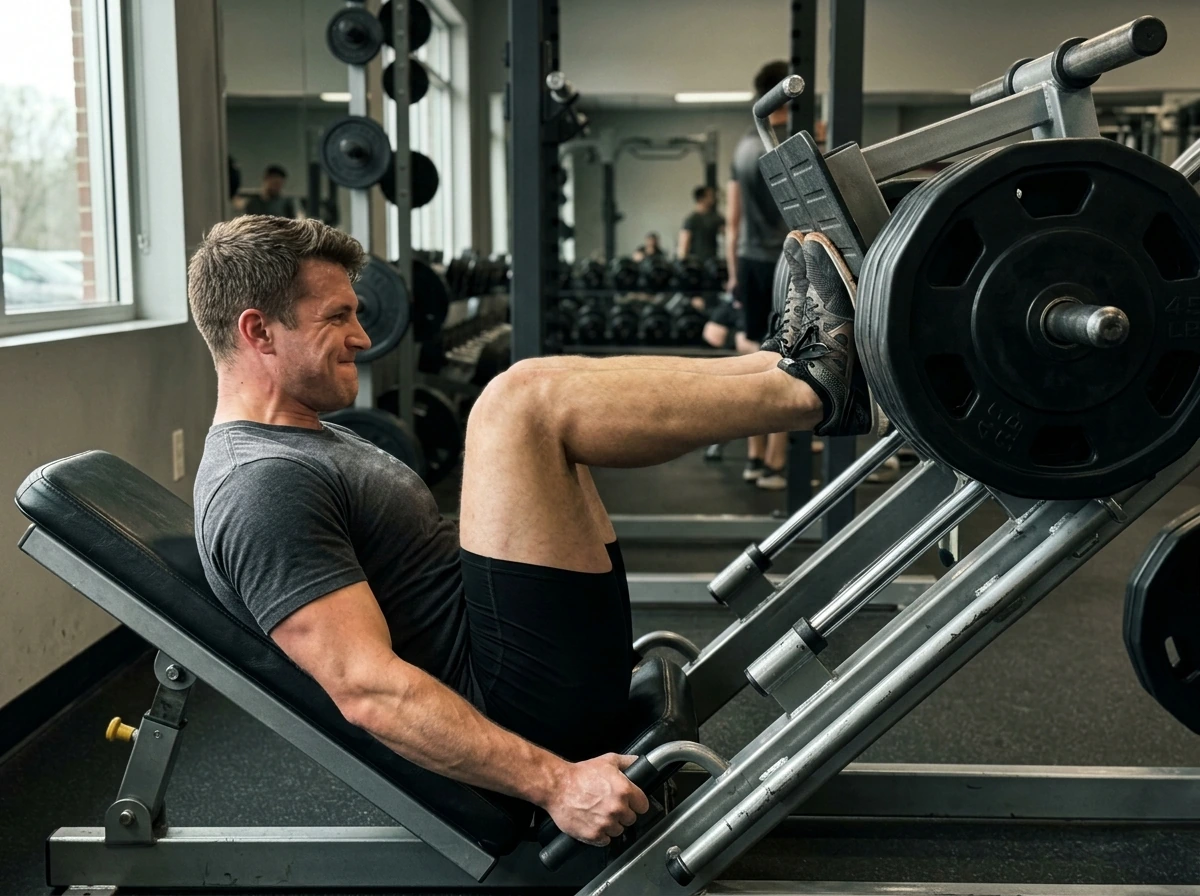
Intensity in training terms means how close you're working to your one-rep maximum. For hypertrophy, a broad range works: sets of 6 to 30 reps can all produce muscle growth, as long as you're working close to failure (within 2 to 4 reps of it). The practical upshot is that you don't need to max out on heavy singles to get bigger. Heavy triples and lighter sets of 20 can both work. What matters is that you're pushing close to your limit for that rep range.
Progressive overload is the actual engine of long-term muscle growth. Every few weeks, you need to either add a little weight to the bar, add a rep or two, or add a set. If you're lifting the same weights for the same reps month after month, don't expect your muscles to keep changing. Track your workouts, even roughly, so you can see whether you're actually progressing.
Exercise selection
Prioritize compound, multi-joint movements: squats, deadlifts, presses, rows, pull-ups, lunges, and hip hinges. These recruit the most muscle mass and apply the most mechanical tension across your body. Add single-joint accessory exercises (curls, lateral raises, leg extensions) to target muscles that compounds don't fully develop. For beginners, starting with 3 to 5 compound movements per session and 1 to 2 accessories is plenty. More advanced trainees can build out their accessory work over time.
Bone-support exercises: weight-bearing, impact, and safety setup
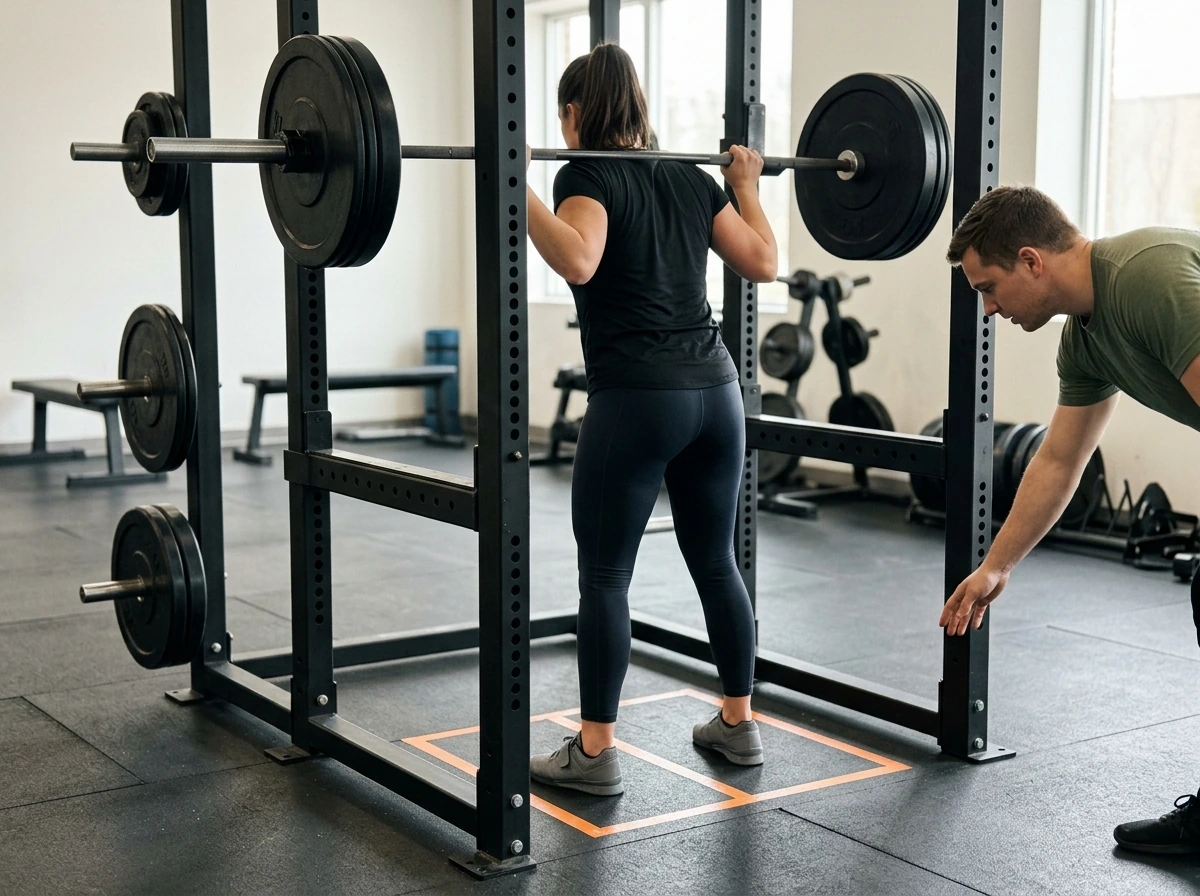
Your resistance training program already does a lot for bone, especially exercises that load the spine and hips directly, like squats, deadlifts, and lunges. These put the femoral neck and lumbar spine under load, which is exactly where fracture risk matters most. But to maximize bone adaptation, it helps to add some weight-bearing and impact work on top of that.
What counts as osteogenic loading
- Walking with a weighted vest (even 10% of body weight adds meaningful skeletal load)
- Jumping exercises: box jumps, jump rope, jumping jacks (3 to 5 sets of 10 jumps, 3 days per week)
- Stair climbing and hiking with a loaded pack
- Jogging or brisk walking on harder surfaces (more ground reaction force than a treadmill)
- Resistance exercises that load the spine and hips: squats, deadlifts, hip thrusts, overhead press
A randomized clinical trial tested weighted-vest use against resistance exercise in older adults and found both approaches can offset bone loss associated with weight reduction. If you're someone who isn't ready for jumping or heavy barbell work, a weighted vest during daily walking is a genuinely practical and low-barrier option.
Safety for older adults and beginners
Age is context, not a reason to avoid loading. Research consistently shows older adults can improve BMD and muscle mass with resistance training. However, the starting point matters. If you're over 60, just starting, or have any known bone density concerns, begin with moderate loads and controlled tempos before adding impact. Work on hip hinge, squat, and push/pull mechanics with light weights or bodyweight first. If you have diagnosed osteoporosis or osteopenia, a few sessions with a physical therapist familiar with bone health to establish your baseline movement quality is a smart investment before progressing to loaded barbells or jumping.
Balance and stability work also matters here. Falls are a primary mechanism of fracture in older adults, and resistance training improves both strength and balance. Adding simple balance drills (single-leg stance, step-overs, balance board work) a few times per week complements your bone-loading program and directly reduces fracture risk through fall prevention.
Nutrition for muscle and bone: protein, calories, and key micronutrients
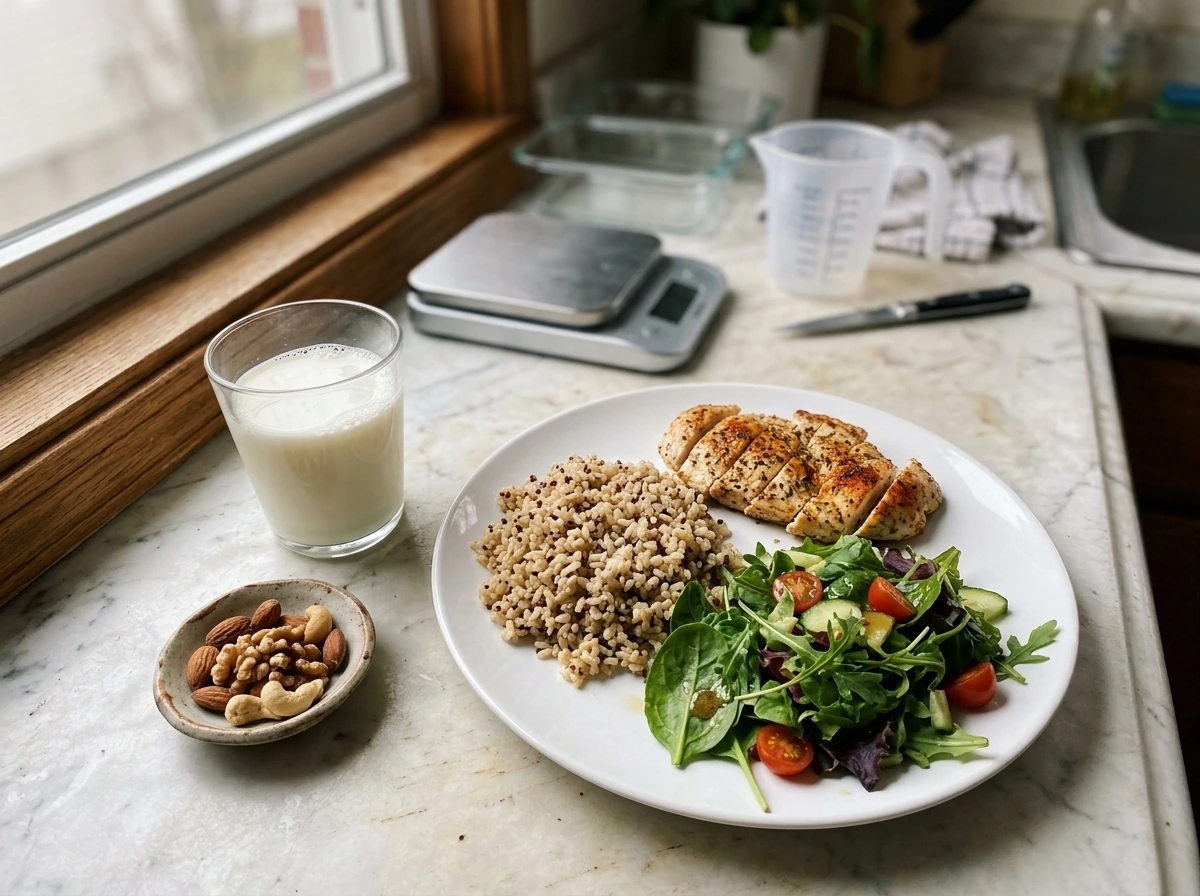
Training gives your body the signal to grow, so what helps muscles grow starts with building the right stimulus in the gym. Nutrition gives it the raw materials to actually do it. If your nutrition is consistently off, the best training program in the world will underdeliver. which of these nutrients helps muscles grow strong
Protein: how much and when
The International Society of Sports Nutrition (ISSN) position stand puts daily protein for muscle growth at 1.4 to 2.0 grams per kilogram of body weight per day for most exercising people. If you weigh 75 kg (about 165 lbs), that's roughly 105 to 150 grams of protein per day. If you're in a caloric deficit trying to lose fat while preserving muscle, bump that up to 2.3 to 3.1 g/kg/day, because protein needs rise when calories are restricted.
Don't stress too much about hitting a precise window around your workout. A meta-analysis found that total daily protein is the primary driver of muscle gain, and any anabolic window around exercise is broader than the old "eat within 30 minutes" dogma suggested. That said, spreading protein across 3 to 4 meals throughout the day is still a good practical habit, since you're giving your body repeated opportunities for muscle protein synthesis. Getting 30 to 50 grams of protein per meal across 3 to 4 meals hits most people's daily targets cleanly.
Total calories
You can't build muscle efficiently in a significant caloric deficit. Research is clear that energy deficits can impair protein synthesis and reduce lean mass gains compared to training with adequate calories. For most people trying to build muscle, eating at or slightly above maintenance (a modest surplus of 200 to 400 calories per day) gives your body the energy it needs to build without excessive fat gain. If you're a beginner or returning after a break, you can often improve body composition (gain muscle while losing fat) even in a slight deficit due to your body's high responsiveness to new training stimuli, but this window closes quickly as you advance.
Carbohydrates
Carbohydrates are not required for muscle protein synthesis directly, but they matter for training performance and recovery. Resistance exercise can deplete muscle glycogen by roughly 25 to 40% in a single session. If you're training hard and frequently, chronically low carbohydrate intake can leave your glycogen stores depleted going into workouts, which limits training intensity and volume, and ultimately limits the stimulus for growth. A moderate carbohydrate intake (roughly 3 to 5 grams per kilogram of body weight per day for most active people) supports training performance, glycogen replenishment, and recovery between sessions.
Key micronutrients for bone
Muscle growth doesn't have unique micronutrient demands beyond good general nutrition, but bone health does. Three nutrients stand out: calcium, vitamin D, and vitamin K2, often discussed in the context of the grow bone vitamin code. Calcium is the primary mineral in bone matrix. The NIH recommends 1,000 mg per day for adults up to age 50, increasing to 1,200 mg per day for women over 50 and men over 70. Getting this from food first (dairy, fortified plant milks, leafy greens, canned fish with bones) is preferable to relying entirely on supplements. Vitamin D is essential for calcium absorption and bone remodeling. Vitamin K2 helps direct calcium into bone rather than soft tissue.
Magnesium and zinc also play supporting roles in bone metabolism and protein synthesis, and both are commonly under-consumed. A diet rich in whole foods, lean proteins, legumes, nuts, seeds, and vegetables covers most of these bases without needing to track every micronutrient.
Supplements that can help (and what to avoid)
Supplements are the garnish, not the meal. Most of what moves the needle comes from your training and food. That said, a few supplements have genuinely useful evidence behind them, and a few others are worth skipping or approaching carefully.
What's worth considering
| Supplement | Who it helps | Evidence summary | Practical note |
|---|---|---|---|
| Creatine monohydrate | Most people, especially older adults and vegetarians | Improved strength in as little as 2 weeks during resistance training; supports lean mass gains with consistent use | 3 to 5 g/day; no loading phase required; one of the most studied and safe supplements available |
| Vitamin D | Anyone with low blood levels or limited sun exposure | Essential for calcium absorption and bone health; supplementation is most useful when you're actually deficient | Get a 25(OH)D blood test first; dose to your actual level rather than taking high doses universally |
| Calcium (supplemental) | Adults who genuinely can't meet needs through diet | Mixed evidence for fracture prevention in well-nourished populations; better to prioritize dietary calcium first | If supplementing, stay within RDA ranges; split doses for better absorption; avoid mega-dosing |
| Protein powder | Anyone struggling to hit daily protein targets from food | Effective for meeting protein goals; no magic beyond what whole food protein provides | Whey, casein, or plant-based blends all work; choose based on dietary preference and tolerance |
| Omega-3 fatty acids | Older adults especially | A randomized trial found omega-3 supplementation increased muscle protein synthesis rates in older adults; modest but real benefit | 1 to 3 g/day of combined EPA/DHA; fish oil or algae-based options both work |
| Collagen peptides | Bone health support, connective tissue | A meta-analysis of trials (often combined with calcium and vitamin D) showed improvements in BMD versus controls; variability across studies | Best taken with vitamin C; timing around exercise may enhance connective tissue benefit |
What to skip or approach carefully
The supplement industry is full of products that overpromise. Pre-workouts with heavy stimulant loads, testosterone boosters with little clinical evidence, and exotic "muscle activators" are largely marketing. The USPSTF reviewed evidence and concluded that vitamin D and calcium supplementation for primary fracture prevention in community-dwelling adults without known deficiency has inconsistent evidence. This doesn't mean these nutrients don't matter, it means that supplementing them on top of already-adequate intake doesn't guarantee fracture protection. Test before you supplement when it comes to vitamin D, and prioritize food sources for calcium. The Endocrine Society now recommends using 25(OH)D testing and targeting supplementation to specific populations and thresholds rather than blanket high-dose use for everyone. That's a reasonable framework for most people to follow.
If you want to go deeper on supplement options for muscle growth, this site covers the best pills to grow muscle fast and best protein powder to grow muscle in more detail, along with a breakdown of the [best vitamins to grow muscle](/exercise-nutrition-for-growth/best-vitamins-to-grow-muscle), which is worth reading alongside this guide.
Recovery, sleep, and lifestyle factors that make growth happen
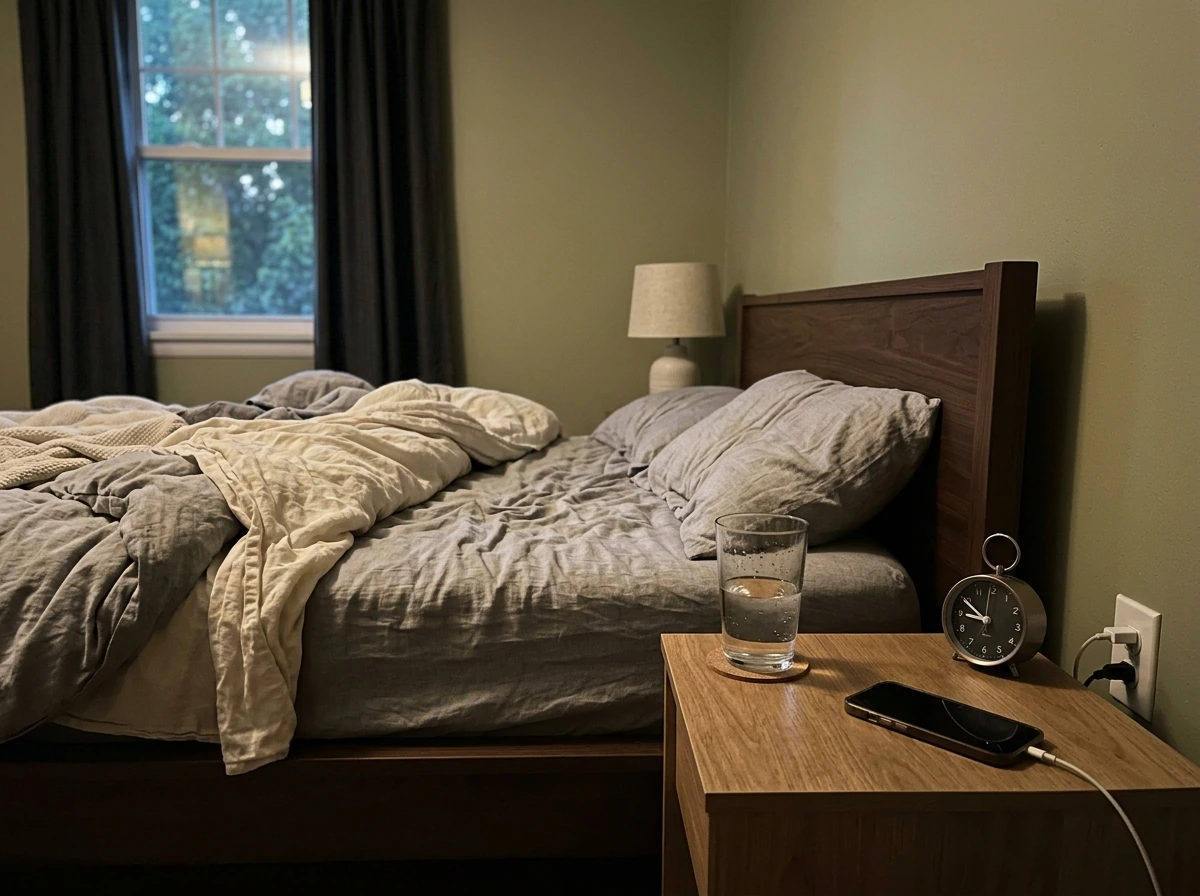
Here's the thing most people miss: training is the stimulus, but growth actually happens during recovery. If you're training hard but sleeping poorly, managing chronic stress badly, or engaging in habits that actively suppress bone and muscle building, you're leaving a significant percentage of your results on the table.
Sleep
Aim for 7 to 9 hours per night. This isn't just about feeling rested. Growth hormone is primarily secreted during slow-wave sleep, and muscle protein synthesis rates are elevated during sleep. A randomized trial found that pre-sleep protein intake (around 40 grams of casein) increases overnight muscle protein synthesis rates in older men. If you're an older adult or training hard, a small protein-rich snack before bed (cottage cheese, Greek yogurt, a casein shake) is a practical and evidence-backed habit.
As a side note, if you're struggling to sleep, resistance training itself may help. An AHA-reported study found that adults getting less than 7 hours of sleep who did resistance training increased their average sleep time by about 17 minutes per night. That's not a cure for insomnia, but it's a meaningful nudge in the right direction.
Stress and under-recovery
Chronic psychological stress elevates cortisol, which is catabolic to muscle tissue and can suppress bone formation. This doesn't mean you need to eliminate all life stress (good luck with that), but it does mean that managing stress through consistent sleep, adequate calories, and appropriate training load matters. Under-recovery, meaning training too hard without enough rest, is a real and common problem. If you're sore all the time, strength is stalling despite consistent effort, and your motivation is tanking, those are signs to back off volume for a week before pushing forward again.
Smoking and alcohol
Smoking directly reduces bone mineral density and increases hip fracture risk, according to a BMJ meta-analysis. A 2024 cohort study found that quitting smoking was associated with reduced fracture risk compared to continued smoking, which confirms the damage is at least partially reversible. If you smoke, this is one of the highest-impact changes you can make for bone health, more impactful than most supplements. Alcohol, especially heavy or chronic consumption, also blunts muscle protein synthesis, disrupts sleep architecture, and impairs bone remodeling. Moderate, occasional drinking is unlikely to meaningfully derail your progress, but regular heavy drinking will.
Timelines, tracking progress, and when to get medical input
Managing expectations upfront saves a lot of frustration. Muscle and bone adapt on very different timelines, and neither happens as fast as most people want.
What to expect and when
| Tissue | Early changes (weeks 1 to 8) | Measurable changes (months 3 to 6) | Long-term (12+ months) |
|---|---|---|---|
| Muscle | Strength gains primarily from neural adaptations (same muscle, better recruitment) | Visible size changes begin; significant strength increases | Substantial hypertrophy; progressive strength improvements continue with consistent training |
| Bone | Bone remodeling begins but isn't measurable on standard scans | Subtle BMD changes possible with high-impact or resistance programs | Meaningful BMD improvements measurable on DXA; fracture risk begins to shift with consistent loading |
For muscle, most people notice real visible and performance changes by months 3 to 4 of consistent training and good nutrition. For bone, you're working on a longer horizon. Meaningful BMD changes show up on DXA scans over 12 to 24 months of consistent loading. This doesn't mean the work isn't happening earlier, it just means bone remodels more slowly than muscle.
How to track your progress
- Track your lifts: log sets, reps, and weights every session so you can see progressive overload over time
- Take monthly photos and measurements (waist, arms, thighs) for body composition changes, since scale weight alone misses muscle gain
- Notice functional markers: how you move, energy levels, how quickly you recover between sets
- For bone, a baseline DXA scan followed by a repeat at 12 to 24 months gives you objective data on whether your program is working
- Blood work: check vitamin D (25(OH)D), calcium, and a basic metabolic panel annually if you're being proactive about bone health
When to get medical input
If you're over 50 and haven't had a bone density scan, it's worth asking your doctor about one, especially if you have risk factors like a family history of osteoporosis, a history of fractures, low body weight, or have used corticosteroids long-term. The FRAX tool, developed by the WHO, estimates your 10-year probability of hip fracture and major osteoporotic fracture using your BMD plus clinical risk factors. It's freely available online and is a good starting point for a conversation with your doctor. Osteoporosis is formally diagnosed with a T-score of -2.5 or lower at the femoral neck or lumbar spine on DXA. Osteopenia (T-score between -1.0 and -2.5) is a signal to act on lifestyle aggressively, not to panic but not to ignore either.
For muscle specifically, if you're losing muscle mass despite training and adequate protein, or if you're an older adult with significant functional decline, a conversation with a physician about checking testosterone, thyroid function, and other hormonal markers is reasonable. Hormones matter for both muscle and bone, and sometimes the barrier to progress isn't your program or nutrition but an underlying issue that's treatable.
Your starting point today
The most important thing you can do right now is start, and start well. Pick a resistance training program you'll actually stick with (3 days per week is enough to begin). Hit your protein target (1.6 g/kg/day is a practical middle-ground starting point for most people). Add some weight-bearing activity to your week beyond lifting. Get your sleep dialed in. If you smoke, that's your single highest-impact change for bone health. And if you're over 50 or have any known bone concerns, get a baseline DXA scan so you're working with real data, not guesswork. Everything else, supplements, advanced periodization, precise timing protocols, can layer in once the fundamentals are running.
FAQ
How do I know I’m training close enough to failure for muscle growth without overdoing it?
Use effort, not soreness, as your guide. If the last 1 to 3 reps of a set feel hard but doable with good form (you could not complete many more), you’re likely within range. If you repeatedly need to cut sets because form collapses, or strength stalls for more than 2 to 4 weeks despite eating enough, you’re probably going too hard and should reduce volume or intensity.
What helps muscles and bones grow if I’m a beginner who can’t lift heavy yet?
You can still drive adaptation with moderate loads by aiming for controlled reps and consistent progression. Focus on adding reps before adding weight, use full range of motion that you can control, and include simple weight-bearing work like brisk walking, stairs, or incline treadmill sessions to add bone-relevant loading.
Is it better for growth to lift heavy weights or do higher-rep sets?
Both can work if you stay near your effective effort level (around 2 to 4 reps in reserve). A practical approach is to mix rep ranges, for example most work around 6 to 12 reps, with some sets in the 12 to 20 range, so you cover different stimulus while keeping joints healthy.
How much total weekly training volume should I start with to grow muscle, and when should I increase it?
Start near 8 to 10 working sets per muscle group per week and add sets only when performance and recovery stay steady for 2 to 3 weeks. A good rule is to increase weekly volume by about 20 to 25% at a time, then reassess if soreness, sleep, and strength remain stable.
What should I do if I’m not gaining muscle after months of training and protein is on track?
Check three common bottlenecks that are not always obvious: are you progressing the training load or reps, are you meeting calories (or at least not cutting aggressively), and are you actually training the target muscles enough (enough hard sets, not just “working out”)? Also look for under-sleep or chronic stress, which can blunt gains even when protein intake is correct.
Can I grow muscles and bones at the same time if I’m trying to lose weight?
Yes, but expect slower muscle gain in a deeper deficit. For best results, keep the deficit modest (around maintenance to 200 to 400 calories below) and prioritize protein. For bone, include weight-bearing and some impact or higher strain work if safe, because just reducing calories can increase bone loss even when you lift.
Does protein timing around workouts actually matter?
Total daily protein matters most, but timing can help you hit your daily target. Spreading protein across 3 to 4 meals with roughly 30 to 50 grams per meal is a useful habit. If you struggle to eat enough earlier in the day, a protein-rich pre-bed snack is a practical way to support overnight muscle protein synthesis.
How much calcium and vitamin D do I actually need for bone health?
Aim to meet calcium needs through food first, then supplement only if you are consistently short. Calcium targets typically run about 1,000 mg per day for most adults under 50 and 1,200 mg for certain older groups. For vitamin D, the most efficient approach is often testing 25(OH)D and supplementing only to reach an appropriate range rather than taking high doses blindly.
What types of exercise build bone best, and can I substitute swimming if I do it a lot?
For bone density, the key is osteogenic loading, meaning ground reaction forces or significant strain on the skeleton. Swimming and cycling are helpful for cardio, but they usually do not provide enough loading to meaningfully preserve BMD compared with weight-bearing and impact-type work. If you cannot do impact, consider faster walking, stairs, or resistance training with weight-bearing patterns and proper progression.
How can older adults or people with low bone density start safely without increasing fracture risk?
Start with moderate loads, controlled tempo, and great technique, emphasizing hip hinge, squat patterns, and push-pull strength. If you have osteoporosis/osteopenia or have had fractures, a few sessions with a physical therapist who understands bone health can help you choose safe ranges and avoid risky movements during the ramp-up phase.
Will balance training really affect bone growth and fracture risk?
It may not directly increase bone density the way loading does, but it reduces the chance that loading turns into injury. Falls are a major cause of fractures in older adults, and improving stability and reaction time lowers fracture risk, which makes the overall “bone outcome” better even if BMD changes are modest.
Is smoking or alcohol really that harmful to muscle and bone progress, even if I exercise?
Smoking is one of the highest-impact changes because it lowers bone mineral density and increases fracture risk beyond what training can fully offset. Heavy or chronic alcohol can also interfere with sleep and blunt muscle protein synthesis. Quitting smoking can improve risk over time, so it is worth treating as a core part of the plan, not an optional add-on.
When should I consider getting a DXA scan, and how do I interpret the results in plain terms?
If you are over 50 or you have risk factors like prior fractures, long-term corticosteroid use, low body weight, or family history, ask about baseline DXA. A T-score of -2.5 or lower typically indicates osteoporosis, and -1.0 to -2.5 suggests osteopenia, which means lifestyle and training changes should be more aggressive rather than waiting.
How often should I train to support both muscle growth and recovery?
A common sweet spot for most people is 2 times per week per muscle group. That usually translates to 3 full-body sessions or 4 upper/lower sessions weekly. If recovery is poor, you can keep frequency but reduce sets or swap some work for lighter technique-focused sessions to maintain stimulus without accumulating fatigue.
What are the signs I should scale back training volume or intensity?
If you’re getting chronically sore, strength and performance are not improving, sleep is worsening, and motivation is dropping, those are practical red flags. Try deloading for about a week by reducing volume or holding intensity steady with fewer sets, then rebuild gradually once things stabilize.