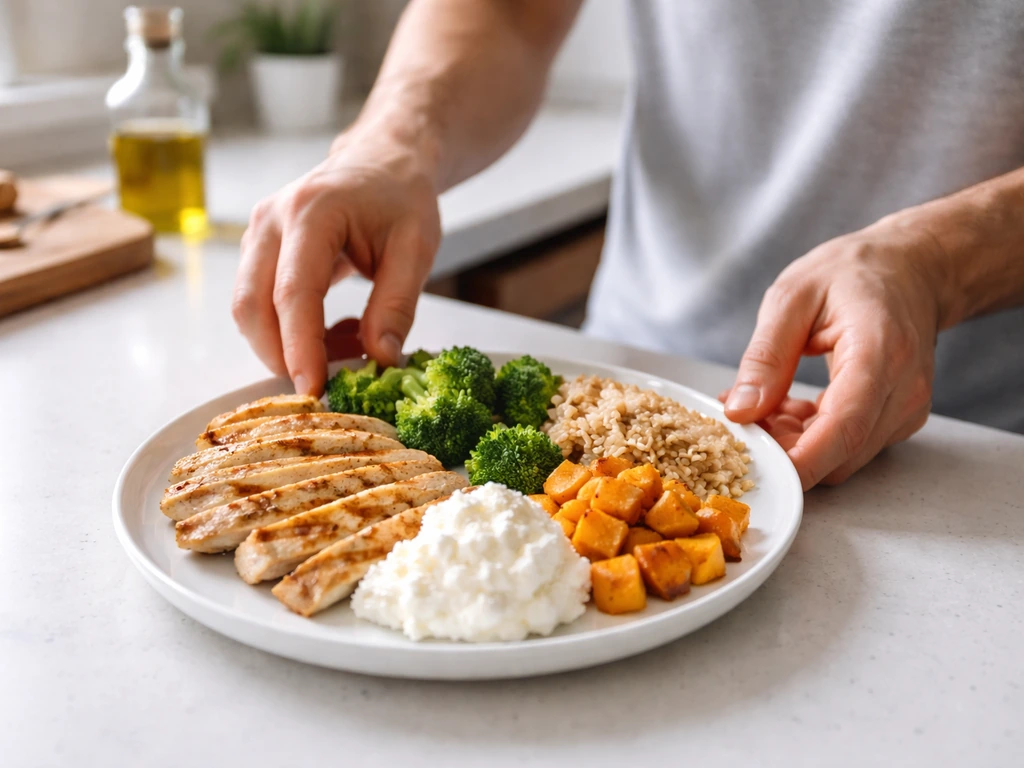
Yes, muscle absolutely grows under fat. Fat and muscle are completely separate tissues built through completely separate biological processes, and having one does not stop the other from developing. You can add meaningful muscle size and strength while carrying body fat, and in many cases, especially if you're newer to lifting or have more fat to lose, you can do both at the same time.
Does Muscle Grow Under Fat? Truth, Fuel, and How to Train

Marcus Kellerman
17 May 2026
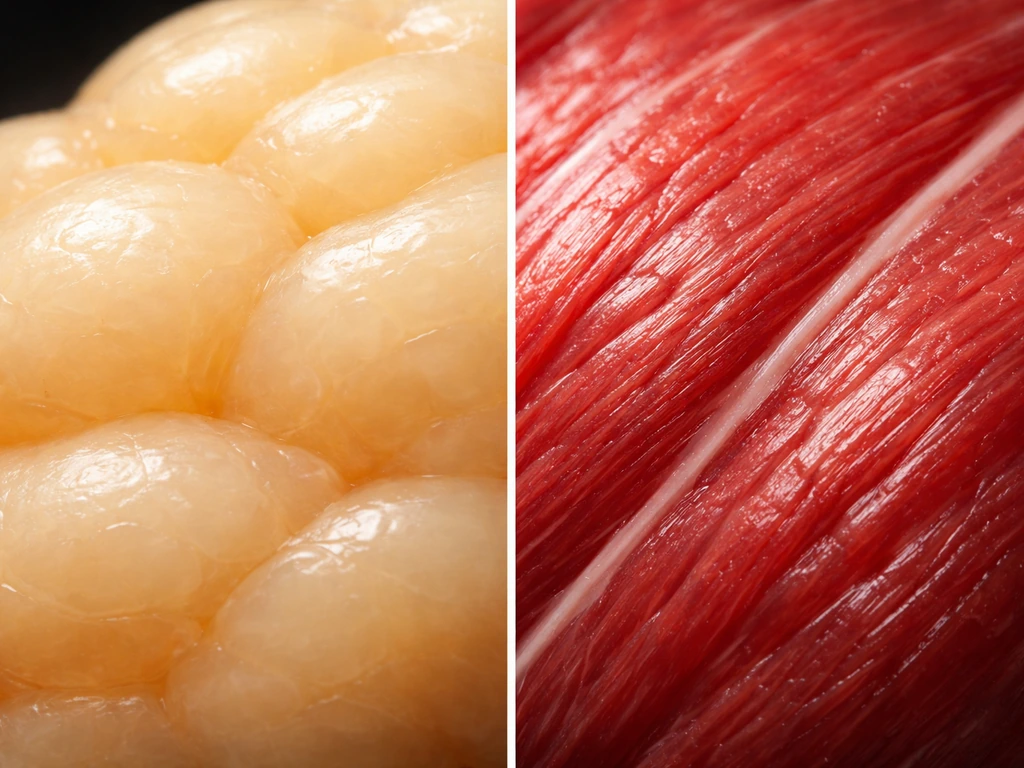
The fat sitting on top of your muscles doesn't block growth, it just makes that growth harder to see until enough fat comes off. If you are looking for real-world experiences and advice, searching “how to grow muscle” on Reddit can help you compare training and nutrition routines people are actually using how to grow muscle reddit.
Fat and muscle are built through completely different processes
This is probably the most important thing to understand, because a lot of confusion stems from treating fat and muscle as if they compete in a straightforward way. They don't. Fat tissue (adipose tissue) grows when you consistently consume more energy than you burn, with the excess stored as triglycerides inside fat cells (adipocytes). Muscle tissue grows through a completely different mechanism: your muscles detect mechanical stress from training, and that stress triggers a signaling cascade that drives muscle protein synthesis, where amino acids from your diet are assembled into new contractile proteins. One process is about energy surplus and storage; the other is about mechanical tension and protein availability. They run on different inputs and respond to different signals.
Skeletal muscle is in a constant state of protein turnover, meaning proteins are being broken down and rebuilt all the time. When synthesis consistently outpaces breakdown, your muscle fibers get bigger. When breakdown consistently wins, you lose muscle. What tips that balance toward growth is a combination of a training stimulus (mechanical tension from resistance exercise) and an adequate supply of amino acids from dietary protein. Fat stores have essentially no role in this building process itself.
Does your body use stored fat to build muscle?
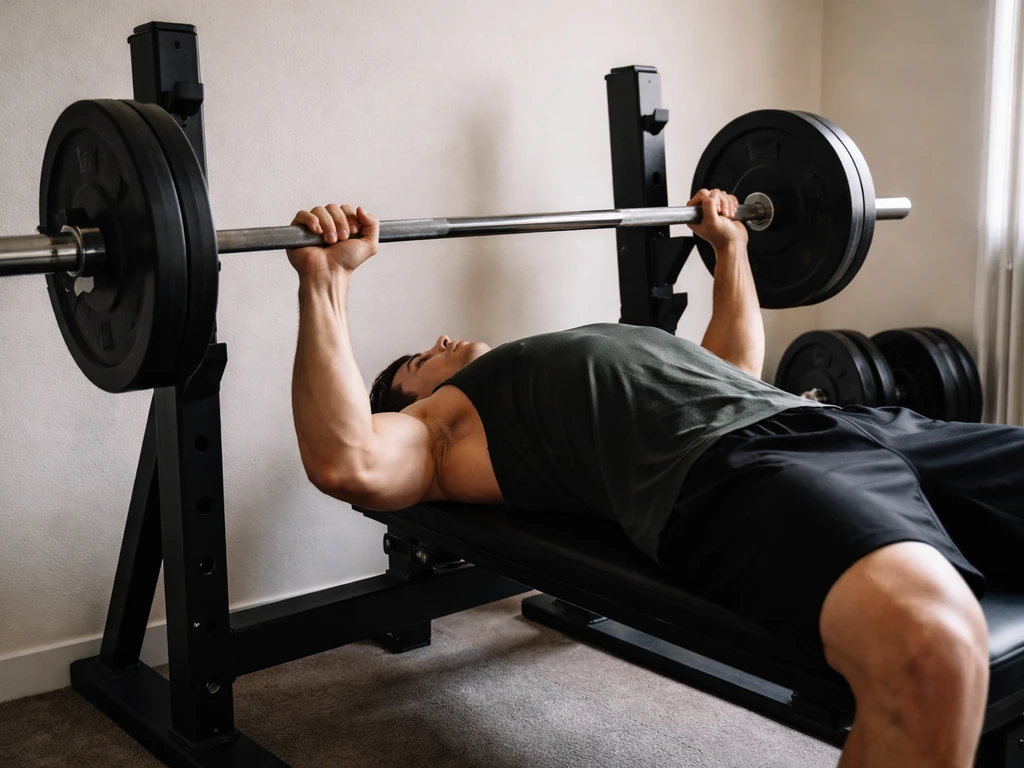
This is where people get genuinely confused, and it's worth clearing up clearly. Your body can burn stored fat for energy, yes. During fasting or low-intensity activity, adipocytes break down triglycerides into free fatty acids and glycerol through a process called lipolysis. Those fatty acids then get oxidized in muscle mitochondria to produce ATP.
So fat does fuel working muscles. But that's where the connection ends. Fat being burned for energy does not mean fat is being converted into muscle. Those are two completely different processes.
Catabolism refers to the breakdown of molecules to release energy, contrasting with anabolism, which builds larger structures using the energy and precursors from catabolism Fat being burned for energy does not mean fat is being converted into muscle. The energy produced by burning fat is used to power cellular work (including muscle contractions and recovery processes), but the actual building blocks of new muscle tissue are amino acids, not fat molecules.
You cannot build muscle protein out of fatty acids.
One practical wrinkle: at higher training intensities, fat oxidation actually slows down because it can't supply ATP fast enough to keep up with demand. Carbohydrates take over as the dominant fuel at higher intensities. This matters when you're thinking about how hard to train while in a calorie deficit, since carbohydrate availability becomes even more important for maintaining training performance and quality.
What actually drives muscle to grow: training signals that matter
To build muscle, you need to give your muscles a reason to grow. That reason is progressive overload: consistently increasing the challenge placed on your muscles over time, whether through more weight, more reps, more sets, or less rest. Without that progressive stimulus, your muscles have no incentive to add new tissue. Fat being present doesn't interfere with this process at all.
The blank" rel="noopener noreferrer">ACSM's 2026 resistance training position stand recommends training all major muscle groups at least 2 days per week, aiming for roughly 10 sets per muscle group weekly for hypertrophy. For older adults, research supports 3 sets of 10 to 12 reps performed 3 to 4 days per week as a safe and effective starting point. You don't need to train to absolute failure on every set, but working within a few reps of failure most of the time helps maximize the growth stimulus. Both lighter and heavier loads can produce hypertrophy, though the research slightly favors heavier loads when sets are taken close to failure.
- Train each major muscle group at least 2 times per week
- Aim for around 10 working sets per muscle group per week as a hypertrophy target
- Use moderate to heavy loads (8 to 12 reps is a practical range for most people)
- Work within 2 to 4 reps of failure on most sets, without necessarily going to full failure every time
- Add progressive overload consistently: small weight increases, extra reps, or extra sets over weeks and months
- Prioritize compound movements (squats, deadlifts, rows, presses) to cover the most muscle with the most efficient stimulus
Nutrition: what your muscles actually need to grow
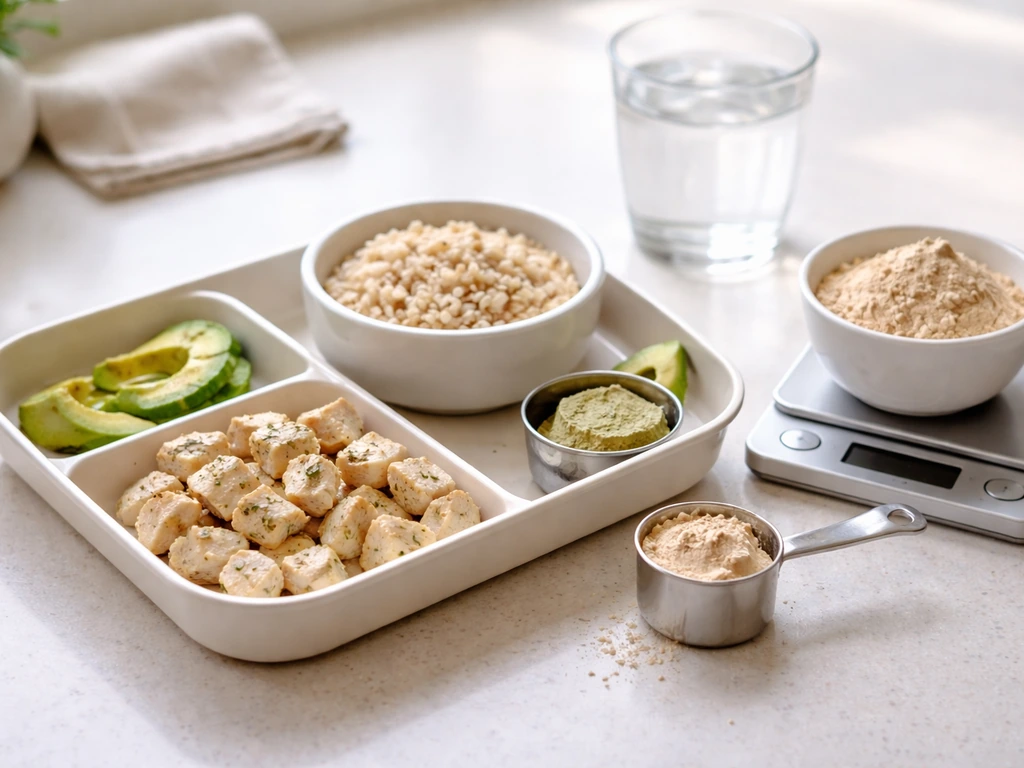
Since amino acids are the literal building blocks of muscle protein, dietary protein is non-negotiable. The International Society of Sports Nutrition recommends 1.4 to 2.0 grams of protein per kilogram of body weight per day for most exercising individuals. Research suggests that going above roughly 1.6 g/kg/day shows diminishing returns for muscle gain in most people, so that's a practical upper target to aim for if you're focused on efficiency. If you're heavier and carrying significant body fat, some practitioners use a target based on goal or lean body weight rather than total weight to avoid overestimating needs.
Calories matter too, and the direction matters. A modest calorie surplus (typically 200 to 400 calories above maintenance) creates the most favorable conditions for muscle growth, because it ensures energy availability for both training and the anabolic processes afterward. That said, muscle growth is not impossible in a deficit, which is what the recomposition concept is all about. The key point: even in a calorie deficit, keeping protein high and continuing to train hard can rescue muscle protein synthesis and allow for muscle retention or modest gain.
Carbohydrates often get undervalued in muscle-building conversations. They're the primary fuel for intense resistance training, and they support glycogen resynthesis between sessions, which directly affects how well you perform next time you train. Poor training performance means a weaker mechanical stimulus, which means slower muscle growth. Fat intake should be kept sufficient (generally 20 to 35% of total calories) for hormone production and overall health, but it's protein and carbohydrates that do the heaviest lifting for performance and recovery.
Recomposition vs bulking: what actually happens when you're trying to lose fat and build muscle at the same time
Body recomposition, losing fat while gaining muscle simultaneously, is real. Research confirms it's most robustly documented in people who are new to resistance training, people with higher body fat levels, and older adults who are deconditioned. If you fit any of those categories, you have a real physiological advantage: your muscles respond strongly to a new training stimulus, and your body can draw on fat stores to partially offset the energy demands of that process. This is genuinely good news if you're frustrated by your starting point.
The tradeoff with recomposition compared to a dedicated bulk is speed. When you're in a caloric surplus focused on building muscle (bulking), muscle gain is typically faster because energy availability is high and protein synthesis conditions are more favorable. Recomposition is slower but has the obvious appeal of not gaining additional fat in the process. A systematic review in BMJ Open Sport and Exercise Medicine found that resistance exercise during dietary weight loss protected fat-free mass and increased fat mass loss compared to calorie restriction alone, which is essentially what a successful recomp looks like in practice.
| Approach | Calorie Target | Best For | Rate of Muscle Gain | Fat Change |
|---|---|---|---|---|
| Recomposition | At or slightly below maintenance | Beginners, higher body fat, older adults | Slow but possible | Gradual loss |
| Lean Bulk | Modest surplus (200-400 cal above maintenance) | Intermediates wanting faster muscle gain | Faster | Slight potential gain |
| Aggressive Bulk | Large surplus (500+ cal above maintenance) | Hard gainers, very lean individuals | Fastest (with more fat gain) | Likely gain |
| Cut (diet only) | Significant deficit, low protein | Not recommended | Muscle loss likely | Fat loss with lean mass loss |
The recommendation for most people reading this: if you're a beginner or have noticeable body fat to lose, start with a recomp approach. Eat at or just below maintenance, hit your protein target daily, and train hard with progressive overload. If you've been training for a while and you're relatively lean, a modest surplus will generally get you further faster.
Myths worth ditching (and what realistic progress actually looks like)
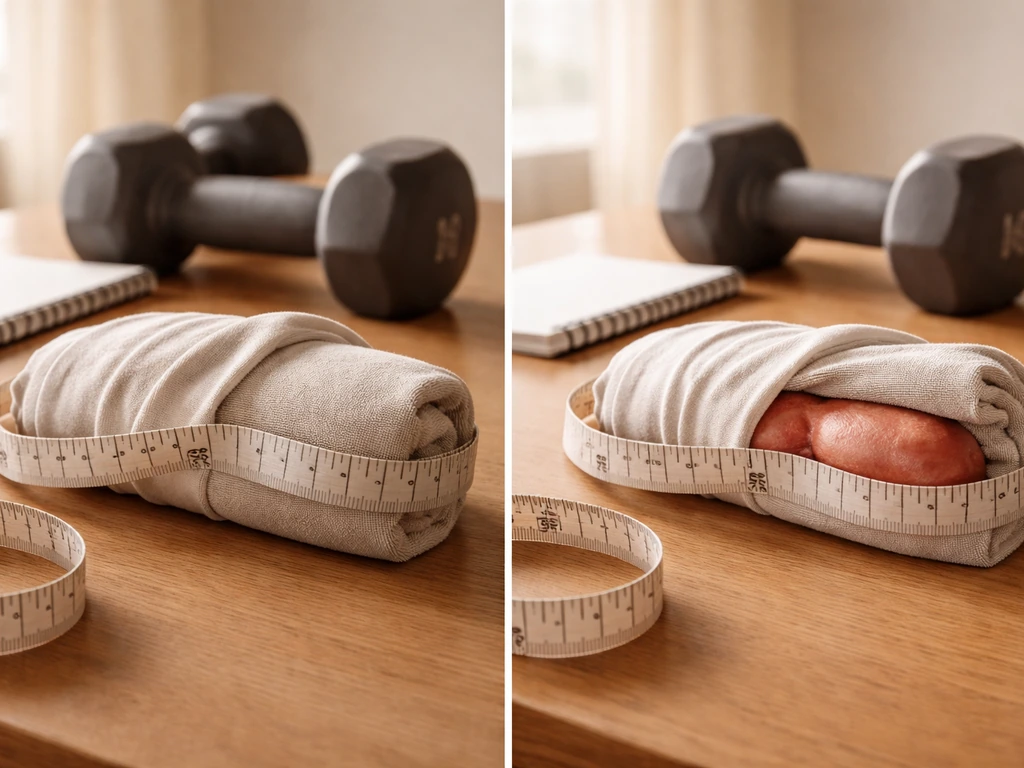
The biggest myth is that fat somehow blocks muscle growth. It doesn't. The muscle underneath is growing, or it isn't, based on whether you're training and eating correctly. The fat layer is just sitting on top. This is why people doing recomposition often feel stronger, notice their clothes fitting differently, and see better shape in certain areas before the scale moves much at all. The work is happening, even when you can't see it yet.
Another common misconception is that your body uses fat as raw material to build muscle. As explained earlier, fat provides energy through oxidation, but blank" rel="noopener noreferrer">amino acids are the substrates for muscle protein. That matters for anyone wondering how to grow pitbull muscle, since your diet needs to support hypertrophy training amino acids are the substrates for muscle protein. There is no direct conversion pathway from stored fat to muscle tissue. Burning fat and building muscle are parallel processes that happen simultaneously, but neither one feeds the other directly.
The scale is also wildly misleading during recomposition. Fat mass and lean mass can shift in opposite directions without the total number changing much. This confuses a lot of people into thinking they're not making progress. You might lose 3 pounds of fat and gain 2 pounds of muscle and feel and look significantly better while the scale barely moved. This is why tracking only body weight is a mistake during this phase.
- Myth: Fat blocks muscle growth. Reality: They are separate tissues built through separate processes. Fat doesn't interfere with muscle protein synthesis.
- Myth: Your body converts fat into muscle. Reality: Fat provides energy through oxidation. Amino acids from protein build muscle. Different processes entirely.
- Myth: You must bulk to gain muscle. Reality: Beginners and people with higher body fat can build muscle in a deficit or at maintenance with adequate protein and progressive training.
- Myth: The scale tells the whole story. Reality: During recomposition, scale weight is often misleading. Strength gains, tape measurements, and progress photos are more informative.
- Myth: You need to train to absolute failure every set. Reality: Working close to failure (within a few reps) is effective. Going to complete failure every set increases injury risk and hampers recovery.
- Myth: You can spot-reduce fat over your muscles. Reality: Fat loss is systemic, driven by overall energy balance and whole-body lipolysis, not by working the muscle underneath a specific fat deposit.
On timelines: beginners typically notice measurable strength gains within 4 to 6 weeks and visible muscle changes within 8 to 12 weeks when training and nutrition are consistent. For older adults, the timeline is similar, though recovery may require a bit more attention. Don't expect dramatic visible changes in month one, especially if you're also losing fat at the same time. The progress is real before it's visible.
What to actually do starting today
Here's the practical plan. If your goal is to build muscle while reducing body fat, these are the levers to pull immediately.
Set your calories and protein first
Calculate your maintenance calories (your total daily energy expenditure) using a simple online TDEE calculator. If you're going for recomposition, eat at maintenance or in a modest deficit of no more than 300 to 500 calories per day. If you're prioritizing faster muscle gain, add a 200 to 400 calorie surplus.
If you're trying to grow muscle fast as a skinny guy, you typically need to pair that with a training plan that creates progressive overload prioritizing faster muscle gain. Either way, hit 1. 6 to 2. 0 grams of protein per kilogram of body weight every single day.
That protein target is the non-negotiable. Fill remaining calories with carbohydrates (prioritize around workouts) and sufficient fat. Keep carbohydrate intake high enough to fuel your training sessions, especially on lifting days.
Build your training around progressive overload
Start with a full-body or upper/lower resistance training program hitting each major muscle group at least twice a week. Three or four sessions per week is ideal for most people, including older adults. Use compound movements as your foundation: squats, deadlifts, Romanian deadlifts, bench press, rows, overhead press, and pull-ups or lat pulldowns. Aim for 3 to 4 sets of 8 to 12 reps per exercise, working hard enough that the last few reps are genuinely challenging. Add weight or reps incrementally every week or two. That progressive overload is what tells your muscles to grow.
Prioritize sleep and recovery
Muscle grows during recovery, not during the workout itself. Aim for 7 to 9 hours of sleep per night. This is when growth hormone and testosterone peak, protein synthesis runs at higher rates, and the adaptations from training are consolidated. Cutting sleep short consistently undermines muscle growth even when training and nutrition are dialed in. If you're in a calorie deficit, recovery becomes even more important, since resting protein synthesis rates drop slightly under energy restriction and you need every advantage you can get.
Track the right things
Stop relying on the scale alone. Instead, track these four things weekly or bi-weekly: body weight (averaged across several days, not a single morning), waist circumference, strength on your key lifts, and progress photos taken in consistent lighting and poses. If your waist is decreasing, your lifts are going up, and photos show better muscle definition over 6 to 12 weeks, the plan is working, even if the scale is barely moving. That combination of data tells a far more accurate story than any single number.
- Calculate your TDEE and set calories at maintenance (recomp) or a 200 to 400 calorie surplus (lean bulk)
- Hit 1.6 to 2.0 g of protein per kg of bodyweight every day, non-negotiable
- Train each major muscle group at least twice per week with compound lifts and progressive overload
- Aim for 3 to 4 sets of 8 to 12 reps per exercise, working close to but not always to complete failure
- Prioritize carbohydrates around your workouts to fuel training quality and glycogen recovery
- Sleep 7 to 9 hours per night consistently
- Track waist measurements, strength numbers, and progress photos alongside scale weight
- Reassess every 4 to 6 weeks and adjust calories or training volume if progress stalls
One last note for beginners and older adults specifically: you don't need a perfect setup to start seeing results. If you're new to lifting, your body responds to almost any consistent stimulus, which is a real advantage. The people with the most body fat to lose often see the most dramatic recomposition results early on. Don't wait until conditions are perfect. Start training and eating enough protein now, track the right metrics, and the muscle under the fat will make itself known over the coming months.
FAQ
Can I build muscle under fat while in a calorie deficit?
Yes. Even if you lose fat, your body can still increase muscle size as long as you keep training hard and hit a daily protein target. In a deficit, prioritize performance (enough carbs around workouts) so your mechanical tension stays high, and accept that visible change may be slower than during a surplus.
Does my body turn fat into muscle when I diet?
Fat loss happens from a calorie deficit, but muscle gain depends on progressive overload and sufficient protein. Burning stored fat for energy does not provide the amino acids your muscles need to build new tissue, so focus on protein and training stimulus rather than trying to “convert” fat into muscle.
How can I tell if I’m gaining muscle while my weight stays the same?
You cannot know whether you are “growing” without looking at trends. Use weekly averaged body weight (not one weigh-in), waist measurements, strength changes, and photos. If waist drops and strength or reps increase, you are likely retaining or gaining muscle even if the scale barely moves.
Why don’t I look more muscular even if I feel stronger?
Genetics and fat distribution affect how muscle under the fat layer looks, but recomposition is still possible. People often notice changes in shape and strength before the scale moves, especially in early training. The key is to track measurements and performance instead of relying on how fast the mirror changes.
Do I need to train to failure to grow muscle under fat?
Training “close to failure” matters, but constant maxing out can backfire with fatigue, especially in a deficit. Instead of failing on every set, leave about 1 to 3 reps in reserve most sets, keep volume consistent, and manage recovery so you can progress week to week.
Should I recomp or bulk if I’m trying to grow muscle while reducing body fat?
Yes, but the strategy changes. If you are heavier with more body fat, starting at or slightly below maintenance often supports recomposition. If you are already lean, a small surplus with the same protein target usually gives faster hypertrophy, because performance and recovery tend to improve.
What should I fix first if I’m not getting stronger or leaner?
If you are not seeing progress after 6 to 12 weeks, the issue is usually one of four areas: protein consistently low, calories not in the right direction, progressive overload not happening, or training volume too low. Recheck protein daily, count sets per muscle per week, and confirm you are adding load or reps over time.
How aggressive can my calorie deficit be and still grow muscle?
It can. With resistance training, a moderate deficit, and enough protein, you can maintain and sometimes gain muscle. However, the more aggressive the cut, the harder it is to keep training quality high, and the more likely muscle retention becomes the main goal rather than large gains.
How much does sleep and recovery affect muscle growth under fat?
Rest days and sleep are part of the stimulus, not extra. If you consistently sleep under about 7 hours, you may recover more slowly and stall strength gains. In a deficit, recovery needs are even higher, so protect sleep and consider reducing volume temporarily if soreness and fatigue build.
Do carbs matter for building muscle while dieting?
Carbs are not required for muscle growth by themselves, but they strongly support training performance and glycogen replenishment. If carbs are too low, your lifting intensity often drops, which weakens the mechanical tension that drives hypertrophy, especially during calorie restriction.
Is it important to eat protein around my workout?
Protein is necessary, but timing is a tool, not a magic lever. A practical approach is to spread protein across 3 to 5 meals daily and include a dose after training or in the hours before, so muscle protein synthesis stays supported.
Will recomposition work faster for beginners than for experienced lifters?
Yes, especially for beginners. As your training stimulus improves and your body adapts, recomposition can feel fast at first. Still, expect slower, less dramatic changes after the initial phase, and keep using performance and waist trends to guide adjustments.