If you're skinny and struggling to gain muscle, the fix is almost always the same two things: you're not eating enough, and your training isn't structured around progressive overload. Fix those two, back them up with consistent sleep, and you can realistically add 8–15 lbs of lean mass in your first 12–16 weeks of serious training. That's not hype, it's what the research on novice trainees actually shows, and it's what I've seen work over and over. The specifics matter though, so let's get into them.
How to Grow Muscle Fast for Skinny Guys: Step-by-Step Plan

Marcus Kellerman
18 May 2026

Why skinny guys struggle to gain muscle (and what actually works)
Most skinny guys aren't genetically cursed. They're just chronically under-eating and under-stimulating their muscles. A lot of people with fast metabolisms feel like they eat a lot, but when you actually track it, they're hovering around maintenance calories or even below. Research confirms this directly: energy deficiency impairs lean mass gains from resistance training, even if you're getting stronger. You can't build tissue out of nothing. Your body needs a caloric surplus to have the raw material for muscle protein synthesis to do its job.
The training side is usually just as broken. Random workouts, inconsistent sessions, and programs built around isolation machines aren't going to drive fast progress for a beginner. What works is simple: compound movements, progressive overload tracked over time, and hitting each muscle group at least twice a week. That's the actual mechanism, mechanical tension applied repeatedly and progressively is what signals your body to build more muscle. Everything else is secondary.
There's also a metabolism myth worth addressing here. Some skinny guys genuinely do have faster metabolisms, which means their calorie targets need to be higher than average to generate a surplus. This isn't a barrier, it just means you eat more. If you're someone who identifies with the "fast metabolism" side of this problem, the nutrition section below applies to you especially hard. If you want the exact numbers for your situation, see how to grow muscle with fast metabolism for a quick calorie and surplus strategy. The principles aren't different; the numbers are just bigger.
Nutrition for rapid gains: calorie surplus, protein targets, and meal strategy
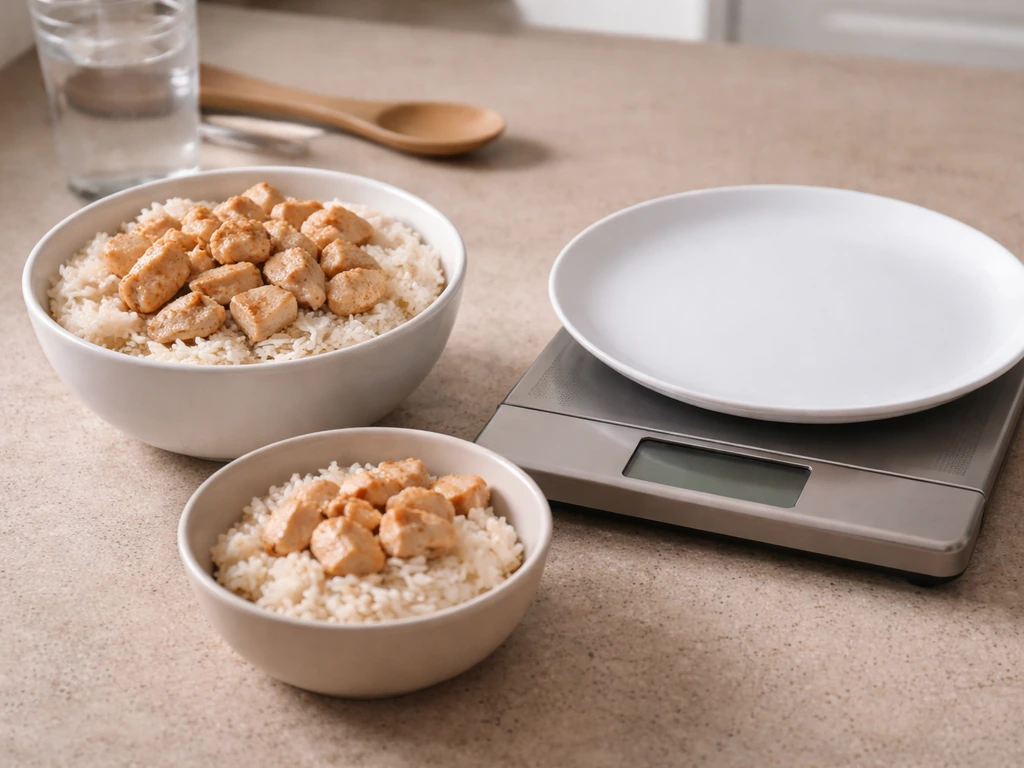
Your single most important nutritional task is being in a consistent calorie surplus. The practical guideline backed by research is adding around 300–500 calories per day above your maintenance level. Done right alongside resistance training, this produces roughly 0.45 kg (about 1 lb) of weekly weight gain, with most of that skewed toward lean mass rather than fat. That's the target zone: fast enough to be meaningful, controlled enough that you're not just getting fat.
To find your starting number, estimate your maintenance calories (bodyweight in lbs multiplied by 15–17 is a rough starting point for active people) and add 300–500 on top. If you're not gaining at least 0.5 lbs per week after two weeks, eat more. Don't overthink the math, the scale is your feedback tool.
Protein targets
The ISSN recommends 1.4–2.0 g of protein per kg of bodyweight per day for people engaged in resistance training. For a 70 kg (154 lb) skinny guy, that's 98–140 g of protein daily. I'd aim for the higher end, closer to 1.8–2.0 g/kg, when your goal is maximizing muscle gain. Per meal, target roughly 0.25 g of protein per kg of bodyweight, which lands around 20–40 g of high-quality protein per sitting. That dose is enough to maximally stimulate muscle protein synthesis in a single meal for most people.
Spread that across 3–5 meals or eating occasions. You don't need to obsess over timing to the minute, but eating protein consistently through the day, including something within a couple of hours of training, is a reasonable habit that keeps muscle protein synthesis elevated.
Handling low appetite
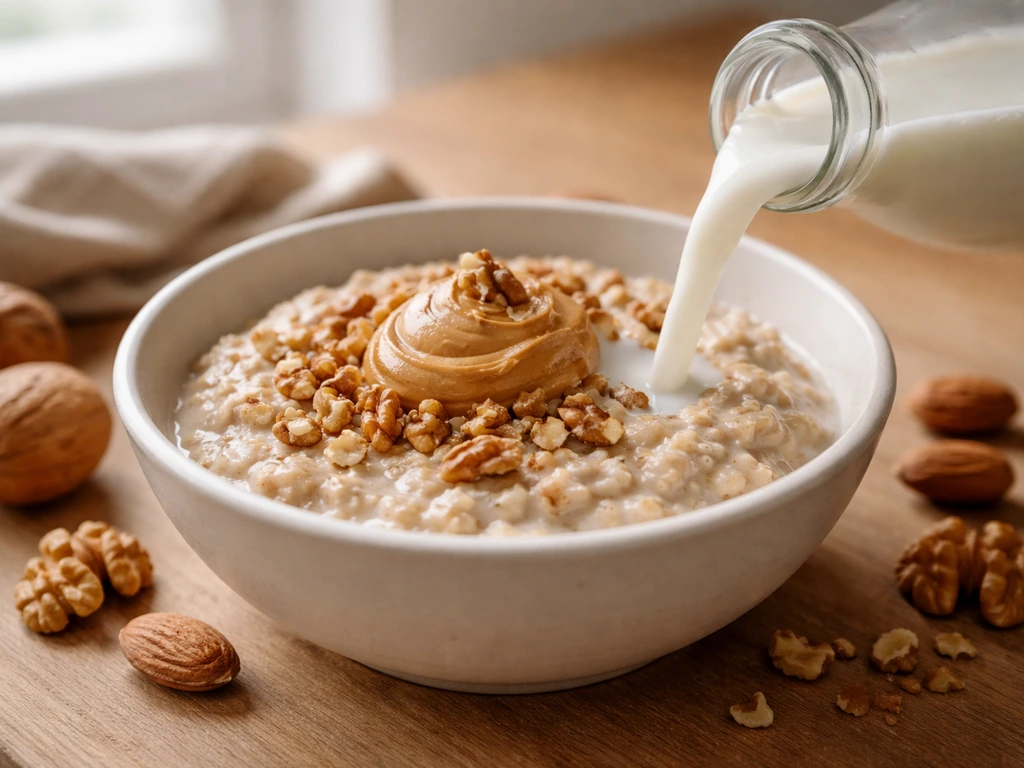
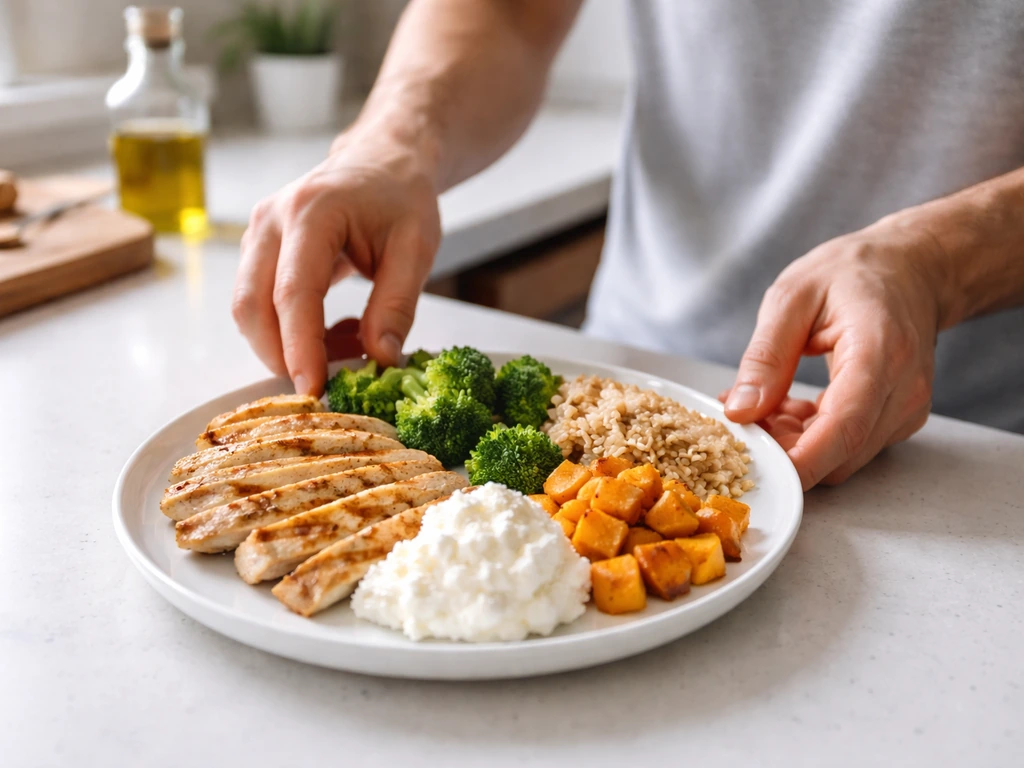
Low appetite is the number one practical obstacle for skinny guys trying to eat more. The solution isn't forcing down huge meals, it's increasing calorie density. Whole milk, nut butters, olive oil, rice, oats, bananas, Greek yogurt, and eggs are all calorie-dense foods that don't require enormous volume to hit your targets. A 500-calorie shake made with milk, a banana, oats, and protein powder takes about 90 seconds to make and drink. Use liquid calories to bridge the gap when solid food feels like too much.
Carbohydrates and fats aren't the enemy here, they're your calorie vehicles. Prioritize protein first, then fill the rest of your calories with whatever whole-food carbs and fats you enjoy and tolerate well. You don't need a fancy macro split. Protein first, calorie surplus second, food quality third.
Training for skinny lifters: program setup, exercise selection, volume, and progression
The best training program for a skinny beginner is not complicated. ACSM guidelines for novice hypertrophy training recommend 2–3 sets of 8–12 reps per exercise, at roughly 70–85% of your one-rep max, trained 2–3 days per week. Expert consensus from Delphi studies on novice exercise selection consistently emphasizes multi-joint compound movements over isolation work. That means your program should be built around squats, deadlifts, bench press, rows, overhead press, and pull-ups or lat pulldowns, not cable flyes and leg extensions.
For weekly volume, dose-response research suggests that most people see solid hypertrophy stimulus in the range of 10–20 working sets per muscle group per week. Dose-response evidence is often framed within a roughly 10 to 20 working sets per muscle per week range for many individuals when targeting hypertrophy 10–20 working sets per muscle group per week. As a beginner, you don't need to max that out immediately. Start at the lower end, around 10–12 sets per major muscle group per week, and build from there as your recovery capacity improves.
A simple 3-day full-body template to start
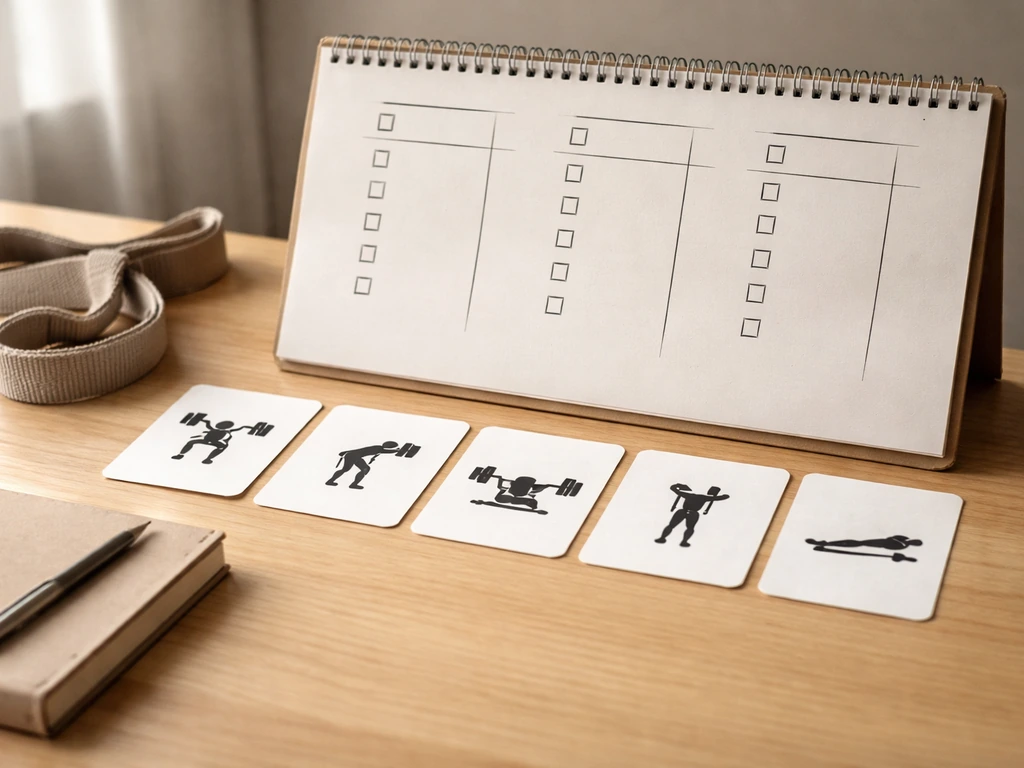
Three full-body sessions per week (Monday, Wednesday, Friday or similar) is the ideal starting structure. Each session should hit the major movement patterns: a squat pattern, a hinge pattern, a horizontal push and pull, and a vertical push or pull. That covers everything without requiring 90-minute gym sessions.
| Movement Pattern | Example Exercise | Sets x Reps |
|---|---|---|
| Squat | Barbell back squat or goblet squat | 3 x 8–10 |
| Hinge | Romanian deadlift or conventional deadlift | 3 x 8–10 |
| Horizontal push | Barbell or dumbbell bench press | 3 x 8–12 |
| Horizontal pull | Barbell or dumbbell row | 3 x 8–12 |
| Vertical push | Overhead press | 2–3 x 8–12 |
| Vertical pull | Lat pulldown or pull-up | 2–3 x 8–12 |
Progressive overload is the whole game
Progressive overload means you're lifting more, or doing more reps, or doing more total volume over time. Without it, your muscles have no reason to grow. The practical rule: when you can complete the top of your rep range with good form (e.g., 3 x 12), add 5 lbs next session. Track every session in a notebook or app. If you're not beating last week's numbers at least some of the time, your training isn't progressing, and neither is your muscle. This simple habit separates beginners who make fast gains from those who spin their wheels for months.
Recovery and muscle growth: sleep, stress, and avoiding common overtraining mistakes

Muscle doesn't grow during your workouts, it grows during recovery. This sounds obvious but it's the thing most motivated beginners ignore. Sleep is your most powerful recovery tool. Systematic reviews on sleep deprivation and muscle strength show that insufficient sleep impairs strength performance and recovery outcomes. Aim for 7–9 hours. If you're regularly getting 5–6, you're leaving gains on the table regardless of how well you train and eat.
Chronic stress is the other silent recovery killer. Elevated cortisol competes with the anabolic signaling you're trying to drive through training and eating. You can't fully control life stress, but you can control sleep hygiene, training load, and how hard you push in any given week. If your stress is high, your training volume probably needs to come down temporarily, not go up.
Overtraining vs. productive soreness
Soreness is not a requirement for muscle growth, and more soreness is not a sign of a better workout. If soreness is lasting more than two days consistently, that's a sign you're doing too much volume too fast. The distinction matters: functional overreaching (a short-term performance dip) resolves in days to two weeks with reduced load and more rest. Overtraining syndrome, the serious version, takes much longer and requires a real break. Stay well clear of the second one by building volume gradually and listening to your body's recovery signals. If you feel beat up going into a workout, train lighter or take an extra rest day. Skipping one session to recover beats grinding through three bad ones.
Supplements that can help (and what's not necessary)
Most supplements are unnecessary if your nutrition is dialed in. There are two exceptions worth knowing about for skinny guys trying to build muscle fast.
Creatine monohydrate is the most evidence-backed muscle-building supplement that exists. The ISSN concludes it's the most effective ergogenic nutritional supplement for increasing high-intensity exercise capacity and lean body mass during training. You can load with about 0.3 g/kg/day for 5–7 days to saturate your muscles faster, then drop to a maintenance dose of 3–5 g/day. Or just start with 3–5 g/day from day one, you'll reach the same saturation point in about 3–4 weeks. It's cheap, safe, and it works. A meta-analysis specifically looking at adults under 50 found significant improvements in muscle strength from creatine combined with resistance training. Take it.
Caffeine is worth mentioning as a performance tool rather than a muscle-builder directly. ISSN evidence shows it's consistently ergogenic at 3–6 mg per kg of bodyweight taken 30–90 minutes before training. Higher doses (above 9 mg/kg) don't add more benefit and start causing side effects. If a cup or two of coffee before the gym helps you push harder, that's a legitimate edge, just don't let it replace sleep.
Vitamin D is worth checking if you're deficient, low vitamin D is linked to reduced performance and recovery, but supplementation benefits aren't consistent across studies unless you're actually deficient. Get your levels tested before spending money on it. Beyond those three, a protein powder is useful if you're struggling to hit your protein targets through whole food, but it's a convenience tool, not a magic ingredient. Everything else, BCAAs, testosterone boosters, fat burners, you can ignore.
Timeline, expectations, and how to track progress to keep gaining fast
Here's what realistic fast progress looks like for a skinny beginner in the first 8–16 weeks: you can expect to gain roughly 1–2 lbs per week on the scale when eating a proper surplus, and over 12–16 weeks of serious training, a significant portion of that will be actual lean mass. Early weight gain (weeks 1–3) will include some glycogen and water, especially if you add creatine, don't panic about that or mistake it for fat gain. Real muscle takes a few weeks to accumulate in amounts you can see and measure.
"Fast" for a skinny beginner realistically means 8–15 lbs of lean mass in 12–16 weeks under optimal conditions, good surplus, consistent training with progressive overload, and adequate sleep. Beginners have a significant advantage here because novice response to training is strong. That advantage diminishes over time, so the first 6 months are genuinely your best window for rapid transformation.
How to track progress properly
Use three data points together, not one in isolation: weekly bodyweight average (weigh yourself each morning, average the week), strength in your main lifts (are you lifting more than last month?), and monthly progress photos. The scale alone is misleading week to week because weight fluctuates with water, food volume, and glycogen. But if your bodyweight average is going up, your lifts are going up, and your physique looks different in photos after 6–8 weeks, you're gaining real muscle. If the scale moves but your lifts stall, check your sleep and calorie quality. If your lifts are going up but the scale doesn't move, you need to eat more.
Every two weeks, reassess. If you're not hitting 0.5–1 lb per week of weight gain, add another 200–300 calories. If you're gaining more than 1.5 lbs per week consistently, pull back slightly so you're not accumulating excess fat. The plan isn't static, you adjust it based on what the data tells you. That feedback loop is what keeps the gains coming and stops the process from going sideways.
Your next 7 days
- Calculate your estimated maintenance calories and add 300–500 to get your daily target.
- Set a protein goal of 1.8–2.0 g per kg of bodyweight and plan 3–5 meals that each include 20–40 g of protein.
- Pick a 3-day full-body program built around the compound movements listed above and schedule the sessions.
- Buy creatine monohydrate and start taking 3–5 g daily.
- Track your workouts — write down every set, rep, and weight.
- Commit to 7–9 hours of sleep for the next two weeks and see what happens to your training quality.
- Weigh yourself every morning this week and average the numbers — that's your baseline.
None of this is complicated, but all of it has to happen together. The skinny guys who stay skinny are usually nailing one part and missing another, they train hard but under-eat, or they eat enough but train randomly without progression. Stack all the pieces and stay consistent, and the first 12 weeks will likely be the fastest muscle growth you'll ever experience. You might gain some fat with a surplus, but muscle growth still happens as long as your training is consistent and progressive. For a dog-specific equivalent focused on building and maintaining pitbull muscle, prioritize appropriate training, proper nutrition, and gradual conditioning how to grow pitbull muscle.
FAQ
How long does it actually take to see visible muscle changes as a skinny guy?
Expect the scale and gym performance to change first, usually within 2–3 weeks. Visible changes typically show up after 6–8 weeks, because early gains include glycogen and water (especially if you start creatine). If you have no measurable strength improvement by week 4, the issue is usually calorie intake, training consistency, or not progressing reps/load.
Should I train every day to grow muscle faster?
Not as a default. Beginners respond well to 2–3 full-body sessions per week because it supports weekly volume and recovery. Training more often usually only helps if you can recover, maintain progression, and avoid cutting volume due to fatigue. If soreness lasts more than 2 days consistently or performance drops, you are training too frequently.
What if my weight is going up but my waist is growing faster than my muscle?
That suggests your surplus is too large. Reduce calories by about 150–250 per day and keep protein and training progression the same. You can also use the “rate cap” idea, aim for roughly 0.5–1 lb per week of bodyweight gain on average rather than chasing faster weight increases.
What if I’m gaining weight but my strength is not improving?
If the scale moves but lifts stall, calories might be up but protein timing or training stimulus is inconsistent. Double-check that you are reaching the top of the rep range with good form and adding load, reps, or sets over time. Also ensure you are sleeping enough, because low sleep can blunt strength gains even in a surplus.
How should I adjust my program if I’m an absolute beginner and the big lifts feel hard?
Use the same principles, progressive overload and compounds, but start with easier variations and longer setup practice. For example, do goblet squats or machine-assisted rows before barbell versions. The goal is to leave the session with solid effort (not maximum fatigue), then build difficulty gradually while still tracking progression.
How many reps should I stay in for fastest muscle gain?
A practical beginner target is 8–12 reps for most sets, which aligns with the article’s range. If you can only comfortably do 5–6 reps early on, that is still fine as long as the weight is challenging and you progress over time. Use the rep range as a tool, not a rule, keep 1–3 reps in reserve on most sets.
Is creatine necessary for skinny guys to grow fast?
It is not required, but it can help you train harder and recover better, which indirectly supports muscle gain. If your priority is “fast and simple,” daily creatine (3–5 g) is a low-risk option. If your stomach is sensitive, start with 3 g/day and take it with food, consistency matters more than loading.
How should I use liquid calories without getting low-quality food?
Use calorie-dense drinks to raise your intake, then keep protein and overall quality anchored. For example, a shake with milk, oats, fruit, and whey still provides protein and carbohydrates rather than just sugar. If your goal is lean mass, avoid making every liquid calorie drink only sugar, juice, or soda.
What should I do if I cannot hit protein per day with normal meals?
Keep whole foods first, but treat protein powder as a convenience to reach your target. Aim for a similar protein dose per meal (roughly 0.25 g/kg per sitting for your bodyweight). If you routinely miss your daily total, split it into 4–5 eating occasions and add one extra protein-centered snack.
Should I train to failure to maximize muscle growth?
For most skinny beginners, training to failure is not necessary and can slow progress by hurting recovery. Instead, use near-failure effort most of the time, for example stop 1–3 reps before you can’t complete another clean rep. Save true failure for occasional sets once technique is stable, and never sacrifice form to chase fatigue.
How do I know if my surplus is correct week to week?
Track weekly bodyweight average, not single weigh-ins. If your average gain is below about 0.5 lb per week after two weeks, add 200–300 calories per day. If you are consistently above about 1.5 lb per week, pull back 150–250 calories to avoid excessive fat gain. Keep training progression steady while adjusting calories.
What’s the best way to track progressive overload if I’m doing many exercises?
Focus on a small set of primary lifts that you progress each week, then treat accessory movements as “good enough” until the primaries are moving. Log sets, reps, and load for each exercise, and use a clear rule such as adding 5 lb when you hit the top of the rep range for your planned sets.
Do I need to bulk forever to keep gaining muscle fast?
No. “Bulk” is a phase, once your rate of gain slows or fat gain rises, you adjust. A common approach is to run your surplus until you see your bodyweight gain exceed your target, then reduce calories slightly. The aim is to maintain enough surplus for performance and progression, not maximize weight at any cost.
Can I build muscle fast if I’m naturally very active during the day?
Yes, but you must account for higher maintenance calories. If you are in a surplus and your lifts and photos improve, your activity level is not a problem. The catch is underestimating maintenance when you are more active than average, so you may need to start higher than the simple bodyweight x 15–17 estimate and refine using the 2-week weight feedback loop.
How should I handle soreness and fatigue when I start a new plan?
Some soreness in the first 1–2 weeks can be normal, but it should not keep escalating. If soreness consistently lasts more than two days or your performance drops from week to week, reduce volume slightly (for example, cut 1–2 sets per muscle group) and keep progression gradual. Skipping one session occasionally to recover is usually better than grinding through repeated poor sessions.