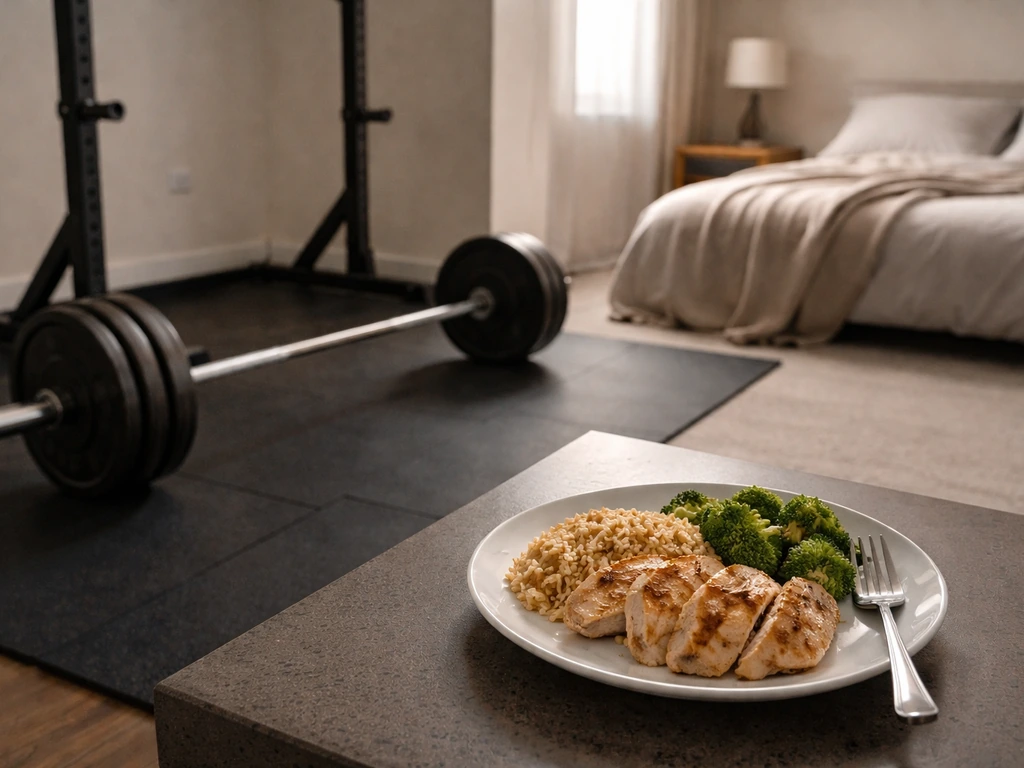
To grow skeletal muscle, you need three things working together: a consistent training stimulus that challenges your muscles beyond what they're used to, enough protein and total calories to support repair and growth, and adequate recovery time so that adaptation actually happens. Get those three right, and muscle growth is pretty much inevitable over 8 to 12 weeks. For more direct guidance on gaining size, follow a structured approach to progressively overload your training and manage recovery so your muscles have the conditions to grow how to force muscles to grow. Miss one, and the other two won't fully compensate.
How to Grow Skeletal Muscle: Beginner Training and Nutrition Guide

Marcus Kellerman
28 Apr 2026

What actually makes muscle grow
Skeletal muscle grows through a process called hypertrophy, which is an increase in the size of individual muscle fibers. The trigger is mechanical tension: when you load a muscle under resistance, especially through a full range of motion, you create micro-damage and metabolic stress that signals the body to rebuild those fibers thicker and stronger. That rebuilding process, called muscle protein synthesis, requires a positive protein balance where synthesis exceeds breakdown. Training creates the demand; nutrition and rest supply the raw materials.
One thing worth clearing up immediately: you don't need to feel crushed or extremely sore to grow. Soreness is a byproduct of novel stress, not a reliable indicator that hypertrophy is occurring. Once your body adapts to a movement pattern after a few weeks, soreness fades even while growth continues. To grow, you have to surprise the muscle, so keep pushing your training stimulus forward as you adapt. What matters is progressive challenge over time, not how wrecked you feel the next morning.
The other thing to understand is that muscle growth is slow. A beginner can expect to add roughly 1 to 2 pounds of actual muscle per month under good conditions. Intermediate trainees gain slower. This isn't a reason to be discouraged; it's a reason to set realistic expectations so you don't bail on a program that's actually working.
Building your training plan: volume, intensity, and progression

The most important training variable for hypertrophy is weekly volume, meaning the total number of hard sets you perform per muscle group per week. Research is fairly clear that more volume generally produces more growth, up to a point. Practically speaking, fewer than 5 sets per muscle group per week is probably too little to drive consistent hypertrophy. The range of [10 or more sets per muscle per week](https://pmc.
ncbi. nlm. nih. gov/articles/8884877/) tends to produce the best results for most people, with the 5 to 9 set range being a solid starting point if you're new to structured training.
For beginners, starting on the lower end and building up over several weeks is smarter than jumping to high volume right away and getting beat up.
Rep ranges and how close to failure you should train
The classic hypertrophy rep range is 6 to 15 reps per set, but muscle can grow across a fairly wide range (roughly 5 to 30 reps) as long as the set is taken close enough to failure to create meaningful tension. You don't need to grind to absolute failure every set. Training to about 2 to 3 reps in reserve (RIR), meaning you stop when you estimate you had 2 or 3 reps left in the tank, appears to be effective and keeps fatigue manageable. For beginners especially, this is a safer and more repeatable approach than constantly pushing to the limit.
Progressive overload: the non-negotiable

Progressive overload is the principle that your muscles need to be challenged with slightly more than they've done before in order to keep adapting. Without it, you plateau. The simplest way to apply this is to aim to add a small amount of weight (2.5 to 5 lbs on compound lifts, 1 to 2.5 lbs on isolation exercises) or an extra rep or two every week or two. When you can no longer progress on a lift, you can increase sets, reduce rest periods slightly, or vary the tempo before jumping to more weight.
Exercise selection and workout structure
Build your program around compound movements: squats, deadlifts, Romanian deadlifts, bench press, rows, overhead press, and pull-ups or lat pulldowns. These train multiple muscle groups simultaneously and allow you to move meaningful loads. Add targeted isolation work (curls, tricep extensions, lateral raises, leg curls) on top of that foundation. A simple full-body routine 3 days per week works extremely well for beginners. Intermediate trainees often do better with an upper/lower or push/pull/legs split, training each muscle group 2 times per week to hit the volume targets without crushing recovery.
Rest periods between sets matter less than many people think. Both shorter (around 60 seconds) and longer (2 to 3 minutes) rest intervals can support hypertrophy, particularly in less trained individuals. A practical middle ground is 90 seconds to 2 minutes for most sets, with longer rests on heavy compound movements. The priority is being recovered enough to maintain quality effort on the next set.
A sample weekly volume target by muscle group

| Muscle Group | Beginner (sets/week) | Intermediate (sets/week) |
|---|---|---|
| Chest | 6–8 | 10–16 |
| Back (width + thickness) | 8–10 | 12–18 |
| Shoulders | 6–8 | 10–14 |
| Quads | 6–8 | 10–16 |
| Hamstrings/Glutes | 6–8 | 10–14 |
| Biceps | 4–6 | 8–12 |
| Triceps | 4–6 | 8–12 |
| Calves | 4–6 | 8–12 |
Nutrition: eating to actually support muscle growth
Training is the stimulus, but nutrition is what your body uses to build. If you're eating at a significant calorie deficit, muscle growth slows or stalls because your body doesn't have enough energy and raw material to both fuel daily functions and build new tissue. For most people trying to add muscle, a modest calorie surplus of about 200 to 300 calories above your maintenance intake is enough to support growth without excessive fat gain.
If you're a beginner or returning after a long break, you may be able to gain muscle while eating at maintenance or a slight deficit, but don't count on it long-term. If you want a more targeted breakdown of how to grow muscles as a woman, your nutrition targets are a big part of the answer.
How much protein you actually need

The ISSN recommends 1. The ISSN position stand specifies that [1. 4 to 2. 0 g/kg/day](https://scholars.
nova. edu/ws/portalfiles/portal/42798931/International%20Society%20of%20Sports%20Nutrition%20position%20stand_%20protein. pdf) is sufficient for most exercising individuals, framed around achieving a positive muscle protein balance for muscle building and maintenance. 4 to 2.
0 grams of protein per kilogram of body weight per day for exercising individuals focused on building or maintaining muscle. In practical terms, a 180-pound (82 kg) person needs roughly 115 to 165 grams of protein daily. If you're in a calorie deficit or doing a lot of training volume, staying toward the higher end of that range is protective.
Hitting this number consistently is more important than obsessing over timing, though spacing protein across 4 to 5 meals of 20 to 40 grams each is a reasonable strategy that keeps muscle protein synthesis elevated through the day.
Carbs: your training fuel
Carbohydrates don't directly build muscle, but they power your workouts. Muscle glycogen (stored carbohydrate) is the primary fuel for resistance training, and when glycogen is low, performance drops, which means less volume, less intensity, and ultimately less stimulus for growth. Eating sufficient carbohydrates around training helps maintain output session over session. There's no magic ratio, but most trainees aiming for hypertrophy do well keeping carbohydrates as the majority of their calorie intake (roughly 45 to 55% of total calories), with adjustments based on individual tolerance and preference.
Practical nutrition targets at a glance
| Nutrient | Target | Notes |
|---|---|---|
| Protein | 1.4–2.0 g/kg body weight/day | Higher end during calorie deficit or high volume |
| Total calories | ~200–300 kcal above maintenance | Estimate maintenance via TDEE, then add surplus |
| Carbohydrates | ~45–55% of total calories | Prioritize around training for performance |
| Fats | Remaining calories after protein + carbs | Don't drop below ~0.5 g/kg; supports hormones |
Supplements worth using (and what to ignore)
The supplement industry is built on making ordinary people feel like they're missing something. Most of the time, you're not. That said, a small number of supplements have solid evidence behind them and are worth considering.
- Creatine monohydrate: The most well-researched ergogenic supplement available. It increases phosphocreatine stores in muscle, allowing you to do slightly more work per session, which compounds over time into greater hypertrophy. A maintenance dose of 3 to 5 grams per day is effective without needing a loading phase. It's cheap, safe, and works across all ages and training levels.
- Protein powder: Not magic, just a convenient food. If you're consistently hitting 1.6 to 2.0 g/kg of protein through whole foods, you don't need it. If you're falling short, a whey or plant-based protein shake is an easy fix. Think of it as a tool for convenience, not a growth catalyst.
- Caffeine: A performance aid that can help you train harder, particularly for early sessions. Doesn't directly cause muscle growth, but helps you perform better in the gym, which supports volume and intensity over time.
BCAAs are generally not worth the money if you're already eating enough total protein. Research suggests their recovery and soreness benefits are modest, and any meaningful hypertrophy benefit disappears once overall protein intake is adequate. So-called testosterone boosters have been reviewed rigorously and most show little to no reliable effect on serum testosterone at the doses and ingredients typically used. Skip them.
Recovery: where the actual growth happens
You don't grow during your workouts. You grow in the 24 to 72 hours afterward, during rest. Training creates the signal; recovery is when your body acts on it. This is worth taking seriously, not just as a platitude.
Sleep is the most underrated muscle-building tool
Growth hormone is primarily secreted during deep sleep, protein synthesis rates are elevated overnight, and sleep deprivation is directly linked to impaired muscle protein synthesis and increased muscle breakdown. Aim for 7 to 9 hours of sleep per night. If you're consistently getting less than 7, it will limit your results regardless of how good your training and nutrition are. This isn't a suggestion to optimize; it's a floor below which gains start leaking away.
Rest days and stress management
Each muscle group needs roughly 48 hours of recovery between hard sessions. Training the same muscles every day doesn't give the hypertrophic process time to complete. Beyond physical rest, psychological stress elevates cortisol, which is catabolic and actively works against muscle growth. Chronic stress without adequate recovery can blunt your results even when training and nutrition look good on paper. This is one reason why sustainable, moderate training programs consistently outperform intense, all-out approaches over 8 to 12 week windows.
Timelines, common mistakes, and tracking your progress
What to realistically expect in 8 to 12 weeks
Research on untrained to lightly trained individuals shows measurable increases in muscle thickness within 8 weeks of structured resistance training. In practice, beginners often notice visible changes in body composition and meaningful strength increases within 6 to 10 weeks. If you want to focus specifically on how to grow muscle strength, you can apply progressive overload and train close to failure while keeping volume and recovery consistent. The scale may not move dramatically, especially if you're gaining muscle while losing fat simultaneously (common in beginners). Don't judge 8-week results by the scale alone.
The mistakes that kill progress
- Not eating enough protein: This is the most common nutrition mistake. If you're training hard and not hitting at least 1.4 g/kg of protein daily, you're leaving gains on the table.
- Too little weekly volume: Less than 5 sets per muscle per week is unlikely to produce meaningful hypertrophy. Many beginners do one or two sets and wonder why nothing is happening.
- No progressive overload: Doing the same weight and reps every session for months means your muscles have no reason to adapt further. You have to increase the challenge over time.
- Inconsistency: Missing 2 to 3 weeks of training every month, then training hard for a week, is not the same as consistent moderate effort. Consistency beats intensity over 8 to 12 weeks.
- Overtraining without enough recovery: More is not always better. If you're constantly fatigued, your joints ache, and your lifts are going backward, you're probably accumulating too much fatigue without enough rest to supercompensate.
- Unrealistic expectations: Expecting dramatic physical transformation in 4 weeks leads to abandoning programs that were actually working. Muscle growth takes months, not weeks.
How to track what's actually working
Track at least three things: your training (exercises, sets, reps, weight), your body weight (daily weigh-ins averaged weekly to smooth out water fluctuations), and a simple body measurement or photo at baseline and every 4 weeks. Your strength on key lifts is one of the best proxies for whether progressive overload is happening. If your squat, bench, row, and deadlift are all going up week over week, hypertrophy is almost certainly following. If they're stuck for 3 to 4 weeks in a row, it's a signal to look at volume, nutrition, or recovery. Don't rely on feel alone. The data tells a more honest story.
If you're exploring related questions like how to grow muscles at home with limited equipment, how to grow muscle strength alongside size, or how to grow muscles naturally without supplements, the same core principles apply: progressive overload, adequate protein, and consistent recovery are the foundation in every context. If you're specifically trying to learn how to force muscles to grow, focus on progressive overload, adequate protein, enough weekly volume, and consistent recovery.
For women, the same core principles apply, so you can follow this guide to learn how to grow muscles as a woman. Focus on progressive overload and consistent training so your muscles adapt by getting stronger over time how to grow muscle strength alongside size. If you want the best ways to grow muscle, make sure your training plan follows progressive overload, adequate volume, and smart recovery. The best ways to grow muscle come from combining progressive overload with enough weekly training volume and consistent recovery. The variables that change are the tools and environment, not the underlying biology.
FAQ
What should I do if my lifts and measurements stop improving (plateau) while I am training hard?
If you cannot add load or reps, add total “effective reps” by improving range of motion, technique, or slowing the eccentric phase for the same weight. If performance still stalls for 3 to 4 weeks, increase weekly sets by 1 to 3 for that muscle or extend the rest interval by 30 to 60 seconds to regain set quality.
Do I need to train to failure every set to grow skeletal muscle?
For hypertrophy, most sets should be within about 0 to 3 reps of failure (2 to 3 RIR is a good default), but you should not take every set to the limit. Use fewer hard sets on the most fatiguing movements (like squats or deadlifts), keep the rest a bit farther from failure, and aim to progress week to week.
How can I tell I am progressing if I am not very sore?
When soreness is low, growth can still be happening, but you can use a performance-based check: if you are maintaining or improving rep count, load, or set quality in the same rep range, your stimulus is probably sufficient. If those metrics drop for multiple sessions, soreness is not the problem, recovery or training structure is.
Can you grow skeletal muscle with limited equipment or at home only?
Yes, but it is usually slower and less efficient than full, balanced programs. A practical approach is to choose a few full-body compound patterns you can load progressively, then add 1 to 2 isolation movements per targeted area to reach the weekly volume target (often 10 or more hard sets per muscle per week over time).
Will muscle growth stall if I cut calories, and how do I adjust if it starts to?
You can gain muscle on a calorie deficit, but it requires tighter recovery and more patience, and it is most reliable for beginners or after a break. Use a smaller deficit, keep protein at the high end of your range, and watch for a drop in session performance. If strength and reps trend down for 2 to 3 weeks, reduce the deficit.
What if I cannot consistently get 7 to 9 hours of sleep, what should I prioritize first?
Sleep is a major limiter, but nutrition consistency matters too. If you cannot hit 7 to 9 hours, prioritize a minimum of 7, then protect carbohydrate intake around training to maintain performance, and keep protein spread across the day. Also, avoid stacking hard workouts when you already have a short-sleep night.
How much rest time do I really need between workouts for the same muscle?
If you are doing full-body training 3 days per week, you generally want about 48 hours between hard sessions for the same muscle. That said, smaller muscle groups or lighter assistance work can tolerate shorter gaps, but compound heavy work (especially squats, deadlifts, overhead pressing) benefits from longer recovery.
How do I calculate weekly volume, and what counts as a “hard set”?
Set volume should come from hard sets, not just exercise volume. To count volume, include sets taken close enough to failure to meaningfully challenge the muscle, and exclude warm-up sets. If you are new, start around the lower end of the set range and build gradually so recovery does not collapse.
What is the simplest exercise selection strategy to grow muscle without overcomplicating my routine?
For beginners, you often do not need a long list of movements. Pick 4 to 6 total lifts that cover the major patterns, then add 1 to 2 isolations for the muscles that lag. The goal is meeting weekly volume with manageable fatigue, so choose variations you can progressively load.
Should I deload, and how do I know when it is time?
Not necessarily. An effective strategy is to reduce intensity fatigue while keeping enough stimulus, for example by keeping the same rep scheme but using slightly lighter loads, or deloading by cutting weekly sets by 30 to 50% for 5 to 10 days. Deloads help when performance stalls, motivation drops, or nagging aches accumulate.
What are the most common nutrition mistakes that limit muscle gain?
If you are under-consuming protein, you lose an important building block, and if you are under-consuming total calories, training quality drops. Use a quick check: if body weight is falling steadily and your performance is declining, first increase calories and keep protein near the high end of your target.
Which supplements, if any, are actually worth considering for muscle growth?
Supplements are optional, but if you want evidence-backed basics, consider creatine monohydrate (commonly used to support high-intensity performance) and possibly vitamin D or omega-3 only if you are deficient or not getting them from food. Skip multi-ingredient testosterone boosters and BCAA-only products if you already meet protein targets.