You can grow bigger muscles naturally by training with enough volume and intensity, eating a modest calorie surplus with high protein, and recovering consistently. That's the whole formula. Everything else is optimization. If you want to do it faster, you need to understand which of those three levers you're currently under-using, then fix that first. This guide breaks all of it down into a plan you can start today.
How to Grow Muscles Naturally Faster: A Step-By-Step Guide

Marcus Kellerman
8 Apr 2026
The natural drivers of faster muscle growth
Muscle grows when it's exposed to a training stimulus it can't fully handle, forced to repair, and given enough nutrients and rest to rebuild bigger than before. The three main mechanical drivers are: mechanical tension (load on the muscle), metabolic stress (the pump and burn from sustained effort), and muscle damage (the microtrauma that triggers repair). Of these, mechanical tension driven by progressive overload is the most reliable and scalable lever you have.
What actually makes this happen faster is closing the gap on whichever factor you're shorting. Most people under-train (not enough volume or intensity), under-eat (especially protein), or under-recover (poor sleep, high stress). Fix the biggest gap and growth accelerates. The reason people plateau isn't usually genetics or age. It's because one of those three areas quietly stops progressing while the other two do.
It also helps to understand how skeletal muscle actually responds to these growth signals at the cellular level, because once you see the mechanism, the training and nutrition rules stop feeling arbitrary and start making obvious sense.
Training plan for maximum hypertrophy
Progressive overload is non-negotiable
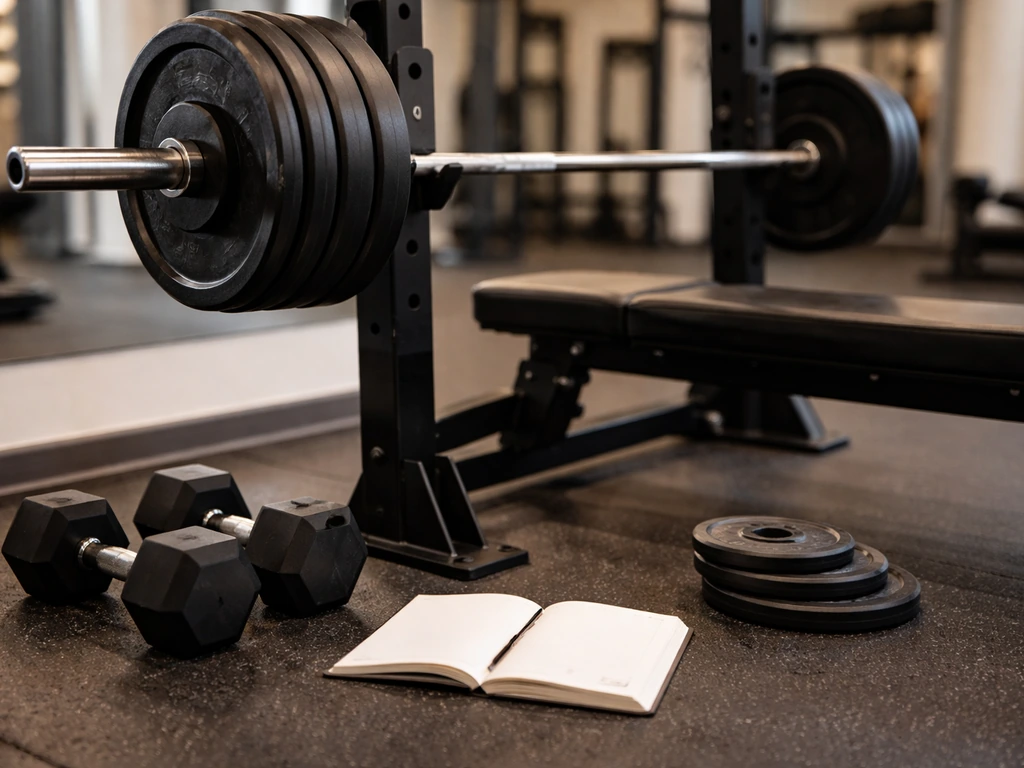
Progressive overload means your muscles are asked to do more over time. That can mean more weight, more reps, more sets, shorter rest periods, or better technique with the same load. If you're lifting the same weights you were three months ago, you're maintaining, not growing. Add small increments (2.5 to 5 lbs on compounds, 1 to 2.5 lbs on isolation moves) as soon as you can complete the top of your rep range with clean form. If you want to build both muscle size and strength simultaneously, progressive overload is the bridge between the two.
Volume: how many sets per week
Research consistently supports a dose-response relationship between weekly set volume and muscle growth. For most people and most muscle groups, something in the range of 10 to 20 hard sets per muscle per week produces solid hypertrophy. Beginners can grow well on the lower end (10 to 12 sets). Intermediate and advanced lifters typically need 15 to 20+ sets to keep progressing. Going above 20 sets can work for some, but returns diminish and recovery demand rises sharply. Start conservative, then add sets over weeks as your recovery allows.
Frequency: how often to train each muscle
Training each muscle group twice per week tends to outperform once-per-week training for hypertrophy. This doesn't mean more volume overall, just that splitting your weekly sets across two sessions (rather than cramming them into one) produces better results. A push/pull/legs split done twice per week, an upper/lower split, or a full-body program done three days a week all achieve this. The exact structure matters less than hitting each muscle at least twice with quality effort.
Intensity: how hard to train

Reps-in-reserve (RIR) is the best practical guide to training intensity. For hypertrophy, you want most sets to end within 0 to 3 reps of failure. That means if you could grind out 3 more reps, you left too much on the table. You don't have to go to absolute failure on every set, but you do need to be close. Research on proximity-to-failure shows this is one of the clearest drivers of hypertrophy outcomes. For rep ranges, anywhere from 5 to 30 reps per set can build muscle as long as you're working hard enough. Practically, 6 to 12 reps works well for most people and most movements because it balances mechanical tension with manageable fatigue.
Exercise selection
Prioritize compound movements: squats, deadlifts, bench press, overhead press, rows, and pull-ups. These give you the most mechanical tension across multiple muscle groups per set. Add isolation work (curls, lateral raises, tricep extensions, leg curls) to target muscles that the compounds don't fully load. You don't need a huge exercise library. A program with 4 to 6 core movements done consistently and progressively beats a constantly rotating menu of 20 exercises. If you don't have access to a full gym setup, you can still build muscle effectively at home with the right approach to loading and progression.
Sample weekly structure
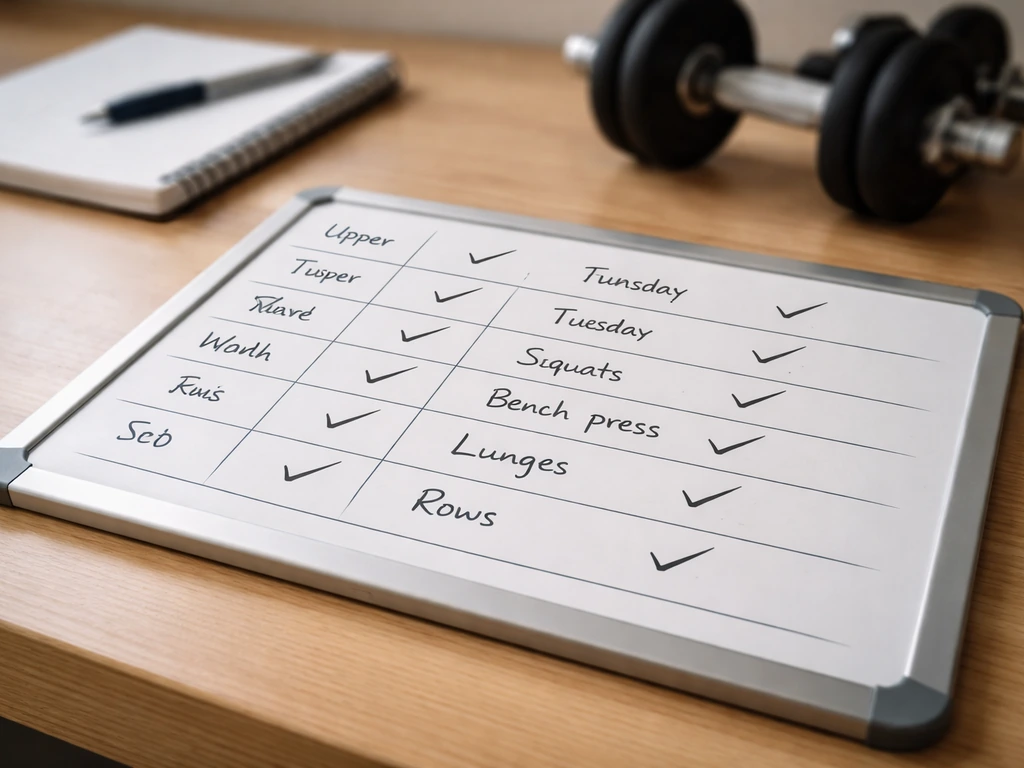
| Day | Focus | Example Movements |
|---|---|---|
| Monday | Upper (push focus) | Bench press, overhead press, tricep dips, lateral raises |
| Tuesday | Lower | Squat, Romanian deadlift, leg press, leg curl |
| Wednesday | Rest or light cardio | Walking, mobility work |
| Thursday | Upper (pull focus) | Barbell row, pull-ups, face pulls, bicep curls |
| Friday | Lower | Deadlift, Bulgarian split squat, leg extension, calf raises |
| Saturday | Optional: lagging muscles or cardio | Arms, core, or 20-min cardio |
| Sunday | Full rest | Recovery focus |
How much to eat and what to eat
Calories: the foundation
You need a calorie surplus to build muscle at a meaningful rate. A modest surplus of 200 to 400 calories above your maintenance level is the sweet spot for most people: enough to fuel growth without excessive fat gain. Aggressive bulking (1,000+ calorie surpluses) mostly just adds fat faster, not muscle faster. Estimate your maintenance calories by multiplying your bodyweight in pounds by 14 to 16 (depending on activity level), then add 250 to 300 calories. Track for two to three weeks, adjust based on the scale moving up by 0.25 to 0.5 lbs per week (beginners can aim for 0.5 to 1 lb/week).
Protein: your most important macro
Protein is where most people fall short. The evidence-backed target for maximizing muscle protein synthesis is 0.7 to 1 gram of protein per pound of bodyweight per day (or about 1.6 to 2.2 grams per kilogram). The International Society of Sports Nutrition position stand similarly recommends that exercising individuals consume about 1.4 to 2.0 g of protein per kg body weight per day to optimize training adaptations for most people 1.6 to 2.2 grams of protein per kilogram. A 180 lb person should aim for roughly 130 to 180 grams of protein daily. Go toward the higher end if you're in a calorie deficit, you're older, or you train very hard. Spread that intake across 3 to 4 meals for best utilization. Sources like chicken breast, eggs, Greek yogurt, cottage cheese, beef, fish, and whey protein are the most practical and complete.
Carbs and fats: the support crew
After hitting your protein target, fill remaining calories with carbohydrates and fats. Carbs are your primary fuel for intense resistance training. Low-carb diets aren't optimal for building muscle because they limit training performance and glycogen replenishment. Aim for at least 40 to 50% of total calories from carbohydrates, prioritizing sources like rice, oats, potatoes, fruit, and whole grains. Fats should make up around 20 to 30% of calories, and don't drop below 0.3 grams per pound of bodyweight. Fat supports hormone production, including testosterone, which matters for muscle growth.
Micronutrients worth paying attention to
Vitamin D, magnesium, and zinc all play roles in muscle function and testosterone regulation. Most people who eat a varied whole-food diet cover their bases, but if you're training hard and recovering poorly, getting bloodwork done to check vitamin D is worth it. Iron matters too, especially for women who train intensely. Creatine aside (covered below), no supplement replaces a diet built on whole foods.
Protein and nutrition timing for growth support

Timing matters less than total daily intake, but it's not completely irrelevant. The anabolic window around training isn't the razor-thin 30-minute slot you've probably heard about. Research suggests your body is sensitized to protein for several hours post-workout. That said, having a protein-containing meal within 1 to 2 hours before or after training is a practical habit that covers your bases without obsessing over the clock. Having a protein-containing meal within the time around training is supported by the ISSN position stand on nutrient timing, which discusses timing strategies as practical feeding strategies that can help recovery and adaptations protein-containing meal within 1 to 2 hours before or after training.
More important than post-workout timing is how often you're feeding your muscles throughout the day. Muscle protein synthesis responds better to 3 to 5 protein-rich meals spaced 3 to 5 hours apart than to two large meals. Practically, that means breakfast, lunch, an optional afternoon snack, and dinner, each containing 30 to 50 grams of protein. Don't skip breakfast thinking you'll make it up at dinner. Spreading intake evenly is genuinely more effective.
Pre-workout nutrition should include carbohydrates for energy and some protein. A meal of rice and chicken two hours before training, or oats and a protein shake 45 to 60 minutes before, works well. Post-workout, prioritize a complete protein source and carbohydrates to refuel muscle glycogen. A whey shake with a banana, or chicken and rice, does the job simply.
Supplements that can help naturally (what's worth it, what's not)
Most supplements are a waste of money. A small handful have consistent evidence behind them and are worth considering as additions to a solid training and nutrition foundation.
| Supplement | Evidence Level | Practical Use | Worth It? |
|---|---|---|---|
| Creatine monohydrate | Very strong | 3 to 5g daily, no loading required | Yes, definitely |
| Whey protein | Strong (as a food supplement) | Fill protein gaps, 25 to 50g per serving | Yes, if diet falls short |
| Caffeine | Moderate to strong | 3 to 6mg/kg body weight before training | Yes, use strategically |
| Vitamin D | Moderate (if deficient) | 1,000 to 2,000 IU/day if blood levels are low | Yes, if deficient |
| Beta-alanine | Moderate (for endurance reps) | 3.2 to 6.4g/day, helps with high-rep sets | Situational |
| BCAAs | Weak (if protein intake is adequate) | Redundant if you hit daily protein targets | No, not necessary |
| Testosterone boosters | Very weak to none | Most have no meaningful evidence | No |
| Fat burners / thermogenics | Weak to none | Largely marketing, not muscle builders | No |
Creatine is the single most evidence-backed natural performance supplement available. It increases phosphocreatine stores in your muscles, letting you do more reps at a given weight, which translates directly into more volume and more growth over time. Take 3 to 5 grams daily, consistently. The form that matters is creatine monohydrate. Anything fancier (Kre-Alkalyn, ethyl ester, etc.) is more expensive and not better.
Recovery essentials

Sleep is your most powerful anabolic tool
Most of your muscle repair and growth hormone release happens during sleep. Getting less than 7 hours consistently will blunt your gains more than most training mistakes. Target 7 to 9 hours. If your sleep quality is poor, that matters as much as duration. Keep a consistent sleep schedule, limit screens before bed, and keep your room cool and dark. People who chronically sleep 5 to 6 hours show measurably lower testosterone and higher cortisol, both of which work against muscle growth.
Stress management
Chronic psychological stress elevates cortisol, which suppresses protein synthesis and promotes muscle breakdown. This doesn't mean you can't train when stressed, but it does mean that life stress and training stress add up. If your work stress is maximal, your training volume might need to come down temporarily, not up. Managing stress through walks, breathing techniques, or simply not overtraining are all practical tools.
Soreness: what it means and what it doesn't
Delayed onset muscle soreness (DOMS) is not a reliable indicator of a good workout or muscle growth. You can train a muscle effectively and feel no soreness. Conversely, you can be extremely sore from doing something new or unusual without it producing better growth. Don't chase soreness. Train consistently, progressively, and with enough volume. Soreness is a side effect of novelty or high volume, not a requirement for results.
Deloading: when to back off intentionally
Every 4 to 8 weeks, consider a planned deload week where you reduce volume by 40 to 50% and keep intensity moderate. This lets your joints, connective tissue, and nervous system recover while you maintain the habit of training. Some people do this automatically because life gets busy. Others need to plan it deliberately. Signs you need a deload: persistent joint aches, motivation dropping sharply, performance declining for two or more weeks in a row, and sleep quality getting worse despite no other changes.
One legitimate way to prevent accumulated fatigue is to periodically change the stimulus your muscles experience. This is the core idea behind shocking the muscle with novel training stimuli, and it can also serve as a form of active deload when done thoughtfully by temporarily shifting to lighter loads, different angles, or different tempos.
Common mistakes and a realistic timeline for bigger muscles
Mistakes that slow natural muscle growth
- Not eating enough protein consistently (most common mistake by far)
- Training without progressive overload, cycling the same weights and reps for months
- Doing too little volume (less than 8 to 10 hard sets per muscle per week)
- Never getting close to failure, leaving 5 to 6 reps in reserve on every set
- Skipping sleep or accepting chronic 5 to 6 hour nights as normal
- Changing programs every 2 to 3 weeks before adaptations have time to accumulate
- Believing soreness equals growth and chasing it instead of tracking performance
- Over-relying on supplements while under-investing in training and nutrition basics
- Thinking natural growth is too slow and looking for shortcuts that don't exist
Realistic timelines to expect
Natural muscle growth has real speed limits. Beginners can gain 1 to 2 lbs of actual muscle per month in their first year when training and nutrition are dialed in. Intermediate lifters are looking at 0.5 to 1 lb per month. Advanced lifters might add 0.25 lbs per month. These numbers sound modest, but 12 to 15 lbs of lean muscle in your first year of serious training is a genuinely dramatic physical change. Visually noticeable differences typically appear within 6 to 8 weeks for people starting from zero, and within 4 weeks in terms of strength improvements.
Age is context, not a ceiling. Older adults build muscle more slowly and may need slightly higher protein intakes (closer to 1 gram per pound of bodyweight) and longer recovery windows between sessions. But the same mechanisms still work. Resistance training remains effective well into your 60s, 70s, and beyond. The fundamentals don't change, the dosing just requires more attention.
If you're a woman wondering whether this same framework applies to you, the answer is yes with minor differences. Women build muscle through the same physiological process. The rate of gain is somewhat lower due to lower testosterone levels, but the training and nutrition principles are identical. The approach to growing muscle as a woman follows the same progressive overload, volume, and protein targets outlined here.
What 'natural' actually means in practice
Natural muscle growth means relying on training stimulus, food, sleep, and time. There are no legitimate shortcuts outside of those four. Certain techniques can help you squeeze more out of your training, like deliberately introducing variety to prevent your muscles from adapting too fully to a predictable stimulus, but even those are built on top of solid basics, not replacements for them.
The best overall methods for muscle growth consistently come back to the same handful of variables: progressive overload, sufficient weekly volume, adequate protein, a calorie surplus, and consistent recovery. If you're looking for how to push your muscles harder to force faster adaptation, the answer is usually to get closer to failure on your working sets, add one or two sets per muscle group per week, and make sure your protein intake is genuinely hitting target every single day.
Start today with the simplest version of this plan: pick a 4-day upper/lower program, eat 0.8 to 1 gram of protein per pound of bodyweight, aim for a 200 to 300 calorie surplus, and sleep 7 to 9 hours. Add 5 lbs to your main lifts whenever you complete all your sets. Do that for 12 weeks and you'll have more muscle, more strength, and a very clear picture of which variable to tighten next.
FAQ
Do I need to go to failure on every set to grow muscles naturally?
If your goal is how to grow muscles naturally, aim for most sets to finish with 0 to 3 reps in reserve, but keep some sets slightly easier (for example 2 to 4 RIR) on your very last set of an exercise or when form starts to degrade. This reduces the chance you accumulate fatigue that slows progression over the next 1 to 2 weeks.
How do I know whether I should increase sets or increase intensity when I stop growing?
Use a simple weekly volume tracker: count “hard sets” that are within your target RIR range and stop about 1 to 2 reps before you lose technique. If you are already at 15 to 20 hard sets for a muscle group and progress stalls, first check that your intensity is close to target, then add a small amount of volume (like 1 to 2 sets) only if recovery and sleep are solid.
If I get bored, should I keep changing my exercises to keep growing naturally?
For hypertrophy, you usually do not need more exercise variation, you need more high-quality effort with progression. A practical approach is to keep 4 to 6 “stay the same” lifts for 6 to 12 weeks, then swap only 1 exercise if you are bored or if a movement causes joint pain.
What should I do if I miss my daily protein target one or two days?
If you miss your protein target occasionally, do not “make up” by overeating protein at one meal. Instead, spread the deficit across the rest of the day, aiming for 3 to 4 protein feedings total, and restart your normal pattern the next day. Consistency across weeks matters more than single meals.
How can I adjust my calorie surplus if I gain too much fat while trying to grow naturally?
If you are gaining fat faster than expected, reduce your surplus by about 100 to 200 calories, not by slashing training. A good check is whether your weekly scale gain is within your target range (about 0.25 to 0.5 lb per week for most). If weight gain is flat, increase calories slightly and reassess after 2 weeks.
Does pre- or post-workout protein timing matter more for natural muscle growth?
For meal timing, prioritize hitting your total daily protein and distributing it across 3 to 5 feedings. A helpful rule is to include 25 to 50 grams of protein at each main feeding, and for your pre or post workout, choose whichever is easier to fit consistently. Either way, you cover the “anabolic” window by day totals, not by exact minutes.
What if my workouts feel weaker even though I’m eating enough protein?
If you are not eating enough carbohydrates, you may notice your reps drop across sets even if bodyweight and protein are on track. Increase carbs around training by swapping some fats for carbs at that meal, and ensure you still keep fats within your target range. This often improves training quality, which then drives growth.
How should I adjust RIR if my strength is going down during a “bulking” phase?
Your RIR target is best judged by performance, not by how “hard” a set feels. If your reps at a given weight are trending down for 2 or more weeks, you might be too far from failure some weeks, or your total volume might be too high for your recovery capacity. Adjust one variable at a time.
How do I decide when to deload, and how long should it last?
A deload is especially useful when training stress stacks up, but it is not only for heavy lifters. If you feel persistent joint aches, your sleep worsens, or your performance is declining for 2 weeks, cut weekly sets by 40 to 50% and keep loads moderate, then reassess after 7 days.
Does creatine timing matter, and what if it upsets my stomach?
Creatine monohydrate is the practical choice, 3 to 5 g daily, and timing is not critical. If you are sensitive to stomach upset, split the dose into 2 smaller servings (for example 2 g morning, 3 g evening) and take with food.
What are the most common reasons people are not gaining muscle naturally despite following a workout plan?
If you are training hard but not gaining, check the boring inputs first: actual calorie surplus, daily protein grams, and whether weekly hard sets are truly within 10 to 20 for that muscle group. Then check sleep quantity and stress level, because chronic short sleep often makes both appetite and recovery inconsistent.
How can I grow muscles naturally at home if I cannot add weight easily?
You can still grow without a gym, as long as you can progressively overload. The practical limitation is load availability, so use options like adding reps, using slower tempos, increasing range of motion, or using resistance bands and adjustable weights to keep adding difficulty over time.