You can help your dog build lean muscle by combining progressive exercise, a high-protein diet, and adequate recovery time. The basic biology is the same as it is in humans: your dog's muscles grow when a training stimulus breaks down muscle fibers, protein supplies the amino acids to repair them bigger, and rest gives the body time to do that repair. Get all three right, and you'll see real changes in 8 to 12 weeks. Skip one, and you'll spin your wheels.
How to Make Your Dog Grow Muscle: Training, Food, Recovery

Marcus Kellerman
2 May 2026
How dogs actually build muscle
Dog muscle physiology works on the same principles as human muscle physiology. Mechanical tension from resistance-style exercise triggers micro-damage to muscle fibers. The body responds by synthesizing new contractile proteins (primarily actin and myosin) to repair and reinforce those fibers, making them thicker and stronger over time. This process is called muscular hypertrophy, and it requires three things working together: a training stimulus that challenges the muscle, enough dietary protein to fuel synthesis, and recovery time for the process to complete.
One thing to set straight immediately: more exercise does not automatically mean more muscle. Endless low-intensity walking mostly builds cardiovascular fitness. True muscle growth requires resistance-style loading, activities that force muscles to work against meaningful resistance, like swimming, hill climbing, weighted pulling, or structured interval work. The stimulus has to be challenging enough to provoke adaptation.
Realistic timelines: in a healthy adult dog with good nutrition and consistent training, you can expect visible muscle changes in 8 to 12 weeks. Early weeks (1 to 3) are mostly neuromuscular adaptation. The dog gets more coordinated and efficient at the movements. Actual hypertrophy becomes visible from weeks 4 onward. Don't panic if you don't see dramatic changes at week 2. You're not doing it wrong.
Age matters here. Puppies under 12 to 18 months (or 24 months for large breeds) have open growth plates, and high-impact or heavy resistance work can damage developing bone and joints. Focus on play-based movement and coordination for young dogs. At the other end, senior dogs can absolutely build and preserve muscle, but they need more recovery time between sessions, lower-impact activities, and closer veterinary monitoring. Age is context, not a barrier.
Check your dog's starting point before you do anything else
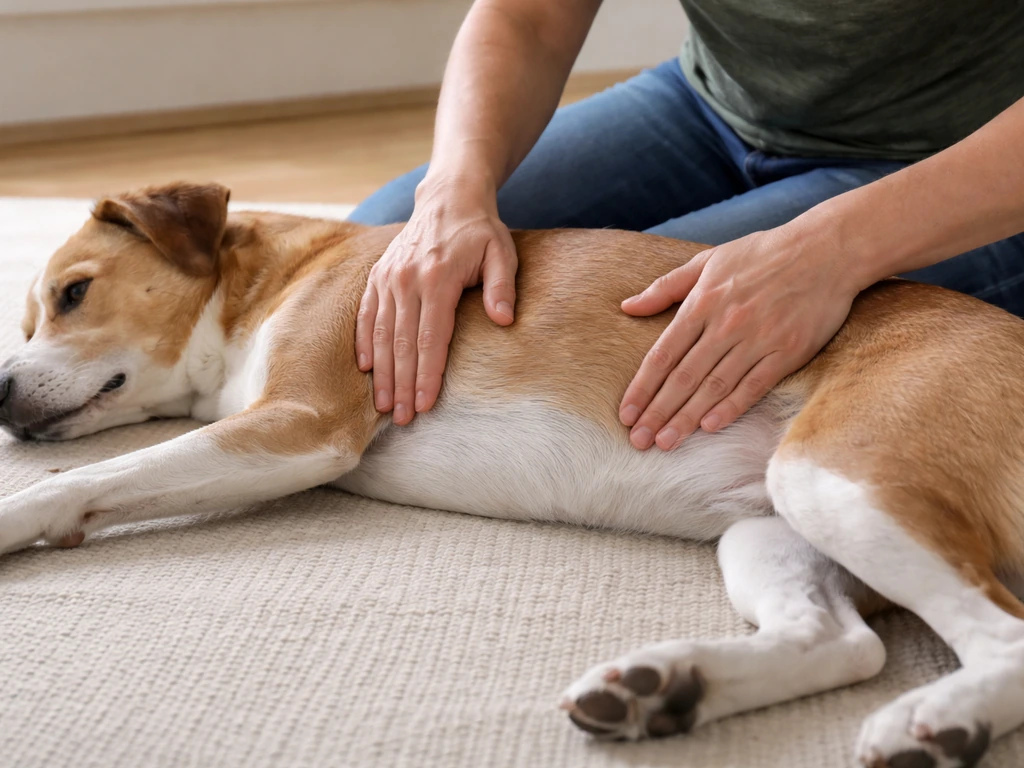
Before you change a single thing, you need a baseline. That means knowing whether your dog is currently under-muscled, over-fat, or both, because the plan looks different depending on the answer.
Use body condition scoring (BCS)
The Merck Veterinary Manual and Purina both use a 9-point body condition score (BCS) scale, where the ideal range is typically 4 to 5 out of 9. You assess BCS by looking and feeling: Can you see the ribs without pressing? Can you feel them easily with light pressure? Is there a visible waist when you look down at your dog from above? Is there an abdominal tuck when viewed from the side? Each unit above 5 on the BCS scale corresponds to roughly a 10 to 15% increase in body weight above ideal, according to Purina's BCS system. That means a dog scoring 7 or 8 is carrying significant extra fat, and the priority there is fat loss alongside muscle preservation, not pure mass gain.
BCS is more actionable than raw scale weight alone because ideal weight varies enormously between breeds. A lean German Shepherd and a lean Labrador might weigh very differently but share the same BCS. Get familiar with how your dog's ribs, waist, and hip bones feel right now. That's your baseline to track against.
Muscle condition score (MCS)
Separate from fat assessment, vets also use a muscle condition score to evaluate muscle mass directly, typically assessed by feeling the muscles over the spine, shoulders, skull, and hips. A dog can have a normal BCS (not fat) but still have significant muscle wasting, which is common in older dogs or those recovering from illness. WSAVA's Global Nutrition Guidelines include both BCS and MCS as standard nutrition assessment tools. The WSAVA Global Nutrition Guidelines explain that muscle condition score (MCS) assesses muscle, which can be affected by disease or aging, and that it is distinct from body condition score (BCS), which assesses fat stores both BCS and MCS. If your dog looks thin but also feels weak or has visible muscle hollowing over the spine, that's muscle wasting, and it may signal an underlying health issue worth investigating before starting a training program.
Health constraints to check
Before ramping up exercise intensity, think honestly about any existing joint issues, orthopedic history, heart or respiratory conditions, or metabolic diseases like hypothyroidism (which can impair muscle development). If your dog has any of these, you need vet clearance first. This isn't just liability boilerplate. Designing around a health constraint from the start produces much better outcomes than trying to manage an injury you caused by skipping this step.
Nutrition: the part most people underdo
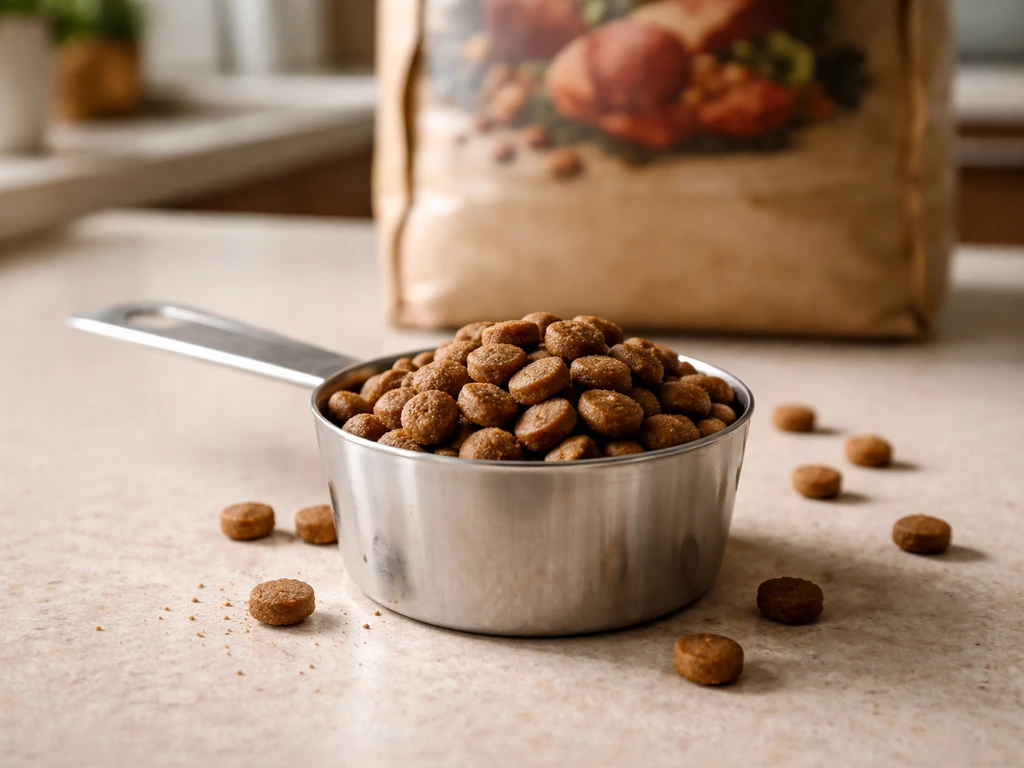
Training tells the muscle to grow. Nutrition is what it actually grows from. If the diet doesn't supply enough protein and total calories, your dog will not add meaningful muscle regardless of how good the exercise program is. This is the most common reason dog muscle-building efforts fail.
Protein targets
AAFCO's minimum for adult dog maintenance is 18% crude protein on a dry matter basis (DMB), with leucine minimums at 0. AAFCO nutrient profile tables provide minimum crude protein and leucine values on a dry matter basis for adult maintenance nutrient profiles blank" rel="noopener noreferrer">18% crude protein on a dry matter basis (DMB), with leucine minimums at 0.68% DMB. 68% DMB. But minimums are not optimal for muscle growth. Working and performance dogs generally need protein in the range of 25 to 30% DMB or higher, with quality protein sources (animal-based proteins with complete amino acid profiles) taking priority over plant-based fillers. Leucine specifically is worth noting because it's the key amino acid that triggers muscle protein synthesis, the same way it does in humans.
When reading labels, remember that the FDA clarifies AAFCO profiles are expressed on a dry matter basis, so you can't directly compare a dry kibble's protein percentage to a wet food's label percentage without accounting for moisture content. A wet food listing 10% protein might actually be 35 to 40% protein on a dry matter basis. Do the math before switching foods based on label comparisons.
Calories and energy balance
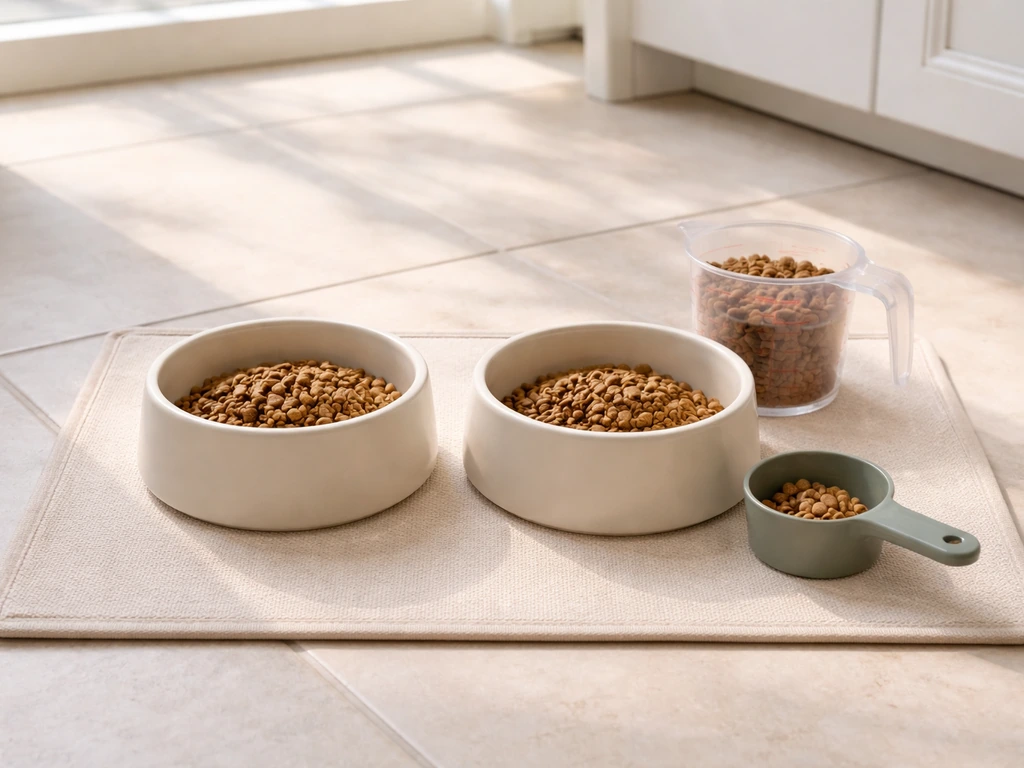
Muscle growth requires a positive energy balance, meaning your dog needs to be eating enough to support both maintenance and new tissue synthesis. WSAVA's calorie guidance uses resting energy requirement (RER) calculations based on body weight, then applies activity multipliers. A rough starting point for an active adult dog is: RER (kcal/day) = 70 x (body weight in kg)^0.75. An active dog building muscle might need 1.6 to 2.0 times that RER depending on training intensity and breed. Don't guess: weigh your dog, calculate their RER, and then bump calories up modestly (10 to 15% above maintenance) while monitoring BCS over 3 to 4 weeks.
Meal timing
Timing matters more than many owners realize. Feed your dog a protein-rich meal within 1 to 2 hours after a training session when muscle protein synthesis is most active. Don't train on a completely empty stomach (risk of low energy and poor performance) or on a very full stomach (especially for large breeds, where there's a bloat risk). Two to three smaller meals per day tends to keep amino acid availability steadier than one large meal, which supports better muscle protein synthesis across the day.
Training: how to actually drive muscle growth
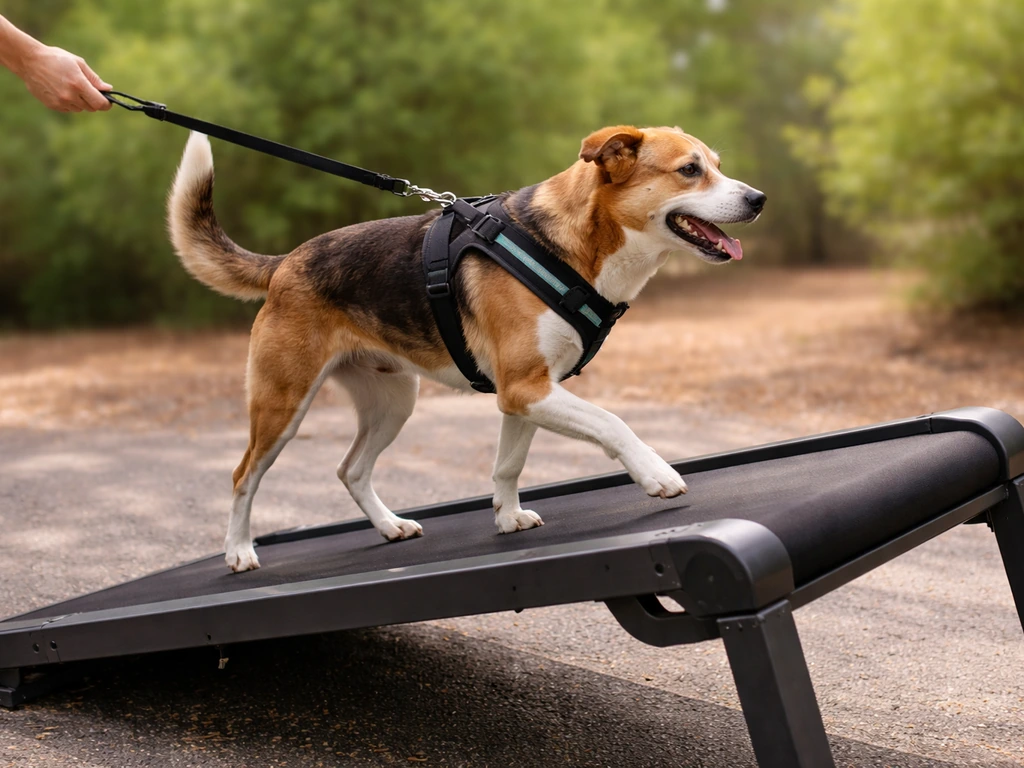
The core principle is progressive overload: the training stimulus has to keep getting more challenging as your dog adapts, or muscle growth stalls. Research confirms that repeated exercise bouts of the same intensity in dogs lead to progressively smaller physiological responses over time, meaning the same workout becomes less effective as fitness improves. You have to keep nudging the difficulty upward.
Best exercises for canine muscle building
- Swimming and water resistance work: probably the safest high-resistance option, especially for dogs with joint concerns. Water provides consistent resistance through the full range of motion without joint impact.
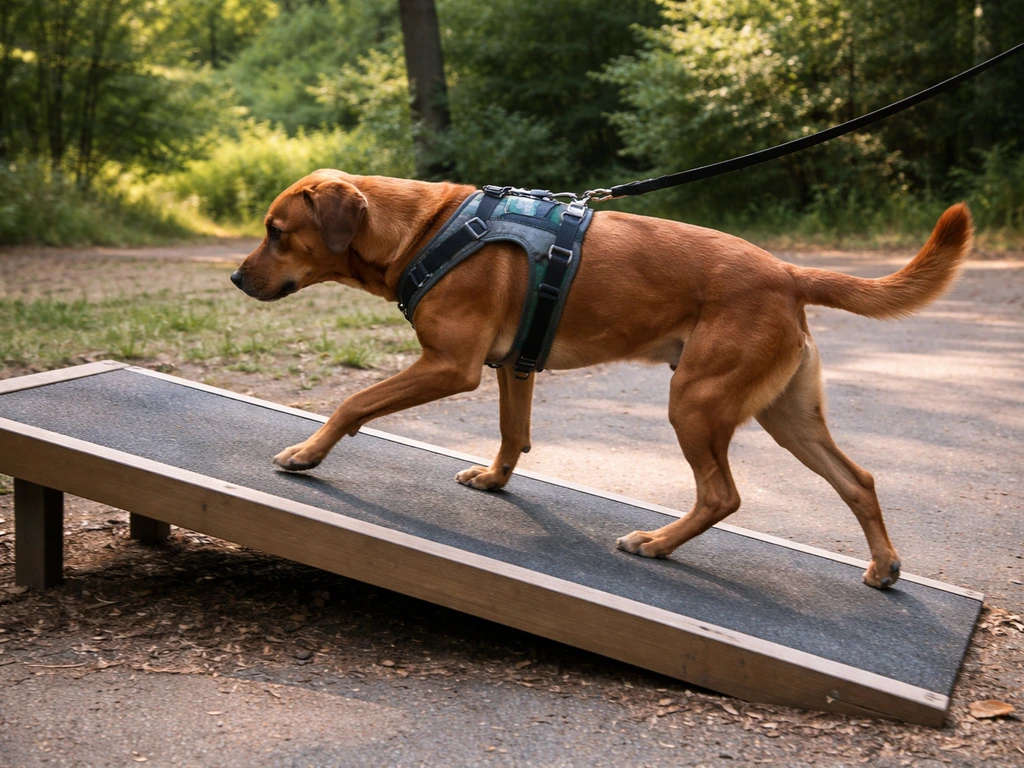
- Hill climbing and incline work: walking or trotting on hills significantly increases the muscular demand on the hindquarters and core compared to flat walking. Start with gentle inclines and build gradient over weeks.
- Weighted drag or pulling (sleds, carts, or weighted vests): excellent for breeds bred for pulling work (Huskies, Malamutes, larger breeds). Must be introduced very gradually and fitted correctly to avoid injury.
- Cavaletti poles and balance work: poles set at varying heights teach proprioception and core stability while strengthening stabilizing muscles. Great for all sizes.
- Controlled sprints and interval runs: short high-intensity bursts followed by rest periods increase metabolic stress on muscles. Keep sprint intervals short (10 to 20 seconds) with full recovery between.
- Treadmill work: useful for controlled, progressive conditioning. Cornell's vet rehab guidance recommends starting treadmill work with a veterinary rehabilitation specialist to ensure the protocol is appropriate for your dog.
A beginner-friendly weekly routine
| Day | Activity | Duration / Intensity |
|---|---|---|
| Monday | Hill walking or incline treadmill | 20–30 min, moderate pace |
| Tuesday | Rest or gentle flat walk | 15–20 min easy |
| Wednesday | Swimming or water resistance | 15–25 min |
| Thursday | Rest | Full rest or light play |
| Friday | Cavaletti poles + short sprints | 20–30 min |
| Saturday | Hill walking or pulling work (if appropriate) | 25–35 min |
| Sunday | Full rest | Recovery day |
Progress the program every 2 to 3 weeks by increasing either duration, gradient, resistance, or speed, not all at once. One variable at a time. If your dog shows stiffness, reluctance to move, or behavioural changes after a session, back the intensity down before progressing again.
Recovery: the part everyone skips
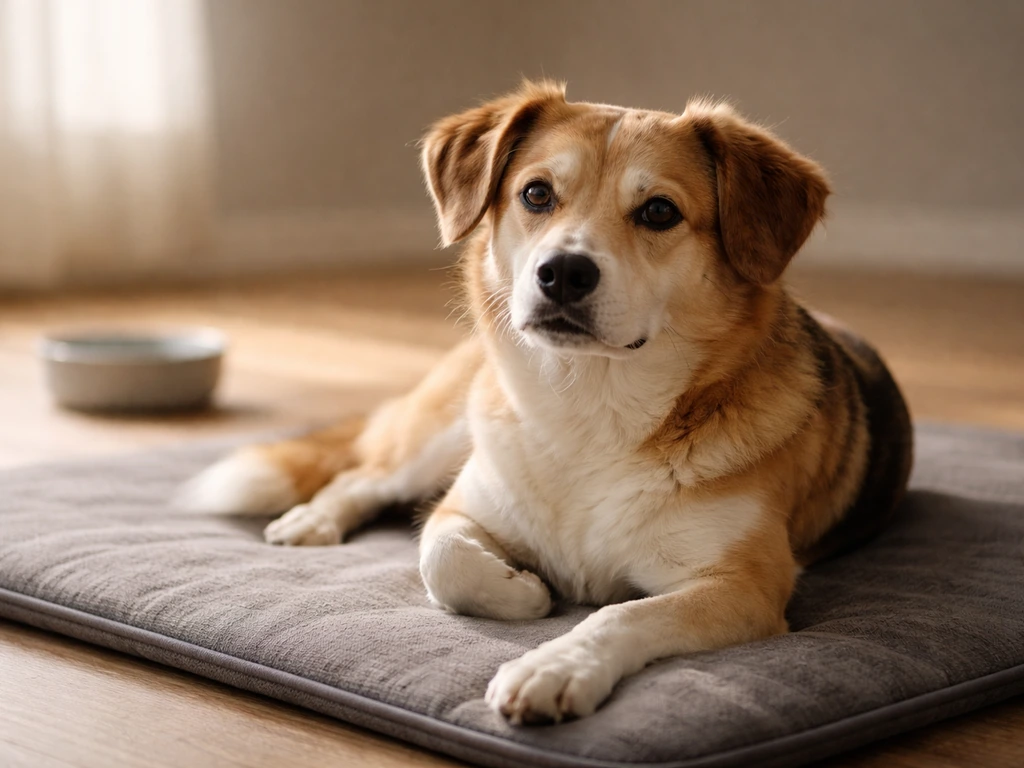
Muscles don't grow during training. They grow during recovery. Training is the signal; rest is when the adaptation actually happens. This is true for dogs just as much as it is for humans, and it's why the sample routine above includes full rest days.
Delayed onset muscle soreness (DOMS) is real in dogs, even if they can't tell you about it directly. Research shows DOMS typically appears 12 to 24 hours after unaccustomed eccentric exercise (the downhill portion of a hill walk, landing from a jump, decelerating from a sprint) and is greater with eccentric loading than concentric. Watch for stiffness, reluctance to use stairs, slower-than-normal movement, or sensitivity to touch over worked muscles in the 24 to 48 hours after a new or harder session. That's normal in small doses. Repeated severe soreness is a sign you're progressing too fast.
Sleep and downtime matter too. Working and training dogs that get adequate sleep and low-stress recovery periods between sessions adapt faster than those who are constantly activated. Make sure your dog has a comfortable, temperature-appropriate place to rest, and don't schedule hard training sessions back to back without a recovery day in between.
Injury prevention comes down to three things: a proper warm-up before intense sessions (5 minutes of easy movement), gradual load progression, and not training through pain signals. If your dog develops a limp, sudden behavioural reluctance, or visible swelling after a session, that's not soreness. That's an injury, and it warrants a vet visit.
Supplements: what's worth considering and what to skip
The supplement space for dogs is full of products making claims that aren't well-supported by evidence. Here's an honest breakdown.
Creatine
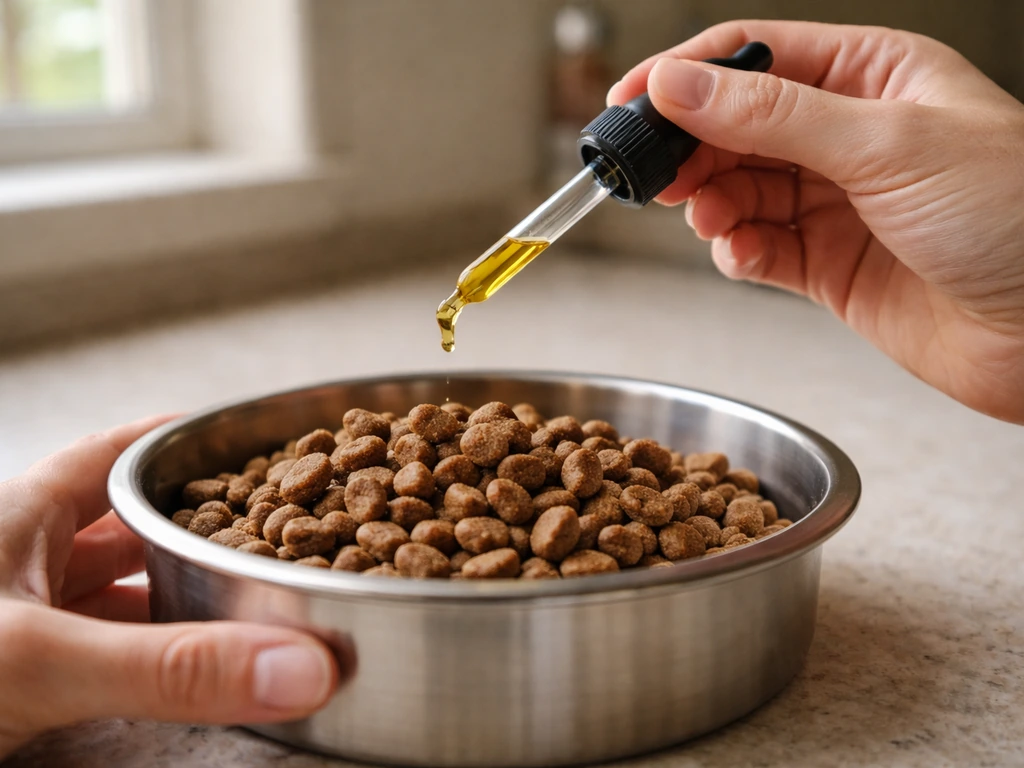
Creatine is probably the most discussed canine performance supplement. The NRC (2006) concluded there was no established evidence of benefit from creatine supplementation for exercising dogs. More recent studies have shown possible benefits, but the evidence remains mixed, not settled. One beagle study used 200 mg/kg body weight per day administered via diet and showed elevated plasma creatine concentrations peaking around 90 minutes after feeding. But elevated plasma creatine doesn't automatically translate to lean mass gains. If you're considering creatine, talk to your vet first, use conservative doses, and don't expect the dramatic results some products advertise.
Fish oil (omega-3 fatty acids)
Omega-3s, particularly EPA and DHA from fish oil, have reasonable evidence for reducing exercise-related inflammation and supporting joint health. This can indirectly support training consistency by keeping joints comfortable, which matters especially for older dogs. This is probably the most broadly useful supplement for a training dog, with a strong safety profile at appropriate doses.
Branched-chain amino acids (BCAAs) and amino acid supplements
If your dog is on a complete, high-protein diet with adequate leucine (0.68% DMB minimum, and ideally higher for performance), additional BCAA supplementation is unlikely to add meaningful benefit. Extra amino acids don't build more muscle if protein intake is already sufficient. Save your money and put it toward better food quality instead.
What to avoid
- Human anabolic supplements or prohormones: never. Hormonal interventions in dogs require veterinary prescription and monitoring. Using human products is dangerous and inappropriate.
- Unverified 'muscle builder' supplements marketed directly to pet owners without NASC (National Animal Supplement Council) or vet guidance: the regulatory oversight on these products is limited.
- Excessive protein supplementation above what a complete diet provides: more protein than the body can use doesn't build more muscle. It's just extra calories and unnecessary kidney filtration load.
- Supplements containing xylitol, artificial sweeteners, or other ingredients safe for humans but toxic to dogs: always read every ingredient on any supplement before giving it to your dog.
Track progress and work through plateaus
Progress tracking for canine muscle building is simpler than most people expect. You don't need fancy equipment. You need consistency and a few reliable markers.
What to track every 2 to 4 weeks
- Body weight on the same scale at the same time of day (ideally before feeding).
- BCS assessment using the 9-point scale, using the same palpation landmarks each time (ribs, waist, hips).
- Muscle condition score: feel over the spine, shoulders, and hips for fullness vs. hollowing.
- Performance markers: how far your dog can swim before tiring, how they handle the same hill compared to 4 weeks ago, sprint times if you're measuring them.
- Photos from the same angle (top-down and side profile) in consistent lighting. Muscle changes are often more visible in photos than they feel in the moment.
What to do when progress stalls
A plateau after 6 to 8 weeks usually means one of three things: the training stimulus hasn't progressed enough (the current workouts are no longer challenging), calories or protein intake hasn't kept pace with the dog's increased muscle mass and energy demands, or recovery is insufficient and the dog is chronically fatigued. Check each variable before assuming the approach isn't working. Increase training intensity by one variable (distance, gradient, resistance, or speed), bump food intake by 10%, and add one additional full rest day, then reassess after 3 more weeks.
If you've been consistent for 12 weeks, the nutrition looks right, the training has been progressively harder, recovery is adequate, and you're still seeing no meaningful change in muscle condition, that's the point where a vet conversation about underlying metabolic issues (thyroid function, hormonal imbalances, malabsorption) is genuinely warranted.
Safety notes and when to bring in a vet or trainer
Most healthy adult dogs can start a graduated muscle-building program with owner-led changes. But there are specific situations where professional involvement isn't optional, it's the right call.
Get vet clearance before starting if your dog
- Is a puppy under 12 months (or under 18 to 24 months for large/giant breeds) due to open growth plates.
- Is a senior dog (generally 7+ years for small breeds, 5+ years for giant breeds), where AAHA's life-stage guidelines recommend regular nutritional and exercise evaluation alongside muscle and body condition scoring.
- Has any existing orthopedic diagnosis (hip dysplasia, elbow dysplasia, cruciate injury, arthritis).
- Has a history of heart, respiratory, or metabolic disease.
- Has been significantly sedentary for an extended period and is starting from near zero fitness.
- Is showing unexplained muscle wasting that isn't explained by low protein intake or inactivity.
When to bring in a canine rehabilitation specialist
Canine rehabilitation therapists (certified veterinary rehabilitation practitioners, or CVRPs) are the dog equivalent of a physiotherapist and personal trainer combined. Cornell's vet guidance specifically recommends starting treadmill work with a rehab specialist for dogs with specific needs or profiles. If your dog is recovering from injury, is significantly deconditioned, is a senior managing joint disease, or you simply want a professionally designed program rather than a DIY approach, a rehab specialist is the most efficient path to safe, measurable progress.
For supplement decisions in senior dogs particularly, AAHA's life-stage guidelines explicitly recommend discussing supplement use with your vet rather than defaulting to general product claims. This matters more as dogs age because organ function changes how they process and tolerate certain compounds.
The bottom line is this: building muscle in your dog is a genuinely achievable goal, and the principles aren't complicated. Progressive training, sufficient protein above AAFCO minimums, modest calorie surplus, real recovery time, and consistent tracking over 8 to 12 weeks will produce results in most healthy adult dogs. Once you understand the core principles, you can apply the same lean muscle goals to yourself, too how to grow lean muscle. The principles parallel what works in human muscle building (including the emphasis on protein quality, progressive overload, and recovery that you'd apply to growing lean muscle mass in any context) and the mistakes are the same too: too little protein, too much low-intensity work, and not enough rest. The same core ideas apply if you're focused on how to grow muscle mass fast, including progressive overload, enough calories, sufficient protein, and recovery. If you want to focus on your own body instead, the same training and nutrition priorities apply to how to grow muscle and lose fat. Get those three things right, and you'll have a noticeably stronger dog by the end of summer.
FAQ
How much weight should my dog gain while building muscle (and how do I avoid turning it into fat gain)?
Aim for minimal gain, roughly 0 to 5% body weight over 8 to 12 weeks. Track by body condition score and waist/rib feel, not scale weight alone. If BCS rises by more than about 1 point, reduce calories (or training volume) before increasing protein again.
Can I build muscle if my dog is already lean and not able to gain weight easily?
Yes, but you need a surplus and good digestion. If ribs are visible and BCS is consistently below ideal, start with a small calorie surplus (about 10% above your calculated maintenance) and reassess weekly. Persistent inability to gain, loose stools, vomiting, or ravenous hunger are signs to check with a vet for malabsorption or parasite issues before assuming it is just “not enough calories.”
What kind of resistance-style work is safest for dogs that do not tolerate intense exercise?
Choose low-impact loading that still creates meaningful muscle tension, like incline hill walking at a controlled pace, swimming with gradual time increases, or controlled trotting with short, frequent intervals. Avoid jumping, heavy pulling, and hard deceleration work if your dog has joint pain or poor conditioning, and progress one variable at a time.
How do I progress a training plan if my dog is improving in stamina but not in muscle size?
That usually means the stimulus is getting easier while calories and protein stay the same. Use progressive overload by increasing resistance, gradient, or eccentric control (for example slower downhill pace without forcing speed), not just duration. Also verify feeding timing, total daily protein, and whether recovery days are truly happening.
Is it okay to use hills or treadmill work for muscle building, and what are the common mistakes?
It can work well, but the common mistake is doing the same grade and speed repeatedly without escalating load. Another mistake is skipping warm-up and doing long sessions too soon, which increases DOMS or injury risk. Start with short sessions, warm up first, and increase either incline or time every 2 to 3 weeks.
How often should I train the “muscle building” workouts per week?
For most dogs, 3 to 4 harder sessions per week with full rest or very easy movement days in between is a good starting structure. If your dog shows repeated stiffness, altered gait, or reduced enthusiasm for 48 hours after sessions, decrease frequency or total load rather than pushing through.
Do I need to train every muscle group, or is focusing on one area enough?
Full-body work usually produces better overall muscle gain, because dogs use multiple muscle chains and need balanced development for joint stability. If you focus on only one area, you can create asymmetries that show up as uneven gait or soreness. A simple approach is to rotate between incline work, swimming or rear-end engagement, and pulling or interval work while keeping the same progressive overload rules.
What should I do if my dog gets severe DOMS or seems reluctant to move after a new workout?
If it is mild stiffness that improves over 24 to 48 hours, you can keep going at a reduced dose. If the dog is limping, has swelling, makes a clear pain response, or avoids weight-bearing, that is not typical soreness. Stop the program and contact a vet, then resume only after getting a safe return-to-exercise plan.
How important is protein timing, and what if my dog eats late or refuses food after training?
Timing helps, but it is not the only factor. Aim to feed within 1 to 2 hours post-session when possible, but if your dog refuses food or vomits, adjust meal size and training intensity. Sometimes smaller training, shorter sessions, or feeding before training by a few hours works better than forcing a meal immediately after.
How do I know whether BCS changes are due to water retention, fat gain, or true muscle gain?
Use a combination of measurements: BCS/rib feel, visible waist from above, and muscle firmness over the spine and hips. If weight jumps but ribs and waist worsen quickly, it is likely fat or water. True muscle gain tends to show gradual changes over weeks with improved muscle condition and stable or slowly changing BCS.
Should I use creatine, amino acids (BCAA), or rely on food instead?
If your dog is already on a complete, high-protein diet with adequate leucine, extra BCAA is usually unnecessary. Creatine has mixed evidence for lean-mass outcomes and should be discussed with your vet first, especially for dogs with kidney issues or on medications. For most dogs, the highest-return “supplement” is improving diet protein quality and ensuring adequate total calories.
Why is my dog eating enough but still not building muscle, and what are the most common hidden causes?
Common causes include insufficient total daily calories, protein that is below performance needs, inconsistent training intensity (no real progression), and inadequate recovery time. Less obvious causes include parasites, chronic GI problems, thyroid or hormonal issues, and medications that affect appetite or metabolism. If there is no meaningful improvement after consistent effort for 12 weeks, it is time for vet-guided investigation.
When do I need professional help instead of continuing DIY muscle training?
Get professional input if your dog has orthopedic history, joint disease, heart or respiratory limitations, persistent muscle wasting, or you see signs of injury or neurologic problems. A canine rehab specialist (CVRP) is also especially helpful for deconditioned dogs, senior dogs with pain, and anyone needing a measurable, safe progression plan.