Ashwagandha can modestly support muscle strength and recovery when combined with consistent resistance training, but it won't build muscle on its own. The research shows real but small-to-moderate effects: a 2026 meta-analysis pooling 223 participants found a standardized mean difference of 0.58 for muscle strength (95% CI 0.12–1.04), which is statistically meaningful but rated low certainty due to small trial sizes and variability between studies. Think of it as a potential edge, not a shortcut.
Does Ashwagandha Grow Muscle? Evidence, Dosing, and Safety

Marcus Kellerman
27 May 2026
What the human evidence actually shows
The studies on ashwagandha and muscle are more credible than most supplement research, mostly because several of them are randomized, double-blind, placebo-controlled trials, which is the gold standard. Here's a quick rundown of what they actually found.
One well-cited 8-week trial put 57 young men through a resistance training program while half took 300 mg of ashwagandha root extract twice daily (600 mg total). The ashwagandha group saw significantly greater gains in bench press and leg extension 1RM, larger increases in arm, thigh, and chest size, and lower creatine kinase levels (a marker of muscle damage and recovery stress) compared to the placebo group. A separate 12-week trial using the branded Sensoril extract (500 mg/day) in recreationally active men reported similar improvements in upper- and lower-body strength plus better perceived recovery. An 8-week KSM-66 study also found gains in 1RM strength, muscle size, and VO2max.
A Bayesian meta-analysis of available physical-performance trials confirmed a pooled effect favoring ashwagandha on strength and recovery outcomes, while acknowledging the usual caveats: trials are small, extracts and doses vary across studies, and most participants are young men. The 2026 meta-analysis (the most recent and comprehensive as of now) confirmed those findings with a moderate effect size but graded the overall evidence as low certainty, meaning we can be cautiously optimistic but not definitive.
The honest interpretation: ashwagandha probably contributes something real to strength and recovery when you're already training hard. The gains won't be dramatic, but they're consistently positive across multiple well-designed studies. That's more than most supplements can claim.
How it might actually work
There's no single proven mechanism, but there are a few plausible pathways that the research touches on. None of them involve ashwagandha directly triggering muscle protein synthesis the way mechanical tension and amino acids do, so it's not operating like a hormone or a direct anabolic agent.
Cortisol reduction
This is probably the strongest mechanistic story. A 60-day randomized controlled trial found a statistically significant roughly 23% reduction in cortisol levels in the ashwagandha group versus placebo. Chronically elevated cortisol is catabolic, meaning it works against muscle growth by increasing protein breakdown and suppressing anabolic signaling. If you're training hard, stressed at work, sleeping poorly, or all three, high cortisol can genuinely blunt your gains. Bringing cortisol down through ashwagandha could help your training environment become more anabolic, which would explain the recovery improvements seen in trials.
Testosterone and DHEA-S
A 16-week crossover study in aging overweight men found no significant between-group difference for cortisol, fatigue, or vigor in that particular population, but did observe favorable changes in DHEA-S and testosterone outcomes for the ashwagandha group. Other trials have reported modest testosterone increases as well. The effect is real but not dramatic, and it seems more relevant in men with lower baseline testosterone (like older or chronically stressed men) than in young men already in a healthy hormonal range. Don't expect it to behave like a testosterone booster in the way some marketing implies.
Sleep and recovery quality
Ashwagandha has shown consistent effects on stress and sleep quality in multiple trials. Better sleep is one of the most underrated drivers of muscle recovery and growth hormone release. If ashwagandha helps you sleep deeper and recover faster between sessions, that has real downstream effects on how much you can train and how well you adapt to it. The lower creatine kinase levels seen in the 8-week resistance training trial suggest it may reduce training-induced muscle damage or speed up repair. If you're wondering does BCaaas grow muscle, it's important to separate what directly supports training adaptation from what may only help recovery lower creatine kinase levels.
What's probably hype
Claims that ashwagandha directly increases muscle protein synthesis or activates mTOR the way leucine-rich protein does are not supported by human evidence. It's also not going to compensate for under-eating, under-training, or poor sleep habits. The mechanism is more likely indirect: less stress, better recovery, slightly better hormonal environment. That's useful but modest.
How to actually take it if you want to try it
If you've decided to run a personal trial, here's how to do it in a way that mirrors what the research actually used.
Dose
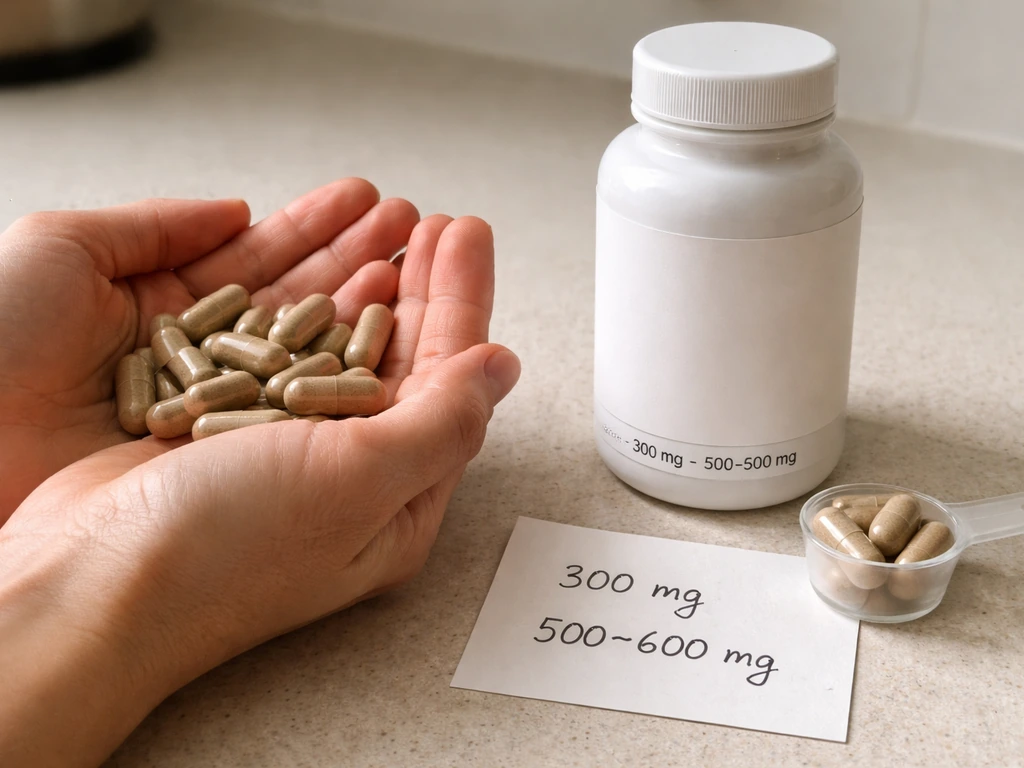
The most commonly studied doses are 300 mg twice daily (600 mg total) or 500–600 mg once daily, using standardized root extracts like KSM-66 or Sensoril. Both approaches have worked in trials. Stick to a product that clearly states the extract type and standardization (usually withanolide content), not just raw powder.
Timing
Take it with food to reduce the chance of GI discomfort. If you're splitting the dose, morning and evening works well. If you're taking a single daily dose, evening is a reasonable choice given ashwagandha's reported effects on sleep quality and stress reduction.
Trial duration
Run it for at least 8 weeks, since that's the minimum duration used in the strength trials that showed results. Twelve weeks gives you a cleaner signal. Anything shorter makes it hard to tell if the supplement is doing anything.
What to track
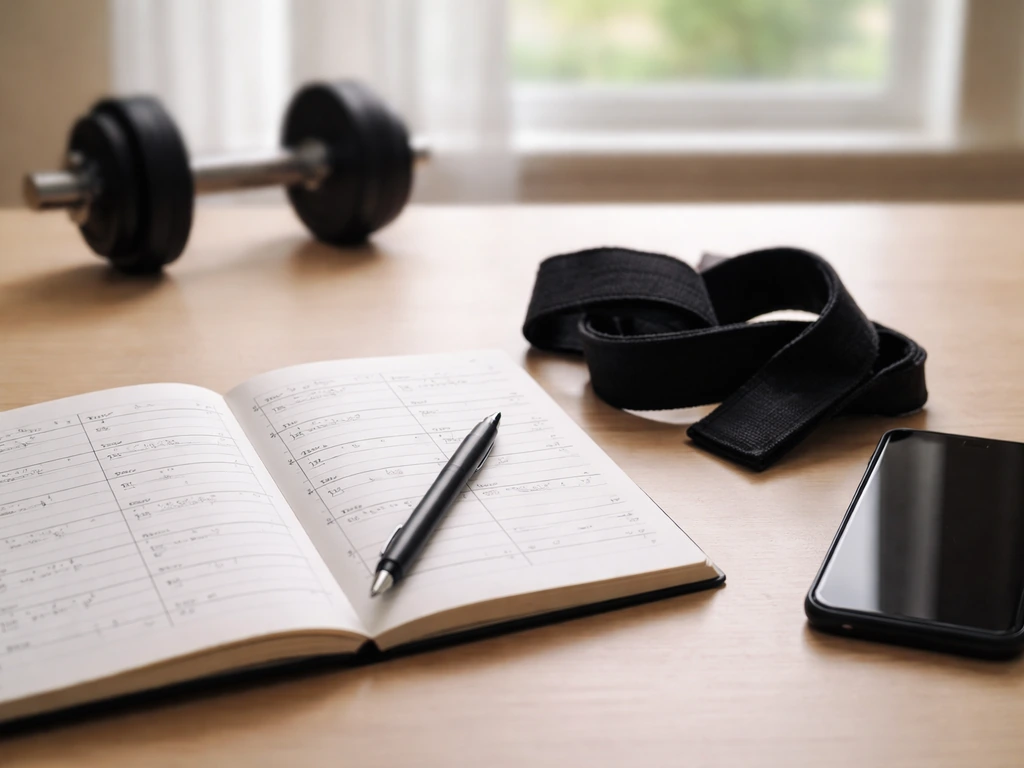
- Log your 1RM or estimated max on key lifts (bench press, squat, deadlift, leg press) at the start and end of the trial
- Track subjective recovery: how sore are you between sessions, how rested do you feel on training days, on a simple 1–10 scale
- Note sleep quality using a wearable or a simple journal rating
- Keep training volume, protein intake, and calories consistent so you're isolating the variable
If your lifts go up more than expected, your recovery feels noticeably better, and your sleep improves, it's probably working for you. If you notice nothing after 10–12 weeks, you've got your answer: skip it and spend that money on food.
Where ashwagandha fits in the bigger picture
This is worth being blunt about: the fundamentals of muscle growth are not optional, and ashwagandha is. Training with progressive overload, eating enough protein, being in at least a maintenance calorie intake, and sleeping 7–9 hours are the actual drivers of hypertrophy. Whether your waist grows when you gain muscle is often a water, fat, and posture question, so check that before judging changes on the scale or in photos does your waist grow when you gain muscle. If your goal is muscle gain, you can think of supplements as at most a small edge over the training stimulus that ultimately answers does pilates grow muscle. The research on protein is clear: somewhere in the range of 1.4–2.0 g of protein per kg of bodyweight daily is where the muscle-building evidence sits, with gains from additional protein tapering off above roughly 1.6 g/kg/day. No ashwagandha study has ever produced strength or size gains close to what consistent resistance training alone produces. In contrast, peptides are a different category, and you do not typically see reliable muscle-building from them without solid training and adequate nutrition.
Think about it this way: if you're training 3–4 days per week, hitting 1.6–2.0 g protein/kg/day, eating enough calories, and sleeping well, ashwagandha might give you a small additional edge on recovery and strength. If you're training inconsistently, under-eating protein, or sleeping 5–6 hours a night, ashwagandha will not plug those holes. It's a potential multiplier for a solid foundation, not a replacement for one.
Compare this to something like whey protein, which directly provides the amino acids muscle tissue is built from, or creatine, which has decades of strong evidence behind it. If you're wondering whether whey protein can directly grow muscle, the answer depends on how it fits your overall protein intake and training does whey protein grow muscle. Ashwagandha's place is more in the recovery and stress-management category. If you already have your training, nutrition, and sleep dialed in, it's a reasonable next-tier addition.
Who should actually consider it (and who probably shouldn't bother)
Ashwagandha isn't equally useful for everyone. It's worth thinking about where you are before deciding whether to try it.
| Who you are | Is it worth trying? | Why |
|---|---|---|
| Chronically stressed lifter (high-stress job, poor sleep, elevated cortisol) | Yes, worth a trial | Stress/cortisol reduction is ashwagandha's strongest evidence base; recovery improvements are plausible |
| Older adult (40s–60s+) with declining testosterone or DHEA-S | Yes, worth a trial | Hormonal benefits appear more relevant in men with lower baseline testosterone; recovery support matters more at this age |
| Beginner resistance trainee | Maybe, low priority | Beginner gains from training are so large that a supplement edge is barely noticeable; focus on the basics first |
| Advanced lifter, low stress, good sleep | Low priority | If your recovery and hormones are already optimized, the marginal effect is likely small |
| Someone under-eating protein or training inconsistently | Skip it for now | Fix nutrition and training first; ashwagandha can't compensate for those gaps |
Older adults are actually one of the more interesting use cases. Muscle loss with aging (sarcopenia) is driven partly by declining testosterone, higher baseline cortisol, and reduced recovery capacity. Ashwagandha's documented effects on cortisol, DHEA-S, and testosterone are most meaningful in people where those hormones are already trending lower. If you're in your 50s or 60s, training consistently but finding recovery sluggish or strength gains stalling, it's a reasonable low-risk trial.
Safety, side effects, and who should avoid it
Ashwagandha is generally well-tolerated in healthy adults at research doses (300–600 mg/day of standardized extract). The most commonly reported side effects are mild GI discomfort, nausea, or loose stools, usually manageable by taking it with food.
The more serious concern is liver injury. Case series from Iceland and the U.S. Drug-Induced Liver Injury Network have documented cases of ashwagandha-associated liver damage, typically with a cholestatic or mixed pattern. The NIH Office of Dietary Supplements notes five reported cases in people taking roughly 450–1,350 mg/day over one week to four months. These cases appear rare, but they're not theoretical. If you notice yellowing of the skin or eyes, dark urine, or persistent fatigue and abdominal pain while taking ashwagandha, stop immediately and see a doctor.
Beyond liver risk, there are specific groups who should avoid ashwagandha entirely or only use it under medical supervision.
- Pregnant or breastfeeding women: 2024 guidance from multiple health authorities recommends against use; ashwagandha has traditional associations with uterine stimulation
- People with autoimmune conditions (rheumatoid arthritis, lupus, multiple sclerosis, Hashimoto's): ashwagandha may stimulate immune activity, which could worsen these conditions
- People with thyroid disorders or taking thyroid medications: ashwagandha may affect thyroid hormone levels and interact with treatment
- Anyone pre-surgery: NCCIH advises against use before surgery due to potential interactions with anesthesia and sedation
- People taking sedatives, anti-seizure medications, immunosuppressants, blood pressure medications, or diabetes medications: possible interactions mean you should check with a prescriber first
If none of those apply to you and your liver health is normal, a standard 8–12 week trial at 300–600 mg/day of a standardized extract is a reasonable, low-risk experiment. Just don't exceed the doses used in research, stick to reputable third-party-tested brands, and pay attention to how your body responds.
FAQ
If I’m not already lifting weights, will ashwagandha still help me grow muscle?
Not reliably. The benefits seen in trials show up alongside consistent resistance training, usually over at least 8 weeks. If you are not progressing your training and calories, ashwagandha is unlikely to create the training stimulus your body needs for hypertrophy.
Does ashwagandha increase testosterone enough to cause muscle gain?
Usually the effect, when it appears, is modest and more noticeable in people with lower baseline hormone status (for example, older or chronically stressed individuals). It is not a substitute for proven muscle-building drivers, and you should not expect it to behave like a strong hormone replacement.
Which extract matters more, KSM-66 or Sensoril, for strength and muscle size?
Both have shown improvements in controlled studies, but they are not interchangeable with generic “ashwagandha powder” products. Choose a brand that clearly states the extract type and standardization (for example, stated withanolide content), because dose equivalence by mg of raw root is not reliable.
What’s the best time to take ashwagandha if my main goal is recovery?
A common approach is taking one dose in the evening, since sleep and perceived recovery tend to improve in studies. If your product is dosed twice daily, morning plus evening often matches the trial-style schedule and can reduce the chance of GI upset.
Will ashwagandha make my workouts better immediately, or does it only work over weeks?
The more meaningful outcomes in the research are strength and muscle size changes measured after weeks of training. You may feel changes in stress, sleep, or soreness sooner, but treat those as supportive signs rather than evidence that muscle growth is “kicking in” immediately.
How should I track whether it’s working for me without fooling myself?
Use a simple pre-defined check: keep the same training plan, log sleep quality and soreness, and compare 1RM or rep targets after 8 to 12 weeks. If sleep improves but strength stays flat, the supplement may be helping recovery but not enough to change performance, or the training stimulus may be insufficient.
Does ashwagandha replace creatine or whey protein?
No. Creatine supports strength and training capacity through well-established mechanisms, and whey helps you hit protein targets consistently. Ashwagandha is more of a recovery and stress-management add-on, so you will still want adequate protein, calories, and progressive overload.
Should I take ashwagandha with food, and does it affect absorption?
Taking it with food is commonly used to reduce GI discomfort, and it can improve tolerability. If you get nausea or loose stools, try taking the dose with a meal, splitting it, or switching to the single daily evening approach if sleep is your priority.
What would be a reasonable “stop” point if I don’t notice results?
If you do not see any improvement in training recovery or performance after about 10 to 12 weeks, it is reasonable to stop and reallocate the budget. If you are inconsistent with calories, protein, or sleep, fix those first before concluding ashwagandha is not working.
Is it safe to take ashwagandha if I have liver issues or abnormal liver labs?
If you have any history of liver disease or abnormal liver enzymes, avoid self-experimenting. Since rare cases of cholestatic or mixed liver injury have been reported, discuss it with a clinician and consider baseline liver tests if you are cleared to try it.
Who should avoid ashwagandha or use it only with medical supervision?
People who are pregnant or breastfeeding should avoid it due to insufficient safety data. Also use extra caution or medical supervision if you have known liver problems, are taking medications that affect the immune system or liver, or have a medical condition where hormonal changes could be relevant.
What side effects should prompt me to stop ashwagandha right away?
Stop immediately and get medical care if you develop yellow skin or eyes (jaundice), dark urine, persistent unusual fatigue, or abdominal pain. Mild GI symptoms can sometimes be improved by taking it with food, but liver-related symptoms should be treated as urgent.