Yes, meat genuinely helps you build muscle, and here's why: it's one of the most efficient ways to hit the daily protein target your body needs to actually grow. But meat doesn't cause muscle growth on its own. The real drivers are resistance training, total daily protein across all meals, and consistent recovery. Meat just happens to make hitting those targets easier for most people.
Does Meat Help You Grow Muscle? Evidence and How to Use It

Marcus Kellerman
27 May 2026

What 'helps you grow' actually means for muscle
Muscle growth (hypertrophy) happens when muscle protein synthesis outpaces muscle protein breakdown over time. Training creates the stimulus by applying mechanical tension to muscle fibers, which signals the body to repair and build those fibers back thicker and stronger. Protein provides the raw material, specifically amino acids, that the body uses to actually build new muscle tissue. Without sufficient training stimulus, extra protein doesn't magically build muscle. Without sufficient protein, your training stimulus goes partially wasted because the body doesn't have the building blocks to complete the repair. Both levers have to be pulled.
This is why the question isn't really 'does meat build muscle?' It's 'does meat help me hit my protein needs?' And in most cases, the answer is yes, very effectively.
What meat actually brings to the table for muscle growth
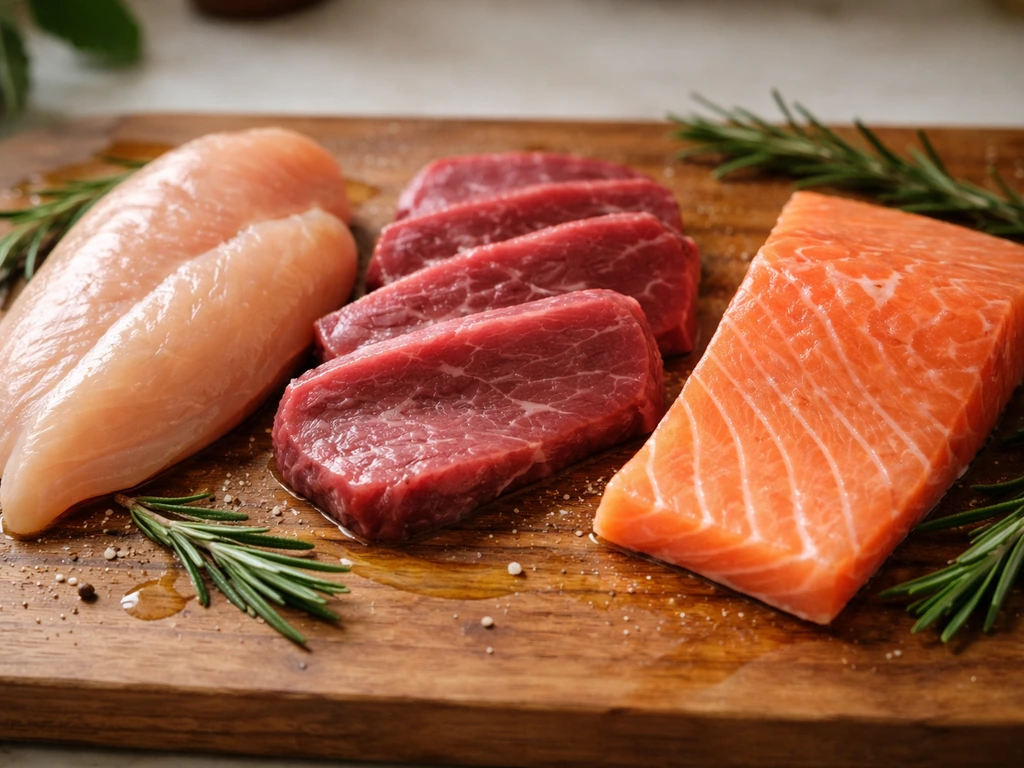
Meat is a complete protein source, meaning it contains all nine essential amino acids in useful amounts. That matters because your body can't synthesize essential amino acids on its own. Among those, leucine is the one that most directly triggers muscle protein synthesis through the mTOR signaling pathway. Animal meats, whether chicken breast, beef, pork, or fish, tend to be high in leucine relative to their total protein content. A 200g (roughly 7 oz) chicken breast delivers around 40–45g of protein with leucine content well above the threshold needed to maximally stimulate MPS in a single sitting.
Beyond protein, meat provides calories, which matter especially if you're trying to build muscle while in a calorie surplus. It also delivers creatine (found naturally in red meat and fish), zinc, iron, and B12, all of which support energy metabolism and recovery. You're not just getting protein when you eat meat, you're getting a supporting cast of nutrients that contribute to performance.
How much protein you actually need to build muscle
For most people doing resistance training, the International Society of Sports Nutrition puts the effective range at 1.4 to 2.0 grams of protein per kilogram of body weight per day. A 2018 meta-analysis by Morton et al. found that gains in lean mass plateaued around 1.6 g/kg/day in a large dose-response analysis, meaning going much higher than that didn't produce meaningfully more muscle. That doesn't mean 1.6 is a hard ceiling for everyone, especially older adults, but it does mean you don't need to eat a pound of steak every day to grow.
| Body Weight | Minimum Target (1.4 g/kg) | Practical Target (1.6 g/kg) | Upper Range (2.0 g/kg) |
|---|---|---|---|
| 60 kg (132 lb) | 84 g/day | 96 g/day | 120 g/day |
| 75 kg (165 lb) | 105 g/day | 120 g/day | 150 g/day |
| 90 kg (198 lb) | 126 g/day | 144 g/day | 180 g/day |
| 110 kg (242 lb) | 154 g/day | 176 g/day | 220 g/day |
These numbers are achievable without eating meat at every meal, but meat makes them easier to hit because of its high protein density. A 150g (5 oz) lean beef or chicken portion gives you roughly 35–40g of protein with relatively little filler.
Meat vs other protein sources: does it have to be meat?
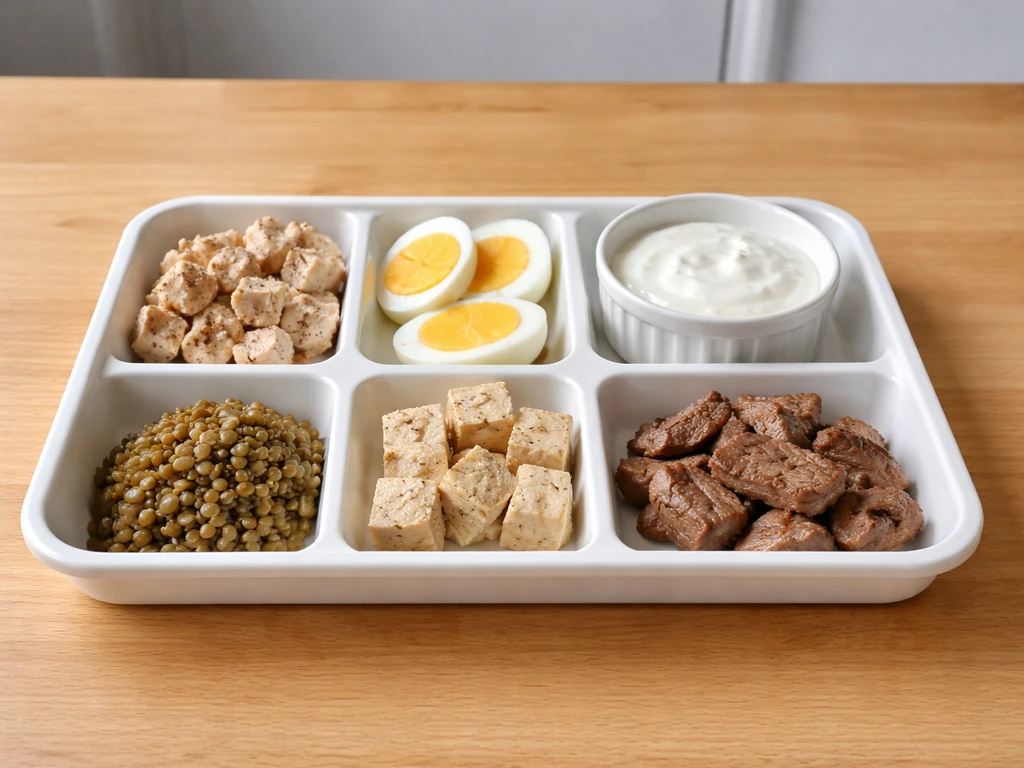
No, you don't need meat specifically to build muscle. Spinach is unlikely to grow significant muscle on its own, but it can still support your overall nutrition as part of a muscle-building diet. What you need is sufficient total daily protein from high-quality sources. Dairy (Greek yogurt, cottage cheese, whey protein) and eggs are also complete proteins with strong leucine profiles and are well-supported by research for MPS. The honest comparison between animal and plant proteins is that animal sources tend to be more leucine-dense and better absorbed gram-for-gram, but plant proteins absolutely work when consumed in adequate amounts and with enough variety.
| Protein Source | Protein per 100g | Complete Protein? | Leucine Content | Practical Notes |
|---|---|---|---|---|
| Chicken breast (cooked) | ~31g | Yes | High (~2.4g per 100g) | Lean, affordable, versatile |
| Lean beef (cooked) | ~26g | Yes | High (~2.0g per 100g) | Also provides creatine, zinc, B12 |
| Whey protein (powder) | ~75–80g | Yes | Very high (~8–10g per 100g powder) | Fast-absorbing, convenient |
| Greek yogurt (0% fat) | ~10g | Yes | Moderate | Great snack or meal addition |
| Eggs (whole) | ~13g | Yes | High | Cheap, nutrient-dense |
| Tofu (firm) | ~8–10g | Mostly complete | Low-moderate | Works well combined with other plant sources |
| Lentils (cooked) | ~9g | Incomplete | Low | Needs combining; higher carbs |
If you're vegetarian or largely plant-based, you can absolutely build muscle, but you need to be intentional about hitting your daily protein target and covering leucine-rich sources like dairy, eggs, soy, or leucine-fortified plant proteins. The idea that plant protein 'doesn't work' is a myth, but the idea that it's equally convenient gram-for-gram is also not quite right.
How to structure meals to maximize muscle protein synthesis
Total daily protein is the most important variable, but how you distribute it across meals does matter. ISSN nutrient timing research suggests that spreading protein intake in doses of roughly 20–40 grams every 3–4 hours tends to support muscle protein synthesis better than the same total amount consumed unevenly. Think 3–5 meals or protein-containing eating occasions spread through the day rather than skipping protein all day and eating one giant steak at dinner.
For most people eating around 120–150g of protein per day, that works out to roughly 30–40g per meal across 3–4 meals. A chicken breast, a palm-sized piece of salmon, or 200g of Greek yogurt with added protein all fit this range well. You don't need to be obsessively precise, but you also don't want 80% of your protein hitting your system in a two-hour window.
- Aim for at least 3 protein-containing meals spread across the day
- Target 30–40g of protein per main meal if possible
- Don't skip protein at breakfast, it's a common gap that tanks daily totals
- Post-workout protein within a couple of hours is useful but the 'anabolic window' is wider than the old 30-minute myth suggested
- A protein-rich snack before bed (like cottage cheese) can support overnight muscle protein synthesis, particularly relevant for older adults
Bulking vs cutting: using meat without blowing your calorie budget
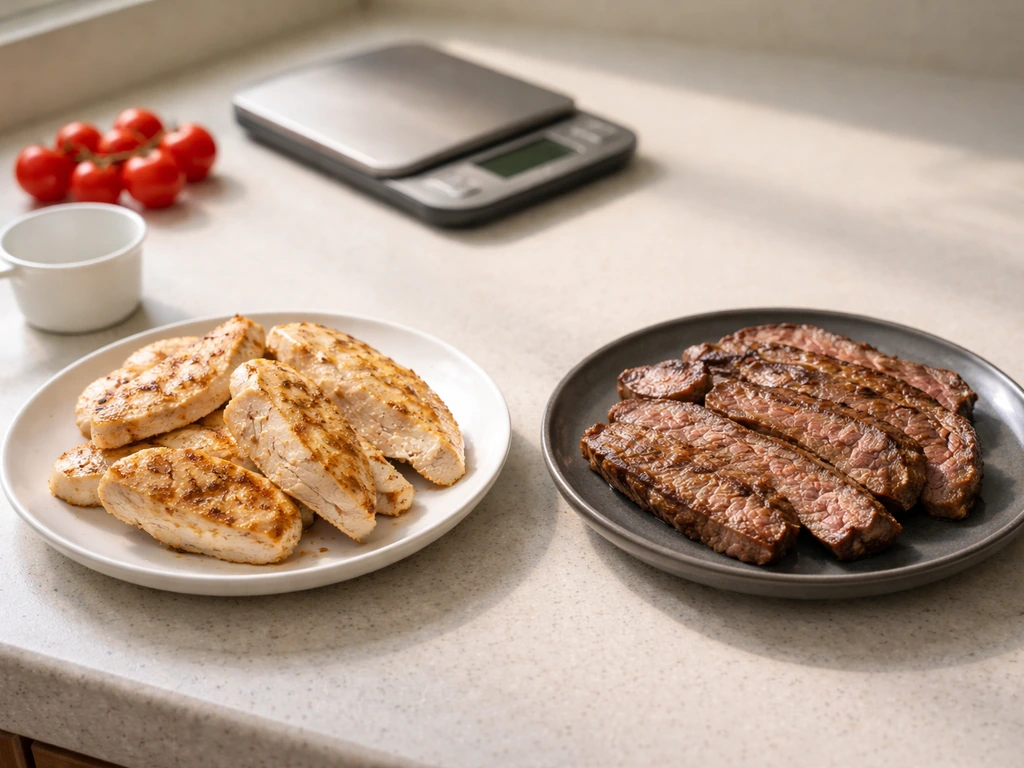
If you're in a muscle-building phase (bulk), you need a modest calorie surplus, typically 200–400 calories above maintenance. Fattier cuts of meat like ribeye, lamb, or regular ground beef contribute significantly more calories, which can help if you're struggling to eat enough. A 200g serving of 80/20 ground beef delivers around 450–500 calories and 40g of protein. That's efficient for a bulk.
If you're cutting or maintaining, lean meats are your friend. Chicken breast, turkey, white fish like cod or tilapia, and extra-lean beef all sit in the range of 150–200 calories per 150g serving while still delivering 30–35g of protein. This high protein-to-calorie ratio keeps you full, protects muscle mass during a deficit, and leaves room for carbs and fats elsewhere in your diet. What you want to minimize during a cut is processed meats like sausages, deli meats, and cured bacon, not because protein is bad but because processed meats are calorie-dense, high in sodium, and low in nutritional density relative to lean alternatives.
Older adults and other groups who should think about this differently
Older adults (roughly 60+) experience a phenomenon called anabolic resistance, where the muscle protein synthesis response to a given protein dose is blunted compared to younger people. In practice, this means older adults often benefit from pushing toward the higher end of the protein range (closer to 1.8–2.0 g/kg/day) and from making sure each meal contains a meaningful protein hit, ideally 35–40g rather than 20g. The per-meal leucine threshold also appears to be higher in older adults, which gives high-quality animal proteins and dairy proteins a practical edge.
For beginners of any age, the good news is that muscle protein synthesis response to training is heightened in the early months, so even modest protein increases produce visible results quickly. You don't need to optimize every variable from day one. Get to 1.6 g/kg, train consistently, and the results will come. For women, protein needs scale the same way by body weight, so the numbers above apply equally. The myth that women should eat less protein to 'avoid getting bulky' has no physiological basis.
For those who eat little or no meat, muscle growth is entirely achievable. The key is planning around complete or complementary protein sources, using dairy or eggs if acceptable, and considering a quality protein supplement to close gaps. This isn't fundamentally different from what meat-eaters face, it just requires a bit more intentionality with food choices. If you want a future-forward option, you can also ask how you can grow meat without relying on traditional animal farming.
A practical plan: portions, choices, and easy meals
You don't need a complicated meal plan to make this work. Here's a simple framework: anchor 3 meals per day around a protein source, aim for a palm-sized portion of meat or equivalent at each meal, and add protein-rich snacks if your total is still coming up short.
- Breakfast: 3–4 eggs scrambled with vegetables, or Greek yogurt (200g) with protein powder mixed in (30–35g protein)
- Lunch: 150–180g grilled chicken or canned tuna over rice or salad (35–40g protein)
- Dinner: 180–200g lean beef, salmon, or turkey with roasted vegetables and a starch (35–45g protein)
- Optional snack: 200g low-fat cottage cheese or a protein shake if you're still short (20–25g protein)
For lean choices day-to-day, prioritize chicken breast, turkey breast, fish (especially salmon, tuna, cod), and lean cuts of beef like sirloin or 90/10 ground beef. For bulking phases, add in fattier cuts, whole eggs, and red meat more freely. For cutting phases, keep portions tight and replace higher-fat cuts with leaner alternatives rather than cutting protein itself.
Processing matters too. Whole cuts of meat are almost always a better choice than heavily processed versions. Deli meats, hot dogs, and processed sausages are convenient but come with added sodium, preservatives, and often inferior protein quality per calorie. They're fine occasionally but shouldn't be your main protein strategy.
If you want to reduce meat intake while still growing muscle effectively, lean into eggs, Greek yogurt, cottage cheese, and whey protein as your backbone, and supplement with legumes, tofu, and tempeh as secondary sources. You can meet every target without eating meat at all if you're consistent and deliberate. Whether you use meat or not, the underlying rules are the same: hit your daily protein, spread it across meals, train hard, and recover well. This includes what happens if you change other habits too, like how often you remove the factors that might be limiting your training or recovery.
FAQ
If I eat a lot of meat, will I automatically grow muscle?
Meat can help you reach your protein target, but the growth outcome still depends on training stimulus, total calories, and recovery. If your meat intake improves your day’s protein and you resistance train consistently, you will likely grow. If it does not raise your total protein, or if training volume and sleep are lacking, meat alone will not change results.
Can eating more meat help even if I’m not eating enough calories for muscle gain?
Not necessarily. If you exceed your protein needs but your daily calories are too low for your goal (cutting too hard), muscle gain will slow because the body prioritizes survival and recovery. Aim for the right calorie setup first (modest surplus for bulking, manageable deficit for cutting), then use meat as a tool to hit protein.
Does meat still help if I only eat protein at one meal per day?
Yes, but only if you still hit total daily protein and distribute it across meals. The commonly useful range is about 20 to 40 grams of protein per eating occasion, spaced roughly every 3 to 4 hours, rather than skipping all day and eating one large protein-heavy meal at night.
How much meat or protein should I aim for per meal to maximize muscle protein synthesis?
Yes. For a single meal, protein dose quality matters, but the easiest decision aid is to ensure each meal contains a meaningful protein amount and a leucine-rich source (meat, dairy, eggs, soy). For many people, roughly 35 to 40 grams per meal tends to be a practical target, especially for older adults.
What if I don’t eat meat, can I still get the same muscle-building benefits?
If you tolerate dairy and eggs, you can match meat’s muscle-building effectiveness for many people. Meat is not uniquely required because other complete proteins (whey, Greek yogurt, cottage cheese, eggs) provide essential amino acids and leucine. The main “edge” of meat is convenience and leucine density per calorie.
Does the “meat helps you grow” answer change for people over 60?
Older adults often need slightly more total protein and higher per-meal protein to overcome anabolic resistance. Practically, that means leaning toward the upper end of the daily range (often closer to 1.8 to 2.0 g/kg/day) and aiming for about 35 to 40 grams per meal, plus consistent resistance training.
Should I choose lean meat or fatty meat, depending on whether I’m bulking or cutting?
It can, especially for bulking. But fattier meats raise calories quickly, which can be helpful if you struggle to eat enough, and counterproductive if you are not actually trying to gain. For cutting, prefer leaner meats or portion smaller servings of higher-fat options to keep calories in check.
Is processed meat (sausage, deli meat, bacon) still good for muscle gain?
Often, but not always. Processed meats tend to be calorie-dense and can be high in sodium with less micronutrient density per calorie. They can fit occasionally, but for consistent muscle support, whole-food protein sources (chicken, fish, lean beef, eggs, dairy) usually make it easier to stay within calorie and nutrient targets.
If I’m vegetarian or mostly plant-based, what’s the biggest mistake that prevents muscle growth?
Yes, but if your protein intake is too low or your protein is mostly from low-leucine sources, gains can stall. Vegetarian or plant-based approaches work when you intentionally cover complete or complementary amino acid profiles (for example soy, dairy, eggs if included, or leucine-fortified options) and meet the daily protein target.
Is there a point where more meat protein becomes unnecessary?
You may not see extra benefit and can make adherence harder. Research summarized in the article suggests gains plateau around about 1.6 g/kg/day for many people, so going far above that often adds little. A simple approach is to start around the middle of the recommended range, track progress, and adjust by small increments if needed.