
Yes, muscles do grow from mechanical tension, and it is the most important single driver of hypertrophy we know of. When a loaded muscle fiber is stretched or contracted under resistance, that physical force triggers a chain of biological signals that ultimately tells your body to build more protein and thicken the fiber. But here is the honest caveat: mechanical tension is not the whole story, and more tension does not automatically mean more growth. How you generate it, how consistently you apply it, and how you progress it over time is what actually separates people who gain muscle from people who just go through the motions.
Do Muscles Grow From Mechanical Tension? How to Train It

Marcus Kellerman
6 May 2026

What mechanical tension actually is

Mechanical tension is the physical force pulling on a muscle fiber when it resists a load. Every time you lower a dumbbell, press against a cable, or hold a barbell at the bottom of a squat, your muscle fibers are under tension. That tension is detected by proteins in and around the fiber, particularly structures called integrins and titin, which act like strain gauges embedded in the muscle cell. When they sense enough force, they kick off a signaling cascade that includes activation of mTOR (a key regulator of muscle protein synthesis) and satellite cell recruitment, both of which are directly involved in making muscle fibers larger and stronger.
This is different from metabolic stress, which is the burning, pump-inducing accumulation of byproducts like lactate from high-rep training, and from muscle damage, which is the microscopic tearing associated with soreness after novel exercise. Schoenfeld's influential 2010 review laid out all three as potential contributors to hypertrophy. The current consensus leans toward mechanical tension as the primary driver, with metabolic stress playing a supporting role and muscle damage being largely incidental rather than a goal to chase. You do not need to be sore to grow. If you are wondering how quickly those early signals kick in, the related question do muscles shrink before they grow is worth checking so you know what to expect in the days around training You do not need to be sore to grow..
How tension triggers muscle growth at the cellular level
When enough tension is applied to a muscle fiber, the mechanical signal gets converted into a chemical one. Mechanosensors in the cell membrane and cytoskeleton activate pathways that upregulate muscle protein synthesis, the process of building new contractile proteins (mainly actin and myosin). Satellite cells, which are dormant repair cells sitting alongside muscle fibers, also get activated and can donate their nuclei to growing fibers, giving those fibers more machinery to produce protein. The result, over weeks and months, is fibers that are physically thicker and the overall muscle is larger.
Neuromuscular recruitment matters here too. Research published in the European Journal of Applied Physiology in 2022 noted that neural drive and mechanical tension work together: you need to actually recruit enough motor units for the tension to reach the fibers that have the most growth potential, which are the larger, fast-twitch fibers. This is why effort and proximity to failure matter, not just the absolute weight on the bar. A 2022 systematic review and meta-analysis found that proximity-to-failure can influence skeletal muscle hypertrophy by increasing how much muscle fibers are exposed to the key stimulus of mechanical tension. A set of 20 reps taken close to failure recruits those high-threshold fibers just as effectively as a set of 6 heavy reps. The tension experience at the fiber level is the key variable.
How to actually create mechanical tension during your workouts
Tension is highest when the muscle is under load through a long range of motion and when you control the movement rather than letting momentum take over. Three things matter most here: range of motion, tempo, and technique.
Range of motion

Using a full range of motion consistently produces more hypertrophy than partial reps, especially through the stretched position. A deep squat, a full stretch at the bottom of a Romanian deadlift, or letting the bar touch your chest on a press all expose the muscle to more tension across its full length. This is where a lot of the growth signal comes from. If you are cutting your reps short to use more weight, you are trading tension for ego, and that is a bad trade.
Tempo and control
Slowing down the lowering (eccentric) phase of a rep, typically 2 to 4 seconds, keeps the muscle under load longer and increases the total time under tension per set. You do not need to obsess over exact seconds, but deliberately controlling the descent on a curl, a press, or a squat makes a real difference compared to just letting gravity do the work. A 3-second eccentric is a practical default for most exercises. You can be more explosive on the lift phase, but own the lowering.
Technique and leverage
Good technique is not just a safety issue: it determines which muscle actually receives the tension. If your lower back takes over during a row, your lats do not grow. Cables and machines have an advantage here because they maintain consistent tension through the full arc of the movement, unlike free weights where the tension curve shifts depending on the joint angle. For example, a cable fly keeps the chest under tension at the top of the movement, whereas dumbbells lose most of their tension there. Neither is strictly better, but knowing this lets you pick the right tool. For beginners and older adults especially, machines and cables are excellent for building the tension habit safely before adding heavier free-weight loading.
Intensity and rep ranges that keep tension high

Mechanical tension is generated effectively across a wide range of loads, roughly 30% to 85% of your one-rep max, as long as you are working close to failure. The practical rep ranges that cover this are about 5 to 30 reps per set. Lower rep ranges (5 to 10) with heavier loads are highly effective and time-efficient. Moderate ranges (10 to 20) are the hypertrophy sweet spot for most people and are easier on joints, which matters a lot for older adults or anyone with wear and tear. Higher rep ranges (20 to 30) can absolutely build muscle if you push close to failure, because by the last few reps you have recruited your high-threshold fibers just the same as you would with heavier loads.
The key word is effort. A comfortable set of 15 reps where you stop with 6 reps left in the tank is not creating much tension signal. A set of 15 reps where you stop with 1 to 2 reps left absolutely is. Leaving 1 to 3 reps in reserve (called RIR, or reps in reserve) is the practical target. Going completely to failure every set is not necessary and adds recovery costs, but getting close to it most of the time is what makes tension-based training work.
| Rep Range | Load | Who It Suits Best | Key Consideration |
|---|---|---|---|
| 5-10 reps | Heavy (75-85% 1RM) | Intermediate and advanced lifters | High tension, lower volume per set, higher joint stress |
| 10-20 reps | Moderate (60-75% 1RM) | All levels, great for older adults | Best balance of tension and recovery; most studied range |
| 20-30 reps | Lighter (30-60% 1RM) | Beginners, joint-sensitive, high-volume blocks | Must push close to failure or tension signal drops off sharply |
How to progress tension over time without grinding into the ground
Muscles adapt to the tension they experience, so if tension stays constant, growth slows. Progressive overload is the method for keeping tension meaningful, and it does not just mean adding weight every week. The ACSM's 2026 resistance training position stand emphasizes that weekly training volume is the primary driver of hypertrophy adaptations, so progression of total workload (not just load on the bar) is what matters most.
Here is a practical hierarchy of ways to progress. Use these in order, cycling back when needed:
- Add reps within your target range before adding weight. If your target is 3 sets of 8-12, get to 12 on all sets before bumping the load.
- Add load in small increments (2.5 to 5 lb for upper body, 5 to 10 lb for lower body) once you hit the top of your rep range.
- Add a set. Going from 3 to 4 working sets per exercise increases total volume and tension accumulation without changing the weight.
- Add frequency. Training a muscle twice per week instead of once roughly doubles the weekly tension dose.
- Slow the eccentric to extend time under tension when load increases feel premature or joint-unfriendly.
Fatigue management matters too. You cannot generate meaningful tension on muscles that are chronically under-recovered. Most muscles need 48 to 72 hours between hard sessions. Spreading your weekly volume across 2 to 3 sessions per muscle group works better than cramming it all into one marathon workout. Sleep, protein intake (roughly 0.7 to 1 gram per pound of bodyweight daily), and managing overall stress all affect your ability to actually generate and respond to tension.
Myths and mistakes that kill your tension signal
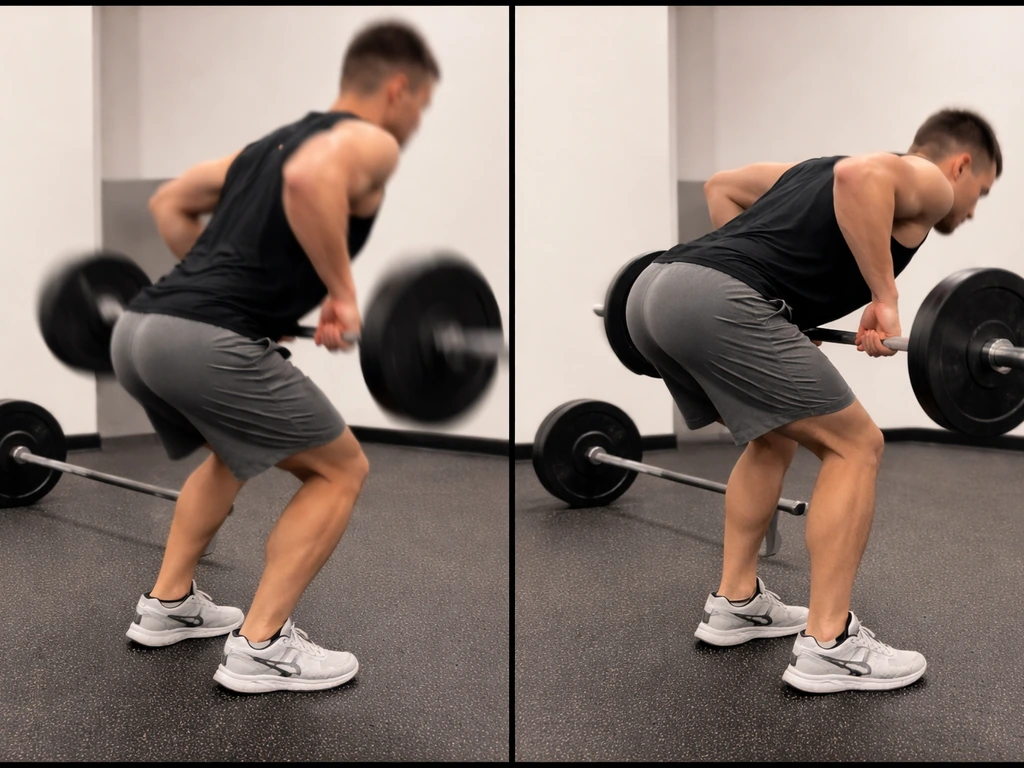
A few ideas are widespread in gyms and online and they actively undermine tension-based growth. Here are the ones worth pushing back on directly.
- "More weight always means more tension." Not if your form breaks down, you shorten your range of motion, or you use momentum. Sloppy heavy reps often produce less tension on the target muscle than controlled lighter ones.
- "You need to feel the burn or the pump for it to work." Metabolic stress (the burn and pump) is a secondary contributor at best. You can have a highly effective tension-focused workout with almost no pump if the movement quality and effort are right.
- "Lighter weights don't build muscle." They do, as long as effort is high enough. This is important for older adults, people with joint issues, and anyone in a high-volume training block who needs load management.
- "Soreness means you grew." Muscle damage causes soreness, not growth. Chasing soreness by constantly doing novel exercises or extreme eccentrics is counterproductive. Consistent tension with progressive overload beats novelty every time.
- "Tension is the only thing that matters." Volume, frequency, nutrition, and recovery all interact with the tension signal. Maximal tension in a single set, once a week, with poor sleep and inadequate protein will not build much muscle.
- "Flexing or squeezing a muscle without load builds it meaningfully." Light isometric contraction without significant resistance generates far less mechanical tension than loaded training. The mind-muscle connection is real and useful for improving technique, but it is not a substitute for actual loading.
A practical routine to apply mechanical tension starting today
You do not need to overhaul everything. The fastest improvement most people can make right now is to slow down their eccentric phase, extend their range of motion, and push 1 to 2 reps closer to failure on each set. Those three adjustments alone dramatically increase the quality of tension without changing a single exercise or adding a single minute to your session.
If you want a starting template, here is a simple 3-day-per-week full-body structure built around mechanical tension principles. Each session targets all major muscle groups, keeps per-session volume manageable, and gives 48 hours of recovery between sessions. For beginners, start with 2 working sets per exercise. For intermediate lifters, use 3 to 4 sets. Choose weights that make the last 2 to 3 reps genuinely hard.
| Exercise | Sets x Rep Target | Tension Focus |
|---|---|---|
| Squat or leg press | 3 x 10-15 | Full depth, 3-sec lower, pause at bottom |
| Romanian deadlift | 3 x 10-12 | Stretch-focused, feel the hamstring load at bottom |
| Incline dumbbell press or cable press | 3 x 10-15 | Full stretch at bottom, controlled descent |
| Cable row or machine row | 3 x 10-15 | Retract scapula, slow eccentric, full arm extension |
| Overhead press (dumbbell or machine) | 3 x 10-12 | Full range, no lockout bounce at top |
| Cable curl | 3 x 12-15 | Full extension at bottom, squeeze at top, 2-sec lower |
| Cable or machine triceps pushdown | 3 x 12-15 | Full extension, controlled return, no elbow flare |
Run this 3 days per week (Monday, Wednesday, Friday works well) for 6 to 8 weeks, progressing one variable per session when you can. Track your sets, reps, and weights in a notebook or app. After 8 weeks, you will have a concrete record of your tension progression, and most people who do this consistently see visible and measurable muscle gain within that window, though the first 3 to 4 weeks tend to be more about neural adaptation than visible size change.
For older adults, the same principles apply. The main adjustment is to lean toward the 12 to 20 rep range with moderate loads, prioritize machines and cables for their consistent tension curves and lower injury risk, and be slightly more conservative about proximity to failure, stopping at 2 to 3 reps in reserve rather than 1. Progression just happens a bit more gradually, which is fine. Mechanical tension works the same way in a 60-year-old muscle as it does in a 25-year-old muscle: the biology is the same, the timeline may be a bit longer, and the programming just needs to respect recovery.
The bottom line is simple. Mechanical tension is the core signal your body uses to decide whether to build more muscle. Give it consistent, quality tension through good technique and full range of motion, push close enough to failure to recruit the fibers that actually grow, and add a little more work over time. In puberty, however, your hormones also affect how quickly and how much you can build muscle, so training is only one part of the picture add a little more work over time. Does massaging muscles help them grow? The evidence for hypertrophy is much more supportive of progressive mechanical tension than of massage alone. This is also why simple techniques like squeezing during training can support muscle growth when they help you maintain effective tension progressive mechanical tension. If you want to go deeper into what makes muscles grow, look for Jeffrey Siegel's breakdown of the key drivers of hypertrophy progressive mechanical tension. Everything else is detail on top of that foundation.
FAQ
If mechanical tension is the main driver, do I have to train heavy all the time to grow?
No. Growth can happen across a wide load range (about 30% to 85% of your 1RM) as long as you create high effort and get close to failure. A practical check is whether the last 2 to 3 reps are truly hard with controlled form, even if the weight is moderate.
How close to failure do I need to go for mechanical tension to matter?
Aim for about 1 to 3 reps in reserve most sets (RIR 1 to 3). If you consistently stop with, say, 5 to 6 reps left in the tank, you likely are not delivering enough fiber-level tension to drive much hypertrophy.
Do I need to work in a full range of motion every time for tension to cause growth?
Ideally yes, because a major portion of tension stimulus comes from stretching positions and moving through the whole arc. If you cannot use full ROM due to pain, use a ROM you can control safely, and prioritize slow eccentrics and consistent effort through that available range while you work on mobility and technique.
Will sore muscles grow faster if I’m chasing mechanical tension?
Soreness is not required for hypertrophy. You can grow without being sore, as long as you consistently apply quality tension and progress training load or total work over time. Conversely, being very sore can be a sign you did too much novel or overly stressful work, which can reduce your ability to recover and train again.
Does slowing down the eccentric phase always increase muscle growth?
It usually helps because it keeps the muscle under load longer, increasing tension quality. The exception is if slowing down changes your technique so much that you lose the target muscle or the set becomes sloppy. Use controlled, stable reps, and stop the set when form breaks rather than forcing a slower descent at the cost of control.
Are partial reps ever worth doing for mechanical tension?
They can be useful as a complement, but they often underdose the stretched-range tension that drives much of the growth signal. If you do partials (for example, due to grip limits or joint discomfort), make sure total training includes other movements or ROM exposures that still challenge the muscle through its full length.
How do I progress mechanical tension if my weight cannot go up?
Progress total workload and effort instead. Examples include adding reps, adding sets, using a longer range of motion, improving tempo control, or reducing reps-in-reserve over time. Tracking sets, reps, and load lets you make small, measurable changes without relying solely on heavier weights.
Can I train a muscle once a week and still get mechanical tension for hypertrophy?
It can work, but it is often less efficient for most people because weekly volume tends to be harder to recover from and distribute. Many lifters respond better when they spread volume across 2 to 3 sessions per muscle per week with about 48 to 72 hours between hard exposures.
What if I feel my lower back during rows or my shoulders during chest presses, does that reduce mechanical tension?
It can. Mechanical tension still occurs on muscles you are recruiting, but the target muscle may not be receiving enough of it. Adjust technique, reduce ego load, and consider tools with more stable tension curves (cables or machines) until you can control the movement and feel the intended muscle working through the range.
Is momentum the enemy of mechanical tension?
Momentum usually reduces fiber-level tension because the load is not being resisted throughout the movement. If you need to “throw” the weight to complete reps, slow down and lighten so you can control both the lowering and the stopping points, keeping the movement deliberate.
Do mechanical tension and metabolic stress work together, or do they compete?
They work together, but you should not rely on the “burn” alone. Metabolic stress can add to the signal, yet mechanical tension is the core driver. If you only chase burning high reps far from controlled effort, you may miss progressive tension across time.
How long does it take to see muscle growth from mechanical tension training?
You can gain strength and neural efficiency within the first few weeks, which can look like growth. Visible size changes commonly become more obvious around 3 to 4 weeks onward, but full adaptation usually takes longer (often several months) as long as you keep progressing work and recovering.
Does age change how mechanical tension should be programmed?
The biology is similar, but older adults often benefit from a more conservative proximity to failure (for example, 2 to 3 reps in reserve) and a comfortable rep range (often roughly 12 to 20). Machines and cables can help you maintain consistent tension with less technique demand and typically lower injury risk.
Can massage or squeezing replace mechanical tension for hypertrophy?
Massage alone is not a substitute for the tension stimulus. Squeezing during training can help you maintain attention and control, which may improve how effectively you apply tension, but the actual driver is still progressive, quality loading close enough to failure.