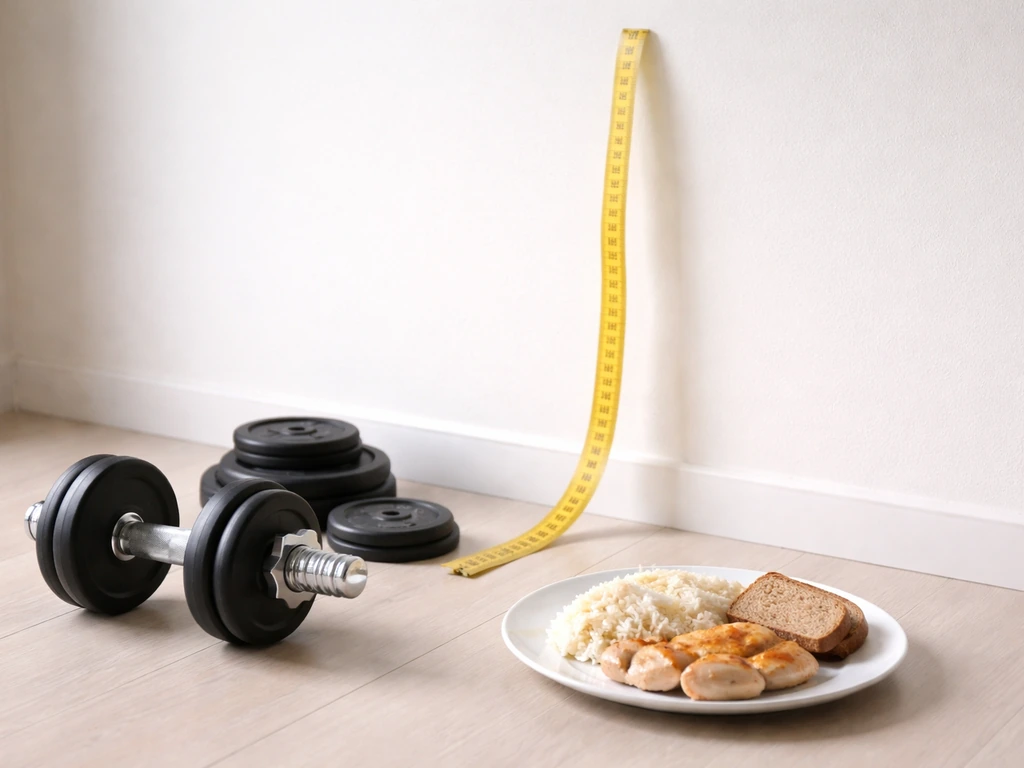
Yes, you genuinely grow muscle on rest days. In fact, the majority of the actual repair and growth process happens after you leave the gym, not during the workout itself. Training is the trigger, but rest days are when your body acts on that signal, rebuilding muscle fibers thicker and stronger than before. If your rest days are poorly set up, that process stalls, and your hard training sessions produce far less than they should.
Do You Grow on Rest Days? Recovery and Muscle Gain Guide

Marcus Kellerman
5 Jun 2026

Muscle growth basics: stimulus vs repair

Here's how the process actually works. When you lift heavy, you create mechanical tension and metabolic stress in the muscle fibers. That stress triggers a cascade of signaling molecules, most notably through the mTORC1 pathway, that tell your body a repair and building response is needed. Muscle protein synthesis (MPS) rises sharply within the first hour after training, sits around 50% above baseline at the 4-hour mark, and peaks at roughly double the resting rate by 24 hours. It then stays meaningfully elevated for up to 36 to 48 hours post-exercise before returning to baseline.
None of that peak activity is happening while you're lifting. The stimulus is created during training, but the actual remodeling, the part that results in bigger, denser muscle tissue, plays out during the recovery period. Think of training as submitting a work order and rest days as when the construction crew actually shows up.
Hypertrophy over time is the cumulative net effect of repeatedly running this cycle. Each training session elevates MPS, your nutrition and recovery either support or undercut that elevated synthesis, and over weeks and months those small positive balances stack up into measurable muscle mass. Miss the recovery piece consistently and you're essentially filing work orders that never get fulfilled.
What rest days do to muscle growth
A rest day, when set up correctly, is a high-activity period at the cellular level. MPS is still running well above baseline throughout most of your first rest day after a hard session. Your muscles are actively repairing microdamage, incorporating amino acids into new contractile proteins, and recalibrating metabolic pathways to handle similar workloads better next time. The net muscle protein balance, meaning synthesis minus breakdown, has been shown to remain significantly positive at 3, 24, and 48 hours after resistance training, as long as protein intake supports it.
Crucially, muscles stay sensitive to the anabolic effect of protein ingestion for roughly 24 to 48 hours after a training bout. That means what you eat on your rest day directly influences how much of that elevated MPS window gets converted into actual tissue. A rest day with poor nutrition or chronic sleep debt is a wasted window. One with solid protein intake, adequate calories, and good sleep is where a lot of your actual gains happen.
Research on training frequency also reinforces this. When weekly training volume is matched, whether you hit a muscle group once, twice, or three times a week doesn't dramatically change hypertrophy outcomes. The muscle doesn't care that much about frequency itself. What matters is that you recover well enough between sessions to maintain quality volume over time. Rest days serve that function.
How to know if you're actually recovering

You don't need expensive tech to gauge recovery. A few honest daily check-ins give you most of what you need. In a pilot trial, researchers used perceived recovery and wellness responses alongside strength performance testing to characterize overreaching and subsequent taper, supporting subjective recovery scales as actionable monitoring signals.
- Performance in the gym: If your strength or reps are trending down across two or more consecutive sessions, that's a clear recovery deficit. Occasional off days happen, but a pattern is a signal.
- Soreness: Mild to moderate soreness that clears within 48 to 72 hours is normal. Soreness that lingers past 72 hours, especially before your next session for that muscle, suggests you exceeded your current recovery capacity.
- Fatigue and motivation: Persistent heaviness, low drive to train, and general tiredness that doesn't resolve after a rest day point to accumulated fatigue that rest alone may not fix quickly.
- Sleep quality: If you're sleeping 7 to 9 hours and still waking up tired, something is stressing your recovery. If you're sleeping under 6 hours consistently, you're actively impeding adaptation, since even a single night of significant sleep loss measurably impairs physical readiness.
- Resting heart rate and HRV: A resting heart rate that's elevated by 5 to 7 beats above your personal norm, or a heart rate variability reading that trends notably downward over several days, can indicate accumulated stress. HRV is useful context but not infallible, as delayed onset soreness itself can skew readings.
The most practical approach is combining at least two of these signals. One bad sleep doesn't mean you're overtrained. But if performance is slipping, soreness is lingering, and you're sleeping poorly all at once, your rest days need to be more intentional, not just a default off day.
Best ways to train "on rest days" (active recovery)
Rest day doesn't have to mean couch day. Light movement on off days can actually speed up recovery by improving blood flow to repairing tissue, reducing inflammation, and helping clear metabolic byproducts from the previous session. The key word is light. The moment your rest-day activity becomes a meaningful physical stressor, it stops being recovery and starts competing with it.
Active recovery techniques like easy walking, cycling at conversational pace, swimming lightly, or mobility and stretching work well because they increase circulation without generating meaningful muscle damage or significant metabolic fatigue. Studies comparing active recovery approaches show real benefits for reducing perceived fatigue and soreness markers compared to passive rest, particularly in the 24 to 48 hour window after training.
- 20 to 40 minute walk at easy pace: probably the single best default rest-day activity for most people
- Mobility or flexibility work: addresses joint range of motion and feels productive without taxing muscle
- Light cycling or swimming: great for cardiovascular health without loading sore muscles
- Foam rolling or soft tissue work: evidence is moderate, but many people find it helps soreness and movement quality
- Yoga at a non-intense level: good for mobility, breathing, and stress reduction
What to avoid on rest days: HIIT, heavy accessory lifts disguised as "light work," long runs at challenging pace, or any session that leaves you feeling drained afterward. If you finish your rest-day activity more fatigued than when you started, it wasn't a rest day.
How nutrition and protein affect growth on rest days
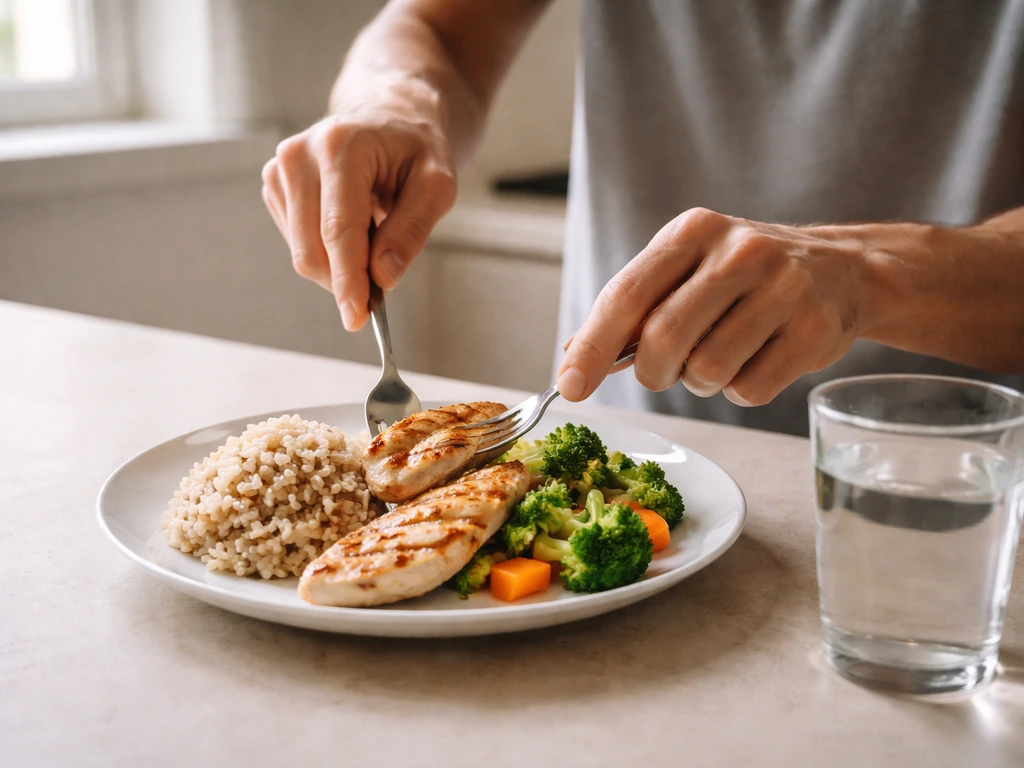
Because MPS stays elevated for 24 to 48 hours after training, your rest-day nutrition is doing real work. Protein intake on rest days should be treated with essentially the same seriousness as on training days. The total daily target still applies: most evidence supports somewhere in the range of 1.6 to 2.2 grams of protein per kilogram of bodyweight per day to maximize hypertrophy, and that doesn't pause because you're not lifting.
Distribution matters too. Research comparing different protein feeding patterns during a 12-hour recovery window found that consuming 20 grams of high-quality protein every 3 hours produced better myofibrillar protein synthesis outcomes than larger, less frequent doses (like 40 grams every 6 hours) or smaller, more frequent doses (10 grams every 1.5 hours). The sweet spot appears to be roughly 20 to 25 grams of quality protein per meal, spread across 4 to 5 meals through the day. That pattern works on rest days just as it does on training days.
Carbohydrates and fats also matter on rest days, though not in a dramatically different way than on training days. Carbs help replenish muscle glycogen depleted during your last session and support hormonal balance. Fats are needed for hormone production and cell membrane integrity. Hydration also plays a role in how efficiently nutrient delivery and protein synthesis proceed at the cellular level.
Hydration is also important because water helps your body deliver nutrients and support the recovery processes that allow muscle growth Hydration also plays a role. Cutting calories heavily on rest days because you're not training can undercut the recovery window your muscles need most. A modest reduction in total intake is fine if you're managing body composition, but slashing food intake significantly on rest days is a common mistake that limits gains.
Recovery variables: sleep, stress, soreness, and fatigue
Sleep is probably the single most underrated recovery variable. Growth hormone release peaks during deep sleep, protein synthesis signaling continues overnight, and tissue repair runs at full speed when you're not generating new training stress. Chronic sleep restriction, even modest reductions to 6 hours per night over several days, compounds into measurable impairments in physical performance and recovery. One study showed a single night of total or partial sleep deprivation produced measurable athletic performance decrements. Consistently sleeping less than 7 hours puts a ceiling on how well even perfect training and nutrition can work.
Psychological and life stress matters more than most people acknowledge. Cortisol is genuinely catabolic at chronically elevated levels, meaning high work stress, relationship stress, or poor sleep all compete directly with the anabolic signaling you're trying to generate from training. When life stress is very high, your recovery capacity shrinks, and what would normally be a manageable training load can start pushing you toward accumulation of fatigue.
Soreness is useful information but shouldn't be chased or feared. You don't need to be sore to have stimulated growth. Soreness that's still present going into a session for the same muscle group is a flag that recovery isn't complete. Training through significant soreness repeatedly isn't toughness, it's a way to accumulate damage faster than you can repair it. That said, mild residual soreness combined with normal strength levels usually means you're fine to train.
Older adults face a version of all of this that requires a bit more patience. Recovery does slow with age, not because muscle can't grow, but because MPS is slightly less responsive to smaller protein doses and the recovery window may take a bit longer. That typically means prioritizing sleep more strictly, staying even more consistent with daily protein intake, and potentially building in one more full rest day per week compared to a 25-year-old running the same program.
Should you rest completely or train lightly: decision guide
This depends heavily on your situation. Here's a practical framework based on the most common scenarios.
| Your situation | Recommended rest day approach |
|---|---|
| Beginner (under 6 months of consistent training) | Full rest or very light walking. Your nervous system and connective tissue need time to adapt. Don't push for more frequency than your program calls for. |
| Intermediate or advanced lifter, feeling good | Active recovery: 20 to 40 minutes of easy movement, mobility work, or light cardio. No additional lifting. |
| High soreness (still very sore 48+ hours post-session) | Full rest or gentle walking only. Training through severe soreness adds damage faster than you can repair it. |
| Running high weekly volume (5+ training days) | Prioritize at least 1 to 2 true rest or active-only days per week. More volume requires proportionally more recovery. |
| Older adult (50+) | Build in an extra full rest day compared to younger lifters. Prioritize sleep, protein at every meal, and low-stress activity on off days. |
| High life stress week (poor sleep, work pressure, etc.) | Full rest or very light activity. Reduce training intensity or volume for that week rather than trying to push through. Stress has a real cost on recovery capacity. |
| Deload week | Active recovery only. Light movement, mobility, maybe one very easy low-volume session. No sessions that create meaningful fatigue. |
The underlying principle across all of these is the same: rest days exist to make your next training session better and to let the biological work your last session triggered actually finish. A rest day that compromises that process, whether through intense activity, poor nutrition, sleep debt, or extreme stress, is worse than no training day at all.
One resistance-training study reported that a one-week deload at the midpoint of a 9-week program appeared to negatively influence lower-body strength measures but had no effect on lower-body hypertrophy, power, or local muscular endurance [A rest day that compromises that process](https://pmc. ncbi. nlm. nih.
gov/articles/PMC10809978/). A rest day set up well, with easy movement, solid protein intake across the day, 7 to 9 hours of sleep, and managed stress, is when a significant portion of your actual muscle growth happens. Treat it accordingly.
FAQ
Do you grow on rest days if you are not lifting at all?
Yes, growth still happens, but it depends on what you mean by a rest day. If you are truly not lifting and you eat enough protein and calories, you can maintain a positive muscle protein balance for roughly the 24 to 48 hour window after your last hard session. If you do a “rest day” that includes another hard workout, heavy accessory work, or strenuous endurance, you create new stress that can partially replace recovery, so the net benefit may shrink.
What happens to muscle growth on rest days if I miss protein?
If you do not eat enough protein to cover your day, the elevated muscle protein synthesis window can still occur, but less of it turns into new tissue. A common mistake is “saving” protein for training days and eating less on off days. Use the same daily protein target on rest days, then distribute it in about 4 to 5 feedings (roughly 20 to 25 grams of quality protein per meal).
How should I choose between passive rest and active recovery on rest days?
Yes, but adjust the definition of “rest” to your fatigue level. If performance is slipping, soreness is lingering into the next session, or sleep has been consistently short, shift toward more passive rest or much easier activity. If those signals are absent, a short, easy walk or mobility work can help circulation without adding fatigue.
Do I need to be sore on rest days for muscle growth?
Not necessarily. You can train and still grow even if you are not sore, since soreness is not the goal. The better indicator is whether your strength and technique are returning toward your baseline. If you repeatedly enter sessions with the same muscle group sore and your lifting quality is dropping, that suggests the rest day is not enough.
Should I add an extra rest day if my workouts feel hard?
For most people, “more rest days” only helps if it restores your ability to train with enough quality volume. If you add rest days without improving sleep, protein intake, or total weekly training quality, you may under-train. A good decision rule is to keep weekly volume appropriate, then use rest days to prevent performance decline and fatigue buildup, not to replace training entirely.
Can I do long runs or hard cardio on rest days and still grow?
Long cardio at challenging intensity can reduce recovery by creating additional fatigue and lowering your ability to absorb the training stress that drives hypertrophy. Light, conversational-paced movement is usually fine. If your rest-day cardio makes you feel more drained than when you started, it is not functioning as recovery.
Does one bad night of sleep on a rest day ruin my muscle gains?
Sleep loss can blunt the recovery side of growth. The article body notes measurable performance and recovery impairment even after a single night of partial or total deprivation. If you consistently sleep less than about 7 hours, you may hit a ceiling where nutrition and training cannot fully compensate. Treat rest days as an opportunity to protect sleep, not just to “catch up” later.
What if I am not overtrained physically, but my life stress is very high?
Yes, life stress can work against recovery by keeping stress hormones elevated, which competes with the anabolic signaling you are trying to create. If work or personal stress is high, you may need to reduce training intensity or total volume during the week, even if your program originally assumed normal recovery.
How do rest days for muscle growth change as you get older?
Older adults often need a more deliberate recovery approach. The body of the article notes a reduced MPS responsiveness to smaller protein doses and a potentially longer recovery window. In practice, that means staying stricter with daily protein distribution, prioritizing sleep, and considering one extra full rest day if recovery lags compared with younger lifters.
Is muscle growth on rest days based on the day of the week or the time since my last workout?
The timing is usually about the last meaningful training session, not the calendar day. A rest day immediately after a hard session can be very productive because muscle protein synthesis is still elevated. If you trained hard again later the same muscle group, that extends the “post-training window,” so think in terms of recovery between stimuli rather than simply “how many days since Monday.”