Water doesn't directly build muscle the way protein, calories, and resistance training do. do muscles need water to grow. It won't trigger muscle protein synthesis on its own. But being even mildly dehydrated can tank your strength, slow your recovery, and make every hard set feel harder than it should. So the honest answer is: water doesn't grow muscle, but it absolutely supports every process that does.
Does Water Help You Grow Muscle? Hydration Guide

Marcus Kellerman
27 May 2026
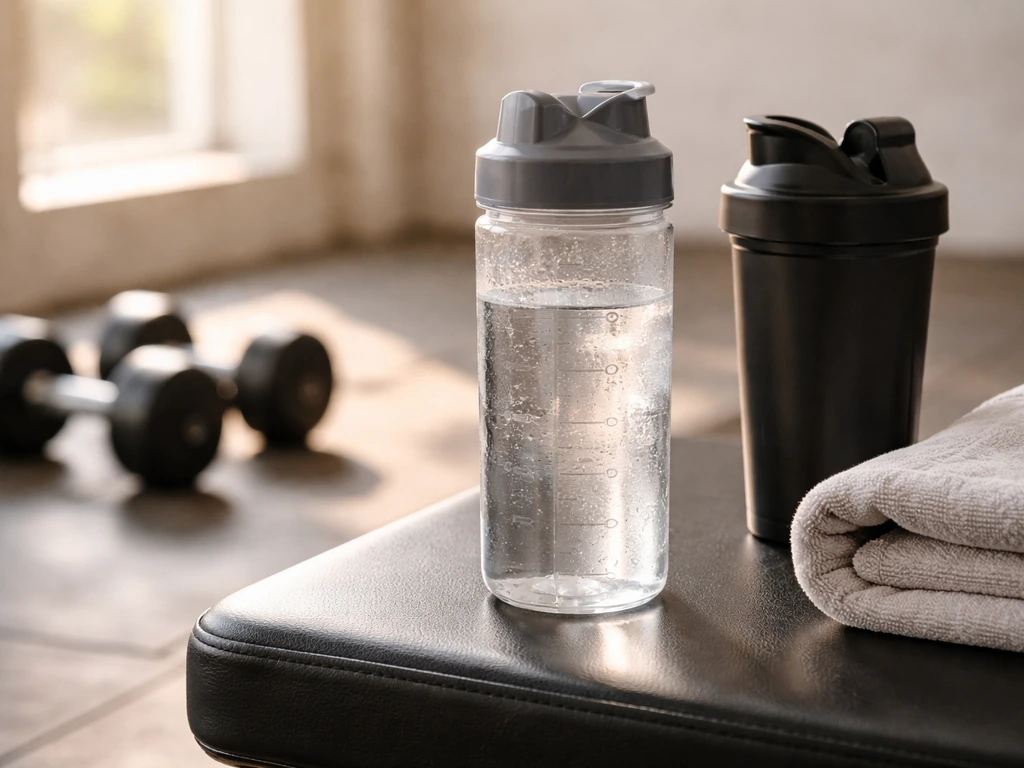
What water actually does for muscle growth
Think of hydration as the infrastructure, not the builder. Muscle tissue itself is roughly 75% water. When you're well hydrated, blood volume stays higher, which means better nutrient and oxygen delivery to working muscles, better metabolite clearance during sets, and more stable thermoregulation so your body isn't fighting two battles at once. When you're dehydrated, blood flow to muscle drops, substrate delivery slows, and heat builds up faster. Research on dehydration in heat conditions shows this combination creates a physiological environment that directly impairs exercise capacity.
There's also a recovery angle that doesn't get enough attention. Studies comparing euhydrated versus dehydrated conditions after eccentric exercise found worse delayed-onset muscle soreness (DOMS) outcomes in the dehydrated group. If you're sore for an extra day or two because you skimped on fluids, that's training time you're losing. And since muscle growth happens during recovery, anything that extends recovery costs you progress. It's indirect, but it's real. A Cochrane review found low-quality evidence with pooled results suggesting blank" rel="noopener noreferrer">cold-water immersion may reduce fatigue and potentially improve physical recovery ratings immediately after exercise, and it distinguishes water exposure or immersion from hydration as a separate recovery variable.
The key takeaway: water isn't a muscle-building nutrient the way protein is. Amino acids actually trigger muscle protein synthesis; water doesn't. But dehydration is a genuine performance and recovery limiter, and if you're consistently under-hydrated, you're leaving gains on the table even if your training and protein intake are dialed in.
How hydration supports training performance and recovery
The performance effects of dehydration kick in earlier than most people expect. A loss of around 2% of body weight from sweat is commonly associated with measurable drops in strength output, mental focus, and perceived effort. For a 180 lb (82 kg) person, that's only about 3.5 lbs (1.6 kg) of fluid loss. You can hit that during a hard 60-minute session in a warm gym without feeling particularly thirsty.
Research suggests that dehydration causes skeletal muscle to lose intracellular water, with roughly 1.2% of intracellular muscle water lost for every 1% drop in body mass. That matters because muscle cell volume is actually a signal. A hydrated muscle cell is more anabolic. A shrunken one is in a more catabolic state. You're not going to grow optimally in a shrunken state, even if you're eating enough protein.
From a recovery standpoint, adequate hydration supports nutrient transport to repairing muscle fibers, helps regulate the inflammatory response to training, and keeps connective tissue pliable. If you're also doing significant cardio volume alongside your lifting, staying on top of fluids becomes even more important because you're generating more heat and more metabolic waste that needs to be cleared.
How much water to drink for muscle building
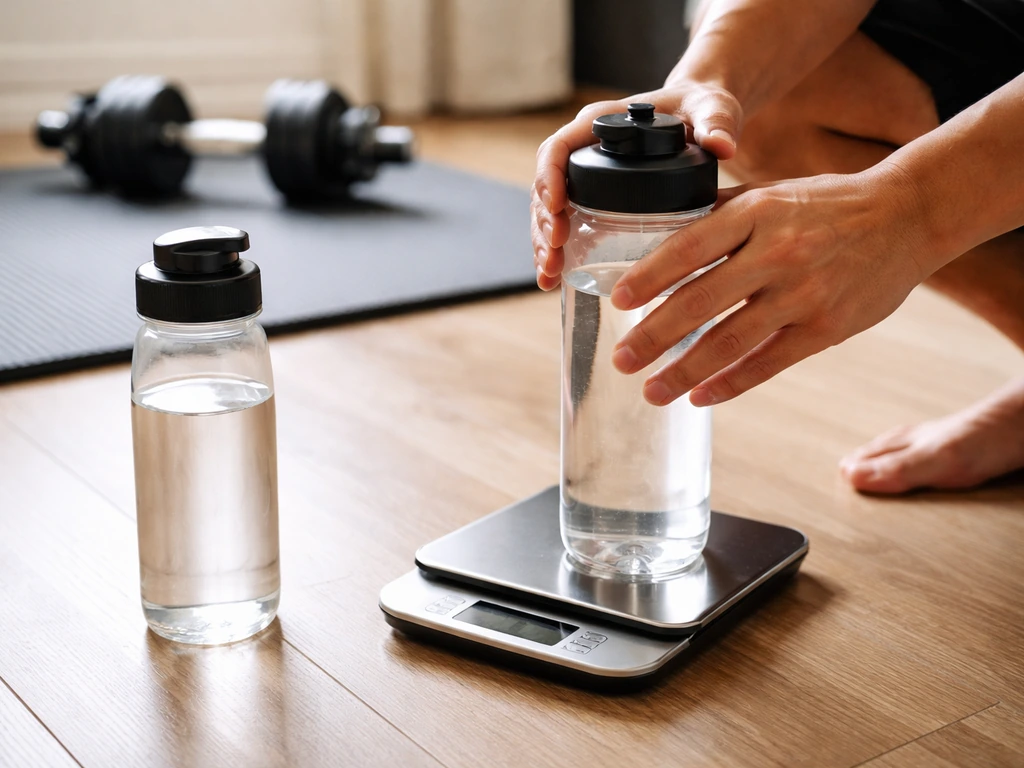
There's no universal number that works for everyone, and anyone claiming otherwise is oversimplifying. Sweat rates alone can range from about 0.5 to 4 liters per hour depending on the person, the environment, and intensity. That's an enormous range. That said, you need practical starting points.
The ACSM recommends drinking roughly 5 to 7 mL of fluid per kilogram of body weight about 4 hours before exercise. A more accessible version: aim for about 500 mL (roughly 16 oz) two hours before training. During the session, drink to thirst rather than forcing a fixed volume. After exercise, use body-weight changes as your guide. A kilogram of body weight lost equals approximately 1 liter of fluid lost, so drink accordingly after your workout to restore what you sweated out.
For day-to-day baseline hydration, pale yellow urine is the simplest and most reliable indicator that you're in a good range. Dark yellow or amber means you're behind. Clear urine every time isn't necessary and can actually signal you're overdoing it. If you're not sure where to start, general guidance typically lands around 2.5 to 3.5 liters per day for active adults, with the higher end applying on training days and hot days.
| Timing | Practical Target |
|---|---|
| 4 hours before training | 5–7 mL per kg body weight |
| 2 hours before training | ~500 mL (16 oz) if urine is still dark |
| During training | Drink to thirst; don't force volume |
| After training | ~1.5 L per kg of body weight lost |
| Rest of the day | Target pale yellow urine throughout |
Signs you're underhydrated (and what to do today)
Most people who are chronically under-hydrated don't feel dramatically thirsty. They just feel off. Here's what to watch for:
- Dark yellow or amber urine, especially in the morning
- Strength dropping unexpectedly mid-session when nutrition and sleep are fine
- Cramping during or after training, particularly in heat
- Feeling unusually fatigued after workouts that should be manageable
- Slower recovery or DOMS that lingers longer than expected
- Headaches after training in warm environments
- Mental fog or reduced focus during sets
If you're seeing several of these consistently, the fix is straightforward. Start the day with a large glass of water before coffee. Bring water to every session and actually drink it. If you've been skipping fluids during workouts, that's the first thing to change. You don't need a fancy hydration product to fix mild chronic underhydration. Just drink more water consistently, prioritize it around training, and watch the urine color feedback.
When hydration matters even more
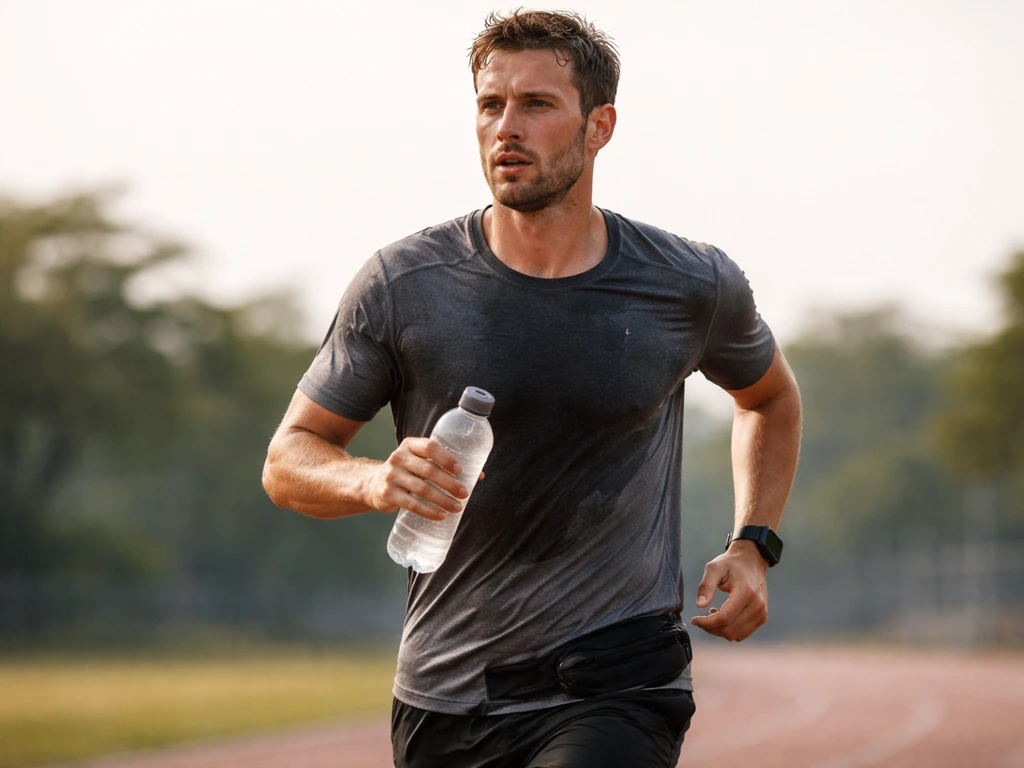
There are specific situations where hydration becomes genuinely critical rather than just a background variable. If any of these apply to you, bumping up your fluid attention isn't optional.
- Training in heat or high humidity: Your sweat rate climbs significantly, fluid losses accelerate, and the thermoregulatory load adds to the stress on muscle tissue and performance. Dehydration combined with heat stress is where the research consistently shows the most pronounced performance drops.
- High cardio volume alongside lifting: Running, cycling, or conditioning work stacked with resistance training dramatically increases total sweat output. Your hydration needs on those days are meaningfully higher.
- Older adults: Thirst sensation decreases with age, which means you can be significantly dehydrated before feeling the urge to drink. If you're an older adult building muscle, proactive drinking matters more, not less.
- High sodium intake from diet: Eating a lot of processed food or protein powders with high sodium content increases fluid needs.
- Summer outdoor training or travel to warmer climates: Even a few days of adjustment lag can impair performance noticeably.
This connection between environment, sweat rate, and muscle performance is also why hydration is more nuanced than just hitting a liter target. The same person needs different amounts on a cold gym day versus an outdoor summer session. Pay attention to the conditions, not just the clock.
A word on overhydration: more isn't always better
Drinking excess water relative to your actual sweat and sodium losses carries real risk. Exercise-associated hyponatremia (EAH) is defined as blood sodium below 135 mmol/L during or up to 24 hours after activity, and it happens when you drink more fluid than you're losing, diluting the sodium in your blood. At the severe end, EAH can escalate to seizures, coma, and death. It's not a theoretical risk reserved for ultramarathoners. It can happen in recreational gym-goers who overdo water intake, especially if they're not sweating much.
The best available guidance, including from the Wilderness Medical Society, advises drinking in response to thirst rather than following a fixed-volume schedule. For most gym sessions under an hour in a temperate environment, drinking to thirst is genuinely sufficient. The people most at risk for overhydration are those doing very prolonged activity who drink aggressively on a timer regardless of thirst.
There are also populations who need individual guidance rather than general targets. If you have a kidney condition, heart condition, or take medications that affect fluid balance (such as diuretics or certain blood pressure drugs), talk to your doctor before adjusting your fluid intake significantly. The same goes for anyone managing a chronic illness. For healthy, active adults, thirst plus urine color is a reliable, low-tech system that avoids both extremes.
Build the rest of the picture: what hydration can't replace
Water is a supporting player, not the star. The fundamentals that actually drive muscle growth are a consistent resistance training stimulus, sufficient protein (generally 1.6 to 2.2 g per kg of body weight per day), enough total calories to support growth, sleep that allows recovery and hormonal function, and progressive overload over time. Hydration supports all of those by keeping your training quality high and your recovery efficient. But if your protein is low, your training isn't challenging enough, or you're not sleeping, drinking more water won't compensate. Even though protein is the main macronutrient for muscle repair and growth, you may also need adequate protein so your body has the building blocks to take advantage of your training.
Rest days are another piece worth respecting here. Muscle repair happens between sessions, not during them, and staying well hydrated on rest days supports the nutrient delivery and tissue repair your muscles need to grow. Similarly, carbohydrate intake affects how much glycogen your muscles store, and glycogen binds water in muscle tissue. Do you need carbs to grow? You may not need huge amounts, but enough carbs can help you train harder and refill glycogen for better muscle-building progress carbohydrate intake. So hydration and carb intake are actually connected in a practical way. Being well fueled and well hydrated go together.
Here's a simple checklist to act on today, pulling everything together:
- Check your urine color first thing tomorrow morning. Pale yellow is your target. If it's dark, start drinking more water before training.
- Drink about 500 mL of water in the two hours before your next session.
- Bring water to every training session and drink to thirst throughout.
- After training, weigh yourself if you want a precise read. Drink roughly 1.5 L per kg of body weight lost.
- Make sure protein is on point: at least 1.6 g per kg of body weight per day from food or a combination with supplements.
- If you train in heat, outdoors in summer, or do high cardio volume, bump your fluid intake and consider electrolytes rather than plain water for sessions over an hour.
- If you're an older adult, set reminders to drink throughout the day since thirst becomes a less reliable signal with age.
- Don't overcomplicate it. If your urine is pale, you're training hard, eating enough protein, sleeping well, and progressing your lifts over time, you're doing the work that actually builds muscle.
FAQ
If water doesn’t build muscle, should I ignore hydration and just focus on protein and lifting?
No. While water is not an anabolic signal like protein, even mild underhydration can reduce strength output and slow recovery, which indirectly lowers training quality. Think of hydration as protecting your ability to complete the workouts that drive muscle gain, not as a replacement for protein, calories, or progressive overload.
Is drinking during a workout always needed, or can I just drink before and after?
For many gym sessions under about an hour in moderate temperatures, drinking to thirst is usually enough. If your session is longer, hotter, or includes lots of sweating, having fluids during the workout becomes more important to prevent that 1 to 2% body-weight drop that can measurably impair performance.
Does clear urine mean I’m getting too much water and will that hurt muscle growth?
Not necessarily, but repeatedly very clear, watery urine can suggest you are overshooting. Overdrinking can dilute sodium and raise the risk of exercise-associated hyponatremia, especially if you are not sweating much. Use urine color as feedback, not as a goal to keep it perfectly clear.
Should I drink electrolyte drinks or just plain water for lifting days?
Plain water is often sufficient for typical resistance training. Electrolytes become more relevant when you sweat heavily, train in heat for a long time, or notice you finish sessions with a lot of salty sweat, headaches, or cramps. In those cases, adding sodium through fluids or food can help you avoid drinking excessive water just to stay hydrated.
How do I use the body-weight method if I’m wearing clothes or weighing at different times?
Weigh under consistent conditions, ideally nude or in the same light clothing, at the same time relative to meals. Use the change as an estimate, then replace roughly 1 liter per kilogram of weight lost, and adjust if you also had large meal or sweat variations.
Does hydration matter on rest days for building muscle?
Yes, indirectly. Keeping hydration steady supports nutrient transport and tissue repair processes your muscles rely on between sessions. It won’t create a muscle-building stimulus by itself, but chronic underhydration can still leave you less recovered for your next workout.
Can dehydration make my muscles look smaller even if I’m still eating enough protein?
Yes. Dehydration and changes in intracellular water can reduce muscle cell volume, which can make you look flatter and may shift the environment toward less anabolic signaling. That means you may not be judging progress correctly if you only track how you look without monitoring training performance and recovery.
What are early signs that I’m underhydrated even if I don’t feel thirsty?
Common clues include persistent fatigue, worse concentration, headaches, dry mouth, and darker urine. A lot of people miss hydration problems because thirst can be muted during busy training days, so urine color and how you feel during sets are practical indicators.
How much water is too much during exercise, and who should be extra careful?
Too much usually means drinking more than you are losing, especially on a schedule rather than in response to thirst. You should be extra cautious if you have kidney or heart conditions or take meds that affect fluid balance, like diuretics, and you may need individualized guidance.