Dyno Myo Grow can support muscle growth, but only if your training, protein intake, and calories are already doing the heavy lifting. The active ingredients, Beta Ecdysterone and Epicatechin, have genuine (if modest) human research behind them suggesting they can nudge protein synthesis and myostatin suppression in the right direction. The keyword there is 'nudge.' This is not a dramatic muscle-builder on its own, and if you're eating too little protein or skipping progressive overload in your workouts, two capsules a day will not save you.
Does Dyno Myo Grow Work for Muscle Growth? Evidence and Guide

Marcus Kellerman
29 May 2026

What Dyno Myo Grow actually is
Dyno Myo Grow (sold as 'The MYO-GROW' by DynoMuscle) is a capsule-based supplement positioned as a non-hormonal muscle growth aid. Each bottle contains 60 capsules, dosed at 2 capsules per day, giving you a 30-day supply. At $49 per bottle (or $117 for three, $174 for six), it sits in the mid-range supplement price bracket.
The formula centers on three ingredients: Beta Ecdysterone (400mg per serving), Epicatechin, and Piperine in the form of BioPerine (5mg). The capsule shell is hypromellose, making it vegan-friendly. The brand frames the product around 'myostatin suppression' and 'muscle protein synthesis,' and markets it as non-hormonal. There appears to be at least one formula revision in its history (the current page references a 'more powerful formula'), so if you're reading an older review, check the current label before assuming the ingredient amounts match.
One thing worth noting: DynoMuscle claims third-party testing for quality and purity, but the product page doesn't name a specific certification body like NSF Certified for Sport or Informed Sport. That's a yellow flag worth knowing about, especially if you're a drug-tested athlete. It's not disqualifying, but it means you can't verify the purity claims as rigorously as you could with a named certifier.
Does it actually grow muscle? What the ingredients say
Let's go ingredient by ingredient, because that's the only honest way to answer this.
Beta Ecdysterone
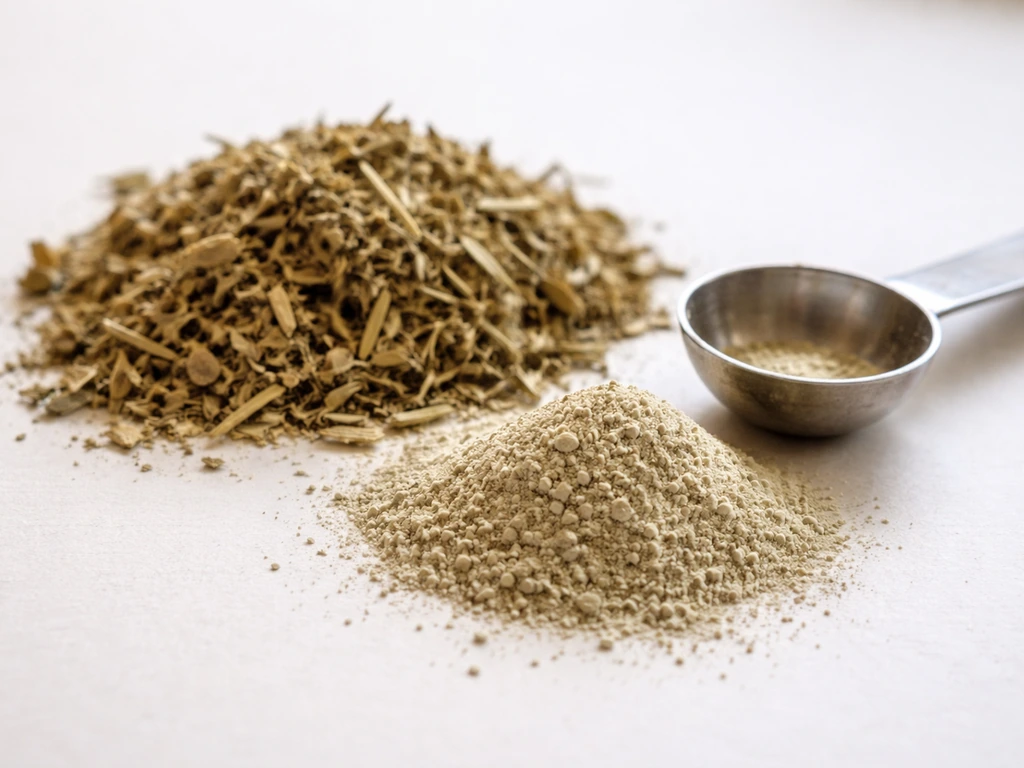
This is the headline ingredient, dosed at 400mg per serving. Beta Ecdysterone is a plant-derived compound (a phytoecdysteroid) that has attracted real scientific interest because it appears to interact with estrogen receptor beta in muscle tissue and may stimulate protein synthesis through an anabolic signaling pathway, without acting like a steroid hormone in the traditional sense. Animal research has been promising for years. Human research is still limited but emerging. Some trials have shown meaningful lean mass improvements compared to placebo over 10 to 12 weeks when combined with resistance training. The 400mg dose in Myo Grow is within the range used in published human studies, which is a point in its favor.
Epicatechin
Epicatechin is a flavonoid found naturally in dark chocolate and green tea. The mechanism that makes it interesting for muscle building is its ability to reduce myostatin, a protein that essentially tells your muscles to stop growing. Lower myostatin means your muscles can respond more readily to training stimulus. A small pilot study (6 participants) measuring myostatin and follistatin levels in humans after epicatechin supplementation showed the ratio shifted favorably.
This aligns with a small human pilot study (n=6) included in the epicatechin literature, which measured muscle strength alongside plasma biomarkers such as myostatin and follistatin after epicatechin treatment [PMC](https://pmc. ncbi. nlm. nih.
gov/articles/PMC3857584/). A separate randomized trial using tea catechins (epicatechin is a catechin class compound) combined with exercise showed improvements in muscle mass and strength in older adults. A randomized controlled trial in humans testing epicatechin-enriched extract from Camellia sinensis examined how it can improve regulation of muscle mass and function [randomized trial](https://pmc. ncbi.
nlm. nih. gov/articles/PMC8300738/). The effect sizes aren't enormous, but they're real and they're mechanistically sound.
The honest caveat is that the human evidence base is still thin, and most trials are small.
Piperine (BioPerine)

Piperine's job here isn't to build muscle. It's to improve how well your body absorbs the other two ingredients. At 5mg, it's in a reasonable functional range for bioavailability enhancement. This is a common and legitimate use of piperine in supplement formulations, and it does meaningfully improve the absorption of various compounds in human studies. Think of it as a delivery mechanism, not an active muscle-builder.
Put it all together and what you have is a supplement with a plausible, non-hormonal mechanism, real (if early-stage) human evidence, and ingredients dosed at reasonable levels. It is not going to replace creatine or protein powder as the workhorses of your supplement stack. But dismissing it entirely as 'just hype' isn't accurate either. The realistic expectation is a modest enhancement in muscle protein synthesis and myostatin suppression on top of a solid foundation, not a transformation tool.
Who actually benefits and who probably won't notice much
Not everyone gets the same return from a supplement like this, and being honest about that will save you money and frustration.
| Who you are | Likely benefit | Why |
|---|---|---|
| Intermediate lifter, 1+ year training, decent nutrition | Moderate: possible lean mass and recovery improvement over 8-12 weeks | Already past beginner gains, so marginal optimizers like ecdysterone can move the needle more meaningfully |
| Beginner, first 6 months of training | Low to moderate: training itself will dominate your results | Newbie gains are so powerful that supplements are largely irrelevant at this stage; save the money |
| Older adult (50+), training consistently | Moderate to meaningful: myostatin tends to rise with age, so suppressing it may help preserve and build muscle | Epicatechin's myostatin-reducing effect is especially relevant in age-related muscle loss contexts |
| Advanced lifter, optimized nutrition and training | Low to moderate: can be a useful tool to chase diminishing returns | The closer you are to your genetic ceiling, the more you need every marginal edge |
| Sedentary or undertrained person | Minimal: no supplement compensates for lack of training stimulus | Protein synthesis can't be boosted meaningfully without a muscle damage and repair signal from exercise |
The older adult case is worth pausing on. Myostatin levels tend to increase with age, which is one reason why building and maintaining muscle gets harder after 50. An ingredient specifically targeting myostatin suppression is more relevant in that context than it is for a 22-year-old who can grow by looking at a barbell. If you're in your 50s or 60s and training consistently, Myo Grow has a more compelling argument than it does for a young beginner.
How to use it correctly if you try it

The standard dose is 2 capsules per day. The brand recommends an 8 to 12-week trial for best results, with early performance-related changes potentially noticeable around weeks 4 to 6. That timeline is reasonable for a compound like ecdysterone, which isn't a stimulant and doesn't produce overnight changes.
Take the 2 capsules at the same time each day. Many people take them with a meal to reduce any potential digestive discomfort, though the formula itself is unlikely to be harsh on the stomach. There's no strong evidence that taking it specifically pre-workout versus any other time dramatically changes outcomes, so consistency matters more than perfect timing.
Stacking it with other supplements
If you're going to stack Myo Grow with anything, prioritize the evidence-based workhorses first. Creatine monohydrate (3 to 5g per day) has the deepest human evidence base of any muscle supplement and pairs naturally with ecdysterone because they work through different pathways. A quality protein powder to hit your daily targets is non-negotiable if whole food alone isn't getting you there. A pre-workout is optional and adds stimulants, which is a separate category entirely from Myo Grow's mechanism. Don't skip creatine in favor of Myo Grow; use both or use creatine first.
The fundamentals Myo Grow can't replace
This is where I want to be blunt, because too many people buy a supplement and expect it to compensate for gaps in the basics. If you're asking, “does Myo Grow work,” the answer depends on whether your training, calories, and protein are already in place too many people buy a supplement and expect it to compensate for gaps in the basics. It won't. Here's what actually drives muscle growth and what you need in place before any supplement matters:
- Protein: aim for 0.7 to 1g per pound of bodyweight per day (roughly 1.6 to 2.2g per kg). This is your single biggest nutrition lever for muscle growth.
- Calories: you need a slight caloric surplus to build new tissue. Even a modest 200 to 300 calories above maintenance gives your body the raw material to grow. Eating at a deficit while expecting muscle gain is an uphill battle.
- Progressive overload: your training must get harder over time, whether that's more weight, more reps, or more total volume. Without this, there's no signal to grow regardless of what you're supplementing.
- Sleep: growth hormone release peaks during deep sleep, and muscle protein synthesis rates are elevated during recovery. Seven to nine hours isn't optional if muscle growth is the goal.
- Training frequency: hitting each muscle group at least twice per week consistently outperforms once-a-week splits for hypertrophy in most research.
Myo Grow can amplify what these fundamentals are already doing. It cannot substitute for them. If your protein is low, fix that first. If your training has no structure or progression, fix that first. The supplement is a layer on top, not the foundation.
Safety, side effects, and red flags to watch for
Beta Ecdysterone and Epicatechin both have reasonable safety profiles in the doses studied. Neither is a stimulant, neither acts directly on your hormonal axis the way anabolic steroids do, and neither has documented serious adverse effects at typical supplement doses in healthy adults. The non-hormonal positioning of Myo Grow is accurate as far as the mechanism research suggests.
Piperine at 5mg is well within the range used in human studies without safety concerns, though it's worth knowing that piperine can affect how your body processes certain medications (it slows the metabolism of some drugs, which can raise their blood levels). If you're on prescription medication, check with your doctor before adding any piperine-containing supplement.
The broader quality concern is the third-party testing claim without a named certifier. If you're a competitive athlete subject to drug testing, you should be cautious about any supplement that doesn't carry a recognized certification like NSF Certified for Sport or Informed Sport, because 'third-party tested' without specifics doesn't give you the same protection against contamination. For recreational lifters, this is a lower-stakes concern, but it's still worth keeping in mind.
Red flags to watch for in any supplement in this category: claims of 'steroid-like effects without the side effects,' promises of specific pound-for-pound muscle gain numbers, or any suggestion that results come without training. Myo Grow's marketing stays mostly on the right side of this line by emphasizing use alongside resistance training and nutrition, which is appropriate.
A realistic timeline and how to know if it's working

Here's a practical breakdown of what to expect and when, assuming you're training consistently and eating enough protein:
| Timeframe | What you might notice | How to measure it |
|---|---|---|
| Weeks 1-3 | Minimal visible change; possible slight improvement in workout recovery between sessions | Track workout performance: reps, sets, weights used |
| Weeks 4-6 | Possible improvement in training performance and muscle fullness; some users report reduced soreness | Take progress photos, log bodyweight weekly, track gym numbers |
| Weeks 8-12 | Most meaningful window for lean mass and strength changes to become visible and measurable | Body composition measurement (DEXA or skinfold calipers), tape measure around arms/thighs/chest, strength benchmarks |
| Beyond 12 weeks | Continue if results are positive; consider a break of 4-6 weeks before cycling back on | Maintain your measurement habits and compare to pre-trial baseline |
The most useful thing you can do before starting is establish a baseline: your bodyweight, a few key measurements (arm, chest, thigh circumference), a progress photo, and your working weights on two or three major lifts. After 8 to 12 weeks, compare everything. If your strength went up, your measurements increased, and your weight moved in the right direction, the combination of training and supplementation is working. If nothing changed at all, the honest answer is that either the product isn't doing much for you specifically, or your fundamentals need work.
Don't judge a non-stimulant supplement like this on how you 'feel' in week one. It's not a pre-workout. The signal you're looking for is slow, measurable, and shows up in your data over weeks, not in your energy levels on day three.
The bottom line on whether it's worth trying
If your training and nutrition are solid and you're looking for a non-stimulant, non-hormonal supplement with a plausible mechanism and some human evidence behind it, Dyno Myo Grow is a reasonable thing to trial for 8 to 12 weeks. If you're looking for a quick overview, this myo grow review breaks down what it is, how the ingredients work, and who it’s most likely to help. The ingredients aren't snake oil. The doses are in a functional range.
The mechanism is grounded in real physiology. But it's not going to produce dramatic results, it's not a substitute for creatine or adequate protein, and it's not a shortcut past the basics. Think of it as a potential 5 to 10 percent amplifier on a foundation that you've already built, not a foundation itself. This Muscle Grow XXL review perspective lines up with the same expectations of a modest, foundation-friendly supplement effect rather than dramatic gains.
The 90-day money-back guarantee at least means the financial risk is manageable if you decide to try it and find it doesn't do much for you personally.
FAQ
So, does Dyno Myo Grow work, or is it only hype?
It can be worth trying if your fundamentals are already in place (progressive resistance training plus adequate protein and calories), and you want a non-stimulant, non-hormonal add-on. If you are not already hitting your protein target or your workouts are not progressing, it is unlikely to produce noticeable changes.
How long does it take for Dyno Myo Grow to show results?
You should not expect it to work like a pre-workout. Because it is not designed to deliver an immediate performance “kick,” the more practical check is whether your strength and measurements trend upward over 8 to 12 weeks, not whether you “feel something” in the first few days.
What should I do if I do not notice any muscle gains after 8 to 12 weeks?
If you do not see any trend in strength or measurements after the recommended 8 to 12 week trial, the most likely explanation is one of two things: your training and nutrition are not providing the stimulus, or your body does not respond meaningfully to the ingredient combination. At that point, keep the basics and consider reallocating the budget to higher-evidence options like creatine.
Is there a best time to take Myo Grow, pre-workout or with meals?
Consistency with resistance training matters more than taking it “pre-workout.” A reasonable approach is to take the daily dose the same time each day, preferably with a meal to minimize any digestive discomfort, since timing is unlikely to dramatically change outcomes for a slow-acting supplement.
Can Dyno Myo Grow replace creatine or protein powder?
Do not use it as your only muscle-building supplement if your diet is short. A common mistake is skipping creatine or not reaching protein targets, then expecting Dyno Myo Grow to “make up for it.” Use it as an optional add-on, not a replacement.
Is Myo Grow more likely to help older lifters than younger ones?
Yes, especially as long as your plan still includes resistance training progression and adequate protein. The reason it can be more relevant for older adults is that myostatin-related signaling tends to be less favorable with age, so an ingredient aimed at that pathway may provide a better “fit,” even if the effect size is still modest.
I take prescription medications, is it safe to use Dyno Myo Grow?
If you are on prescription medications, be cautious because piperine can affect drug metabolism and potentially raise blood levels of certain drugs. The safest next step is to ask your prescriber or pharmacist before starting any piperine-containing supplement.
If I compete in drug-tested sports, can I use Myo Grow?
Dyno Myo Grow is marketed as non-hormonal, but “non-hormonal” does not guarantee competition safety. If you are subject to drug testing, the lack of a named certification body for contamination control is a practical reason to be extra cautious and check with your testing organization rules before using it.
How should I measure whether Dyno Myo Grow is working for me?
You should treat it as a modest amplifier and plan your expectations accordingly. A practical decision aid is to track baseline bodyweight, a few measurements, progress photos, and working weights, then judge results by trends over time rather than by short-term scale or mirror fluctuations.
What is the best way to start using Dyno Myo Grow if I am already training?
If you want to start, prioritize the fundamentals first, then add the supplement. A sensible order is: ensure daily protein and calorie targets, lock in a progressive lifting plan, then trial the supplement for 8 to 12 weeks to see if it adds measurable value for your body.
What side effects or practical issues should I watch for?
Watch out for digestive upset, especially if you take it on an empty stomach, and if you notice any unusual symptoms, stop and reassess. Also, because product formulas can change over time, always compare the current label to what you are expecting before assuming the same ingredient amounts as older reviews.