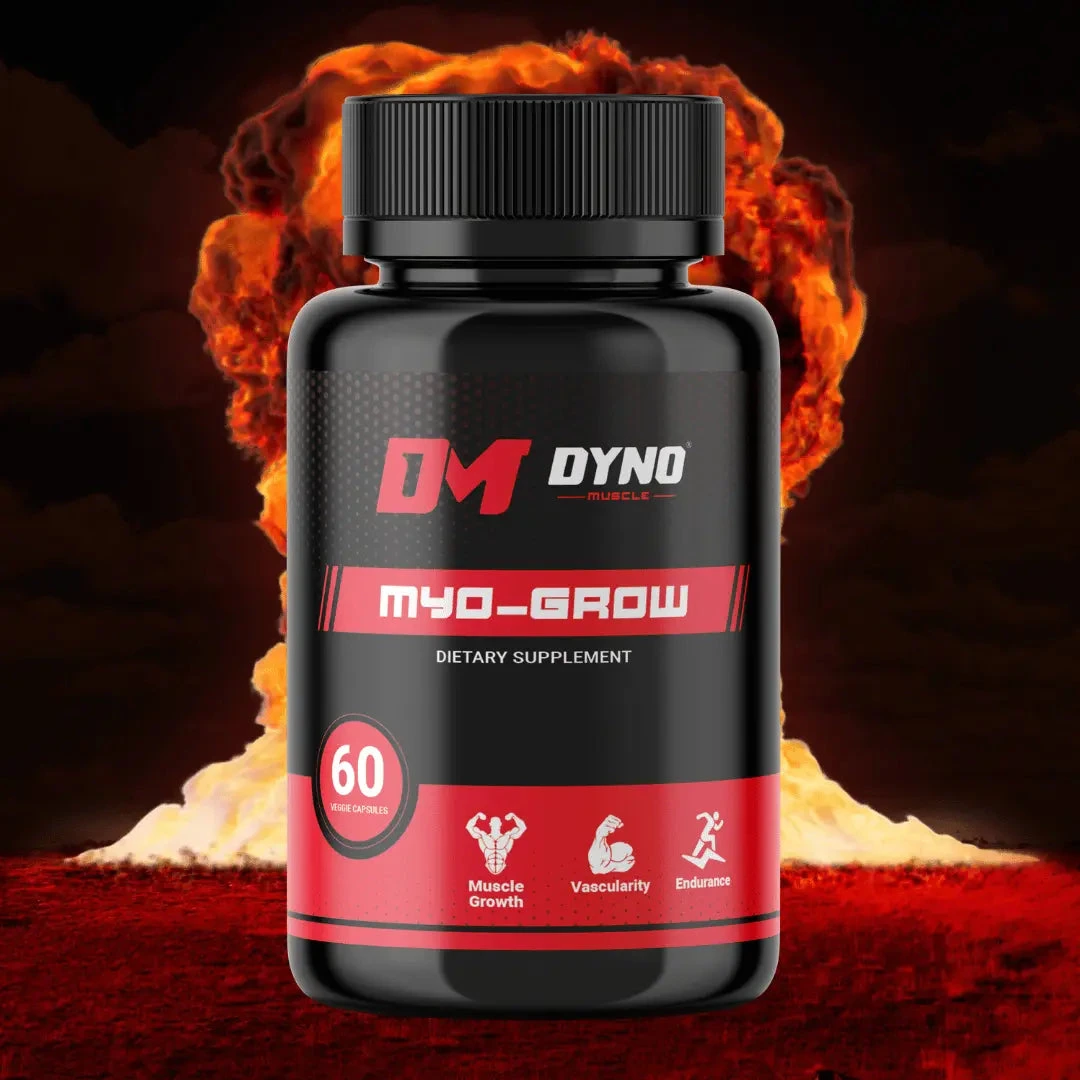
MyoGrow is a capsule-based muscle growth supplement made by a brand called DynoMuscle. Each serving is two capsules and the formula is built around three active ingredients: 400 mg of epicatechin, 400 mg of beta-ecdysterone, and piperine. The brand markets it as a natural, non-hormonal alternative to anabolics, claiming it reduces myostatin and supports lean muscle. That's the what. Whether it actually delivers on those claims is a different question, and that's where things get more complicated.
What Is MyoGrow? Does It Build Muscle or Not?

Marcus Kellerman
7 May 2026
What exactly is MyoGrow (brand, product, or concept)?
MyoGrow is a branded supplement product, not a generic concept or ingredient. It's sold by DynoMuscle under a few promotional variants, including one labeled "From Weak To Freak," but the core product and its ingredient panel stay consistent across those pages. You might also see it written as "Myo-Grow" or "MYO-GROW." It's not a product line with multiple formulas or a category of supplements, it's a single SKU from one company.
If you landed here because you saw MyoGrow in an ad or a social post, you're looking at DynoMuscle's flagship product. The brand uses several landing pages and funnel variations to promote it, which can make it look like multiple different products. It's the same capsule formula throughout.
How DynoMuscle markets MyoGrow
The marketing positions MyoGrow as a "clinically dosed" supplement that uses natural ingredients to trigger muscle growth without synthetic hormones. The two headline ingredients, epicatechin and beta-ecdysterone, are each claimed to support muscle building through different mechanisms. Epicatechin is framed as a myostatin inhibitor (myostatin is a protein that limits muscle growth), while beta-ecdysterone is described as a natural muscle-building compound. Piperine rounds out the formula as a bioavailability enhancer, meaning it's included to help your body absorb the other two ingredients more efficiently.
The brand also claims each batch undergoes "rigorous third-party testing for purity and potency," and customer testimonials on the product page include language like "putting on 20 lbs of lean muscle and cutting down." Those are marketing claims, not clinical results, and the distinction matters a lot when you're deciding whether to spend money on something.
The ingredient breakdown
| Ingredient | Claimed dose | What it's supposed to do | What evidence actually says |
|---|---|---|---|
| Epicatechin | 400 mg | Inhibit myostatin, raise follistatin, support muscle growth | Some human RCT data in older/sarcopenic adults shows modest improvements in muscle strength markers; effects in healthy trained adults are less clear and one study shows it can inhibit aerobic adaptations |
| Beta-ecdysterone | 400 mg | Natural anabolic compound to build muscle | Animal and cell data look interesting; human RCT evidence is limited and inconsistent; not established for muscle hypertrophy in healthy adults |
| Piperine | Not specified | Improve bioavailability of other ingredients | Does enhance absorption of some compounds; also inhibits CYP3A4 and P-glycoprotein, which creates real drug interaction risk |
Does MyoGrow actually build muscle? The honest evidence check
Let's take each ingredient seriously, because the underlying science deserves a fair look even if the marketing oversells it.
Epicatechin
Epicatechin is a flavanol found in dark chocolate and green tea, and it does have some real human research behind it. An 8-week RCT in sarcopenic older adults combining epicatechin supplementation with resistance training reported improvements in skeletal muscle strength and favorable changes in follistatin and myostatin plasma levels. That's a meaningful finding. But the population matters: sarcopenic older adults have low baseline muscle mass and are highly responsive to almost any intervention. Separate research also found that epicatechin supplementation can actually inhibit aerobic adaptations to cycling training in humans, which is a reminder that this compound doesn't just flip on a "muscle growth" switch. The effects are context-dependent and training-mode-specific.
Is 400 mg the right dose? Possibly, though research doses vary and the "clinically dosed" label should prompt you to ask: clinically dosed compared to which trial? That comparison isn't clearly spelled out in DynoMuscle's materials.
Beta-ecdysterone
Beta-ecdysterone is a naturally occurring compound found in plants and some insects. There's animal and in-vitro research suggesting anabolic-like effects, and it's been generating buzz in the supplement world for years. Human clinical evidence in resistance-trained adults, though, is sparse and inconsistent. The research simply isn't at the point where you can confidently say 400 mg per day will produce meaningful hypertrophy in a healthy person doing a normal training program.
Piperine
Piperine from black pepper is legitimately useful as a bioavailability booster for certain compounds. The issue is that it also inhibits CYP3A4, a key liver enzyme involved in metabolizing a huge range of medications, and P-glycoprotein, a drug transporter. A systematic review and meta-analysis confirms that piperine can meaningfully alter the pharmacokinetics of co-administered conventional drugs. If you take any prescription medication, this is not a trivial concern.
Bottom line on the formula
The ingredients aren't snake oil, but the gap between "there's some research on this compound" and "this product will put 20 lbs of muscle on you" is enormous. The testimonial-based marketing dramatically overstates what the science supports. If you want a deeper look at user experiences and whether MyoGrow has worked for real people, the related reviews of DynoMuscle's Myo-Grow cover that ground more specifically. If you are specifically looking into the Muscle Grow XXL review conversation, compare those claims against the same ingredient-evidence standard used for MyoGrow. If you still want to evaluate DynoMuscle’s product specifically, a dyno muscle myo grow review can help you compare the marketing claims with real user experiences.
How to evaluate it safely before buying

Third-party testing: verify, don't just trust
DynoMuscle claims third-party testing, but the marketing copy doesn't name a specific certification program. There's a difference between a brand saying "we third-party test" and a product actually carrying a seal from NSF Certified for Sport, Informed Sport, or USP. Those programs have searchable product databases where you can confirm a specific product passed. Before buying, look up MyoGrow in NSF's Certified Products Search or the Informed Sport database. If it's not listed, the "third-party tested" claim is marketing language rather than a verified certification.
Dosing and label transparency
The formula as marketed shows named doses for epicatechin and beta-ecdysterone, which is better than a hidden proprietary blend. That said, always read the physical label on the product you receive, not just the website graphic. Check whether the doses match what's advertised, whether there are any additional ingredients listed, and whether the serving count matches the bottle size.
Side effects and who should be cautious
- Anyone on prescription medications should check for piperine interactions before starting, especially people taking immunosuppressants, anticoagulants, antiretrovirals, or statins, since piperine inhibits CYP3A4 and can raise blood levels of many drugs unpredictably
- Older adults: the epicatechin data is actually most relevant to your demographic, but the interaction risk from piperine is also most serious for people managing multiple medications, so a conversation with your pharmacist or doctor first is essential
- People with cardiovascular conditions or hormonal health concerns should not assume "natural, non-hormonal" means automatically safe
- Beginners: you're unlikely to need anything beyond food and training to get your first year of gains; starting with a novel supplement instead of nailing the basics is backwards
What actually builds muscle: the evidence-based plan
If MyoGrow doesn't deliver, or if you'd rather spend your money on what has the strongest evidence, here's what that looks like. None of this is complicated, but all of it compounds over time in a way no supplement can replicate.
Protein: the one supplement that unambiguously works

A large meta-analysis published in the British Journal of Sports Medicine found that protein supplementation supports muscle mass and strength gains during resistance training, with benefits plateauing around 1.6 g per kilogram of bodyweight per day for most people. Going higher than about 2.2 g/kg provides no additional muscle-building benefit for the vast majority of lifters. Practically, that means a 180 lb (82 kg) person needs roughly 130 to 165 g of protein daily. Get that from whole food first (chicken, eggs, Greek yogurt, fish, legumes), then fill gaps with whey or plant protein powder if needed.
Training: progressive overload is the mechanism
Muscle grows in response to mechanical tension, metabolic stress, and muscle damage, with mechanical tension being the primary driver. The practical translation: you need to lift progressively heavier loads or do more total volume over time. Three to four resistance training sessions per week, each hitting major muscle groups with compound movements (squats, presses, rows, hinges), gives most people everything they need to drive consistent hypertrophy. You don't need to train to failure every set, you just need to push close enough to it that the stimulus is real.
Calories: muscle doesn't grow in a vacuum
You need a modest caloric surplus to build muscle efficiently, roughly 200 to 400 calories above your maintenance level. Trying to gain muscle aggressively in a deficit is mostly a beginner or returning-lifter phenomenon. If you've been training for more than a year, feed the growth. Track roughly for a few weeks to calibrate, then adjust based on the scale and mirror.
Recovery and sleep: the underrated third pillar
Muscle protein synthesis peaks in the hours after training but continues for up to 48 hours post-session. Sleep is when most of that repair and adaptation happens. Seven to nine hours of sleep per night is not optional if you're serious about building muscle. Chronic poor sleep blunts anabolic hormones and increases cortisol, essentially working against everything your training is trying to do.
Supplements with the strongest evidence
If you want to add something beyond food and training, two supplements have the most consistent evidence base. Creatine monohydrate (3 to 5 g per day) improves strength and power output in trained athletes across multiple meta-analyses, and those performance gains translate into better training stimulus over time. Protein powder, as covered above, helps hit your daily targets when whole food falls short. Caffeine can improve workout performance acutely, though it doesn't directly drive hypertrophy. Everything else, including MyoGrow, is either promising but unproven or overhyped. If you're wondering does myo grow work, the evidence so far is not strong enough to treat it like a must-have supplement.
Red flags and when to talk to a professional
There are situations where you should talk to a doctor, pharmacist, or registered sports dietitian before starting any new supplement, including one as seemingly mild as MyoGrow. If you are wondering, does DynoMy o Grow work, the evidence still does not support the big transformation claims MyoGrow. If you are considering a myo grow review type product, it helps to double-check ingredients, dosing, and third-party testing before you pay MyoGrow.
- You take any prescription medications, especially statins, blood thinners, antifungals, HIV medications, or immunosuppressants, because piperine's CYP3A4 inhibition can meaningfully raise drug blood levels
- You have a known liver or kidney condition, since novel compounds add metabolic load that already-stressed organs may not handle well
- You're an older adult managing multiple health conditions and already taking several medications
- You have a history of hormone-sensitive conditions and you're uncertain whether a supplement marketed as "non-hormonal" is actually appropriate for your situation
- You've been training consistently for months and are not gaining muscle at all, because that's a nutrition, sleep, or programming issue, not a supplement deficiency, and a sports dietitian can identify the actual gap quickly
- Any supplement that promises dramatic body composition changes in short timeframes (like testimonials claiming 20 lbs of lean muscle) is a red flag worth treating with skepticism before committing money
A registered sports dietitian is genuinely the best investment for someone serious about muscle growth who feels stuck. They can audit your actual intake, identify missing calories or protein, and give you a plan that's personalized. That's more useful than any capsule.
FAQ
Is MyoGrow the same thing as “myo” or myostatin support supplements?
No. MyoGrow is a specific branded capsule product from DynoMuscle. “Myo” or myostatin-support is a broader marketing theme, but it does not tell you the exact ingredients, doses, or testing status of the product you are considering.
What should I check on the label before buying MyoGrow?
Verify the serving size is actually two capsules, confirm the exact milligram amounts of epicatechin and beta-ecdysterone match the advertised doses, and look for any extra ingredients beyond those three. Also confirm the bottle’s capsule count matches what you are paying for, since marketing images can be misleading.
If epicatechin and beta-ecdysterone have some research, why might MyoGrow still not build noticeable muscle?
Because most of the “promising” evidence does not consistently translate into meaningful hypertrophy in healthy, resistance-trained adults, and outcomes depend heavily on your training program, baseline muscle mass, diet, and how consistently you take the supplement. Compound-level evidence is different from product-level results.
Does MyoGrow work better for older adults, beginners, or experienced lifters?
Older adults and people starting resistance training from a low baseline are often more responsive to many interventions, but the strongest translation to visible muscle gain in healthy, experienced lifters is less clear. If you are already training consistently for a year or more, you should expect much smaller effects than marketing implies.
Can MyoGrow interfere with my workout goals in ways other than muscle gain?
Yes. Epicatechin has been shown in some human research to potentially blunt aerobic adaptations to endurance training. If you do mixed training (lifting plus cycling or running), you may want to discuss timing or supplementation with a professional.
How does the piperine in MyoGrow affect medication safety?
Piperine can inhibit drug-metabolizing enzymes and transporters, which may change blood levels of certain prescription medicines. If you take any long-term medication, check with a pharmacist before using MyoGrow, especially for drugs with narrow therapeutic windows or multiple metabolism pathways.
Is MyoGrow “non-hormonal” the same as being risk-free?
Not automatically. Even if a product is not synthetic-hormone based, “non-hormonal” does not mean harmless. You still need to consider side effects, ingredient interactions (notably piperine), and how your overall health status or lab markers might be affected.
What does “third-party tested” mean, and how can I verify it?
Third-party testing claims only hold up when there is a specific certification program and a searchable product listing. Before buying, look for the exact product in databases such as NSF Certified for Sport, Informed Sport, or USP verification. If there is no match, treat the claim as marketing.
Could MyoGrow fail due to inconsistent dosing or absorption?
Yes. Supplements can vary by batch, and “clinically dosed” only matters if the delivered dose in the bottle matches the label and you tolerate the ingredients. If you miss servings, take them with improper timing, or have gastrointestinal sensitivity, real-world absorption and effects can be reduced.
Is it worth taking MyoGrow if my protein, surplus, and training are already dialed in?
If your protein intake, progressive resistance training, calorie intake, sleep, and consistency are already solid, MyoGrow is unlikely to be a major game changer. In that situation, it is usually higher value to consider evidence-based basics first, then reassess whether any supplement produces measurable benefits for you.
How long should I try MyoGrow before deciding it is not working?
A practical decision window is often 8 to 12 weeks, aligned with typical resistance-training programming and the time it takes to see changes in strength and body composition. Track key metrics such as weekly strength progression, training performance, and side effects, not just scale weight.
What alternatives should I prioritize instead of MyoGrow?
Prioritize protein intake, a consistent training plan with progressive overload, enough calories for a modest surplus, and sufficient sleep. If you want supplements with stronger evidence for muscle-building support, creatine monohydrate and protein powder (to hit targets) are usually the highest ROI options.
When should I talk to a clinician before using MyoGrow?
Talk to a doctor or pharmacist if you are pregnant or breastfeeding, have liver or kidney disease, take prescription medications (due to piperine interaction risk), have a history of supplement-related adverse reactions, or compete in sports where banned-substance screening matters.