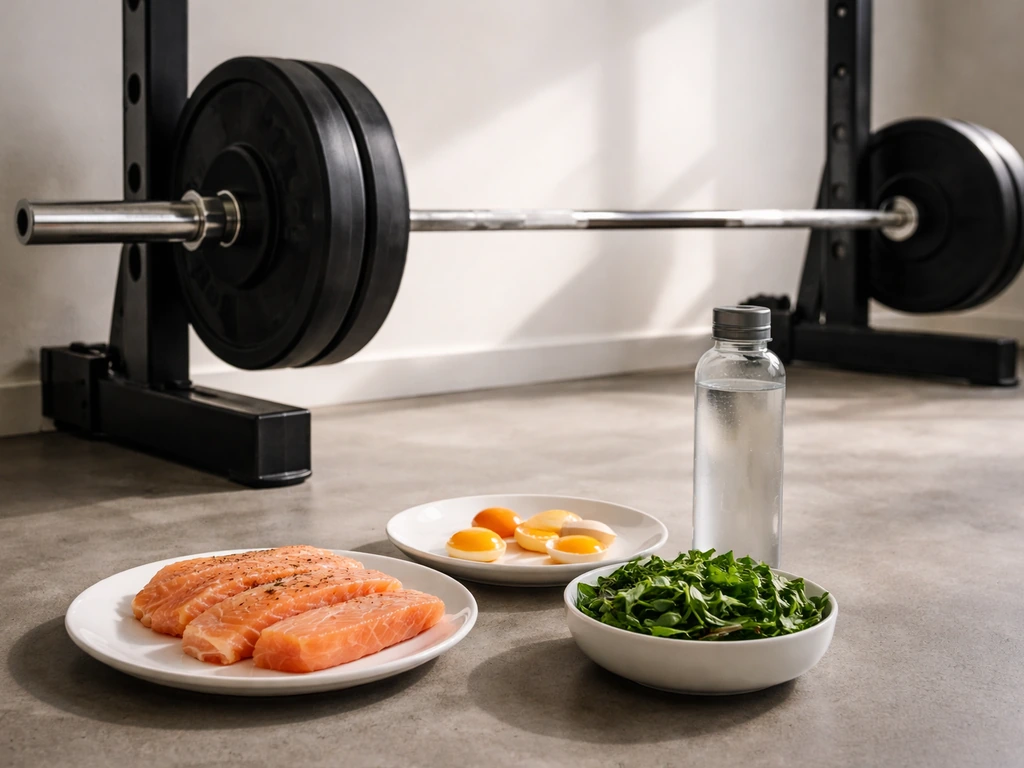
Yes, you can grow muscle while fasting, but the honest answer is: it depends heavily on what kind of fasting you're doing. Time-restricted eating with a 16:8 or even 18:6 window? Muscle gain is absolutely on the table, provided your protein and total calories are solid. Multi-day fasting? You're mostly in preservation mode at best. The type of fasting you choose matters more than almost anything else in this conversation, and most of what you've probably read glosses over that distinction. Let's fix that.
Can You Grow Muscle While Fasting? A Practical Plan

Marcus Kellerman
20 Apr 2026
What fasting actually does to your muscles

The moment you stop eating, your body starts making trade-offs. Insulin drops, which removes one of the most potent signals that tells your muscle to hold onto its amino acids. mTOR signaling, the pathway that drives muscle protein synthesis, quiets down. And your muscles begin releasing amino acids into circulation so your liver can run gluconeogenesis and keep blood glucose stable. This isn't catastrophic in the short term, but it is real.
Human tracer studies make this pretty clear. After 60 hours of fasting, forearm muscle shifts to a higher net amino acid output, meaning more protein is being broken down and released than is being built. After 72 hours, net skeletal muscle phenylalanine release increases noticeably and mTOR signaling drops measurably. These aren't subtle signals. The longer the fast, the more your body treats muscle as a fuel source. The good news is that muscle still responds to insulin's antiproteolytic effects during fasting, meaning that when you do eat, you can put the brakes on breakdown quickly. That's actually the mechanic that makes shorter fasting windows workable for muscle building.
Short overnight fasts of 10 to 14 hours, which most people are already doing without thinking about it, barely register as a stress on muscle tissue. The real shift happens somewhere between 24 and 48 hours, when endogenous glucose production declines and the body leans harder on muscle protein and stored fat. Beyond 48 to 72 hours, the catabolic environment is pronounced enough that building new muscle is essentially off the table. Preserving what you have becomes the goal.
Can you actually build muscle while fasting: what the evidence really says
The most honest summary of the research is this: time-restricted eating, specifically windows of 8 to 10 hours with adequate protein and total calories, shows no meaningful disadvantage for muscle gain compared to eating spread across the full day. In a randomized study of well-trained men and women, 16:8 time-restricted eating was viable for maintaining and building lean-mass outcomes under a hypercaloric, protein-controlled diet 16:8 time-restricted eating was viable for lean-mass outcomes under a hypercaloric, protein-controlled diet. Several controlled trials comparing 16:8 intermittent fasting to normal meal timing in resistance-trained individuals found similar lean mass gains when protein was matched. That's the key phrase. When protein was matched.
Where people lose muscle on intermittent fasting is almost always because they're also eating less protein, fewer total calories, or both. can you grow muscle on keto. The fasting itself isn't usually the villain. The shortfall it creates is. If you compress your eating window and don't consciously protect your protein intake, you'll likely eat less overall, and your muscles will pay the price over time.
Multi-day fasting is a different story. The physiology is unambiguous: prolonged fasting increases muscle protein breakdown, suppresses anabolic signaling, and creates a catabolic hormonal environment that works against muscle growth. You can absolutely use multi-day fasts for other goals (metabolic flexibility, insulin sensitivity, certain health protocols), but expecting to build muscle during a 48 to 72+ hour fast is setting yourself up for disappointment. If you're doing periodic extended fasts, the goal around those windows is lean mass retention, not growth.
This connects directly to questions about building muscle in a calorie deficit or without a calorie surplus. If you are trying to build muscle without a calorie surplus, focus on hitting your protein target and keeping training stimulus strong. In other words, can you grow muscles in a calorie deficit depends on protecting protein and keeping training stimulus high. You can also grow muscle without carbs by prioritizing enough protein and total calories while training consistently. If you're trying to can you grow muscle while cutting, the same fundamentals apply: keep protein high and training stimulus strong grow muscle without carbs. The principles overlap: under calorie restriction of any kind, muscle gain becomes harder and slower, but it's not impossible for beginners or for people returning after a break. For experienced lifters who are already lean, muscle gain during a significant caloric deficit is genuinely difficult regardless of meal timing.
Which fasting style actually works for muscle gain
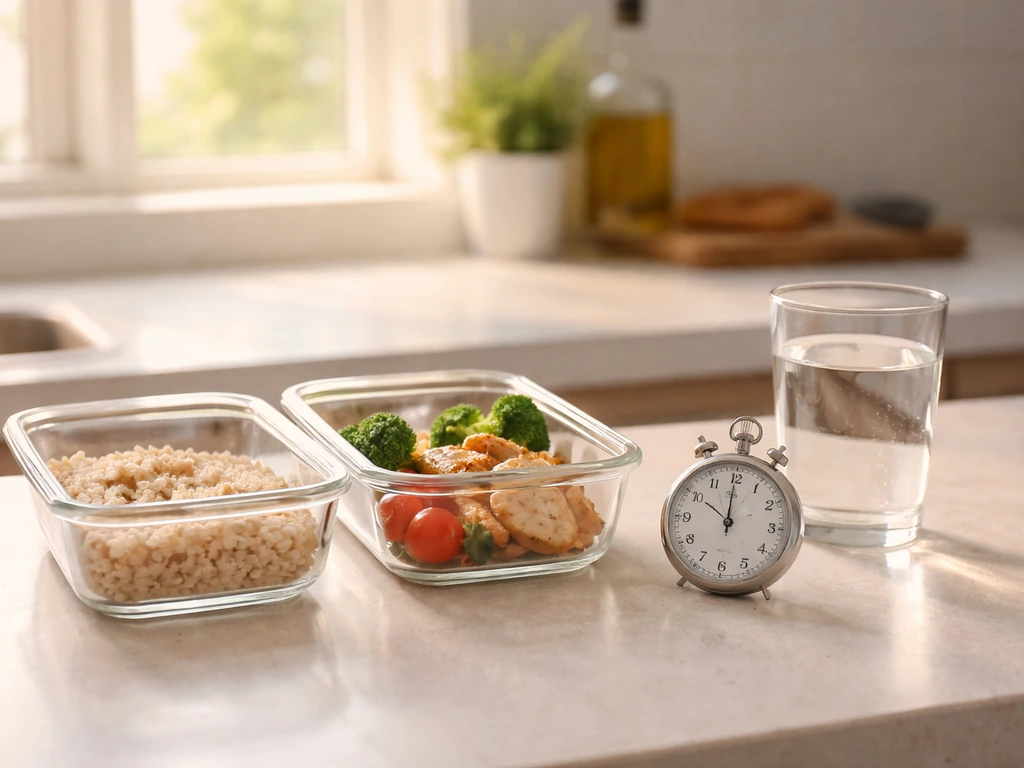
Not all fasting protocols are built the same when it comes to muscle. Here's how the major approaches stack up:
| Fasting Style | Eating Window | Muscle Gain Potential | Main Challenge | Best For |
|---|---|---|---|---|
| 16:8 Intermittent Fasting | 8 hours | Good, with matched protein | Hitting protein in a compressed window | Most lifters wanting structure |
| 18:6 Time-Restricted Eating | 6 hours | Moderate, requires discipline | Fitting enough calories and protein | Experienced lifters comfortable with hunger |
| 5:2 (two low-cal days) | Normal 5 days, ~500 cal x2 | Limited on fast days, normal other days | Caloric shortfall affecting weekly totals | People who prefer full eating days most of the week |
| OMAD (one meal a day) | 1–2 hours | Difficult, protein timing is poor | Can't absorb enough protein in one sitting efficiently | Short-term fat loss phases only |
| 24–72+ hour fasting | None during fast | Not realistic; preservation mode | Active muscle catabolism | Therapeutic/health protocols, not muscle gain |
The sweet spot for muscle gain is a 16:8 or at most an 18:6 window. These allow you to distribute protein across two to three meals, maintain enough total caloric intake to support training, and still capture whatever metabolic benefits fasting offers. Going to OMAD or beyond starts working against muscle biology pretty directly. If you're doing those protocols for other reasons, at least go in knowing that lean mass preservation rather than growth is the realistic outcome.
How to structure your training while fasting
When to train relative to your eating window
The most muscle-friendly approach is to train either just before you break your fast or early in your eating window. Training fasted (in the final hour or two of your fasting period) is manageable for most people and has the advantage of putting your first meal, ideally protein-rich, right after training. That post-workout protein spike arrives at exactly the right time when muscle protein synthesis is most elevated.
Training in the middle or early part of your eating window also works well. What you want to avoid is training at the very end of your eating window and then immediately going into a long fast. That setup means you're heading into the most catabolic portion of the fast right when your muscles need recovery nutrients most. Not ideal, but not disqualifying if it's your only option. In that case, just prioritize getting a solid protein meal in before the fasting window starts.
Managing volume, intensity, and performance expectations
Expect some performance adjustment in the first two to three weeks of fasting, especially if you're training fasted. Glycogen availability can be lower, perceived effort tends to be higher, and strength on compound lifts may dip slightly. This is mostly adaptation, not muscle loss, and it typically stabilizes. Most people find their performance returns to normal or close to it within a few weeks once the body adjusts to the fasted training state.
Keep your training volume and intensity consistent with what you were doing before. This isn't a time to go harder to compensate. Progressive overload still applies, you're still looking to add reps or weight over time, but dropping volume dramatically because you're fasting will just reduce the training stimulus for muscle growth. Maintain your program, monitor performance, and adjust if strength or rep counts drop over multiple weeks.
For older adults especially, training intensity and sufficient volume are non-negotiable. The anabolic sensitivity of muscle to protein and mechanical tension declines somewhat with age, which means older lifters can't afford to reduce stimulus while also potentially eating less. If you're over 50 and experimenting with fasting, keep lifting heavy (relative to your capacity), prioritize compound movements, and be especially vigilant about your protein numbers.
Protein and calories during fasting: solving the shortfall problem
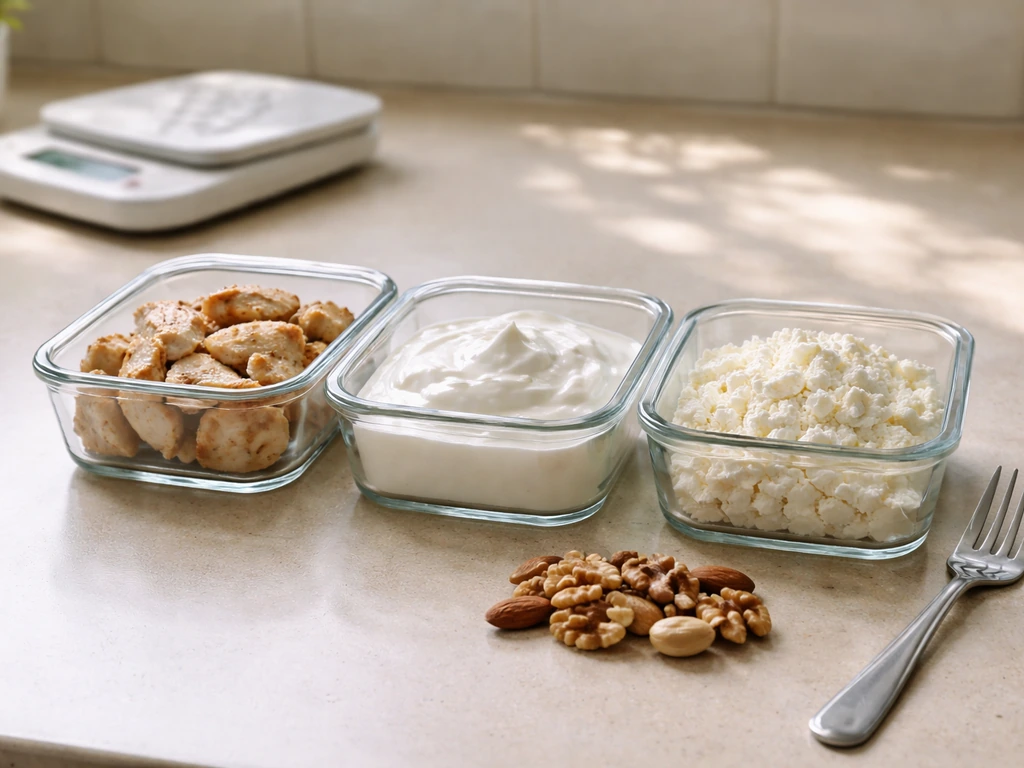
This is where most people go wrong. The fasting window compresses your eating time, which naturally makes it harder to hit the protein targets that muscle growth requires. The target you're aiming for is 0.7 to 1 gram of protein per pound of bodyweight per day (roughly 1.6 to 2.2 grams per kilogram). For a 180-pound person, that's 126 to 180 grams of protein. Getting that into a 6 to 8-hour window is doable but requires intention.
Distributing protein across at least two to three meals within your eating window is better than trying to hammer it all into one sitting. Research on protein absorption suggests there's a ceiling on how much muscle protein synthesis a single bolus of protein can maximally stimulate, somewhere around 40 to 50 grams per meal for most adults, though this ceiling may be higher for older adults who benefit from slightly larger individual doses (closer to 40 grams per meal) to overcome age-related anabolic resistance. Spreading protein across meals within your window takes advantage of multiple synthesis spikes.
On total calories: if you're trying to gain muscle, you need at least a modest caloric surplus, or at minimum maintenance calories. Fasting doesn't change that math. What fasting sometimes does is unintentionally create a deficit because people simply can't eat enough in the compressed window. Track your intake for at least a week when you start a fasting protocol to confirm you're actually hitting your targets. Calorie-dense, protein-rich foods (eggs, Greek yogurt, lean meats, dairy, legumes, protein shakes) are your friends here because they let you fit more nutrition into fewer meals.
One practical tactic: structure your first meal after breaking the fast to be your largest and most protein-dense, especially if you trained before or around that meal. Your second meal can carry most of the remaining protein, and a smaller third meal or snack can close the gap. This front-loads nutrition when your muscles are most primed to use it.
Supplements worth considering during fasting
Most supplements don't change the fundamental equation, but a few genuinely support muscle retention and training quality when you're eating in a compressed window.
- Protein powder: the most practical tool for hitting protein targets when whole foods alone fall short. A whey shake, which is fast-digesting, works especially well post-training. Casein or a blend works better as a final meal before the fasting window starts because it digests more slowly.
- Creatine monohydrate: one of the most evidence-backed supplements for strength and lean mass. Take 3 to 5 grams daily with any meal in your eating window. It doesn't need to be timed around training.
- Essential amino acids (EAAs) or BCAAs: during a fasted training session, a small dose of EAAs (6 to 10 grams) can blunt muscle protein breakdown without meaningfully breaking the fast from a metabolic standpoint. This is particularly useful if you train late in the fasting window. BCAAs alone are less complete but still provide some protection.
- Caffeine: fasted training often feels harder, and caffeine (3 to 6 mg per kilogram of bodyweight) taken 30 to 45 minutes before training can meaningfully improve performance, strength output, and perceived effort. Black coffee counts.
- Vitamin D and magnesium: not specific to fasting, but both support muscle function and recovery, and both are commonly deficient in people eating in restricted windows. Worth checking.
- Beta-alanine: useful if your training involves higher-rep sets or conditioning work. Helps buffer muscular fatigue, which can feel more pronounced during fasted training.
Skip expensive proprietary blends and anything marketed specifically as a 'fasting supplement.' The basics above cover what the evidence actually supports. If you're on a tighter budget, creatine and protein powder give you the most return per dollar.
How to know if it's working, and how to fix it if it's not
Signs you're progressing
Muscle gain during fasting looks exactly like muscle gain any other time: your strength goes up over weeks, your muscles look fuller, your bodyweight trends upward slightly (or stays stable if you're also losing fat), and your energy during training is solid. Track these things concretely. Log your lifts every session. Take monthly photos. If you're gaining strength and your best compound lift numbers are climbing over a 6 to 8 week period, you're doing something right.
Warning signs you're losing lean mass

- Strength dropping on multiple exercises over two or more consecutive weeks, not just a bad day
- Persistent fatigue and poor recovery that doesn't improve after a deload
- Constant hunger even after meals, suggesting total calories are too low
- Noticeable loss of muscle fullness or size, especially visible in the mirror after a pump
- Weight dropping faster than 0.5 to 1 percent of bodyweight per week (faster than this often signals lean mass loss alongside fat)
How to adjust
If you're seeing warning signs, run through this checklist in order before making dramatic changes. First, audit your protein. Most problems trace back here. If you're not hitting 0.7 to 1 gram per pound consistently, fix that before anything else. Second, check your total calories. Use a tracker for a week without changing anything, just to see where you actually land. Third, shorten your fasting window slightly: moving from 18:6 to 16:8 gives you more room to eat and recover without abandoning the approach. Fourth, review your training load. If you added volume or intensity at the same time you started fasting, that's a double stress. Stabilize one variable at a time.
If you're an older adult (50+) and you're not progressing, the protein dose per meal is often the issue. Research suggests older muscle is less sensitive to lower protein doses, so bumping individual meals to 40 grams or more of high-quality protein (leucine-rich sources like whey, eggs, or meat) can make a meaningful difference. The leucine threshold, the minimum amount of leucine needed to trigger a meaningful protein synthesis response, is higher in older muscle. Don't try to solve this with smaller, more frequent protein doses across the day; if your window is compressed, make each dose count more.
Fasting can absolutely coexist with a muscle-building goal when you use the right protocol, protect your protein, and train consistently. The people who fail at it usually combine a long fasting window with low protein and reduced training intensity, then blame the fasting. Treat it like any other nutritional strategy: it's a tool, not magic. Use it in a way that supports the muscle physiology, and it can work very well.
FAQ
Can you grow muscle while fasting if you train during the fasting window?
Yes, but only if you keep the fast short enough to avoid a large net muscle protein breakdown period. As a rule of thumb from the article’s logic, stick to time-restricted eating (around 16:8 or 18:6) and avoid extended fasts. If your goal is muscle growth while fasting, a longer fast (24 to 72+ hours) shifts the body toward preservation, so track your expectations accordingly.
Is it better to lift right before or right after breaking a fast for muscle growth?
Usually, but don’t rely on the idea that “fasted training will automatically build more muscle.” The practical lever is what happens immediately after. Train near the end of your fasting window or early in your eating window, then make your first meal large and protein-dense so you get a strong protein synthesis response when your body is ready to use it.
Why do some people lose muscle on intermittent fasting even when they feel they’re eating enough?
Watch out for the hidden deficit. Even if you feel like you’re eating “the same,” compressing the eating window often causes you to miss calories, and the article notes this is the most common reason people lose muscle. The fix is to track intake for at least a week and confirm you’re hitting protein and calories, not just “mostly eating clean.”
Can you grow muscle while cutting calories during fasting?
If fat loss is the goal, muscle gain becomes slower and smaller, but it can still happen if training stimulus and protein are protected. The article’s key requirement still applies: hit your daily protein target (about 0.7 to 1 g per pound), and keep lifting volume and intensity consistent. Expect better results if you’re a beginner, returning after a break, or doing only a mild deficit.
Do supplements like creatine or protein powder actually matter for muscle gain with fasting?
Creatine and protein powder can help because they’re easy to fit into a compressed window. Creatine supports training quality and muscle performance, and protein powder helps you hit the per-day target without increasing meal size. They do not replace the fundamentals, so use them to close the protein gap rather than as a substitute for adequate calories and progressive training.
What if I want to do OMAD (one meal a day) and still build muscle?
Yes, but the article cautions that doing extreme compression like OMAD or beyond tends to work against muscle biology for growth. If you only eat once per day, you’ll likely struggle to meet protein per meal within the window and you may not get enough total calories for growth. If you must do OMAD, you would need to be extra deliberate about protein quantity and total calories.
How should I split protein across meals when my eating window is short?
Protein distribution still matters even if total daily protein is correct. The article points to a practical ceiling where one large bolus does not stimulate muscle protein synthesis as effectively as spreading across multiple meals. In a compressed window, aim for at least two to three protein feedings, with doses that are large enough (often around 40 to 50 grams per meal) to drive a meaningful response.
Does it help to front-load protein right after my fast instead of spreading it evenly?
Yes, but prioritize timing and composition. The article suggests front-loading your first meal after your fast, especially if you trained before or around that meal. A practical approach is making meal one the biggest, most protein-dense portion, then use meal two to finish the bulk of your remaining protein, with meal three optional depending on your total intake.
If my strength drops during fasting, does that mean I’m losing muscle?
Performance often dips in the first two to three weeks due to lower glycogen and adaptation effects, especially if you train fasted. That does not automatically mean you are losing muscle. Use progressive overload and monitor strength, reps, and bodyweight trends over 6 to 8 weeks, adjusting fasting timing or intake only if performance stays down alongside poor protein or calories.
I’m 50+, and my muscle growth stalled on fasting. What should I change first?
If you’re over 50 and not progressing, the article highlights that older muscle is less sensitive to smaller protein doses. Instead of trying to “sprinkle” smaller amounts across the day, make each meal count more, often around 40 grams or more per protein dose when your window is compressed, and keep training stimulus high.
What’s the best way to troubleshoot stalled results while fasting for muscle gain?
Don’t change fasting and training at the same time. The article recommends a simple troubleshooting order: audit protein first, then verify total calories with tracking, then slightly shorten the fasting window if needed, and only then review training load. This prevents you from mistaking one problem (like low calories) for another (like the fasting schedule).