Yes, you can grow muscle in a calorie deficit, but the honest answer comes with conditions. It's not a free pass that applies equally to everyone. Whether it works for you depends on your training history, how big your deficit is, how much protein you're eating, and how hard you're training. The good news is that for a meaningful chunk of people, building muscle while losing fat is genuinely achievable, not just a gym myth.
Can You Grow Muscles in a Calorie Deficit? How to Do It

Marcus Kellerman
10 Apr 2026

The direct answer: yes, but with real conditions

Muscle growth requires your body to synthesize new muscle protein faster than it breaks it down. A calorie deficit makes that harder because your body has less energy to work with and is under hormonal pressure to conserve resources. But it doesn't make it impossible. The process that drives muscle growth, which is mechanical tension from resistance training, still triggers anabolic signaling even when calories are low. So the stimulus is there. What changes is the efficiency and the rate at which your body acts on it.
The scientific term for simultaneously losing fat and gaining muscle is body recomposition. It's well documented in specific populations, particularly beginners, people returning from a training layoff, and those who are overweight or obese. For leaner, more experienced lifters, the same process becomes harder because there's less stored energy to draw from and the muscle-building machinery is already closer to its ceiling. That doesn't mean it stops entirely, it just slows down significantly and demands more precision.
One more thing worth saying upfront: even when you can't build measurable new muscle in a deficit, maintaining the muscle you have while losing fat is a real and valuable outcome. Don't discount that. It's the difference between ending a cut looking lean and athletic versus ending it looking smaller and flat.
What a calorie deficit actually does to muscle
When you eat less than you burn, your body shifts toward using stored energy. Fat is the primary target, but muscle protein is also on the table if conditions aren't right. Cortisol rises, anabolic hormones like testosterone and IGF-1 tend to dip, and muscle protein breakdown can accelerate. This is the physiological pressure working against you.
At the same time, resistance training is sending the opposite signal. Heavy compound lifts create mechanical tension and metabolic stress that tell the body to adapt and build. The question becomes which signal wins. The answer depends largely on how severe the deficit is, how much protein you're eating, and whether you're maintaining training intensity. A mild deficit with high protein and consistent resistance training tilts the balance toward muscle preservation and, in the right person, muscle growth. A severe deficit with low protein and sporadic training tilts it the other way fast.
The magnitude of your deficit matters a lot here. A 25% caloric reduction is the kind of number that shows up in research as meaningful, producing real weight loss while still allowing resistance training to do its job. Go much deeper than that and you start compressing recovery, blunting hormonal output, and making it nearly impossible for your body to partition energy toward muscle building. A 500-calorie daily deficit is a common practical target. More than 750 to 1000 calories below maintenance starts pushing into territory where lean mass preservation becomes genuinely difficult even with perfect nutrition and training.
Who can build muscle in a deficit, and who has a harder time
Your starting point matters more than almost anything else here. Beginners and detrained individuals have the most to gain because their muscles respond strongly to any new training stimulus, even under suboptimal conditions like a calorie deficit. If you're new to lifting or coming back after months off, your body is essentially primed to add muscle at a rate that outpaces the drag of a calorie deficit.
People who are overweight or obese also have a real advantage here. Extra body fat means more stored energy available for the muscle-building process, even when dietary intake is reduced. Resistance training combined with caloric restriction in overweight and obese populations consistently shows lean mass preservation, and in many cases actual lean mass gains, alongside fat loss. This holds across age groups including middle-aged and older adults. If you're carrying significant body fat and picking up resistance training for the first time, you have nearly ideal conditions for body recomposition.
Older adults deserve a specific mention. The research is clear that resistance training increases muscle mass and strength in older populations, and this applies even during caloric restriction. The threshold for sufficient protein is actually higher in older adults due to reduced anabolic sensitivity to protein, meaning you may need to aim toward the upper end of protein recommendations. Age is context, not a barrier. Growing muscle while cutting is a realistic goal even if you're in your 50s or 60s, provided training and protein are dialed in.
For lean, experienced lifters, the picture is more complicated. The research on lean mass sparing during caloric restriction in resistance-trained athletes shows that factors like training experience, pre-diet training volume, and deficit magnitude all interact. The leaner and more trained you are, the harder it becomes for your body to build new muscle tissue while also running a calorie deficit. For this group, the realistic goal during a cut is usually maintaining lean mass as close to 100% as possible, with any actual muscle gain being a bonus rather than the primary target.
Training when calories are low
Keep the progressive overload alive

The biggest training mistake people make in a deficit is backing off too much. Reducing training volume during a cut essentially removes the signal your body needs to hold onto muscle. Research on detraining makes this clear: when resistance training volume and intensity drop, strength and muscle mass measures decline relatively quickly. You don't need to train more than usual in a deficit, but you absolutely need to keep training hard enough to give your body a reason to maintain what it has.
Progressive overload still matters in a deficit. You may not be adding weight to the bar every week, but you should be maintaining or nudging up on load, reps, or total volume over time. If your strength is trending down significantly week over week, that's a red flag that your deficit is too aggressive or your recovery is compromised.
Volume and intensity: what the research says
Interestingly, a network meta-analysis comparing exercise modalities during caloric restriction found that moderate- and low-intensity resistance training can preserve lean body mass better than high-intensity resistance training across included studies. This doesn't mean you should train light, but it does suggest that grinding yourself into the ground with maximal loads every session isn't necessarily the winning strategy during a cut. A combination of moderate intensity with adequate volume, meaning enough sets per muscle group per week to maintain the training stimulus, tends to hold up well when calories are limited.
A practical starting point is 10 to 20 working sets per muscle group per week, keeping reps in the 6 to 15 range with controlled effort. If recovery starts to slip (more on that below), pulling back to the lower end of that range is smarter than gutting through and accumulating fatigue you can't recover from.
Nutrition in a deficit: the levers that actually move the needle
Protein is non-negotiable

If there's one thing the research on muscle building in a deficit agrees on, it's this: protein intake is the most important nutritional variable. An updated systematic review with meta-regression specifically examining dietary protein's effect on fat-free mass in energy-restricted, resistance-trained individuals confirms that higher protein protects lean mass during a cut, with the benefit scaling with deficit magnitude. The bigger your deficit, the more protein you need to counteract it.
The practical target for most people in a deficit is 1.6 to 2.2 grams of protein per kilogram of bodyweight per day. For older adults, the evidence leans toward 1.3 g/kg as a meaningful improvement over the standard 0.8 g/kg, with some data supporting going higher. A 3-times-per-week resistance training program paired with higher protein intake consistently outperforms lower protein for preserving fat-free mass in calorie-restricted conditions across multiple trials. If you're cutting and not hitting at least 1.6 g/kg per day, you're leaving the most important lever on the table.
Carbs matter more than people think
The role of carbohydrates is more nuanced. A 2025 systematic review and meta-analysis concluded that carbohydrate intake is not an independent determinant of resistance-training-induced hypertrophy when protein and total energy requirements are already met. So if your protein is high and your deficit is modest, cutting carbs isn't automatically going to kill your muscle gains. That said, there's important context: low carbohydrate availability can impair the hypertrophic response to resistance training, particularly through blunted anaerobic performance and increased BCAA oxidation. Muscle strength tends to be less affected than hypertrophy under low-carb conditions, but if carbs are chronically depleted, your training quality and glycogen levels will suffer.
The practical takeaway is to keep enough carbs around your training sessions to maintain workout quality. This is not the moment to go ultra-low-carb unless you've tested it and your performance holds up. People often wonder whether you can grow muscle without carbs entirely, and the honest answer is that it becomes harder when training performance and glycogen take a hit. Similarly, if you're considering growing muscle on keto, the same caution applies: it can work for some people, but the margin for error is smaller.
Deficit size and cycling strategies
Aim for a moderate deficit of roughly 300 to 500 calories per day. This is conservative enough to preserve lean mass while still producing fat loss over time. One strategy worth knowing about: intermittent energy restriction, where you cycle between lower-calorie and higher-calorie (especially higher-carbohydrate) days, has been shown in a randomized controlled trial to attenuate fat-free mass loss compared with continuous restriction in resistance-trained individuals. In a 12-week resistance-training trial, intermittent fasting (5:2) and continuous energy restriction produced similar changes in body composition and muscle strength when paired with moderate protein intake intermittent energy restriction. If continuous cutting feels like it's grinding your performance down, cycling your calories or incorporating refeed days is a legitimate and evidence-backed tool.
Some people also wonder about more extreme approaches. Growing muscle while fasting is a real question, and the short answer is that it depends heavily on your fasting protocol, protein intake around training, and baseline. Intermittent fasting with time-restricted eating is less problematic than extended multi-day fasting, where muscle preservation becomes much harder.
Recovery and supplementation when you're in a deficit
Sleep is your most underrated tool
Sleep is where muscle repair and hormonal restoration actually happen. When you're in a calorie deficit, your body is already under mild physiological stress. Cutting sleep on top of that accelerates muscle breakdown, elevates cortisol, and suppresses anabolic hormones. Seven to nine hours is the target. If you're consistently sleeping less than 6 hours and wondering why you're losing strength on your cut, poor sleep is almost certainly part of the answer.
Managing fatigue and knowing when to back off
Fatigue accumulates faster in a deficit because you have less energy to recover with. The signs to watch for are persistent soreness that doesn't clear between sessions, strength trending down across multiple sessions, poor sleep quality, and a general sense of feeling flat. When these show up together, a short deload of 5 to 7 days at reduced volume is smarter than pushing through. This is not weakness or giving up; it's how you stay in the game long enough for the process to work.
Creatine: the one supplement worth prioritizing
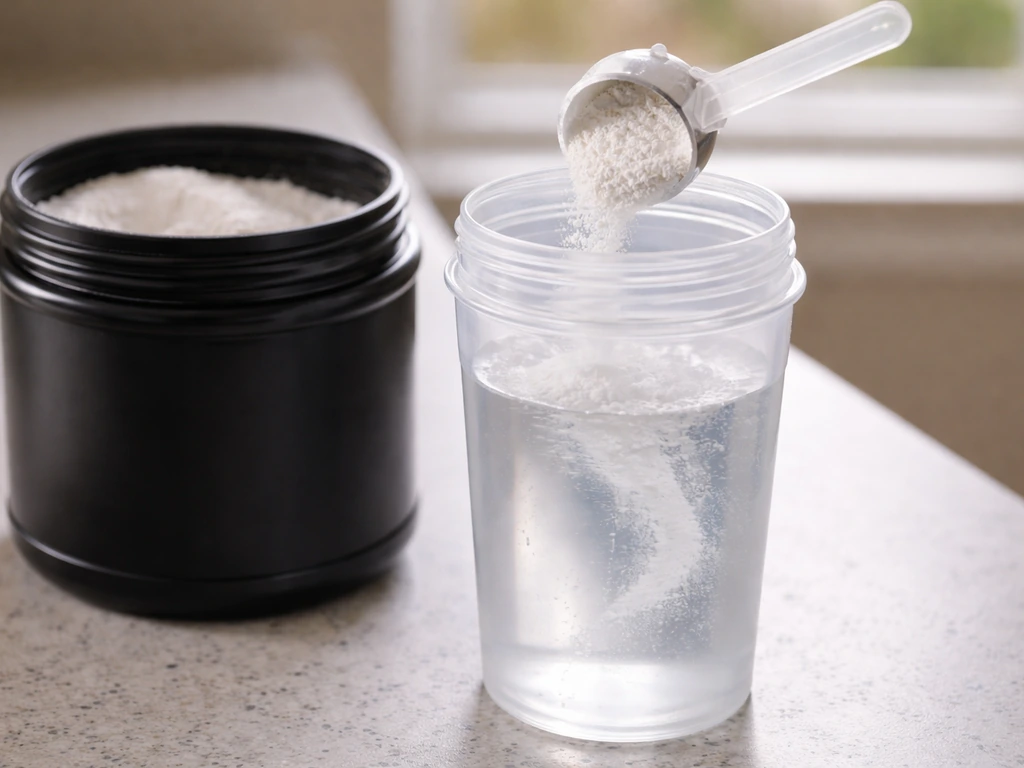
Creatine monohydrate is the supplement with the most consistent support for helping maintain muscle and strength during resistance training, including in calorie-restricted conditions. In adults under 50, creatine combined with resistance training produces greater strength gains compared to resistance training alone. In older adults, the evidence is equally compelling: multiple meta-analyses show that creatine plus resistance training improves both lean tissue mass and upper-body strength compared to training alone. If you're in a deficit and not using creatine, you're leaving one of the most accessible and well-researched tools unused. The standard dose is 3 to 5 grams per day. No loading phase required.
Beyond creatine, a high-quality protein supplement like whey can make it practical to hit your daily protein targets without eating excessive food volume. That's especially useful in a deficit when total food intake is already constrained. Everything else, the fat burners, the pre-workouts, the BCAAs, is secondary. If protein and creatine are covered, you've done 90% of what supplementation can actually do for you here.
What to realistically expect and how to track it
Recomp vs lean-mass gain: what's the difference?
Body recomposition means you're losing fat and building (or maintaining) muscle simultaneously. The scale may barely move because you're trading fat mass for lean mass. This is the most common outcome for beginners, detrained individuals, and those with higher body fat. Net new muscle gain in a deficit, where you're measurably bigger and stronger at the end of a cut than at the start, is harder to achieve but possible with the right conditions.
Most experienced, already-lean lifters in a deficit are doing well if they maintain 95% of their lean mass while losing a meaningful amount of fat. Growing muscle without a calorie surplus is a real possibility, but the rate of gain will always be slower than what's possible in a surplus.
How to track progress (and when to adjust)
The scale alone is a terrible progress tracker during a recomp or cut. It conflates fat loss, muscle changes, water retention, and glycogen levels into one misleading number. Use a combination of the following:
- Bodyweight trend over 2 to 4 weeks (average it, don't judge single days)
- Body measurements: waist, hips, chest, arms, and thighs every 2 to 3 weeks
- Progress photos every 2 to 4 weeks under consistent lighting and angles
- Strength tracking: log your working weights and reps for key compound lifts every session
- Rate of weight loss: aim for 0.5 to 1% of bodyweight per week; faster than that risks lean mass loss
If your strength is holding steady or gradually increasing, your measurements are changing in the right direction, and the scale is moving down slowly, you're doing this right. If strength is dropping significantly week after week, that's a signal to either increase calories slightly, reduce training volume temporarily, or check whether sleep and protein are where they need to be.
A practical comparison: deficit approaches
| Approach | Deficit Size | Best For | Lean Mass Risk | Rate of Fat Loss |
|---|---|---|---|---|
| Aggressive cut | 750–1000+ kcal/day | Short-term pre-event prep for lean athletes | High | Fast (1–1.5% BW/week) |
| Moderate cut | 300–500 kcal/day | Most people; best for recomp and lean mass retention | Low to moderate | Moderate (0.5–1% BW/week) |
| Mini deficit / recomp | 100–250 kcal/day | Lean, experienced lifters wanting simultaneous gain/loss | Very low | Slow (0.2–0.4% BW/week) |
| Intermittent / cycled restriction | Varies; higher-carb refeed days included | Resistance-trained individuals struggling with continuous restriction | Low | Moderate, with better performance retention |
Putting it all together: your starting point today
If you're asking whether you can grow muscle in a calorie deficit, here's the direct playbook. Set a moderate deficit of 300 to 500 calories below your maintenance. Get your protein to at least 1.6 g/kg per day, and push closer to 2.0 to 2.2 g/kg if you're leaner or more experienced. Keep resistance training 3 to 4 times per week with enough volume to maintain the training stimulus, and track your strength. Take 3 to 5 grams of creatine daily. Sleep 7 to 9 hours. And use your weekly bodyweight average plus measurements to judge progress, not the daily scale number.
If you're a beginner, overweight, or detrained, expect genuine recomposition where fat comes down and muscle goes up. If you're already lean and experienced, the realistic win is holding onto your muscle almost completely while the fat drops. Either outcome is valuable. Either requires the same fundamentals: adequate protein, consistent training, a controlled deficit, and enough sleep to recover. Get those right and the rest takes care of itself.
FAQ
If I’m losing weight in a deficit, will my muscles automatically grow too?
Yes, but the “muscle gain” is usually small and harder to measure. Your best bet is to track performance (reps at a given load, total weekly volume) and circumference/ photos, because the scale often lies during recomposition due to water and glycogen shifts.
How do I know whether my deficit is too big to build muscle?
If the deficit is aggressive, you may still preserve some muscle, but net new hypertrophy becomes unlikely for most people. A practical checkpoint is strength, if your main lifts and rep targets fall for more than 2 to 3 weeks, your deficit or recovery is likely too harsh.
Can you grow muscle in a deficit if you use intermittent fasting?
Yes, a deficit can still work with intermittent fasting, but only if you hit daily protein and keep training quality. Extended multi-day fasting tends to make lean mass preservation harder, so your fasting window matters more than the fasting label.
Does it matter how I split my protein in a calorie deficit?
You can, but aim for enough protein per day rather than forcing all protein into the smallest meal. Spreading intake across the day (and including a quality protein source near training) typically improves consistency and makes it easier to reach your grams per day.
What training mistake most often stops muscle growth during a cut?
Yes. Your article emphasizes protein, but another key issue is training stimulus, if you stop progressing or cut volume too much, muscle gain becomes even less likely. Use a simple guardrail: keep sets per muscle group roughly in the 10 to 20 working range and stop sessions when form fails, not when you feel “strong enough.”
How many carbs should I eat on a deficit to protect muscle?
Yes, but it can backfire if it makes workouts sloppy. Carbs are most useful for training performance and keeping intensity high, so keep them high enough to maintain your target rep ranges and reduce how much your strength drifts.
Is it harder to grow muscle in a deficit if I’m already lean?
If you are very lean, the margin is smaller. In that case, “recomp” may mostly look like maintenance, not growth, so you may need a slower deficit, higher protein (closer to the upper end), and tighter control of sleep and training volume to avoid losing size.
Why does poor sleep cause muscle loss during a calorie deficit?
Sleep is not just recovery, it also affects hunger and training output. If you consistently sleep under 6 hours, expect more trouble hitting protein, higher fatigue, and strength declines, which makes muscle preservation harder even if nutrition is on point.
Should I adjust calories or training if my strength is dropping on my cut?
Often, yes. If your main lifts and pump work stall for multiple weeks and your recovery markers worsen (soreness lingers, performance drops), it can indicate fatigue from volume, intensity, or insufficient food. A short deload plus a slight calorie increase is usually a faster fix than pushing through.
Will creatine guarantee muscle retention in a deficit?
Creatine helps most when you can train consistently, it does not offset a lack of resistance training or chronic under-eating. If you stop lifting or your protein intake is low, creatine alone will not prevent lean mass loss.
Can a small calorie deficit make muscle gain more likely than a bigger one?
Yes, when you are near maintenance and in the “small deficit” range, muscle gain becomes more plausible, especially for beginners and detrained lifters. Think of it as trading slower fat loss for more training capacity, which can indirectly support hypertrophy.
Is intermittent energy restriction better than continuous cutting for muscle retention?
Yes, but you need to treat it as an experimental change, not a permanent identity. If you repeatedly see strength and measurements dip, try a higher calorie day or less aggressive deficit for 1 to 2 weeks, then reassess, especially if training quality is sliding.
What’s the best way to track muscle changes during a cut if the scale is unreliable?
It’s possible, but your progress tracking should change. Focus on weekly averages, waist and limb measurements, and strength trends, because day-to-day scale swings from water and glycogen can mask fat loss or make you think you’re gaining muscle when you are not.
Can I grow muscle in a deficit while going keto?
Yes, if it causes your total daily energy and training performance to drop too far, muscle preservation suffers. The safest approach is to ensure you still hit protein targets and that your workouts keep the same intensity and rep quality, otherwise the “keto in a deficit” margin becomes smaller.