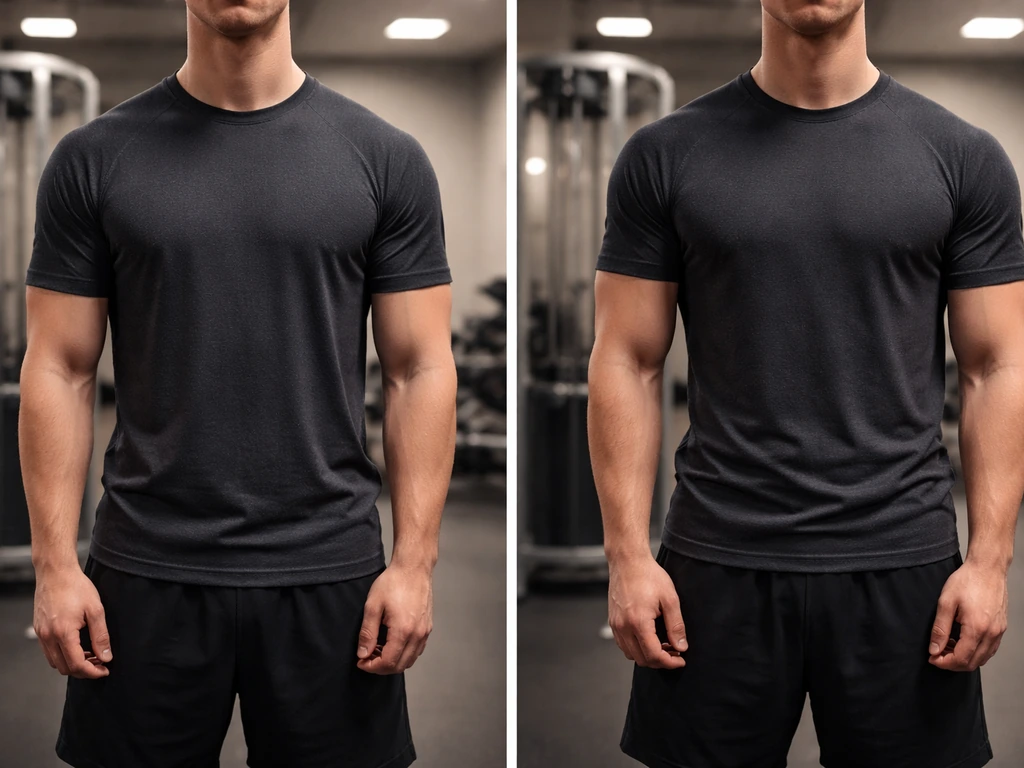
If you're training consistently, eating enough protein, and sleeping well, you can expect measurable strength gains within the first 2 to 4 weeks, detectable muscle size changes around weeks 3 to 4 (visible on ultrasound even if not yet in the mirror), and noticeable physical changes in the 8 to 12 week range.
How Long Does It Take to Grow Muscle Naturally?

Marcus Kellerman
23 May 2026
If you want a tighter estimate of your month-to-month gains, consider how factors like training age, consistency, and starting size affect your monthly muscle growth potential how much muscle can you grow in a month. Real, visible muscle that other people notice typically takes 3 to 6 months for most beginners. For intermediate and advanced lifters, meaningful new muscle takes longer because you're closer to your genetic ceiling.
That's the honest answer, and the rest of this guide explains what's happening at each stage and how to make sure you're actually set up to grow.
What 'natural' actually means here
When people ask how long it takes to grow muscle naturally, they usually mean without anabolic steroids, SARMs, or other performance-enhancing drugs that artificially accelerate or amplify muscle protein synthesis. That's the definition we're using here. Natural training means your results are bounded by your own hormonal environment, genetics, recovery capacity, and how well you execute the fundamentals. It doesn't mean avoiding creatine, protein powder, or caffeine, which are legal, well-studied supplements that work within your body's normal physiology. The distinction matters enormously for timeline expectations. Steroid users can gain muscle at rates that are simply not achievable naturally, so comparing yourself to enhanced athletes (or even some fitness influencers who are quietly enhanced) will only demoralize you.
Natural muscle growth is also governed by factors you can't fully control: your genetics, biological sex, age, and training history. Men typically grow muscle faster than women due to higher testosterone levels. Beginners gain faster than experienced lifters because they're further from their genetic ceiling. Older adults, particularly those over 60, tend to show a somewhat smaller hypertrophic response than younger adults when following the same program, though they absolutely still respond and grow. None of this is a reason not to train. It's just context for setting realistic expectations rather than chasing timelines that don't apply to you.
Strength gains come first, size gains come later
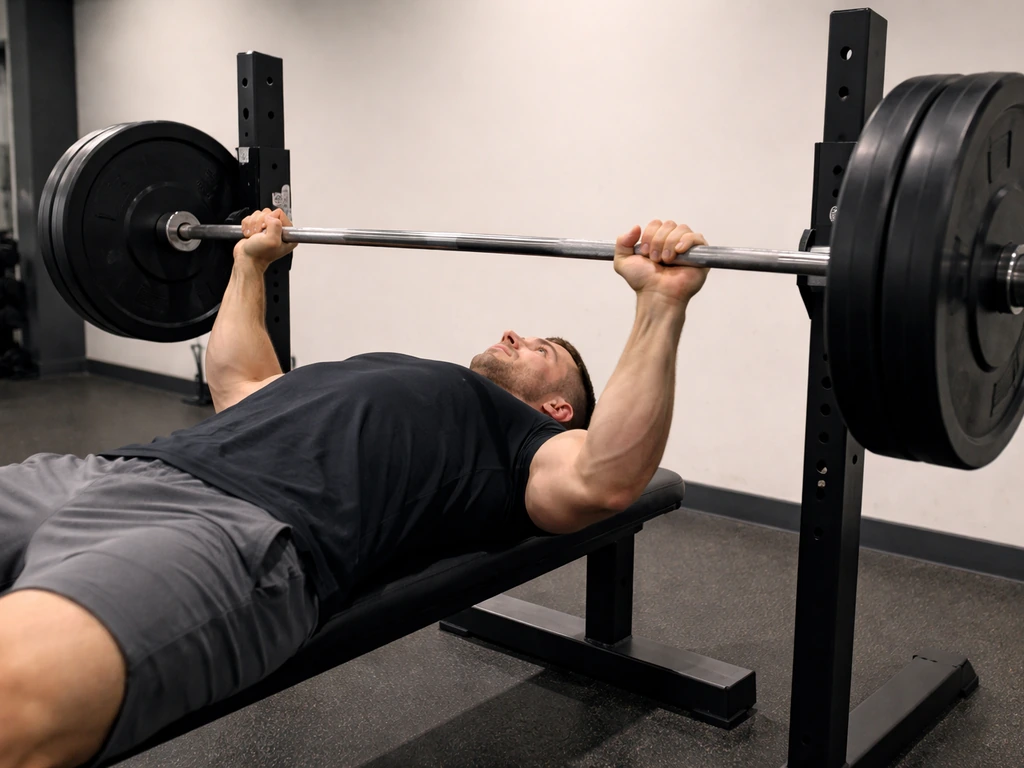
Here's something that trips a lot of new lifters up: the first month or two of training, your strength goes up noticeably but you may not see much size change. This is completely normal and expected. Early strength gains are primarily neural, meaning your nervous system is getting better at recruiting motor units, coordinating movement patterns, and producing force efficiently. You're not necessarily building much new muscle tissue yet, you're just getting better at using what you have. These neural adaptations can produce significant strength increases in weeks 2 through 6 even when hypertrophy is minimal.
Actual muscle tissue growth starts earlier than most people think, though. Research using ultrasound to measure muscle cross-sectional area has detected statistically significant increases in muscle thickness within 3 to 4 weeks of starting a resistance training program in untrained individuals. One study found mean increases in thigh muscle area after just two training sessions, with significant hypertrophy appearing around weeks 3 to 4.
The issue is that these early changes are small, and the mirror and a tape measure aren't sensitive enough to catch them. You typically need 8 to 12 weeks before changes show up clearly in photos, and 3 to 6 months before most people notice a real shift in your physique. After the initial neural phase, the hypertrophic response accelerates and becomes the dominant driver of continued strength improvement.
| Timeframe | What's happening | What you'll notice |
|---|---|---|
| Weeks 1–2 | Neural adaptations, motor learning | Better coordination, less soreness over time |
| Weeks 3–4 | Early hypertrophy (measurable by ultrasound) | Noticeable strength gains, slight fullness in trained muscles |
| Weeks 6–10 | Hypertrophy accelerating, continued neural gains | Lifts going up consistently, clothes fitting slightly differently |
| Months 3–6 | Visible physique changes, measurable size increases | Other people notice, photos show clear difference |
| 6–12+ months | Steady but slower gains as adaptation continues | Real strength and size that holds up over time |
How to predict your own timeline
Your starting point is the single biggest predictor of how fast you'll grow. Beginners (less than 1 year of consistent, structured training) have the most to gain and gain it fastest. A common estimate for natural muscle gain in a motivated beginner is roughly 1 to 2 pounds of muscle per month in the first year when training and nutrition are dialed in. That slows to maybe 0.
5 to 1 pound per month in year two, and by year three and beyond you're often talking about a few pounds per year at most. How much muscle you can realistically put on in a given window is a topic worth exploring in more depth on its own.
If you're wondering how much muscle you can grow in 3 months, the timeline depends heavily on your starting point, training consistency, and how well you follow nutrition and recovery How much muscle you can realistically put on in a given window. Ultimately, your timeline for muscle growth depends on factors like starting point, training age, nutrition, and recovery, which is what determines how much muscle you can grow how much muscle you can realistically put on.
Your sex matters too. Men have more testosterone and a higher anabolic ceiling, so they tend to gain faster in absolute terms. Women gain muscle at a similar relative rate (as a percentage of their starting muscle mass) but from a lower absolute baseline, so the numbers on the scale look smaller even when the adaptation is equally strong. Women should not use male timelines as their benchmark.
Age is a real but often overstated factor. Adults over 60 can and do build muscle from resistance training, but the hypertrophic response can be somewhat blunted compared to younger adults following the same program. This doesn't mean older adults should train less. If anything, the stakes are higher: resistance training for muscle retention and functional strength becomes increasingly important with age. The timeline may just need a bit more patience and attention to recovery.
- Beginner (0–1 year): fastest gains, often 1–2 lbs of muscle per month possible with good execution
- Intermediate (1–3 years): gains slow, roughly 0.5–1 lb per month at best
- Advanced (3+ years): a few pounds per year is a realistic ceiling without drugs
- Older adults (60+): gains are smaller in magnitude but still meaningful and very much worth pursuing
- Women: similar relative rate to men, smaller absolute numbers, different reference points needed
The training variables that actually drive muscle growth

You don't grow muscle just by showing up to the gym. You grow it by consistently applying the right training stimuli and progressively making that stimulus harder over time. Progressive overload is the foundational principle: your muscles must be challenged beyond what they're accustomed to in order to adapt. That means adding weight, reps, or sets over time, or reducing rest periods, or improving technique so more tension goes to the target muscle. If you're lifting the same weights for the same reps you did six months ago, don't expect six months of muscle growth.
Volume (the total number of sets per muscle group per week) is one of the clearest drivers of hypertrophy in the research. The 2026 ACSM resistance training position stand points to roughly 10 sets per muscle group per week as a practical starting target. Systematic reviews and meta-analyses suggest meaningful hypertrophy benefit continues up to around 12 to 20 sets per week, with diminishing returns beyond that range. More is not always better, and grinding through 25 sets per muscle per week while sleeping poorly and under-eating is worse than doing 12 quality sets with excellent recovery.
Intensity in the hypertrophy context means how close you train to muscular failure. You don't need to go to absolute failure on every set, but you need to be working hard enough that the last few reps of a set are genuinely challenging. Research on autoregulation supports using a reps-in-reserve (RIR) approach, where you aim to stop sets with roughly 1 to 3 reps left in the tank. This lets you train at a high enough intensity to drive adaptation without accumulating unnecessary fatigue. Leaving 5 or 6 reps in reserve on most sets is probably not hard enough to grow.
Exercise selection should prioritize compound movements (squats, deadlifts, presses, rows, pull-ups) that train multiple muscle groups under load, supplemented by isolation work for lagging muscles. Training frequency of 2 times per week per muscle group is generally well-supported for hypertrophy and fits most schedules. Hitting a muscle group once per week can work, especially at higher volumes, but twice tends to be more efficient for most people.
Eating for muscle: what your nutrition actually needs to look like
Protein is the non-negotiable. The International Society of Sports Nutrition (ISSN) recommends 1.4 to 2.0 grams of protein per kilogram of bodyweight per day for exercising individuals looking to support muscle growth and retention. For a 180-pound (82 kg) person, that works out to roughly 115 to 165 grams of protein daily. Individual doses of protein within each meal ideally provide around 20 to 40 grams to maximally stimulate muscle protein synthesis, with leucine-rich sources (chicken, eggs, beef, dairy, soy) being particularly effective. Spreading protein across 3 to 5 meals or feedings tends to be more effective than cramming it all into one or two meals.
Calories matter too. You can build some muscle in a calorie deficit (especially if you're a beginner or returning after a break), but genuine hypertrophy is most efficient in a calorie surplus. A modest surplus of 200 to 500 calories per day above your maintenance level is enough to support muscle growth without excessive fat gain. If you're not sure whether you're in a surplus, track your bodyweight weekly for 2 to 3 weeks. If it's not moving up slightly (say 0.25 to 0.5 lbs per week during a muscle-building phase), you're probably not eating enough.
Carbohydrates are your primary fuel for resistance training and support recovery, so don't slash them in the name of 'eating clean.' Fat should be kept at a minimum of around 0.5 to 1.0 grams per kilogram of bodyweight to support hormone production, including the testosterone and IGF-1 that drive muscle growth. Going too low in fat for extended periods can blunt your anabolic environment. Beyond the big three macronutrients, micronutrients like vitamin D, zinc, and magnesium play supporting roles in muscle function and recovery, so eating a varied diet with plenty of vegetables, whole foods, and fruit matters more than people give it credit for.
Meal timing is real but secondary to total daily intake. Having protein within a couple of hours around your training session (before and/or after) is a reasonable practice, but stressing over a precise 30-minute anabolic window is not necessary if your overall daily protein target is met.
Recovery is where muscle is actually built

Training breaks muscle down. Sleep and rest are when it rebuilds bigger and stronger. The American Academy of Sleep Medicine recommends adults get 7 or more hours of sleep per night on a regular basis. In practice, 7 to 9 hours is the target range for most people who are training hard. Chronically sleeping 5 to 6 hours while training for hypertrophy is like pouring water into a bucket with a hole in it. Your hormone production (especially growth hormone and testosterone), protein synthesis rates, and nervous system recovery are all significantly compromised by sleep deprivation.
Chronic stress raises cortisol, which is catabolic and directly works against muscle protein synthesis. This doesn't mean you need a stress-free life to build muscle, but it does mean that life stressors should factor into how hard you're training. If work is brutal and sleep is suffering, hammering high-volume training isn't the move. Scaling back volume temporarily is a smarter choice than grinding through and stalling for months.
Deloading (deliberately reducing training volume, intensity, or both for a week every 4 to 8 weeks) is a legitimate and evidence-informed practice. A recent study testing deload approaches found that reducing weekly set volume and training frequency for a week didn't negatively affect short-term hypertrophy outcomes in untrained young men. Planned deloads help manage accumulated fatigue, reduce injury risk, and can actually let you come back and train harder. If you've been training hard for 8 weeks straight and feel beat up, a deload is not laziness, it's smart programming.
Supplements worth considering (and ones you can skip)
Creatine monohydrate is the most well-supported natural supplement for muscle and strength gains. The ISSN position stand on creatine states it is safe and well-tolerated in healthy individuals. It works by increasing phosphocreatine stores in muscle, allowing you to produce more energy during high-intensity efforts, which translates to more reps, more volume, and better long-term hypertrophy. You can load with about 5 grams four times daily for 5 to 7 days to saturate stores quickly, or just take 3 to 5 grams per day and reach saturation in 3 to 4 weeks. Either approach works. This is the one supplement that genuinely moves the needle for most people.
Protein powder is a convenient way to hit your daily protein target, not a special muscle-building product. Whey, casein, and soy are all high-quality, complete protein sources. If you're consistently hitting 1.6 to 2.0 g/kg of protein from food, you don't need it. If whole food protein sources are inconvenient or expensive, a scoop of protein powder is a practical solution.
Caffeine is a well-documented ergogenic aid. The ISSN reports performance benefits at doses of roughly 3 to 6 mg per kilogram of bodyweight, meaning a 180-pound person might benefit from 250 to 500 mg before training. It improves strength output, endurance, and focus during sessions, which can mean more effective training over time. It's optional but useful if you train at times when energy is low.
Omega-3 fatty acids have some mechanistic data suggesting benefits for muscle protein synthesis and recovery, but the direct performance evidence is more mixed. A quality fish oil supplement (providing 2 to 4 grams of combined EPA and DHA per day) is unlikely to hurt and may offer modest benefits, especially for older adults or people with low dietary fish intake. It falls more in the 'reasonable addition' than 'essential' category.
| Supplement | Evidence level | Practical recommendation |
|---|---|---|
| Creatine monohydrate | Strong | 3–5 g/day, highly recommended for most people |
| Protein powder | Strong (as a protein source) | Use only if you're not hitting daily protein from food |
| Caffeine | Strong for performance | 3–6 mg/kg before training, optional but useful |
| Omega-3 fish oil | Moderate, mixed | 2–4 g EPA+DHA/day, reasonable addition especially for older adults |
| BCAAs | Weak (if protein is adequate) | Skip unless protein intake is already very low |
| Pre-workout blends | Variable | Usually caffeine + fillers; just use caffeine directly if you want the benefit |
How to track progress and fix it when gains stall

The scale alone is a terrible way to track muscle growth. Your weight fluctuates daily based on water, food, and other factors, and muscle is denser than fat, so you could be building muscle while your weight barely moves (especially during body recomposition phases). Use multiple tracking methods together for a clear picture.
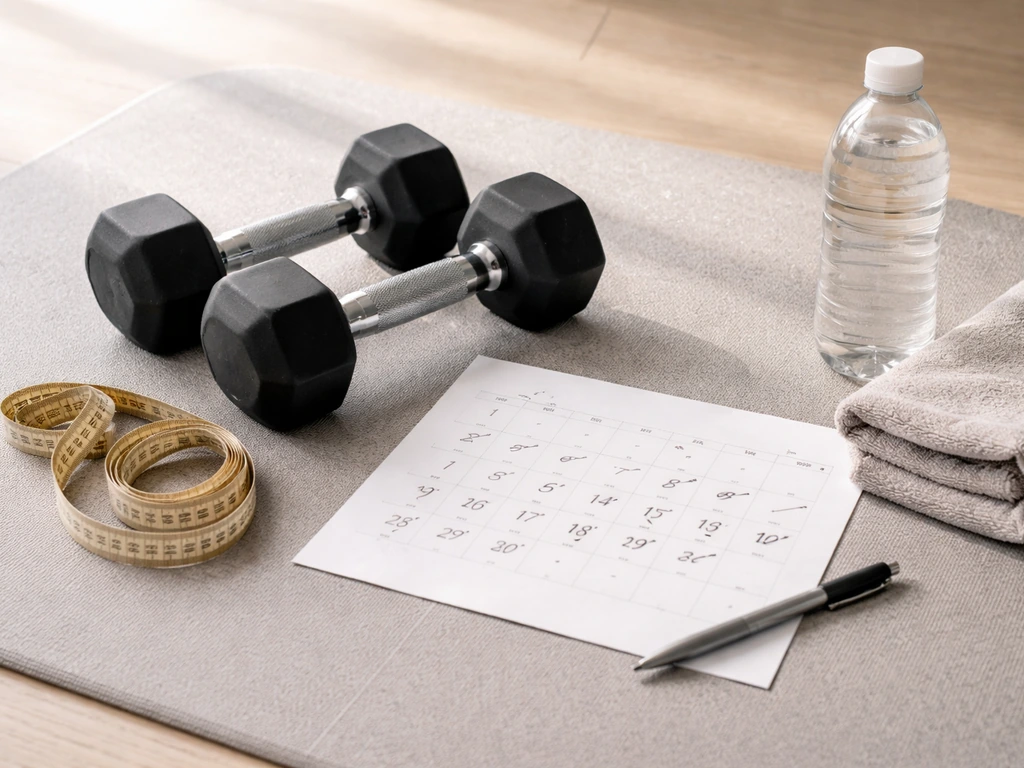
- Progress photos: Take them every 4 weeks in consistent lighting, same time of day, same poses. This is often the most motivating and visually clear metric.
- Strength in key lifts: Track your working weights and reps in compound movements. If your squat, bench, and row are going up over time, you're almost certainly growing.
- Body measurements: Tape measure around the chest, upper arms (flexed), thighs, and waist once a month. Arm and thigh measurements going up while waist stays the same is a great sign.
- Bodyweight trend: Weekly average (weigh yourself 3 to 4 mornings per week and average them) tells you far more than a single daily weigh-in.
If you've been training for 8 to 12 weeks and none of your tracking metrics are moving, there are a handful of common culprits to check. The most common one is under-eating, specifically not being in enough of a calorie surplus and not hitting daily protein targets. The second most common is not enough progressive overload: you need to actually be adding weight or reps over time, not just showing up and going through the motions with the same loads. Third is poor sleep or high life stress chronically undermining your recovery. Fourth is a program that's genuinely too low in volume or too random to accumulate the stimulus your muscles need.
If gains have stalled after 4 to 6 weeks, try this systematic approach before overhauling everything. First, audit your nutrition by tracking food intake for 5 to 7 days to see where protein and calories actually land. Most people significantly underestimate. Second, look at your training log and identify whether weights are actually going up week to week.
If not, make progressive overload the explicit focus of each session. Third, assess sleep honestly. If you're regularly under 7 hours, fix that before adding more training volume. Fourth, if everything checks out and you've been on the same program for 12 or more weeks with no changes, it may be time to adjust the program itself, adding sets, changing rep ranges, or introducing new exercises to create a fresh adaptive stimulus.
Building muscle naturally takes real time, and that's not a flaw in the process. If you want to estimate how long it takes to grow muscle mass, use your starting point and consistency as the main guide how long does it take to grow muscle mass. It's what makes it durable. Gains that come from months of consistent work, good nutrition, and quality recovery stick around in a way that shortcuts don't. If you're a beginner, you're in the best position possible: the gains are fastest and most motivating right now. If you're intermediate or advanced, the slower pace is just the cost of already being further along. Wherever you're starting, the fundamentals don't change, and they work.
FAQ
If I start seeing strength gains quickly, does that mean I’m definitely building muscle already?
Not necessarily. The first 2 to 6 weeks often include strong neural adaptations, meaning you can lift more due to better coordination and motor unit recruitment even if visible size changes are small. If you want to confirm hypertrophy, check longer-term markers like progressive overload trends, repeated increases in training volume, and small but consistent changes on photos or measurements over 8 to 12 weeks.
How long does it take to grow muscle if I’m only training once per week?
You can build muscle with once-weekly training, but it usually takes longer or requires more total weekly volume per session to get the same hypertrophy stimulus as splitting into two sessions. If progress feels slow after 8 to 12 weeks, one practical adjustment is moving to two sessions per muscle group and keeping weekly set totals similar.
How long will it take if I’m not a true beginner, for example I trained inconsistently before?
Training “age” depends on consistent time close to what you’re doing now, not just how long ago you lifted. If your prior efforts were sporadic, your timeline may resemble a beginner (faster early gains). A useful approach is to track your last 8 to 12 weeks: if weights and reps are trending up, you’re responding, even if the scale changes little.
What’s the fastest timeline that’s realistic without steroids?
For most motivated natural beginners, noticeable physique changes often take about 3 to 6 months, with measurable strength gains appearing in 2 to 4 weeks and small muscle thickness increases possible by 3 to 4 weeks. If someone claims “big” visible changes in a few weeks, it’s usually tool misuse (lighting, pump, water retention, or unrealistic comparisons) rather than true new tissue.
Why do my measurements and photos not change even though I feel stronger?
Common reasons include scale stability from water shifts, muscle gaining while fat stays the same or decreases slowly (body recomposition), and lack of sensitivity in the measurement method. Re-measure under consistent conditions (same time of day, same posture, similar lighting), and focus on whether your weekly training load is genuinely increasing for at least 8 to 12 weeks.
How long does muscle gain take if I’m in a calorie deficit?
You can gain some muscle while cutting, but the timeline for visible hypertrophy is usually slower than a small surplus. A practical decision rule is to ensure you still hit daily protein and keep progressive overload realistic. If your bodyweight drops and training load stalls for 4 to 6 weeks, increase calories slightly or reduce training intensity/volume to preserve gains.
How long should I give a workout plan before concluding it’s not working?
If execution is solid, give it about 8 to 12 weeks before making major changes, since early improvements can be neural and small hypertrophy changes are easy to miss. Use a decision checklist: protein and calories on target, sleep at least 7 hours for most nights, and training log showing upward trends in weight, reps, or set quality.
Do I need to go to failure to grow faster, or will slower intensity still work?
Going close to failure helps drive hypertrophy efficiently. A useful caveat is that consistently leaving too many reps in reserve (for example, 5 or 6) can reduce the stimulus, slowing growth. Instead of absolute failure every set, consider an RIR approach (often around 1 to 3 reps left) on most working sets, while keeping form strict.
How long does it take to see progress if I keep changing my exercises every few weeks?
Exercise swaps frequently reset your learning curve and can interrupt progressive overload, making it harder to judge true hypertrophy progress. If you want faster, clearer muscle gain, keep the main lifts stable for longer blocks (often 8 to 12 weeks) and only swap isolation exercises if you have a specific reason like joint discomfort or lagging areas.
Is there a point where adding more sets stops speeding up muscle growth?
Yes. Hypertrophy gains tend to continue with more weekly sets up to a range, then slow down with diminishing returns and higher fatigue. If you’re currently near the high end (for example, very high set totals per muscle group) and recovery is worse, cutting back to a quality-focused range and improving effort per set often produces better results within the next 4 to 8 weeks.
Can I speed muscle growth by taking a break from training?
Yes, in some cases. If you’ve trained hard for 8 to 12 weeks and feel unusually beat up, a deload can reduce fatigue and help you return to productive overload. The goal is not to “gain during the break,” it’s to recover so your next 4 to 8 weeks of training generate better stimulus and progress.
What should I do if I’ve been training 3 to 6 months but my progress is still minimal?
Run a targeted audit instead of replacing everything: confirm you’re in a sufficient calorie range for your goal, hit daily protein, and verify overload in your log. Then check sleep quality and stress, because chronic poor recovery often blunts hypertrophy even with good workouts. If all of that is on point and you’ve done the same plan for 12+ weeks, adjust variables like volume, rep ranges, exercise selection, or frequency to create a new adaptive stimulus.