Here's the direct answer: most people can gain roughly 1 to 2 pounds (0.5 to 1 kg) of actual muscle in a month under good conditions. Beginners can sometimes push toward the higher end of that range in the early months. Intermediate lifters sit closer to the middle. Older adults often land at the lower end, and that's completely normal and still meaningful. These aren't arbitrary numbers, they reflect what human muscle physiology actually allows when training, nutrition, and recovery are dialed in.
How Much Muscle Can You Grow in a Month? Real Expectations

Marcus Kellerman
20 Apr 2026

The frustrating truth is that a single month is a short window for muscle growth. For a more complete timeline, see how long it takes to grow muscle naturally with the right training and recovery how long does it take to grow muscle naturally.
For a more complete timeline, see how long it takes to grow muscle mass with the right training and recovery (related option), beyond just the early month estimate how long does it take to grow muscle mass. To learn how much muscle you can realistically build in that first month, use the ranges and expectations discussed for beginners, intermediates, and older lifters how much muscle can you grow.
To get a realistic sense of how quickly does muscle grow, focus on the drivers of hypertrophy and what you can expect in month one versus later. To estimate how many months to grow muscle, focus on hypertrophy drivers and how your progress changes after the first month. The biological process of hypertrophy is slow by design.
But slow doesn't mean zero, and understanding what's realistic, and what drives you toward the high end versus the low end, is genuinely useful. Let's work through it.
Realistic muscle gain: what to expect this month and over the year

Monthly gains depend heavily on where you're starting. Beginners have a significant biological advantage called "newbie gains", the nervous system, connective tissue, and muscle fibers all respond strongly to an unfamiliar training stimulus. In the first one to three months, a beginner can realistically add 1.5 to 2 pounds (roughly 0.7 to 1 kg) of lean muscle per month. That rate doesn't last. By the time you've been training consistently for a year or more, monthly gains drop closer to 0.5 to 1 pound (0.25 to 0.5 kg), and advanced lifters may see 0.25 pounds or less in a good month.
| Training Level | Monthly Muscle Gain (lbs) | Monthly Muscle Gain (kg) | Annual Estimate |
|---|---|---|---|
| Beginner (0–1 year) | 1–2 lbs | 0.5–1 kg | 12–20 lbs / 5–9 kg |
| Intermediate (1–3 years) | 0.5–1 lb | 0.25–0.5 kg | 6–12 lbs / 3–5 kg |
| Advanced (3+ years) | 0.25–0.5 lb | 0.1–0.25 kg | 2–5 lbs / 1–2 kg |
| Older adults (55+) | 0.25–0.75 lb | 0.1–0.35 kg | 3–8 lbs / 1.5–3.5 kg |
Older adults deserve a specific note here. Research consistently shows that age is a moderator of lean body mass gains from resistance training, meaning that on average, older lifters gain less muscle per unit of time than younger adults. But the word "less" is doing a lot of work. Older adults absolutely build muscle from resistance training.
A 2020 systematic review and meta-analysis found that older adults still experience hypertrophy with resistance training, but the hypertrophic response diminishes with advancing age [Older adults absolutely build muscle from resistance training. ](https://journals. physiology. org/doi/abs/10.
1152/japplphysiol. 00170. 2020). Studies show that meaningful lean mass gains do accumulate, and longer training durations (at least 12 weeks) tend to produce better results than shorter blocks.
One month is a starting point, not a ceiling, and even modest muscle gains at 60 or 70 have real payoffs for strength and physical function that compound over time.
If you're tracking over a year, these monthly estimates add up to roughly 5 to 20 pounds of muscle depending on your level, which is significant. The first month often feels like the most exciting because scale weight can shift quickly, but some of that is water, glycogen, and inflammation from new training stress. Real muscle tissue takes weeks to meaningfully accumulate, so don't panic if the scale barely moves in month one.
What actually limits how much muscle you can build in a month
Muscle growth is rate-limited by biology, not just effort. You can train harder, eat more, and sleep perfectly, and you'll still top out at a ceiling that your body imposes. Understanding those limits helps you stop chasing unrealistic outcomes and focus on what actually moves the needle.
- Training status: The more trained you are, the less new stimulus each session provides. Your muscles have already adapted to a lot, so the margin for new growth narrows.
- Muscle protein synthesis rate: Your body can only elevate protein synthesis so much in response to training. There's a biological cap on how fast muscle fibers can be rebuilt and added to, and that cap is lower than most people assume.
- Calorie balance: You need a small caloric surplus to support muscle building. Eating at maintenance or in a deficit makes meaningful muscle gain very difficult, even with perfect training.
- Protein intake: Inadequate protein is one of the most common reasons people underperform on muscle gain. Without enough amino acids, synthesis stalls even if the training stimulus is excellent.
- Recovery capacity: Sleep quality, training frequency, and how well you manage stress all affect how fully you recover between sessions. Unrecovered muscle doesn't grow as efficiently.
- Hormonal environment: Testosterone, growth hormone, and IGF-1 all support muscle protein synthesis. These tend to be lower in older adults and in people under chronic stress or sleep deprivation, which is part of why age and lifestyle affect results.
- Individual genetics: Fiber type distribution, hormone baseline, and how your body partitions nutrients all vary from person to person. Two people doing the same program and eating the same diet will not gain at the same rate.
One thing worth calling out directly: soreness doesn't predict growth. You can have a brutally sore muscle that grew very little, and a muscle that barely aches that was stimulated extremely well. Soreness reflects novelty and inflammation, not hypertrophy. Don't chase soreness as a proxy for a good workout.
Training: sets, reps, intensity, and how to structure your week

The training variables that drive muscle growth are well-established: mechanical tension, metabolic stress, and muscle damage. Of these, mechanical tension, lifting heavy enough to challenge the muscle through a full range of motion, is the most important driver. You don't need to maximize all three every session, but you do need to make your muscles work hard consistently.
Sets and reps
For hypertrophy, working in the 6 to 20 rep range is supported by good evidence, with most people finding the sweet spot around 8 to 15 reps per set. The key is that your sets need to end within a few reps of failure, reps in reserve (RIR) of 0 to 3. If you can comfortably do 15 reps and feel like you could do 10 more, that set isn't challenging the muscle enough to drive growth. Aim for 10 to 20 hard sets per muscle group per week, spread across your sessions. Beginners can get results at the lower end of that range. Intermediate and advanced lifters typically need more total volume to keep progressing.
Progressive overload: the non-negotiable
Progressive overload is simply doing more over time, more weight, more reps, more sets, or better technique that lets you work the muscle harder. Without it, your body has no reason to add new muscle tissue. Track your lifts every session. If you did 3 sets of 10 at 135 lbs on bench press this week, your goal next week is 3 sets of 11, or 3 sets of 10 at 140 lbs. It sounds simple because it is, but it's the one thing most people get inconsistent about. Even in a single month, you should expect to make measurable progress on your main lifts if your training is dialed in.
Exercise selection and weekly structure
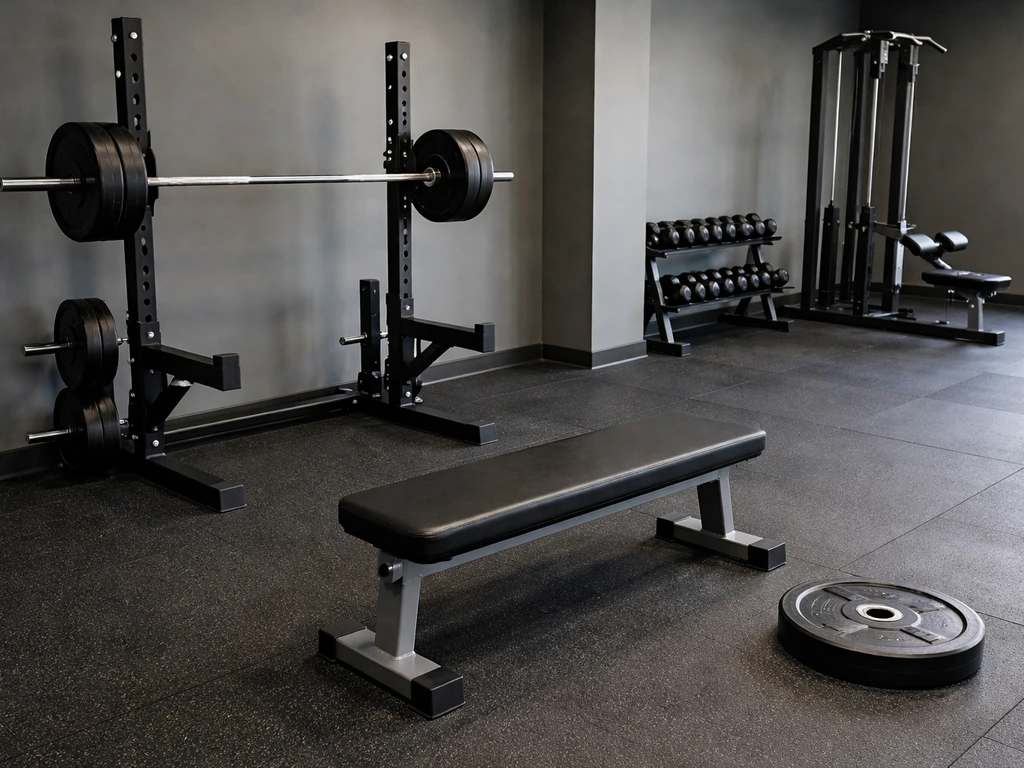
Prioritize compound movements, squats, deadlifts, bench press, rows, overhead press, pull-ups, because they train the most muscle mass and allow the heaviest loading. Add isolation exercises (curls, lateral raises, leg extensions) to fill in gaps, but don't let them dominate. A full-body routine 3 days per week works extremely well for beginners and older adults. Intermediate lifters often do better with an upper/lower split across 4 days, which allows more volume per muscle group while still allowing adequate recovery. Six or seven training days per week is usually too much unless each session is short and carefully managed, overtraining is a real limiter, especially in the first month when your connective tissue is still adapting.
Nutrition: calories, protein, and carbs that actually support muscle growth
Training is the stimulus for muscle growth. Nutrition is the raw material. You can train perfectly and eat poorly and you'll leave most of your potential gains on the table. Get these three things right and everything else is details. A r/StrongerByScience discussion also reflects real-world uncertainty around whether raising protein intake from about 1.6 g/kg/day to about 2.2 g/kg/day makes a meaningful difference blank" rel="noopener noreferrer">real-world uncertainty around whether raising protein from about 1.6 g/kg/day to about 2.2 g/kg/day makes a meaningful difference.
Calories: a moderate surplus is enough

To build muscle, you need to eat slightly more than your body burns. A surplus of roughly 200 to 400 calories per day above your maintenance level is the practical target. Going higher doesn't speed up muscle growth, it just adds fat. If you're a beginner or returning to training after a long break, you may be able to build muscle close to maintenance (body recomposition), but most people benefit from a modest caloric surplus. Use a TDEE (total daily energy expenditure) calculator as a starting estimate, then adjust based on what the scale does over 2 to 3 weeks.
Protein: the most important macronutrient for muscle gain
The research on protein for muscle growth is consistent: you need roughly 0.7 to 1 gram of protein per pound of body weight per day (about 1.6 to 2.2 grams per kilogram). For a 180-pound person, that's 125 to 180 grams of protein daily. Older adults may benefit from staying toward the higher end of this range because muscle protein synthesis becomes slightly less efficient with age, a concept called anabolic resistance. Spreading protein across 3 to 4 meals throughout the day (rather than eating most of it in one sitting) also improves how well your body uses it. Practical sources include chicken, beef, eggs, fish, Greek yogurt, cottage cheese, and legumes for plant-based options.
Carbs and overall diet quality
Carbohydrates don't directly build muscle, but they support the training that does. Carbs fuel high-intensity exercise, spare protein from being burned for energy, and help replenish glycogen after sessions. Aim for most of your remaining calories after protein to come from carbohydrates, especially around training. Whole food sources, rice, oats, potatoes, fruit, bread, work great. Don't obsess over exact carb timing, but eating a carb-containing meal within a couple of hours before and after training is a sensible habit. Overall diet quality matters too: vegetables, micronutrients, and adequate hydration support recovery and hormonal health, which circle back to your growth rate.
Recovery: the part most people underestimate
Muscle doesn't grow during training, it grows during recovery. Training is the signal; sleep, rest, and reduced stress are when the actual construction happens. If your recovery is poor, your results will be poor, even if your training and nutrition are solid.
Sleep is where growth happens
You need 7 to 9 hours of quality sleep per night. During sleep, your body releases growth hormone, repairs muscle tissue, and consolidates the adaptations from your training sessions. Consistently sleeping 5 to 6 hours is one of the fastest ways to undercut your gains, it blunts protein synthesis, elevates cortisol, and compromises the hormonal environment that muscle growth depends on. If your schedule is busy, prioritize sleep quality over adding another training session.
Stress and cortisol
Chronic psychological stress elevates cortisol, which directly opposes muscle protein synthesis and can accelerate muscle breakdown. This doesn't mean you need to eliminate stress, life doesn't work that way. But it does mean that if you're going through an especially stressful period, your gains may be blunted no matter how well you train and eat. Managing stress through walks, breathing practices, social connection, or simply reducing training volume temporarily during high-stress stretches is a legitimate recovery strategy, not a cop-out.
How to know if you're recovering well enough
Good recovery signs include consistent performance in the gym (or gradual improvement), stable energy levels throughout the day, normal sleep quality, and an appetite that feels on track. Warning signs of under-recovery include persistent fatigue that doesn't resolve after a rest day, declining strength across multiple sessions, irritability, poor sleep despite being tired, and loss of motivation to train. If you're seeing those signals, reduce training volume by 30 to 40% for a week before pushing hard again. One deload week per 4 to 8 weeks of hard training is a smart preventive habit.
How to actually measure progress in a month
This is where most people go wrong. They judge a month of training by the mirror on day 28 and feel disappointed, but muscle growth doesn't show up reliably on the mirror in 4 weeks, especially if you're not losing fat simultaneously. You need multiple data points to get an accurate read.
The scale
Weigh yourself every morning after using the bathroom and before eating. Track the weekly average, not the daily number, body weight fluctuates 2 to 5 pounds day to day based on water, sodium, carbs, and digestive contents. If your weekly average is going up by about 0.25 to 0.75 pounds per week during a muscle-building phase, you're in a reasonable range. Gaining much faster than that usually means fat gain is outpacing muscle gain.
Strength in the gym
Strength progression is the most reliable week-to-week indicator that something positive is happening. Log every session. Track your main compound lifts. If you're adding reps or weight consistently over 4 weeks, your muscles are responding. Stalled or declining strength (when recovery is adequate) usually means nutrition or volume needs adjustment.
Photos and measurements
Progress photos taken in the same lighting, at the same time of day, in the same pose every 2 to 4 weeks are more revealing than daily mirror checks. For measurements, track limb circumferences (arms, thighs, chest, waist) with a flexible tape measure every 2 to 4 weeks. Growing arm circumference alongside a stable or shrinking waist is a strong signal of lean mass gain.
What to adjust if results are below expectations
If after a full month your strength hasn't moved, your weight is flat or dropping, and your measurements are unchanged, work through this checklist in order: Are you actually eating enough? Track calories honestly for one week using a food logging app, most people underestimate intake significantly. Are you getting enough protein? Is your training progressing or are you going through the motions? Are you sleeping 7 to 9 hours? Fixing one of these usually unlocks progress. Don't change everything at once, adjust one variable, give it 2 weeks, and reassess.
Your practical targets for the next 4 weeks
Here's what to actually aim for over the next month, put simply:
- Train 3 to 4 days per week with compound movements as the foundation, doing 10 to 20 hard sets per muscle group per week.
- Eat 0.7 to 1 gram of protein per pound of bodyweight every day, spread across at least 3 meals.
- Eat 200 to 400 calories above your estimated maintenance level to support muscle building without excess fat gain.
- Log your lifts every session and aim to add reps or weight to your main movements each week.
- Sleep 7 to 9 hours per night as a non-negotiable priority.
- Track weight daily, photos every 2 weeks, and key measurements every 2 to 4 weeks.
- Expect 0.5 to 2 pounds of muscle gain depending on your training history and age—and know that month two and three will give you much clearer data than month one alone.
One month is a real unit of progress, but muscle building is fundamentally a long game. Within the same logic, you can estimate your 3-month muscle gain by scaling up from month-one expectations while accounting for your training age. It usually takes weeks to see real muscle gains, and the timeline depends on how long you've been training, your calories, and your recovery One month is a real unit of progress.
The habits you build in the first month, consistent training, adequate protein, tracking your lifts, are what compound into meaningful physique changes over 3, 6, and 12 months. If you're curious about how growth timelines stack up across longer periods, the picture gets more encouraging: yearly totals for consistent lifters are substantial, and the physiology that drives those gains starts exactly where you are right now.
FAQ
If the scale goes up a lot in month one, is that muscle or fat?
It can, but it is usually not pure muscle. A good rule is to expect some scale movement from water and glycogen changes, especially in the first 1 to 2 weeks after you start or change training. If you want a clearer answer than the scale, use strength progression plus your 2 to 4 week measurements (waist plus arm or thigh).
How much muscle can you grow in a month if you are cutting calories?
Yes, but the “how much” can drop. If you are in a calorie deficit, you generally cannot reach the top end of the muscle gain range, and you may rely more on recomposition (building muscle while losing some fat). To preserve muscle, keep protein high and cut the deficit modestly, then track strength and waist size over 2 to 3 weeks to see if you are holding gains.
Does the month-one muscle gain estimate change if I have been lifting for years (or just coming back)?
Expect less for people with long training history or if you are restarting after a long layoff. The ranges in month one tend to apply more to beginners and “re-starters” (some newbie gains can return). If you have been training consistently for years, a good month might be closer to the lower end of the total muscle gain range.
Can I train harder and build the maximum amount of muscle in one month by increasing workout frequency?
At least 48 to 72 hours before counting it as a true muscle-building session. If you train the same muscle too frequently without recovering, strength and performance often stall even if soreness feels high. A practical approach is 10 to 20 hard sets per week per muscle group, spread across 2 or more sessions, with the goal that you still progress week to week.
Do I need to go to complete failure to maximize muscle growth in month one?
“Failure every set” is not required, and it can backfire if you cannot recover. A set ending with 0 to 3 reps in reserve (RIR) is enough for growth for most people, and you may use a mix (some near-failure, some slightly farther) to manage fatigue. If your performance declines across your key lifts for more than a week, you are likely overshooting intensity or volume.
How can I tell if my weight gain during month one is the right kind of weight gain?
Yes, but prioritize the rate of change rather than a single day of tracking. Weekly average body weight is the easiest quick check. If weekly average rises while strength climbs and waist does not balloon, that pattern suggests more muscle than fat. If strength is flat or declining, the surplus may be too large or recovery is insufficient.
How do I know my weight is appropriate for the 8 to 15 rep range in practice?
For hypertrophy targets, choose loads that let you hit the rep range with good form and consistent depth. If you can comfortably do the top reps with 3 or more reps in reserve on every set, the weight is probably too light. If you cannot keep technique and form degrades in the middle of the set, the weight may be too heavy for the intended stimulus.
What should I do if I do everything right but I do not look noticeably bigger after 4 weeks?
Not necessarily, and this is a common mistake. Muscle growth can lag behind how you feel in the mirror, especially if you are not losing fat. Use performance and measurements as the primary data. Mirror changes can be real, but they are less reliable day to day than strength trends and 2 to 4 week photos.
After a month, my strength and measurements are flat. What is the best first thing to troubleshoot?
A common reason is inconsistent intake, especially underestimating calories. Another is protein distribution, for example eating most protein at one meal and leaving gaps. Try logging intake for 7 days, then adjust one variable at a time, typically calories first, then protein and sleep, while keeping training progression steady.
What if I gain fat faster than muscle in my first month?
If your waist is increasing quickly while arm or thigh measurements barely change, fat gain may be outpacing muscle. In that case, reduce the calorie surplus slightly (for example, by about 100 to 200 calories per day) rather than removing carbs entirely. The goal is to keep training performance improving while limiting unnecessary fat gain.
Is it normal to get stronger before my muscle visibly changes in the first month?
Yes, but it changes the realistic timeline. You can get some strength gains within weeks due to better coordination and technique, even if visible muscle changes are minimal. That is why strength progression is emphasized as a week-to-week indicator, and why muscle tissue accumulation still needs more time to show.
How do I adjust my plan if I cannot consistently get 7 to 9 hours of sleep?
If you are missing sleep or often feel wiped out, your ceiling drops fast. A practical target is 7 to 9 hours most nights, and if you cannot, prioritize earlier bedtime and consistent wake time. If poor sleep persists, consider deloading volume for 4 to 7 days rather than adding more workouts to “catch up.”