Pre-workout does not directly build muscle. It doesn't trigger protein synthesis, it doesn't add contractile tissue, and taking it without training gets you nothing useful. What it can do is help you train harder, push more volume, and recover slightly better between sets, and that improved training stimulus is what eventually shows up as muscle. Think of it as a tool that sharpens the edge of your workout, not one that does the work for you.
Does Pre Workout Grow Muscle? Evidence, Ingredients, Safety

Marcus Kellerman
4 May 2026

What's actually in pre-workout and what each ingredient does
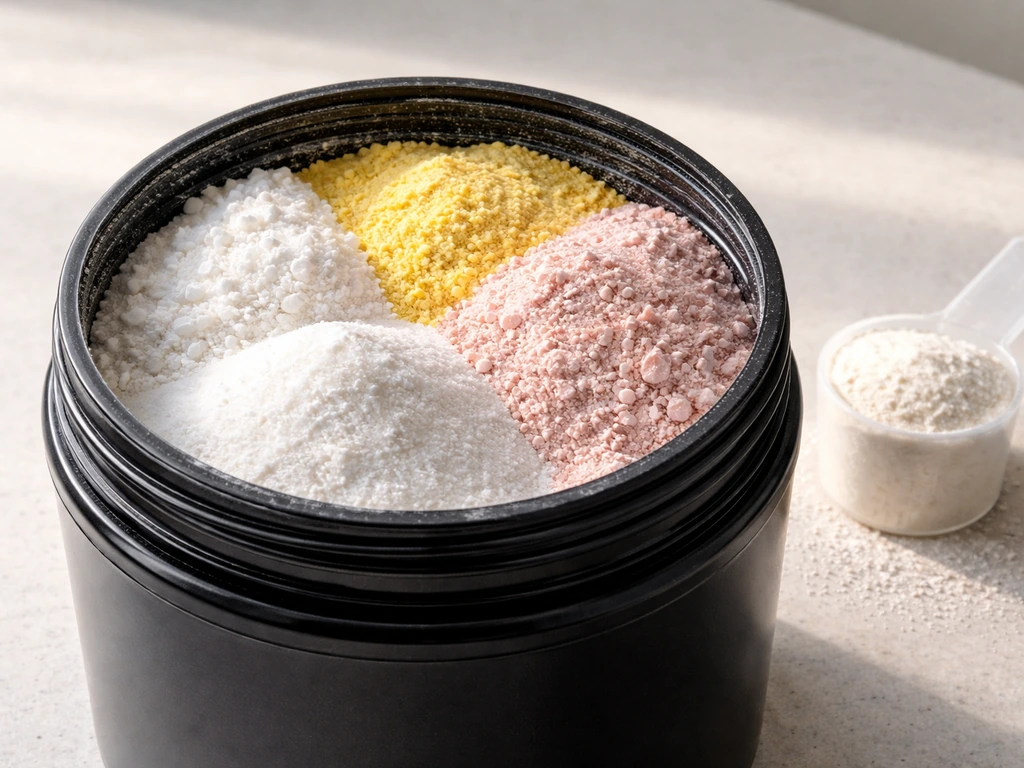
Most pre-workout products are multi-ingredient blends, and the ingredients vary wildly by brand. Some are well-researched with meaningful dose ranges. Others are underdosed filler with good marketing. Here's what the evidence actually says about the common ones.
Caffeine
Caffeine is the backbone of almost every pre-workout on the market, and it's the ingredient with the strongest evidence base. The ISSN position stand places the effective dose for strength and performance at about 3 to 6 mg per kilogram of body weight, taken 30 to 90 minutes before exercise. For an 80 kg person, that's roughly 240 to 480 mg. Most healthy adults can handle up to 400 mg per day safely according to general caffeine safety guidance, but a lot of pre-workouts are stacking close to or above that in a single serving. Caffeine works by blocking adenosine receptors, which reduces perceived effort and delays fatigue, meaning you can push harder before your body signals to stop.
Beta-alanine

Beta-alanine is the one responsible for the tingling sensation (called paraesthesia) you feel in your face and hands after taking some pre-workouts. It's not dangerous, but it is a signal that you got a real dose. The mechanism: beta-alanine raises intramuscular carnosine levels, which helps buffer the drop in pH during intense exercise, basically slowing the acid buildup that makes your muscles burn and fail.
The ISSN recommends 4 to 6 g per day for at least 2 to 4 weeks to actually raise carnosine meaningfully. This isn't an acute hit like caffeine, you're building a reserve over time. It's most beneficial for efforts lasting 1 to 4 minutes, so it's more relevant for high-rep sets and metabolite-heavy training than for pure max-effort lifts. The tingling can be reduced by splitting the dose into smaller amounts (around 1.
6 g at a time) or using sustained-release forms.
Creatine
Some pre-workouts include creatine, and when they do, it's one of the more meaningful additions. Creatine has the strongest evidence base of any supplement for improving high-intensity training performance and supporting lean mass gains over time. The loading protocol endorsed by the ISSN is 5 g four times per day for 5 to 7 days to saturate muscle stores quickly, followed by a maintenance dose of 3 to 5 g per day. The problem with relying on pre-workout for creatine is that many products don't include a full 3 to 5 g per serving, and you need consistent daily dosing, not just on training days, to keep stores elevated. You're usually better off taking creatine separately and consistently.
Citrulline and arginine
Citrulline (often as citrulline malate) is included in pre-workouts for its effect on nitric oxide production and blood flow, the "pump" you get during training. Research using 8 g of citrulline malate taken about an hour before exercise has shown improvements in repetitions to failure in leg press and hack squat conditions. Arginine is also used for nitric oxide support, but citrulline actually raises plasma arginine more reliably because it bypasses first-pass metabolism in the gut. These ingredients can increase training volume within a session and improve muscle oxygenation, but the direct hypertrophy effect is indirect at best, it's about doing more work, not about triggering growth on its own.
Dietary nitrates (beetroot)
Beetroot juice and nitrate-rich extracts have shown real performance benefits in endurance exercise and some resistance training research. Studies examining muscular endurance during bench press and back squat have found performance and muscle oxygenation benefits from nitrate supplementation versus nitrate-depleted placebo. Like citrulline, the mechanism runs through the nitric oxide pathway. The effects on pure hypertrophy over time are less clear, but the potential to sustain higher training volume is the relevant mechanism for muscle building.
What "pump" blends and proprietary formulas often mean
Many products stack several of these ingredients into a "pump complex" or "performance matrix" without disclosing individual doses. This is the major issue with the pre-workout market, proprietary blends hide whether you're getting research-backed amounts or trace quantities added for label credibility. If a product doesn't list individual ingredient doses, you're largely guessing.
Pre-workout doesn't directly build muscle, here's what it actually does
Muscle growth (hypertrophy) happens when mechanical tension and metabolic stress during training stimulate muscle protein synthesis, and then nutrition and recovery allow new tissue to be laid down. Pre-workout ingredients don't directly activate protein synthesis pathways the way training and protein intake do. What they do is influence the quality and quantity of the training stimulus, the thing that does drive muscle growth.
Think of it this way: if caffeine lets you do 3 more quality reps per set across 4 sets, and you're doing 4 exercises, that's meaningful additional mechanical tension over weeks and months. Beta-alanine helping you sustain intensity through the 15th rep of a set rather than quitting at 12 adds up. Citrulline helping you squeeze more volume into a session adds up. The sum of those indirect contributions can translate into meaningfully better muscle-building outcomes, but only if everything else is also in place.
What the research actually shows for hypertrophy and strength
Several 8-week randomized controlled trials have tested multi-ingredient pre-workouts against placebo in resistance-trained men following periodized programs, with hypertrophy and lean mass measured by DEXA. The consistent pattern: participants using pre-workout show small to modest improvements in lean mass and strength compared to placebo, but the differences are often not dramatic, and they're most reliably seen when the pre-workout contains ingredients like creatine and beta-alanine alongside caffeine rather than caffeine alone.
Crucially, these studies are typically run in already-trained individuals, meaning training novelty isn't inflating the results. When creatine is present and properly dosed, it likely carries a good share of the lean mass benefit independently of the other ingredients. Trials testing individual ingredients show that beta-alanine's contribution to hypertrophy specifically is modest and tied to whether training volume is actually increased by the fatigue buffering. The honest interpretation: multi-ingredient pre-workouts can support slightly better outcomes than training alone when they contain well-dosed active ingredients, but they don't produce gains that come close to what progressive overload, sufficient protein, and sleep accomplish on their own.
How to use pre-workout to actually support muscle growth
Timing
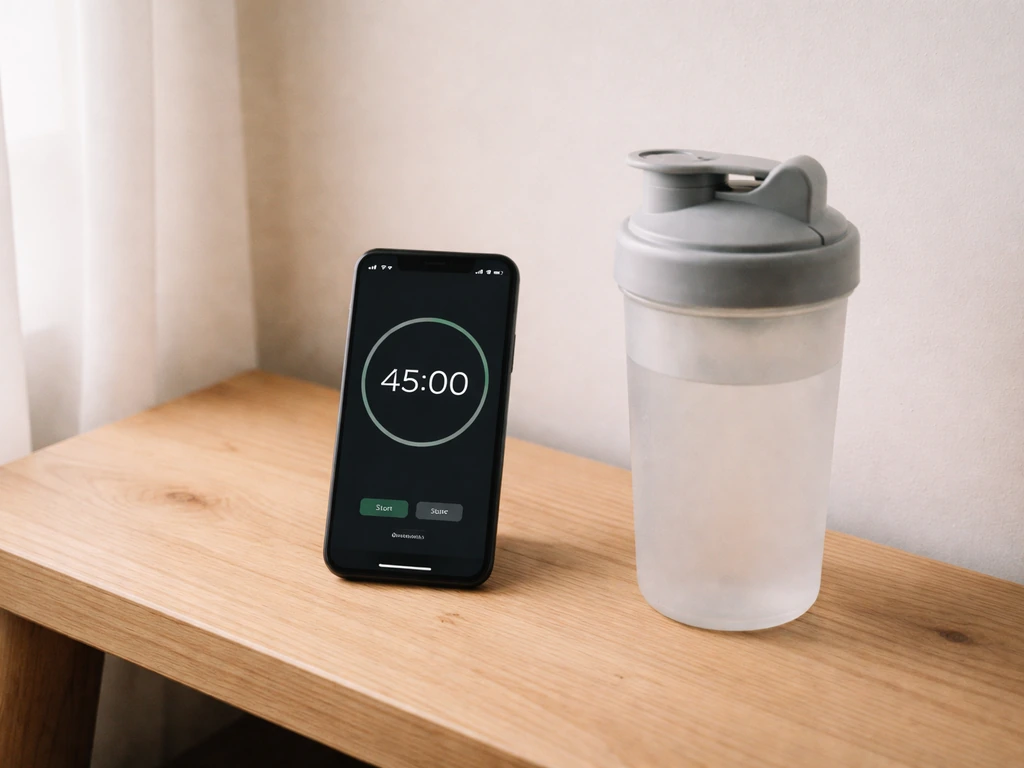
Take pre-workout 30 to 60 minutes before training. Caffeine's ergogenic effects are well-studied in that window, and 45 to 60 minutes is a reasonable middle ground. If you train in the evening, be aware that caffeine has a half-life of about 5 to 6 hours, and research confirms it disrupts both nocturnal sleep and recovery sleep quality, even at moderate doses. Poor sleep directly undermines muscle recovery and growth, so late-night caffeine is a real tradeoff that often negates what you gained in the session.
Dosing
For caffeine, 3 to 6 mg per kg of body weight is the research-backed range for strength performance. Start at the lower end, especially if you're new to stimulants or haven't trained in a while, and assess your tolerance. Many commercial pre-workouts stack 200 to 400 mg per serving, so check the label. For beta-alanine, you need consistent daily doses (not just pre-workout doses on training days) at 4 to 6 g total to see carnosine benefits over 2 to 4 weeks. For citrulline malate, look for at least 6 to 8 g per serving to hit doses used in research.
Tolerance and cycling
Caffeine tolerance builds quickly. Many regular pre-workout users find that the performance benefits diminish over weeks of daily use as the nervous system adapts to constant adenosine receptor blockade. Cycling off caffeine for 1 to 2 weeks every few months can help restore sensitivity. You don't necessarily need to cycle beta-alanine or creatine, since they work through accumulation rather than acute receptor stimulation.
Realistic expectations
Pre-workout is not going to add 5 lbs of muscle to your frame directly. What it can realistically do is let you have better sessions more consistently, sustain higher training quality when you're tired, and over 8 to 12 weeks of structured training, that can mean a small but real edge in strength and lean mass. Don't measure pre-workout's value in weeks, measure it in the quality and consistency of sessions over months.
Who actually benefits from pre-workout
| Who you are | Pre-workout benefit | Recommendation |
|---|---|---|
| Beginner (0–6 months training) | Low — training novelty drives rapid gains regardless; risk of starting too high on stimulants | Skip it or use a low-stim option; focus on technique and progressive overload first |
| Intermediate lifter (6+ months, hitting plateaus) | Moderate — can help push volume and sustain quality through longer sessions | Worth trying if sleep and protein are already sorted; use a transparent-label product |
| Advanced/experienced lifter | Moderate to higher — training is already efficient, so marginal gains in volume matter more | Well-dosed caffeine + creatine + citrulline stack is reasonable and evidence-backed |
| Caffeine-sensitive individuals | Low benefit, higher risk — anxiety, elevated heart rate, sleep disruption common at standard doses | Try stimulant-free pre-workouts with citrulline, beta-alanine, and creatine only |
| Older adults (50+) | Nuanced — caffeine benefits appear consistent across age groups, beta-alanine may help attenuate neuromuscular fatigue; sleep disruption is a bigger risk at older ages | Lower caffeine doses, prioritize earlier sessions, confirm no cardiovascular contraindications with a doctor |
| Evening trainers | Stimulant-based pre-workouts actively undermine recovery sleep, offsetting gains | Use stimulant-free formulas or just eat a small carb + protein snack before training |
One thing worth noting for beginners specifically: the research testing multi-ingredient pre-workouts for lean mass outcomes is almost entirely done in already-trained individuals. Beginners are in the fastest growth phase of their lifting lives and will gain muscle rapidly through training alone. Adding a stimulant-heavy pre-workout when you're still learning movement patterns and building base strength is mostly unnecessary and occasionally counterproductive if it causes anxiety or disrupts sleep.
Safety, side effects, and common mistakes
The FDA has flagged concerns about highly concentrated caffeine products, and pre-workouts sit in a gray zone here. Common side effects from excessive caffeine intake include increased heart rate and palpitations, elevated blood pressure, anxiety, digestive discomfort, and sleep disruption. These aren't rare, they're predictable at doses above what your body is adapted to. Anyone with hypertension, heart arrhythmia, anxiety disorders, or who is pregnant should be especially cautious.
ACOG states that moderate caffeine consumption in pregnancy (less than 200 mg/day) does not appear to increase the risk of miscarriage or preterm birth. Moderate caffeine during pregnancy is generally considered acceptable up to [around 200 mg per day](https://www.
acog. org/womens-health/experts-and-stories/the-latest/surprise-youre-pregnant-now-what), but that ceiling is easy to hit with a single serving of many pre-workouts.
The most common mistake people make with pre-workout is treating it like a necessity rather than a tool. When someone feels they can't train without it, they've likely built caffeine dependency rather than training motivation. The second most common mistake is stacking multiple caffeine sources, a pre-workout plus coffee plus an energy drink on the same day, and ending up well above safe daily thresholds. A third mistake is buying products with proprietary blends and assuming the label ingredients are meaningfully dosed. They often aren't.
- Don't use pre-workout as a substitute for adequate sleep — the caffeine might mask fatigue, but the muscle-building happens during recovery, not during the session
- Start with half a serving to assess tolerance before going to a full dose
- Avoid pre-workout within 6 hours of your intended bedtime to protect sleep architecture
- If you experience palpitations, chest discomfort, or significant anxiety, stop and reassess the dose or product
- Look for products that list every ingredient and dose individually — no proprietary blends
The things that actually build muscle, pre-workout is downstream of these
If pre-workout is a 5% lever, the following are the 95%. None of them are optional if you actually want to grow muscle. Pre-workout doesn't fix a broken foundation, and for most people, the foundation is where the work needs to go. If you want muscle without supplements, focus first on progressive overload, enough protein, calories for growth, and consistent recovery grow muscle without supplements.
Progressive overload
This is the non-negotiable. Muscles grow when they're consistently challenged with increasing tension over time, more weight, more reps, or more volume than what they've already adapted to. Without progressive overload, you can take every supplement on the market and not add meaningful muscle. Pre-workout can help you push one or two more reps or sustain quality through an extra set, but it cannot substitute for a structured, progressive training program.
Protein intake
The ISSN recommends 1.4 to 2.0 g of protein per kilogram of body weight per day for people training to build or preserve muscle. For an 80 kg person, that's 112 to 160 g per day. This is the raw material for muscle protein synthesis. Without enough protein, the training stimulus doesn't fully convert into new tissue, you're signaling growth without supplying the bricks. Pre-workout has nothing to do with this equation. If you're not hitting protein targets consistently, that's the problem to solve first. You can grow muscle without most supplements, but you cannot grow it without protein.
Total calories and energy balance
Muscle growth requires energy. A slight caloric surplus, or at minimum, eating at maintenance, supports the anabolic processes triggered by training. Chronic caloric restriction while trying to build muscle is a fight against your own physiology. Pre-workout obviously contributes nothing here.
Sleep and recovery
Most of the adaptation from training happens during sleep, particularly deep sleep stages where growth hormone is secreted and muscle repair ramps up. Consistently getting 7 to 9 hours of quality sleep is more anabolic than any supplement stack. This is also why stimulant-based pre-workouts used late in the day can actively undermine muscle growth, the session might have been good, but if sleep is compromised, the recovery signal is blunted.
Where pre-workout and other supplements fit in
If creatine is your priority (and there's a strong argument it should be), you don't need it bundled into a pre-workout to get the benefit. Creatine itself is one of the few supplements with strong evidence for supporting lean mass gains over time. Taking 3 to 5 g of creatine monohydrate daily on its own, including rest days, is more reliable than depending on a pre-workout dose that may be inconsistent or underdosed.
Similarly, the question of whether you can grow muscle without supplements at all is a real one, and the answer is yes, especially if training, protein, and recovery are dialed in. If you want to focus on how to grow muscles without weights, the same fundamentals still apply: progressive training, enough protein, and solid recovery grow muscle without supplements at all. Supplements are marginal gains on top of fundamentals, not replacements for them.
How to decide if pre-workout is worth it for you
Here's a practical decision framework. Work through it honestly before spending money on a tub.
- Are you consistently getting 7+ hours of sleep and 1.6+ g/kg of protein? If not, fix those first — they will do more for your muscle growth than any pre-workout.
- Are you following a structured progressive overload program? If not, a pre-workout won't compensate for randomized training.
- Are you an experienced lifter who's already optimized the basics and looking for a marginal edge? Then a transparent-label product with caffeine (3–6 mg/kg), citrulline malate (6–8 g), and optionally beta-alanine (4–6 g daily) is worth experimenting with.
- Are you caffeine sensitive, a beginner, or training at night? Consider a stimulant-free pre-workout or skip it entirely and invest in food quality instead.
- Do you need creatine? Yes, probably — but take it separately and consistently rather than relying on a pre-workout to deliver it.
The bottom line is this: pre-workout is a legitimate performance support tool with a real (if indirect) connection to muscle growth, but it's been wildly oversold as something transformative. The best pre-workout on the market won't outperform a week of better sleep, consistent protein intake, and a training program you actually progress on. Use it as a tool when the fundamentals are already covered, not as a shortcut around them.
FAQ
If pre workout does not directly build muscle, when does it actually help you grow?
Only if it helps you train better enough to create a higher training stimulus over weeks. If you take pre-workout but your program, protein intake, calories, and sleep do not support progressive overload, you will not see meaningful hypertrophy.
Do I have to take pre workout every day to see muscle-related benefits?
You might get performance benefits from a stimulant dose, but you typically will not build the same muscle support effects without consistent dosing of specific ingredients. For example, beta-alanine requires daily intake over 2 to 4 weeks to raise carnosine meaningfully, and creatine works best with daily dosing.
What is the best time to take pre workout for muscle gain?
Timing matters mainly for caffeine and other acute ingredients, not for long-term adaptations. For most people, 30 to 60 minutes before training is a practical window, but if your workout is in the evening, consider using less caffeine or skipping pre-workout to protect sleep.
Can pre workout hurt muscle growth?
Yes, if it disrupts sleep even slightly, it can blunt recovery and reduce gains. A key edge case is late dosing, since caffeine can linger for 5 to 6 hours, so pre-workout that feels great during the session may cost you at night.
How do I avoid taking too much caffeine if I use pre workout and also drink coffee?
Try capping caffeine from all sources (pre-workout plus coffee plus energy drinks) so you do not exceed your personal tolerance and general daily guidance. A common mistake is stacking multiple products without realizing the total caffeine can easily land well above what you intended.
How can I tell whether a pre workout is properly dosed?
Look for ingredient-by-ingredient dosing on the label. Proprietary blends are a common trap, because you cannot tell if you are getting research-backed amounts like 3 to 6 mg per kg caffeine or 6 to 8 g citrulline malate.
What if I do not feel any difference from pre workout, is it still helping muscle growth?
If the product gives you no meaningful increase in reps, volume, or perceived exertion, it is likely not doing much for you. One useful approach is to track performance for 2 to 3 weeks and compare your average set reps and total work with and without it.
Does pre workout make it easier to overtrain or lose form?
Training intensity and fatigue level still matter. If pre-workout enables higher volume, you may see more growth, but if it tempts you to sacrifice form or rush progressive overload, you can stall or get injured, which can reduce muscle gain.
Should I use creatine instead of relying on pre workout for muscle gains?
Creatine is the exception where the muscle support can be more reliable. If creatine is your goal, using creatine monohydrate daily (including rest days) separately is usually more dependable than relying on an unknown pre-workout serving dose.
Who should be extra cautious with pre workout?
If you are anxious easily, have panic symptoms, or have underlying heart rhythm or blood pressure issues, stimulant-heavy pre-workout can be a bad fit even if it improves performance. In those cases, consider lower-stimulant options or avoid pre-workout altogether and focus on program, protein, and sleep.
Why does pre workout stop working after a while, and what should I do?
Yes, some people experience reduced responsiveness as tolerance builds. If benefits fade, reducing the dose, taking occasional breaks (for example, 1 to 2 weeks every few months), or lowering total caffeine can help restore sensitivity.