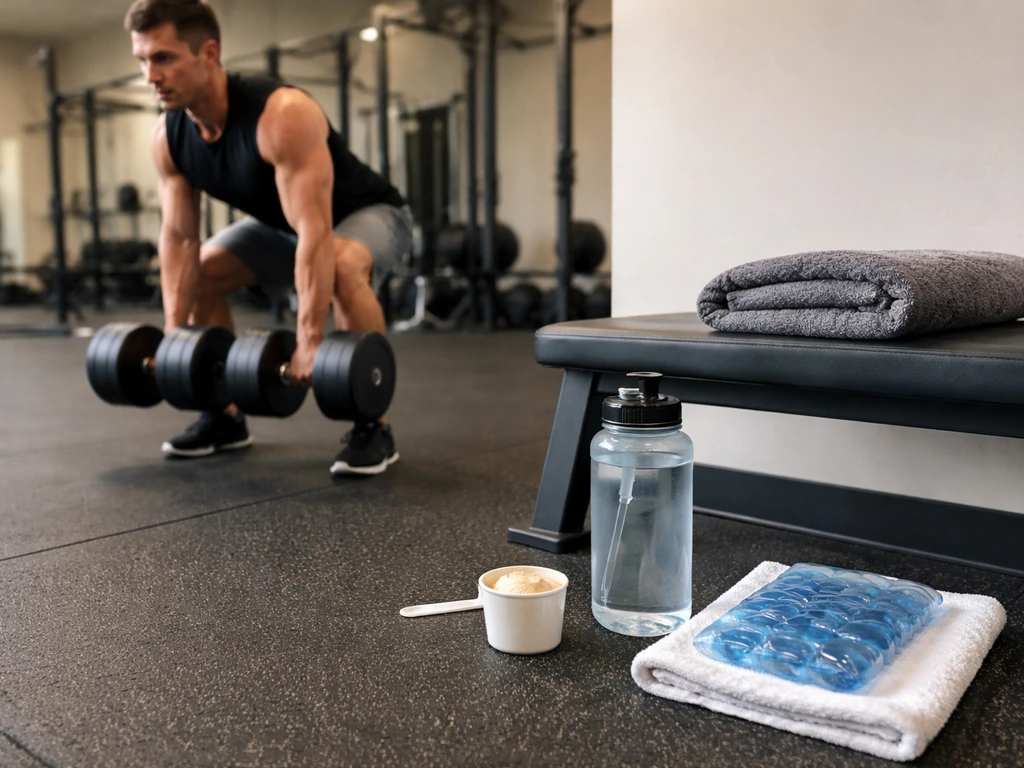
The source doesn't matter as much as the stimulus. What matters is that the muscle is working hard enough, often enough, and that you're recovering and eating to support growth. Building muscle without weights is a real possibility, not a workaround, as long as you apply the same principles that make any resistance program work.
Where people go wrong is assuming that removing weights also removes the need for effort. They hear "bodyweight training" and picture a few lazy push-ups before bed. That won't do it. Research is clear that proximity to failure matters, meaning you need to be pushing close to your limit on each set to generate the kind of mechanical tension that drives hypertrophy. A set of 20 push-ups that you could do 40 of is basically a warm-up. A set of push-ups taken close to the point where you genuinely can't do another rep? That's training.
So the short answer is: no gym required, no weights required, but effort and consistency absolutely required. If you can commit to those two things, everything else in this guide is actionable starting today.
Protein and calorie strategy for muscle gain without equipment
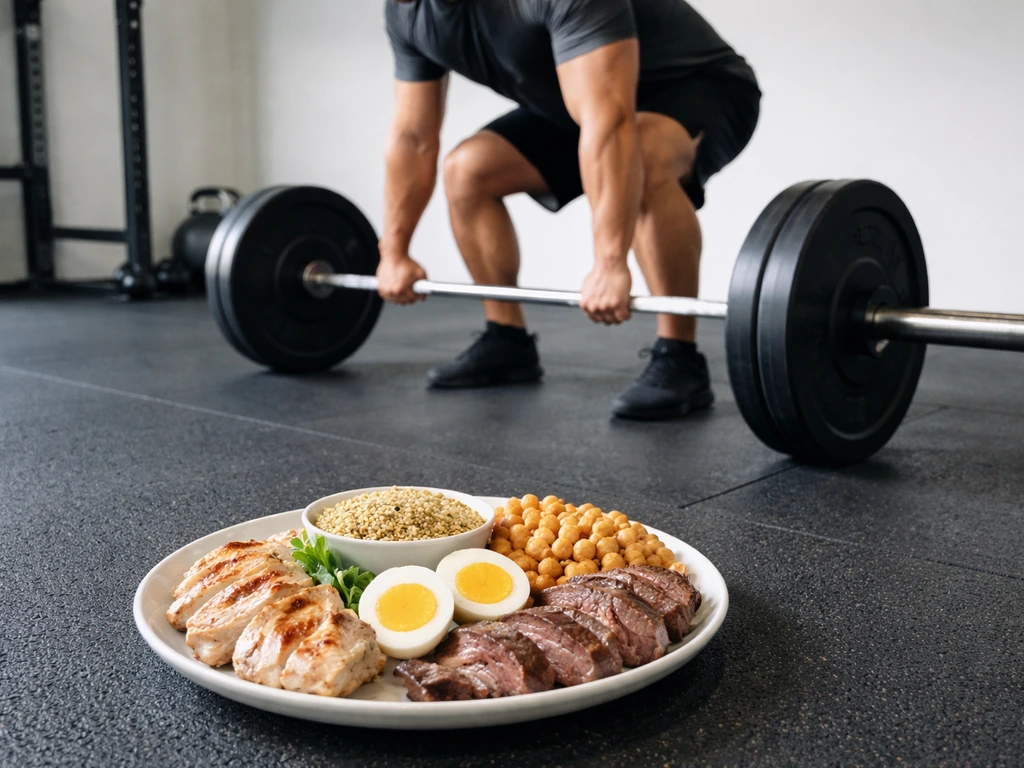
Training is only half the equation. If your nutrition isn't supporting muscle protein synthesis, the stimulus from your workout just gets wasted. The good news is the targets here are straightforward. The research points to roughly 1.6 g of protein per kilogram of bodyweight per day as the sweet spot for maximizing muscle gain. The International Society of Sports Nutrition puts the effective range at 1.4 to 2.0 g/kg/day for most people who exercise regularly. Going higher than 2.0 g/kg adds very little benefit for hypertrophy unless you're in a calorie deficit, which is its own conversation.
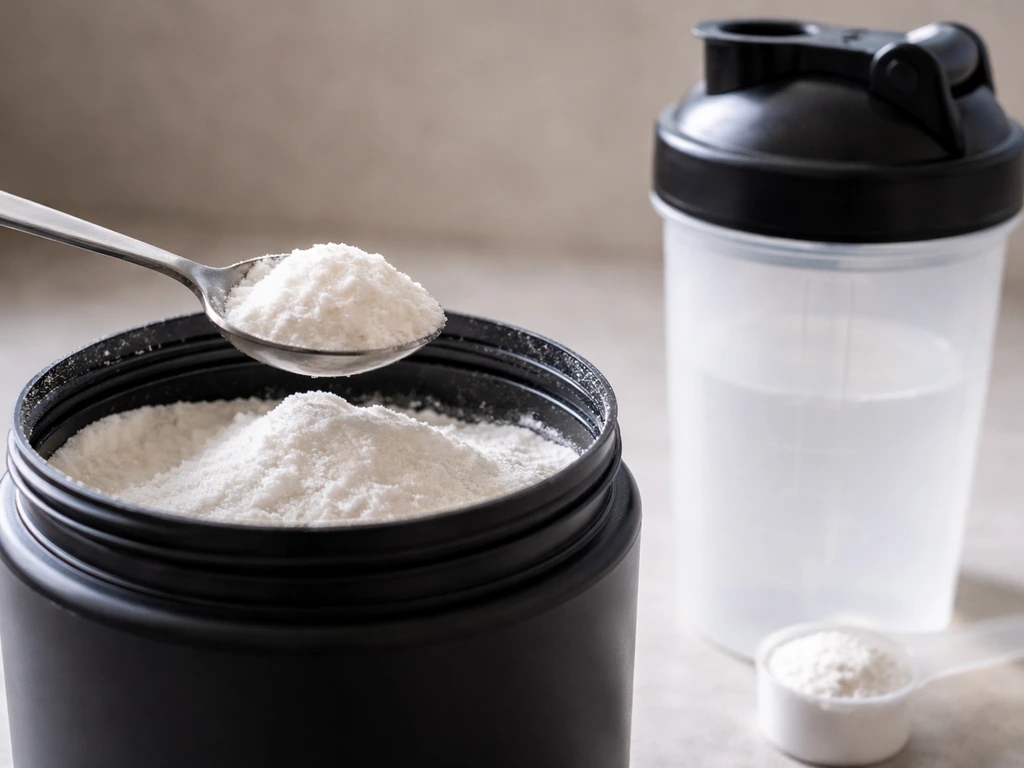
For a practical example: if you weigh 80 kg (about 176 lbs), you're aiming for roughly 128 to 160 g of protein per day. That's achievable through whole food sources like chicken, eggs, Greek yogurt, cottage cheese, canned fish, legumes, and tofu. You don't need protein shakes to hit these numbers, though they can help if your schedule makes whole food meals harder to manage. There's a broader discussion worth reading if you're wondering whether you can grow muscles without enough protein, because the answer is pretty firmly no.
On top of protein, you need to eat enough total calories to support growth. Building muscle in a meaningful calorie deficit is very difficult for most people unless they're beginners or returning from a long break. A modest surplus of 200 to 300 calories per day above your maintenance level is usually enough to fuel muscle gain without piling on unnecessary fat. If you're not sure of your maintenance calories, a simple starting point is bodyweight in pounds multiplied by 15 to 16 for moderately active people.
Meal timing also plays a supporting role. A practical approach backed by sports nutrition research is to spread your protein intake across at least four meals throughout the day, targeting around 0.4 g/kg per meal. For that same 80 kg person, that's about 32 g of protein per meal, four times a day. This approach keeps muscle protein synthesis elevated more consistently than cramming all your protein into one or two meals. And eating protein close to your training sessions, either before or after, gives an added boost to the adaptation process.
No-equipment training: bodyweight moves and everyday resistance
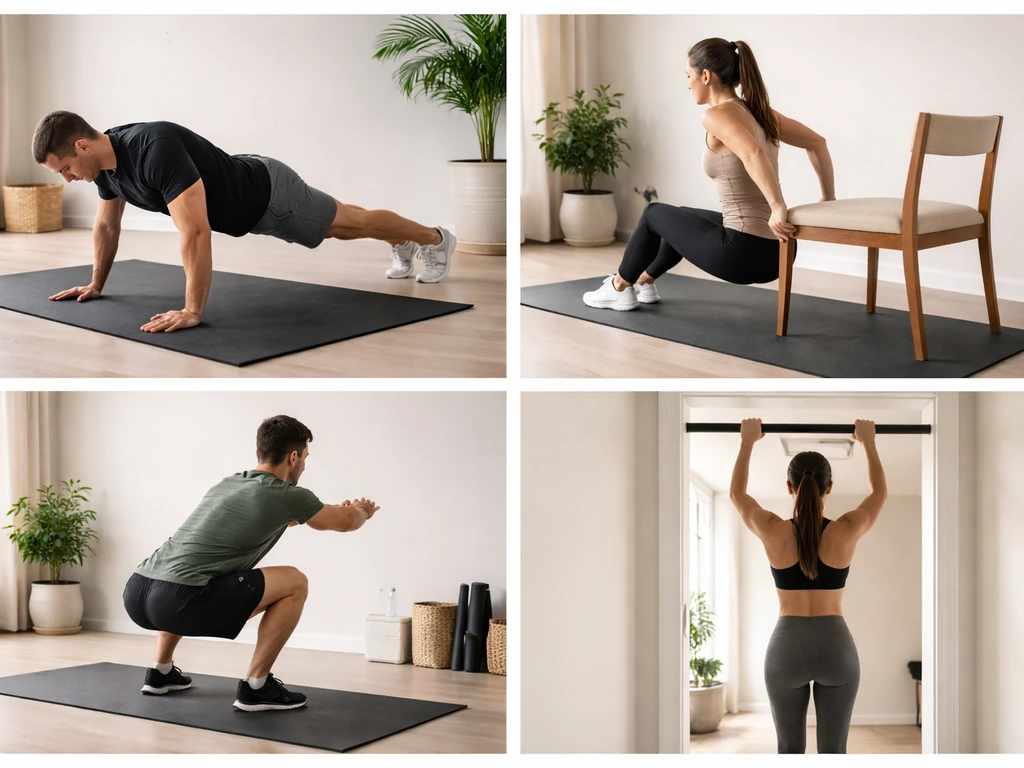
The beauty of bodyweight training is that your own body provides a surprisingly wide range of resistance challenges. Push-ups, dips off a chair, pull-ups on a door frame bar, squats, lunges, glute bridges, pike push-ups, inverted rows under a desk or sturdy table, single-leg variations, and isometric holds all create real mechanical tension when done with intent and appropriate difficulty. You don't need a gym membership to train every major muscle group.
Isometric exercises deserve a specific mention because they're often overlooked. Research on isometric training shows it can produce meaningful hypertrophy, especially when holds are done at longer muscle lengths (think the bottom of a wall sit or the stretched position of a push-up hold). These aren't just injury rehab tools. A deep wall sit held for 45 to 60 seconds creates a serious quad stimulus, and a slow isometric push-up hold at the bottom produces significant chest and tricep tension. Isometrics are also useful if joint discomfort makes full range movements harder.
Everyday objects can also extend what's available to you. A loaded backpack adds resistance to squats and push-ups. A gallon jug of water (about 8 lbs) works as a makeshift dumbbell for curls and lateral raises. A sturdy towel looped around a door handle can create pulling resistance for rows. You don't need to spend anything to get started, and if you're interested in eventually phasing out supplements or gym costs entirely, understanding how to grow muscle without supplements is a natural next step from here.
Key movement patterns to cover every session
- Push (chest, shoulders, triceps): push-up variations, pike push-ups, dips
- Pull (back, biceps): inverted rows, towel rows, door-frame pull-ups
- Squat/hinge (quads, hamstrings, glutes): squats, lunges, Romanian deadlift with a loaded backpack, glute bridges
- Core (abs, obliques, lower back): planks, dead bugs, hollow body holds
- Carry/stability (full body): single-leg stands, farmer carry with household objects
Progressive overload without weights: making it harder over time

Progressive overload is the principle that your muscles need increasing challenge over time to keep adapting. With weights, this usually means adding plates. Without weights, you apply the same principle through other variables, and there are more options than most people realize.
- Harder variations: Move from a standard push-up to an archer push-up to a pseudo planche push-up. Harder versions of the same pattern increase the mechanical demand on the muscle.
- Slower tempo: A 4-second lowering phase on a squat or push-up dramatically increases time under tension and muscle fatigue without changing the exercise at all.
- More reps or sets: If you can do 3 sets of 12 this week, aim for 3 sets of 15 next week, or add a fourth set. Volume has a clear dose-response relationship with hypertrophy.
- Shorter rest periods: Reducing rest from 90 seconds to 60 seconds increases metabolic stress on the muscle and makes the same session harder.
- Increased load: A backpack with added weight, a heavier water jug, or resistance bands added to a movement all count as load progression.
- Isometric intensity: Longer hold durations or holding at a more difficult angle (deeper stretch position) progressively challenges the muscle.
- Training frequency: Evidence supports training each muscle group at least twice per week on a volume-equated basis for better hypertrophy outcomes compared to once a week.
The key is to track what you're doing. Even a simple notes app on your phone works fine. If you did 3 sets of 15 push-ups last week, you have a target to beat this week. Without that record, it's too easy to accidentally coast at the same difficulty for months while wondering why nothing is changing.
Recovery, rest, and what to realistically expect
Sleep is probably the most underestimated recovery tool available to you, and it's free. The CDC recommends adults get 7 to 9 hours of sleep per night, and this isn't just a wellness talking point. Sleep deprivation meaningfully disrupts the hormonal and inflammatory responses your body needs to repair muscle tissue after training. Research has shown that even modest sleep restriction can compromise the benefits of resistance training over time. Getting your training right while consistently sleeping five hours a night is fighting yourself.
On timelines: beginners typically see noticeable strength changes within 2 to 4 weeks (largely from neural adaptations) and visible muscle size changes starting around 6 to 8 weeks with consistent effort and adequate nutrition. Don't expect dramatic visible change in the first month. What you should expect is that movements feel easier, you can do more reps, and your body composition starts to shift. For older adults, the timeline is similar but recovery between sessions may benefit from an extra day. The evidence on resistance training for older populations is encouraging: meaningful strength and muscle adaptations are achievable at any age, and "use it or lose it" applies in both directions.
Hydration is also worth mentioning. Muscle tissue is roughly 75% water, and even mild dehydration blunts performance and recovery. Aim for pale yellow urine as a simple day-to-day check. For most people, 2 to 3 liters of water per day is a reasonable baseline, more on training days or in hot conditions.
When it comes to supplements, most aren't necessary if your diet is solid, but creatine is one worth knowing about. Meta-analytic evidence in older adults shows creatine supplementation combined with resistance training produces about 1.4 kg more lean tissue gain compared to placebo. If you're curious whether it's actually necessary, the full breakdown on whether you can grow muscle without creatine is worth a read before you decide. Similarly, if you want to know the specifics of whether creatine directly grows muscle on its own, that question has a nuanced answer that goes beyond just "take it and grow."
Avoiding common myths and pitfalls
The biggest myth in this space is that you can grow muscle without working out at all. You cannot. Not through visualizing, not through electric muscle stimulators worn while sitting on the couch, not through any supplement. If there is no mechanical tension on the muscle, there is no hypertrophy signal. Protein without training mostly just gets used for energy or stored. Pre-workout products, for example, can sharpen your focus and improve training performance, but by themselves they don't build anything. If you've been wondering whether something like that can substitute for training, the answer on whether pre-workout grows muscle is pretty clear: it doesn't, without the work.
The second myth is that soreness equals growth. It doesn't. Soreness is a response to unfamiliar stress on the muscle (called DOMS, delayed onset muscle soreness). You can have an excellent training session with real hypertrophic stimulus and feel minimal soreness, especially as you get more experienced. Chasing soreness is a trap that leads people to constantly change their routine, which actually undermines progressive overload.
The third common pitfall is inconsistency. Bodyweight training done at home has a lower barrier to entry, which is great for getting started, but the same low barrier can make it easy to skip sessions. A missed week here and there won't derail progress, but habitual skipping combined with sporadic effort produces sporadic results. Two solid training sessions per week, done consistently for three months, will beat an ambitious seven-day plan that falls apart after two weeks every single time.
A simple weekly plan you can start today
Here's a practical structure you can begin immediately. This is designed for beginners and intermediate trainees, works for all ages, requires no equipment, and applies everything covered above. Train three days per week with at least one rest day between sessions. Two days per week is the minimum for meaningful hypertrophy; three days produces better results for most people. A systematic review and meta-analysis found that training frequency does not significantly or meaningfully affect hypertrophy when weekly volume is equated, supporting frequency flexibility as long as volume is managed.
| Day | Session Focus | Example Exercises | Sets x Reps |
|---|
| Monday | Full body A | Push-ups, inverted rows, squats, plank hold | 3 x 10-15 each |
| Tuesday | Rest or light walk | Low-intensity movement, stretching | Active recovery |
| Wednesday | Full body B | Pike push-ups, glute bridges, lunges, dead bug | 3 x 10-15 each |
| Thursday | Rest | Sleep 7-9 hours, hit protein target | Recovery |
| Friday | Full body A (progress) | Add reps, slow tempo, or harder variation vs Monday | 3 x 12-15 each |
| Saturday | Optional: isometrics | Wall sit, push-up hold at bottom, door-frame row hold | 3 x 30-60 sec |
| Sunday | Full rest | Prioritize sleep and nutrition | Recovery |
Daily nutrition targets to pair with this plan
- Protein: 1.6 g per kg of bodyweight per day (example: 128 g/day for an 80 kg person)
- Spread protein across 4 meals, aiming for ~0.4 g/kg per meal
- Calorie intake: maintenance calories plus 200 to 300 calories per day
- Hydration: 2 to 3 liters of water daily, more on training days
- Sleep: 7 to 9 hours per night, non-negotiable for recovery
Every two weeks, review your training log and apply at least one form of progression: more reps, an extra set, a harder exercise variation, or slower tempo. If you can do that consistently, track your protein, and protect your sleep, you will see real changes. The equipment you don't have is not the limiting factor. The consistency you build from here is.