
Your muscles don't need to be confused or shocked. They need a reason to grow that they haven't fully adapted to yet. That's the real meaning behind "to grow you have to surprise the muscle", not random workouts or constant exercise swaps, but a deliberate, structured change in stimulus that keeps your muscles working harder than they're used to. Once you understand that, the phrase stops being vague gym wisdom and starts being a practical programming tool. If you want a clear plan for how to grow muscle strength, focus on progressive overload while keeping training structured and repeatable.
To Grow You Have to Surprise the Muscle: Evidence Plan

Marcus Kellerman
29 May 2026

What "surprise the muscle" actually means
The idea has a kernel of real physiology behind it. Muscle tissue grows when it's exposed to sufficient mechanical tension, the force generated as muscle fibers contract under load, and when that tension is accompanied by enough training volume and adequate recovery for protein synthesis to outpace protein breakdown. The "surprise" is simply a stimulus your body hasn't fully adapted to. When a training stress becomes routine, your neuromuscular system gets more efficient at handling it, and the growth signal weakens.
What it does not mean: you need to confuse your muscles with random exercises, you need to be sore after every session, or you need to overhaul your program every few weeks. Soreness is a poor proxy for growth. You can build muscle doing the same movements for months as long as you're progressively increasing the demand. If you want to know how to grow muscles at home, use the same rules: train close to failure, progress the difficulty over time, and recover well grow muscle doing the same movements. The "surprise" can be as simple as adding five pounds to the bar or squeezing out one more rep than last week.
This distinction matters especially if you're a beginner or an older adult. Beginners grow rapidly on almost any structured program because nearly everything is a new stimulus. Older adults can absolutely build muscle, research confirms measurable dose-response relationships between training volume and hypertrophy even in people over 60, but the stimulus still needs to be progressive and consistent, not random.
How to vary training without making it random

There are several legitimate levers you can pull to vary your training stimulus in a structured way. The key is changing one or two variables at a time, not everything at once, so you can actually track what's working.
Weekly training volume, the biggest lever
Volume (total weekly sets per muscle group) is the most robustly supported driver of hypertrophy in the research. Meta-analyses show a clear dose-response relationship: fewer than 5 sets per muscle per week produces less growth than 5 to 9, and 10 or more sets per week produces more again.
In a resistance-trained-men RCT comparing 16, 24, and 32 weekly sets per muscle group over 8 weeks, higher weekly volume produced greater muscle thickness outcomes Meta-analyses show a clear dose-response relationship: fewer than 5 sets per muscle per week produces less growth than 5 to 9, and 10 or more sets per week produces more again. .
A study comparing 16, 24, and 32 weekly sets in trained men found greater muscle thickness at the higher volumes over 8 weeks. A practical starting range for most people is 10 to 20 working sets per muscle group per week, built up gradually.
Load and rep ranges
You can drive meaningful growth across a fairly wide rep range, roughly 6 to 30 reps per set, provided you're training close enough to failure to generate sufficient tension. The research on proximity to failure shows it's the effort dimension that matters, not hitting failure itself. Leaving 1 to 3 reps in reserve while still pushing hard is a smart approach. For older adults specifically, the evidence points to moderate intensities around 51 to 69% of one-rep max producing the best whole-muscle hypertrophy outcomes, which typically falls in the 12 to 20 rep range.
Exercise selection and angles
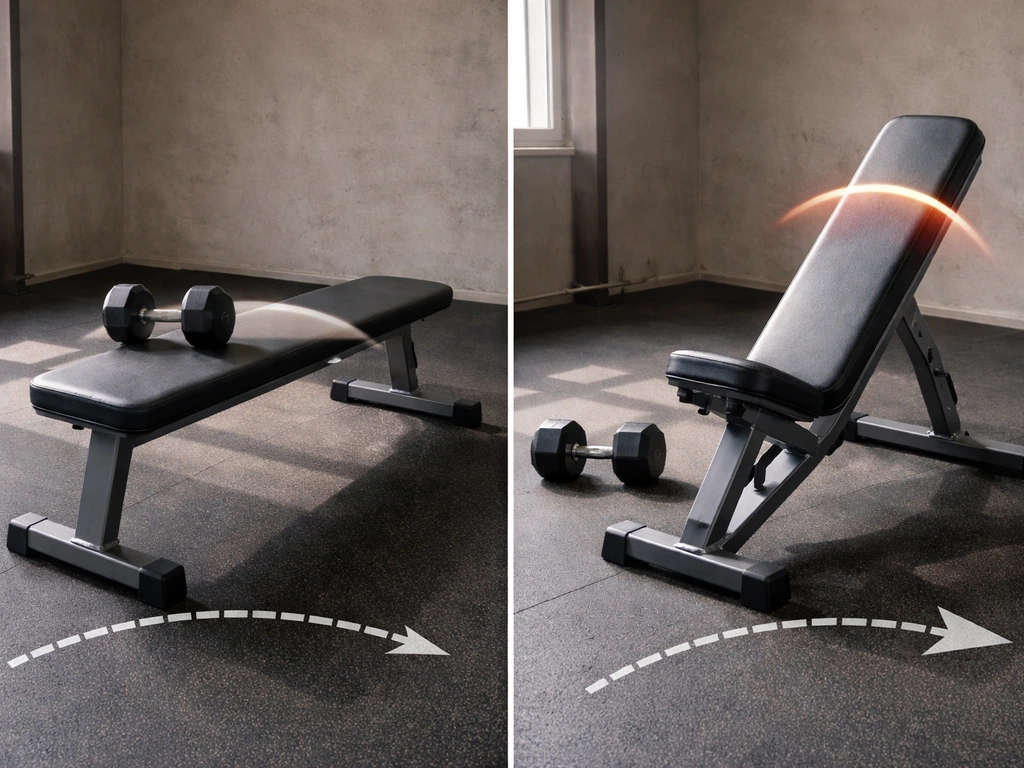
Swapping a flat bench press for an incline press, or a leg press for a Bulgarian split squat, changes the joint angle, muscle length under tension, and the portion of the strength curve being challenged. This is legitimate variation, it hits slightly different regions of a muscle and can break a plateau without abandoning progressive overload. A reasonable approach is to keep one or two primary movements stable across a 6 to 8 week block, then rotate one accessory exercise if you've stalled or want a fresh stimulus.
Training frequency
Frequency is worth mentioning, but it's less important than most people think. The evidence consistently shows that when weekly volume is matched, training a muscle once versus three times a week produces similar hypertrophy. Where frequency genuinely helps is in making high-volume training manageable, splitting 16 weekly chest sets across two sessions is more practical and probably better tolerated than doing all 16 in one workout. So train each muscle at least twice a week if you can, not because frequency is magic, but because it makes your volume more sustainable.
Tempo, range of motion, and rest periods

Slowing the eccentric (lowering) phase to 3 to 4 seconds increases time under tension and can make a lighter load feel significantly harder. Training through a full range of motion consistently outperforms partial reps for hypertrophy. And shortening rest periods (say, from 3 minutes to 90 seconds) increases the metabolic demand and can serve as a volume-equivalent variation when you can't add more sets. These are all legitimate tools for varying the stimulus without abandoning structure.
Progressive overload is still the engine
No variation works long-term without progressive overload, the practice of systematically increasing the training demand over time. Variation changes the texture of the stimulus; progressive overload ensures that stimulus keeps growing. If you keep applying progressive overload with the right training volume, recovery, and nutrition, you can force your muscles to grow force your muscles to grow it. Think of it this way: the "surprise" is the direction you push, and progressive overload is how hard you push in that direction.
Here's a simple framework to follow. Run a training block of 4 to 8 weeks with consistent exercises and track your performance session to session. Each week, try to add one small form of progression. When you can't progress any further, reps have stalled, load hasn't moved in two to three sessions, that's your signal to either deload or rotate a variable.
| Progression type | How to apply it | When to use it |
|---|---|---|
| Add load | Increase weight by the smallest increment available (1.25–2.5 kg) | Primary go-to when form is solid and reps are at the top of your target range |
| Add reps | Hit the top of your rep range before adding load | When load jumps are too large or you need a buffer week |
| Add sets | Add 1 set to your weekly volume every 2–3 weeks | When load and reps have stalled; good for volume-building phases |
| Change exercise | Swap one accessory movement after a 6–8 week block | After a genuine plateau in the same exercise; not for novelty alone |
| Adjust tempo | Slow the eccentric to 3–4 seconds | When load cannot be increased but you want to increase tension |
| Reduce rest | Drop rest periods by 15–30 seconds | When adding sets isn't feasible; increases relative intensity |
A practical rule: don't change more than one or two variables between blocks. If you swap the exercises, keep volume and load progression the same. If you increase volume, keep the exercises stable. This is what separates structured variation from random novelty.
Common mistakes that kill your progress
Chasing novelty instead of adding load
This is the most common way the "surprise the muscle" idea goes wrong. You feel stale, you watch a new YouTube program, you overhaul everything, and then wonder why you're not growing. New exercises feel hard because you're unskilled at them, not because they're delivering more mechanical tension. Give any movement 4 to 6 weeks before judging whether it's working. The discomfort of learning a new exercise is not the same as a productive growth stimulus.
Using soreness as a progress metric
Delayed onset muscle soreness (DOMS) reflects mechanical damage and inflammation, not necessarily the kind of tension-driven stimulus that builds muscle best. You can grow without being sore, and you can be very sore from a workout that doesn't produce meaningful hypertrophy. Chasing soreness by constantly introducing new movements is a good way to stay perpetually beat up without ever building a base of progressive overload.
Too much volume, too fast
More sets is better, up to a point, but jumping from 8 weekly sets per muscle to 25 in a week is a fast track to injury and excessive fatigue, not faster growth. Volume should be built incrementally. A reasonable approach is to increase total weekly sets by 1 to 2 per muscle group every two to three weeks during a volume-building phase, then take a deload before pushing higher.
Poor recovery management

If you're varying training stimulus but not recovering between sessions, you're accumulating fatigue faster than adaptation. Signs of this include stalling on loads you previously found easy, persistent muscle heaviness that doesn't clear between sessions, and disrupted sleep. Fatigue masks fitness, you may be growing, but you won't see or feel it until you back off enough to let it show.
Nutrition: making the "surprise" actually translate into muscle
Training variation creates the signal for growth. Nutrition is what the body uses to actually build new tissue. If you're under-eating or under-consuming protein, no amount of clever programming will produce the muscle you're after.
For most people training consistently, the International Society of Sports Nutrition recommends a daily protein intake of 1.4 to 2.0 grams per kilogram of body weight. A 75 kg person should be hitting roughly 105 to 150 grams of protein per day. The distribution matters too: aim for around 20 to 40 grams of protein per meal, with no more than 3 to 4 hours between feedings, to keep muscle protein synthesis elevated across the day.
Total calorie intake also matters. You can technically build muscle in a slight caloric surplus or even at maintenance if you're training hard enough and eating enough protein, but a chronic caloric deficit will blunt hypertrophy no matter how well-designed your program is. If progress has stalled, check your average calorie intake before assuming the training variation isn't working.
Carbohydrates support training performance and glycogen replenishment after sessions. Having a meal or snack combining protein and carbohydrates in the hours around your workout supports both performance in the gym and recovery afterward. A protein and carbohydrate meal or snack in the hours around training supports performance and recovery by aiding glycogen replenishment and muscle repair a meal or snack combining protein and carbohydrates in the hours around your workout. This doesn't need to be complicated, a chicken and rice meal before or after training covers most of it.
If hitting protein targets through food alone is a challenge, a whey or plant-based protein supplement is a straightforward and well-supported tool. It's not magic, but it's a convenient way to close a protein gap without eating six chicken breasts a day.
Recovery, sleep, and managing fatigue
Here's something that doesn't get enough attention: your muscles don't grow during training. If your goal is the best ways to grow muscle, focus on progressive overload with enough weekly volume, solid recovery, and consistent nutrition. They grow during recovery. The training session is the stimulus, recovery is where the adaptation happens. If you're constantly introducing new stimuli without giving your body time to respond, you're not building on anything.
Sleep is non-negotiable. Research links insufficient sleep to reduced strength performance and poorer training adaptations. The general guideline for adults is 7 to 9 hours per night, and the evidence supports that this isn't just about feeling rested, it directly affects muscle protein synthesis, hormonal environment, and your ability to train hard in subsequent sessions. If your sleep is poor, no amount of training variation will compensate.
Deloads are a structured way to manage accumulated fatigue. A deload week typically involves reducing weekly volume by 30 to 50% and lowering intensity slightly, while keeping most movements the same. The research suggests deloads are better at restoring performance capacity than directly driving hypertrophy, but that's exactly the point: clearing fatigue lets you come back and train harder, which is what actually drives growth over months and years. Plan a deload every 4 to 8 weeks depending on how hard you're training, or use one reactively when performance starts declining.
Life stress also matters. Psychological stress elevates cortisol, which competes with the anabolic environment needed for muscle growth. During genuinely high-stress periods, heavy work demands, poor sleep, illness, dialing back training intensity and volume temporarily is smarter than pushing through and accumulating damage you can't recover from.
Realistic timeline: when to expect changes and how to adjust
Muscle growth is slow. Beginners can gain 1 to 2 kg of lean muscle per month in their first year under good conditions. Intermediate and advanced lifters gain significantly less, closer to 0.5 to 1 kg per month at best, often less. Older adults can absolutely still build muscle, but anabolic sensitivity decreases with age, so the process is slower and consistency matters even more.
For practical purposes, run any new program or variation block for at least 6 to 8 weeks before evaluating it. Less than that and you're not giving your body time to adapt, and you're likely still in the learning phase of any new movements. Take measurements, track your lifts, and note how you look and feel at the end of the block. That's your real feedback loop.
If after 6 to 8 weeks you've seen zero progress in strength, no change in measurements, and you feel fine (not overly fatigued), the problem is almost always one of three things: not enough volume, not enough protein, or not training close enough to failure. Check those three before assuming your program needs a dramatic overhaul.
- Weeks 1–2: Adaptation phase. Strength gains are mostly neurological. Don't judge the program here.
- Weeks 3–6: This is where hypertrophy starts accumulating if volume, effort, and nutrition are on point. Track your performance closely.
- Weeks 6–8: Evaluate. If strength is progressing and body composition is shifting, stay the course. If not, audit volume, protein, and proximity to failure first.
- After 8 weeks: Deload for 1 week, then either continue with the same block (adding volume) or rotate one or two exercises for the next block.
- Every 3–4 months: Do a broader review. Are you stronger than you were? Has body composition changed? If yes, the system is working — keep refining, don't rebuild from scratch.
The underlying principle across all of this is the same one that makes the "surprise the muscle" idea useful when applied correctly: give your muscles a demand they haven't fully adapted to, give them the raw materials to build with, let them recover, and then raise the demand again. This is especially helpful if you're learning how to grow muscles as a woman, because it keeps your training stimulus progressive instead of random. That cycle, repeated consistently over months and years, is how muscle grows. The variation keeps the cycle productive. The structure keeps you from spinning your wheels.
FAQ
How do I know if I actually “surprised” the muscle enough, or if I’m just changing exercises without progress?
Use performance or output metrics, not how you feel. If within a 6 to 8 week block your working reps increase at the same load, or load increases for the same reps and set count, you’re likely providing a real adaptation stimulus. If numbers stay flat, you may be paying the cost of skill acquisition without a true increase in effort, volume, or progression.
Should I aim for failure every set to keep surprising the muscle?
No, you want consistent hard effort. A practical target is leaving about 1 to 3 reps in reserve on most working sets, then pushing closer to failure only on your most important sets or exercises. Chasing failure too often can raise fatigue and slow progression, making the training “hard” without it being productive.
What if my weights never go up, but my reps and form improve?
That still counts as progressive overload. Especially early on or when technique improves, “load” progression can temporarily be replaced by rep progression, cleaner range of motion, slower eccentrics, or reduced rest times at the same rep targets. Record what improved, then keep the volume and proximity-to-failure consistent so the next block has a fair chance to convert progress into heavier loads.
How long should I keep the same exercise before rotating something?
Give it 4 to 6 weeks before judging, and ideally 6 to 8 weeks for a full block. Rotation too soon often measures novelty and learning, not hypertrophy stimulus. If strength is moving but growth seems slow, adjust volume or proximity-to-failure first rather than constantly swapping movements.
If soreness isn’t required, how should I tell whether my training is working?
Look for trend data. Over 2 to 4 weeks you should see improving reps at the same load, improved reps with the same rep range and rest, or stable performance while your body recovers better. Also watch for objective recovery markers like sleep quality and the ability to repeat sessions without strength dropping across consecutive workouts.
I can’t add sets right now, can I still grow using “surprise” variables like rest time or tempo?
Yes, tempo and rest can function as volume-equivalent variations when you keep effort consistent. For example, shorter rests can increase metabolic stress and make a given set harder, and a slower eccentric can increase time under tension. However, the safest approach is not only changing tempo, but also maintaining or gradually building total working sets over time.
Is it better to vary reps, or vary load, to surprise the muscle?
Pick one primary progression method and keep it consistent. You can train in the 6 to 30 rep range, but for most people it’s easier to progress using either load (for a target rep range) or reps (for a target load) week to week. Constantly switching rep schemes can interfere with tracking effort and makes it harder to know whether the stimulus is improving.
How should I structure blocks and deloads if I’m training intensely and progressing every week?
Even if you’re progressing, plan a deload every 4 to 8 weeks or when performance starts slipping (for example, loads or reps stall for 2 to 3 sessions). A deload usually means reducing weekly sets by about 30 to 50% and slightly lowering intensity while keeping movement patterns similar. The goal is to restore performance capacity so the next block can push harder.
Do I need to train each muscle two times per week, or can I grow with less frequency?
If weekly volume is matched, one versus multiple sessions can produce similar hypertrophy, but practical recovery and scheduling matter. Training a muscle at least twice per week often makes it easier to accumulate volume without excessive fatigue in a single workout. If you can only train once weekly, use enough total weekly sets and keep proximity-to-failure and rest periods controlled.
What’s the fastest way to troubleshoot a plateau without “overhauling everything”?
Return to the three most common causes: not enough weekly volume, not enough protein, or not training close enough to failure. Change only one or two variables for the next block, for example, add 1 to 2 sets per week for the lagging muscle while keeping exercise selection stable and protein intake on target.
Can I build muscle while in a calorie deficit?
You can make progress, but a chronic deficit tends to blunt hypertrophy and can slow strength gains. If progress stalls, check your average calorie intake before changing training variables. A small surplus or maintenance with sufficient protein typically gives you the best conditions to convert training stimulus into new tissue.
How much protein do I need if I’m older, dieting, or training hard?
The same general target range still applies, but older adults and people dieting often benefit from hitting the higher end of the range. Aim for 1.4 to 2.0 g per kg per day, spread across 3 to 4 feedings with roughly 20 to 40 g per meal. If you struggle to hit targets with food, a protein supplement can close gaps reliably.
What if I’m always fatigued, my sleep is poor, and I keep trying to surprise the muscle with new changes?
In that situation, the issue is often recovery, not training variety. If you see persistent heavy feelings, stalling loads you used to handle, or sleep disruption, reduce training stress by deloading or temporarily lowering volume and intensity. “Surprise” is ineffective if accumulated fatigue prevents you from actually increasing demand over time.