Yes, muscles absolutely need rest to grow. Training is the stimulus, but the actual growth happens during recovery. If you never give your muscles adequate time to repair and adapt between sessions, you're essentially spinning your wheels, or worse, going backward. The good news is that 'rest' doesn't mean doing nothing for days on end. It means understanding three distinct recovery windows: between sets, between training sessions, and full rest days.
Do Muscles Need Rest to Grow? How Much Recovery Works

Marcus Kellerman
24 Apr 2026

Muscles grow during recovery, not during training
Here's the thing people get backwards: the workout itself is the signal, not the growth event. When you lift weights, you create mechanical tension and some degree of muscle damage. That triggers a cascade of biological activity, most importantly, activation of the mTOR pathway, which is essentially the body's muscle-building switch.
Muscle protein synthesis (MPS) rises during the early recovery phase after resistance exercise and stays elevated for roughly 24 hours in trained individuals, and up to 48 hours in some cases. That elevated synthesis window is when the repair and remodeling that leads to bigger, stronger muscle actually happens. Training without recovery is like sending a construction crew to tear down walls every day without ever giving them time to rebuild.
The stimulus is necessary, but it's the recovery period that produces the adaptation.
What 'rest' actually means for muscle growth

Rest isn't one thing. In the context of muscle growth, it operates at three different levels, and each one matters in a different way.
Rest between sets
Inter-set rest is about maintaining the quality and volume of your training within a session. Shorter rests (around 60 seconds) mean your muscles and nervous system are still partially fatigued when you start the next set, which reduces the total reps and load you can handle. Research comparing 1-minute versus 3-minute rest periods has found that [longer rest between sets can actually improve muscle thickness gains](https://journals. lww.
com/nsca-jscr/fulltext/2016/07000/longerintersetrestperiodsenhance_muscle. 3. aspx) over a multi-week training program in trained men. ACSM-aligned guidance suggests roughly 2 to 3 minutes for big compound lifts (squats, presses, rows) and 1 to 2 minutes for smaller isolation exercises.
The practical takeaway: shorter rests are fine occasionally, but consistently cutting rest too short limits your volume, and volume is one of the primary drivers of hypertrophy.
Rest between sessions (the 48-hour rule)
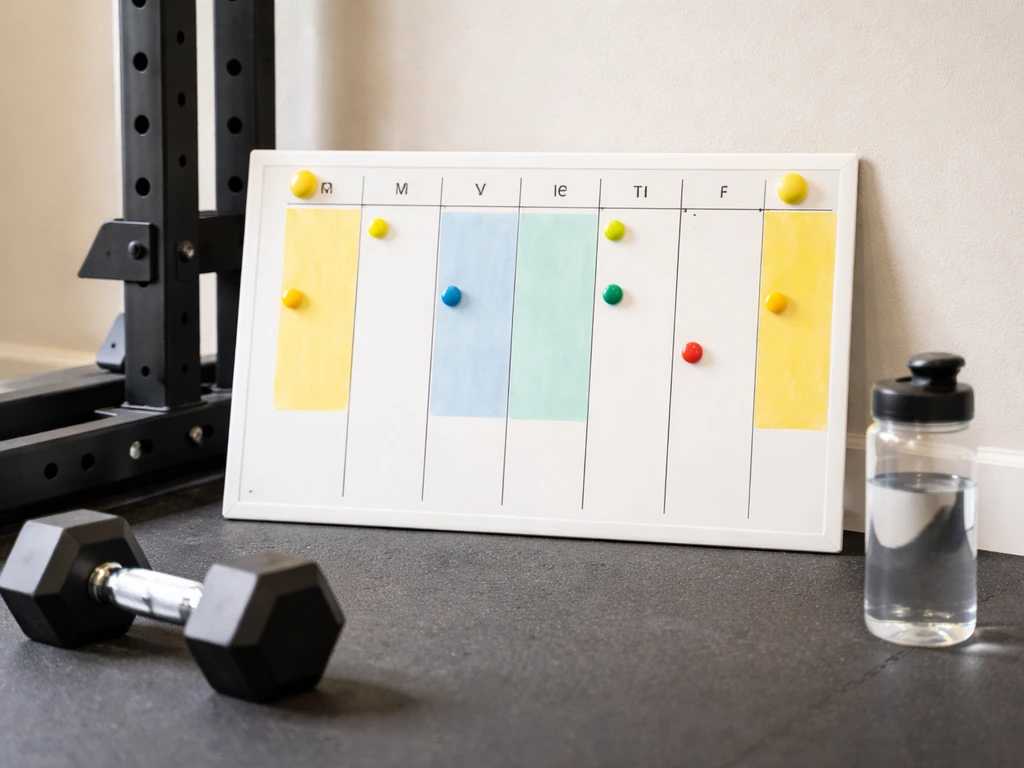
This is the big one most people ask about. Because muscle protein synthesis stays elevated for roughly 24 to 48 hours after training, it makes physiological sense to allow at least 48 hours before training the same muscle group again. This isn't rigid dogma, but it's a useful working rule. Training a muscle before that synthesis window closes and the tissue has recovered means you're stacking stress on an unrepaired foundation. Research using animal models has also shown that compressing recovery to 24 hours between sessions (versus 72 hours) can still produce hypertrophy, but it increases activation of protein degradation systems, meaning the net anabolic balance gets less favorable when you rush it.
Rest days and weekly structure
Rest days don't mean the whole body is shut down. If you train different muscle groups on different days (a split routine), you can train daily and still give each muscle group adequate recovery. The point is that any specific muscle group needs roughly 48 hours of recovery between sessions. Rest days can help muscle growth too, as long as you manage overall weekly recovery and keep sleep and protein on point do muscles grow on rest days.
Full rest days from all training make more sense when training volume and intensity are high, or when accumulated fatigue is building across the whole week. Most practical programs built around hypertrophy include 1 to 2 full rest days per week for that reason.
How much rest is actually enough: practical guidelines

The right amount of rest depends on your training level, but here are solid starting points that work for most people.
| Recovery Type | Beginners | Intermediate / Advanced |
|---|---|---|
| Between sets (compound lifts) | 2–3 minutes | 2–3 minutes |
| Between sets (isolation exercises) | 1–2 minutes | 1–2 minutes |
| Between sessions (same muscle group) | 48–72 hours | 48–72 hours (72+ if high volume) |
| Full rest days per week | 2–3 | 1–2 (more if needed) |
| Training frequency per muscle group | 2x per week | 2–3x per week |
For beginners, erring toward the more conservative end (72 hours between sessions for the same muscle group, 2 to 3 rest days per week) gives the body time to adapt to unfamiliar stress. Beginners also experience a greater muscle protein synthesis response to training, so recovery demand is genuinely higher in the early months. For intermediate and advanced lifters, the muscles adapt to training loads and can often handle slightly more frequency, but high-volume or high-intensity sessions still require the full 48 to 72 hours before hitting the same group again. Trying to train a muscle group 4 or 5 times per week with hard sessions is where most people run into trouble.
How to tell if you're actually recovered
This is where the nuance lives. Soreness is the signal most people rely on, but it's actually one of the least reliable indicators of recovery status. Delayed-onset muscle soreness (DOMS) typically shows up 12 to 24 hours after intense or unfamiliar exercise and peaks somewhere between 24 and 72 hours. But here's the important distinction: soreness timing doesn't line up cleanly with your performance readiness or where you are in the protein synthesis cycle. You can be sore and still be ready to train. You can feel fine and still be undertrained.
The most reliable signal is performance. If you sit down to do the same workout and your reps, load, or quality of movement has noticeably declined compared to the previous session, that's real fatigue. A systematic review of overtraining research found that sustained performance decrease is the most consistently validated indicator of insufficient recovery, not soreness, not heart rate variability, not any single biomarker. So track your training. If your numbers are going up over weeks, you're recovering well. If they're stagnating or dropping and you're not deliberately backing off, it's worth looking at your recovery.
- Performance declining across successive sessions with the same muscle group — a sign of insufficient recovery between workouts
- Persistent soreness lasting more than 4 to 5 days — especially after workouts that aren't dramatically harder than usual
- Feeling heavy, flat, or unmotivated in sessions that should feel manageable — can indicate accumulated fatigue
- Reps dropping noticeably from set to set within a session — often a sign of too-short rest between sets
- No soreness or performance change at all — not necessarily a problem, especially once you're trained
What affects how long recovery actually takes
Recovery time isn't the same for everyone, and it isn't even the same for you every week. Several factors legitimately shift how long your muscles need between sessions.
Age
Older adults experience a blunted mTOR signaling response to resistance exercise compared to younger adults. Research shows that phosphorylation of key mTOR targets peaks earlier and less robustly in older muscles over the 24-hour post-exercise window. What this means practically is that older adults may benefit from slightly more recovery time between sessions and from paying extra attention to protein intake per meal to overcome what's called anabolic resistance. This doesn't mean older adults can't build muscle, they absolutely can, but the recovery math shifts a bit with age.
Training experience and fitness level
Beginners experience larger disruptions to muscle tissue from training because the loads and movements are unfamiliar. This is why DOMS tends to be more intense early on, and why conservative recovery windows (48 to 72 hours) are especially important in the first several months. As you become more trained, your muscles adapt their structural and metabolic responses, and protein synthesis elevation after training may not last quite as long (roughly 24 hours in trained individuals versus potentially longer in beginners). This is part of why more experienced lifters can sometimes train a muscle group more frequently without a recovery penalty.
Training volume and intensity
A session with 20 hard sets of leg work requires more recovery than a session with 8 moderate sets. Both volume (total sets and reps) and intensity (how close to failure you train) affect how much repair work the muscles need to do. If you're running higher-volume phases or training close to failure consistently, building in extra recovery, whether through an additional rest day, a deload week every 4 to 8 weeks, or reducing frequency for that muscle group, is a reasonable and evidence-consistent adjustment.
Life stress and overall workload
Your body doesn't compartmentalize stress. Poor sleep, high work stress, illness, or other physical demands outside the gym all draw from the same recovery pool. If life is heavy, your muscles may need more time between sessions even if your training hasn't changed. This is an area where the science is less precise and individual variation matters most, but it's real, and it's worth accounting for when you notice performance stalling despite adequate training structure.
Making your rest actually work: sleep, protein, and nutrition

Rest days only produce growth if the conditions for recovery are present. Two things matter more than anything else here: sleep and protein.
Sleep is non-negotiable
One night of sleep deprivation has been shown to reduce postexercise skeletal muscle protein synthesis rates by around 18% in a randomized crossover study. That's a meaningful hit to your recovery for a single bad night. Habitual sleep restriction, even losing just one to two hours below recommended amounts, can blunt the adaptations you're trying to drive with training. The mechanism runs through anabolic resistance: when sleep is inadequate, the body's response to protein and training is dampened.
Muscle growth is deeply connected to what happens overnight, and sleep quality is the foundation of that. Sleep quality affects overnight muscle protein synthesis too, so make sure you get enough rest each night do your muscles grow when you sleep. Seven to nine hours is the standard recommendation and it's well-supported for this purpose.
Getting enough total sleep is a big part of recovery, so if you are wondering how sleep affects muscle growth, focus on hitting your nightly target consistently Seven to nine hours is the standard recommendation.
Protein fuels the repair
Muscle protein synthesis requires amino acids. Without adequate dietary protein, the elevated MPS signal after training has nothing to work with. A broad body of evidence supports a target of at least 1. 6 grams of protein per kilogram of bodyweight per day for people doing resistance training, with some benefit potentially continuing up toward 2.
2 g/kg. Older adults, due to anabolic resistance, often benefit from larger per-meal protein doses (around 40 grams) to maximally stimulate MPS compared to the roughly 20 to 25 grams that works well for younger adults. Research has also found that consuming protein before sleep, around 40 grams of casein is commonly studied, can increase overnight muscle protein synthesis rates and improve net protein balance during overnight recovery, which is a simple strategy with real upside.
General nutrition and carbohydrates
Overall calorie intake matters because recovering from training is an energy-demanding process. Chronic undereating slows recovery and suppresses the anabolic environment even if protein targets are hit. Carbohydrates replenish muscle glycogen, which supports performance in subsequent sessions, so very low-carb eating can indirectly hurt recovery by compromising training quality. However, the carbs question also matters, because carbohydrates help replenish glycogen so your training quality stays high do muscles need carbs to grow. You don't need to obsess over every detail, but making sure you're eating enough total food, especially around training, gives rest days the raw materials they need to do their job.
Myths and mistakes that derail recovery
Myth: You need to be sore to know training worked
Soreness is a byproduct of unfamiliar or high-eccentric loading, not a reliable marker of effective training or upcoming growth. Once you're trained on a movement, you can get a strong hypertrophic stimulus with minimal soreness. Chasing DOMS by constantly switching exercises is one of the most common ways people undermine their own progress.
Myth: More training always means more muscle
Training the same muscle group every day without adequate recovery doesn't accelerate growth, it compresses the recovery window and can shift the net protein balance in a less favorable direction. Overreaching (accumulated fatigue from excessive training load) leads to performance decrements that can take days to weeks to resolve. True overtraining syndrome is rarer but takes even longer to recover from. Neither is a fast track to more muscle.
Myth: Rest days mean the muscle isn't growing
This one gets things almost perfectly backwards. The 24 to 48 hour post-exercise window is when mTOR signaling is elevated and muscle protein synthesis is actively building new tissue. A day off after a hard training session is often the day your muscles are doing the most repair work. Growth happens during recovery, not during the workout itself. What do muscles need to grow? They need the recovery basics to be in place: sufficient rest, sleep, and dietary protein.
Myth: The same rest schedule works for everyone
A 22-year-old beginner and a 55-year-old intermediate lifter need different recovery windows. High-volume programs and low-volume programs need different recovery structures. Someone sleeping 8 hours and eating 160 grams of protein a day recovers faster than someone sleeping 5 hours on 80 grams. The 48-hour guideline is a useful default, not an immutable law. Pay attention to your own performance signals and adjust accordingly.
Mistake: Skimping on sleep and protein while adding more training days
If your gains have stalled, the instinct is often to add more sessions. But if sleep and protein are already insufficient, more training just digs a deeper hole. Before adding volume, it's worth checking whether recovery fundamentals are actually in place. Often that's the lever that moves the needle, not a fourth training day. Do you need testosterone to grow muscles? While testosterone can affect how well you build muscle, you do not automatically need to raise it to make progress if you train and recover properly.
FAQ
If muscle protein synthesis can stay elevated for 24 hours, do I really need 48 hours rest every time?
Not always. 48 hours is a practical rule when sessions are hard, high in volume, or close to failure. If your workout was moderate (lower total sets, less eccentric damage, not taken to near-failure), you may tolerate 24 hours for that muscle without performance dropping. The safer way to decide is performance, if your next session loses reps, load, or range of motion, add recovery for the next cycle.
Can I grow by training a muscle group twice per week with long rest between sessions?
Yes, as long as each session delivers enough effective sets and you recover well. Twice weekly works for many people, especially if overall weekly volume lands in a productive range. The key edge case is beginners with very low weekly volume, they often need either more total sets or better distribution, but you still need to keep recovery fundamentals (sleep, protein, calories) consistent.
What should I do if I only have one rest day per week but want to train 5 to 6 days?
Use a split that avoids hard work for the same muscle group with insufficient overlap. For example, alternate leg-heavy days with lighter leg days, or separate squat-pattern and hinge-pattern work so the same tissue is not getting max eccentric stress back-to-back. You still need about 48 hours for each specific muscle group after hard sessions, so plan the week around that mapping rather than around the calendar.
How do I know rest is the problem versus my program being too hard for other reasons?
Look for a consistent pattern. If your performance declines in multiple exercises targeting the same muscle group, and it does not rebound after a lighter day or after you add sleep and protein, recovery is likely insufficient or the workload is excessive. If only one lift is lagging, technique, exercise selection, or load progression may be the issue instead of rest.
Is it okay to train through soreness if my performance is still improving?
Usually, yes. Soreness alone is not a reliable recovery indicator, so if your strength and movement quality match your previous session (or are improving), a workout can be appropriate. The caveat is soreness that is accompanied by worsening range of motion, sharp pain, or declining control, that suggests the tissue is not ready and you should reduce volume or take an extra day.
Do rest days slow progress if I feel guilty about taking them?
Rest days do not erase gains, they protect the adaptation process. If your weekly performance is trending down or fatigue accumulates across the week, a scheduled rest day can increase the chance you train with good quality on the next day. A useful approach is to treat rest days as part of the program structure, not as an emergency response.
Should I take a deload week instead of adding more rest between sessions?
Often, yes when fatigue is widespread. Add extra recovery per muscle session if the issue is localized (for example, quads keep falling behind). Choose a deload every 4 to 8 weeks when multiple lifts stall, perceived effort rises, and performance drops across the entire routine. Deloads usually reduce volume and keep technique practice, which helps you recover without losing practice effects.
Does cardio or a physically demanding job increase how much rest muscles need?
It can, because your recovery resources are shared. Heavy daily steps, hard conditioning, endurance training, or a demanding job can increase total fatigue, reducing how well you tolerate strength training. If your gym performance is stable on paper but you feel systemically wiped out, increase sleep, consider lowering training volume, or adjust frequency so the same muscle group is not stressed again before full recovery.
Is it enough to rest, or do I also need active recovery to grow?
You do not need active recovery for muscle growth, but gentle movement can help you maintain comfort and circulation. The practical best use of active recovery is light activity (easy walking, cycling at low intensity) on rest days, avoiding additional hard eccentric work that adds muscle damage. The main driver still remains adequate sleep, protein, and total weekly training stimulus.
How much should I eat around training to make rest days more effective?
Aim to support training quality and overnight recovery. A simple rule is to include protein across the day and avoid large calorie deficits, because undereating reduces the net anabolic environment. Also consider spacing carbs so you can perform better in your next session, since low glycogen can reduce reps and load even if you recover “on time”.