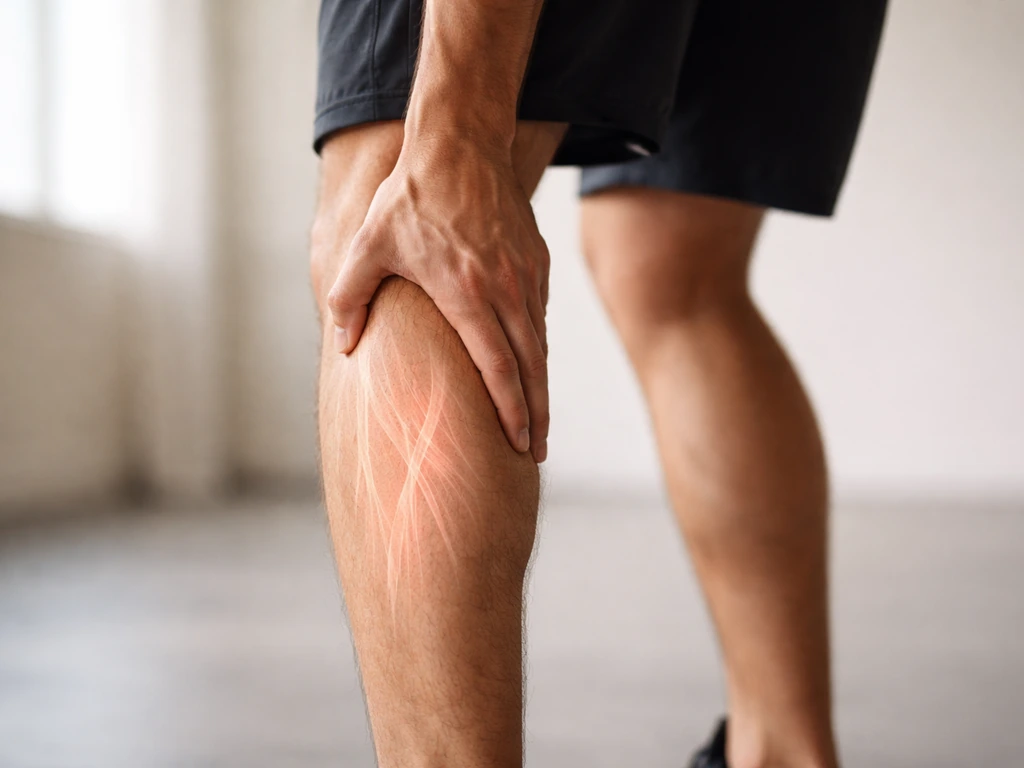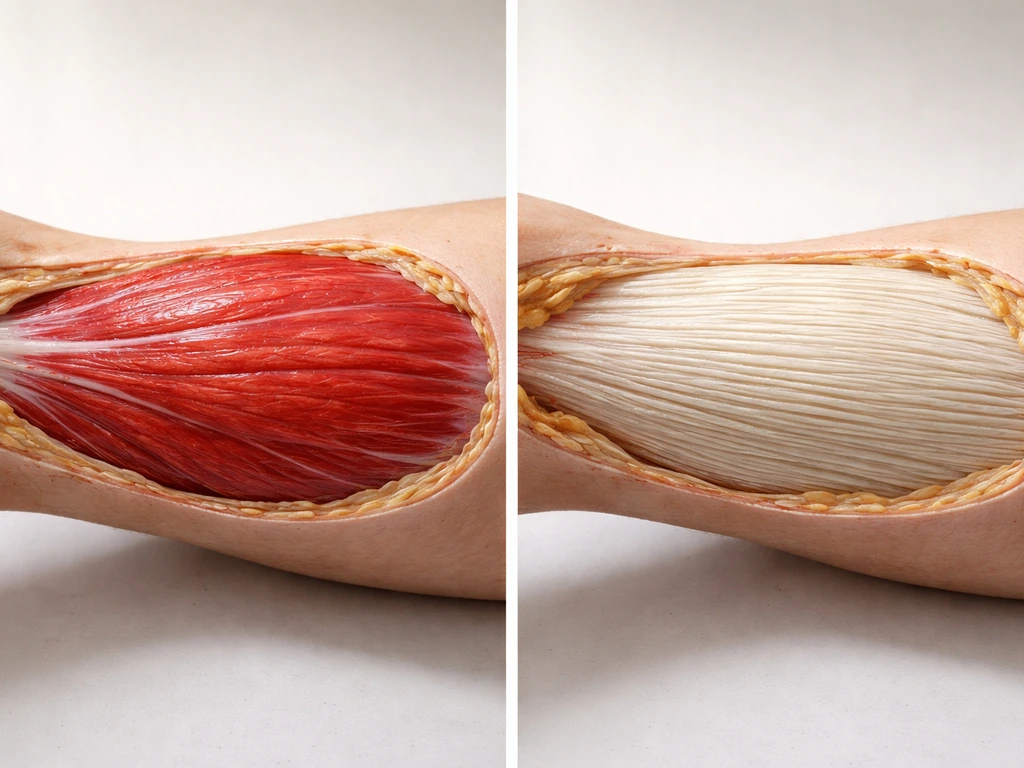
Yes, your muscles grow on rest days. In fact, rest days are when the actual growth happens. The workout is the trigger, not the result. If you skip rest days thinking more training means more muscle, you're likely slowing yourself down, not speeding things up. Here's the full picture on what's really going on inside your muscle tissue when you're not in the gym.
Do Muscles Grow on Rest Days? Recovery Explained

Marcus Kellerman
10 Apr 2026

What 'muscle growth' actually means during training vs. recovery

When you lift weights, you're not building muscle in the moment. You're doing the opposite: you're creating mechanical tension, metabolic stress, and microscopic damage to muscle fibers. That damage and stress is the signal. Your body reads it as a reason to adapt and come back stronger. The actual rebuilding, the hypertrophy, happens afterward during recovery.
The key process is muscle protein synthesis (MPS), which is your body's rate of building new muscle protein. It competes against muscle protein breakdown (MPB). Muscle grows when MPS consistently exceeds MPB over time, producing a positive net muscle protein balance. If you want a deeper look at all the inputs that support this process, what muscles need to grow covers the full picture, from mechanical load to nutrition to hormonal environment. But the short version is: training creates the stimulus, recovery is where the adaptation happens.
Testosterone also plays a role in this equation. It amplifies the MPS response to training and supports net protein balance. If you're wondering how much it matters, whether you need testosterone to grow muscle breaks down its actual contribution versus other factors. The point here is that growth isn't a single-variable equation, but rest days are non-negotiable regardless of your hormonal baseline.
Do muscles grow on rest days, and do they grow more on rest days?
Muscles grow primarily on rest days, not during workouts. Research using stable isotope tracer methods shows that muscle protein synthesis is elevated for roughly 24 to 48 hours after a resistance training session. One well-cited study found MPS is more than double at 24 hours post heavy resistance exercise before declining toward baseline by around 36 hours. That elevated synthesis window sits almost entirely in your rest period.
So to put it plainly: the hours you spend resting after a hard session are the hours your muscles are most actively rebuilding. Rest days aren't passive, they're when the repair and growth are firing at full speed. That's not motivational language, that's the physiology.
Research on post-absorptive protein turnover in resistance training also shows that alongside MPS increases, muscle protein breakdown actually decreases with consistent training over time. That double benefit, more synthesis and less breakdown, creates a more positive net protein balance and better conditions for hypertrophy. You can't get there without recovery windows built into your schedule.
Why muscles need rest to grow dives further into the cellular mechanisms behind this if you want the science in more depth. But the practical takeaway is simple: more rest (within reason) isn't laziness, it's a growth strategy.
What happens if you never take rest days
If you train hard every single day without adequate recovery, muscle growth stalls and eventually reverses. Here's why: each training session spikes MPS, but it also accumulates fatigue. If you're hammering the same muscle groups before MPS has had a chance to peak and come back down, you're interrupting the repair cycle and adding more breakdown on top of unfinished rebuilding.
Over time this leads to overreaching, and if it continues, overtraining syndrome. Signs include persistent soreness that doesn't resolve, declining performance in the gym, disrupted sleep, mood changes, and a general feeling of being worn down. Your body isn't adapting anymore, it's just trying to keep up with damage.
The irony is that people who train every day thinking they're maximizing gains are often the ones making the least progress. The stimulus is there, but the adaptation never gets to complete. Think of it like digging a hole and filling it back in every night. You need to let the cement set.
How recovery actually works: soreness, repair, and timelines

Muscle soreness (DOMS, or delayed onset muscle soreness) typically peaks 24 to 72 hours after a training session, especially after novel exercises or high eccentric load. Soreness is a side effect of the repair process, not a requirement for growth. You can have an extremely productive training session without significant soreness, and you can be very sore without having done much to trigger hypertrophy. Don't use soreness as your progress metric.
The actual repair and remodeling timeline looks roughly like this for most people. Inflammation peaks in the first 24 hours. Satellite cells and repair mechanisms are most active from 24 to 72 hours. Full structural remodeling and strength supercompensation can take 48 to 96 hours depending on training intensity, your experience level, age, and nutrition. Older adults generally need more time at the longer end of that window, which is completely normal and just means scheduling should account for it rather than fighting it.
Sleep is a major driver of this repair process. Growth hormone secretion peaks during deep sleep, and that's when a significant portion of muscle protein synthesis is being run. If you want to understand just how much overnight recovery contributes, whether muscles actually grow overnight addresses exactly that question. Short version: yes, and meaningfully so.
How to plan rest days: full rest vs. active recovery vs. deloads
Not all rest is the same, and how you structure your recovery days matters. Here's a practical breakdown of the three main options.
Full rest days
Full rest means no structured training. This is appropriate the day after a very high-intensity session, during periods of accumulated fatigue, or when you're genuinely sore or run down. Most people benefit from one to two full rest days per week. These days are not wasted days. The protein synthesis spike from your last session is still running, and your body is doing exactly what it's supposed to do.
Active recovery days
Active recovery means low-intensity movement: a 20 to 30 minute walk, easy cycling, light stretching, yoga, or swimming. The goal is to increase blood flow to recovering muscles without adding meaningful new stress. This can actually speed up the clearance of metabolic byproducts and reduce soreness perception. It's a good option on days when your muscles aren't fully recovered but you want to stay moving. The key word is low intensity. If you find yourself pushing hard, it's a workout, not recovery.
Deload weeks
A deload is a planned reduction in training volume or intensity, typically for one week, after several weeks of progressive training. You still train, but you might cut sets in half, reduce weight by 40 to 50 percent, or both. Deloads help resolve accumulated fatigue, restore performance, and often result in a notable uptick in strength and size in the following week. Most intermediate and advanced lifters benefit from a deload every four to eight weeks. Beginners can often go longer without one because their training stress is lower relative to their recovery capacity.
| Recovery Type | Intensity Level | Best For | Frequency |
|---|---|---|---|
| Full rest | None | High-fatigue days, after intense sessions, beginners early on | 1–2 days/week |
| Active recovery | Very low | Moderate soreness, staying mobile without adding stress | 1–2 days/week |
| Deload week | Low (50% volume/intensity) | Accumulated fatigue, plateaus, pre-competition prep | Every 4–8 weeks |
What to do on rest days to actually maximize growth
Protein: keep it consistent, not just post-workout
Muscle protein synthesis is elevated for up to 48 hours after training, which means your protein intake on rest days is just as important as on training days. A common mistake is eating less protein on rest days because you didn't train. Don't. Aim for at least 1.6 to 2.2 grams of protein per kilogram of bodyweight daily, spread across three to four meals. Your muscles don't stop needing amino acids just because you're not in the gym.
Calories: don't crash your intake

Some people slash calories on rest days because they burned fewer calories. This logic works against muscle growth. The repair and remodeling happening on rest days still requires energy. If you're in a caloric deficit on your recovery days, you're limiting the resources available for MPS. Carbohydrates in particular play a supporting role here. Whether muscles need carbs to grow gets into the specifics, but the practical point is that carbs replenish muscle glycogen and support recovery, so keeping them in your rest day meals is a smart call.
Sleep: your biggest recovery lever
Sleep is where a disproportionate amount of muscle repair happens. A multidimensional review in Sleep and Athletic Performance describes deep sleep as a key regeneration window, when muscle repair and protein synthesis intensify and energy stores such as muscle glycogen are replenished [deep sleep as a regeneration window](https://pmc. ncbi. nlm.
nih. gov/articles/PMC12610528/). Growth hormone, which directly supports protein synthesis and fat metabolism, is primarily secreted during slow-wave sleep. Cortisol (which promotes muscle breakdown) stays low during good sleep and spikes when sleep is cut short.
How sleep supports muscle growth explains the hormonal mechanics in detail. And if you're not sure how much sleep you actually need to see results, how much sleep you need to build muscle gives a practical, evidence-based target. For most adults, seven to nine hours is the sweet spot. [Less than six hours consistently will measurably impair your gains.
](https://pmc. ncbi. nlm. nih.
gov/articles/PMC12263768/)
The relationship between sleep and muscle growth runs so deep that whether your muscles grow while you sleep is genuinely one of the most important questions in recovery physiology. The answer is yes, and not in a trivial way. Prioritizing sleep is not optional if building muscle is the goal.
A simple rest day checklist
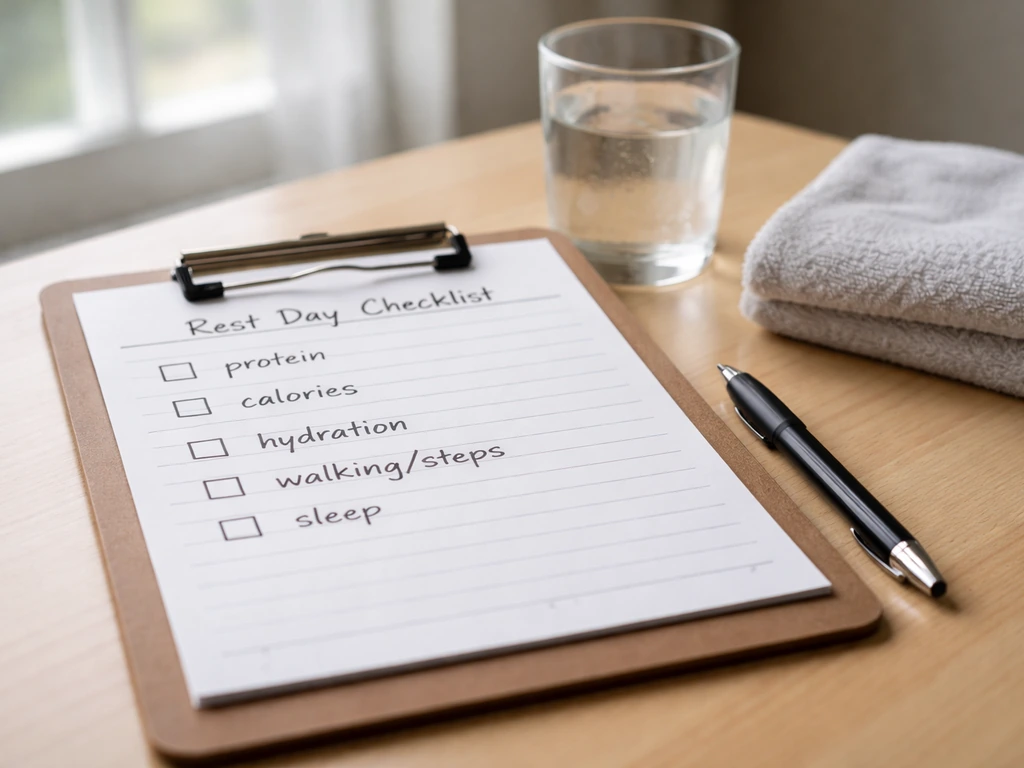
- Hit your daily protein target (1.6–2.2g per kg bodyweight), spread across meals
- Keep total calories close to your training day intake, especially if in a building phase
- Include carbohydrates to support glycogen replenishment and recovery
- Get 7–9 hours of sleep, treating it as seriously as your training sessions
- Consider a short walk or light mobility work if you have residual soreness
- Avoid alcohol in excess, as it suppresses protein synthesis and disrupts sleep quality
Myths and mistakes you'll see everywhere online
Online fitness communities, especially on Reddit, are full of well-meaning but often contradictory advice about rest days. Here are the ones worth addressing directly.
'If I'm not sore, I didn't work hard enough'
Soreness is not a reliable indicator of effective training. As you become more trained, soreness decreases even as the quality of your sessions improves. Chasing soreness by doing novel exercises constantly or adding extreme volume actually disrupts consistent progressive overload, which is the real driver of growth. Use performance metrics (are you lifting more weight, doing more reps, recovering faster?) not soreness as your feedback.
'Taking a rest day will make me lose gains'
One or two rest days will not cause muscle loss. Meaningful muscle atrophy from disuse begins after roughly two to three weeks of complete inactivity, and even then it's a gradual process. A weekend rest day is not a detraining event. You're not losing anything. You're gaining, because that's when MPS is elevated and repair is underway.
'More volume always means more muscle'
There is a dose-response relationship between training volume and muscle growth, but it has a ceiling. Beyond your maximum recoverable volume (which varies by individual and muscle group), adding more sets produces diminishing returns and eventually negative returns. If you're training every day and not seeing progress, the answer is rarely 'more training.' It's usually more recovery.
'Rest day nutrition doesn't matter'
This is one of the most common practical mistakes. Because MPS peaks in the 24 to 48 hours after training, your rest day meals are actively fueling the muscle-building process your workout triggered. Skimping on protein or calories on rest days is like starting a construction project and then not delivering the building materials. The crew (your muscle repair mechanisms) is ready and waiting. Don't leave them short-handed.
'Cardio on rest days will kill my gains'
Low to moderate intensity cardio on rest days does not meaningfully interfere with muscle growth, and light cardio can improve blood flow and support recovery. What matters is total stress and recovery capacity. If you're doing a brutal 90-minute run the day after leg day, that's an issue. A 30-minute easy walk or bike ride is not. Context matters more than the category of activity.
The bottom line on rest days and muscle growth
Rest days are not the absence of progress. They are the period where your training investment is being converted into actual muscle. Muscle protein synthesis spikes after your workouts and remains elevated for up to 48 hours, and that window overlaps almost entirely with your rest time. Cutting rest days short doesn't give your body more opportunities to grow. It cuts them off.
The practical action from here is straightforward. Build one to two dedicated rest or active recovery days into your week, keep your protein and calorie intake consistent on those days, prioritize sleep like it's part of your training program (because it is), and schedule a deload week every four to eight weeks if you're training with serious intent. That's not a complicated protocol. It's just letting the process work.
FAQ
How many rest days per week do I actually need to grow muscle?
A common starting point is 1 to 2 full rest days per week, but the real target is whether your performance is stable or improving. If your lifts trend down for 2+ sessions in a row or soreness and fatigue linger, you likely need more recovery, either another full rest day or a deload.
Do I need to rest the exact muscle group that I trained the day before?
Not necessarily. Smaller muscles or indirect work (like shoulders hit during presses) may recover faster, while heavy leg sessions often need longer. A practical rule is to train a muscle again when you can hit your usual reps or load without your technique degrading, not when you feel completely pain-free.
Will muscle growth still happen if I’m sore but my workouts feel weak?
You can still benefit from recovery when sore, but persistent weakness is a red flag that recovery is lagging. If your reps drop significantly or you feel unusually sluggish, choose active recovery or a full rest day and avoid adding novelty or extra volume just because you’re still feeling the effects.
Is it okay to do cardio on rest days, and how much is too much?
Yes, low to moderate intensity cardio is usually fine, and light movement can help circulation and soreness. The limit is when cardio adds to fatigue or forces you to cut total volume, strength work, or sleep. If your recovery markers worsen (performance down, sleep worse, soreness lasting longer), reduce duration or intensity.
Should I eat the same calories and protein on rest days as training days?
Protein should stay consistent, because muscle protein synthesis can remain elevated for up to about 48 hours after training. Calories can be adjusted based on your goals, but if you are cutting aggressively or skipping meals on rest days, you may blunt recovery. If you are in a deficit, avoid making rest days the “lowest calorie” days.
What if I only have one rest day, can I still grow?
Often yes, especially for beginners or people with lower training volume. Consider keeping weekly volume within your recoverable range, prioritize sleep, and schedule a deload before fatigue accumulates. If you train each muscle 2 to 3 times per week, one rest day can still work if the other days are not all high-intensity.
Do I lose muscle if I take a longer break, like 2 to 3 weeks off?
Some loss of muscle size and strength can occur after extended inactivity, but it is typically gradual rather than immediate. The key is to restart with a reduced volume for 1 to 2 weeks, then ramp back up. If the break was caused by injury or burnout, a cautious restart helps you regain training momentum without re-triggering excessive soreness.
How should I choose between full rest, active recovery, and a deload?
Use full rest when you have clear accumulation (sleep disruption, declining performance, heavy soreness). Use active recovery for light movement when you feel stiff but you are not overwhelmed by fatigue. Use a deload when you have several weeks of training with diminishing returns or performance plateaus, typically by cutting volume and sometimes load for about a week.
Is “rest day” the same as “no walking and no movement”?
No. Complete inactivity is not required for growth, and many people recover better with daily low-intensity movement. If you have a desk job, a simple walk or easy cycle for 20 to 30 minutes can support recovery without increasing training stress.
Should I sleep more on rest days than on training days?
If your schedule allows, extra sleep can be helpful, but the bigger win is consistency. Aim for your daily target (often 7 to 9 hours for most adults). Also protect sleep quality, because short sleep increases stress hormones and can make your recovery capacity worse even if you rest from lifting.
How do I know I’m getting enough recovery, beyond soreness?
Track performance and readiness. Good signs are stable or improving reps, loads, and workout quality, plus soreness that resolves within the expected window. Bad signs include steadily worsening sleep, reduced strength progression for multiple sessions, and lingering soreness that keeps you from training with your normal technique.