Here's the short answer: no, carbs are not strictly required for muscles to grow. Protein and adequate total calories are the two non-negotiables. Carbs matter a lot for fueling hard training, replenishing glycogen, and sustaining the training volume that drives hypertrophy, but they are not the direct trigger for muscle protein synthesis. If you understand that distinction, you can make much smarter decisions about your nutrition, whether you're eating a high-carb diet, going lower-carb, or somewhere in between.
Do Muscles Need Carbs to Grow? What the Evidence Says

Marcus Kellerman
15 Apr 2026
What carbs actually do (and don't do) for muscle growth
The biggest myth floating around gyms and nutrition forums is that carbs trigger muscle growth by spiking insulin, and that insulin then drives protein into muscle tissue. This sounds logical but the evidence doesn't really support it. Research shows that insulin at physiological levels has not been shown to directly increase muscle protein synthesis in humans. In fact, studies confirm that raising plasma insulin alone, without sufficient amino acids present, does not stimulate muscle protein synthesis. So the idea that you need to eat carbs to spike insulin to grow muscle is not how it works.
Where insulin does play a supporting role is through indirect mechanisms, like improving blood flow and amino acid delivery to muscle tissue. And carbohydrates clearly matter for glycogen, which fuels high-intensity training. Low glycogen can impair AMPK/mTORC1 signaling in complex ways, and research indicates that when carbohydrate restriction persists for 8 to 12 weeks, it can limit anaerobic output and potentially blunt hypertrophic responses. But the key word there is 'can.' It's a performance and volume issue more than a direct protein-synthesis issue.
A recent systematic review and meta-analysis found that the isolated effect of carbohydrate intake on muscle hypertrophy has not been clearly established, even outside ketogenic conditions, and that the quality of available trials is low. That doesn't mean carbs don't matter. It means we can't say 'more carbs = more muscle' with the same confidence we can say 'more protein = more muscle.' The relationship is indirect and context-dependent.
Calories are not optional
If carbs aren't the direct lever, calories absolutely are a major factor. A meta-analysis published in the Scandinavian Journal of Medicine and Science in Sports found that energy deficiency attenuates resistance-training gains in lean mass, even when protein is adequate. You can still make strength gains in a deficit, but maximizing muscle hypertrophy is harder when your body doesn't have surplus energy to work with. On the flip side, overeating without training mostly adds fat, so the goal is calibrated surplus, not just eating more of everything.
It's also worth noting that glycogen resynthesis itself depends on total energy intake, not just carb intake in isolation. Even if you're consuming carbohydrates, inadequate total calories will limit how well you recover. So when people ask whether muscles need carbs to grow, what they're often really asking is whether they need calories. And yes, they absolutely do. What muscles need to grow comes down to mechanical tension from training, sufficient protein to synthesize new tissue, and enough total energy to support that process, with carbs being one useful tool in the energy equation.
Protein is the actual building block

If you only optimize one macronutrient for muscle growth, make it protein. A large meta-analysis found that total daily protein intake was by far the most important predictor of hypertrophy, with roughly a 0.2 increase in effect size for every 0.5 g/kg increase in protein intake. The research consistently points to a range of about 1.6 to 2.2 g/kg of body weight per day as the practical target for people doing resistance training. The GSSI and NSCA both land in that neighborhood, with some research suggesting that novice lifters may benefit from the higher end of that range (around 1.5 to 1.7 g/kg) because they're adapting faster.
Beyond a certain point, more protein doesn't keep adding benefit. The dose-response meta-analysis by Morton et al. found that protein intakes above approximately 1.6 g/kg/day don't meaningfully contribute further to resistance-training-induced gains in fat-free mass. So hitting around 1.6 to 2.0 g/kg per day is the practical sweet spot. Going slightly above that isn't harmful, but it won't supercharge your gains either. The real risk for most people isn't eating too much protein, it's not eating enough consistently.
One more thing worth flagging: even in a caloric deficit, keeping protein high protects muscle. A randomized trial showed that combining resistance training with a diet that kept protein at roughly 3.1 g/kg/day decreased body fat while preserving lean mass. That's on the very high end, but it illustrates the point. If you're cutting, protein becomes even more important, not less.
Carbs, protein, and calories by goal
Here's how to think about your macros depending on what you're trying to do:
| Goal | Calories | Protein Target | Carb Approach |
|---|---|---|---|
| Muscle gain (bulk) | 200–400 kcal surplus above TDEE | 1.6–2.2 g/kg/day | Moderate to high; prioritize around training |
| Recomposition (maintain weight) | Near maintenance | 1.8–2.2 g/kg/day | Moderate; enough to fuel sessions |
| Fat loss while preserving muscle | 10–25% caloric deficit | 2.0–2.4 g/kg/day (higher when cutting) | Lower okay; keep enough for training performance |
| Low-carb or keto adaptation | Calorie target unchanged | 1.8–2.2 g/kg/day | Very low (under 50g/day); monitor performance |
Notice that protein targets go up when calories go down. That's intentional. When you're in a deficit, protein does more work protecting lean mass, and you need to compensate for the missing calories by being more precise with the nutrient that matters most for muscle retention.
When and how to eat carbs around training

Timing isn't magic, but it does matter more when total carb intake is low or when you're doing high-volume, high-intensity training. If you're eating plenty of carbs throughout the day, hitting them at the perfect moment matters less. If you're carb-restricted, getting them closer to your sessions becomes more useful.
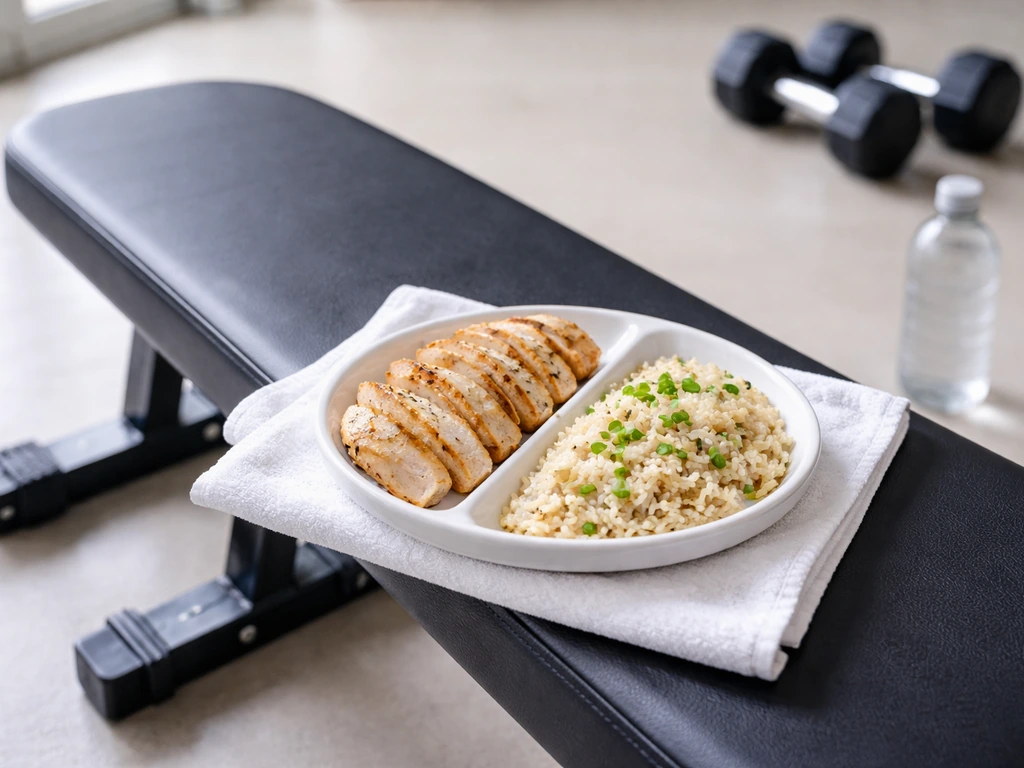
For pre-workout, eating a mixed meal with carbs and protein 90 to 120 minutes before training is a solid baseline. Something like rice and chicken, oatmeal with protein powder, or a sandwich works fine. You want your glycogen stores topped off going into a hard session, especially if you're doing compound lifts or high-rep work with short rest periods.
Post-workout, the priority is protein first, then carbs. Research shows that about 1.2 g of carbohydrate per kg of body weight per hour is likely to maximize glycogen resynthesis rate after depleting exercise, which is useful for people training twice a day or doing back-to-back sessions. For most people lifting 3 to 5 days a week with 24 hours between sessions, you have plenty of time to refuel. Glycogen can be fully restored within roughly 24 hours if your daily carb intake is sufficient, so stressing about the exact post-workout window matters less than hitting your daily targets. One important note: adding protein to your post-workout carbs doesn't actually speed up glycogen resynthesis, but it does support muscle repair, so it's still worth doing.
Going low-carb while still trying to build muscle
You can build muscle on a low-carb diet. The evidence on this is genuinely mixed, but the blanket claim that 'no carbs means no muscle' isn't supported. Several studies on ketogenic diets combined with resistance training show that fat-free mass outcomes are not universally negative. A CrossFit study over 12 weeks found no statistically significant difference in total lean body mass between keto and control groups, though there were some trends toward reduced muscle thickness in the keto group. Animal research also shows that low-carb ketogenic diets don't impair acute or chronic hypertrophic responses to resistance exercise at the mechanistic level.
The real risk on a low-carb approach isn't that you can't trigger muscle protein synthesis. It's that lower glycogen availability tends to reduce training performance, meaning you may lift less weight, complete fewer sets, or feel worse during sessions. Over time, that reduced training volume and intensity can translate to a smaller hypertrophic stimulus. So if you're going low-carb, protect your training quality. Keep protein high, make sure total calories aren't also too low, and consider placing whatever carbs you do eat around your training sessions. An isocaloric low-carb, high-protein diet has been shown to support skeletal muscle protein synthesis without causing muscle breakdown, so calories and protein remain your primary levers.
It's also worth thinking about what happens during recovery. Muscles need adequate rest to grow, and that rest period is when your nutrition choices, including your carb intake, affect how well you recover for the next session. Low-carb eating can work, but it tends to require more attention to overall calorie management and recovery quality.
Common mistakes that stall muscle growth
Not eating enough total calories
This is the most common mistake by far, especially among people focused on 'eating clean.' You can eat perfectly healthy food and still not eat enough to grow. Muscle growth requires an anabolic environment, and chronic energy restriction makes that harder to achieve. If you've been training consistently for months and not seeing size changes, the first thing to audit is your total calorie intake, not your macro ratios.
Protein gaps
A lot of people think they eat enough protein because they have chicken at dinner. But hitting 1.6 to 2.0 g/kg/day consistently across every day, not just training days, requires intentional planning. Spreading protein across 3 to 4 meals is a practical way to make it work. Each meal should have at least 25 to 40 g of a complete protein source.
Confusing carbs with calories
Some people cut carbs and think they've fixed their diet, but then they don't replace the lost calories with anything. Total energy intake drops, training suffers, and they conclude that 'low-carb doesn't work.' Others add carbs thinking that alone will help them grow, without tracking whether protein or total calories are actually on target. Carbs are a tool, not the mechanism. Keep that framing and the decisions get clearer.
Inconsistent training and poor recovery
Nutrition can only do so much if training stimulus is inconsistent. You could be eating perfectly and still plateau if you're not progressively overloading your sessions. On the recovery side, sleep is where a significant amount of the actual muscle repair happens. Your muscles grow while you sleep, driven by growth hormone release and protein synthesis that peaks during deep sleep. Skimping on sleep, even a few nights a week, can meaningfully blunt your progress.
Underestimating hormonal context
Hormones matter too, and this is especially relevant for older adults. If you're wondering whether you need testosterone to grow muscle, the short answer is that optimal testosterone levels support muscle growth, but you don't need supraphysiological levels to make progress. Nutrition, sleep, and training all influence hormonal output. Chronic energy restriction and very low-carb dieting can lower testosterone in some people, which is another reason not to go too aggressive with cuts.
Troubleshooting a plateau
If you've hit a wall, here's how to work through it systematically. First, check your calories, are you actually in the right range for your goal? Use a food tracking app for two weeks to get real numbers, not estimates. Second, check protein, are you hitting 1.6 g/kg/day or above every single day? Third, look at training volume and progressive overload, are you adding weight or reps over time, or have you been doing the same sessions for months?
Recovery is also worth examining. Muscles do grow on rest days, since that's when protein synthesis is catching up to the damage from training. If you're training every day without real recovery sessions, you may be limiting your own progress. And if sleep is under 7 hours consistently, that's worth addressing before anything else. Research consistently shows that sleep helps grow muscles by creating the hormonal and metabolic conditions that make protein synthesis more efficient. Most adults need somewhere in the range of 7 to 9 hours of sleep to support muscle growth, and cutting that short is one of the fastest ways to stall progress without realizing why.
If you're cutting calories and worried about lean mass, consider a refeed strategy. A randomized controlled trial found that intermittent energy restriction attenuated lean mass loss compared with continuous restriction in resistance-trained individuals. Cycling between slight deficits and maintenance periods, even just one higher-calorie day per week, can help preserve muscle when you're trying to lose fat. And muscle can grow overnight during a well-fed recovery period, so making those refeed days count nutritionally is worth the effort.
If-then guidance for different situations
- If you're a beginner: Focus on protein first (aim for 1.6 g/kg/day), eat at or slightly above maintenance, and don't overthink carb timing. Consistency in training and eating matters more than perfect macro splits at this stage.
- If you're an older adult: Protein needs may be slightly higher to overcome anabolic resistance; aim for 1.8 to 2.2 g/kg/day and distribute it across meals. Carbs help sustain training intensity, which becomes more important as recovery takes longer.
- If you're trying to gain muscle as fast as possible: Eat in a modest surplus (200 to 400 kcal above TDEE), keep protein at 1.8 to 2.2 g/kg/day, and use carbs liberally around training sessions to fuel volume.
- If you're low-carb or keto: Keep total calories and protein on target, place carbs (if any) around training, monitor performance carefully, and consider whether the carb restriction is actually serving your goals or just limiting your progress.
- If you're in a caloric deficit: Raise protein to at least 2.0 g/kg/day, keep resistance training in place, and consider periodic refeeds to protect lean mass.
- If you've plateaued: Audit calories and protein with actual tracking, reassess training progression, and prioritize sleep before changing your macro ratios.
FAQ
Do muscles need carbs to grow if I hit my protein and calories?
If you get enough protein (about 1.6 to 2.0 g/kg/day) and you are at maintenance calories or a modest surplus, your carbs are not required for hypertrophy. In that setup, carbs mainly help you train harder by topping off glycogen, so muscle growth still tracks best with high training quality and adequate total energy.
When do carbs matter most for muscle growth, even if they are not required for protein synthesis?
Carbs can become more “necessary” when your training relies on repeated high-intensity sets, short rest times, or high total volume, because low glycogen can reduce how much work you can do. In practice, many low-carb athletes keep carbs limited most of the day but add a targeted amount around hard sessions to preserve performance.
How important is post-workout carb timing for building muscle?
A single post-workout meal will not make or break your gains. For people training once per day with about 24 hours between sessions, it is usually more important to meet total daily carbs and protein than to chase a precise “anabolic window.” Bigger differences show up with back-to-back training days or twice-a-day workouts.
What should I do if I go low-carb and my workouts get worse?
If you are restricting carbs and training feels flat, the first check is whether total calories dropped too. If calories are correct but performance is worse, consider adding carbs specifically before or during workouts (for example, a carb-containing pre-workout meal) and keep protein the same. This protects training volume, which is what ultimately drives hypertrophy.
Can I build muscle while dieting if I stay low-carb?
Yes, but it is safer to think in terms of training performance and total calories rather than “carbs equal muscle.” If your deficit is too aggressive, protein cannot fully protect lean mass, even if you are hitting the right grams of protein. A common approach is a smaller deficit, higher protein, and keeping training intensity as stable as possible.
Will low-carb dieting stop muscle growth immediately?
You can, but you may need a longer runway to dial things in. Going from higher-carb to low-carb often causes several weeks of performance changes as glycogen and fueling patterns adapt, so expect training output to fluctuate early. Track body weight, strength trends, and session volume rather than judging by how you feel on week one.
If I eat more carbs, will I automatically gain more muscle?
Not necessarily, especially if you are not training hard enough to justify the surplus. Many people add carbs and gain scale weight, but a portion of that can be fat if overall calories overshoot. For lean mass gain, pair carb increases with resistance training volume and keep the surplus small and controlled.
Is insulin the reason carbs help muscles grow?
Insulin is not something you need to artificially “spike” for hypertrophy. What tends to matter more is getting enough amino acids from protein and having enough energy to recover and support training. If carbs are low, insulin will likely be lower, but that does not prevent muscle building when protein and calories are adequate.
What carb level is “enough” for someone who wants to stay low-carb?
The practical target for glycogen support is personal. If you choose low-carb, start with a moderate reduction rather than extreme restriction, then adjust based on training performance and body composition progress. If volume falls and stays down for several weeks, that is a sign to increase carbs, not just “push through.”
I added carbs but still feel stuck, what should I check first?
A good way to confirm you are not missing the real issue is to compare week-to-week training volume and calorie intake. Many “I eat carbs but I am not growing” cases are actually protein shortfalls, inconsistent effort, or an energy deficit. If you are under-eating, adding carbs without fixing calories often changes performance but does not solve the underlying deficit.
How should I adjust carbs if I am already hitting my protein target?
GSSI-quality advice that is commonly used in practice is to prioritize daily protein first, then adjust carbs to support training. For athletes who tolerate it well, a diet that is low to moderate in carbs can work, but if recovery and performance are compromised, carbs may need to be increased around key sessions. Always keep protein steady when you test carb changes.