Muscles need four things to grow: a training stimulus that challenges them, enough protein to rebuild with, enough total calories to support the process, and adequate recovery time to actually make the adaptations. That's the whole answer. Everything else, including supplements, fancy programs, and timing tricks, is either a refinement of one of those four pillars or a distraction from them. If you're missing any one of them, growth stalls. Let's walk through each in the detail that actually matters.
What Do Muscles Need to Grow? Training, Nutrition, Recovery

Marcus Kellerman
11 Apr 2026

The core requirements for muscle growth
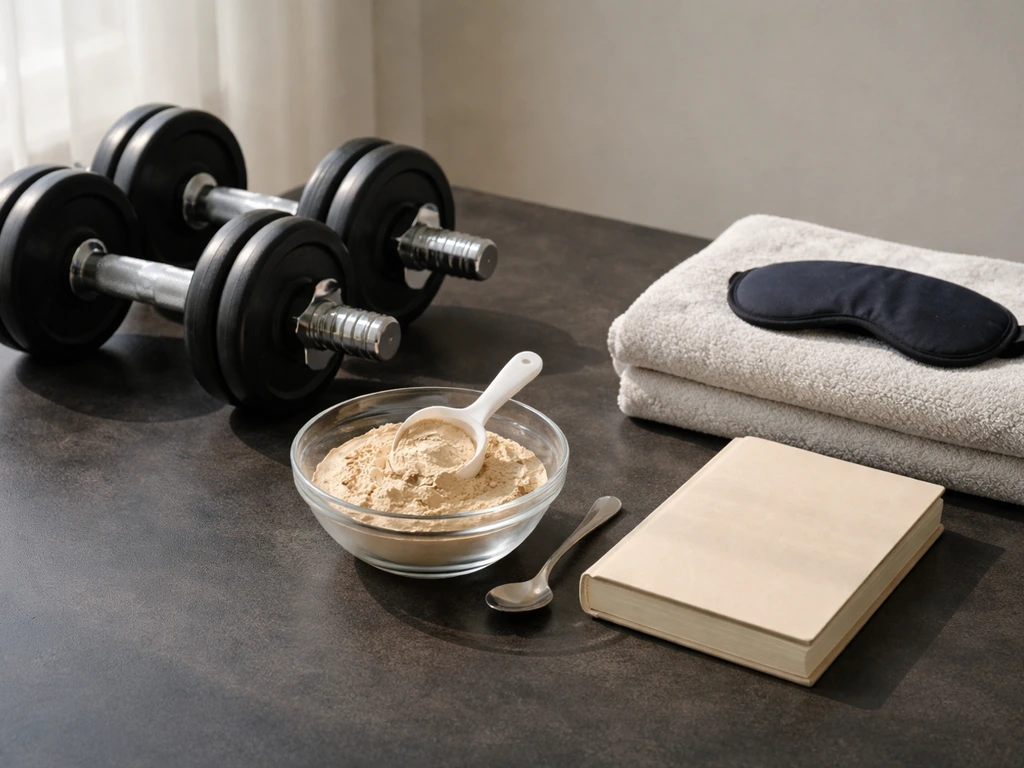
Muscle growth, technically called hypertrophy, happens when your body senses that existing muscle tissue isn't adequate for the demands being placed on it. The primary driver is mechanical tension: your muscle fibers are stressed under load, microscopic damage occurs, and the repair process builds them back slightly thicker and stronger. Metabolic stress, the burn and pump you feel during high-rep sets, also appears to contribute to hypertrophic adaptations, though mechanical tension remains the dominant signal. Both happen during well-designed resistance training. The key word there is 'resistance.' You need load, whether that's a barbell, dumbbells, cables, or hard bodyweight progressions. Cardio alone won't cut it.
Beyond the training signal, your body needs raw materials: amino acids from protein to build new contractile tissue, carbohydrates and fats to fuel your workouts and support hormonal function, and overall caloric sufficiency to avoid a catabolic state. Finally, it needs time away from the gym. The actual growth happens during recovery, not during the workout itself. Skip any of these inputs and you're leaving results on the table.
Training: progressive overload, volume, and intensity
Progressive overload is non-negotiable. If your muscles aren't being challenged beyond what they've already adapted to, there's no signal to grow. Overload can come from adding weight to the bar, doing more reps with the same weight, adding sets, shortening rest periods, or improving technique so more of the load actually reaches the target muscle. You don't need to add weight every single session, but over weeks and months the trend needs to go up.
Volume, meaning the number of sets you do per muscle group per week, matters a lot more than most beginners realize. The dose-response relationship is real: research shows hypertrophy of roughly 5.4% with fewer than 5 weekly sets per muscle, 6.6% with 5 to 9 sets, and about 9.8% with more than 10 sets. Aiming for at least 10 sets per muscle group per week is a solid general target for most people. Advanced trainees may need considerably more, with some evidence suggesting experienced lifters may benefit from 20 or even 27-plus weekly sets to continue driving adaptations. Start on the lower end if you're new, and build up as your recovery capacity improves.
Intensity, meaning how close to failure you're training, is the other side of the coin. Sets done with 5 or more reps left in the tank tend to be less productive for hypertrophy than sets taken closer to failure. A good rule of thumb: most of your sets should end with only 1 to 3 reps left in reserve. You don't always need to go to absolute failure, but you shouldn't be cruising through sets with tons of gas left in the tank and expect maximum results.
Nutrition: calories, protein, and carbs
Calories first, protein second
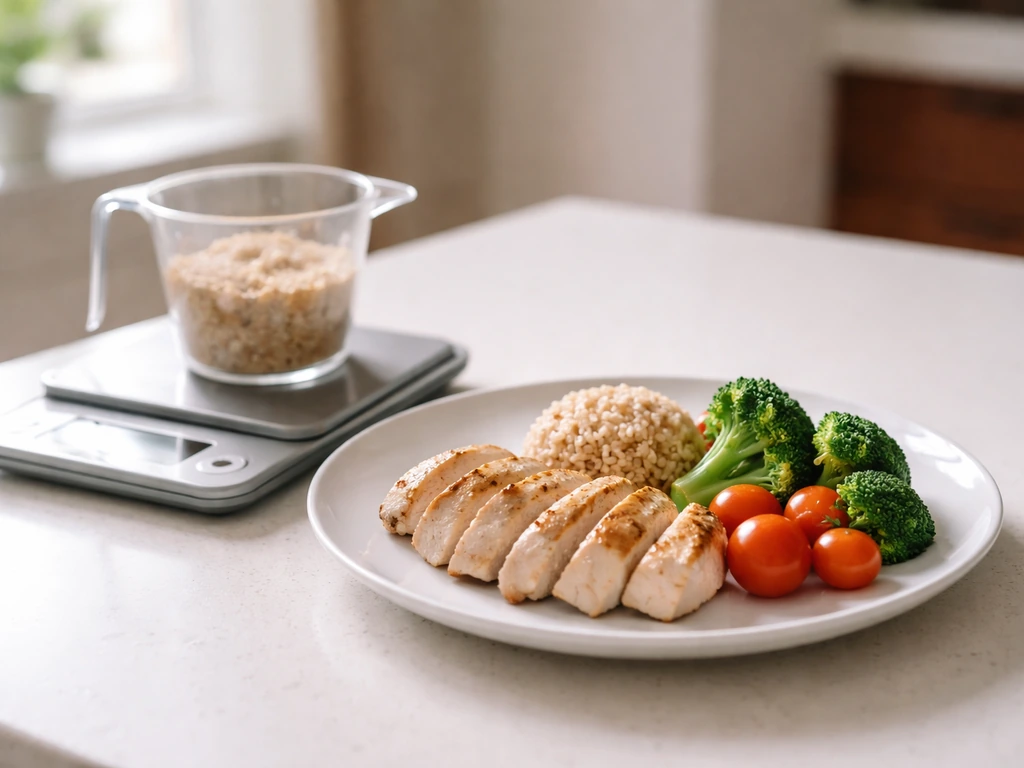
You can build muscle in a caloric deficit, but it's slower and harder, especially past the beginner stage. Being in a modest caloric surplus, roughly 200 to 400 calories above maintenance, gives your body the energy it needs to synthesize new tissue without burying you in unnecessary fat gain. If you're a beginner or returning after a long break, you may be able to recomp (gain muscle while losing fat) for a while at maintenance calories. Older adults can also often build meaningful muscle without a large surplus. But at some point, if the scale isn't creeping up at all and your strength is plateauing, you probably need to eat more.
Protein is the most important macro to nail down. The evidence points consistently to a daily target of around 1.6 to 2.2 grams per kilogram of bodyweight for people doing resistance training. The International Society of Sports Nutrition puts the practical sweet spot at roughly 1. The ISSN protein position stand lists protein intake targets for exercising individuals in the commonly cited range of about 1.6 to 2.0 g/kg/day blank" rel="noopener noreferrer">around 1.6 to 1.8 g/kg/day. 6 to 1.8 g/kg/day for exercising individuals. If you weigh 80 kg (about 175 lbs), that's 128 to 176 grams of protein per day. Don't just eat it all at once either: distributing your intake across meals spaced every 3 to 4 hours, with each serving hitting around 0.25 to 0.40 g/kg, keeps muscle protein synthesis elevated throughout the day more effectively than one or two large protein dumps.
Don't sleep on carbohydrates
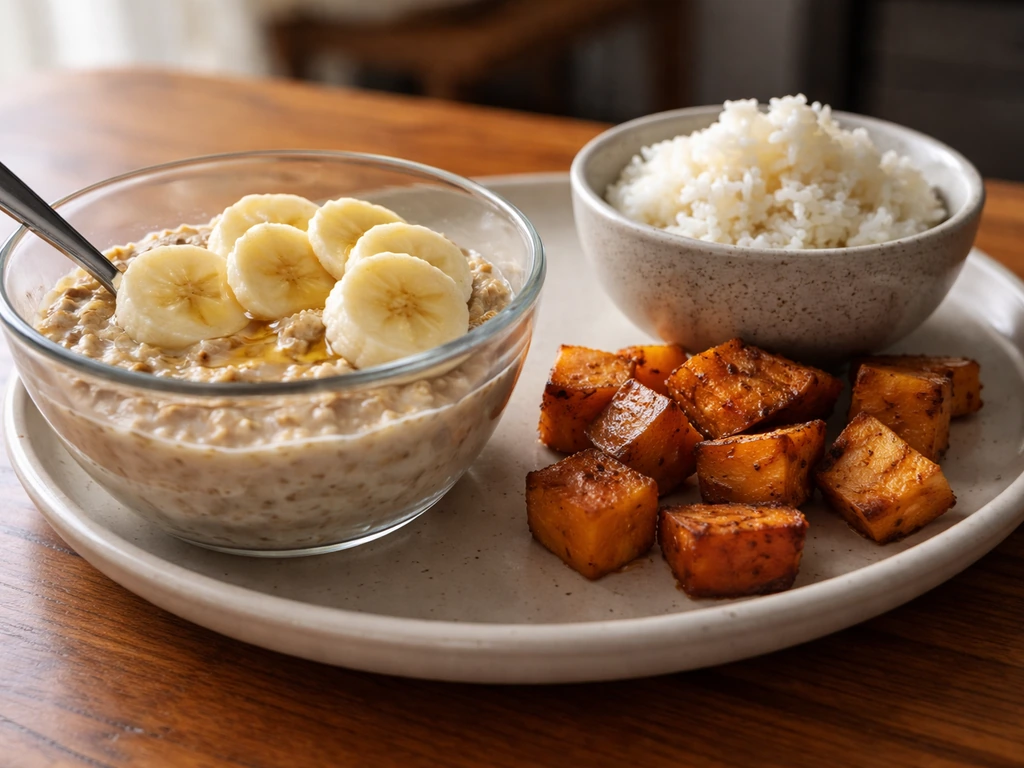
Carbohydrates are often treated as optional, but they're genuinely useful for muscle growth. Resistance training can significantly deplete skeletal muscle glycogen, especially during high-volume sessions, and that depletion directly affects your ability to perform and recover. whether muscles need carbs to grow is a legitimate question, and the short answer is: carbs aren't strictly required, but they support training performance and glycogen replenishment in ways that matter if you're training hard. Adequate carbohydrate intake helps maintain training volume and speeds post-exercise recovery. Low-carb approaches can work, but they often come with a performance cost that limits your ability to drive progressive overload, which is the real growth signal.
Recovery: sleep, stress, soreness, and rest days
This is where muscle growth actually happens. The workout is the stimulus. Recovery is the adaptation. People chronically underestimate how much their results depend on what they do between sessions. A question worth thinking about is whether muscles truly need rest to grow, and yes, they do. Training the same muscle again before it's recovered enough just accumulates fatigue without adding growth stimulus. Most muscle groups recover well with 48 to 72 hours between direct sessions, though this varies by training volume, age, and individual recovery capacity.
Sleep is where the magic happens

Growth hormone release, protein synthesis, and tissue repair are all amplified during sleep. If you've ever wondered whether sleep genuinely helps grow muscles, the answer is a clear yes. Research confirms that muscle growth does occur overnight, making consistent, quality sleep one of the most underrated tools in a lifter's toolkit. For practical guidance, understanding how much sleep you actually need to maximize muscle gains comes down to aiming for 7 to 9 hours per night for most adults. Consistency matters more than perfection: one bad night won't kill your gains, but chronically sleeping 5 to 6 hours will. For a healthy adult, the American Academy of Sleep Medicine and Sleep Research Society consensus statement recommends sleeping 7 or more hours per night on a regular basis, and that more than 9 hours may be appropriate for some groups blank" rel="noopener noreferrer">sleeping 5 to 6 hours.
One nuance worth knowing: the benefits of resistance training on sleep quality tend to be cumulative rather than immediate. You might not notice better sleep the very night after a hard session, but your muscles do grow while you sleep, and a consistent training habit tends to improve sleep quality over time, especially in older adults.
Stress, rest days, and deloading
Psychological and physiological stress share the same recovery pool. If you're going through a period of high life stress, your body's capacity to recover from training is genuinely reduced. NSCA guidelines acknowledge that training frequency should be adjusted downward when total stress load, physical and psychological, is high. Pushing through periods of high life stress with unchanged training volume often leads to stalled progress or injury. It's not weakness to reduce your training temporarily; it's smart management of your recovery budget.
The question of whether muscles grow on rest days is one a lot of people get wrong. Yes, they do. Rest days aren't wasted days; they're when the repair and growth process gets done. Planned deload weeks, where you reduce training volume and intensity for a week, are also valuable for accumulation-phase lifters. Survey data on deloading practices among strength coaches shows common prescriptions involve just 1 to 2 sessions per week with reduced sets (1 to 3) and reps, at roughly 60 to 84 percent of your normal working weights. A deload every 4 to 8 weeks works well for most intermediate and advanced trainees.
One more myth to address: soreness is not a reliable indicator of muscle growth. You can have a highly productive session with minimal next-day soreness, especially as you get more experienced. Chasing soreness by constantly switching exercises or adding extreme volume often backfires. Soreness reflects novelty and accumulated damage, not necessarily quality training.
Supplements that can help (and what's genuinely optional)
Supplements are the fourth wall of the muscle-building house: nice to have, but the house stands without them. That said, a few have solid evidence behind them and are worth considering once your training, nutrition, and sleep are in order.
- Creatine monohydrate: this is the most well-researched performance supplement in existence, and it genuinely helps. The ISSN confirms creatine monohydrate is effective for increasing muscle creatine stores. A loading phase of roughly 20 g per day (split into four 5g doses) for 5 to 7 days followed by a maintenance dose of 3 to 5 g per day is one approach; simply starting at 3 to 5 g daily from the beginning also works, just takes a few more weeks to saturate. Worth it for most people who are already training hard.
- Protein supplements: whey, casein, or plant-based protein powders are just convenient food. They don't do anything magical; they just help you hit your daily protein target when whole food falls short. A post-workout shake is fine, but timing it perfectly matters far less than simply hitting your daily total.
- Caffeine: improves performance, increases training volume, and is cheap. Not everyone tolerates it well and it shouldn't replace sleep, but as a pre-workout tool it has real merit.
- Beta-alanine and nitrates: some evidence supports their use for specific training styles. Beta-alanine may help with high-rep endurance; dietary nitrates (like those in beetroot) may modestly improve performance. These are optional extras, not foundations.
- Everything else: fat burners, BCAAs if you're hitting protein targets, most proprietary blends: the evidence doesn't justify the cost. Spend your supplement budget on creatine and more food before anything else.
If you're wondering about hormones, specifically whether you need testosterone to build muscle, the answer is nuanced: testosterone clearly plays a role in how quickly muscle accrues, but people across a wide range of hormonal profiles can still build meaningful muscle with proper training and nutrition. Optimizing lifestyle factors like sleep, stress management, and body composition will support healthy hormone levels without requiring any pharmaceutical intervention for most people.
Common mistakes and why growth stalls

If your muscles aren't growing, it's almost always one of these problems: not enough training volume or intensity, not eating enough protein, not eating enough total calories, not sleeping well, or not actually progressing the load over time. Here are the specific mistakes I see most often.
- Training without progressive overload: doing the same weight for the same reps month after month is maintenance, not growth. You must make it harder over time.
- Protein is too low: a lot of people think they're eating enough protein and they're not. Track it for a week and see what you're actually getting.
- Too much volume, too little recovery: more sessions doesn't mean more muscle. If you're training 6 days a week and sleeping 5 hours, cutting sessions and sleeping more will likely produce better results.
- Constantly switching programs: muscle adapts to stress over weeks, not days. Changing your routine every week because you saw something new online kills your ability to measure and apply progressive overload.
- Expecting soreness to confirm growth: as mentioned above, this is a trap. A well-designed program that doesn't leave you crippled every week is often more productive than one that does.
- Ignoring total caloric intake: eating 'clean' but not enough is a common reason gains stall, especially in people who fear gaining any body fat. A small surplus is your friend.
- Neglecting compound movements: isolation work is fine, but if your program is mostly curls and lateral raises without deadlifts, rows, presses, and squats, you're leaving a lot of stimulus on the table.
- Skipping deloads when accumulated fatigue builds up: ongoing fatigue masks your actual fitness and suppresses strength expression. Planned deloads let your body cash in on the adaptations you've already earned.
What to expect and how to know it's working
Realistic timelines matter. Complete beginners can expect noticeable muscle gain within 8 to 12 weeks of consistent training, though the first 4 to 6 weeks of strength gains are mostly neurological (your nervous system learning to recruit more muscle fibers). True hypertrophy accumulates steadily after that. In the first year of serious training, gaining 0.5 to 1 kg of muscle per month is realistic for men; women tend to add roughly half that rate. After the first year, progress slows: gaining 0.5 to 1 kg of muscle over several months becomes normal. Older adults gain muscle more slowly on average but absolutely can gain it, and the health benefits per unit of muscle gained are arguably higher.
Tracking progress correctly is important because the scale alone will mislead you. Body weight fluctuates daily based on water, food volume, and hormones. The more reliable signals are: strength improvements on key lifts, body measurements (tape measure at consistent sites like arms, chest, waist, and thighs), progress photos taken in consistent lighting every 4 weeks, and how your clothes fit. Using a trend-based approach to monitoring your weight, looking at weekly averages rather than daily readings, filters out the noise and shows you whether you're actually moving in the right direction.
| Metric | What it tells you | How often to check |
|---|---|---|
| Strength on key lifts | Whether progressive overload is happening | Every session |
| Weekly average body weight | Overall trend in mass (up, down, or flat) | Daily weigh-in, review weekly average |
| Body measurements (tape) | Site-specific changes in muscle size | Every 3 to 4 weeks |
| Progress photos | Visual body composition changes | Every 4 weeks, consistent lighting |
| Training performance/volume | Whether fatigue is managed and capacity is growing | Every session |
If after 6 to 8 weeks you're not getting stronger on at least a few lifts, your scale average isn't budging (or is going the wrong way), and your measurements are flat, something needs to change. Start with nutrition: are you hitting protein targets and eating enough? Then look at sleep. Then reassess whether you're actually pushing hard enough in training. Most plateaus are solved at the table or in the bedroom, not by adding a new exercise.
The bottom line: muscles need a progressive training challenge, consistent protein intake in the range of 1.6 to 2.2 g/kg/day spaced across meals, enough total calories to support growth, and real recovery (especially sleep). Get those four things right, track your progress honestly, and adjust when results stall. That's the whole system. No special program, supplement stack, or timing trick overrides the fundamentals.
FAQ
How much should I increase training volume or intensity if I want to grow faster without stalling?
Use small, time-based steps. A common approach is adding 1 to 2 sets per week per muscle (within a 6 to 8 week window) or adding reps first at the same load. If performance drops for several sessions in a row, you are probably overshooting, so reduce sets by 20 to 40% for a week or two (a mini-deload) instead of forcing harder work.
What if I do too much protein, will extra help muscle growth?
More protein beyond your target usually does not speed hypertrophy. Over 2.2 g/kg/day, the extra calories and amino acids mostly become excess intake, which can make surplus harder to control and may displace carbs you need for training. Stick to the 1.6 to 2.2 g/kg/day range, then adjust carbs and calories to improve performance and overall progress.
Do muscles need to be trained close to failure every single set?
Not every set. The article’s “1 to 3 reps in reserve” idea works best when the overall session and weekly volume include enough hard sets. Use a mix: save near-failure effort for your main lifts, and keep isolation work slightly farther from failure if fatigue accumulates. The goal is consistent weekly stimulus, not grinding every exercise.
How do I know my weekly set volume is “enough” if I’m doing many different exercises?
Count sets by muscle, not by exercise. For example, 6 sets on presses and 6 sets on flyes for chest still equals 12 chest sets that week (roughly). If you track only workouts, you can accidentally double-count or under-count. Aim for the lower end first (around 5 to 10 sets per week per muscle) and increase only if strength and measurements are trending up.
What should I do if my weight is flat but my strength is increasing?
That can mean you are recompositioning or gaining muscle at the expense of fat. Do not raise calories automatically. Instead, follow the trend for 2 to 4 weeks, check waist measurements and training performance, and consider small adjustments (around 100 to 200 calories) if you see no size change and plateaus in performance.
How long should I sleep extra or change my routine before expecting visible muscle growth?
Sleep improvements usually show up in performance first, then size. If you add 60 to 90 minutes of sleep and keep training consistent, you may feel stronger within 1 to 2 weeks, with clearer body composition changes over 4 to 8 weeks. If nothing improves after several weeks, the bottleneck is likely calories, protein, or training progression rather than sleep duration alone.
Is it better to train a muscle once hard or multiple times per week for growth?
Both can work, but distributing volume often helps. If you can recover and maintain performance, splitting weekly sets across two sessions tends to let you use better quality effort (less fatigue per session) and sustain near-failure reps. If your schedule is limited, one session can still be effective, but you may need more careful volume management.
What’s the best way to adjust calories if I’m gaining too much fat while trying to grow?
Reduce the surplus instead of stopping growth. If your scale average and waist rise quickly, bring intake down by about 100 to 200 calories per day, and keep protein stable. Then re-check progress using weekly averages for 3 to 4 weeks before changing again.
Can I build muscle without a calorie surplus if I’m not a beginner?
Yes, but it tends to be slower. At maintenance, your body can still add muscle, especially if you are regaining training consistency, are older, or are managing stress well. If you are advanced, not seeing strength gains for 6 to 8 weeks often suggests the stimulus is not being matched by enough total calories and recovery, even if protein is correct.
Do rest days reduce muscle growth, or can they make it better?
They can make it better because they protect performance and recovery capacity. If you miss recovery, you lose the ability to train with enough quality to drive progressive overload. If progress stalls, consider either reducing frequency slightly or inserting a planned deload week (lower sets, not total rest every day) while keeping protein and sleep on track.
How should I handle soreness if it gets worse over time instead of better?
Progressive soreness can be a sign that recovery is insufficient or that volume is outpacing your ability to recover. Instead of chasing soreness, look at performance: are you maintaining load and reps as weeks go on? If the answer is no, reduce weekly sets by 20 to 40% for a week or shorten the session effort by using fewer near-failure sets.
Which metric is the most useful when deciding whether to change my plan?
Use a decision rule based on trends across multiple signals. For 6 to 8 weeks, prioritize (1) strength on key lifts, (2) weekly average body weight, and (3) tape measurements at consistent sites. If strength is flat and calories and protein are already on target, the next likely lever is training volume, intensity quality, or sleep and stress management.