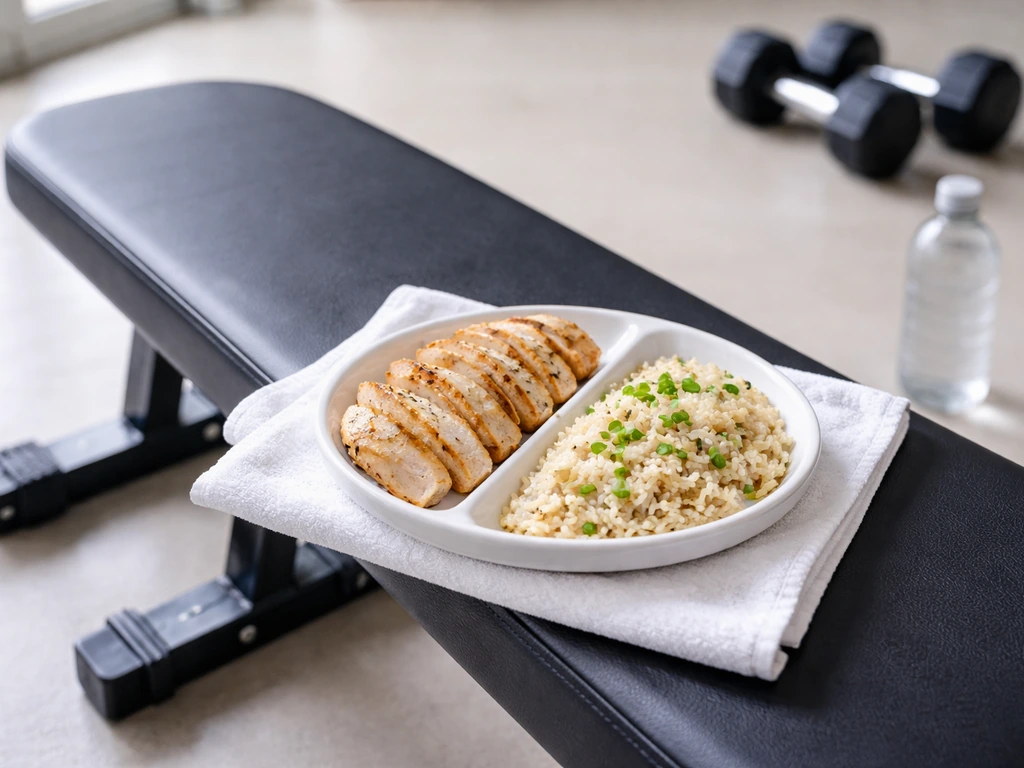
Yes and no, and the distinction actually matters. Your muscles don't meaningfully add new contractile tissue in a single night, but overnight is exactly when the repair and adaptation work that leads to real growth happens. These overnight repair and adaptation processes are why muscles can grow when you rest on recovery days, as long as your sleep, protein, and training stimulus are on point do muscles grow on rest days. If you skip that window, or mess it up with poor sleep, no protein, or too much stress, you slow down the whole process. So the short answer is: overnight is not when you see growth, but it's very much when you earn it.
Does Muscle Grow Overnight? Real Timelines and What to Do

Marcus Kellerman
19 Apr 2026

What's actually happening while you sleep
When you train, you create microscopic damage to muscle fibers and trigger a cascade of inflammatory and molecular signals. IL-6 mRNA, one of the early exercise-response signals, stays elevated at 6 and 24 hours after a resistance-training bout. Satellite cell regulation signals can be active for 6 to 12 hours or more after a hard session. This isn't growth, but it's the setup for growth. Think of it as your body reading the training stimulus and deciding how to respond.
Overnight, if you've eaten enough protein and your sleep is solid, myofibrillar muscle protein synthesis (MPS) stays elevated. Research measuring MPS across a 12-hour post-exercise recovery window found it remained elevated throughout that window when protein was distributed across the period. That 12-hour window maps almost perfectly onto a post-workout evening and a night of sleep. So your muscles aren't 'growing' in the sense of adding visible new tissue overnight, but the molecular work of laying down new protein is actively running while you sleep. That molecular work is exactly why some people ask do your muscles grow when you sleep, even though the visible results come later.
The key distinction is between protein synthesis (a cellular process of building new proteins) and structural hypertrophy (physically larger muscle fibers you can measure). The former happens overnight, given the right conditions. The latter accumulates over days and weeks of repeated training and recovery cycles.
How long muscle growth actually takes: hours, days, and weeks

Here's a realistic timeline so you're not chasing illusions or getting discouraged.
| Timeframe | What's happening | Visible or measurable? |
|---|---|---|
| 0–2 hours post-workout | Muscle pump (blood and fluid pooling), acute swelling, inflammation begins | Yes, temporarily larger appearance |
| 6–24 hours | DOMS begins, inflammatory signals (IL-6, CK) rising, MPS elevated with adequate protein | Possibly swollen/sore, not new tissue |
| 24–48 hours | DOMS peaks, creatine kinase peaks (~170% above baseline in some studies), fluid and edema in muscle | Muscles may look or feel fuller, still not hypertrophy |
| Days 3–7 | MPS accumulates repair; net protein balance improves with training + nutrition consistency | No visible change yet for most people |
| ~20 days (roughly 9 sessions) | Measurable changes in muscle size detectable via ultrasound in some studies | Possible early visual change in beginners |
| 6+ weeks | Myofiber hypertrophy adaptations accumulate; strength gains supplement size changes | Visible, measurable growth for most people |
The 20-day mark is worth noting specifically for beginners, since some research has detected observable hypertrophy after roughly nine training sessions. For most people, though, the honest answer is that you're looking at six or more weeks of consistent training before the mirror shows you something real. Early 'gains' are largely neurological (you get stronger without growing much), fluid-related, or both.
Why you might feel (or look) bigger overnight: DOMS, swelling, and water
This is the most common source of confusion. DOMS (delayed onset muscle soreness) typically shows up 6 to 8 hours after an intense session and peaks around 48 hours post-exercise. During that window, the affected muscles are inflamed and retaining fluid. Ultrasound studies can actually detect changes in echo intensity, a measure that reflects fluid and structural disruption, within hours of training and out to 48 hours. Your bicep feels harder and looks fuller the morning after a heavy arm day? That's mostly inflammation and water, not new muscle fibers.
There's also the glycogen and water effect. Each gram of glycogen stored in muscle pulls in roughly 3 grams of water alongside it. After a hard workout, if you've eaten enough carbs to replenish glycogen overnight, your muscles will literally weigh more and look fuller the next morning. This is a real, useful physiological process, but it has nothing to do with new contractile tissue.
One myth worth busting directly: soreness does not indicate growth, and its absence doesn't mean you didn't train effectively. The DOMS and swelling response tells you there was tissue disruption and inflammation, but trained muscles adapt over time to produce less soreness even when growth is still happening. Chasing soreness as a proxy for progress is one of the most reliable ways to overtrain and underperform.
The recovery factors that actually influence your overnight adaptation

Sleep quality and quantity
Sleep is probably the most underrated variable in muscle building, full stop. A single night of total sleep deprivation is enough to induce anabolic resistance, meaning the normal protein synthesis response to training gets blunted. Sleep restriction studies show that reduced sleep directly impairs myofibrillar protein synthesis rates during recovery. On the positive side, deep sleep is associated with hormonal surges relevant to tissue repair, including growth hormone pulses that support the repair process. Sleep loss also promotes pro-inflammatory gene expression that works against the recovery you need. If you're doing everything else right but sleeping 5 to 6 hours a night, you are leaving gains on the table, and there's no supplement that fixes that.
Nutrition in the overnight window
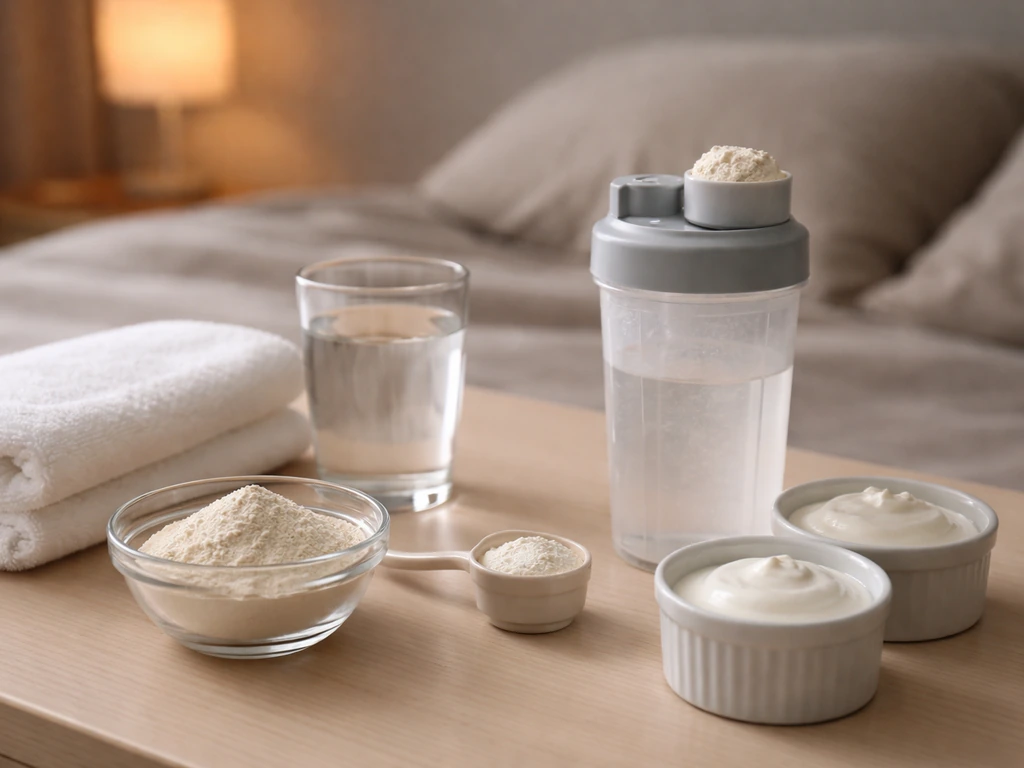
Getting protein in before sleep matters more than most people realize. Research using distributed whey protein (like 8 doses of 10g every 1.5 hours, or 4 doses of 20g every 3 hours across 12 post-exercise hours) showed MPS stayed elevated for the full recovery window. You don't need to set alarms and drink protein shakes overnight, but eating a solid protein-containing meal in the evening, especially after training, gives your body the raw material to run that repair process while you sleep. Skipping food in the evening hours after a training session is one of the most common ways people accidentally undercut their own recovery.
Stress and energy balance
High psychological stress and energy deficits both work against overnight adaptation. Under severe caloric restriction, muscle protein synthesis signaling can become 'refractory,' meaning even adequate protein intake doesn't trigger the normal anabolic response. Chronic stress elevates cortisol, which is catabolic. This doesn't mean you can't lose fat and build muscle simultaneously, but it does mean that extreme deficits or constant life stress can override a good training program. Recovery, in the broadest sense, is a full-system process.
Nutrition that actually supports muscle growth
The research consistently points to daily protein intake in the range of 1. 6 g per kilogram of bodyweight as a useful target for people doing resistance training who want to maximize muscle protein accretion. Some meta-analyses show benefits up to around 2. 2 g/kg, especially for leaner individuals.
For a 75 kg (165 lb) person, 1. 6 g/kg works out to about 120 g of protein per day. Spreading that across three or four meals is more effective than trying to hit it all at once, particularly for older adults, where a per-meal threshold of around 0. A commonly cited evidence-based target is distributing protein at roughly 0.
4 g/kg per meal across at least four meals to maximize anabolism [Spreading that across three or four meals](https://pubmed. ncbi. nlm. nih.
gov/29497353/). 4 g/kg has been associated with maximizing the muscle protein synthesis response.
Carbohydrates get an undeserved bad reputation in muscle-building circles. Carbs directly support training performance and glycogen restoration between sessions, and research shows acute carbohydrate intake can improve resistance training performance. Better training performance means a stronger stimulus, which means better adaptation over time. You don't need to obsess over carb timing the way supplement marketing suggests, but cutting carbs extremely low while trying to build muscle is working against yourself. General guidance: get enough carbs to perform in your sessions and recover between them.
Total calories matter too. If you're in a large energy deficit, your body's ability to respond to the training stimulus is compromised. A modest surplus (roughly 200 to 300 calories above maintenance) supports muscle building without excessive fat gain. If you're a beginner or returning after a break, you have more flexibility here because your body is highly responsive to training stimulus regardless of small calorie fluctuations.
What to do this week if you want real progress

The goal here is not to optimize every variable overnight but to close the biggest gaps. Most people who aren't growing as fast as they'd like are under-sleeping, under-eating protein, or under-training consistently. If you're also wondering whether you need testosterone to grow, the key is that training, sleep, calories, and protein drive the adaptations, and testosterone is more of a background factor than a magic switch do you need testosterone to grow.
If you're wondering what do muscles need to grow, focus on getting enough sleep, sufficient protein, and a consistent training stimulus. If you’re wondering do muscles need rest to grow, focus on recovery day sleep and consistent training so the repair and adaptation can actually accumulate. If you want muscle growth, making sure you get enough carbs to fuel training and replenish glycogen can also support the process. Fix those three things and the rest follows.
If you take a rest day, your growth is still happening because your body uses that recovery time to repair and adapt rest days.
- Lock in your protein target first. Calculate 1.6 g per kilogram of bodyweight and hit that number daily, spread across at least three meals. Make sure one of those meals is in the evening, especially on training days.
- Protect 7 to 9 hours of sleep. This is non-negotiable if you want the overnight repair window to work. No supplement compensates for consistently poor sleep.
- Don't skip carbs before and after training. You don't need a specific timing protocol, but make sure your meals around training include enough carbohydrate to support performance and glycogen recovery.
- Train consistently for at least 6 weeks before judging your results. Beginners may see early changes around the 3-week mark, but real structural hypertrophy builds over months, not days.
- Track what actually matters: how much weight you're lifting over time, how your clothes fit over weeks, and how you feel during sessions. Skip daily weigh-ins as a growth metric since those fluctuate with water and glycogen.
- Manage stress where you can. Chronic stress and severe caloric restriction both suppress the anabolic response. If life is genuinely chaotic, prioritize sleep and protein above everything else.
- Don't chase soreness. Feeling sore after a workout doesn't mean you grew more. A good session that doesn't leave you crippled for three days is often a better training stimulus than one that destroys you.
Signs of real progress to watch for: lifts going up over 4 to 6 weeks, muscle feeling denser and more defined (not just sore and swollen), body weight trending slightly upward over months if you're in a small surplus, and training feeling more manageable at weights that used to be hard. Those are the signals that the overnight repair work is accumulating into actual structural change.
This applies whether you're 22 or 62. Older adults need slightly more protein per meal to hit the same synthesis threshold, and recovery may take a day longer, but the underlying process is the same. Sleep, protein, consistent training, and managed stress drive adaptation at every age. The overnight window is your body's work shift. Your job is to show up to training, then get out of the way and let it run.
FAQ
If my muscles look bigger the morning after training, does that mean they grew overnight?
No. If you truly got enough sleep, protein, and a proper training stimulus, you can have higher protein synthesis overnight, but you will not usually notice a visible size increase the next morning. What you might notice is temporary fullness from inflammation, water retention, or glycogen restoration, and those can mask the absence or presence of real structural gains.
How do I know if I actually grew, if soreness is low or missing?
DOMS can be useful context, but it is not a reliable measure of growth. You can keep gaining with minimal soreness because adaptation reduces damage and inflammation over time. A better check is performance progression (more reps or load over weeks) plus muscle density changes rather than how painful you feel 24 to 48 hours later.
What if I get soreness immediately but it disappears within a day?
If you are sore right after a session but it fades quickly, that does not automatically mean you did too little. Early soreness can reflect the novelty of the movement, form changes, or workout volume. Track whether you can progress the training stimulus across multiple sessions (for example, staying near your target reps) to confirm you are driving adaptation.
I missed sleep one night, will that completely stop muscle growth?
Sleep loss can blunt the anabolic response, but the fix is mostly behavioral, not supplements. Prioritize consistent sleep timing for several nights, aim for adequate total duration, and keep protein and calories steady. If you regularly sleep 5 to 6 hours, expect slower gains until your sleep debt is reduced.
Do I have to drink protein right before bed to grow?
You do not need to wake up to drink protein, but you do need enough daily protein and an evening meal after training. A common mistake is training late, then eating lightly at night due to appetite or schedule. Evenly distribute protein across the day so that late-day intake contributes to the overnight protein synthesis window.
Can I build muscle overnight if I'm in a calorie deficit?
Not always. Extreme deficits can reduce the responsiveness of muscle protein synthesis even if you hit your protein number. If your weight is dropping quickly, strength is falling, or workouts feel flat, you may be too deep in a cut. A modest deficit, or a short maintenance phase, often improves muscle-building momentum.
Why do my muscles look fuller after carbs the next day?
Yes, but it is not the same kind of 'overnight growth' you see with hypertrophy. When glycogen is replenished after a hard session, the water that follows can make muscles look fuller and feel harder. That effect can appear within the first day and then normalize as glycogen and water balance stabilize.
What happens if I keep training the same muscle without real recovery?
If you train a muscle hard and then completely skip the next recovery behaviors (sleep, calories, protein), you can end up with poor adaptation. Over time, missing recovery increases fatigue, reduces training quality, and can raise injury risk. For most people, one or two quality recovery days with good sleep and fueling works better than constant hard training.
Do supplements or stretching replace overnight recovery?
At-home methods like stretching or massage may reduce discomfort, but they will not replace sleep, protein, and a sufficient training stimulus. Also, heavy stretching right after training can temporarily change soreness, while your goal should be to maintain training performance and recover enough to progress.
Does the overnight growth timeline change for older adults?
If you are older, the process is similar, but the recovery requirements can be a bit higher. Many people benefit from slightly higher protein per day, distributing protein more evenly, and allowing an extra day or two for soreness and performance to rebound. If strength progress stalls, adjust volume or frequency before changing everything else.
When should I expect to actually see my muscles change?
For visible changes, the timeline is usually weeks, not nights. A realistic 'signal' is gradual strength improvement over 4 to 6 weeks, followed by increased muscle size and definition over months. Short-term day-to-day changes often reflect water, glycogen, and inflammation rather than new muscle tissue.