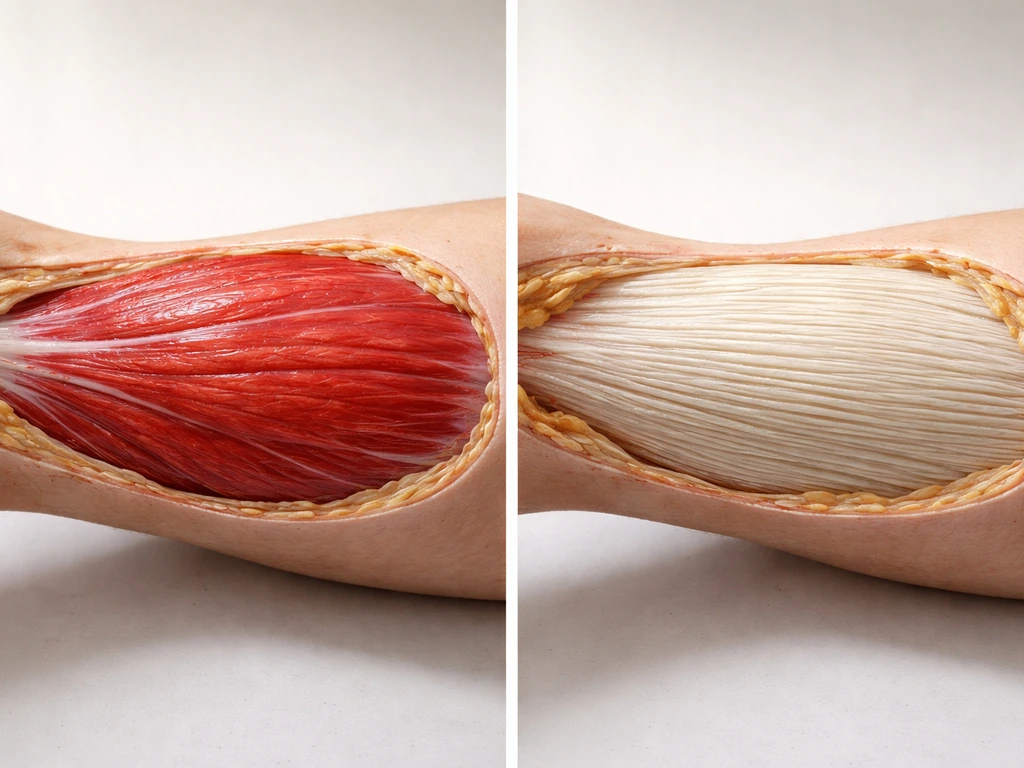
No single muscle universally takes the longest to grow. That's the honest answer, and anyone who gives you a confident ranked list is oversimplifying. What actually determines how fast a muscle grows is a combination of your genetics, how well you're training it, how much volume you're giving it each week, and how well you're recovering. That said, certain muscle groups lag for most people in practice, and there are very clear, fixable reasons why. This guide breaks down what's really going on and gives you a concrete plan to accelerate the muscles that are falling behind for you.
What Muscle Takes the Longest to Grow and Why

Marcus Kellerman
17 Apr 2026

Myth-busting: is there a single "slowest" muscle?
You'll see articles confidently declare that calves, or forearms, or hamstrings are the hardest muscles to grow. The truth is messier. Hypertrophy outcomes are driven by training stimulus, recovery quality, and individual factors like genetics and baseline training status far more than any fixed biological ranking. Research from umbrella reviews on resistance training variables confirms that muscle growth is highly responsive to programming choices, particularly proximity to failure and weekly training volume, rather than some immovable hierarchy of "easy" and "hard" muscles.
The reason certain muscles get a reputation for being stubborn is usually because they're consistently undertrained, poorly activated, or trained with exercises that don't actually challenge them through a full range of motion. Fix those things, and muscles that seemed "slow" often respond just fine. The "slowest muscle" in your body is almost always the one you've been training the least effectively, not some genetically cursed tissue.
What makes some muscles grow slower
There are several real, evidence-supported reasons why a muscle might lag, and understanding them lets you actually fix the problem instead of just accepting it.
Genetics and fiber type
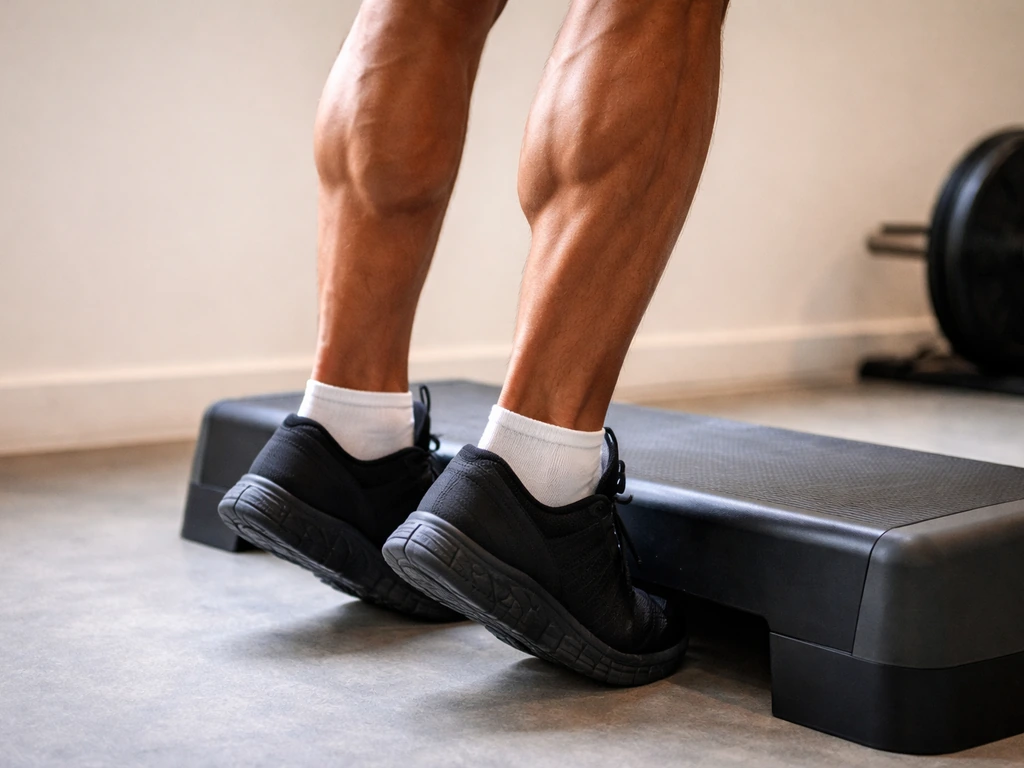
Genetics genuinely matter. A genome-wide association study framework measuring muscle thickness changes after 12 weeks of resistance training found meaningful inter-individual differences in hypertrophic response to identical programs. Some people are wired to respond faster in certain muscle groups. Fiber type distribution plays into this too. Muscles with a higher proportion of slow-twitch (Type I) fibers, like the soleus in your calf, tend to be more fatigue-resistant but also less prone to rapid hypertrophy compared to more fast-twitch dominant muscles. You can't change your fiber ratios, but you can train smarter around them.
Neurological activation
Before a muscle can grow, your nervous system has to learn to recruit it effectively. This is especially relevant for beginners, whose early strength gains are almost entirely neurological. Muscles that are anatomically harder to isolate, like the lower traps, serratus anterior, or rear delts, often lag simply because people never build a strong mind-muscle connection with them. You can load them plenty and still see little growth if activation is weak.
Biomechanics and leverage

Some muscles are mechanically disadvantaged in common exercises. The calves, for example, are already slightly shortened at the ankle joint during most standing exercises because people don't use a full range of motion. Shortened muscles under load don't accumulate as much mechanical tension as muscles trained through a long range. Similarly, the hamstrings are often trained in a hip-dominant or knee-dominant bias depending on the exercise, meaning one part of the muscle gets work while the other is left behind.
Training volume and frequency
Volume is one of the most powerful levers you have. Meta-analytic evidence shows a clear dose-response relationship, with muscles receiving 10 or more weekly sets growing meaningfully faster than those receiving fewer than 5. Muscles that only get hit as secondary movers in compound lifts, such as the biceps during rows or the rear delts during pulls, often don't accumulate enough direct volume to grow at the same pace as muscles that are primary movers in multiple exercises.
Recovery demands
Large, complex muscle groups like the back and legs require more recovery time between sessions. Experimental work on recovery period effects in skeletal muscle has shown that shortened recovery between sessions can blunt hypertrophic signaling. If you're training legs three times a week but sleeping poorly and eating in a deficit, you're essentially outrunning your own recovery capacity, and growth stalls.
Which muscle groups commonly lag and why

While no muscle is universally the slowest, a few groups consistently show up as laggards for most people, and the reasons are pretty consistent.
- Calves: High slow-twitch fiber content, chronically undertrained through a short range, and rarely given enough direct volume. Most people do a couple of sets tacked onto leg day and wonder why their calves don't grow.
- Rear deltoids: Almost invisible in standard pressing and pulling routines. They need direct, high-rep isolation work that most programs skip entirely.
- Hamstrings: Often only hit through one function (knee flexion in leg curls, or hip extension in deadlifts) rather than both, leaving part of the muscle underdeveloped. Understanding what muscles grow from deadlifts can help you see why the hamstrings need supplementary work beyond just pulling from the floor.
- Forearms: Frequently trained as secondary movers but rarely given dedicated isolation work, especially in programs that use lifting straps for everything.
- Long head of the triceps: The most mass-bearing part of the tricep, but it only gets fully challenged when the arm is overhead, a position most pressing movements skip.
- Lower chest: Often underdeveloped because most pressing is flat or incline, with decline and dip variations underused.
- Serratus anterior and lower traps: Rarely trained directly, hard to feel, and almost never programmed in mainstream plans.
It's also worth thinking about which movements you're already doing and what muscles they actually emphasize. For example, what muscles push ups grow is often misunderstood, and many people assume push-up-heavy programs are covering all their bases when they're actually leaving rear delts, hamstrings, and calves almost entirely unaddressed.
How to train your slowest muscles effectively
Once you've identified which muscles are lagging for you, the fix is almost always a combination of more volume, better exercise selection, fuller range of motion, and closer proximity to failure. Here's how to apply each.
Volume and frequency

For a lagging muscle, aim for at least 10 to 16 working sets per week, spread across 2 to 3 sessions. This gives enough stimulus without crushing recovery. Start at the lower end of that range if you've been training the muscle with very little volume, and progress upward over 4 to 6 weeks. Spreading the volume across multiple sessions is almost always better than doing it all in one session, since protein synthesis rates are elevated for roughly 24 to 48 hours after a stimulus.
Intensity and proximity to failure
Most lagging muscles are undertrained not just in volume but in intensity. Leaving 4 or 5 reps in the tank every set for a stubborn muscle isn't going to cut it. Research consistently shows that proximity to failure is a key driver of hypertrophy. For your slowest muscles, push sets to within 1 to 2 reps of failure on most working sets. This is especially important for muscles that are hard to feel, since the extra intensity forces better recruitment.
Range of motion
Training through a full, or even lengthened, range of motion appears to produce superior hypertrophy compared to partial reps. For calves, this means using a full stretch at the bottom of every rep, not bouncing off a shortened position. For hamstrings, it means including movements that bring the hip into full flexion while the knee is extended, like Romanian deadlifts or Nordic curls. For the long head of the triceps, overhead extensions beat pushdowns every time.
Exercise selection
Pick exercises that actually place maximum tension on the muscle in its stretched position. A few examples by muscle group:
| Lagging Muscle | Better Exercise Choice | Why It Works |
|---|---|---|
| Calves | Seated or standing calf raise with full stretch | Loads soleus and gastrocnemius through full ROM |
| Rear delts | Face pulls, reverse pec deck, prone Y-raises | Direct isolation in a range most pressing misses |
| Hamstrings | Romanian deadlifts, Nordic curls, lying leg curls | Combines hip extension and knee flexion stimulus |
| Long head triceps | Overhead dumbbell or cable extensions | Loads muscle in stretched position with arm elevated |
| Forearms | Wrist curls, hammer curls, reverse curls | Direct flexion and extension training both sides |
| Serratus anterior | Cable serratus punches, loaded push-up plus | Forces protraction under load |
If you do a lot of swimming or bodyweight work, it's worth knowing which muscles those modalities actually emphasize so you can identify what they're missing. For instance, what muscles swimming grows covers shoulders and upper back well but leaves glutes, calves, and direct arm flexors relatively underdeveloped without supplementary training.
Tempo and progressive overload
For hard-to-feel muscles, slowing down the eccentric (lowering) phase to 3 to 4 seconds can dramatically improve activation. This is especially useful for rear delts and serratus, where people tend to use momentum. On top of tempo, you still need progressive overload over time. Track your weights and reps, and aim to add load or reps every 1 to 2 weeks. Without progression, volume alone won't keep driving growth.
Nutrition and recovery to support growth everywhere
No amount of smart programming overcomes a consistent caloric deficit or chronic sleep deprivation. Here's what actually moves the needle on the nutrition and recovery side.
Protein intake
The current evidence supports a target of 1.6 to 2.2 grams of protein per kilogram of bodyweight per day for muscle growth. A meta-analysis on protein timing found that total daily protein intake is the primary driver of hypertrophy outcomes, and that the timing of individual meals around workouts is a secondary factor. So stop stressing about your 30-minute post-workout window and make sure you're hitting your daily total. Spread it across 3 to 5 meals to keep protein synthesis elevated throughout the day.
Calories
You need a caloric surplus to grow new muscle tissue, especially in lagging areas. A modest surplus of 200 to 400 calories above maintenance is enough to support hypertrophy without excessive fat gain. If you've been trying to grow stubborn muscles in a deficit, you've likely been working against yourself. Older adults and beginners can sometimes gain muscle and lose fat simultaneously (body recomposition) at maintenance, but for most trained lifters, a small surplus is the practical move.
Sleep and stress
Seven to nine hours of sleep per night is where muscle protein synthesis and growth hormone secretion are optimized. Chronic sleep restriction (under 6 hours) measurably reduces anabolic hormone levels and increases cortisol, both of which work against hypertrophy. High chronic stress has the same effect through elevated cortisol. If you're sleeping poorly and running on high stress, that's likely a bigger limiting factor than your programming, and it's worth addressing directly before adding more volume.
Supplementation
Creatine monohydrate (3 to 5 grams daily) is the most evidence-backed supplement for muscle growth and strength. It's cheap, safe, and particularly useful for muscles that respond to high-intensity, short-duration effort. Caffeine can improve training performance and thus indirectly support hypertrophy. Beyond those two, most supplements offer marginal benefits compared to dialing in protein, calories, and sleep.
Realistic timelines and how to track progress
Understanding why muscles grow larger and stronger at a mechanistic level helps set realistic expectations. Why muscles grow larger and stronger in weightlifters comes down to mechanical tension triggering satellite cell activity and myofibrillar protein accretion, a process that takes weeks to months, not days. Here's what realistic timelines look like:
| Timeframe | What to Expect | How to Measure |
|---|---|---|
| Weeks 1–4 | Strength gains (mostly neurological), better activation, some initial swelling | Track weights/reps in a log |
| Weeks 4–8 | First visible changes in trained individuals, measurable size in beginners | Tape measure (monthly), progress photos |
| Months 3–6 | Clear hypertrophy in most muscles if volume and nutrition are consistent | Tape measure, photos, performance benchmarks |
| 6–12+ months | Noticeable mass gains in previously lagging muscles | All of the above plus body composition tracking |
For measurement, use a flexible tape measure on the same day each week, ideally in the morning before eating or training. Measure circumference at the widest point of the muscle, and track it monthly rather than weekly to smooth out day-to-day fluctuations. Progress photos (same lighting, angle, and time of day) are one of the most underrated tracking tools. Combine those with performance markers like how much weight you're lifting for a given rep range, and you'll have a complete picture.
Troubleshooting plateaus
If a muscle hasn't changed in 8 to 12 weeks despite consistent training, run through this checklist: Are you getting at least 10 working sets per week for that muscle? Are you training within 1 to 2 reps of failure on most sets? Are you using full range of motion? Are you in a caloric surplus or maintenance? Are you sleeping 7 or more hours? Is the weight or reps actually progressing over time? If you answer no to any of these, that's your fix. If you're doing all of them correctly, try changing your exercise selection for that muscle or adding a fourth weekly session specifically targeting it for 4 to 6 weeks.
Common mistakes and how to fix them

Most slow-growing muscles aren't genetically cursed. They're just being trained badly. Here are the patterns I see most often and what to do instead.
- Undertraining the muscle: Doing 2 to 3 sets per week and expecting growth. Fix: increase to 10 to 16 weekly sets, distributed across 2 to 3 sessions.
- Wrong exercises: Using movements that don't actually load the target muscle in its stretched position. Fix: audit your exercise list and replace low-tension movements with ones that challenge the muscle through full ROM.
- Stopping too far from failure: Leaving 5 or more reps in the tank every set. Fix: push your working sets to within 1 to 2 reps of failure, especially for lagging muscles.
- Skipping direct work: Relying on a lagging muscle to grow from compound lifts where it's just a secondary mover. Fix: add 2 to 3 isolation exercises per week that directly target it.
- Poor nutrition: Training consistently but eating below maintenance. Fix: calculate your maintenance calories and add a 200 to 400 calorie surplus, with protein at 1.6 to 2.2 grams per kilogram of bodyweight.
- No progressive overload: Doing the same weight and reps for months. Fix: keep a training log and aim to add load or reps every 1 to 2 weeks.
- Insufficient recovery: Training a lagging muscle hard but sleeping 5 to 6 hours and skipping rest days. Fix: prioritize 7 to 9 hours of sleep and schedule at least 48 hours between sessions targeting the same muscle.
- Giving up too soon: Judging a muscle's growth at 4 weeks instead of 3 to 6 months. Fix: commit to a consistent block of 12 to 16 weeks before evaluating and changing your approach.
The muscle that takes the longest to grow is almost always the one you've been neglecting the longest, or training with the least precision. There's no magic answer here, but there is a practical one: identify the lagging muscle, audit your volume and exercise selection, get your nutrition and sleep right, and give it 3 to 6 months of focused, progressive work. That's the plan, and it works.
FAQ
How do I figure out which muscle is actually taking the longest to grow for me (not just in my head)?
Pick one or two likely lagging muscles, then track three signals for 8 to 12 weeks: circumference (monthly, same time of day), exercise performance in your main lift for that muscle (load or reps keeping the same rep range), and your ability to feel that muscle working. If size does not move but strength and mind-muscle connection are improving, the issue is often range of motion, exercise choice, or proximity to failure.
Is it calves, forearms, hamstrings, or something else that most people should expect to grow slowest?
If you force a practical answer, it is the muscles you accumulate the least effective direct volume for. Calves, forearms, and sometimes hamstrings are common laggards because many people do not load them through a full stretch under tension or they only get secondary work during compounds.
Why might I be training my lagging muscle but still not seeing growth?
Three common misses: (1) you never reach 1 to 2 reps from failure consistently on working sets, (2) you do not use enough loaded range of motion, especially the stretched portion, and (3) you are not actually recovering (low sleep or a caloric deficit). If any of those are true, more “sets” alone usually will not fix it.
Do “hard-to-feel” muscles need different volume or failure targets than easier muscles?
Often yes. For muscles like rear delts or serratus, use controlled reps with a slower eccentric to improve recruitment, then still keep most working sets close to failure (1 to 2 reps). If you cannot approach failure without losing form, adjust exercise selection rather than backing off intensity targets indefinitely.
Should I train a lagging muscle more frequently, like 4 times per week, or stick to 2 to 3 sessions?
2 to 3 sessions per week is usually the sweet spot for most people using 10 to 16 working sets weekly. Going to 4 sessions can help if you split volume better and recover well, but it can also dilute effort and increase fatigue. Use progression, keep total weekly sets in range, and only add frequency if each session is still productive.
How long should I try a focused plan before concluding that muscle is truly “slow to grow”?
Give it 8 to 12 weeks, not a few workouts. After that, if circumference did not change and your performance for the target exercise is stagnant or inconsistent, run the checklist: weekly working sets, proximity to failure, full range of motion, caloric surplus or maintenance with adequate calories, and sleep. If those are on track, then change the exercise or add a fourth session for 4 to 6 weeks.
What if I can grow the muscle in the gym but it never shows up visually?
That can happen due to measurement and expectations. Use monthly measurements at the widest point, same lighting and angle for photos, and compare progress at consistent body weight. Also check if you are actually training the portion you want to grow. For example, biceps and rear delts can look different based on whether you emphasize stretch and lengthened positioning.
Does training in a calorie deficit still allow growth in lagging muscles?
Some people can gain muscle at maintenance or mild deficit, but stubborn muscles are less forgiving. If your goal is prioritizing laggards, a modest surplus is the practical move. If you must cut, prioritize sleep, keep protein high, and expect slower progress while still ensuring you hit working sets close to failure.
Is there a difference between “slow to grow” and “small but strong”?
Yes. A muscle can be strong without being large if your training emphasizes load but not enough effective hypertrophy stimulus (enough weekly sets, enough stretched-range tension, and enough proximity to failure). Strength improvements without size often means the stimulus was not consistently hypertrophy-focused or you are not progressing overall.
Which single mistake delays growth the most for most people with lagging muscles?
Undertraining with insufficient effective sets and insufficient intensity. Many lifters also use shortened or momentum-based reps for “hard-to-feel” areas, which reduces mechanical tension. If you fix range of motion and ensure most sets are within 1 to 2 reps of failure, the majority of lagging issues improve within a few months.