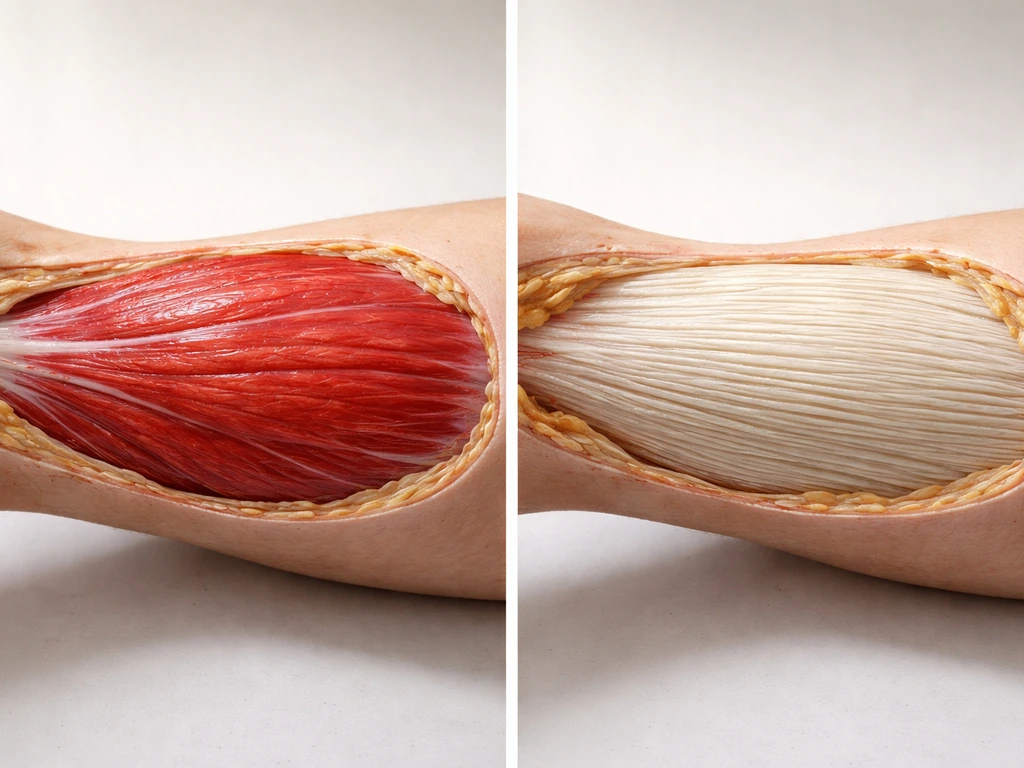
Muscles can start responding to training within the first two to four weeks, but visible hypertrophy (the kind you see in the mirror) typically takes eight weeks or more of consistent training. That's the honest, direct answer. The reason people get confused is that different things you'd call "muscle growth" happen on completely different timescales, and if you're not tracking the right thing at the right time, you'll feel like nothing is working when it actually is.
How Long Does It Take for Muscles to Grow Back?

Marcus Kellerman
2 Apr 2026

What does "muscle growth" actually mean?
Before jumping to timelines, it's worth being precise about what you're measuring. There are at least three things people mean when they say "muscle growth," and they don't all show up at the same time.
Strength gains are the first thing to show up. Within two to four weeks of starting resistance training, your nervous system adapts: motor units recruit more efficiently, firing rates improve, and you can produce more force from the muscle you already have. Research confirms that after just four weeks of strength training, measurable improvements in muscle force are primarily mediated by these neuromuscular adaptations rather than actual increases in muscle size. This is why beginners often feel dramatically stronger in the first month without looking much different. The muscle isn't bigger yet; it's just being used better.
True hypertrophy, meaning your muscle fibers physically getting larger, takes longer. Ultrasound imaging studies measuring muscle thickness show that significant changes are generally not detectable before the eight-week mark. One systematic meta-analysis on quadriceps muscle thickness found a weighted average increase of around 16.6%, but meaningful effects only emerged in subgroup analyses at or beyond eight weeks. As a practical rule of thumb: don't expect ultrasound or mirror-level changes in the first two weeks regardless of how hard you train.
There's also what I'd call "pump and fullness," which is the temporary swelling that happens right after a workout. That's not hypertrophy. It's fluid shifts and metabolic byproducts in the muscle. It looks great for an hour. It means nothing for long-term size. Understanding how quickly muscle actually grows comes down to separating these three phenomena cleanly.
Realistic timelines depending on your goal and experience

Where you're starting matters enormously. Beginners have the largest window for fast gains. Experienced lifters see progress slow down significantly over time. Here's what the evidence and practical experience actually support:
| Experience Level | Strength Gains | Noticeable Hypertrophy | Monthly Muscle Gain (rough estimate) |
|---|---|---|---|
| Beginner (0–1 year) | 2–4 weeks | 8–12 weeks | 1–2 lbs (0.5–1 kg) |
| Intermediate (1–3 years) | 4–6 weeks | 10–16 weeks | 0.5–1 lb (0.25–0.5 kg) |
| Advanced (3+ years) | 6–12 weeks | 12–20+ weeks | 0.25–0.5 lb (0.1–0.25 kg) |
| Older adults (50+) | 4–8 weeks (neural) | 12–16+ weeks | 0.25–0.5 lb with adequate protein/volume |
These ranges are honest averages. Individual variation is real. Genetics, training history, sleep quality, nutrition, and stress all shift these windows. How much muscle you can gain in a month will always depend on where you're starting from, but the ranges above are a reasonable framework.
For anyone asking about a specific area like back muscles: the same timelines apply. Back development often feels slower simply because most people train it with less intuitive mind-muscle connection, use inferior form on rows and pull-downs for longer, and therefore accumulate effective stimulus more slowly. The physiology is the same; the execution challenge is just higher. How long it takes to grow muscle mass in any specific region follows the same 8-plus week rule for visible change.
The big factors that speed up or slow down growth
Progressive overload: the non-negotiable
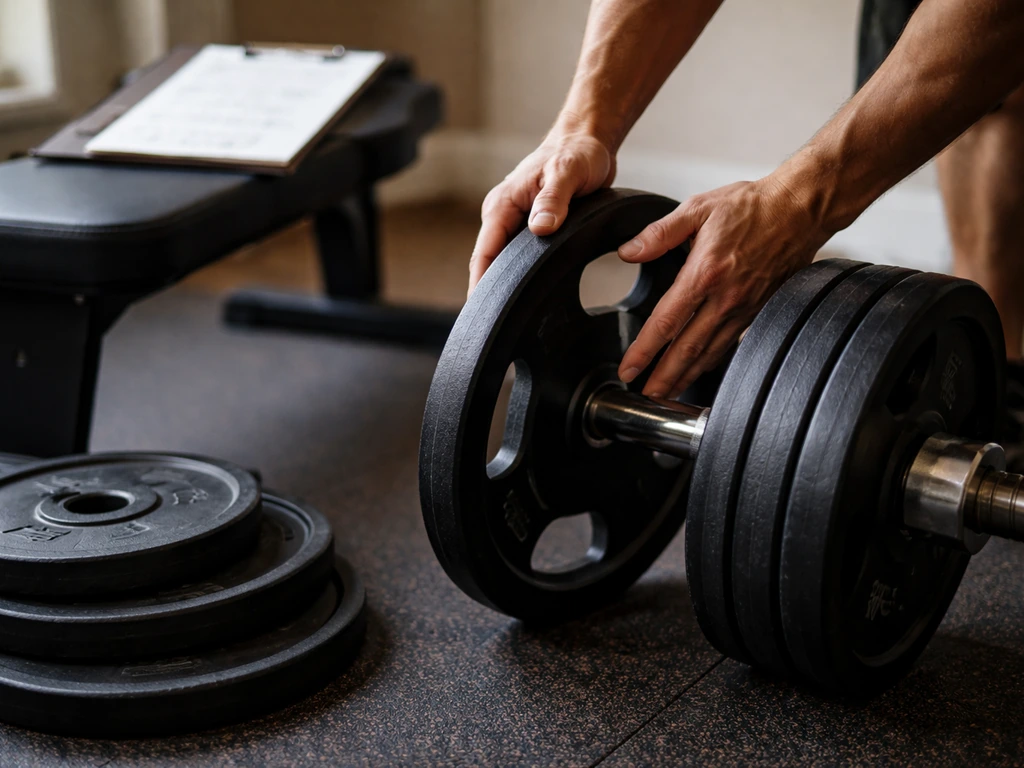
If your muscles aren't being asked to do more over time, they have no reason to grow. Progressive overload means gradually increasing the challenge, whether that's adding weight, adding reps, adding sets, or reducing rest time. Without it, you'll hit a plateau within weeks regardless of how well you sleep or how much protein you eat. This is the single biggest lever in your training.
Volume: how many sets you're actually doing
Weekly set volume per muscle group is one of the most well-studied variables in hypertrophy research. A systematic meta-analysis comparing different weekly set volumes found that studies using higher weekly volumes showed average hypertrophy improvements after about eight weeks, with a commonly cited effective range of roughly 12 to 20 sets per muscle per week for maximizing hypertrophy. This doesn't mean you need to start there if you're a beginner (you don't), but it gives you a practical ceiling to work toward as you build your base.
Intensity and load
Moderate-to-high loads, roughly in the 70–80% of your one-rep max range, represent the bulk of evidence-supported hypertrophy training. That said, research consistently shows you can build muscle across a fairly wide load range (from lighter loads taken close to failure to heavier loads with fewer reps) as long as effort is high. A network meta-analysis on resistance training prescriptions confirms that different combinations of load, sets, and frequency can all support strength and hypertrophy. What matters most is that the muscle is being genuinely challenged near the end of each set.
Frequency
Training a muscle two to three times per week generally outperforms once-per-week training when weekly volume is equated, but the frequency itself is less important than the total volume you accumulate. Research on training frequency effects and strength gains shows that when weekly volume is matched, frequency differences become smaller. Practically, training each muscle twice a week with adequate total sets tends to be the sweet spot for most people balancing recovery and stimulus. If you're only hitting a muscle once a week and wondering why results are slow, this is probably part of the answer.
Nutrition: what you eat directly sets your timeline
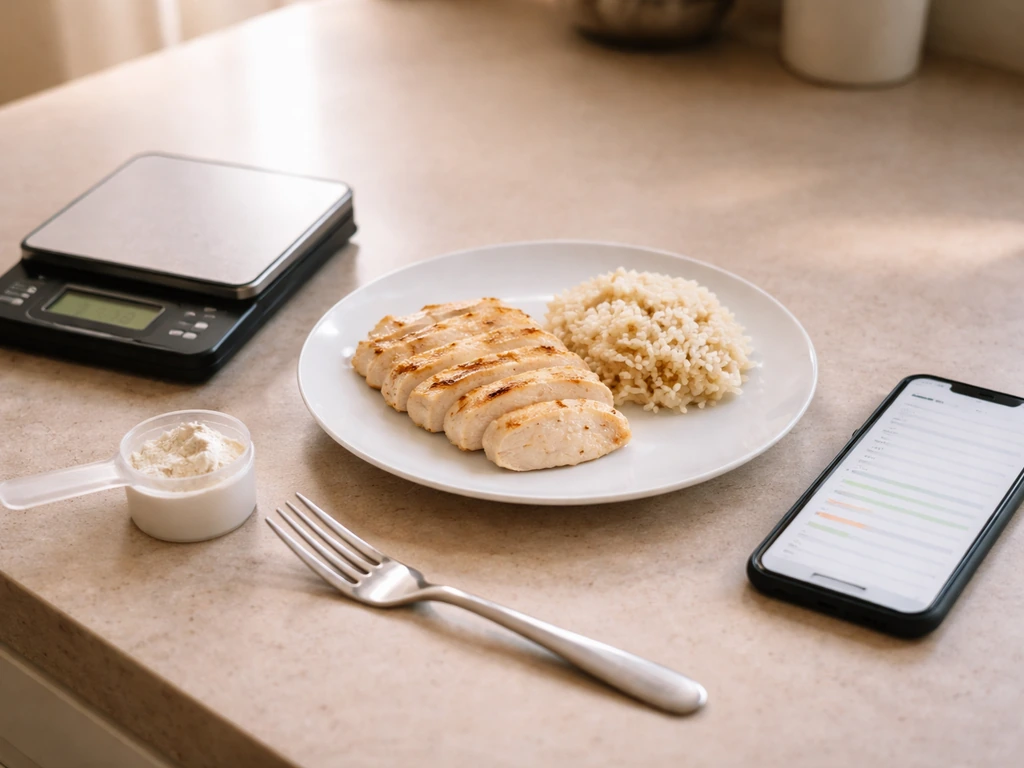
You can train perfectly and still grow slowly if your nutrition doesn't support it. There are three things that matter most: calories, protein, and consistency.
Calories and surplus
Muscle growth requires energy. You can build muscle in a caloric deficit if you're a beginner or returning after a break, but for most people in a dedicated growth phase, a small surplus accelerates the process. Sports nutrition guidance recommends roughly 250 to 500 calories per day above your maintenance intake, or about 10 to 20% more than your typical intake, as a practical target for lean mass gain alongside resistance training. Going much higher than this tends to increase fat gain without proportionally increasing muscle gain.
Protein: where most people undercut themselves
A large meta-analysis by Morton and colleagues identified a clear breakpoint: protein intakes beyond approximately 1.6 grams per kilogram of body weight per day didn't produce further increases in resistance-training-induced fat-free mass gains. So hitting roughly 1.6 g/kg/day is the practical target for most people. Going up to around 2.2 g/kg/day is reasonable insurance if you're in a deficit or if you're an older adult with higher protein needs, but you're unlikely to get measurably more muscle above that ceiling. Focus first on consistently hitting 1.6 g/kg before worrying about meal timing or fancy supplements.
Carbohydrates and timing
Carbohydrates fuel your training, support glycogen replenishment, and help sustain the training quality needed to drive growth over time. A protein timing meta-analysis found that total daily protein intake is far more strongly associated with hypertrophy and strength than any specific anabolic "window" around training. In other words: eat enough carbs throughout the day to train hard, but don't stress about hitting a 30-minute post-workout window. Spread your protein intake across three to four meals daily and make sure your carbohydrate intake supports your training performance.
Recovery: when your muscles actually grow

Growth doesn't happen in the gym. It happens during recovery. The training session is the stimulus; the actual increase in muscle protein and fiber size occurs in the hours and days afterward, primarily driven by elevated muscle protein synthesis. Without adequate recovery, you're just accumulating fatigue without the adaptive response.
Sleep: the most underrated growth factor
Research consistently shows that sleep restriction reduces resistance exercise quality and the number of reps you can complete, which directly limits the training stimulus you're providing. A randomized controlled trial found that sustained sleep restriction significantly reduced both the quality and quantity of resistance exercise performance. On top of that, research on exercise and sleep quality shows a bidirectional relationship: training improves sleep, and better sleep supports better training adaptations. Aim for seven to nine hours. If your gains are stalling and you're sleeping five or six hours a night, that's very likely a major contributor.
Soreness is not the metric you think it is
Delayed onset muscle soreness (DOMS) peaks at 24 to 72 hours post-training and is primarily a sign of mechanical disruption and inflammation, not of growth. Research in the Strength and Conditioning Journal argues directly that there's no solid causal evidence linking soreness to hypertrophy, and dissociations between when soreness peaks and when actual tissue changes occur are well documented. You can have a highly effective growth-stimulating workout with little to no soreness, and you can be extremely sore after a session that didn't drive much hypertrophy at all. Train to accumulate volume and effort, not to feel wrecked.
Taking time off: how quickly do you lose muscle, and how fast does it come back?
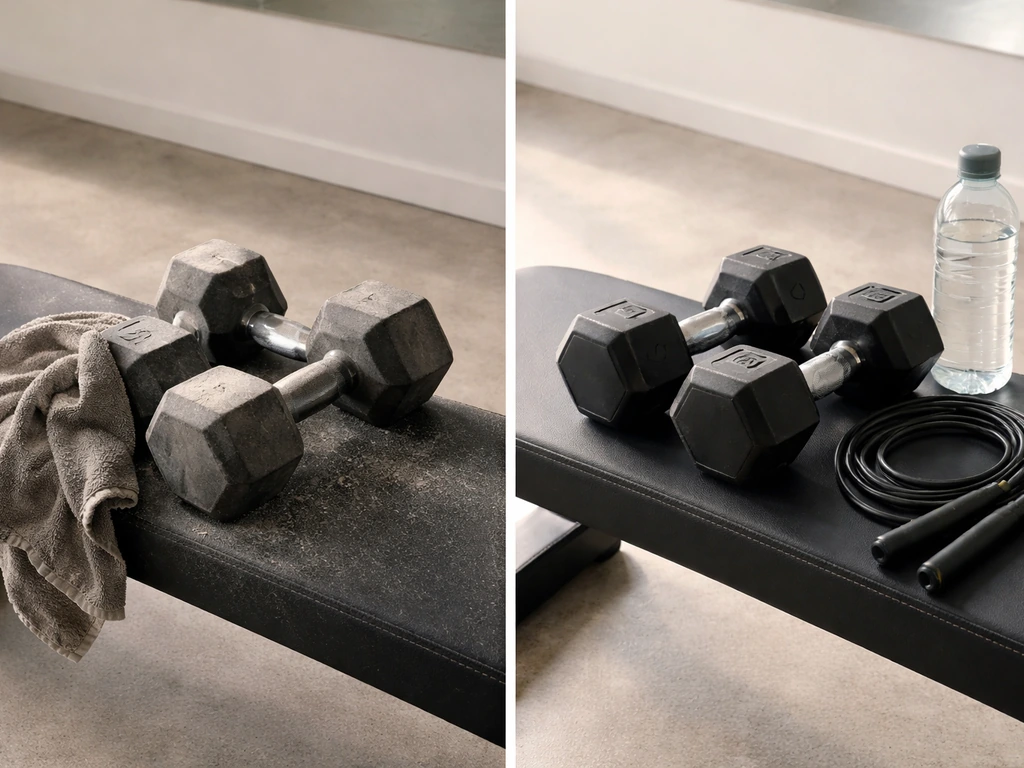
This is where the "grow back" question comes in. If you've taken a break from training, whether a planned vacation, illness, injury, or life getting in the way, the timeline to regain what you lost is generally faster than the original time it took to build it. This is often called "muscle memory," and it's a real physiological phenomenon related to myonuclei retention.
Research on detraining shows that whole-muscle size measures often decrease non-significantly within the first 20 days of stopping training. Meaningful losses tend to emerge after longer windows of inactivity, typically somewhere in the seven to twenty-week range depending on the individual. A study in adolescent athletes found that three weeks of detraining after a twelve-week hypertrophy block did not significantly decrease muscle thickness, strength, or sport performance. In older adults, strength gains from a resistance training program were not completely lost even after sixteen weeks of detraining. How many months it takes to grow muscle from scratch is a longer road than regaining muscle after time off, which is genuinely encouraging.
After injury, timelines vary depending on the injury type, severity, and any immobilization involved. Immobilization causes faster and more significant muscle loss than simple detraining. Regaining muscle post-injury is still faster than building it from scratch, but you're working against atrophy that occurred more rapidly and more completely. Work with a healthcare provider on return-to-training clearance, start conservatively, and expect somewhere between four and twelve weeks to regain most functional strength depending on the duration and nature of the setback.
How to estimate your own timeline and set milestones
How much muscle you can realistically grow depends on your individual starting point, but you can set useful milestones if you measure the right things at the right intervals. Here's a practical framework:
- Weeks 1 to 4: Track strength. Log your working weights and reps every session. Expect meaningful strength improvements even before visible size changes. If you're not getting stronger, your program or effort isn't working.
- Weeks 4 to 8: Track weight and effort quality. Your weights should be climbing consistently. Take progress photos at week four and week eight under the same lighting and conditions. Don't rely on daily mirror checks.
- Weeks 8 to 12: Now look at visible changes. This is when ultrasound-detectable hypertrophy typically becomes significant, and for most people this is when the mirror and tape measure start showing real movement. Measure key body parts (arm circumference, chest, thighs) with a tape measure.
- Month 3 onward: Use monthly check-ins. Compare photos, measurements, and training logs monthly. Expect the rate of visible change to slow as you advance, which is normal and expected.
For a more detailed breakdown of what the three-month window actually looks like in practice, including what's realistic by experience level, how much muscle you can grow in 3 months gives you a useful reference point to calibrate your own expectations.
Why it feels like nothing is happening (and what's actually going on)
There are a few common reasons growth feels stalled, and most of them are fixable once you identify them.
- You're not tracking anything, so you can't see incremental progress. Strength going from 100 lbs to 115 lbs over eight weeks is real progress, but it's easy to dismiss without a training log.
- Your program lacks progressive overload. If you've been doing the same weights and reps for months, you're maintaining, not growing.
- Weekly volume per muscle is too low. Training your chest once a week with three sets total is probably not enough to drive ongoing hypertrophy for most intermediates.
- Protein is consistently below 1.6 g/kg/day. This is extremely common and is one of the most impactful fixes available.
- Sleep is being chronically shortchanged, which reduces training performance and recovery quality simultaneously.
- Expectations are set against unrealistic timelines. Eight weeks to see visible change is actually fast by the standards of long-term adaptation. Comparing yourself to someone six months ahead of you on their timeline will always feel discouraging.
- You're switching programs too frequently. Neural adaptations take four to six weeks to express themselves, and hypertrophy adaptations take eight-plus weeks. If you're changing your program every three weeks, you're never completing the adaptation cycle.
If you're an advanced lifter, the calculus shifts. Research on advanced athletes suggests that maintaining an effective weekly set volume per muscle (somewhere in the range of 4 to 10 or more sets per exercise structure) becomes increasingly important as you accumulate training years, because the marginal stimulus needed to drive further growth is higher. Progress simply slows with experience, and that's not a sign of failure. It's the normal dose-response relationship between training history and hypertrophy. How long it takes to grow muscle naturally as an advanced lifter requires patience and a longer measurement window, not a completely different approach.
What to do this week to start seeing progress
You don't need to overhaul everything at once. Here's what to actually do in the next seven days to set yourself up for a real result:
- Start a training log today. Write down every exercise, weight, and rep count every session. This is the foundation of progressive overload and the only way to see whether you're actually improving.
- Calculate your protein target. Take your body weight in kilograms and multiply by 1.6. That's your daily protein floor in grams. Hit it every day before worrying about anything else.
- Assess your weekly volume per muscle group. Pick two or three priority muscles and count your weekly sets. If you're under ten sets per week, add one to two sets per session until you're in the 12 to 16 range.
- Set a sleep minimum. Commit to seven hours minimum every night this week. Track it if you need accountability.
- Take baseline measurements. Photos, tape measurements of key areas, and your current working weights on your main lifts. This is your week-zero baseline to compare against at eight and twelve weeks.
- Eat in a small surplus if your goal is growth. Add roughly 250 to 500 calories above your typical daily intake from quality whole foods, prioritizing protein and carbohydrates around your training.
Muscle growth is genuinely achievable for almost everyone, but it requires consistent stimulus, adequate nutrition, and enough patience to let the eight-plus week adaptation cycle actually complete. The people who feel like they're not growing are usually undermeasuring progress in the early phase (weeks 1 to 6, where neural gains are real but invisible), undereating protein, or switching programs before adaptations have time to express themselves. Fix those three things and your timeline will look very different three months from now.
FAQ
If I’m getting stronger but not bigger yet, am I still growing muscles?
Not necessarily. In the first 2 to 4 weeks, strength can improve a lot from better nervous system recruitment even if muscle thickness and mirror size do not change yet. If your main metric is how you look, use performance markers too (more reps at the same weight, better range of motion, or higher loads at the same reps) so you do not misread early neural progress as “no growth.”
How long should I stick with a workout program before judging whether it’s working for muscle growth?
Use a “minimum viable window” of at least 8 weeks for hypertrophy, but start tracking sooner. Take baseline photos and measurements (same lighting and pose), and record sets and reps each week. Then re-check at 8 to 12 weeks, because that’s when ultrasound-level or mirror-level visible changes are most likely to emerge if your program and effort are solid.
Why do I look bigger right after training, and does that mean I’m growing?
Yes, but the timeline depends on what “muscle gain” means. Temporary post-workout swelling (“pump and fullness”) can make you look bigger within hours, but it clears quickly and does not equal true fiber growth. A better rule is to judge growth by changes that persist across multiple weeks, not by same-day size.
Can overtraining delay muscle growth, and how would I know?
If you start too hard and miss training repeatedly, you can slow growth even when you “work out a lot.” A practical check is whether you are leaving enough recoverable effort in the tank while still reaching near-failure by the end of sets. If you are consistently failing early, feeling joints nagging, or your weekly sets drop, your timeline will be longer.
What if my progress is slow at 4 to 6 weeks, should I change everything?
Sometimes, but it can also indicate you are not accumulating enough effective stimulus. Common causes include too few hard sets per week, not progressing (same weights and reps for weeks), or ending sets far from failure. If you are hitting the right volume range and progressively challenging the target muscle, stalled appearance at 4 to 6 weeks may simply be that you are still in the “invisible” neural phase.
Is it true that muscles grow faster if you train them twice a week instead of once?
If you are only training once per week, it often feels slower because you are spreading your weekly sets less effectively and recovery can be harder to manage. The fix is not “more frequency” by itself, it’s matching weekly volume and keeping most sets close to failure. For many people, 2 sessions per week per muscle works well for delivering that volume without excessive soreness and missed workouts.
Could poor exercise form make it seem like muscle growth is taking longer?
Lifting with a full range of motion can improve the stimulus to the muscle you are targeting, but comfort and control matter. If your technique is inconsistent, you might be moving weight without consistently loading the intended fibers, which makes timelines longer even with “good” workouts. A practical approach is to pick a form standard you can reproduce (same ROM, tempo, and setup) and track effort set to set.
How do I know if nutrition is the reason I’m not growing yet?
You can, but it is one of the last bottlenecks to assume is the problem. A simple reality check: are you gaining scale weight slowly in a surplus (if your goal is lean mass), and are you hitting about 1.6 g protein per kg body weight per day as a practical baseline? If you are in a deficit, you may still build some muscle, but the timeline to noticeable size increases is usually longer.
If I’m not getting sore, does that mean I’m not building muscle?
Track “effective volume” and performance, not just whether you felt sore. DOMS peaks 24 to 72 hours and can happen after workouts that produce little hypertrophy signal. If your soreness is high but your reps and loads are not improving over time, you may be paying the recovery cost without increasing stimulus.
After a break, how long does it take to get back to my old size and strength?
If you want to “grow back” after time off, expect the timeline to be faster than rebuilding from scratch, but not instant. Muscle size can remain relatively stable for a short window, then meaningful losses appear after longer gaps. Plan for about 4 to 12 weeks to regain most functional strength after many setbacks, and use the same 8-plus-week hypertrophy window to judge true size changes.