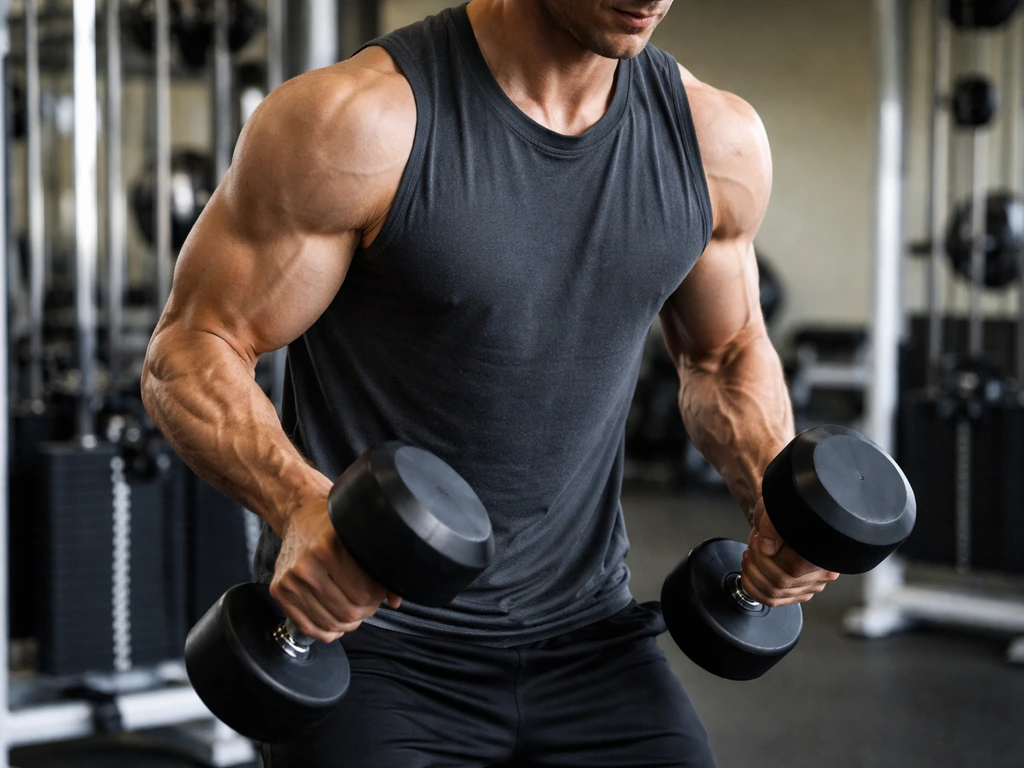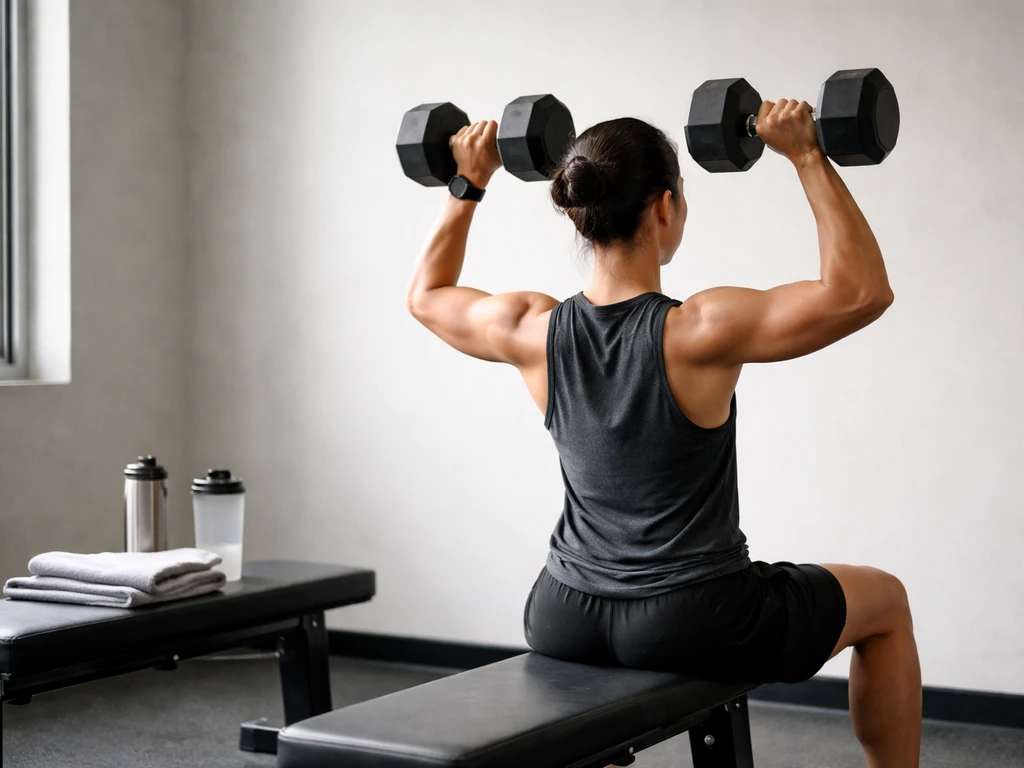
Yes, muscles do grow during puberty, and a meaningful amount of that growth happens whether you train or not. But here's the honest truth: puberty gives you a hormonal window that makes building muscle easier, not automatic. The teens who come out of puberty noticeably more muscular are almost always the ones who also trained, ate enough, and slept well. Hormones open the door; you still have to walk through it.
Do Muscles Grow During Puberty? Timelines and How to Train

Marcus Kellerman
14 May 2026
Muscle development during puberty: what the timeline actually looks like

Puberty does not deliver muscle gains on a neat schedule, and that trips a lot of teens up. The process is anchored to something called peak height velocity (PHV), which is the year when you're growing tallest the fastest. For most boys, that happens around ages 13 to 14, with the whole growth spurt typically spanning roughly ages 12 to 16. Girls hit their growth spurt about two years earlier on average, though there's huge individual variation in both sexes.
Here's how muscle fits into that picture. Peak muscle growth tends to occur within about 6 to 12 months of the PHV year. Peak strength gains come a bit later, roughly 12 to 18 months after PHV. So if a boy's height is shooting up at 13, he might see his most dramatic muscle mass increases around 14 and his biggest strength jumps closer to 15 or 16. The muscle and strength curves lag behind the height curve, which is exactly why many young teens look gangly before they start filling out.
By the end of puberty, the average male ends up with roughly a 7-fold increase in total muscle mass compared to his pre-pubertal baseline. For females, that increase is closer to 3 to 5 times. These are big numbers, but they play out over years, not months, and they don't mean every teen will end up visibly jacked just from going through puberty.
The hormones doing the heavy lifting
Testosterone is the most talked-about player here, and for good reason. Rising androgen levels during puberty directly support muscle protein synthesis and are linked to body composition shifts and strength increases. But testosterone doesn't act alone. Growth hormone and IGF-1 (insulin-like growth factor 1) rise alongside sex steroids and track closely with Tanner stage (the clinical measure of pubertal development). The interaction between androgens and the GH/IGF-1 axis is what drives most of the structural changes in muscle tissue during adolescence.
One thing worth knowing: early in puberty, a lot of the strength gains teens experience are neural, not structural. One thing worth knowing: early in puberty, a lot of the strength gains teens experience are neural, not structural. While muscle squeezing alone is unlikely to drive hypertrophy, the same idea of building real muscle comes more from progressive training and enough recovery does squeezing your muscles make them grow.
Your nervous system gets better at recruiting muscle fibers before your muscles actually get bigger. That's why even pre-pubertal kids can get meaningfully stronger with training without adding much visible muscle mass. The more significant hypertrophy (actual muscle tissue growth) kicks in more prominently as sex hormones rise later in maturation. Think of early puberty strength training as wiring the electrical system; the building itself gets constructed later.
When muscles can and can't "look bigger"
This one matters because perception can be misleading in both directions. During puberty, the body goes through a specific musculoskeletal sequence: legs lengthen first, then the chest and hips widen, then the shoulders broaden (particularly in males). A teen can look noticeably more athletic and broader just from these structural changes, even before significant muscle hypertrophy has occurred. Some teens also notice mild itching or tingling as muscles and skin stretch during growth, which is usually harmless if it passes quickly and there are no rashes itching as muscles grow. The proportions change, the silhouette changes, and clothes fit differently. This isn't fake progress, but it's also not the same as adding contractile muscle tissue.
On the other side, some teens are growing so fast during their peak height velocity year that their muscles are essentially playing catch-up. Long limbs, low muscle mass, coordination still adjusting: this is normal and temporary. The strength and muscle gains typically follow within the next year or two. If you're a teen who feels like you're all arms and legs right now, that's not a sign something is wrong. The hormonal environment is already setting the stage.
Where teens genuinely can't "look bigger" yet is in the earlier Tanner stages, when sex hormones haven't risen enough to support significant hypertrophy. Training at this stage still builds real strength (mostly through neural adaptation), but the mirror gains are limited. That's not a reason to skip training; it's just a reason to set honest expectations and stay consistent rather than frustrated.
How to train during puberty to actually build muscle
The American Academy of Pediatrics updated its guidance on youth resistance training and essentially reversed older, more conservative stances. Well-designed programs have not been shown to harm growth plates, stunt linear growth, or negatively affect cardiovascular health in young people. The key phrase is well-designed. That means supervised, progressive, age-appropriate training, not unsupervised max-effort sessions or copying adult powerlifting programs without modification.
What type of training to do
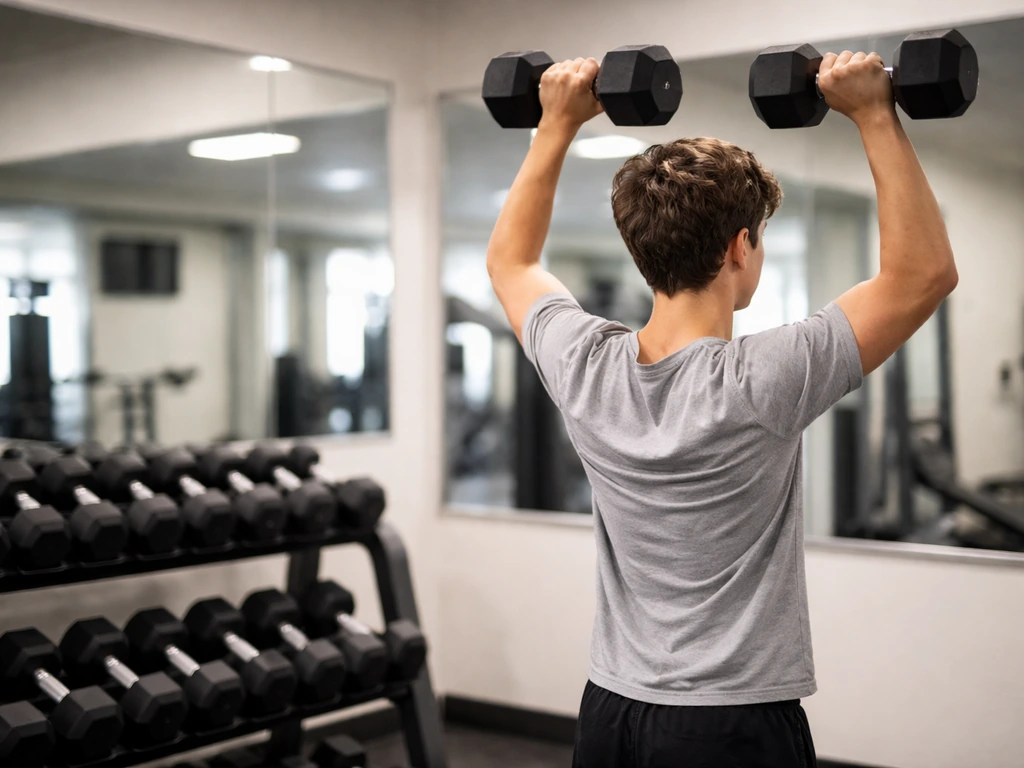
Compound movements are the foundation: squats, deadlifts, rows, presses, pull-ups, and lunges. These build the most muscle per unit of effort and teach movement patterns that carry over everywhere. Early on, bodyweight training works well and helps develop control before loading. Once movement quality is solid, adding external load (barbells, dumbbells, cables) is appropriate and effective.
The NSCA's youth resistance training guidelines support training 2 to 3 days per week with adequate rest between sessions. Starting with lighter loads and higher reps (8 to 15 range) while focusing on technique builds the neural foundation discussed earlier. Progressive overload, gradually increasing weight, reps, or sets over time, is what drives continued adaptation. An ACSM resistance training position stand infographic includes prescription takeaways such as using %1RM to guide resistance training intensity. Don't just repeat the same workout indefinitely.
Managing injury risk
Growth plates (the physis) are the main vulnerability in adolescent training. These are areas of active bone development near the ends of long bones, and they're softer and more susceptible to injury than fully mature bone. Explosive contractions near apophyseal areas (like the hip flexor attachment points and the tibial tuberosity) carry a slightly elevated risk of avulsion fractures until skeletal maturity is closer. This doesn't mean avoid explosive training entirely; it means progress conservatively, don't rush load increases, and get qualified instruction. The AAP recommends a supervisor-to-athlete ratio of about 1:10 or better and appropriate coach certification. If something hurts beyond normal muscle soreness, take it seriously.
Nutrition to support muscle growth during puberty
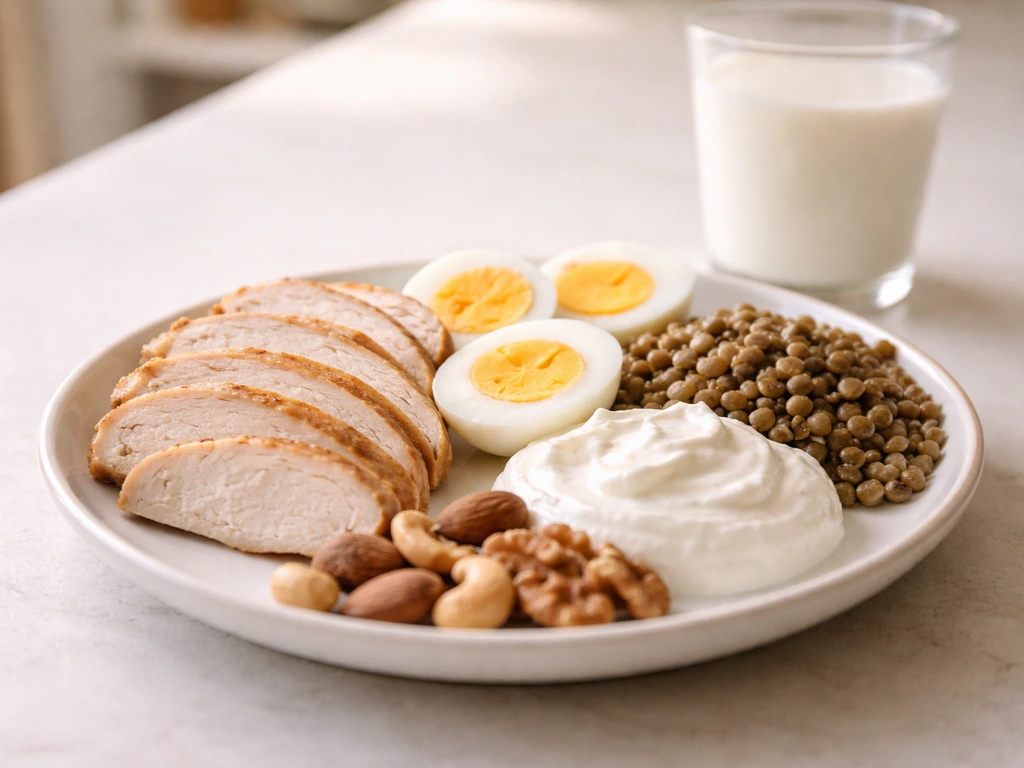
Training without adequate nutrition during puberty is a waste of the hormonal environment you've been given. The body is simultaneously growing taller, adding bone density, developing organs, and trying to build muscle. Calorie and nutrient demands are genuinely higher than most teens realize.
Protein
For teens training to build muscle, a daily protein target of roughly 1.4 to 2.0 grams per kilogram of body weight is the evidence-based range, consistent with ISSN guidance for exercising individuals. For a 60 kg (about 132 lb) teen, that's approximately 85 to 120 grams of protein per day. Spread it across meals rather than loading it all in one sitting. Good sources include eggs, chicken, fish, Greek yogurt, cottage cheese, beans, lentils, and milk. If whole food intake is genuinely inconsistent, a basic whey or plant protein supplement can fill gaps, but it's not a requirement.
Total calories and carbohydrates
Protein gets the most attention but total calories matter just as much, maybe more, for a growing teen. If you're chronically undereating, your body will prioritize fueling basic growth and organ function over building optional muscle. Carbohydrates are the primary fuel source for resistance training and play a direct role in glycogen replenishment after sessions. Cutting carbs aggressively during puberty is counterproductive. Rice, oats, potatoes, bread, fruit, and pasta are all legitimate choices. Don't overcomplicate this. Eat enough food, make most of it whole and minimally processed, and keep carbohydrates as a central part of the plan.
Hydration
Dehydration impairs training performance and blunts recovery, including glycogen resynthesis and protein synthesis efficiency. For most teens, the practical target is staying consistently hydrated throughout the day, not just drinking water during workouts. A simple check: urine should be pale yellow, not dark. On heavy training days or in hot conditions, increase intake accordingly. Sports drinks have a limited role for sessions under 60 to 90 minutes; water is sufficient for most training.
Recovery, sleep, and building the habit of consistency

Sleep is where a significant portion of muscle repair and hormonal output happens. The CDC recommends 8 to 10 hours of sleep per night for teens aged 13 to 18. That's not a soft suggestion. Growth hormone is secreted in pulses primarily during deep sleep, so cutting sleep short regularly means cutting into the very mechanism driving pubertal muscle development. Teens who routinely sleep 5 to 6 hours are leaving real gains on the table, and also significantly increasing their injury risk.
Beyond sleep, managing stress matters more than most teens think. Chronically elevated cortisol (from academic pressure, social stress, or overtraining) competes directly with anabolic hormones. You don't need to eliminate stress, that's unrealistic, but building in consistent recovery between training sessions (at least one full rest day between workouts targeting the same muscle groups) and keeping overall training volume reasonable prevents the kind of overreaching that stalls progress and increases injury risk.
Consistency over months is the variable that separates teens who come out of puberty noticeably more muscular from those who don't. The hormonal window lasts years. Two or three well-structured training sessions per week, adequate food, and enough sleep, sustained over that window, compounds into significant results.
Common myths and what's actually true
| Myth | What's actually true |
|---|---|
| Puberty alone will build you a muscular body | Hormones create the conditions for muscle growth, but without mechanical loading (training), you won't get the hypertrophy response that makes a real visible difference. |
| Lifting weights will stunt a teen's growth | Well-supervised resistance training has not been shown to negatively affect growth plates or linear height in young people. This myth persists but isn't supported by current evidence. |
| The more you feel the burn, the more muscle you're building | Muscle soreness and burning sensations are not reliable indicators of hypertrophy. Feeling your muscles work is not the same as growing them. |
| Boys and girls go through muscle growth at the same time | Girls' growth spurts begin roughly 2 years earlier than boys', so muscle and strength development timelines differ significantly between sexes. |
| Early puberty is too soon to train | Even pre-pubertal youth benefit from resistance training through neural adaptations. Starting early builds movement quality and a training base for when hormonal conditions favor hypertrophy. |
| You need supplements to build muscle as a teen | Whole food nutrition covering protein, calorie, and carbohydrate targets handles the vast majority of needs. Supplements are not necessary and should not be prioritized over food quality and consistency. |
| Strength gains mean muscle gains | Early pubertal strength gains are largely neural, not structural. Real hypertrophy becomes more prominent as sex hormones rise later in maturation. |
One myth worth addressing separately: the idea that puberty is the only window to build muscle. It isn't. The hormonal environment during adolescence is genuinely advantageous, and it makes sense to use it well. But muscle responds to mechanical tension and progressive overload at virtually every age.
Massaging muscles is unlikely to replace the basics like progressive training, enough protein, calories, and sleep that drive real hypertrophy does massaging muscles help them grow. The principles that drive growth during puberty, consistent training, sufficient protein, enough sleep, are the same ones that work at 30 or 60. Puberty just makes the returns on those inputs higher.
If you want the Jeffery Siegel angle on building muscle during puberty, the key is still consistency, enough protein, and smart training what makes muscles grow jeffrey siegel.
A simple starting plan
If you're a teen reading this and wondering where to start, here's a practical framework you can use today:
- Train 2 to 3 days per week with at least one rest day between sessions. Start with bodyweight or light loads and focus on form first.
- Build your workouts around compound movements: squat, hinge, push, pull, and carry patterns cover most of what you need.
- Eat enough total food. Don't diet while trying to build muscle during puberty. Aim for roughly 1.4 to 2.0 g of protein per kg of body weight daily, spread across meals.
- Keep carbohydrates in your diet. They fuel training and support recovery. Don't fear them.
- Sleep 8 to 10 hours per night. This is not optional if you're serious about results.
- Get qualified instruction if you can. A knowledgeable coach or physical education teacher reduces injury risk and accelerates learning.
- Be patient with the timeline. Muscle and strength peaks lag behind height by 6 to 18 months. If you're in a growth spurt, the muscle is coming. Keep training.
The teens who make the most of puberty for muscle development are not the ones with the best genetics or the most time in the gym. They're the ones who stay consistent, eat enough, and sleep well across the years that the hormonal window is open. Start now, be patient, and the results will follow.
FAQ
If puberty makes muscle growth easier, will I gain muscle even if I don’t work out?
Not automatically. Puberty increases the body’s “readiness” to build muscle, but visible gains usually require training plus enough calories, protein, and sleep. If you train hard but sleep 5 or fewer hours most nights, expect slower progress because growth hormone pulses depend heavily on deep sleep.
Why do I feel stronger in puberty but don’t look much bigger yet?
A useful expectation is that your mirror can lag behind strength early on. In early puberty, many strength improvements come from better neural recruitment rather than larger muscle fibers, so you may feel stronger without looking dramatically bigger until later in maturation.
Is it normal to feel underdeveloped during my growth spurt?
Growth spurts can temporarily make you look “thin” or “all limbs” because your limbs lengthen faster than your muscle can catch up. That mismatch is common, and the more meaningful hypertrophy typically shows up in the months after your peak height velocity year rather than instantly.
Will training in early puberty be pointless for muscle growth?
You can still train effectively, but you should expect smaller visual changes in earlier Tanner stages when sex hormones are still rising. The practical move is to focus on technique, progressive overload, and consistency rather than trying to force dramatic hypertrophy when your biology is not yet primed.
How many days per week should a teen train to grow muscle during puberty?
Two good options are 2 to 3 full-session days per week or 3 days if recovery is solid (no chronic soreness, no declining performance). The key is leaving enough rest between workouts for the same muscle groups, and slowly adding load, reps, or sets over time.
Can teens do heavy or explosive training without harming growth plates?
Yes, but you should prioritize qualified coaching and controlled effort. Avoid repeated max-effort attempts, especially for explosive movements near growth-plate sensitive areas. A smart compromise is to keep high skill, moderate intensity early, then progress conservatively as technique and recovery improve.
What happens if I hit my protein target but my calories are too low?
Protein targets work best when paired with enough total food. If your calories are chronically low, your body will prioritize basic growth and organ function over “optional” muscle gain, so even hitting protein grams may not translate into visible hypertrophy.
Do I need to eat carbs to build muscle in puberty?
Carbs matter more than most teens expect for training quality and recovery. If you cut carbohydrates too aggressively, you may notice worse gym performance, slower recovery, and reduced training volume, which indirectly limits muscle gain.
Should I rely on sports drinks to get enough electrolytes for muscle growth?
For most teens, plain hydration is enough for sessions under about an hour. If workouts are longer or it’s hot, adding electrolytes can help, but the main goal is staying consistently hydrated across the day, not only during training.
How do I tell normal soreness from an injury risk during puberty training?
Pain that is sharp, localized to bone, or persists beyond normal soreness is a red flag. Also stop and get evaluated if you have pain that worsens with loading, swelling around a joint or tendon, or repeated discomfort at the same spot.