Your muscles do not need to shrink before they grow, but it is completely normal to look or feel smaller in the first one to three weeks of a new training block. What you are actually seeing is a temporary drop in water retention, glycogen, and inflammation, not a real loss of muscle tissue. Once your body adapts, size and strength both start climbing. The key is knowing the difference between that harmless short-term shift and a genuine red flag that something is going wrong.
Do Muscles Shrink Before They Grow? What to Expect

Marcus Kellerman
24 May 2026

What 'muscles shrink' actually means
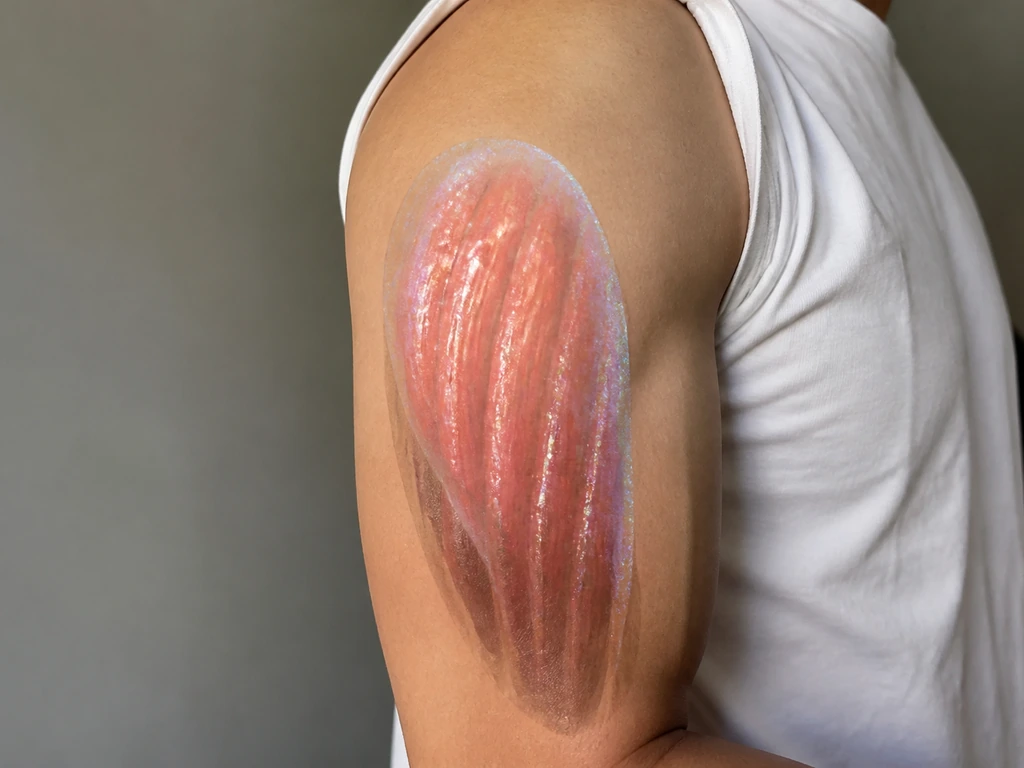
When people say their muscles look smaller after starting a program, they are almost always describing one of four things, and only one of them is a real problem.
The first is glycogen and water. Muscle glycogen is stored alongside water, and the ratio is roughly 3 to 4 grams of water per gram of glycogen. When you start training hard, your muscles burn through glycogen faster than you replenish it, especially in the first few sessions. The result is a temporary flatness or deflated look that has nothing to do with losing actual muscle fibers. blank" rel="noopener noreferrer">Carbohydrate loading studies using spectroscopy have confirmed that muscle water content rises substantially when glycogen is fully restored, which means low glycogen means visibly flatter muscles. During glycogen recovery, associated muscle water changes can follow glycogen restoration, and one human study reported higher muscle water content after full glycogen replenishment compared with low water availability blank" rel="noopener noreferrer">muscle water content rises substantially when glycogen is fully restored.
The second is post-exercise inflammation. A hard training session causes micro-damage and an acute inflammatory response. Your muscles can feel tight, hard, and temporarily larger right after training due to swelling. Once that swelling clears in the days that follow, you may look smaller than you did at peak pump, which is just the inflammation resolving, not tissue disappearing.
The third is water weight at the whole-body level. If you switch to a cleaner diet at the same time you start training, you often drop sodium and processed food intake, which causes a rapid drop in subcutaneous water. The scale goes down, your waist gets a little smaller, and your arms might look leaner but also slightly less full. This is a good sign, not a bad one.
The fourth, and the one worth worrying about, is actual muscle protein loss, meaning your body is breaking down contractile tissue faster than it is building it. This happens when you are in a deep caloric deficit, severely under-eating protein, chronically sleep-deprived, or overreaching without recovery. This is the only scenario where 'shrinking' is genuinely bad. The other three are normal physiology.
What actually changes first: strength, size, and your nervous system
The early weeks of training are dominated by neural adaptation, not hypertrophy. Your brain gets better at recruiting motor units, your motor patterns improve, and inter-muscular coordination tightens up. This is why beginners can add 10 to 20 pounds to a lift in the first three to four weeks without their muscles visibly changing. The muscle itself has not grown yet. Your nervous system has simply learned to use what you already have more efficiently. Can flexing your muscles grow them too?
Visible hypertrophy, meaning actual growth of muscle fibers, typically becomes noticeable somewhere between weeks four and eight for most people starting a well-structured program. Before that, strength gains are the real signal that adaptation is happening. If your strength is climbing, growth is coming. If strength is flat or dropping after four or more weeks, that is worth investigating.
For more experienced trainees returning to training after a break, there is an added advantage called muscle memory. Satellite cells retain nuclei from previous training cycles, so the muscle can rebuild faster the second time around. You may regain prior size in roughly half the time it originally took to build it.
The situations where short-term shrinkage is completely normal
Starting a new program
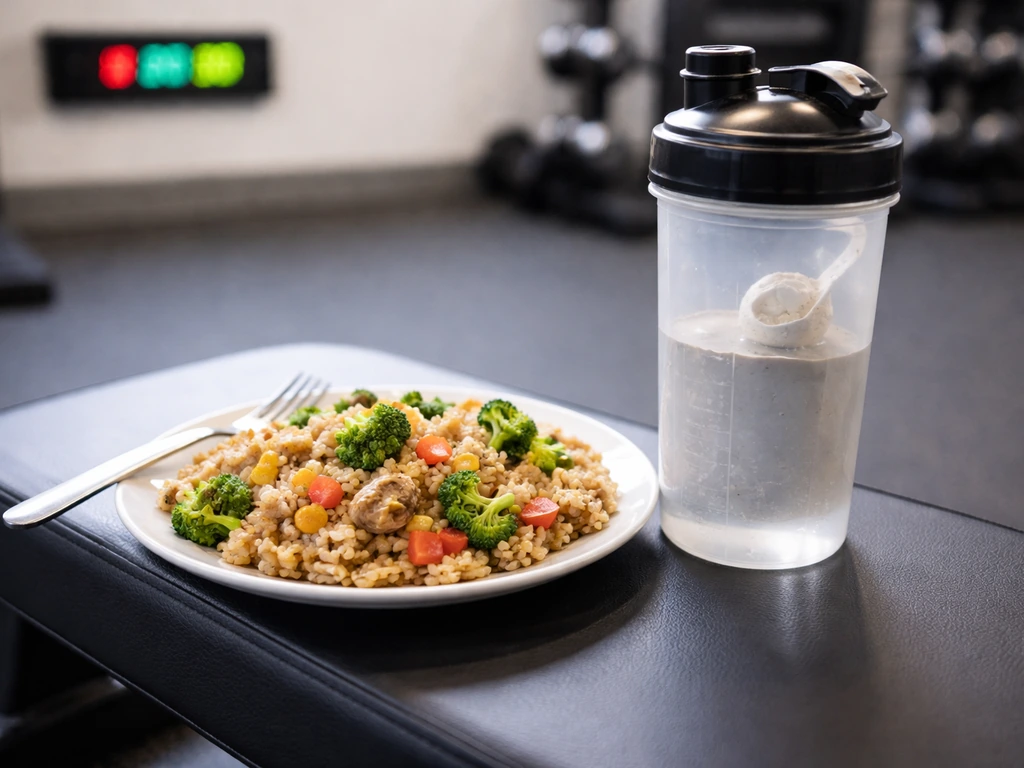
Any new training stimulus introduces unfamiliar mechanical stress. Your muscles get sore, glycogen gets depleted faster than usual, and the inflammation cycle is more pronounced. Expect one to two weeks of looking a little flat or feeling weaker on some lifts. This is not regression. It is your body recalibrating to a new demand.
Returning after a training break
If you took two or more weeks off, your glycogen stores may be lower, your neural efficiency drops quickly, and any inflammation from your first sessions back can be disproportionately high. You might feel weaker and look smaller for seven to fourteen days. Muscle protein synthesis can remain elevated for roughly 48 hours after a resistance session, so the rebuild is already starting even when you feel rough.
Switching programs or adding new movements
Switching from a machine-based routine to free weights, adding high-rep sets after months of low-rep work, or introducing new movement patterns can all cause an acute performance dip and extra soreness. Your muscles are being recruited in novel ways. This is actually a good thing for long-term growth, but it can look and feel like going backward for a week or two.
Cutting or dieting while training
When you drop calories to lose fat, glycogen stores typically decrease because you are eating fewer carbohydrates and your body is running a caloric deficit. The result is flatter-looking muscles even if you are not losing actual muscle tissue. This is one of the most common reasons experienced lifters feel like they are shrinking when they are actually just leaner. As long as protein is high and training volume is maintained, most of your muscle should stay put during a moderate cut.
When shrinking is not normal: red flags to take seriously
Some situations signal a real problem rather than a temporary dip. If any of the following apply to you, something in your approach needs to change.
- Strength is consistently declining across all major lifts after four or more weeks of structured training, not just fluctuating.
- You are losing more than 1 to 1.5 percent of your body weight per week, which is fast enough to risk significant muscle loss even with adequate protein.
- You are eating fewer than 1.6 grams of protein per kilogram of body weight per day while in a deficit or trying to gain muscle.
- You are sleeping fewer than six hours per night consistently. Growth hormone peaks during deep sleep, and chronic sleep debt accelerates muscle protein breakdown.
- Soreness lasts longer than four to five days after each session, suggesting you are outpacing your recovery capacity.
- You feel fatigued, unmotivated, and weaker across the board for more than three consecutive weeks. This is a classic sign of overreaching or undereating.
- Your waist and arms are both shrinking simultaneously with no change in training. This pattern often points to a caloric deficit that is too aggressive.
One or two of these in isolation may not be serious. All of them together means you need to eat more, rest more, or reduce training volume immediately.
How to prevent real muscle loss while pushing for growth
The single most effective thing you can do is progress gradually. Jumping into a high-volume program when you have been sedentary for months is a reliable way to over-stress your recovery system and spin your wheels. A good rule of thumb is to add no more than 10 percent volume per week, and to earn increases in load by hitting your target reps with two or more reps left in the tank.
Mechanical tension is the primary driver of muscle growth, which means your training needs to challenge you close to failure, but not constantly train you to failure on every set of every session. A sustainable approach is to keep most working sets at two to four reps in reserve (RIR), occasionally taking sets closer to failure, and using progressive overload as your north star. If you are adding reps or load over time, you are applying the stimulus needed for growth.
Plan deload weeks every four to eight weeks depending on your training age and intensity. A deload is not weakness. It is when your nervous system catches up with the work you have been doing. Skipping deloads in favor of constant hard training is one of the top reasons lifters stall or regress.
Volume matters too. Research generally supports somewhere between 10 and 20 sets per muscle group per week as an effective range for hypertrophy, with beginners often doing well at the lower end and experienced lifters working up toward the higher end over months. Starting at 20 sets when you have not trained in a year is not more effective. It is just more soreness with the same or worse results.
Nutrition and recovery: the non-negotiables for muscle gain
Protein
Aim for 1.6 to 2.2 grams of protein per kilogram of body weight per day. For a 180-pound (82 kg) person, that is roughly 130 to 180 grams daily. Spread that across three to four meals so each meal delivers 30 to 50 grams, which is enough to maximally stimulate muscle protein synthesis per feeding. Muscle protein synthesis stays elevated for roughly 48 hours after resistance exercise, so your protein intake across those days matters, not just the post-workout window.
Calories
You cannot build significant muscle in a meaningful deficit over the long term. A modest surplus of 200 to 300 calories per day above your maintenance level is enough to support muscle growth without excessive fat gain. If you are trying to recomp (build muscle and lose fat simultaneously), it is achievable for beginners and detrained individuals, but progress will be slower and requires near-perfect protein and training consistency.
Carbohydrates and glycogen
Do not neglect carbohydrates if you want your muscles to look full and perform well. Do muscles itch when they grow? That can happen during early growth and training changes, but it is usually tied to irritation, swelling, or normal skin and nerve responses rather than the muscle literally itching as it grows muscles to look full. Keeping glycogen topped up is directly tied to how your muscles look and how hard you can train. If you have been eating very low carb and your muscles look flat, this is often the first thing to fix before assuming something is wrong with your training.
Sleep and stress
Seven to nine hours of sleep is not optional if muscle growth is a priority. Growth hormone is primarily secreted during slow-wave sleep, and cortisol (which promotes muscle breakdown) stays chronically elevated when you are sleep-deprived or under prolonged psychological stress. If your training is dialed in but your life is chaotic and your sleep is poor, you will grow at a fraction of your potential. Managing stress is part of the training program, not separate from it.
How to tell if you're actually making progress

Tracking the right things prevents a lot of unnecessary panic. Here is a simple two to four week check-in framework you can use right now.
| What to Track | How to Track It | What You Want to See |
|---|---|---|
| Strength on key lifts | Log reps and load each session | Reps or load increasing over 2-4 weeks |
| Reps in reserve (RIR) | Rate difficulty of each set 1-5 | Working sets feel hard but completable |
| Body weight | Weigh daily, use 7-day average | Stable or slowly rising when bulking; slow decline when cutting |
| Muscle measurements | Tape measure on arms, chest, thighs | Stable or growing over 4 weeks |
| Training recovery | Rate soreness and energy 1-10 daily | Soreness resolving within 48-72 hours most weeks |
| Protein intake | Track via app for at least 2 weeks | Consistently hitting 1.6-2.2 g per kg daily |
At the two-week mark, the most important number to check is strength, not size. Size changes take longer to show up. If you are stronger on your main lifts, your program is working. At four weeks, you should start to see measurements holding steady or growing. If strength is flat and measurements are down at four weeks, run through the checklist: calories, protein, sleep, and volume. Usually one of those four is the culprit.
One more thing worth knowing: early training changes like improved coordination and better motor recruitment can make you stronger without adding visible size. That is real progress. The muscle growth follows the neural adaptation, not the other way around. So if you feel stronger but do not see much change in the mirror at three weeks, you are exactly on schedule.
What to do right now if you think your muscles are shrinking
- Check your protein first. Hit 1.6 to 2.2 grams per kilogram of body weight every day for two straight weeks before drawing any conclusions about your training.
- Check your carbohydrate intake. If you are eating very low carb and your muscles look flat, increase carbohydrates around your training sessions and reassess in one week.
- Check your calories. If you are trying to gain muscle and the scale has been dropping for two or more weeks, eat more. A 200 to 300 calorie surplus is enough.
- Check your sleep. If you are averaging under seven hours, fix this before adjusting anything else. Sleep is when the adaptation happens.
- Check your volume and recovery. If you started too aggressively, reduce your weekly sets by 20 to 30 percent for two weeks and see if performance and size stabilize.
- Keep a training log. If you do not know whether you are stronger than you were three weeks ago, you cannot make a useful judgment about your progress.
- Give it four full weeks before making major program changes. Short-term fluctuations in size and strength are normal. Four weeks of consistent data is the minimum for an honest assessment.
The short version: temporary shrinkage in the first one to two weeks is almost always glycogen, water, or inflammation, not muscle loss. Real muscle loss takes weeks of sustained under-eating, under-training, or overreaching. Squeezing your muscles might feel intense, but it is not the main driver of hypertrophy compared with progressive training loads. If you are consistent, eating enough protein, sleeping well, and applying progressive overload, you are on the right path. Trust the process for four weeks, track the right metrics, and adjust based on what the data actually shows rather than how you look on a random Tuesday morning. If you are wondering whether puberty changes how quickly you can build muscle, the good news is that muscles can grow during that stage with the right training and nutrition do muscles grow during puberty. If you want the practical answer to what makes muscles grow, focus on training close to failure with progressive overload, enough protein, and enough overall calories.
FAQ
How can I tell the difference between normal “early shrinking” and real muscle loss?
Not usually, but you should use a concrete check. If you are still adding reps or load and your workouts feel no worse after the first 1 to 3 weeks, the “shrink” is almost always glycogen or water. If strength is flat or dropping for 4 or more weeks, or you are losing size while also losing training performance, that points to under-recovery, too much volume, or not enough calories.
Can changing my diet cause my muscles to look smaller even if my training is the same?
Yes, because glycogen and water can drop faster than the scale changes for fat. If you cut carbs, increase training intensity, or stop eating as much after a long training block, you can look noticeably flatter within days. To troubleshoot, compare your average weekly protein and total calories first, then watch strength and measurements 2 weeks later rather than judging from one or two mirror sessions.
Why do my muscles look full after a workout sometimes, but smaller later in the day?
It depends on what you mean by “shrink.” Pump-related fullness can mask true size. You might look smaller when glycogen is low, then look bigger after a high-carb meal, even without actual growth. Track body measurements under consistent conditions (same time of day, similar salt and carbs) and prioritize strength progression over the “look” right after workouts.
What if I feel weaker and look smaller, could stress or overtraining be the cause?
Sometimes, especially if you start with a new plan that is too hard to recover from. When cortisol is chronically elevated (often from poor sleep or too aggressive intensity), you may see persistent size loss and performance drops. The practical fix is to reduce effort on some sets, add a deload, and tighten sleep and calories for at least 2 weeks before changing the entire program.
Does creatine affect whether muscles look like they are shrinking early on?
If you take creatine, water in the muscle tends to increase over several weeks, which often works in the opposite direction of “shrinkage.” However, when you restart after a break or change dosage or hydration, you can still experience short-term shifts from glycogen and inflammation. Don’t use creatine-related scale changes as proof of muscle loss or gain.
Is it possible to lose size early if my total protein is okay, but my meals are inconsistent?
Protein needs are not just about reaching a daily number, but also about spacing and consistency. If you routinely hit your daily protein but skip or under-eat one day, you can miss the repeated muscle protein synthesis “stimulus window” across the week. Aim for 3 to 4 meals and keep protein steady during the first 4 weeks of a new program.
Can I get stronger without my muscles growing yet, and what would be a program mistake causing that?
Yes, certain beginner setups can make you “feel like you’re doing everything right” while stimulus is low. If you never reach a close-enough effort level (often meaning too many sets far from failure) or you don’t progressively overload, you can improve coordination and lifts without visible hypertrophy. The remedy is to set a rep-in-reserve target on most working sets and add reps or load when you hit your target range.
When I’m cutting, how do I know if I’m shrinking from fat loss vs muscle loss?
If you are losing size and inches but your strength is stable, it is more likely you are simply leaning out (water and glycogen included) rather than losing muscle. The caution is the rate and depth of the deficit. If your deficit is aggressive, sleep is poor, or training volume is dropping, you increase the odds of real muscle loss.
Is being very sore a good sign, or can it mean my plan is too hard?
You should expect soreness and temporary “flatter” feelings after the first unfamiliar sessions, but soreness alone is not a reliable sign of growth. If you are persistently very sore for more than about a week, performance is falling across multiple lifts, or you can’t hit your rep targets, your volume or intensity is likely too high for your recovery.
How much should I trust progress photos or the mirror during the first month?
Yes, a camera can exaggerate small changes. Different lighting, pump state, hydration, and even posture can make the mirror misleading day to day. Use a consistent routine for comparison (same time of day, same lighting, relax between shots, measure the same points) and use the 2-week strength check before panicking about looks.
By when should I expect visible muscle changes after starting a new program?
A realistic timeline helps reduce anxiety. For many people, visible size tends to become noticeable around the 4 to 8 week mark when training and nutrition are aligned. If you still have clear strength gains by 2 weeks, you are usually on track even if the mirror change is small.