
Squeezing your muscles during training can support growth, but it's not a standalone growth trigger. The real driver of muscle hypertrophy is mechanical tension applied progressively over time, meaning you need to lift challenging loads, accumulate enough hard sets per week, and push close enough to failure to actually stress the muscle fibers. Squeezing, pausing at peak contraction, or adding isometric holds are useful tools within that framework, but if you're squeezing without progressive overload and sufficient volume, you're leaving most of your gains on the table. This is also why top coaches like Jeffrey Siegel emphasize progressive overload as the key driver behind real hypertrophy.
Does Squeezing Your Muscles Make Them Grow? What Works

Marcus Kellerman
19 May 2026

How muscle growth actually happens
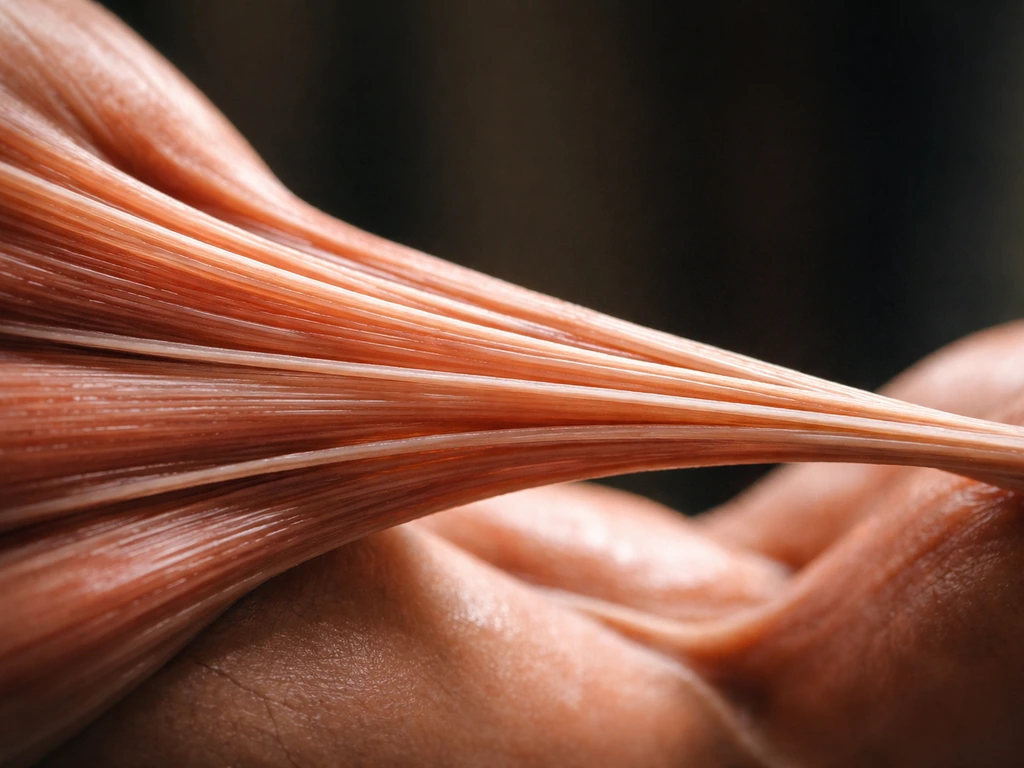
Muscle hypertrophy is driven primarily by mechanical tension: the physical force placed on muscle fibers when they resist a load. That tension activates mechanosensitive pathways, including mTORC1 signaling, that tell the body to increase muscle protein synthesis and, over time, add myonuclear content to support larger fibers. This is well-established physiology, not just gym theory.
But tension alone isn't enough. You need enough of it, frequently enough, over a long enough period. Research consistently shows a dose-response relationship between weekly training volume (total hard sets per muscle group) and muscle size gains, with diminishing returns at very high volumes. Proximity to failure matters too: sets that stop far short of failure produce less hypertrophic stimulus than sets taken close to it. And the whole thing has to progress: the same load, same reps, same sets forever will stop producing results once your body adapts.
The flip side is also true: remove mechanical loading entirely and muscle size drops. Studies on limb immobilization show clear declines in both strength and muscle volume when loading disappears, confirming that muscle tissue is exquisitely sensitive to whether or not it's being mechanically challenged.
What people usually mean by "squeezing"
When someone asks whether squeezing their muscles makes them grow, they're usually talking about one of a few things, and it's worth separating them because they have different practical implications.
- Peak contraction: deliberately holding or squeezing hard at the top of a rep, like flexing your bicep at the top of a curl for a beat before lowering.
- Isometric holds: pausing mid-rep or at a specific joint angle and holding the contraction without movement, sometimes done with load, sometimes without.
- Mind-muscle connection: consciously focusing attention on the target muscle during a set to maximize its recruitment, rather than just moving weight from A to B.
- No-load flexing: squeezing muscles between sets or outside of training with no external resistance at all, like the classic bodybuilder's flexing drill.
These are meaningfully different. Loaded isometric holds and peak contractions during a set are producing real mechanical tension. No-load flexing between sets is a much weaker stimulus. One randomized controlled trial tested whether blank" rel="noopener noreferrer">adding no-load isometric holds during inter-set rest improved strength or hypertrophy in resistance-trained men and found no significant advantage over passive rest. That result makes sense: without a meaningful external load, the tension stimulus is too low to drive significant additional adaptation.
How to actually use squeezing in your training
Used in the right context, peak contraction work and paused reps are legitimate hypertrophy tools. Here's how to integrate them without derailing your progress.
Peak contraction pauses (1–2 second holds at the top)

Adding a brief squeeze at the fully shortened position of a rep, think the top of a lat pulldown or the peak of a leg extension, keeps tension on the muscle for slightly longer per rep. This can improve mind-muscle connection and ensures you're not just bouncing through the range of motion. Keep it to 1–2 seconds. Longer doesn't meaningfully add more stimulus, and it cuts into how much load you can handle across the full set.
Paused reps (hold mid-range or at the bottom)
Pausing at the bottom of a movement, like a paused squat or a paused dumbbell curl at 90 degrees, tends to be more hypertrophically useful than a top-position hold because the muscle is under tension at a longer length. Research on isometric training supports this: isometric work at longer muscle lengths produces greater hypertrophy than the same volume done at shorter lengths. This is also consistent with evidence favoring eccentric-heavy and lengthened-position training for muscle growth. If you're going to add holds, bottom-position or mid-range pauses have better support than peak-contraction squeezes.
Mind-muscle connection during standard reps
Focusing mentally on the muscle you're training, rather than just completing the movement, is a real and practical tool, particularly for muscles that are hard to feel working (like the lats or glutes for beginners). It can increase motor unit recruitment in the target muscle. A review of neural regulation in hypertrophy highlights that motor unit recruitment, alongside mechanical tension, is key to inducing muscle growth and helps explain why targeting the right neural stimulus matters motor unit recruitment and mechanical tension. Use it, but don't sacrifice load to chase the feeling. A weight that's too light to create meaningful tension won't grow you regardless of how hard you focus.
Tempo control
Slowing your reps, especially the lowering (eccentric) phase, increases time under tension and forces more control through the range of motion. Evidence on tempo suggests that slower eccentrics can be favorable for hypertrophy, while extremely slow concentrics tend to reduce the load you can use without a proportional benefit. A practical default is a 2–3 second eccentric, 1 second pause if you want it, and a controlled 1–2 second concentric. Don't obsess over the numbers, but don't rush either.
The training variables that move the needle most
Squeezing is a refinement. These are the fundamentals that determine whether you grow at all.
| Variable | Practical Target | Why It Matters |
|---|---|---|
| Weekly sets per muscle | 10–20 hard sets per muscle group per week | Volume has a clear dose-response relationship with hypertrophy; more hard sets (within recovery capacity) drive more growth |
| Rep range | 5–30 reps per set, most work in the 6–15 range | Hypertrophy occurs across a wide rep range as long as effort is high enough; no single magic number |
| Proximity to failure | Leave 0–3 reps in reserve on most working sets | Sets stopped far from failure produce significantly less hypertrophic stimulus |
| Progressive overload | Increase load, reps, or sets over weeks/months | The body adapts to a fixed stimulus; progression is non-negotiable for continued gains |
| Frequency | Each muscle group trained 2x per week minimum | Spreading volume across multiple sessions appears slightly superior to once-weekly training for hypertrophy |
| Load | Moderate to heavy (roughly 60–85% of 1RM for most work) | Load-dependent mechanical tension is the primary driver; very light loads work only when taken very close to failure |
The ACSM's guidance on resistance training for hypertrophy echoes this: multiple sets, moderate to high loads, and structured progression are the core prescription. Everything else, including tempo, pauses, and peak contractions, operates within that framework.
Recovery, nutrition, and when you'll actually see results
Protein
The International Society of Sports Nutrition puts daily protein intake for muscle growth at around 1.4–2.0 grams per kilogram of body weight. For a 75 kg person, that's roughly 105–150 g of protein per day. Spread it across 3–5 meals rather than loading it all into one sitting, as protein distribution appears to optimize muscle protein synthesis throughout the day. Post-training protein intake is useful but the total daily amount matters more than precise timing.
Calories
You can build some muscle in a caloric deficit, especially if you're new to training or carrying excess body fat, but a modest caloric surplus of around 200–500 calories per day makes muscle gain meaningfully faster. If the scale isn't moving over multiple weeks and your strength isn't progressing, you're probably not eating enough.
Sleep
Sleep is where a large portion of muscle repair and growth occurs. Research on sleep deprivation shows clear impairments to muscular strength and neuromuscular function when sleep is insufficient. Aim for 7–9 hours per night. This isn't a soft recommendation: chronic short sleep will undermine your training adaptations regardless of how well you eat or train.
Realistic timelines
Most beginners start noticing strength changes within 2–4 weeks, largely from neural adaptations. During puberty, muscles can grow with training, but the fundamentals of mechanical tension, progressive overload, and adequate recovery still apply muscles grow during puberty. Visible changes in muscle size typically take 8–12 weeks of consistent training, adequate protein, and sufficient calories to become obvious. More advanced lifters will see slower progress. If you're 3 months in and nothing has changed visually, the problem is almost always insufficient volume, inadequate protein, or not enough progressive overload, not a failure to squeeze hard enough at the top of your reps.
Common myths and mistakes around squeezing
Myth: The burn means it's working
Chasing the burn is one of the most common training mistakes. The burn you feel, especially with high-rep squeezing drills, is mostly from metabolic byproducts like lactate and hydrogen ions. Metabolic stress can contribute to hypertrophy, but it's a secondary mechanism, not the main driver, and it's easy to create burn without creating nearly enough mechanical tension to drive meaningful growth. Feeling like your muscles are on fire is not a reliable indicator that they're being trained effectively.
Myth: Squeezing harder between sets adds extra growth
As mentioned above, no-load isometric squeezing between sets has not been shown to improve hypertrophy over passive rest in controlled research. Your inter-set time is better spent recovering so you can perform the next set with adequate intensity. Flexing in the mirror is fine for posing practice, but it's not a substitute for loaded training.
Myth: Soreness equals growth
Delayed onset muscle soreness (DOMS) is a sign of novel mechanical stress, not a reliable marker of hypertrophy. People sometimes notice an itchy, prickly sensation as their muscles adapt, but soreness and other feelings are not the same thing as proven hypertrophy progress an itchy sensation as their muscles adapt. You can get very sore from an unusual movement pattern without growing much, and you can grow consistently without being sore at all once your body adapts to a program. Don't use soreness as your feedback signal for whether training is working.
Mistake: Using squeezing/holds as a replacement for progressive overload
This is probably the biggest practical error. Adding pauses and peak contractions to your reps is a technique refinement. If you've been doing the same weight for the same reps for three months and you're just adding more dramatic squeezes, you're not progressing. This is why the idea that muscles shrink before they grow often comes down to training stress, not a lack of progress three months. The scale of adaptation your muscles get from technique tweaks is small compared to the adaptation from actually lifting more weight or doing more hard sets over time. Squeeze well, but progress harder.
Mistake: Ignoring the eccentric phase to focus on the squeeze
The lowering phase of a rep, the eccentric, is at least as important as the squeeze at the top, and arguably more so for hypertrophy. Letting weights drop quickly to save energy for a dramatic hold at the top is a poor trade. Control the lowering, especially in exercises like Romanian deadlifts, pull-downs, and dumbbell presses, and you'll get more out of every rep.
The bottom line on squeezing
Squeezing your muscles, done right, is a useful training technique, not a growth mechanism in itself. Peak contractions, paused reps (particularly in lengthened positions), controlled tempo, and a strong mind-muscle connection all help you get more out of the mechanical tension you're already creating with loaded training. But none of them work in isolation. The non-negotiables remain: sufficient hard sets per week, progressive overload over time, adequate protein, enough sleep, and consistency across months, not days. Nail those, then use squeezing as one more tool to optimize the stimulus. That's the order of operations.
FAQ
If I squeeze at the top of every rep, should I use the same weight as usual?
Not always. A peak squeeze often makes the rep harder at the end range, so using the same load may force you to cheat the full set. A better approach is to reduce load slightly (or reduce reps by 1 to 2) so you can keep controlled reps through the whole movement while still hitting the squeeze for about 1 to 2 seconds.
Does squeezing work better for beginners or advanced lifters?
Beginners often benefit more from peak contraction cues and mind-muscle focus because they are still learning to recruit the target muscle and control technique. Advanced lifters usually get less “extra” growth from squeezing alone, unless they can already hit sufficient hard sets, progress, and train the right ranges of motion.
Will squeezing replace adding more volume or heavier loads?
No. Squeezing is a refinement that can slightly improve tension per rep, but it does not create the dose of mechanical tension required for hypertrophy if your total hard sets are low or progression stalls. If you are not doing enough quality sets per week, increase volume first, then use squeezing as a way to make those sets more effective.
How close to failure should I take squeeze-focused sets?
Squeeze work still needs intensity. If you stop far from failure, the extra time at peak contraction usually does not compensate for the lack of stimulus. A practical target is most sets landing around 0 to 3 reps in reserve, with a few sets closer to that range rather than every set pushed equally hard.
Are no-load isometric squeezes between sets ever useful?
They may help with skill, warm-up, or activation, but they are unlikely to add meaningful hypertrophy when used alone. If your main goal is muscle growth, prioritize loaded sets that are challenging, then treat no-load flexing as optional practice, not a substitute for training volume.
What’s the best place in the rep to pause or squeeze for growth?
For most people, bottom-position or mid-range pauses tend to be more productive than long holds at the peak. The reason is that the muscle stays under tension at longer muscle lengths for longer, which better supports hypertrophy than adding extra time only at the fully shortened position.
Should I count every pause as a “rep” for volume totals?
For weekly volume tracking, count the rep based on the full repetition you performed, not the number of internal pauses. For example, one rep with a 1-second bottom pause is still one rep, even though the set was longer. The main thing is to track total hard sets and reps consistently across weeks.
Can squeezing increase injury risk or joint irritation?
It can, especially if you squeeze hard at painful ranges, use unstable positions, or turn pauses into bouncing control issues. If you feel sharp or joint-specific pain, shorten the pause duration (for example, stay near 1 second) or swap to a safer variation and keep the eccentric controlled so the load is handled through the whole range.
If I get sore but my strength and measurements do not change, is squeezing not working?
Soreness alone is not proof of hypertrophy progress. If soreness rises but strength, reps at a given load, and weekly hard-set volume are not progressing, you may be creating novel stress without enough total stimulus. Use performance and consistency across weeks as your primary feedback, not DOMS.
How long should I train with squeezing-focused technique before changing my plan?
Technique tweaks usually give a smaller bump than real program progression. If your log shows stalled weights or stalled hard-set volume for 3 to 6 weeks, the bigger lever is to raise load, add reps within your rep range, or add hard sets per week. Keep squeeze techniques as a constant variable while you progress.